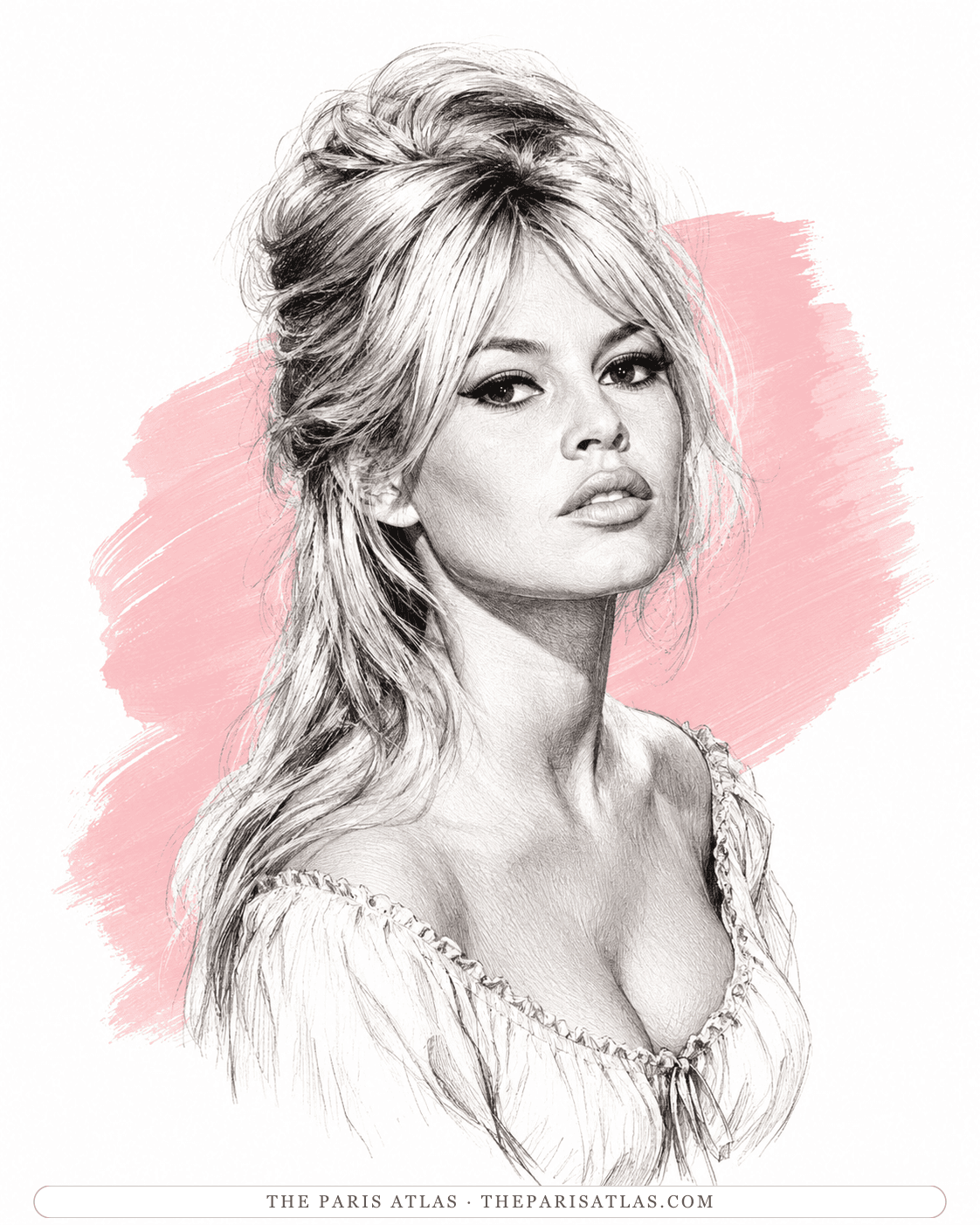
Brigitte Bardot
- Actor
Collaborated with · 1956–1957
Vadim directed Bardot in And God Created Woman (1956), the film that made her an international star, and again in The Night Heaven Fell (1957).
Paris-born French filmmaker, screenwriter, producer and writer whose provocative films helped loosen the sexual conventions of postwar European cinema and transformed Brigitte Bardot into an international star.
Roger Vadim occupies a peculiar place in French film history.
He was never quite a member of the French New Wave, although his first film arrived just before it and helped demonstrate that a young director could make an unconventional movie outside the established hierarchy and succeed internationally. He was never primarily an art-house formalist like Jean-Luc Godard or François Truffaut, although he moved through the same Paris film world. And he was never simply a commercial director either.
Instead, Vadim built his cinema around beauty, sexuality, youth, pleasure and provocation.[1]
His reputation became inseparable from the women in his life. Brigitte Bardot, Catherine Deneuve and Jane Fonda all appeared in his films; Bardot and Fonda married him, while Deneuve was his partner and the mother of his son Christian. Vadim's tendency to present actresses through his own ideal of erotic freedom brought him enormous publicity and commercial success, but it also became the central criticism of his work. Later audiences have often questioned whether his films liberated their female characters or simply turned them into objects of male fantasy.
That ambiguity runs through nearly everything he made.
Yet Vadim's importance cannot be reduced to his marriages. And God Created Woman became an international phenomenon. Les Liaisons dangereuses transported an eighteenth-century novel into contemporary France. Blood and Roses became an early landmark of erotic vampire cinema. And Barbarella, dismissed by many critics in 1968, eventually became one of the most recognizable works of psychedelic pop cinema.[2]
His career began and ended in Paris, but its geography extended from Saint-Germain-des-Prés and Saint-Tropez to Venice, Rome, Hollywood and the imagined galaxy of Barbarella.
Roger Vadim Plemiannikov was born in Paris on 26 January 1928.[3]
His father, Igor Plemiannikov, came from a Russian family that had left the former Russian Empire and entered French life after the Revolution. Igor became a French diplomat, serving in Egypt and later Turkey. Vadim therefore spent part of his earliest childhood far from Paris, particularly in Alexandria. His mother, Marie-Antoinette Ardilouze, was French and had worked as an actress.[4]
The privileged diplomatic childhood ended abruptly when his father died while Roger was still a boy.
The family returned to France.
During the German occupation, Vadim spent much of the war in the French Alps. His family environment there was strongly connected to Resistance activity: people fleeing persecution were sheltered and helped across the border into Switzerland. Vadim later drew upon his wartime memories in his fiction.
The experience placed his adolescence between two very different worlds: the controlled, dangerous atmosphere of occupied France and the explosion of cultural freedom that followed the Liberation.
Paris offered the second.
After the war, Vadim gravitated toward Paris's artistic world.
He briefly attended Sciences Po, but conventional studies interested him less than theater, writing and cinema. He studied acting with the celebrated theater director Charles Dullin and performed onstage. La Cinémathèque française records his beginnings as a theater actor before his transition into filmmaking.
Vadim soon realized that he preferred creating stories to repeating the same performance night after night.
A crucial connection came through the writer André Gide, who introduced him to filmmaker Marc Allégret.[4]
Vadim became Allégret's assistant and then worked as a screenwriter. He learned filmmaking from the inside: scripts, actors, production and the practical mechanics of getting a movie made. At the same time, he worked as a journalist and reporter-photographer for Paris Match. La Cinémathèque française dates that journalism work through the mid-1950s.
It was through this intersection of fashion magazines and cinema that another decisive figure entered his life.
Vadim encountered Brigitte Bardot when she was still a teenager and appearing as a fashion model.
She was fifteen when they met. Vadim was in his early twenties.
They began a relationship but waited until Bardot was eighteen to marry. Their wedding took place in Paris in 1952.
Vadim also encouraged Bardot's movement from modeling into cinema. She acted in a succession of films during the early 1950s, becoming recognizable in France without yet possessing the international persona that would later make the initials “BB” instantly identifiable.
Vadim believed the film industry was misunderstanding what made her unusual.
Rather than turning Bardot into another polished studio star, he wanted to construct a movie around her natural physical presence, spontaneity and disregard for conventional respectability.
That became his directorial debut.
In 1956, at twenty-eight, Vadim directed Et Dieu... créa la femme — And God Created Woman.
The story centers on Juliette, played by Bardot, a young woman living in Saint-Tropez whose sexual independence destabilizes the men around her.
The plot itself was melodrama.
The treatment was what felt new.
Vadim filmed Bardot not as a traditional femme fatale who schemed to destroy men, but as someone who followed her own desires and seemed largely indifferent to the moral rules imposed upon her.
Vadim later explained that he wanted to portray a young woman behaving with the same sexual freedom that society accepted more easily in men.
Its sexual candor and attention to a young woman's autonomy were unusual in mainstream French cinema of the period.
The movie initially caused relatively little excitement when released in Paris.
Internationally, it was another story.
Criterion describes its success as a turning point for the foreign-film market and for Bardot's career. When it reached the United States, the film generated controversy, censorship battles and enormous attention. Bardot became one of the world's most recognizable stars.
The film also changed Saint-Tropez. A Mediterranean town already known to artists and wealthy vacationers became permanently associated with Bardot, beaches, sexuality and a particular fantasy of modern French freedom.
Vadim had made one film and suddenly possessed an international reputation.
And God Created Woman appeared before the films usually considered the beginning of the French New Wave.
Truffaut's The 400 Blows and Godard's Breathless were still several years away.
Vadim was not part of the Cahiers du cinéma critical circle that produced many of the New Wave's directors, and his filmmaking style ultimately moved in a very different direction.
But his success mattered.
A young first-time director had made a relatively inexpensive film around contemporary behavior and a new type of star, shot partly on location, and found an enormous international audience. Historians have therefore sometimes treated And God Created Woman as an important precursor to the Nouvelle Vague rather than an actual New Wave film.
Vadim had been working as a journalist, screenwriter and assistant director in postwar Paris while a younger generation was beginning to challenge the conventions of established French filmmaking. And God Created Woman arrived in 1956, just before the films normally associated with the Nouvelle Vague, and its youthful attitude, location shooting and Bardot's unconventional screen presence helped prepare audiences for what followed.
Vadim opened a door without really walking through it himself.
Vadim and Bardot were married from 1952 to 1957.
He directed her again in The Night Heaven Fell (1958).
Although their marriage did not survive their sudden fame, they remained connected personally and professionally for years.
Vadim continued directing rapidly.
His next films also included Sait-on jamais... (No Sun in Venice, 1957).
But he was already looking for new forms.
One of the most interesting arrived in 1959.
For Les Liaisons dangereuses 1960, released in 1959 despite its title, Vadim adapted Pierre Choderlos de Laclos's eighteenth-century novel into contemporary French society.
The basic machinery of seduction, manipulation and revenge remained.
The costumes did not.
Gérard Philipe and Jeanne Moreau played the modern equivalents of Valmont and Merteuil, while Vadim's second wife, Danish actress Annette Stroyberg, played Marianne de Tourvel.
The idea typified Vadim's approach to literary adaptation. He was interested less in preserving historical settings than in asking whether the sexual games of an older text could be relocated into modern life.
That impulse gives his career more coherence than a sequence of famous actresses: Vadim repeatedly took older literature and made it contemporary, moving from Laclos in Les Liaisons dangereuses and the Marquis de Sade in Le Vice et la Vertu to Schnitzler in La Ronde and Zola in La Curée.
The film also illustrates the extraordinary company in which he worked. Jeanne Moreau and Gérard Philipe belonged to the highest level of French acting, while the screenplay involved novelist Roger Vailland and Claude Brulé.
Vadim was no longer merely the man who had made Bardot famous.
In 1960 he moved into Gothic territory with Et mourir de plaisir, internationally known as Blood and Roses.
Loosely derived from Sheridan Le Fanu's nineteenth-century vampire story Carmilla, it starred Annette Stroyberg, Mel Ferrer and Elsa Martinelli.
The British Film Institute identifies it as the first French vampire feature and places it within the revival of French fantastique cinema. Its combination of lavish color, aristocratic settings, female desire, dreams and vampirism anticipated the wave of erotic vampire films that followed during the 1960s and 1970s.
It is one of the clearest examples of Vadim's actual visual talent.
He favored elegant spaces, beautiful bodies, saturated environments and a world in which erotic attraction seemed capable of disrupting ordinary reality.
After his marriage to Stroyberg ended, Vadim entered a relationship with a young Catherine Deneuve.
A useful correction is necessary here because accounts of Vadim's life sometimes mistakenly describe Deneuve as one of his wives.
They never married.
They were partners and had a son, Christian Vadim, born in 1963.
Vadim directed Deneuve in Le Vice et la Vertu in 1963.
The film drew loosely from the Marquis de Sade's characters Justine and Juliette but relocated their opposition between virtue and vice to occupied Europe during the Second World War. Deneuve played Justine opposite Annie Girardot's Juliette.
Again, Vadim was taking an older literary work and pushing it into a contemporary or historically provocative setting.
His interest in de Sade, Laclos and sexual transgression was becoming one of the clearest threads connecting his movies.
In the early 1960s Vadim met Jane Fonda, the American actress and daughter of Henry Fonda.
They became a couple and married in Las Vegas in August 1965.
Fonda's career during her years with Vadim remains one of the most debated parts of both of their biographies.
Vadim was fascinated by her beauty and tried to move her screen image away from the American ingénue roles she had previously played.
He directed her in La Ronde, his 1964 adaptation of Arthur Schnitzler, and then in La Curée (The Game Is Over, 1966), based on Émile Zola. The latter placed Zola's story of wealth, desire and moral decay into contemporary society.
Then came the movie that would rival And God Created Woman as Vadim's most enduring cultural object.
Barbarella was based on the French science-fiction comic created by Jean-Claude Forest.
Produced by Dino De Laurentiis and made largely in Italy, it starred Fonda as a traveler from the distant future sent across the galaxy to find the scientist Durand-Durand.
Trying to describe the resulting film purely through its plot misses almost everything memorable about it.
Barbarella is psychedelic design, transparent plastic, fur, strange machinery, elaborate costumes, angels, villains, sexual jokes and Pop Art transformed into moving scenery.
The Cinémathèque française's production record lists an extraordinary creative team, including cinematographer Claude Renoir, designer Mario Garbuglia and costume designer Jacques Fonteray, with Paco Rabanne also credited in costume work.
Jane Fonda's costumes became inseparable from the film's reputation.
The result was not greeted as a masterpiece in 1968. Critics often considered it ridiculous or confused.
Time was kinder.
MoMA now describes it as one of the films that most completely captured the sexy and absurd pop aesthetics of the swinging 1960s. Its sets and clothes have influenced fashion designers, music videos, photographers and later science-fiction imagery.
Vadim had made camp before the movie was universally understood as camp.
Vadim's work repeatedly blurred the boundary between his private relationships and his filmmaking.
Bardot was his wife when he made her an international symbol of sexual freedom.
Annette Stroyberg starred in his films while they were married.
Catherine Deneuve appeared in Le Vice et la Vertu while they were partners.
Jane Fonda starred in several of his movies during their marriage.
Decades later, this pattern became harder to discuss simply as romantic legend.
Vadim frequently described himself as someone who loved women and believed his films celebrated their freedom. There is truth in that interpretation: Juliette in And God Created Woman refuses the sexual double standard imposed upon women, and Barbarella exists in a fictional universe where sexual pleasure has largely been freed from conventional shame.
But the camera is unmistakably a heterosexual male camera.
Vadim's women are liberated while simultaneously being staged for spectators to look at.
That contradiction is not peripheral to his movies.
It is one of their defining features.
After Barbarella, Vadim attempted to move further into English-language filmmaking.
He directed Pretty Maids All in a Row in 1971, an American production starring Rock Hudson, Angie Dickinson and Telly Savalas, from a screenplay by Star Trek creator Gene Roddenberry.
The movie mixed sex comedy with murder mystery and received a poor critical response. Roger Ebert was among those who regarded its combination of sex and violence as unsuccessful.
Vadim returned to Bardot in 1973 for Don Juan 73, also known as If Don Juan Were a Woman.
The premise reversed one of European literature's archetypal male seducers by making Bardot's Jeanne the Don Juan figure. It became one of Bardot's last movies before she withdrew from film acting.
By then, however, the culture had caught up with Vadim.
What had looked scandalous in 1956 seemed much less radical after the sexual revolution of the 1960s.
Explicit cinema could go much further than he did.
His particular combination of elegance, provocation and soft-focus eroticism gradually lost its shock.
Vadim and Fonda divorced in the early 1970s. They had one daughter, Vanessa Vadim, born in 1968.
In 1975 he married Catherine Schneider, with whom he had a son, Vania. That marriage ended in divorce.
His children were therefore:
Nathalie, with Annette Stroyberg; Christian, with Catherine Deneuve; Vanessa, with Jane Fonda; and Vania, with Catherine Schneider. Contemporary obituaries confirm the four children.
In 1990 Vadim married French actress Marie-Christine Barrault.
It was his fifth marriage and his final one.
They remained together until his death.
As his film career slowed, Vadim increasingly became an author and memoirist.
This created another complication in his reputation.
He wrote openly about Bardot, Deneuve, Fonda and his other relationships, sometimes revealing intimate details or making assessments that the women themselves disliked. Bardot and Deneuve eventually challenged some of his writing legally.
The memoirs reinforced the image that had already begun to overwhelm his filmmaking: Roger Vadim as seducer, husband, lover and discoverer of beautiful actresses.
It was useful publicity.
It also became a trap.
By concentrating so heavily on his private life, Vadim helped ensure that later generations often encountered him as “the man who married Bardot and Fonda” before encountering him as the director of Blood and Roses or Les Liaisons dangereuses.
In 1987, Vadim returned to the title that had created his career.
He directed an American film called And God Created Woman starring Rebecca De Mornay.
It was not a literal remake of the Bardot film, but the title inevitably invited comparison.
The film failed to repeat the earlier phenomenon and became his last theatrical feature. Vadim subsequently continued working in French television and theater, including productions on the Paris stage.
The circle was difficult to miss.
His movie career had begun with And God Created Woman.
It effectively ended with another.
Vadim's public mythology is strongly associated with Saint-Tropez, but Paris is the real anchor of his life.
He was born there.
After the war, he entered its Left Bank theater culture.
He studied with Charles Dullin.
Through André Gide he reached Marc Allégret and the French film industry.
He worked for Paris Match.
He encountered the young Bardot through the interconnected world of Paris fashion and cinema.
His films drew upon Paris actors, writers, producers and literary traditions: Jeanne Moreau, Gérard Philipe, Catherine Deneuve, Roger Vailland, Choderlos de Laclos, Zola and de Sade.
And when Vadim died on 11 February 2000, he died in Paris at the age of seventy-two. Sources agree that he had suffered from cancer, although contemporary accounts differ on the precise type.
His funeral story, however, ended somewhere else.
Vadim was buried in the marine cemetery at Saint-Tropez, the town forever connected to the film that had changed his life. His widow Marie-Christine Barrault and his former wives Brigitte Bardot, Annette Stroyberg, Catherine Schneider and Jane Fonda attended the funeral.
Vadim's reputation has never settled comfortably.
He is not generally ranked beside Truffaut, Godard, Agnès Varda or Alain Resnais among the defining auteurs of postwar French cinema.
Some critics considered him superficial even during his lifetime.
Yet removing him entirely from the story creates another distortion.
And God Created Woman changed what French cinema could sell to the world.
It helped make Bardot an international phenomenon and contributed to the growing appetite for younger filmmakers and less inhibited French films just before the New Wave.
Les Liaisons dangereuses demonstrated his fascination with relocating literary sexual politics into the present.
Blood and Roses helped establish the erotic vampire film as a modern cinematic form.
And Barbarella survived its reviews to become one of the great visual artifacts of the late 1960s.
Vadim's central subject remained remarkably consistent across them all:
What happens when desire stops obeying the rules?
His answer was usually exuberant, sometimes naive, frequently male-centered and almost always visually seductive.
That combination made him famous.
It also explains why his films are still argued about.
Born Roger Vadim Plemiannikov in Paris on 26 January, the son of French mother Marie-Antoinette Ardilouze and Russian-born diplomat Igor Plemiannikov.
Spends part of his childhood in Egypt and the eastern Mediterranean because of his father's diplomatic career. After his father's death while Vadim is still a boy, the family returns to France.
Lives for much of the German occupation in the French Alps, where his family environment becomes connected with efforts to shelter people fleeing Nazi persecution.
Leaves conventional studies behind and enters the Paris theater world, studying with Charles Dullin and working as an actor.
Through André Gide, meets director Marc Allégret and becomes his assistant and later a screenwriter. He also works as a journalist and photographer for Paris Match.
Meets teenage model Brigitte Bardot and helps connect her with the film world.
Marries Bardot in Paris after she turns eighteen.
Makes his directing debut with And God Created Woman, starring Bardot, Jean-Louis Trintignant and Curd Jürgens. The film becomes an international sensation and turns Bardot into a global star.
Divorces Bardot and directs Sait-on jamais... (No Sun in Venice).
Marries Danish actress Annette Stroyberg. Their daughter, Nathalie Vadim, had been born in 1957.
Directs Les Liaisons dangereuses 1960, moving Choderlos de Laclos's eighteenth-century story into contemporary life with Jeanne Moreau and Gérard Philipe.
Directs Blood and Roses (Et mourir de plaisir), based on Sheridan Le Fanu's Carmilla. It later becomes recognized as an important early French vampire film.
Lives with Catherine Deneuve. They never marry, but their son Christian Vadim is born in 1963.
Directs Deneuve and Annie Girardot in Le Vice et la Vertu, relocating characters inspired by the Marquis de Sade to the Second World War.
Directs Jane Fonda in La Ronde.
Marries Jane Fonda and directs her in several films, including The Game Is Over and Barbarella.
Directs Fonda and Michel Piccoli in La Curée (The Game Is Over), adapted from Émile Zola.
Directs Barbarella with Fonda, transforming Jean-Claude Forest's comic-book heroine into one of the defining pop-cinema images of the late 1960s. His daughter with Fonda, Vanessa Vadim, is born the same year.
Makes the American film Pretty Maids All in a Row with Rock Hudson, Angie Dickinson and Telly Savalas.
Reunites professionally with Bardot for Don Juan 73, in which the traditional male seducer is reimagined as a woman.
Marries Catherine Schneider. They have a son, Vania Vadim.
Directs a new American And God Created Woman starring Rebecca De Mornay. It becomes his final theatrical feature.
Marries actress Marie-Christine Barrault, his fifth and final wife.
Continues directing for French television and works in the theater, including productions in Paris.
Dies in Paris on 11 February, aged seventy-two, after cancer.
Buried on 18 February at the marine cemetery of Saint-Tropez. Bardot, Stroyberg, Schneider, Fonda and Barrault attend the funeral.
Collaborated with · 1956–1957
Vadim directed Bardot in And God Created Woman (1956), the film that made her an international star, and again in The Night Heaven Fell (1957).
Collaborated with · 1961–1963
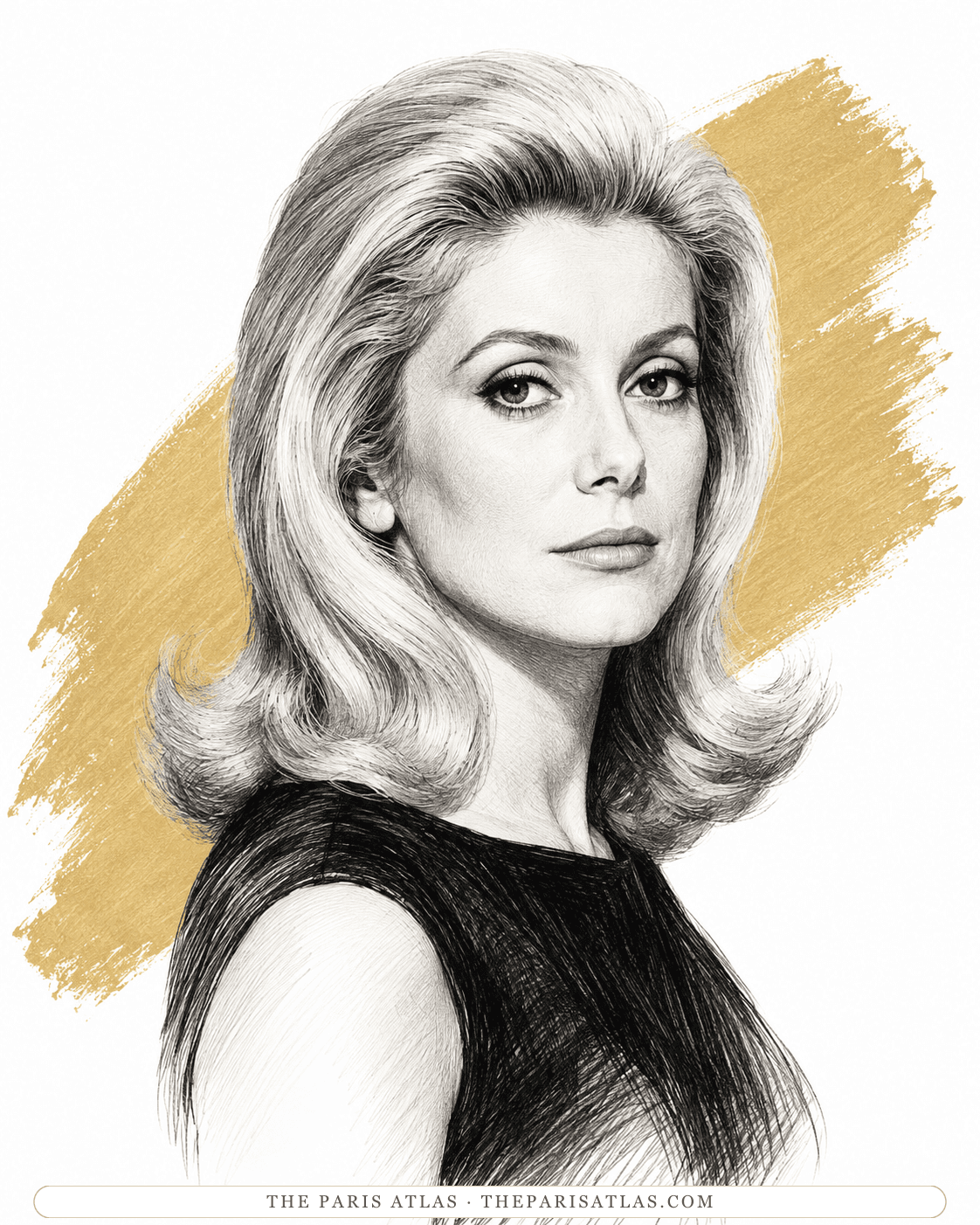
Vadim directed Deneuve in Vice and Virtue after they began a personal relationship; they had a son, Christian Vadim.
Collaborated with · 1959
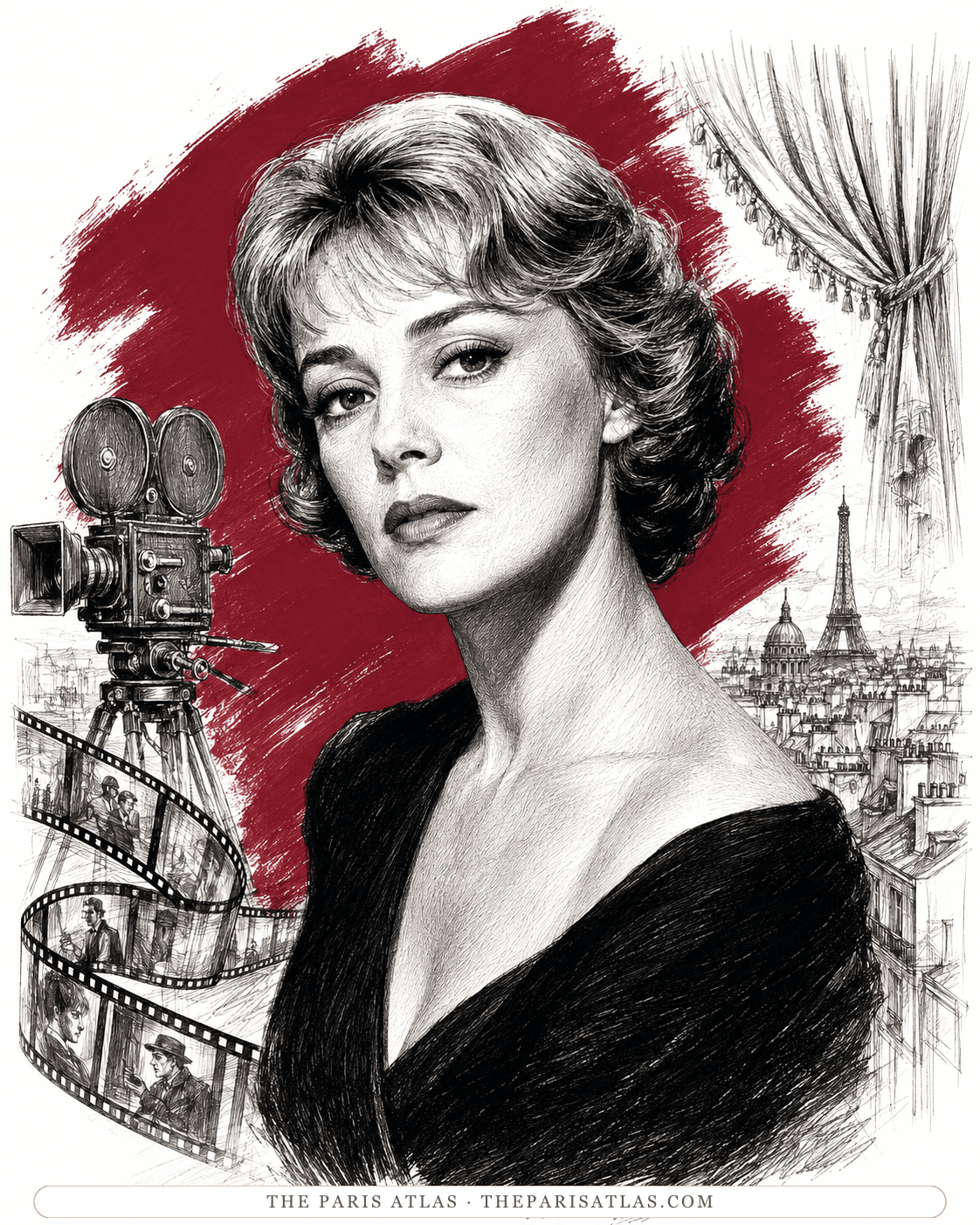
Vadim directed Jeanne Moreau as Juliette de Merteuil in his 1959 adaptation of Dangerous Liaisons.
Collaborated with
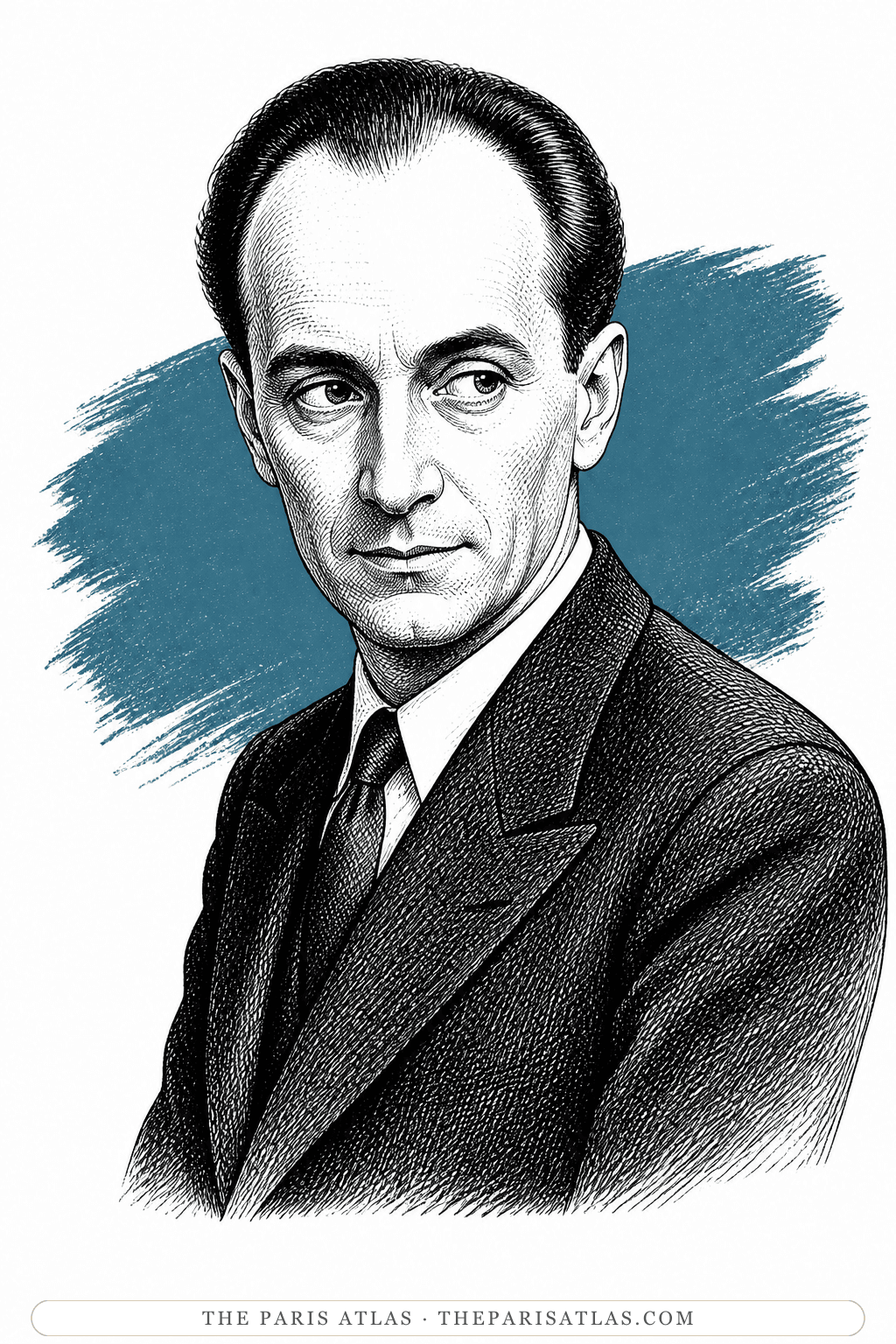
Vadim worked as Marc Allégret's assistant and later as a screenwriter, learning filmmaking within Allégret's productions.
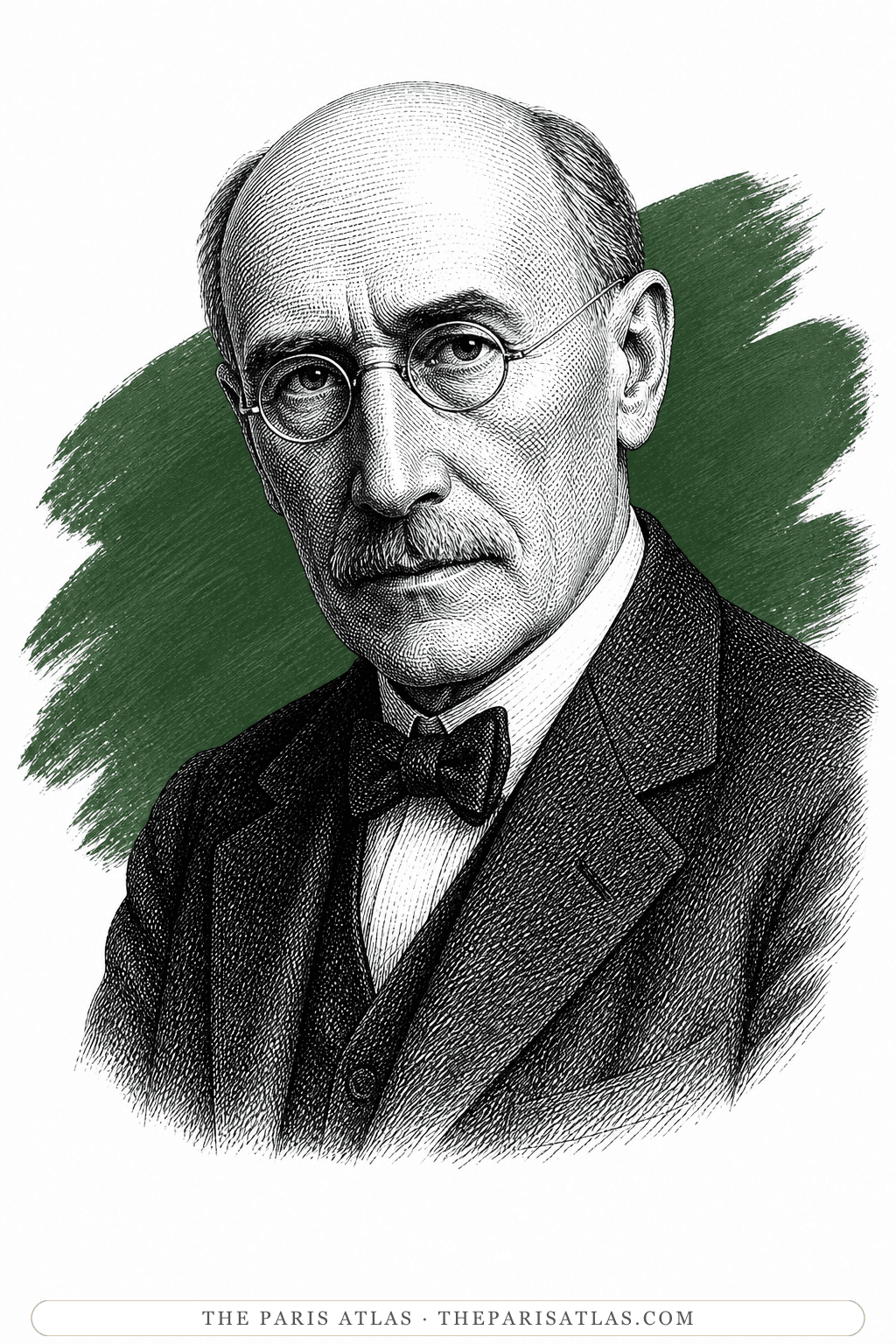
Met
Vadim knew André Gide, who introduced him to filmmaker Marc Allégret after the war.
Collaborated with · 1956–1957
Vadim directed Bardot in And God Created Woman (1956), the film that made her an international star, and again in The Night Heaven Fell (1957).
Collaborated with · 1961–1963
Vadim directed Deneuve in Vice and Virtue after they began a personal relationship; they had a son, Christian Vadim.
Collaborated with · 1959
Vadim directed Jeanne Moreau as Juliette de Merteuil in his 1959 adaptation of Dangerous Liaisons.
Collaborated with
Vadim worked as Marc Allégret's assistant and later as a screenwriter, learning filmmaking within Allégret's productions.
The sources below include biographies, scholarly essays, interviews, and primary materials that informed this page. They reflect both the historical record and ongoing critical conversations about Roger Vadim and their work.


Critical essay on the film's style, reception, and cultural impact.

Film record and overview of Vadim's debut and Bardot's breakthrough.
Authority record confirming Vadim's identity, dates, professions, and catalogue record.
Data record and filmography for Vadim's life and screen work.
Production record for And God Created Woman.
Production record for Les Liaisons dangereuses 1960.
Production record for Barbarella and its creative team.
Cinémathèque discussion of Jane Fonda and Barbarella.
Interview documenting the costume design of Barbarella.
Official film record confirming The Night Heaven Fell as a 1958 Roger Vadim release.
Museum program note on Barbarella's pop aesthetics and afterlife.
Studio record for Barbarella's cast, credits, and release.
Critical history placing Blood and Roses within French fantastique and vampire cinema.
Contemporary French obituary covering Vadim's career and death.
Contemporary report on Vadim's burial and funeral attendees.
Detailed contemporary obituary covering Vadim's childhood, Paris career, films, marriages, and children.
Contemporary report of Vadim's death.
Contemporary obituary covering his journalism, films, relationships, memoirs, theater work, and survivors.
Contemporary obituary corroborating Vadim's death and career.

Scholarly book on cinema, sexual modernity, Bardot, and Barbarella.
British Film Institute context for Bardot's career and cultural impact.
French audiovisual archive material on Bardot, Vadim, and And God Created Woman.
These references anchor the page in the documented record and in the scholarly conversations around Roger Vadim. Every claim on this page traces back to one or more of the works listed here.
 Explore more resources