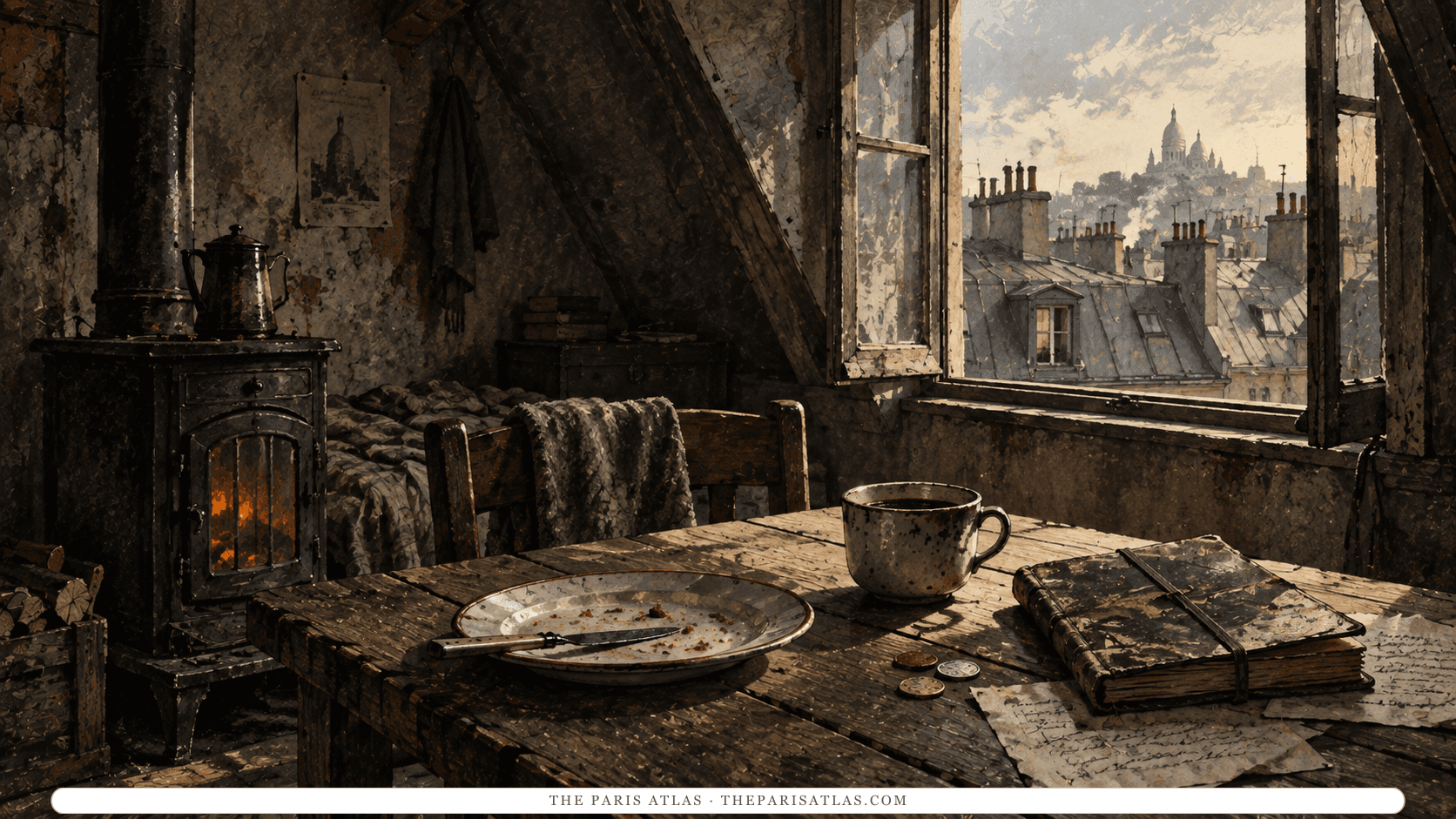
Paris on an empty stomach
The expatriate city as it was actually lived — cafés, cold flats, and hunger as a muse.
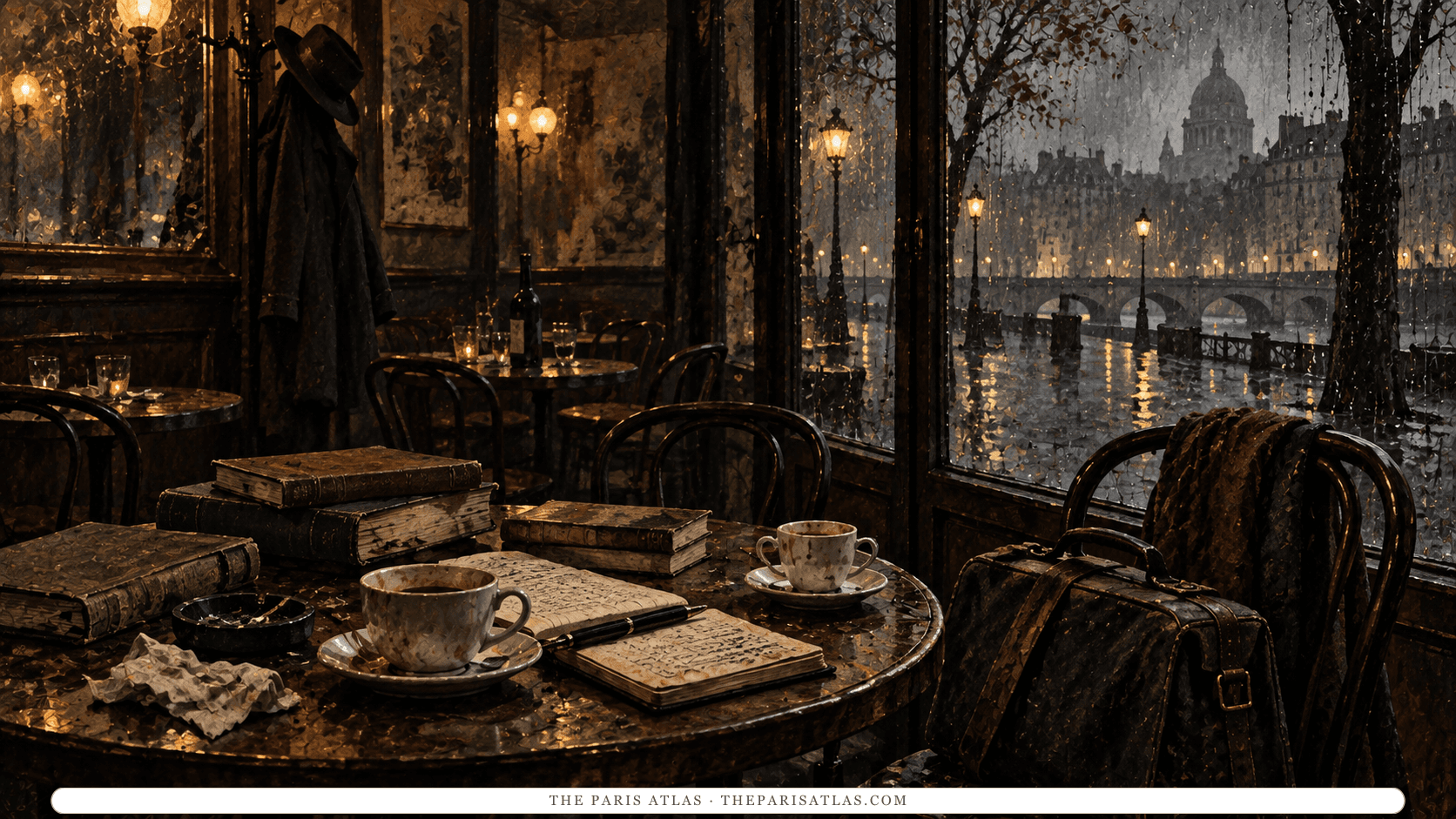
'You are all a lost generation,' Gertrude Stein told the young Hemingway, and he pinned the line to the front of a novel and made it permanent. This list is our answer to the reader who asks where to actually begin with the writers who came out of the Great War and into the cafés of Paris.
The rule for inclusion: each book had to carry a piece of the era no other book on the list carries — the war itself, the expatriate party, the poverty, the poetry, and the long look back. Read all eight and you've walked the whole arc.

The essential one
The center of the shelf and the novel that named the generation. Expatriate Paris and the Pamplona fiesta, drawn from life so directly that half the era's gossip is in it — and underneath the drinking, the flattest sadness in American fiction.

The wound
The wound the whole era limps on. If Sun is the hangover, this is the night before: the Italian front, the retreat from Caporetto, and the paragraph about 'abstract words' that buried a century of war rhetoric.

The dark twin
The French answer, and the era's blackest masterpiece. Céline's Bardamu goes through the same war and comes out laughing — horribly. No book on this list divides readers harder, and none is more influential.

The memory
The era remembering itself. Hemingway's late memoir of the Paris years is the source of half the mythology — the cafés, the hunger, the one true sentence — and it earns its place even where it fibs.

The scandal
What the myth looked like after the money ran out. Miller arrived in 1930, too broke and too late for the party, and wrote the exuberant gutter-testament that got banned for a generation.

The poem
The poetry entry, and the shortest way into the era's presiding intelligence. Pound's farewell to London contains the war's bitterest elegy — eighteen pages, an evening's read, permanent.

The style being invented in real time. The early stories, shaped in Paris under Pound's blue pencil, with war flashes between them — the modern short story's birth certificate.

The coda
The coda. Written a quarter-century after Paris, when the youngest of the generation was old — the discipline they invented, distilled to one man, one fish, and 127 pages.
The expatriate city as it was actually lived — cafés, cold flats, and hunger as a muse.
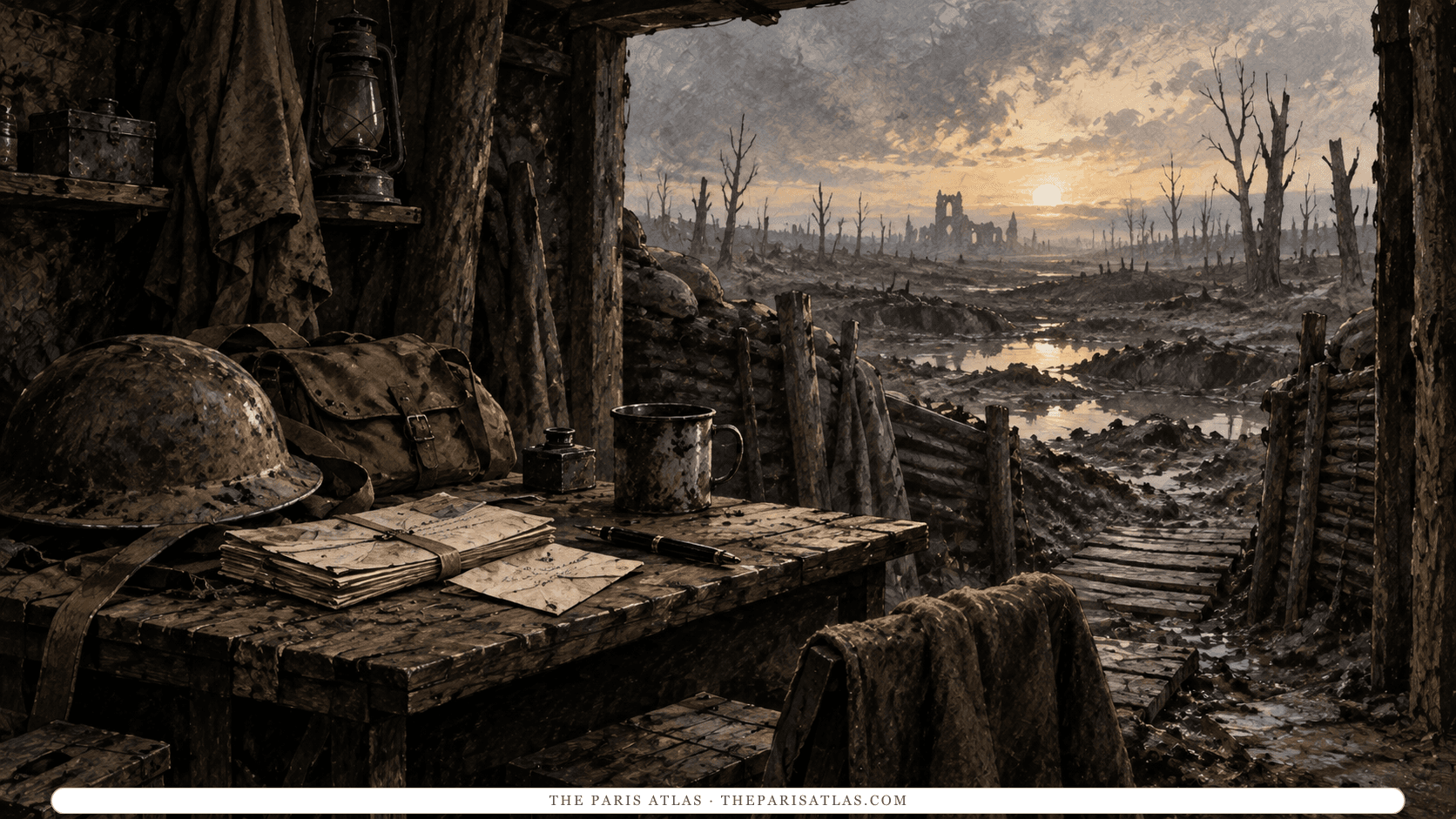
The Great War as the generation's authors actually wrote it — grief, fury, and the end of the big words.
The sources below include primary texts, publication records, archives, and literary history used to frame this reading list and its selections.

Used for the Lost Generation's historical frame and the group of writers associated with it.
Primary text used for the list's account of expatriate Paris and the generation the novel named.
Primary text used for the French wartime and postwar perspective represented on the shelf.
Primary text used for Hemingway's retrospective account of the Paris literary circle.
These references document the historical and bibliographic context behind the list. The ordering and recommendations remain editorial judgments by The Paris Atlas.
 Explore more resources
Newsletter
One book, one honest argument for it, and what to read next. Written by a person, sent on Fridays.