
Giovanni's Room
Both books examine men whose desire collides with the identity and social future they believe they should want.
Read our take
by Edmund White
A boy learns shame early and tries every available way to turn himself into someone else.
White's narrator knows he is attracted to boys but spends his youth hoping, scheming, and seeking treatment in an attempt to become heterosexual. The comedy never erases the damage of that shame.
The narrator grows up amid parental estrangement, class anxiety, school humiliations, artistic ambitions, and a powerful attraction to other boys. His early sexual encounters are mixed with tenderness, experimentation, embarrassment, and fear. A brief relationship with the younger Kevin O’Brien gives him an experience of physical intimacy before he has developed a stable identity around it. At the same time, his father’s emotional distance, his mother’s dependency, and his sister’s mockery intensify his sense that he is failing conventional expectations of masculinity.[1]
As he grows older, the narrator repeatedly attempts to escape his homosexuality rather than understand it. He imagines heterosexual romance, turns toward religion and philosophy, seeks psychoanalysis, and even asks to attend an all-male boarding school because he irrationally hopes constant exposure to boys will somehow cure his attraction to them. He becomes fascinated with male friends, teachers, and older men, often turning admiration into desire while trying to tell himself that the desire is temporary, symbolic, or something he can control.[1]
The final movement of the novel brings his contradictions into sharp focus. He enters a sexual relationship with an older teacher, Mr. Beattie, but instead of allowing the experience to lead toward self-acceptance, he betrays the teacher to the school authorities. The act gives the narrator a temporary way to distance himself from what has happened, but the adult voice recognizes it as a profound moral failure. The book ends not with liberation but with a painful demonstration of how shame can turn inward conflict into harm done to another person.[1]
A boy narrates the desires, deceptions, and attempts at self-correction that shape his adolescence.
The novel opens with the narrator already aware of his attraction to boys. His experiences with Kevin O’Brien and other boys offer glimpses of intimacy, but he has absorbed the belief that his desire makes him abnormal. His parents’ broken marriage, his father’s distance, and his sister’s mockery deepen his fear that he has failed the family’s expectations of masculinity.
During visits with his father, the narrator encounters older boys and men whose confidence fascinates him. A local man takes his money after promising a trip to New York and later introduces him to a hustler. At camp and school, desire attaches itself to friendship, including an unreturned attraction to Tom. The narrator keeps treating these feelings as evidence of a problem that must be solved.
He experiments with heterosexual fantasies, religion, philosophy, and psychoanalysis. Father Burke describes homosexuality through Catholic moral teaching, while Dr. O’Reilly offers a medicalized theory tied to family relationships. The narrator even asks to attend an all-male boarding school, hoping constant exposure to boys will somehow extinguish his attraction to them.
At boarding school, a cultivated married teacher claims that marriage, religion, and discipline allowed him to move beyond homosexual desire. The example strengthens the narrator’s hope that he can transform himself, even as the adult narrator lets readers see the cost of building a respectable life around denial.
The narrator later becomes involved with Mr. Beattie, an unconventional older teacher associated with jazz and marijuana. He seduces Beattie and then reports him to school authorities. Beattie is dismissed. The boy tells himself that exposing the teacher proves he merely used him and need not identify with him, but the adult narrator recognizes the betrayal as a lasting moral failure.
The narrator’s encounter with Mr. Beattie brings his desire and his fear of that desire together. He seeks intimacy with the teacher, then helps destroy Beattie’s position at the school.
Reporting Beattie lets the narrator recast the older man as corrupt and separate from himself. That explanation protects the fantasy that the encounter need not reveal anything about his identity, but it also sacrifices a person who trusted him.
The ending is not a coming-out or a scene of self-acceptance. The narrator has gained experience without gaining the courage to live honestly. White closes childhood by showing that shame is not only an inward feeling: it can become an ethical failure when it is turned against someone else.
Later volumes continue the narrator’s development, but this novel ends as a complete account of an adolescence in which self-knowledge arrives more slowly than adult consequences.
The narrator does not simply fear sexual acts with men. He fears what those acts supposedly make him. His wish to love men without being socially classified as homosexual drives his interest in religion, psychoanalysis, heterosexual romance, and every promised cure.
Shame becomes an active force rather than a private embarrassment. It shapes the narrator’s disguises, rationalizations, and final betrayal of Mr. Beattie. White shows how a culture’s condemnation can become internal discipline long before an authority figure enters the room.
The narrator’s distant father represents a conventional masculinity the boy both desires and believes he has failed to embody. His sister’s athletic confidence earns the approval he wants, while his mother becomes entangled in period theories that wrongly treat maternal closeness as a cause of homosexuality. The novel does not reduce desire to family dynamics; it shows how family life shapes the language through which the narrator experiences it.
Books, paintings, music, and intellectual life offer the narrator beauty and alternative worlds, but taste can also become another mask. Religious and psychoanalytic authorities promise an explanation of his desire, yet both reinforce his hope that he can become somebody else. Knowledge helps him describe himself without necessarily making him honest.
White writes in a retrospective first person that combines psychological precision with highly worked, sensuous prose. The adult narrator’s intelligence constantly reshapes adolescent memory, so scenes feel immediate while also carrying the judgment of someone who now understands their consequences.
The writing is lyrical without becoming sentimental. Beauty can be interrupted by irony, comic observation, selfishness, or cruelty. The narrator is observant and vulnerable, but also vain, manipulative, frightened, and capable of harming others; White never turns him into a morally purified victim.
The book is structured as a sequence of memories rather than a conventional external quest. Its continuity comes from the narrator’s changing attempts to explain his sexuality. Each school, friendship, mentor, belief system, or encounter seems to offer a solution and instead reveals another version of the same conflict.
E. P. Dutton first published A Boy’s Own Story in New York on September 28, 1982. The 217-page novel became the first volume of White’s autobiographical trilogy, followed by The Beautiful Room Is Empty in 1988 and The Farewell Symphony in 1997. Later editions include a 1983 New American Library paperback, a widely circulated 2009 Penguin paperback, a 2014 Open Road Media ebook, and Picador and Pan Macmillan reissues.
The novel has appeared in multiple languages, but translation histories vary by country and edition. Translator names and dates should be attached only to verified publisher or national-library records rather than inferred from incomplete listings.
A graphic-novel adaptation appeared in 2023, adapted by Brian Alessandro and Michael Carroll with illustrations by Igor Karash. No major feature-film or television adaptation was verified in the available production sources. A 1998 short film has the same title, but no source consulted establishes it as an adaptation.
It goes directly to the beginnings of the self-deception that defines David in Giovanni's Room.
The narrator’s schemes can be funny while the shame behind them remains serious.
The account shows how an effort to appear acceptable can govern intimate choices long before adulthood.

A gifted but unreliable self-interpreter looking back on the shame, longing, and betrayals of his adolescence.

An unconventional teacher whose encounter with the narrator leads to the novel’s moral climax.

A younger friend whose comparative spontaneity gives the narrator an early experience of same-sex intimacy.

A distant, conventionally masculine parent whose approval the narrator both craves and resents.

The primary parent whose closeness becomes distorted by the period’s false psychological theories about homosexuality.

An athletic sibling whose mockery reinforces the narrator’s insecurity about masculinity.

A friend whose unreturned attraction teaches the narrator how sharply friendship and hidden desire can diverge.

A girl onto whom the narrator projects the heterosexual future he thinks he should want.

A Catholic authority who interprets the narrator’s desire within a framework of sin and correction.

A psychoanalyst who treats homosexuality as a family-caused condition that might be cured.

Intellectual mentors whose respectable household makes denial look like a possible adult solution.

Two adult gatekeepers who reveal how adolescent desire can create vulnerability to people with greater knowledge and power.
1982
E. P. Dutton publishes the first U.S. edition in New York.
1983
New American Library issues a paperback edition.
1988
The Beautiful Room Is Empty continues White’s autobiographical sequence.
1997
The Farewell Symphony completes the commonly recognized trilogy.
2009
Penguin publishes a widely circulated U.S. paperback edition.
2014
Open Road Media publishes an ebook edition.
2023
Brian Alessandro and Michael Carroll adapt the novel as a graphic novel illustrated by Igor Karash.
Both books examine men whose desire collides with the identity and social future they believe they should want.
Read our take
Like White’s narrator, Kochan builds a socially acceptable self while privately experiencing desire that contradicts expected masculinity.
Read our take
Hollinghurst’s novel looks at a later gay male world and the histories of concealment that made it possible, offering a generational counterpoint to White’s adolescence.
Read our takeYes, but it is autobiographical fiction rather than a literal memoir. White used the novel form to alter events and resist the expectation that every episode was a factual transcription of his life.
The central narrator is generally treated as unnamed. Some criticism calls him Edmund because of the book’s autobiographical basis, but the fictional narrator should not be collapsed into the author.
Its memories cover childhood and adolescence in the American Midwest during the 1940s and 1950s, narrated from a later adult vantage point.
Not in the modern sense of a story ending with public self-identification and acceptance. The narrator recognizes his desire but continues trying to escape the identity attached to it.
He paradoxically believes constant exposure to boys will normalize them and reduce his attraction, showing how desperate and illogical his attempts at conversion have become.
It represents a historically influential framework that treated homosexuality as a psychological disorder caused by family dynamics and therefore potentially curable.
He wants to distance himself from what their encounter means. Recasting Beattie as a corrupt adult he can expose lets him pretend he merely used the teacher rather than identifying with him.
No. He is an adult teacher in a sexual relationship with a student and violates institutional boundaries. The narrator’s betrayal still matters because he first seeks intimacy and then weaponizes authority to protect himself from shame.
The Beautiful Room Is Empty continues the autobiographical project, and The Farewell Symphony follows the narrator into later gay literary and social life and the AIDS era.
A graphic-novel adaptation appeared in 2023, adapted by Brian Alessandro and Michael Carroll with art by Igor Karash. No major film or television adaptation was verified in the available production sources.
Explore authors with a similar voice, perspective, and influence.

American poet and novelist of Los Angeles rooming houses, racetracks and the post office, who quit his job to write when a publisher offered him a hundred dollars a month. He came to Paris once, in September 1978, drank his way through a live television book programme and walked off the set — and French television has been replaying it ever since.
View author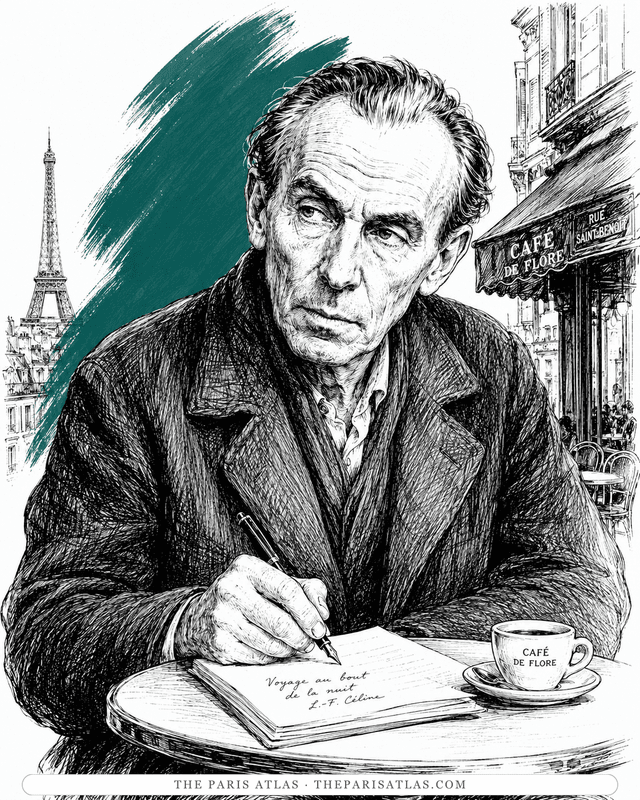
The doctor of the Paris slums who wrote the century's blackest, funniest novel — and changed the sound of French prose.
View author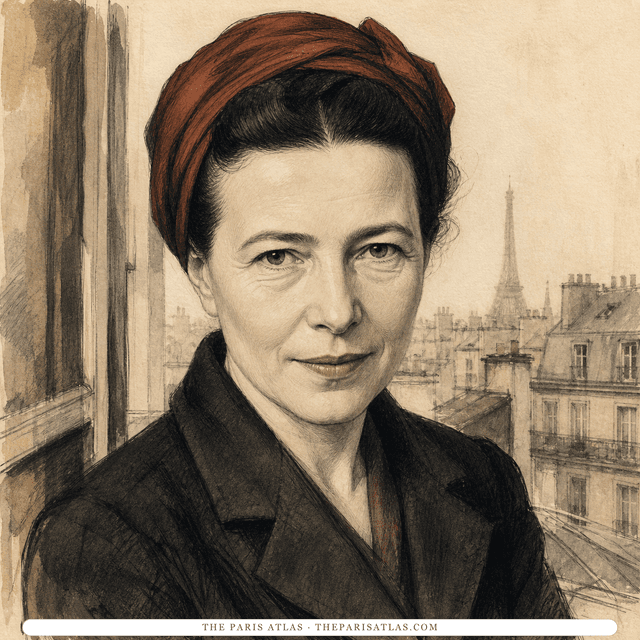
French writer and philosopher whose novels, memoirs, and social analysis examined freedom, gender, responsibility, aging, and the material conditions that shape a life.
View authorThe sources below include the primary text, editions, scholarship, archival materials, and other records that informed this page. They document A Boy's Own Story, its publication, and its place in literary history.


Google Books catalogue record used to cross-check the title and edition metadata.
Internet Archive ISBN catalogue used to cross-check the edition and its availability in library holdings.
Library of Congress books catalogue used to cross-check the bibliographic record by ISBN.
Publisher record for the edition history and graphic-novel adaptation.
University archive record for Edmund White and the autobiographical trilogy.
The primary text is the baseline reference for every book page. Additional references document publication history, interpretation, and historical context where that evidence is available.
 Explore more resources