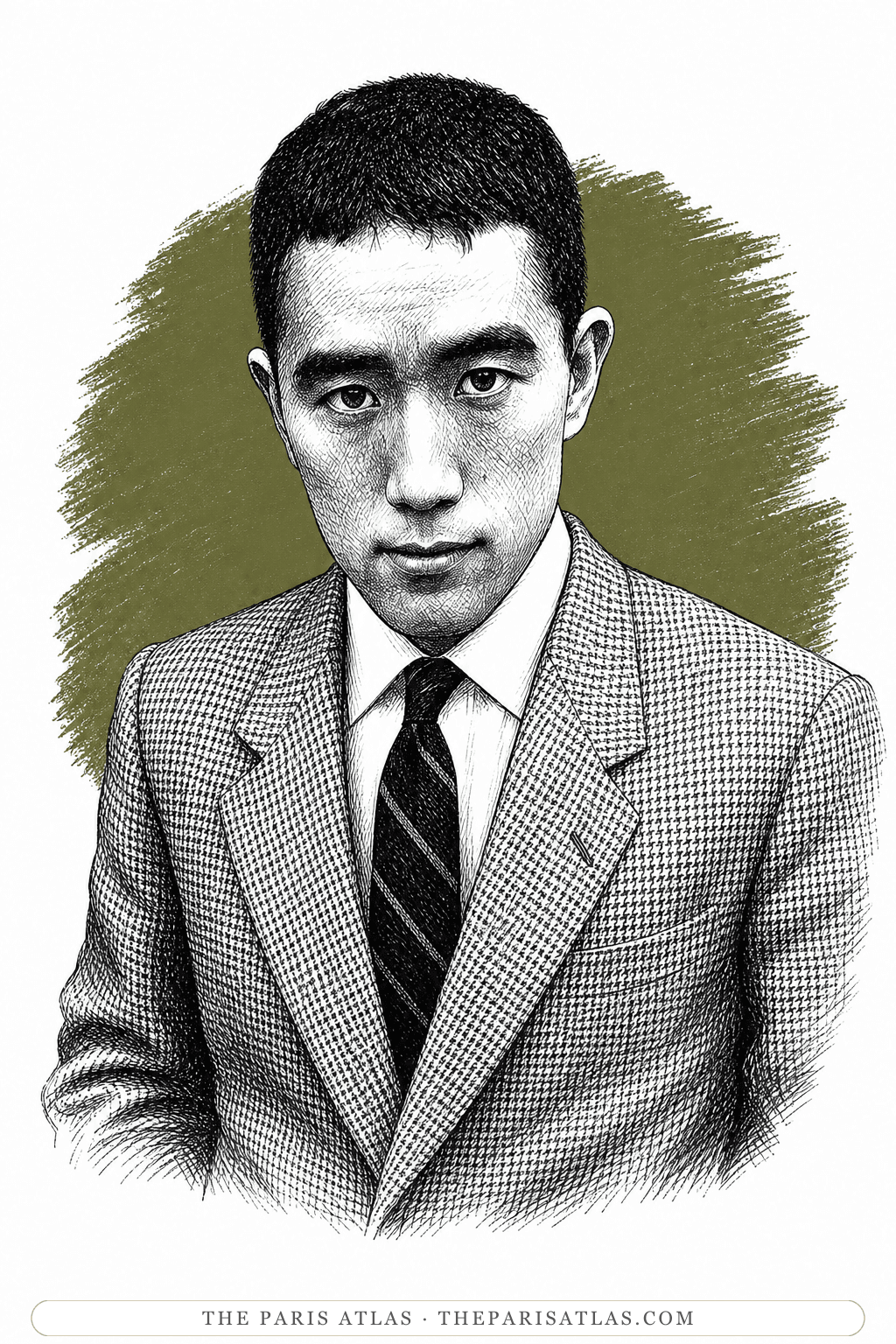

Giovanni's Room
Both novels explore denial, heterosexual courtship, and the damage created when a man tries to force himself into an identity he cannot inhabit honestly.
Read our take
A young man performs the life expected of him and hopes the performance will eventually become real.
Mishima's narrator learns that his desires do not match what others expect, so he constructs an acceptable self. The split between desire and performance becomes exhausting and impossible to ignore.
Kochan grows up under the strong influence of his grandmother and apart from many ordinary childhood experiences. He is physically delicate and drawn to images that combine masculine beauty with danger, suffering, or death. As he matures, these private fantasies become unmistakably erotic. At school he becomes fascinated by Omi, an older, physically confident boy who seems to embody everything Kochan believes he lacks.[1]
As Japan moves through wartime, Kochan tries to construct a socially acceptable future. He meets Sonoko, the sister of a school acquaintance, and begins courting her. His affection for her is real, but he repeatedly tests himself for a sexual response that does not arrive in the form he believes it should. The possibility of marriage forces him to confront the gap between tenderness, social aspiration, and erotic desire.[1]
After the war, Kochan and Sonoko meet again even though she has married. Their continuing attachment cannot solve his fundamental conflict. In the closing scene, Kochan's attention is captured by the body of a young man, and the violent erotic fantasy that follows makes clear that the identity he has tried to suppress remains intact.[1]
A young Japanese man attempts to desire women and behave correctly while concealing the self beneath the performance.
Kochan begins by describing an unusual childhood dominated by illness, isolation, and his possessive grandmother. He remembers being drawn to figures and stories that mix beauty with suffering. He is fascinated by masculine laborers and by heroic or doomed bodies. An early episode involving an image of Joan of Arc reveals his disappointment when a warrior he imagined as male turns out to be a woman.
A decisive awakening occurs when Kochan encounters Guido Reni's painting of Saint Sebastian, which depicts the nearly naked male saint bound and pierced by arrows. The image fuses physical beauty, exposure, pain, and death in a way that becomes powerfully erotic for him. This connection between desire and imagined violence continues throughout the novel.
At school Kochan becomes obsessed with Omi, an older and more physically mature boy. Omi's roughness, confidence, body, and disregard for rules represent a masculinity Kochan both desires and envies. Omi is eventually expelled, but the attachment establishes a pattern in Kochan's desire.
Through his friend Kusano, Kochan meets Kusano's sister Sonoko. He is moved by her gentleness and begins pursuing her. Their courtship offers him a possible path into marriage and conventional adulthood, and he sometimes mistakes his desire for that normal future for sexual desire for Sonoko herself.
When marriage becomes a serious possibility, Kochan panics. He knows he cannot honestly promise Sonoko the kind of desire on which he believes marriage should be based. He withdraws and damages the relationship rather than continue toward an engagement under false pretenses. An attempt to manufacture heterosexual proof through contact with a woman only reinforces the gap between performance and desire.
After the war Sonoko has married another man. She and Kochan meet again, and their encounters carry tenderness, nostalgia, and danger. Sonoko's presence exposes the cost of the mask: it does not merely protect Kochan; it also draws another person into a relationship whose limits he cannot explain without revealing himself.
In the final social scene, Kochan is with Sonoko when he becomes fixated on a muscular young man. His imagination turns immediately toward the man's body and fantasies of violent injury. Sonoko continues speaking while Kochan mentally leaves the conversation. The scene closes without a transformation or cure: the desires beneath the mask remain unchanged.
The ending refuses the conversion narrative Kochan has repeatedly tried to write for himself. Sonoko represented the hope that affection, social pressure, and willpower might turn him into the heterosexual man society expects. His final distraction shows that the effort has not altered the basic direction of his desire.
Sonoko is not revealed to have been meaningless. Kochan's feelings for her include affection, protectiveness, nostalgia, and a wish for an ordinary future. What fails is his attempt to make those feelings perform the work of a desire he does not experience.
The confession is therefore paradoxical. Kochan can describe the mask in extraordinary detail to the reader, but he has not simply removed it within his social world. The novel's honesty exists on the page while the character continues to live through concealment.
Kochan's performance of normality begins as protection from exposure, but over time he directs the performance partly at himself. He repeatedly constructs tests meant to prove that he is becoming the person he is supposed to be. The mask hides him from others while distorting his ability to interpret his own feelings.
Strength, muscles, labor, uniforms, and bodily confidence fascinate Kochan. The Saint Sebastian image establishes the recurring union of male beauty with injury and death. Desire is inseparable from envy, self-judgment, and a violent imagination, giving the novel a darker psychology than a simple story of hidden orientation.
Sonoko becomes the human form of a life Kochan has been taught to imagine as safe and legitimate: courtship, marriage, family, and social acceptance. His inability to desire that life in the expected way turns her into both a beloved person and an impossible solution.
Wartime Japan creates a world in which death is expected and ordinary plans feel provisional. Kochan sometimes imagines that war may rescue him from having to build a conventional adult life. When the war ends, the future returns, along with the problem of how he will live.
The narrator is highly articulate but not always reliable about his motives. He can analyze a feeling while inventing a more acceptable explanation for it. The reader watches him create interpretations in real time rather than simply choosing whether to believe him.
Published in 1949, the book reflects the social and conceptual vocabulary of its period. Kochan clearly experiences same-sex desire, but the novel concentrates on the lived mechanics of concealment, shame, fantasy, and performance rather than supplying a stable modern identity label.
Confessions of a Mask uses an intense first-person voice that combines memory with self-analysis. Kochan narrates his development almost as if he were both patient and examiner, searching earlier memories for evidence of the person he became. The prose can be coolly analytical one moment and lushly visual the next.
Mishima frequently builds scenes around images rather than external action. A painting, a body in motion, a uniform, a gesture, or a remembered physical detail can carry more narrative weight than a conventional plot event. Psychological recognition advances the story.
The style also depends on irony. Kochan often announces a theory about himself that the surrounding details undermine. This gap between explanation and evidence is one way the reader sees the mask operating from inside the mind of the person wearing it.
The novel contains strong autobiographical parallels, but Kochan is not a documentary transcription of Yukio Mishima. Its confessional form deliberately brings narrator and author close while preserving the shaping, selection, and invention of fiction.
Kawade Shobō first published Kamen no kokuhaku in Japan in 1949. New Directions issued Meredith Weatherby's English translation in 1958, and that translation has remained the standard English text through many reissues. New Directions released a modern paperback in 2015, and Penguin Modern Classics issued a UK edition in 2017. Translator and date details for other languages should be checked edition by edition.
No major direct feature-film or television adaptation of Confessions of a Mask was verified in the publisher and bibliographic sources consulted. Films about Mishima and adaptations of his other works are separate works and should not be labeled as adaptations of this novel.
Few books come closer to Baldwin's split between what a man wants and whom he believes he must appear to be.
The narrator’s awareness of his own performance makes self-description a problem for readers to examine.
The pressure to appear conventional is shown through intimate decisions rather than left as an abstract theme.

The self-observing narrator who builds a socially acceptable identity around desires he believes must remain hidden.

The young woman Kochan courts, whose genuine affection becomes his strongest test of a conventional future.

The older schoolboy whose physical confidence embodies the masculinity Kochan both desires and envies.

Kochan's school friend and Sonoko's brother, who brings the narrator into her family circle.

The possessive caregiver whose authority and protectiveness shape Kochan's isolated childhood.

A caring mother whose access to her son is constrained by the grandmother's family authority.

A reserved father who represents the conventional family and adult structures Kochan is expected to enter.

The respectable family circle that turns Kochan's private experiment in normality into a possible marriage.
1949
Kawade Shobō first publishes Kamen no kokuhaku in Japan.
1958
New Directions publishes Meredith Weatherby's English translation in the United States.
2015
New Directions issues a modern paperback reissue of the Weatherby translation.
2017
Penguin Modern Classics issues a UK edition, also translated by Weatherby.
Both novels explore denial, heterosexual courtship, and the damage created when a man tries to force himself into an identity he cannot inhabit honestly.
Read our take
Vidal's near-contemporary novel offers an American comparison for male homosexuality and social expectation.
Read our take
Forster's novel provides an earlier contrast in which male love can be imagined as a shared life rather than permanent concealment.
Read our takeIt contains strong autobiographical parallels, but it is a novel. Kochan should not be treated as a documentary transcription of Yukio Mishima.
It is Kochan's socially acceptable persona: the appearance of conventional masculinity and heterosexuality that conceals desires he believes cannot be shown openly.
Omi is an older, physically confident schoolboy whom Kochan desires and idealizes.
Guido Reni's image of the bound, wounded saint triggers a decisive erotic awakening and establishes the novel's link between male beauty, pain, and death.
He has genuine affection for her, but affection does not create the sexual desire he is trying to prove he possesses.
No. He retreats when marriage becomes realistic, and Sonoko later marries another man.
It follows Kochan from childhood through wartime Japan and into the immediate postwar period.
Meredith Weatherby translated the first English edition, published by New Directions in 1958.
No major direct feature-film or television adaptation was verified in the available production sources.
While with Sonoko, Kochan becomes intensely attracted to a young man's body, confirming that his attempted heterosexual self-reinvention has not changed his underlying desire.
Explore authors with a similar voice, perspective, and influence.
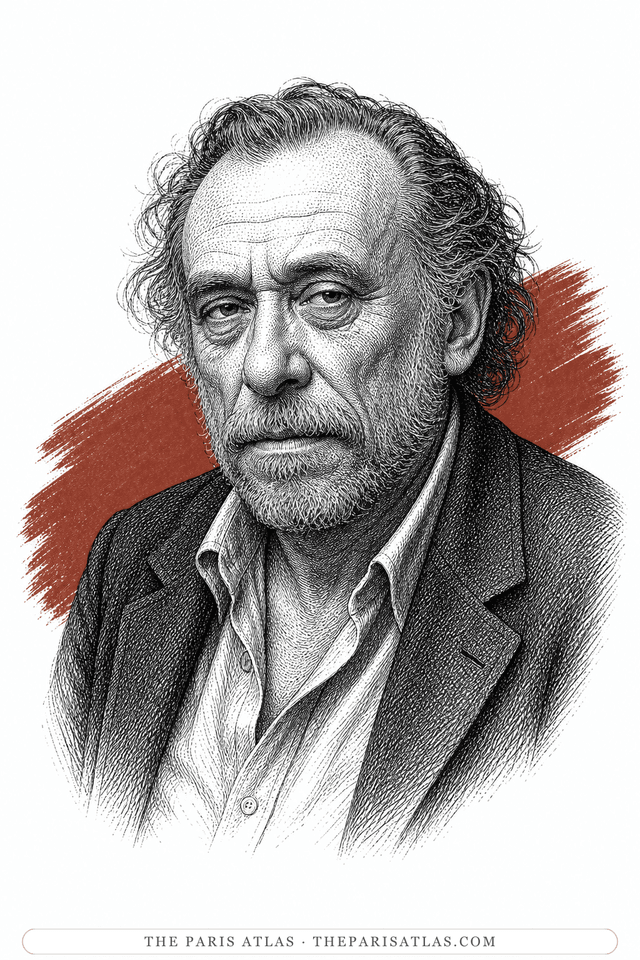
American poet and novelist of Los Angeles rooming houses, racetracks and the post office, who quit his job to write when a publisher offered him a hundred dollars a month. He came to Paris once, in September 1978, drank his way through a live television book programme and walked off the set — and French television has been replaying it ever since.
View author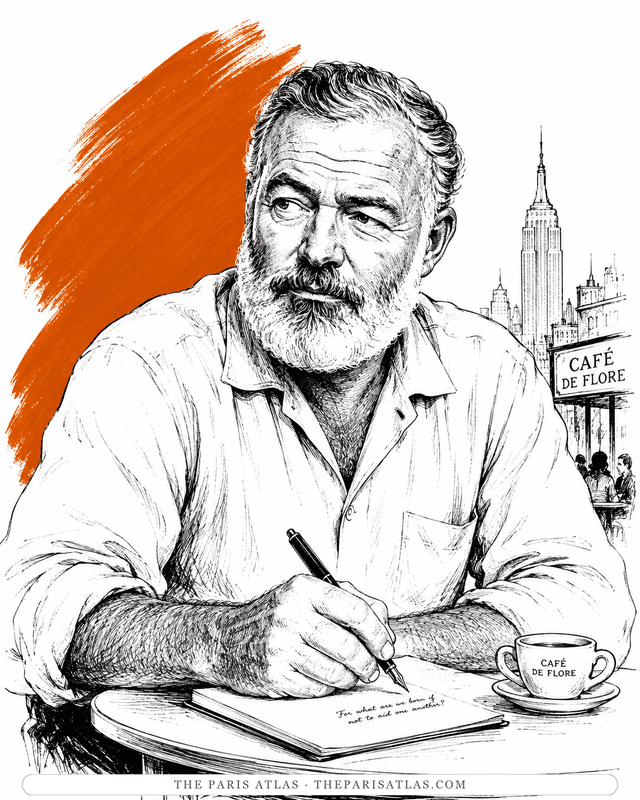
Author of The Sun Also Rises and A Moveable Feast; his pared-down style, developed in 1920s Paris, became the most imitated in American prose.
View author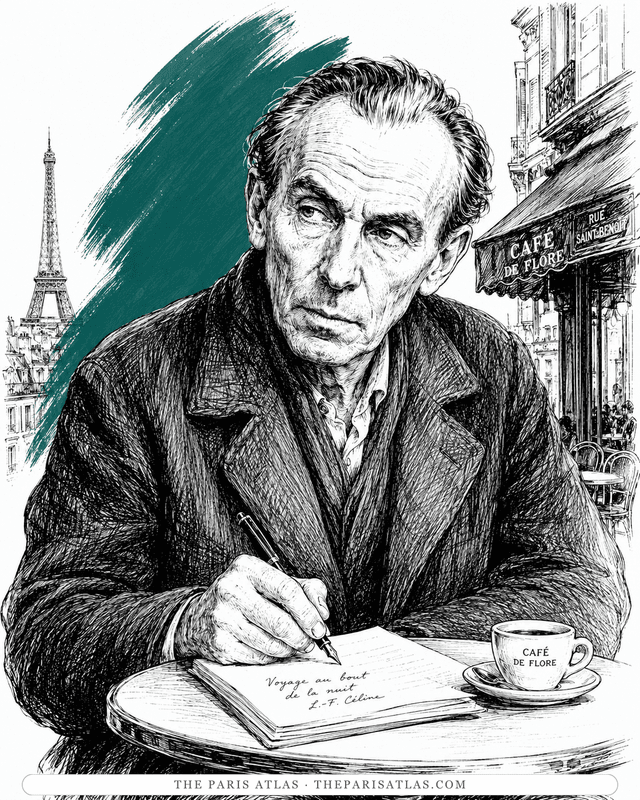
The doctor of the Paris slums who wrote the century's blackest, funniest novel — and changed the sound of French prose.
View authorThe sources below include the primary text, editions, scholarship, archival materials, and other records that informed this page. They document Confessions of a Mask, its publication, and its place in literary history.


Google Books catalogue record used to cross-check the title and edition metadata.
Internet Archive ISBN catalogue used to cross-check the edition and its availability in library holdings.
Library of Congress books catalogue used to cross-check the bibliographic record by ISBN.
WorldCat record verifies the 1958 New Directions edition and Meredith Weatherby's translation.
Japan's National Diet Library independently verifies the 1958 English edition and its source title.
Official publisher page verifies the current edition, core character framework, and continuing English publication history.
Official Penguin UK page verifies the Penguin Modern Classics edition and translator credit.
The primary text is the baseline reference for every book page. Additional references document publication history, interpretation, and historical context where that evidence is available.
 Explore more resources