
Olivia
Chloe’s laboratory colleague in the invented novel, with scientific work and children to return home to.
The book

Who they are in the book
Spoiler-freeOlivia is Chloe's colleague in the laboratory of Mary Carmichael's imagined novel, Life's Adventure. Virginia Woolf introduces that novel in Chapter Five of A Room of One's Own. Olivia combines scientific work with responsibility for children, and Chloe's attention makes that combination a subject for fiction.
A woman seen while doing something
Olivia puts down a jar before leaving the laboratory. The small action matters because the narrator has been considering how narrowly women are often represented in books. A woman working with another woman can become interesting through the movement of her hands, her concentration, and the demands upon her time.
The laboratory gives the relationship an activity and a place. Olivia is not simply a beautiful or mysterious object of Chloe's feelings. She is someone with work to finish and another destination to reach. That practical setting allows affection to arise within the ordinary details of a life.
Work and motherhood occupy the same life
The narrator believes Olivia has two small children. The qualification belongs to the account: Woolf does not provide a family tree or a firm biography. What is clear is that Olivia leaves the shared workplace to return to her children. The departure places professional and domestic responsibilities beside one another.
The episode does not resolve the difficulty of combining those responsibilities. It makes the combination available to a novelist's attention. A reader can ask how the competing demands affect Olivia without pretending that Carmichael's imagined book supplies an answer to every question.
Why being liked becomes a literary event
The narrator's excitement concerns a relationship among women that has significance in its own right. Chloe's liking for Olivia allows the women to be represented through their attention to one another. Their connection does not have to wait for a male character to authorize its interest.
Olivia therefore helps Woolf connect material opportunity with literary form. Education and access to work change what women can do; those experiences also change what writers can describe. The laboratory scene joins the essay's practical argument about resources to its artistic argument about subjects that fiction has barely begun to explore.
Sources and passages
- Virginia Woolf, A Room of One's Own, Chapter Five
Primary text: Olivia's laboratory work, her departure for her children, the narrator's qualified recollection, and the discussion of relationships among women.
How Olivia Is Portrayed
- A colleague whom Chloe likesOlivia is the woman named in Mary Carmichael’s statement about Chloe’s liking. The narrator considers what becomes possible when fiction attends to such relationships.
- Scientific workOlivia shares Chloe’s work preparing liver in a laboratory. The passage connects their task with research on pernicious anemia.
- An ordinary working gestureChloe watches Olivia put a jar on a shelf. Woolf makes this small action part of the discussion about experiences that fiction has often overlooked.
- Work followed by childcareOlivia says that it is time to go home to her children. The narrator has described one laboratory worker as married with two small children, then identifies Olivia through this departure.
If you like A Room of One's Own


If you like Virginia Woolf
Explore authors with a similar voice, perspective, and influence.

Louis-Ferdinand Céline
The doctor of the Paris slums who wrote the century's blackest, funniest novel — and changed the sound of French prose.
View author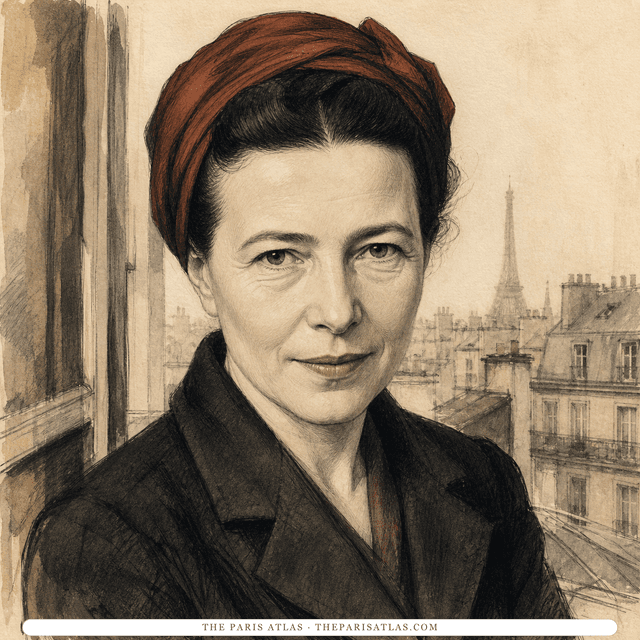
Simone de Beauvoir
French writer and philosopher whose novels, memoirs, and social analysis examined freedom, gender, responsibility, aging, and the material conditions that shape a life.
View author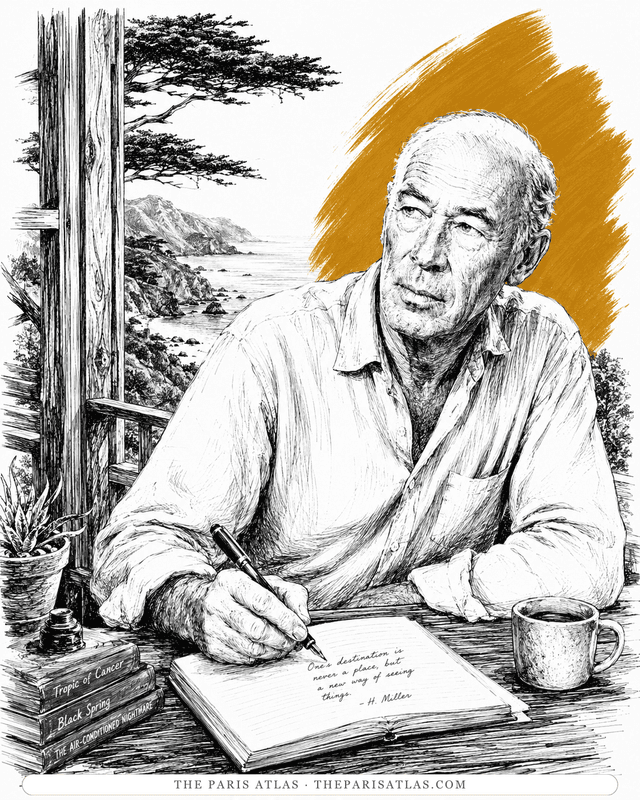
Henry Miller
The Brooklyn dropout who arrived in Paris broke at thirty-eight and wrote the exuberant, banned books that ended American censorship.
View author