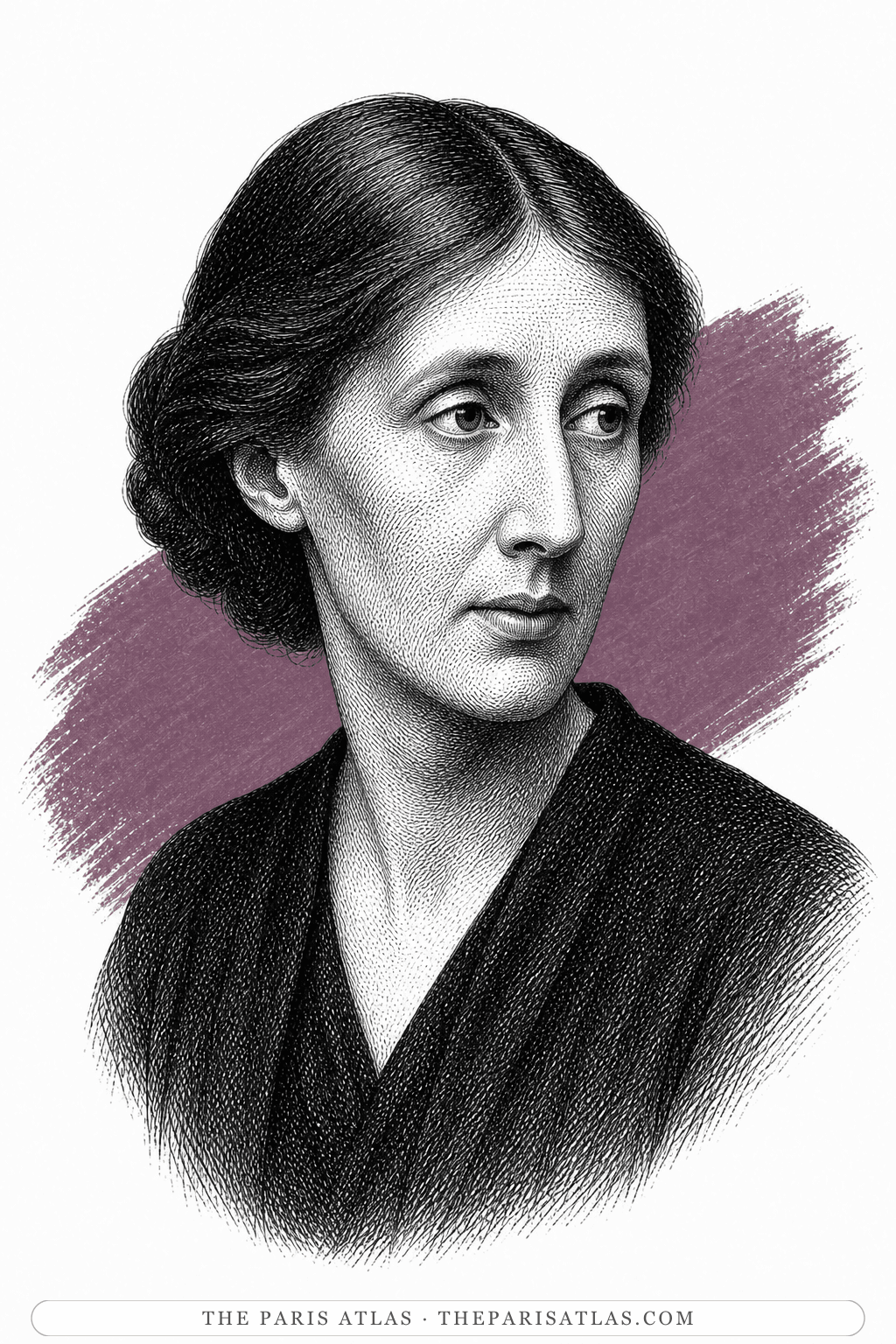

The Second Sex
Simone de Beauvoir examines how social arrangements shape women's lives in a much larger philosophical and historical study.
Read our take
A writer asks what women could create if they had an income, uninterrupted time and access to education.
Virginia Woolf's extended essay considers the material and social conditions that allow women to write. An invented narrator moves through colleges, a library and literary history, testing the connection between creative freedom, money and privacy. Published in 1929, the book grew from talks on women and fiction given at Cambridge in 1928.
The argument begins with an interruption: a college official stops the narrator from walking on a lawn reserved for Fellows and Scholars. At the library, she is told that admission requires a Fellow's company or a letter of introduction. These encounters make access to study a practical question.
Woolf combines imagined scenes with quotations, literary criticism and historical speculation. Oxbridge and Fernham are invented places, and the narrator offers several possible names for herself. Treating every incident as an entry from Woolf's diary would miss the essay's declared method.
Money matters because dependence shapes what a writer can risk saying. Privacy matters because thought takes time and can be interrupted. The essay also asks how inherited ideas about suitable subjects and respectable behavior influence the books women are encouraged to produce.
Chapters One and Two compare educational resources and examine books written about women. The narrator moves from unequal college meals to a library full of contradictory opinions. Her imagined inheritance of five hundred pounds a year then shows how financial security can change a person's freedom to judge.
Chapter Three imagines a sister with William Shakespeare's abilities who receives none of his opportunities. Chapter Four considers women writers and the traditions available to them, including Aphra Behn's example of earning money by writing and Jane Austen's work in a shared sitting room.
Chapter Five examines an invented contemporary novel in which two women share a laboratory. Chapter Six considers a mind able to use capacities conventionally called masculine and feminine, then returns to the conditions that future writers need. Woolf asks her audience to create opportunities for talents that earlier generations could not develop.
An elaborate college lunch is followed by a plain dinner at the women's college of Fernham. The narrator traces the contrast to generations of donations, restricted earning opportunities and the work of raising families. Food, rooms and leisure become evidence of how institutions support thought. Her joke about mothers' lack of wealth develops into an account of the conditions that prevented those mothers from accumulating wealth.
At the British Museum, the narrator finds a mass of contradictory claims about women and sketches an angry professor. She then notices her own anger. Later, paying for lunch recalls the inheritance that freed her from precarious work and dependence on men's approval. The sequence connects the ability to assess a book or a building with the security to disagree without losing one's livelihood.
The narrator invents Judith, a sister as gifted as William Shakespeare, and follows the obstacles placed before her. She receives no comparable schooling, is pressed to marry and escapes to London, where the theater offers neither training nor a safe route into work. The tragic story tests what talent could accomplish under unequal conditions. Judith is a thought experiment, not a recovered historical playwright.
Aphra Behn's ability to earn a living marks a change in the essay's account of women's writing. Woolf then considers Jane Austen, Charlotte and Emily Brontë, and George Eliot, asking how interruptions, restricted experience and criticism affect literary form. Her judgments sometimes favor composure over anger, particularly in her comparison of Austen and Charlotte Brontë. Those judgments are arguments to examine alongside the unequal conditions she describes.
In Mary Carmichael's invented novel, Chloe likes Olivia and the women share a laboratory. The narrator pauses over the possibility of describing women through work and relationships that extend beyond their connection to men. Her response also changes as a reader: an unfamiliar sentence or sequence may be purposeful rather than incompetent. The example asks for new subjects and a willingness to recognize new forms.
A woman and a man entering a taxi prompt the narrator's speculation about an androgynous creative mind, one in which capacities called masculine and feminine can cooperate. Woolf eventually stops speaking through Mary Beton and addresses her audience directly. The imagined Shakespeare sister returns as a figure for unrealized talent. The conclusion asks readers to provide future writers with time, money, education and the courage to think for themselves.
The narrator begins following an idea before the college official orders her off the lawn. The interruption is small in duration but large in consequence: afterward she cannot recover the thought. Woolf makes exclusion affect the movement of the essay itself, so the reader encounters a lost opportunity before being offered a general claim about women's opportunities.
The library refusal repeats the pattern at a different stage of work. Curiosity about how a writer revised a manuscript cannot become research because access requires an intermediary. A room and an income answer these practical obstacles, although they cannot by themselves erase the judgments that decide whose curiosity institutions support.
The narrator's annual income releases her from work performed to please people on whom she depends. It also alters the emotional terms of judgment: she can consider men without needing their favor or hating their power over her livelihood. Financial security matters to the argument because it changes what a writer can afford to think and say.
An inheritance, however, cannot serve as a general route to freedom for everyone. Its usefulness as an example also exposes the essay's social limits. Woolf gives a precise account of intellectual independence from the position of someone who has obtained security, while leaving open how that security could be extended to women without inherited wealth.
Judith Shakespeare supplies a case that the historical record cannot provide: a woman with extraordinary ability whose surroundings prevent its public development. The absence of masterpieces does not establish an absence of talent when training, movement, safety and time have been withheld. The thought experiment challenges the inference drawn from a record shaped by exclusion.
Mary Carmichael's invented novel tests what might change when women acquire room to write. Chloe and Olivia share work and interests beyond their relationships with men. Woolf asks the reader to recognize subjects and forms for which familiar standards may be inadequate. The two inventions connect lost possibilities in the past with habits of attention needed for future writing.
Woolf's judgments about anger in women's writing introduce a tension. The essay documents reasons for resentment, yet sometimes treats visible resentment as an artistic impediment. A reader can accept her account of obstruction without accepting every judgment she makes about the literary responses it produces.
Her speculation about an androgynous mind similarly belongs to an argument about creative freedom, not a scientific description of sex or gender. The ending returns that speculative ideal to practical conditions: future achievement requires living people to gain education, time and enough independence to attempt work that has not yet been imagined.
Chapters One and Two on interruption and income; Three and Five on Judith Shakespeare and Mary Carmichael; Four and Six on anger, literary judgment and the androgynous mind.
Intellectual freedom depends upon material things.
So long as you write what you wish to write, that is all that matters;
A meal, a library visit and a paid bill make the discussion of intellectual freedom concrete.
The narrator notices her anger and assumptions, allowing readers to assess how she reaches her conclusions.
Woolf asks what an author inherits from earlier writers and what disappears when a talent has no opportunity to develop.

The invented narrator who investigates the conditions women need in order to write.

William Shakespeare’s imagined sister, given his talent but denied his opportunities.

The invented first-time novelist whose book makes the narrator reconsider how women can be represented.

The narrator’s friend at Fernham, who teaches science and discusses the college’s finances.

A woman in Mary Carmichael’s invented novel who likes Olivia and works with her in a laboratory.

Chloe’s laboratory colleague in the invented novel, with scientific work and children to return home to.
1928
Woolf gives talks on women and fiction at Newnham and Girton, the Cambridge colleges named in the book's opening note.
1929
The Hogarth Press publishes A Room of One's Own on October 24. Leonard Woolf later confirms the date in a letter preserved at the University of St Andrews.
2025
Vintage publishes the selected US paperback on January 7, with an introduction by Lauren Groff.

Simone de Beauvoir examines how social arrangements shape women's lives in a much larger philosophical and historical study.
Read our take
Lily Briscoe's struggle to paint gives fictional form to questions about women's work, attention and artistic authority.
Read our take
The novel's poet moves across centuries and gendered expectations, bringing literary history into a fictional life.
Read our takeWoolf argues that women need material security and private space to develop their writing. Her discussion also examines education, access to books, inherited traditions and the pressure of other people's judgments.
No. It is an extended critical essay in six chapters, developed from talks on women and fiction. Imagined people and scenes help conduct its argument.
The Judith in this essay is invented. Woolf imagines an equally gifted sister of William Shakespeare to show how unequal schooling, family expectations and access to work might prevent talent from becoming a literary career.
Mary Beton is one of the names offered for the invented narrator. An aunt with that name also appears in the inheritance story. Near the end, Woolf explicitly sets the narrator aside and speaks in her own person.
It is a secure annual income in the narrator's imagined circumstances. The recurring payment represents independence from precarious work and the need to please people who control one's livelihood.
The selected reading edition is Vintage's January 7, 2025 US paperback, ISBN 9780593688632, with an introduction by Lauren Groff and 128 pages. The original book appeared in 1929; chapter readings and quotations follow the separately identified Gutenberg Australia text.
Explore authors with a similar voice, perspective, and influence.
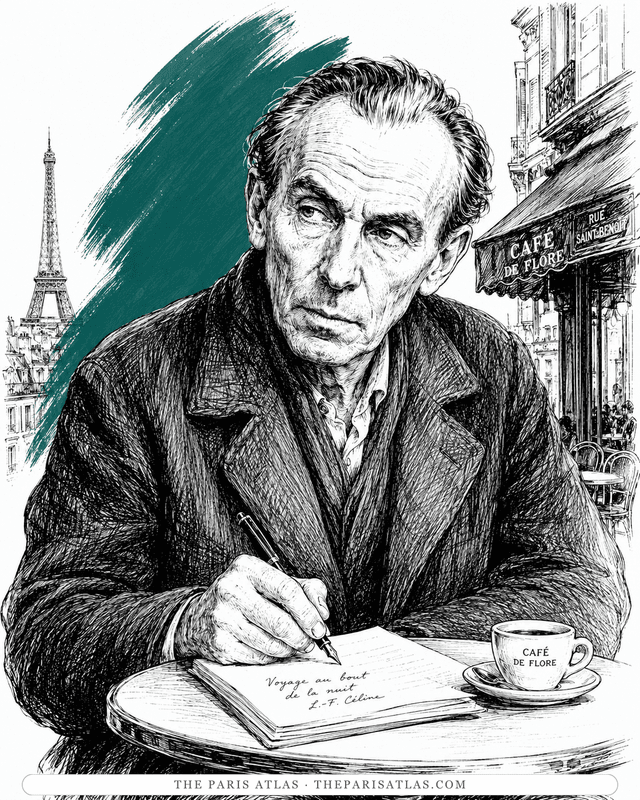
The doctor of the Paris slums who wrote the century's blackest, funniest novel — and changed the sound of French prose.
View author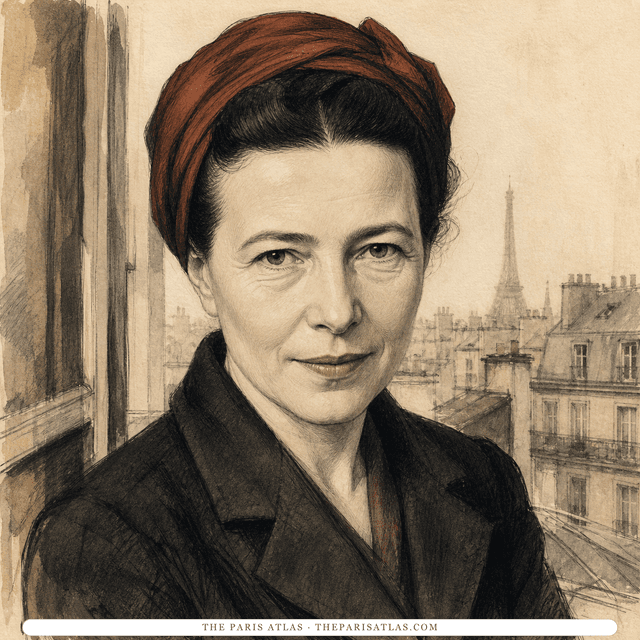
French writer and philosopher whose novels, memoirs, and social analysis examined freedom, gender, responsibility, aging, and the material conditions that shape a life.
View author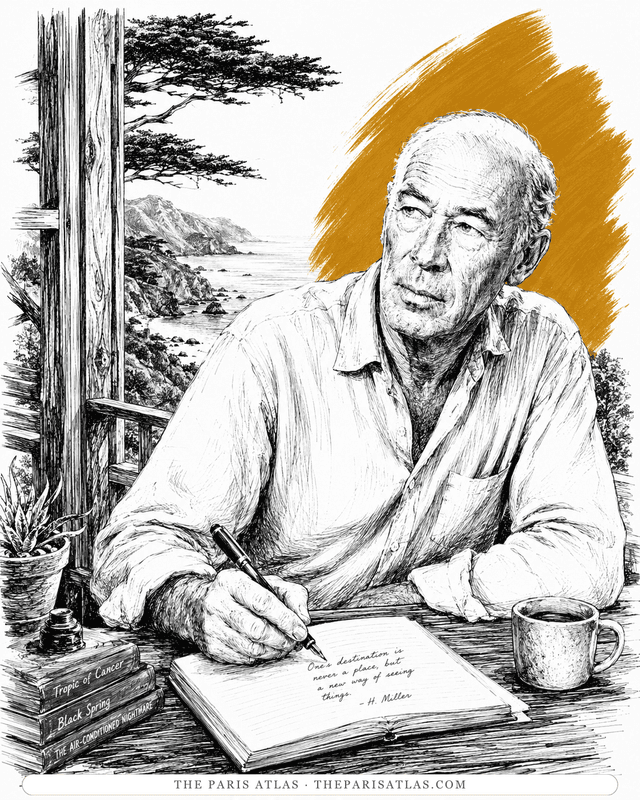
The Brooklyn dropout who arrived in Paris broke at thirty-eight and wrote the exuberant, banned books that ended American censorship.
View authorThe sources below include the primary text, editions, scholarship, archival materials, and other records that informed this page. They document A Room of One's Own, its publication, and its place in literary history.


The primary text represented by this page, used for descriptions of the work’s contents and for any quoted passages shown here.

All six chapters read in full for the argument, commentary and quotations. The transcription is not treated as a facsimile of a specified first printing.
Classifies the 1929 book as an extended essay.
Catalogue description of Leonard Woolf's November 10, 1955 letter confirms October 24, 1929 publication and the American limited edition on the same date.
Exhibited Hogarth Press first edition and context for the Cambridge talks; distinguishes Caroline Stephen's actual legacy from the essay's imagined inheritance.
Selected US date, publisher, ISBN, page count and Lauren Groff's introduction.
Character close reading: Historical account of Shakespeare’s daughter, who is distinct from Woolf’s invented sister.
The primary text is the baseline reference for every book page. Additional references document publication history, interpretation, and historical context where that evidence is available.
 Explore more resources