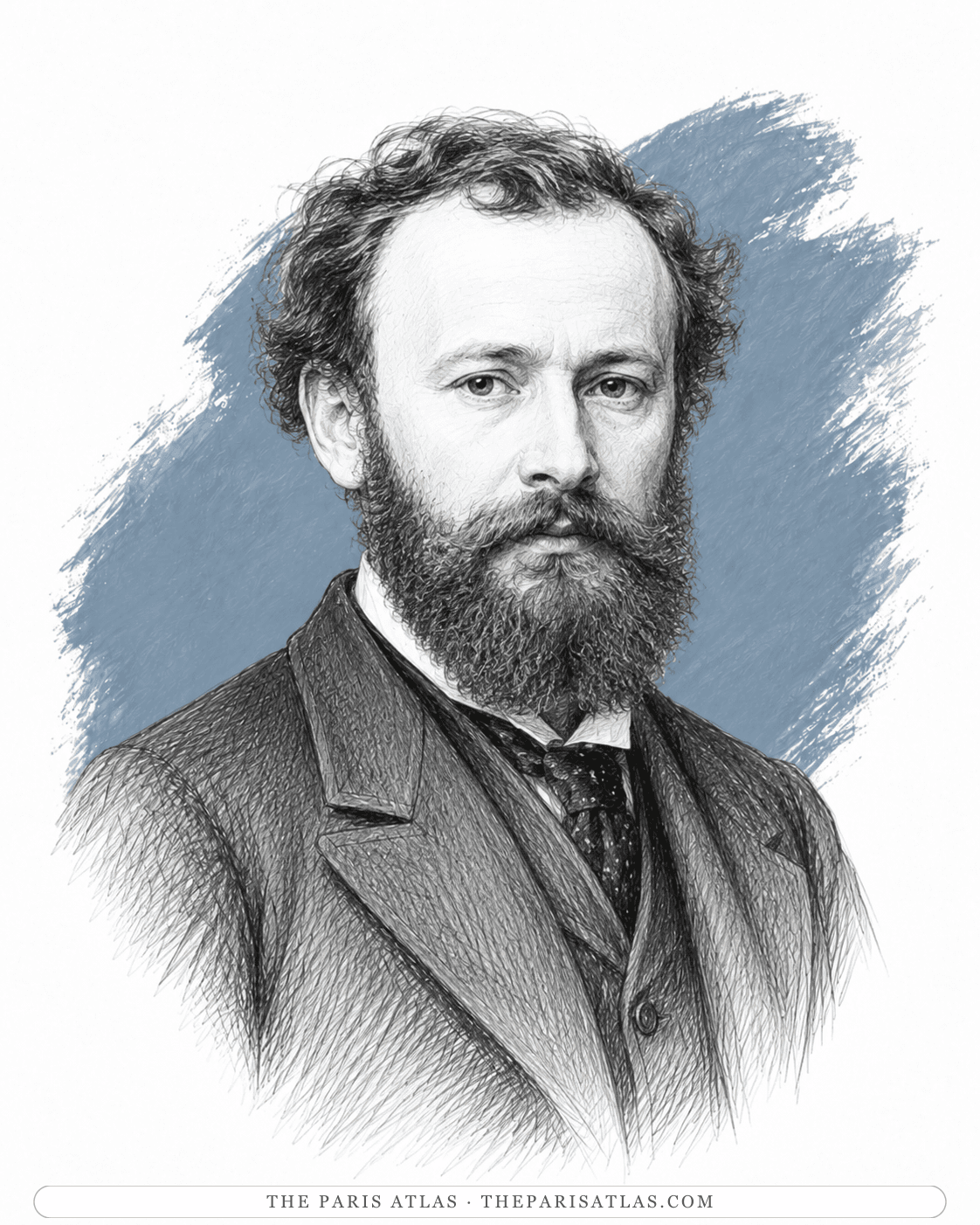
Depicts · 1872
Berthe Morisot
The Musée d'Orsay titles the painting after its sitter and describes her as a young painter with whom Manet shared a deep friendship, whom he took up again as a model when he resumed work at the end of 1871.

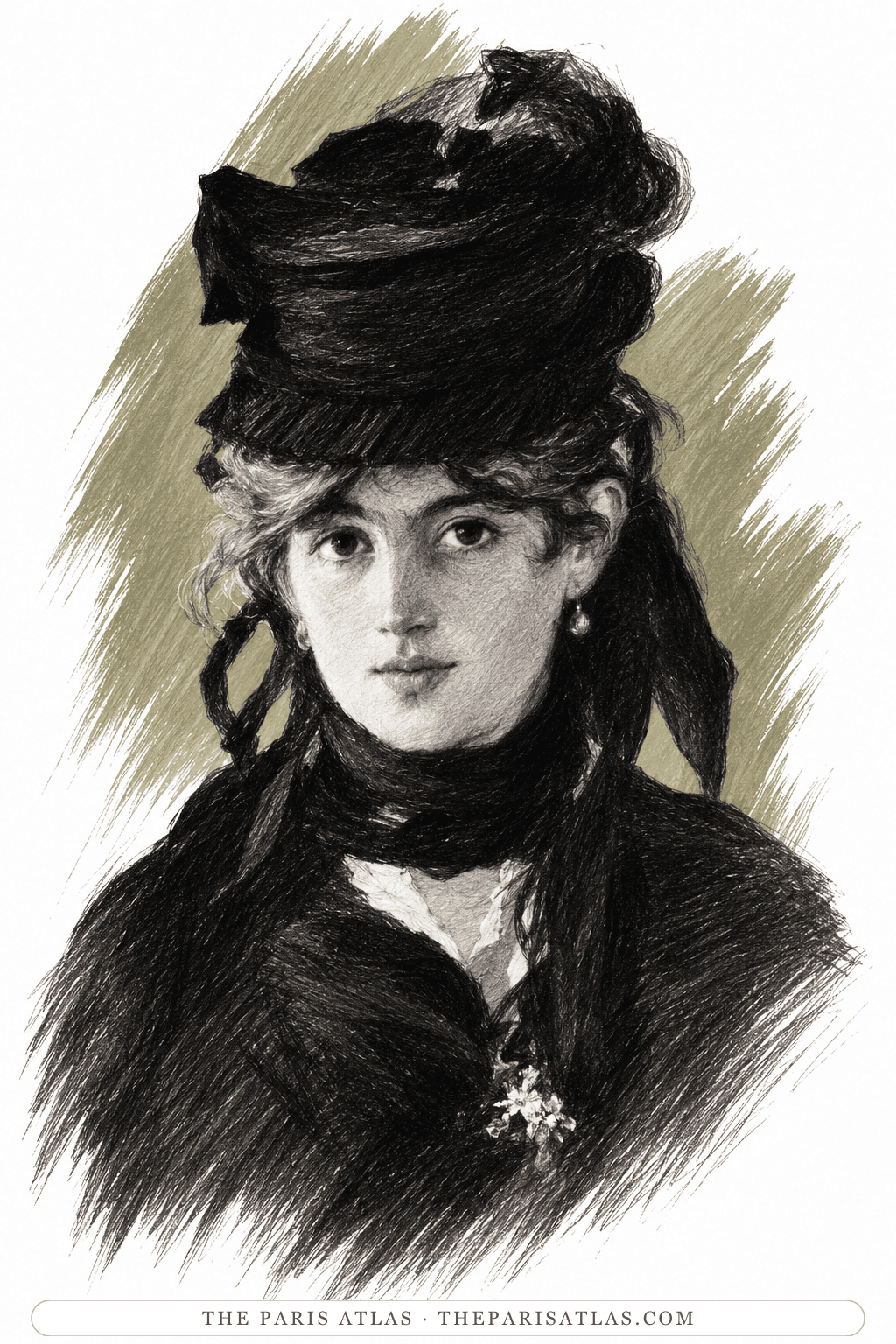
A young woman in black looks out of a small canvas, a tall black hat on her head and a posy of violets pinned low on her chest. The woman is Berthe Morisot, a painter who would help found Impressionism two years later and who married the artist's brother Eugène Manet in 1874. The Musée d'Orsay calls the picture a composition in blacks and notes that Édouard Manet gave her black eyes, though hers were green.
Berthe Morisot is shown head and shoulders against a pale grey-green background, turned slightly and looking straight out. Her hat is a tall black construction of loops and folds, its ribbons falling on both sides of her face. Brown hair escapes the hat and hangs down her right side in long combed strokes.
Berthe Morisot is dressed in black throughout. A wedge of white and tan opens at her throat where the coat parts, crossed by a dark scarf. Below the wedge, a posy of violets is painted in about a dozen strokes of blue, pale blue and cream with olive leaves, the only colour in the lower half of the canvas.
Small pale drop earrings hang at both ears. The signature reads manet 72 in thin dark script at the upper right, and a warm brown band runs down the right edge of the background.
The Musée d'Orsay records the canvas as 55.5 by 40.5 centimetres, with its frame measuring 71.5 by 57.5.[1] The museum's own title entry runs three titles together: Berthe Morisot au bouquet de violettes, then Berthe Morisot au chapeau noir, then Jeune femme au chapeau noir. Portrait de Berthe Morisot.[1] In English the picture is usually called Berthe Morisot with a Bouquet of Violets.
The Musée d'Orsay places the portrait at the end of a break in Manet's working life. He was deeply marked by the Franco-Prussian War and the Commune, stayed in Paris throughout, served in the National Guard (the garde nationale) and could not paint.[2]
Towards the end of 1871 Manet went back to work and took up his former models again, Berthe Morisot among them. The museum describes her as a young painter with whom he shared a deep friendship and who would go on to marry one of his brothers.[2]
That brother was Eugène Manet, and the marriage took place on 22 December 1874. By then Berthe Morisot had shown in the first Impressionist exhibition in April of that year, the only woman among the painters who organised it.
Rather than the even light he often used for portraits, Manet lit Berthe Morisot sharply from one side, so that the Musée d'Orsay describes her face as all light and shadow.[2] The lit half of the face is painted in cream and pale ochre. The shaded half runs warm brown into the jaw, with no soft transition between the two.
Black paint covers the rest of the picture, and it is not all one black. The main body of the hat is a dense opaque black, and the ribbon loops a warmer brown-black. On the right side of the hat the black turns dry and grey, dragged by a brush carrying little paint, so the pale background shows through in arcs.
The coat below is a single flat area of black with no drawn folds at all. The shoulder exists only as an edge against the background. The museum calls the result a sublime composition in blacks and a confirmation of Manet's virtuosity.[2]
The Musée d'Orsay also suggests a motive beyond showing his skill. Manet may have been teaching Berthe Morisot, his younger colleague, what black could still do, at exactly the point when her own painting was growing lighter and lighter as she moved towards Impressionism.[2]
The eyes in the picture are large and near-black, set under heavy dark brows, and they dominate the face. The Musée d'Orsay records that Berthe Morisot's eyes were in fact green.[2]
The museum reads the all-black dress and matching hat the same way, as a choice made to bring out the "Spanish" beauty that had been remarked on since her first appearance in Manet's work in 1869.[2] That first appearance was The Balcony, shown at the Salon that year.
Spain had been in Manet's painting for a decade by then. The National Gallery in London records that he had copied in the Louvre from The Little Cavaliers, a picture then thought to be by Diego Velázquez, and that he greatly admired the Spanish painter.[3]
The Musée d'Orsay reports that Manet's friends took the portrait for one of his masterpieces almost at once, and calls it strange and spellbinding.[2]
Sixty years on, the poet Paul Valéry wrote the foreword to the catalogue of the Manet retrospective held at the Orangerie in 1932, and put the picture above everything else the painter made.[2]
“I do not rank anything in Manet's work higher than a certain portrait of Berthe Morisot dated 1872”
The portrait stayed out of public collections for more than a century. The Musée d'Orsay bought it in 1998, and records the purchase as made with the participation of the Fonds du Patrimoine, the Fondation Meyer, China Times Group and patronage coordinated by the newspaper Nikkei.[1]
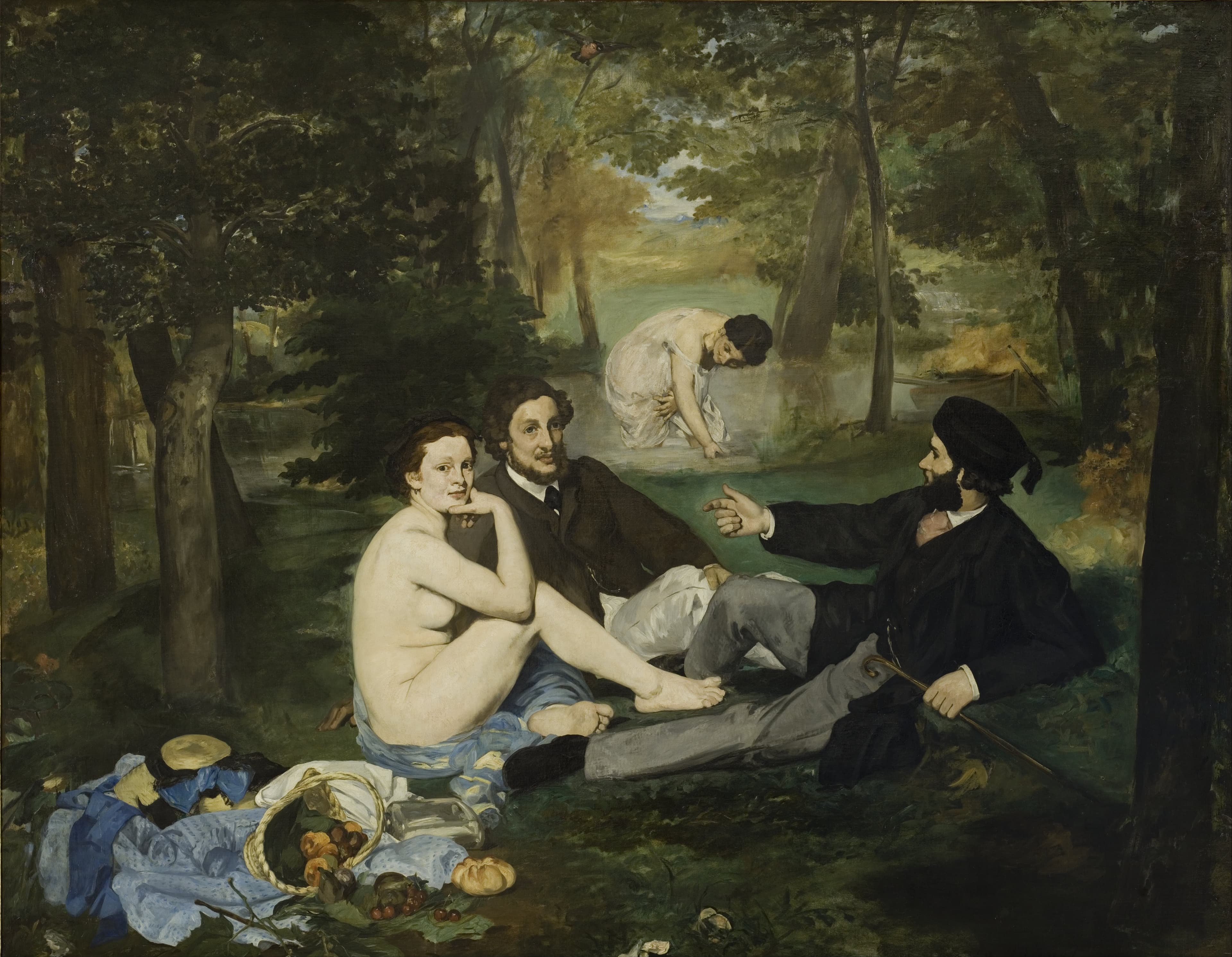
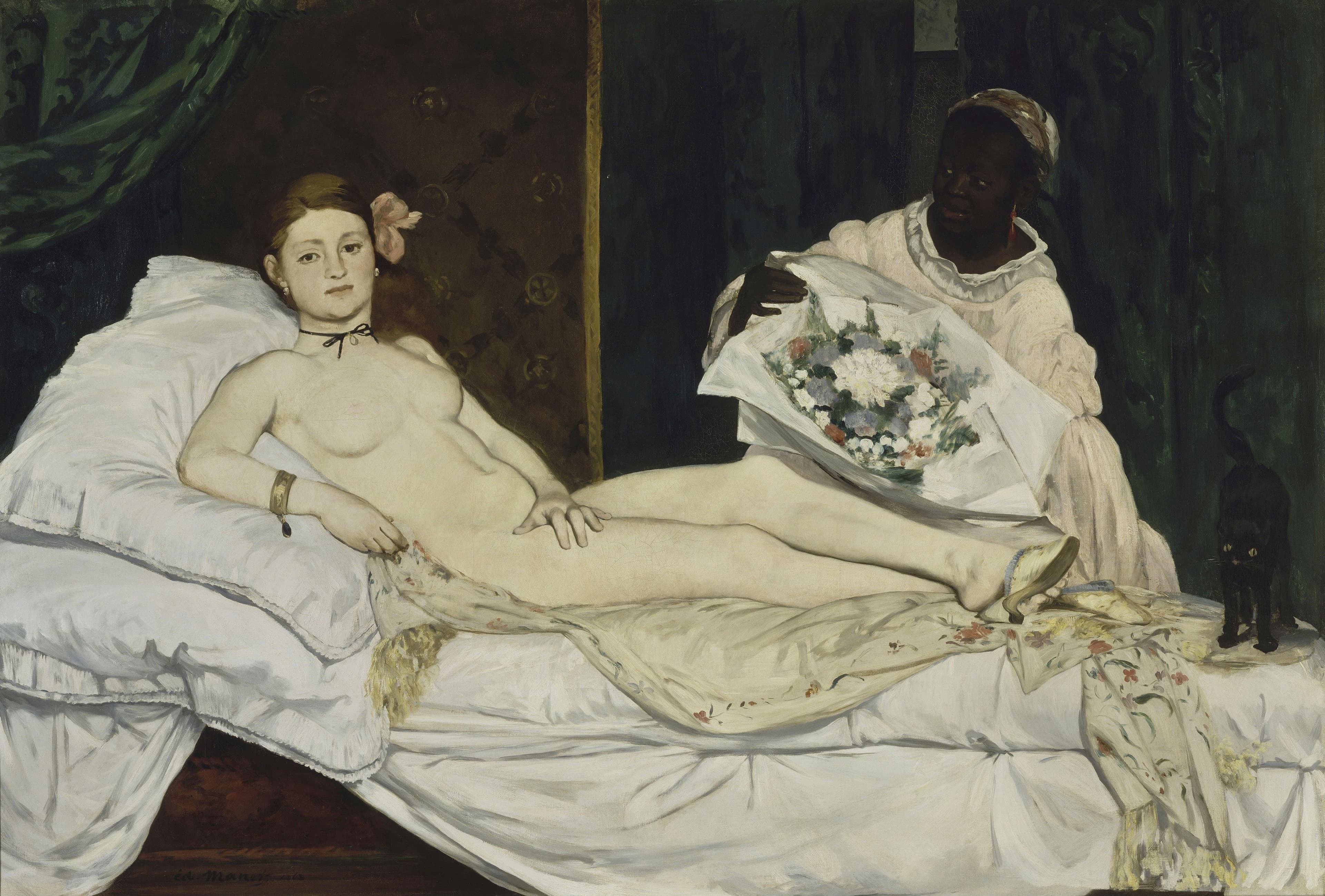
The portrait carries the accession number RF 1998 30 and hangs in the same museum as Olympia and Le Déjeuner sur l'herbe.[1] Works by Berthe Morisot herself are there too, including The Cradle of the same year, 1872.
Close reading
The Musée d'Orsay calls the portrait a composition in blacks, and the phrase is literal. Close up the hat, the coat and the ribbons turn out to be several different blacks doing different jobs, laid on with a brush that is sometimes thick with paint and sometimes almost dry. Against those blacks Manet allows three small areas of colour: the face, a wedge of white at the throat, and a posy of violets the size of a thumbprint.
1.The eyes are black, and hers were green
Both irises are near-black and unusually large against grey-white whites, and they dominate the whole face. The Musée d'Orsay records that Berthe Morisot's eyes were in fact green. The brows above are single thick strokes of dark brown, and the lit eyelid on the viewer's left is a flat wedge of cream with no lash drawn on it.
2.The hat is built from loops of thick black paint
The crown of the hat is a stack of black loops and folds. The paint is thick enough that the ridges left by the brush stand up from the surface and catch the light in the photograph. One pale grey-cream stroke sits behind the topmost loop and separates it from the background. No edge inside the hat is drawn. Each loop is simply a differently angled stroke.
3.A dry brush lets the background show through
On the right of the hat the brush was almost empty. Long curved strokes of thinned black were dragged across the pale background, and the cream of the background shows through them in open arcs. Set against the dense opaque black a few inches away, the same paint behaves as two different colours. The edge of the hat here is not a line but a fade.
4.Signed manet 72
The signature reads manet, in lower case cursive, with the digits 72 set apart to its right. The name is written thinly in a dark brown-grey, and the canvas weave shows through both the letters and the background around them. A warm brown vertical band runs down the right edge of the picture beside the signature.
5.The violets are about a dozen strokes
The posy that gives the painting its title is small enough to cover with a thumb. Blue and pale blue strokes cluster round two strokes of cream, with olive-green leaves at the right and a single ochre stroke above them. Black surrounds the posy on every side. The violets are the only colour anywhere in the lower half of the canvas.
6.One notch of white in the black
Where the coat parts at the throat, a rough triangle of white and tan opens up. The triangle is four or five broad strokes, not a drawn collar, and a dark scarf crosses it vertically at the right. A small ochre stroke sits at the top of the wedge. Apart from the face and the violets, the white wedge is the only break in the black of her clothes.
7.A drop earring, two or three dabs
A small pale drop hangs at her left ear, on the viewer's right. The earring is two or three light dabs and nothing more, recognisable as jewellery only because of where it sits. A matching drop hangs on the other side of the face. Each earring is placed against black, so the contrast, not any drawing, is what makes it show.
8.A green-grey stroke under the lower lip
The mouth is small and closed, in a muted rose. The upper lip is one thin darker line, and the lower lip is lighter and fuller. Directly beneath the lower lip Manet laid a short olive-grey stroke for the shadow under the lip, and left it unblended. At close range the stroke looks like a separate mark rather than shading, and most of the face is built the same way.
9.The hair keeps the bristle marks
Brown hair falls down the right of her head in long strokes of warm brown and ochre. The brush was stiff and half dry, so each stroke keeps the separate lines of its bristles. Manet let the hair run over the black ribbon of the hat rather than around it. The pale background behind shows the canvas weave through broad vertical strokes.
10.The shoulder exists only as an edge
The coat over the shoulder is one unbroken area of black. No fold, seam or button is drawn anywhere in it, and no highlight marks the turn of the arm. The shoulder is a single sweeping curve, and it exists only because the pale background stops there. Close up the black of the coat is warmer at the left, where the brush dragged and the canvas weave shows.
11.A background of broad vertical strokes
The background is not one flat tone but a set of broad vertical strokes in grey-green and cream, thin enough that the weave of the canvas shows through them everywhere. At the right a warm brown band runs the full height of the picture. Manet left both the strokes and the weave visible rather than covering the surface evenly.
1869
Berthe Morisot appears in Manet's work for the first time, in The Balcony, shown at the Salon that year.
1870–71
Manet remains in Paris through the Franco-Prussian War and the Commune, serving in the National Guard and unable to paint.
1871
Towards the end of the year he resumes work and takes up his former models, Berthe Morisot among them.
1872
Paints the portrait, signing it manet 72 at the upper right.
1874
Berthe Morisot shows in the first Impressionist exhibition in April and marries Eugène Manet, the artist's brother, on 22 December.
1932
Paul Valéry places the portrait above everything else in Manet's work, in his foreword to the Orangerie retrospective catalogue.
1998
Bought by the Musée d'Orsay with help from the Fonds du Patrimoine, the Fondation Meyer, China Times Group and patronage coordinated by the newspaper Nikkei. Accession RF 1998 30.
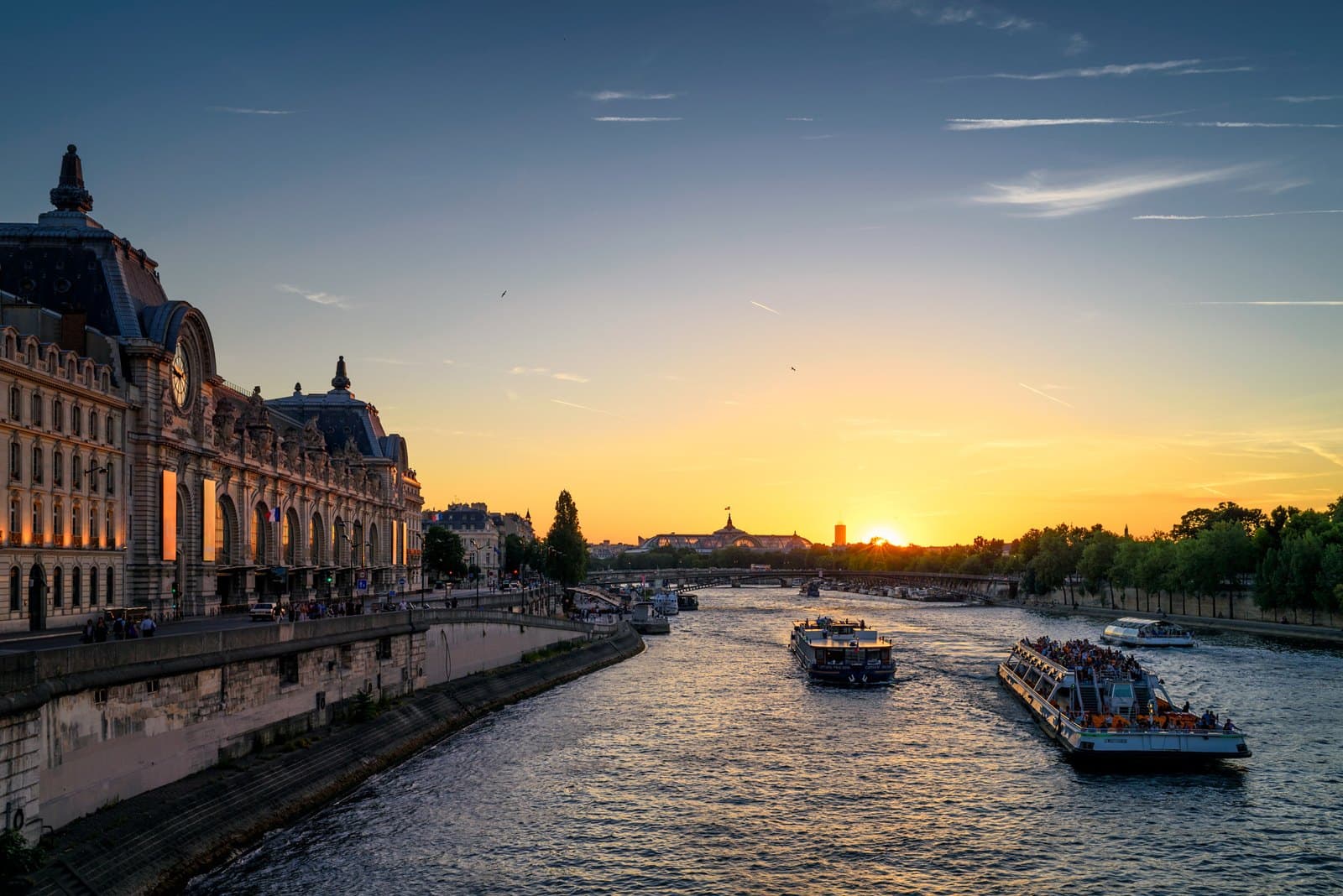
Musée d'Orsay
Esplanade Valéry Giscard d’Estaing, 75007 Paris, France
Displays and loans can change. Check whether this work is on view before making a special trip.
Plan your visitBerthe Morisot, a French painter born in 1841 who helped found Impressionism and showed in seven of its eight exhibitions. She married Édouard Manet's brother Eugène Manet on 22 December 1874.
Green. The Musée d'Orsay notes that Manet painted her eyes black, and black is how they appear in the portrait.
The Musée d'Orsay in Paris, accession number RF 1998 30. The museum bought it in 1998; check the museum for current display information.
The Musée d'Orsay reads the black dress and matching hat as a choice made to bring out the "Spanish" beauty remarked on since she first appeared in Manet's work in 1869. The museum also suggests Manet was showing Berthe Morisot, a younger painter, what black could do as her own colours grew lighter.
The Musée d'Orsay's own title entry gives three titles: Berthe Morisot au bouquet de violettes, Berthe Morisot au chapeau noir, and Jeune femme au chapeau noir. Portrait de Berthe Morisot. In English it is usually Berthe Morisot with a Bouquet of Violets.
55.5 by 40.5 centimetres, roughly twenty-two by sixteen inches. The Musée d'Orsay gives the framed measurement as 71.5 by 57.5 centimetres.
Depicts · 1872
The Musée d'Orsay titles the painting after its sitter and describes her as a young painter with whom Manet shared a deep friendship, whom he took up again as a model when he resumed work at the end of 1871.
Explore painters from the same movements and circles.
Impressionist painter whose late Water Lilies cycle fills the Orangerie's two oval rooms — a gift to France offered the day after the 1918 Armistice and installed to his design.
View artist
Brazilian painter who spent the 1920s moving between São Paulo and Paris, studied Cubism under André Lhote, Albert Gleizes and Fernand Léger, and used what she learned to paint Brazilian towns, railways, plants and bodies. Her 1928 painting Abaporu prompted the manifesto that gave the Anthropophagic movement its name.
View artist
Painter of Haussmann's geometry and the group's organizer-financier; his bequest of Impressionist paintings forced the French state to take the movement in.
View artistThe sources below include collection records, catalogues, scholarly research, and primary materials that informed this page. They document Berthe Morisot au bouquet de violettes, its making, and its place in cultural history.


Manet's copy after The Little Cavaliers in the Louvre and his admiration for Diego Velázquez.
The reproduction is the primary visual source for the close-reading details; rights metadata is preserved separately.
Berthe Morisot's career and her place among the Impressionists.
These references provide the documented foundation for this work's history and interpretation. Claim-level citations remain attached to the specific claims they support.
 Explore more resources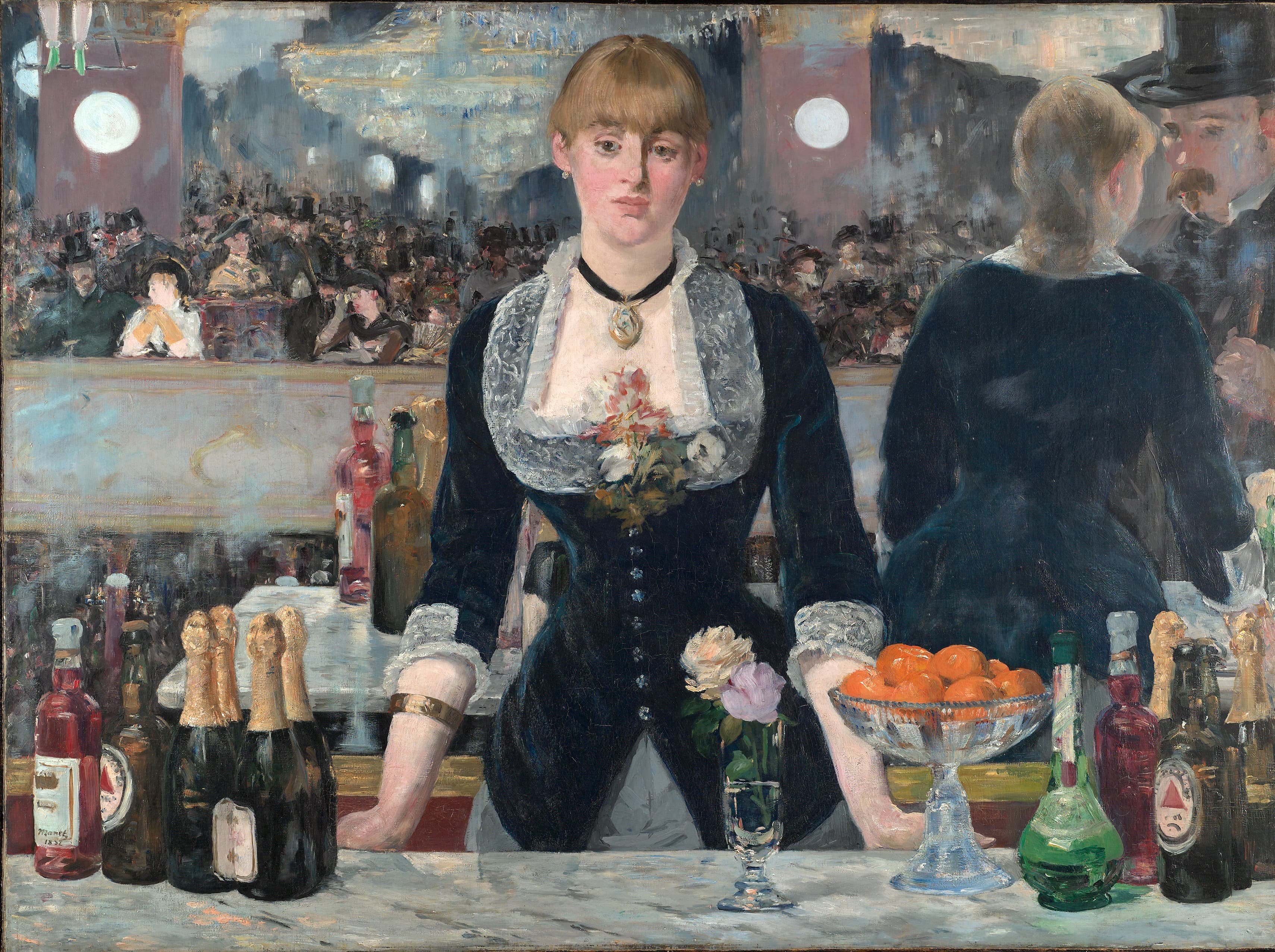

 View source