


Come On In!
A posthumous collection published twelve years after Bukowski's death, near the end of the archive series.
- 2006
- Wry
- Melancholy
- Savage
- autobiographical
- voice-driven
- spare
- funny
About Charles Bukowski
The story, briefly
Spoiler-freeCome On In!, published by Ecco in 2006, arrived a dozen years after Charles Bukowski's death and showed the posthumous archive still producing — the fourth of the Ecco-era volumes drawn from the reserve of unpublished poems he left behind. The poems keep the standing subjects of the late work: the city, the writing desk, the racetrack, memory, and death. The annual archive volumes were approaching their end; The People Look Like Flowers at Last followed in 2007 and The Continual Condition closed the sequence in 2009. In 2013 the writer Michael Phillips showed that poems in this series had been altered before printing, and restored editions followed.
The story, in more detail
By 2006 the archive series was nearing its end: two more volumes followed, in 2007 and 2009, and then the annual books stopped. In 2013, manuscript comparisons published by Michael Phillips documented that poems in the posthumous volumes had been altered in editing. Readers who want the late poems as Bukowski typed them should go to the restored editions edited by Abel Debritto; this volume is part of the series as it originally appeared.
Themes and analysis
Poetry on a lunch break
“A note upon modern poesy” measures poetry’s progress by its readers rather than its fashionable credentials. Paris addresses, classical references and foreign phrases become ways of displaying membership in a literary circle. The imagined mechanic reading at lunch offers another test: whether poems can matter outside that circle’s rituals. Yet the ending uses the lowercase pronoun and ampersand that the speaker has just mocked. His own performance complicates the attack on poetic mannerisms. The poem’s joke reaches back toward its authorial pose, leaving accessibility as an aspiration rather than a purity test he has already passed.
After the field has passed
The very short lines of “the spill” make the reader follow a racing accident in successive fragments, then hold attention on the fallen jockey after the horses have passed. His clothing and stillness remain visible while an ambulance approaches. The closing spectator’s suggestion of getting a drink offers an abrupt escape into ordinary leisure, without resolving the emergency. That contrast places the risk borne by the rider beside the freedom of someone who merely watches. The poem does not supply a recovery or a death; the unsettling fact is how easily another person’s attention can turn elsewhere.
Why we recommend it
Near the end of the series
One of the last volumes of the archive series, which ended in 2009 after a dozen years of posthumous books.
The title's invitation
Come On In! is an invitation, plainly meant: the reader is being asked into the late poems.
Recurring places in the late work
The desk, city, and racetrack give readers concrete settings through which to approach the collection’s thoughts about memory and death.
What this book explores
Timeline
2006
Ecco publishes the collection, twelve years after Bukowski's death.
2007
Ecco publishes the paperback edition of the posthumous poetry collection.
2009
The Continual Condition closes the archive series three years later.
Book editions

- Hardcover
- Ecco
- 2006
- 9780060577056
Reader reviews
Readers may also like


The Last Night of the Earth Poems
The final collection Bukowski assembled himself — the book the posthumous volumes are always compared against.
Read our takeCome On In!: frequently asked questions
What is Come On In!?
A posthumous collection of previously unpublished Charles Bukowski poems, published by Ecco in 2006 from the archive he left at his death in 1994.
How long did the posthumous series run?
From Bone Palace Ballet in 1997 to The Continual Condition in 2009 — a dozen years of volumes from the reserve, first at Black Sparrow, then at Ecco. Restored editions followed in the 2010s.
Are these poems as Bukowski wrote them?
The posthumous volumes carry a documented editing question: 2013 manuscript comparisons showed substantial alterations, and Abel Debritto's restored editions — backed by Bukowski's widow Linda Lee Bukowski — print the manuscripts unrevised.
Where does the title come from?
It is Bukowski's own phrase, an invitation to the reader. No source poem outside the book is being quoted.
Is it still in print?
Yes — Ecco keeps it in its catalogue.
If you like Charles Bukowski
Explore authors with a similar voice, perspective, and influence.
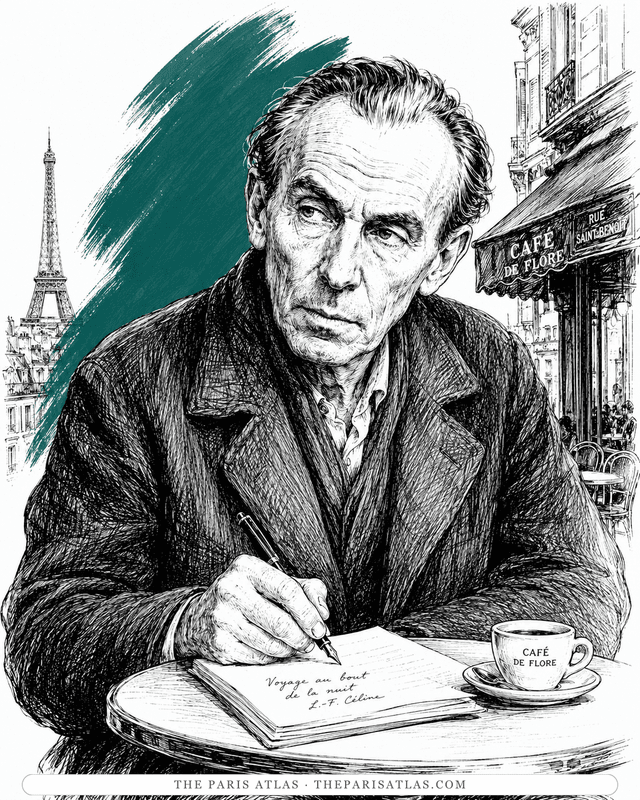
Louis-Ferdinand Céline
The doctor of the Paris slums who wrote the century's blackest, funniest novel — and changed the sound of French prose.
View author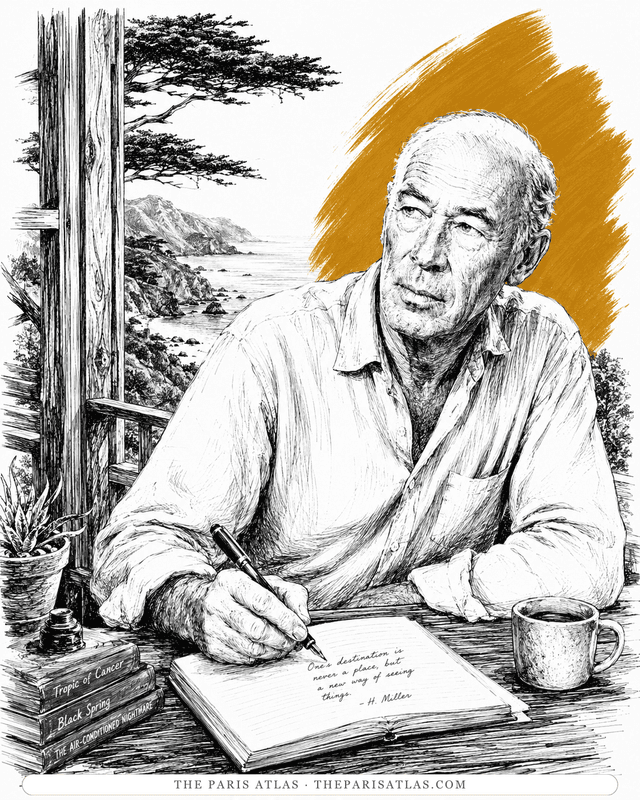
Henry Miller
The Brooklyn dropout who arrived in Paris broke at thirty-eight and wrote the exuberant, banned books that ended American censorship.
View author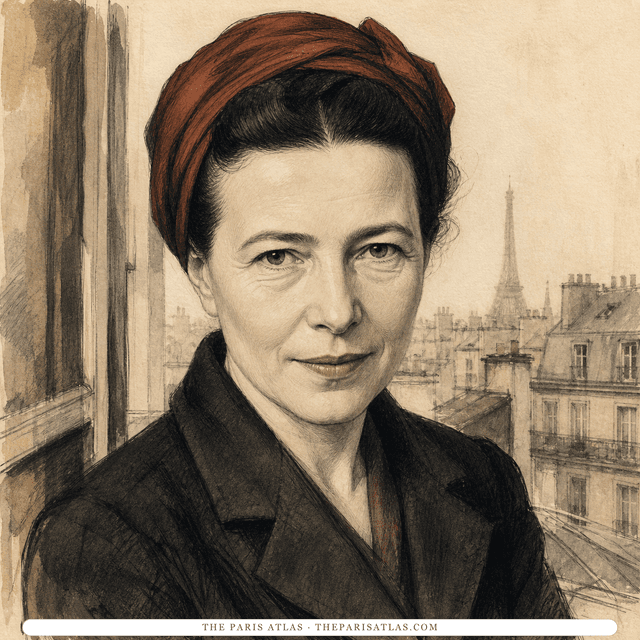
Simone de Beauvoir
French writer and philosopher whose novels, memoirs, and social analysis examined freedom, gender, responsibility, aging, and the material conditions that shape a life.
View author
References
References
The sources below include the primary text, editions, scholarship, archival materials, and other records that informed this page. They document Come On In!, its publication, and its place in literary history.

1Come On In!
PoetryCharles Bukowski, 2006Used forThe primary text represented by this page, used for descriptions of the work’s contents and for any quoted passages shown here.

2Charles Bukowski timeline (bukowski.net)
WebsiteUsed forPublication year and the volume's place in the closing stretch of the series.

3Bukowski's poems were mangled by editors after his death. Now you can read his originals
PeriodicalPBS NewsHourUsed forThe documented editing of the posthumous poems and the restored editions.
4Charles Bukowski's Posthumous Poetry: As the Spirit Wanes, Shit Happens
PeriodicalLos Angeles Review of BooksUsed forCritical account of the posthumous program.
5Come On In! — edition record
Official recordOpen Library, Internet ArchiveUsed forOfficial record used to verify names, dates, institutional details, or other factual information on this page.
6Open Library — Come On In editions
WebsiteUsed forWeb source consulted for documented facts and historical context presented on the Come On In! page.
7Come On In! New Poems — authorized preview
PoetryCanongate Books, via Perlego, 2009Used forComplete “a note upon modern poesy” in the authorized Canongate 2009 preview. A later UK edition, not a collation with the 2006 US printing or the manuscripts; the following previewed poem is incomplete.
8The spill — licensed poem text
WebsiteThe Writer’s Almanac / Minnesota Public Radio, 2014Used forComplete “the spill,” reprinted with publisher permission and credited to Come On In! New Poems, 2007. Analysis does not infer an injury outcome absent from the poem.
i
Why these sources are here
The primary text is the baseline reference for every book page. Additional references document publication history, interpretation, and historical context where that evidence is available.
 Explore more resources