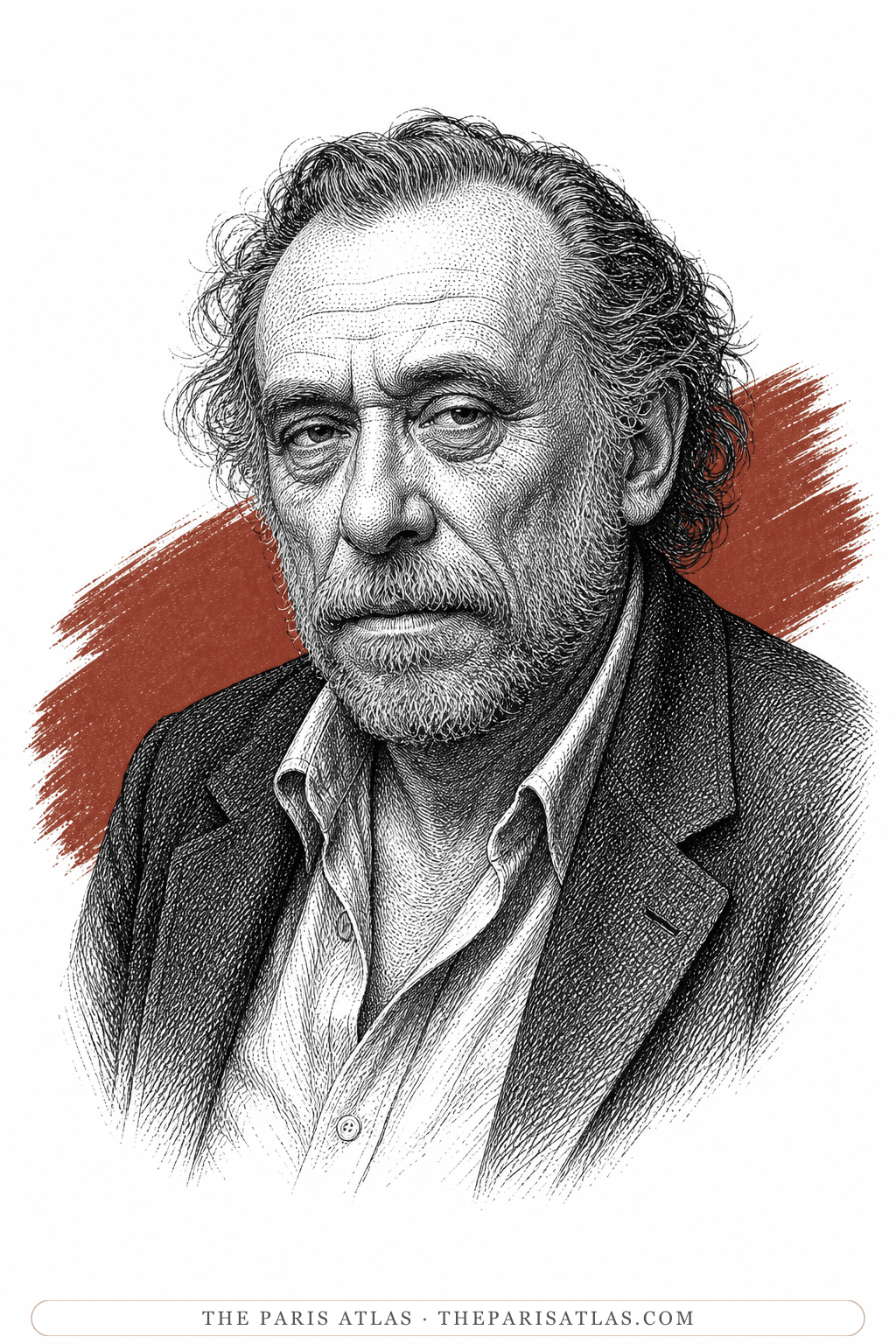

The Last Night of the Earth Poems
The final collection Bukowski assembled himself; this book begins the series that continued after his death.
Read our take
The posthumous archive begins in earnest: previously unpublished poems from the reserve Bukowski left behind, three years after his death.
Bone Palace Ballet, published by Black Sparrow Press in 1997, opened the long run of posthumous Charles Bukowski poetry volumes drawn from the archive of unpublished work he deliberately left behind. Bukowski wrote faster than Black Sparrow could publish, and by his death in 1994 a large reserve of poems existed on the understanding that books would keep appearing after him. This volume began that program in earnest: new poems, not reprints, issued in the familiar Black Sparrow format — a trade printing alongside a collectors' issue of 426 copies carrying a Bukowski serigraph. Readers should know the posthumous volumes carry a documented editing question, described below, that was not resolved until the restored editions of the 2010s.
The posthumous program these books belong to ran for more than a decade — Black Sparrow until 2002, then Ecco after the catalogue transferred — and became controversial in a way few poetry series ever have. In 2013 the writer Michael Phillips published comparisons showing that poems in the posthumous volumes differed substantially from Bukowski's manuscripts, with references to drinking, sex and madness softened or removed. The scholar Abel Debritto, with the support of Bukowski's widow Linda Lee Bukowski, went on to edit volumes that restore the manuscripts as written — Storm for the Living and the Dead (2017) among them. PBS NewsHour's coverage put the charge in one line: the posthumous poems had been altered by editing. These volumes are the series as it originally appeared; the restored editions carry the manuscripts as Bukowski typed them.
The manuscript version of “Owl” makes a brief sighting feel irreplaceable. Repeating that this is his first owl, the speaker gives an ordinary telephone pole the importance of a discovery. The bird remains still under the light; the interruption comes from a caller who merely wants to talk. That contrast gives the ending its disproportionate anger. A familiar social obligation has displaced an encounter the speaker cannot arrange again. The telephone connects him to another person while drawing him away from the living thing that held his attention.
The repeated timetable in “safe” turns domestic security into a troubling rhythm. The neighbors leave for work, return, extinguish their lights, and do it again; the poem makes us experience the recurrence before naming its cost. Yet their unhappiness is the speaker’s interpretation, not something they tell him. When the house seems to return his gaze and weep, his sadness has entered the building itself. That personification intensifies his sympathy while leaving its limits visible: he can imagine the neighbors drowning in routine, but cannot speak for them or rescue them.
The first major volume of the archive Bukowski left behind — the beginning of a program that ran for two decades.
Previously unpublished poems on the subjects of his last decades: mortality, memory, the racetrack, the typewriter.
The documented editing questions invite readers to distinguish the poems as published from the manuscripts behind the posthumous collection.
1994
Bukowski dies in San Pedro, leaving a large archive of unpublished poems.
1997
Black Sparrow Press publishes Bone Palace Ballet from the archive.
2013
Michael Phillips publishes manuscript comparisons that document the posthumous editing question.

The final collection Bukowski assembled himself; this book begins the series that continued after his death.
Read our take
The next volume of the posthumous series, two years later.
Read our take
The mid-1980s collection these archive poems continue from, on the same late-life subjects.
Read our takeA collection of previously unpublished Charles Bukowski poems, issued by Black Sparrow Press in 1997 — three years after his death — from the archive of work he left behind for posthumous publication.
He wrote faster than his publisher could print. By his death in 1994 a large reserve of unpublished poems existed, left deliberately so that Black Sparrow could keep issuing books — which it and its successor Ecco did for two decades.
That is documented as a real question. Comparisons published in 2013 by Michael Phillips showed the posthumous volumes differ from the manuscripts, with references to drinking, sex and madness softened or removed. Abel Debritto's later editions, backed by Bukowski's widow Linda Lee Bukowski, restore the manuscripts as written.
Alongside the trade printing, Black Sparrow issued 426 collectors' copies carrying an original Bukowski serigraph — the press's limited-edition tradition, continued posthumously.
If you want the poems as Bukowski typed them, start with the restored editions edited by Abel Debritto. If you are reading the series as it appeared, this volume is where the posthumous archive begins in earnest.
Explore authors with a similar voice, perspective, and influence.
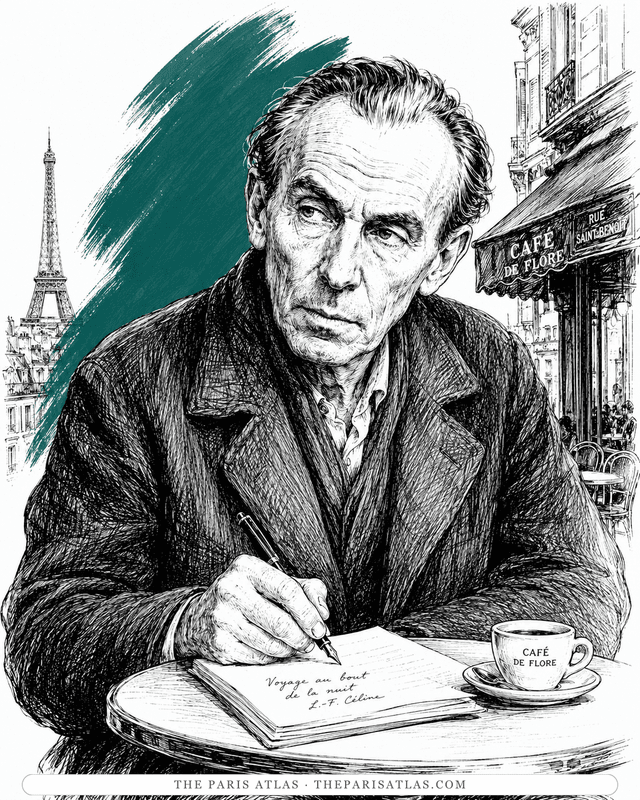
The doctor of the Paris slums who wrote the century's blackest, funniest novel — and changed the sound of French prose.
View author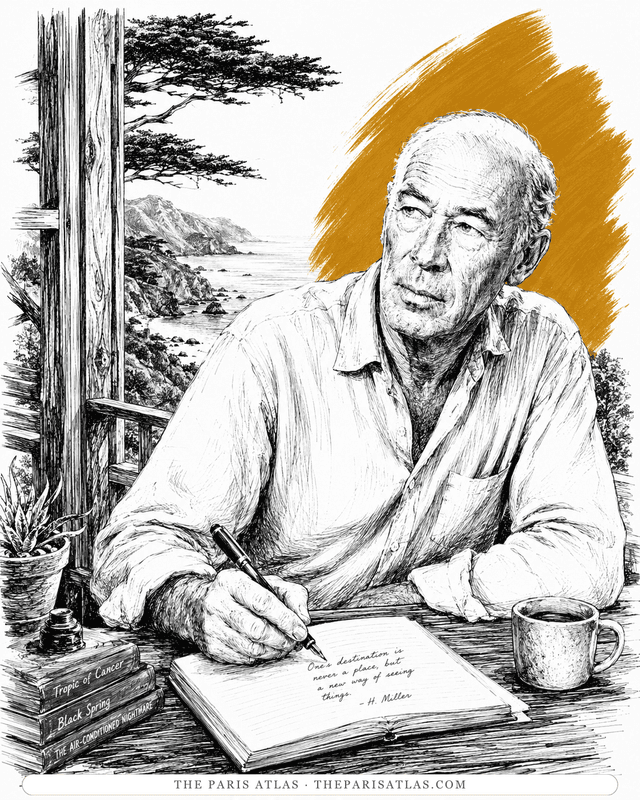
The Brooklyn dropout who arrived in Paris broke at thirty-eight and wrote the exuberant, banned books that ended American censorship.
View author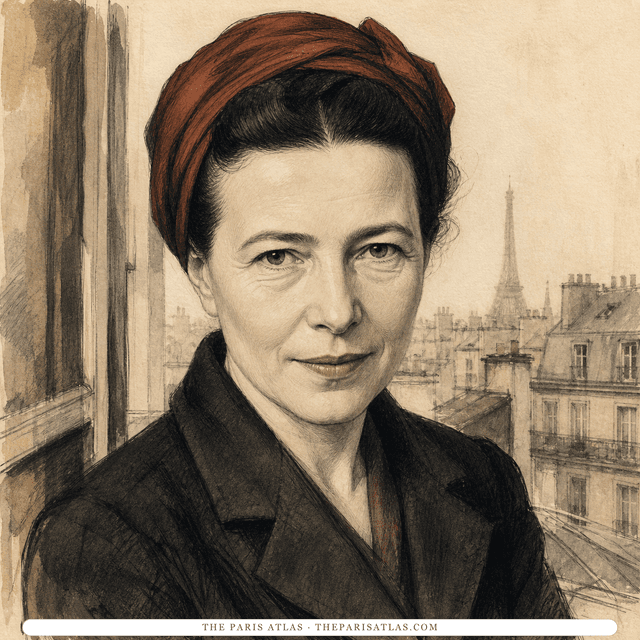
French writer and philosopher whose novels, memoirs, and social analysis examined freedom, gender, responsibility, aging, and the material conditions that shape a life.
View authorThe sources below include the primary text, editions, scholarship, archival materials, and other records that informed this page. They document Bone Palace Ballet, its publication, and its place in literary history.


Publication year, the collectors' issue, and the posthumous series chronology.

The documented editing of the posthumous poems and the restored editions.
Critical account of the posthumous program and its editing history.
Official record used to verify names, dates, institutional details, or other factual information on this page.
Facsimile linked by the specialist database to this collection; not collated with the printed edition.

Public-radio presentation explicitly attributed to Bone Palace Ballet, Black Sparrow Press.
The primary text is the baseline reference for every book page. Additional references document publication history, interpretation, and historical context where that evidence is available.
 Explore more resources