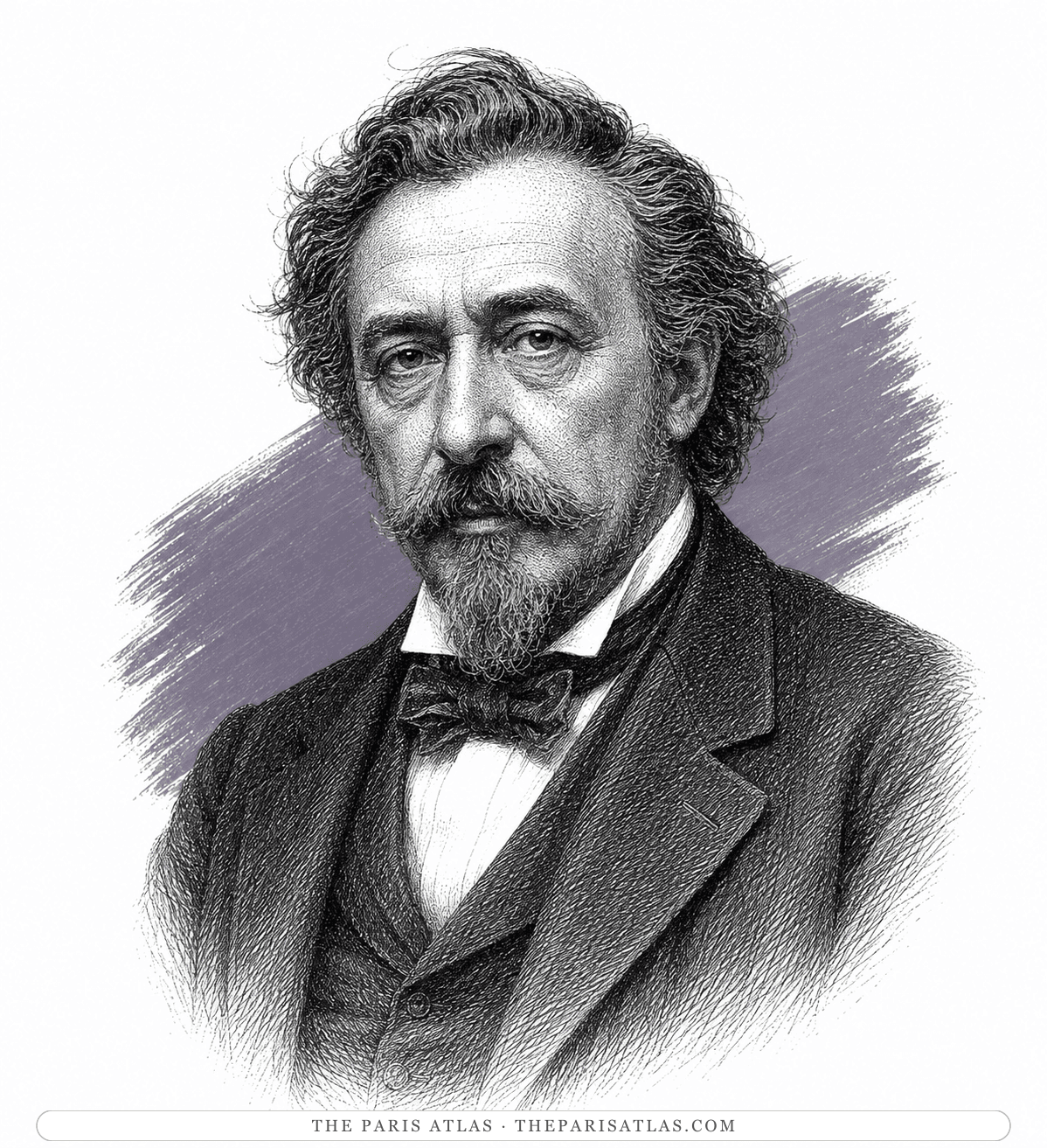
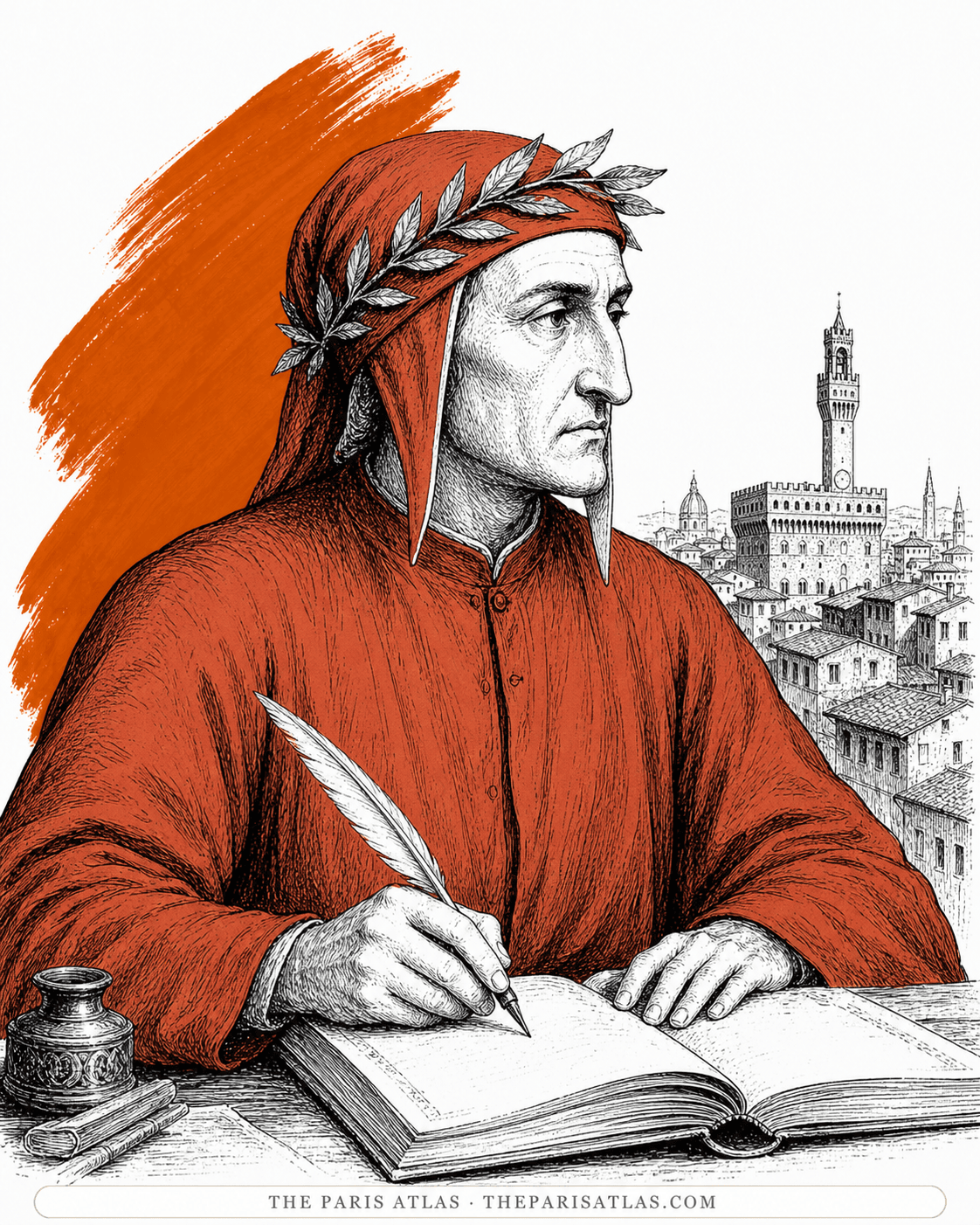
Depicts
Dante Alighieri
Dante appears throughout the 1861 folio as the poem's traveller, guided by Virgil through the circles of hell.
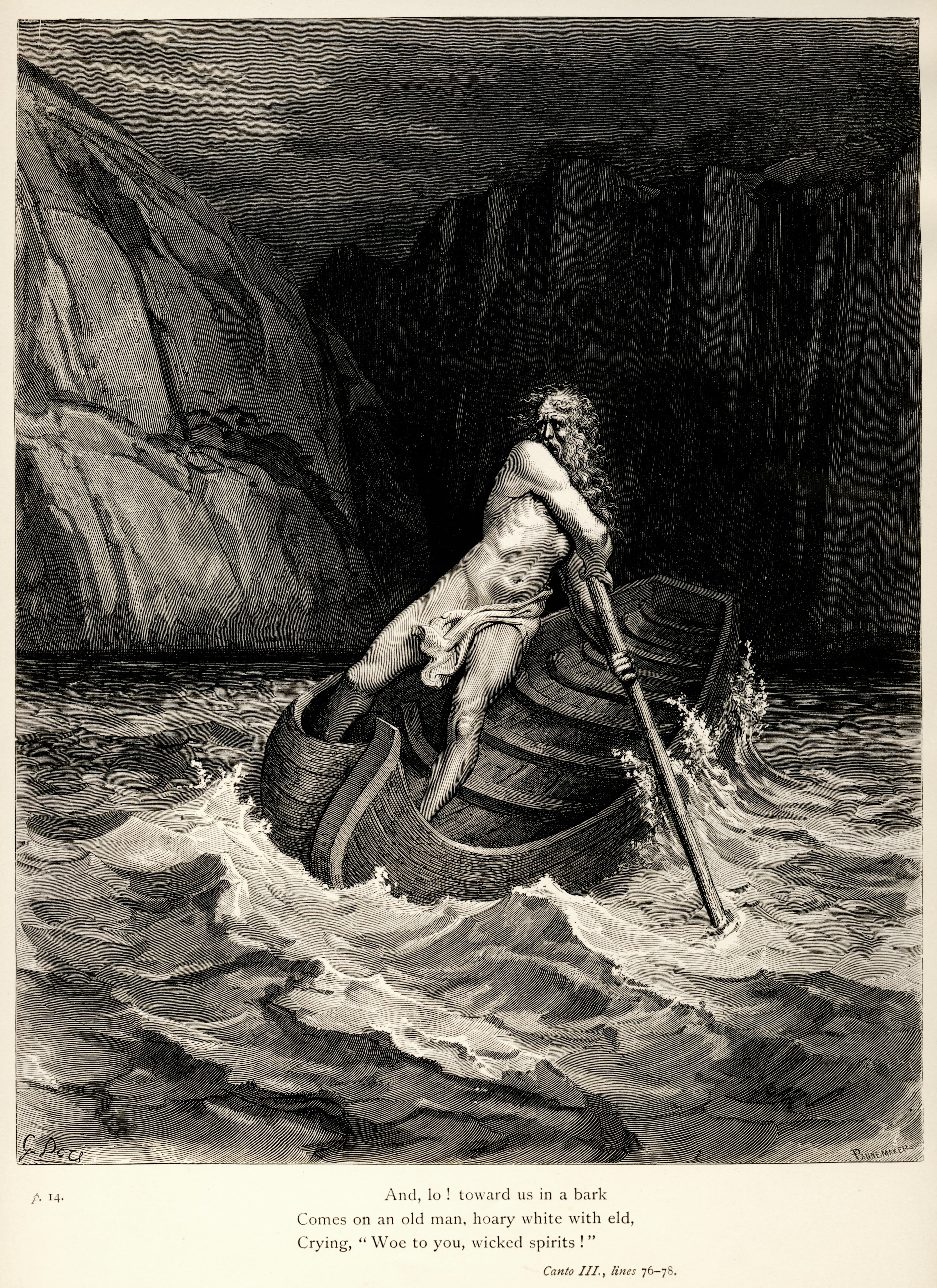
by Gustave Doré
Gustave Doré's folio edition of the Inferno, published in Paris in 1861 at his own expense after his publisher refused to fund it. Its plates fixed the look of Dante's hell for the modern imagination, and their success launched the series of great Doré folios.
By 1860 Gustave Doré was the busiest illustrator in Paris, but the project he wanted most was turned down by his own publisher. He imagined Dante's Divine Comedy as an enormous luxury folio, drawn by him and cut by the best wood engravers in France. Hachette judged the format too expensive to recover its costs.
Doré paid for the first printing of the Inferno himself, with Hachette handling the printing and sale. The edition appeared in 1861 and sold out. Hachette took the series over, and the success carried Doré to a chevalier's cross of the Légion d'honneur that August, at twenty-nine.
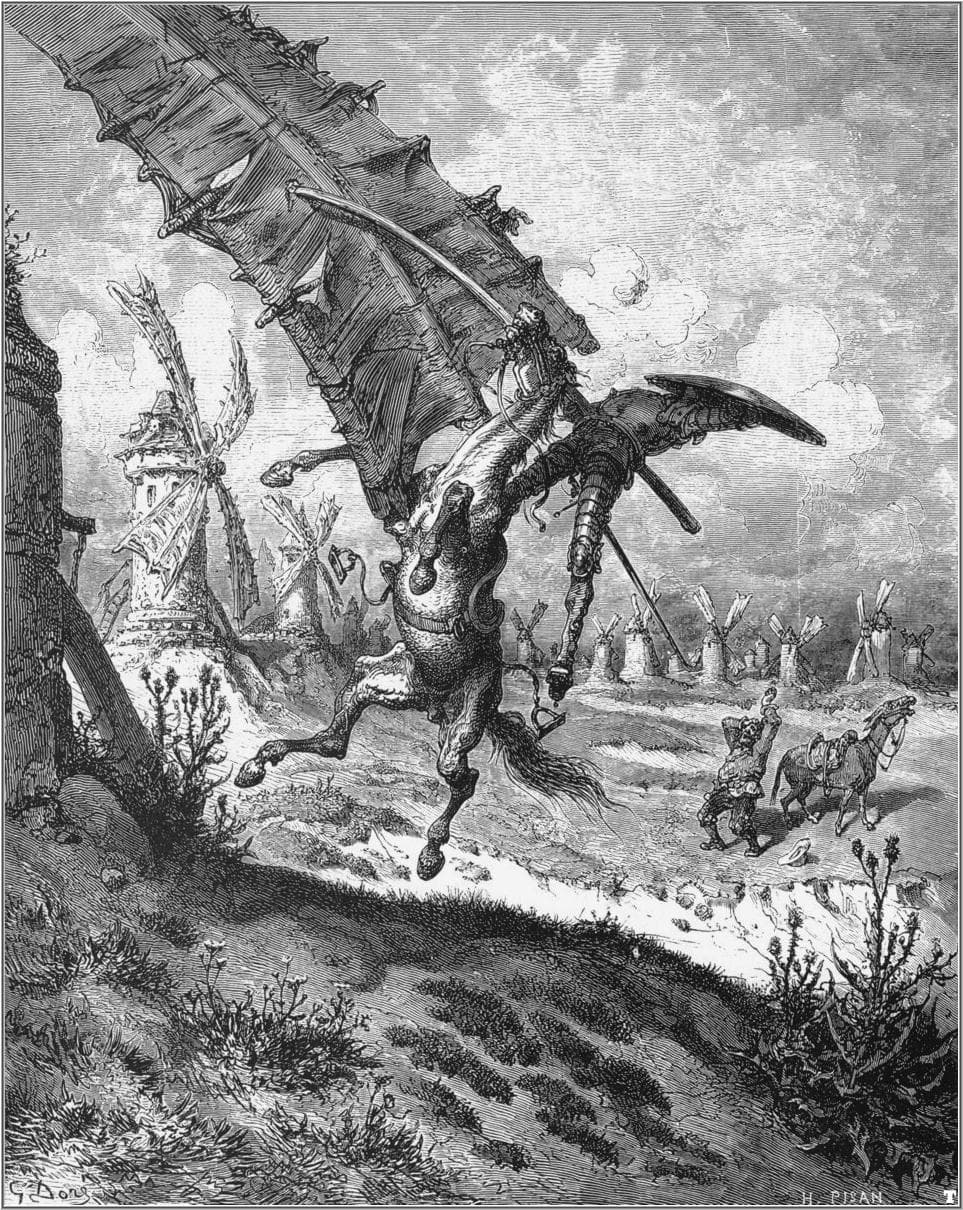
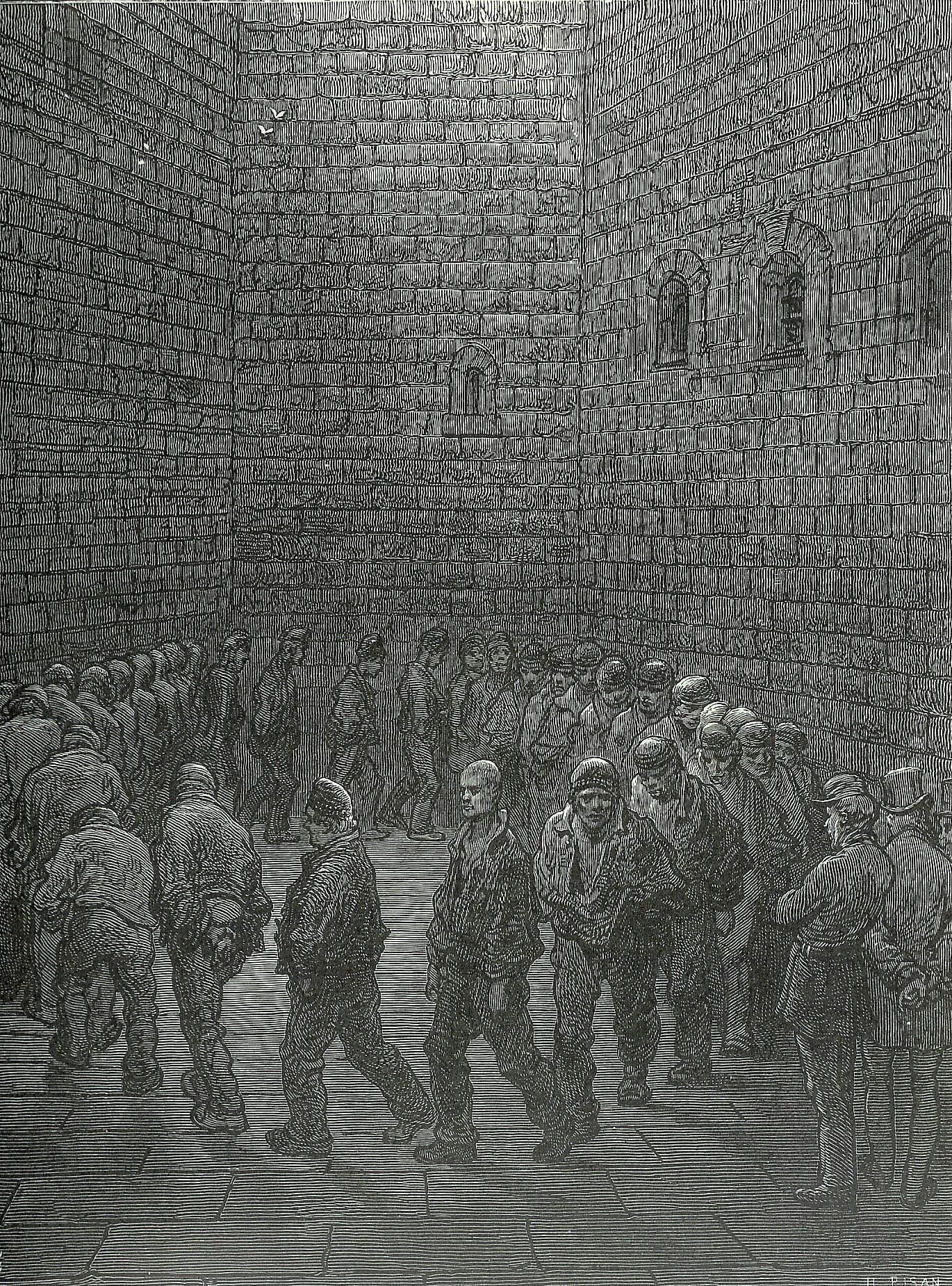
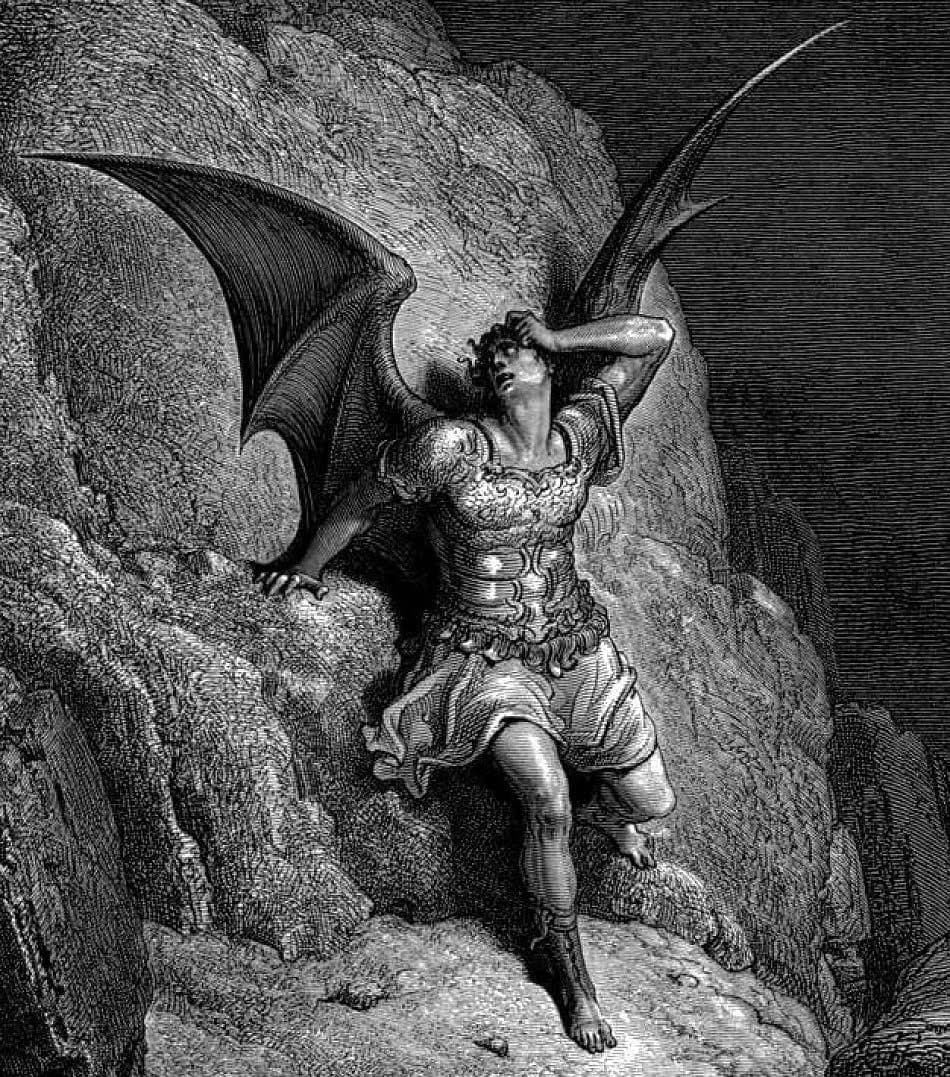
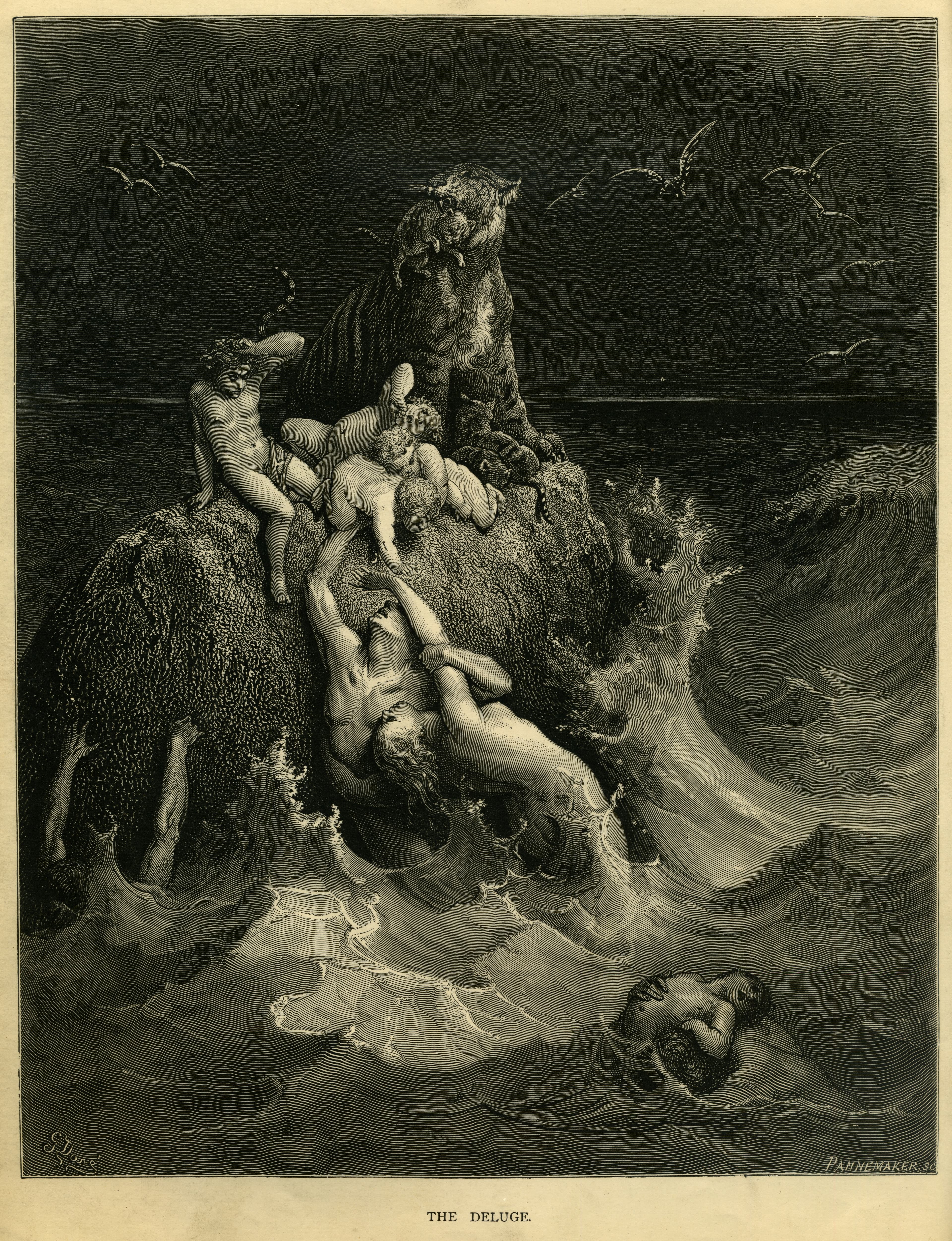
Doré drew Dante Alighieri and his guide Virgil as two small, luminous figures moving through an overwhelming landscape. Forests whose trees are the bodies of suicides give way to cliffs dropping into darkness, ice fields holding the treacherous, and crowds of the damned rendered body by body. The scale is the argument — hell is architecture and weather, and the poets are visitors.
The images owe their finish to a division of labour. Doré drew directly onto the engravers' woodblocks or supplied drawings to be transferred; professional engravers then cut the blocks that printed the plates. The system let one artist's imagination reach print at industrial scale.
Doré completed the Divine Comedy with a second folio covering Purgatorio and Paradiso, published by Hachette in 1868. The hell plates remained the famous ones: publishers ever since have reprinted the Inferno set on its own, and painters and filmmakers staging Dante have started from Doré's staging.
Close reading
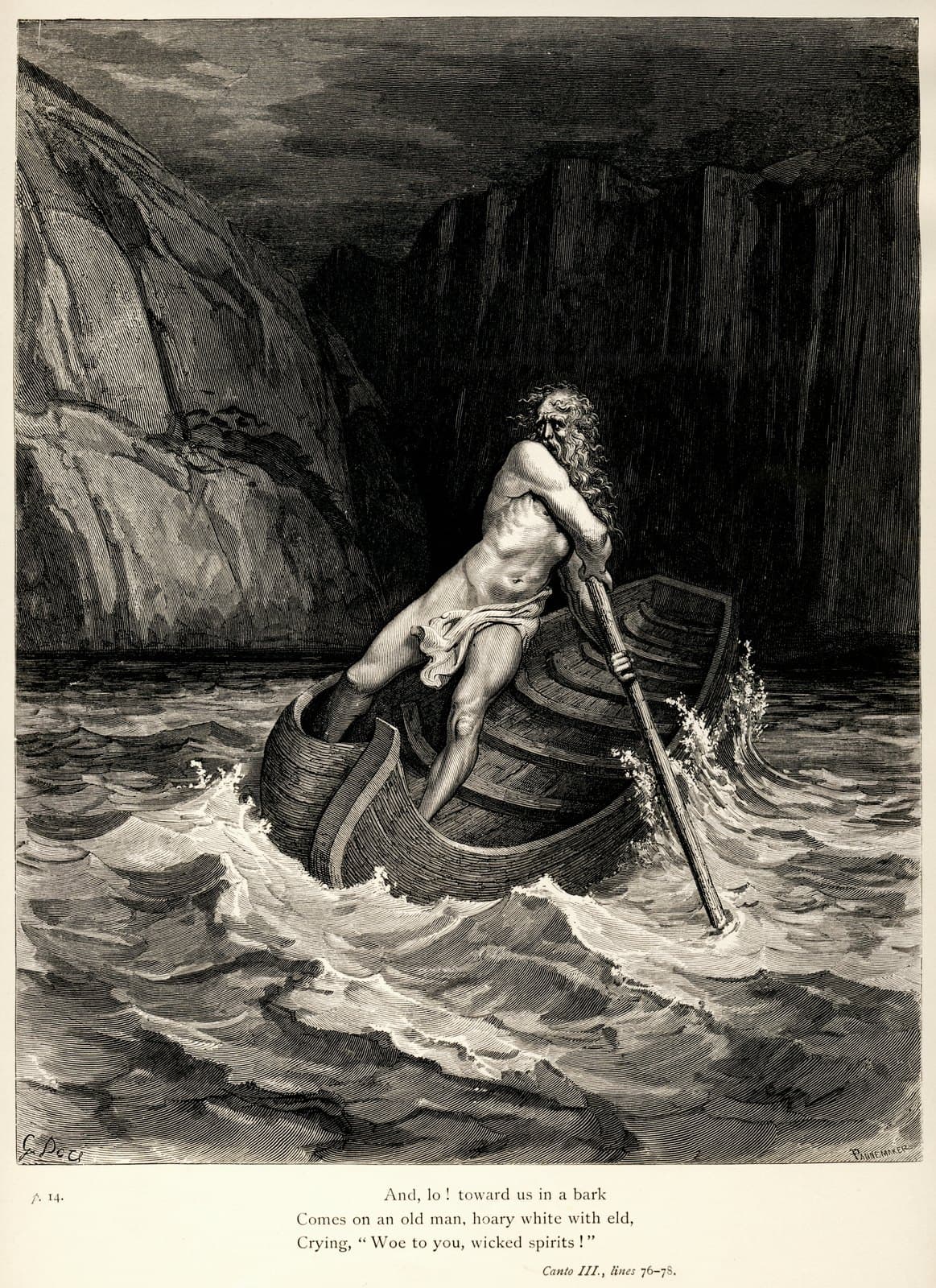
One plate cannot stand for Doré's entire Inferno, but the encounter with Charon contains the suite's governing scale: small travelers, massed bodies, and darkness treated as architecture. The details show how the engraving makes terror accumulate through light and number.
1.Charon commands the crossing
The ferryman's raised body and oar cut through the crowded boat as a hard diagonal. Authority is expressed through the ability to stand and strike where every other figure is compressed.
2.Individual bodies become a single pressure
Faces, hands, backs, and limbs remain separately drawn even as the crowd becomes a continuous surge. Doré makes quantity frightening without reducing the damned to anonymous texture.
3.Darkness behaves like an immense enclosure
Large fields of cut darkness dwarf the illuminated bodies and deny a readable horizon. Hell is not merely where the figures stand; it is the scale and atmosphere that contain them.
4.The raised oar gives the boat its direction
The long oar cuts across the mass of bodies and makes Charon's authority visible. One straight implement controls a boat in which every human form seems to press in a different direction.
5.The river is made from the same restless lines as the bodies
Short engraved marks turn the water into a rough, unstable surface. Doré does not provide a calm strip beneath the boat; the river continues the agitation carried by the passengers.
6.The distant bank offers no relief
Tiny figures and a nearly erased shore extend the scene beyond the main crossing. Distance does not open the space or promise escape; it shows that the same ordeal continues farther away.
A viewing location has not yet been listed for this work.
The folio was published in 1861 in Paris. Doré had wanted the project for years; when Hachette declined to fund so expensive a format, he paid for the first printing himself. It sold out, and Hachette continued the series.
About seventy-five full-page plates in the 1861 folio; exact counts differ slightly between later editions and reprintings. The complete Divine Comedy set, with the Purgatorio and Paradiso volume of 1868, runs to roughly 135 plates.
Yes. The Inferno came first in 1861, and Hachette published his Purgatorio and Paradiso together in a companion folio in 1868. The hell images are the ones that entered popular culture, and they are usually reprinted alone.
Because they became the default picture of hell. The tiny travellers in a vast, hostile landscape, the muscular crowds of the damned, the darkness broken by a single light source — later illustrated Bibles, fantasy art and cinema all inherited the staging. When a film shows hell as monumental architecture in grey half-light, it is quoting Doré whether it knows it or not.
Almost anywhere. The engravings entered the public domain long ago, so they circulate in modern printed editions, in library rare-book rooms holding the 1861 folio, and in full online scans. Original folio volumes appear regularly on the rare-book market.
Depicts
Dante appears throughout the 1861 folio as the poem's traveller, guided by Virgil through the circles of hell.
Explore painters from the same movements and circles.

Brazilian painter who spent the 1920s moving between São Paulo and Paris, studied Cubism under André Lhote, Albert Gleizes and Fernand Léger, and used what she learned to paint Brazilian towns, railways, plants and bodies. Her 1928 painting Abaporu prompted the manifesto that gave the Anthropophagic movement its name.
View artist
French-American artist, lifelong friend of Yves Klein, and a founder of New Realism.
View artist
Strasbourg-born sculptor and poet — Hans in German, Jean in French, both all his life — who co-founded Dada at the Cabaret Voltaire in 1916, composed collages by dropping torn paper 'according to the laws of chance', and settled at Meudon outside Paris in a house his wife Sophie Taeuber-Arp designed.
View artistThe sources below include collection records, catalogues, scholarly research, and primary materials that informed this page. They document Dante's Inferno — the Doré illustrations, its making, and its place in cultural history.


Web source consulted for documented facts and historical context presented on the Dante's Inferno — the Doré illustrations page.
Web source consulted for documented facts and historical context presented on the Dante's Inferno — the Doré illustrations page.
Web source consulted for documented facts and historical context presented on the Dante's Inferno — the Doré illustrations page.
Web source consulted for documented facts and historical context presented on the Dante's Inferno — the Doré illustrations page.
These references provide the documented foundation for this work's history and interpretation. Claim-level citations remain attached to the specific claims they support.
 Explore more resources