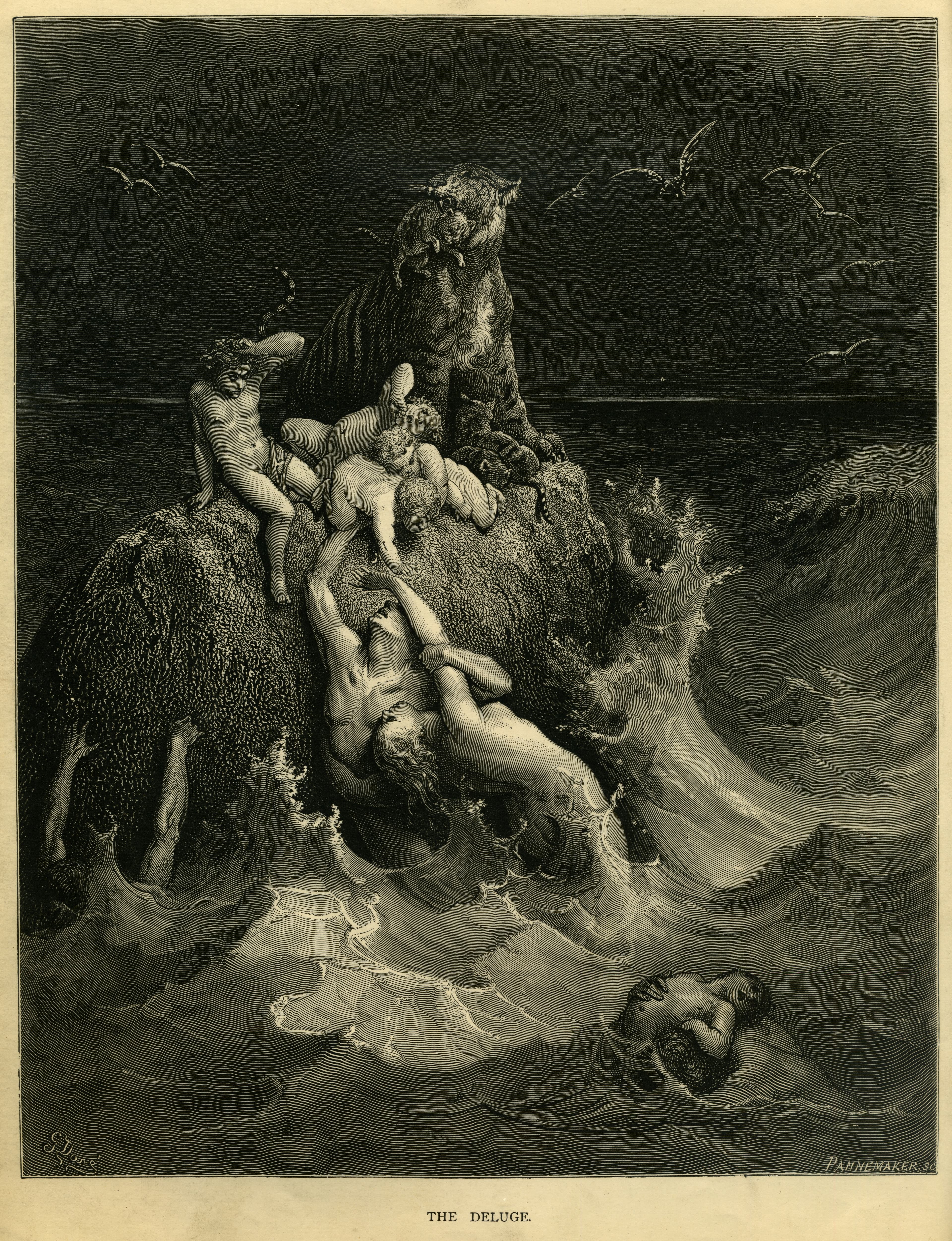
The Doré Bible
by Gustave Doré
The folio Bible published at Tours in 1866 with 241 Doré plates. Reprinted in family Bibles across Europe and America for over a century, it made Doré's Creation, Flood and Old Testament battle scenes the pictures generations attach to scripture.
- 1866
- Wood engravings after Doré's drawings
About Gustave Doré
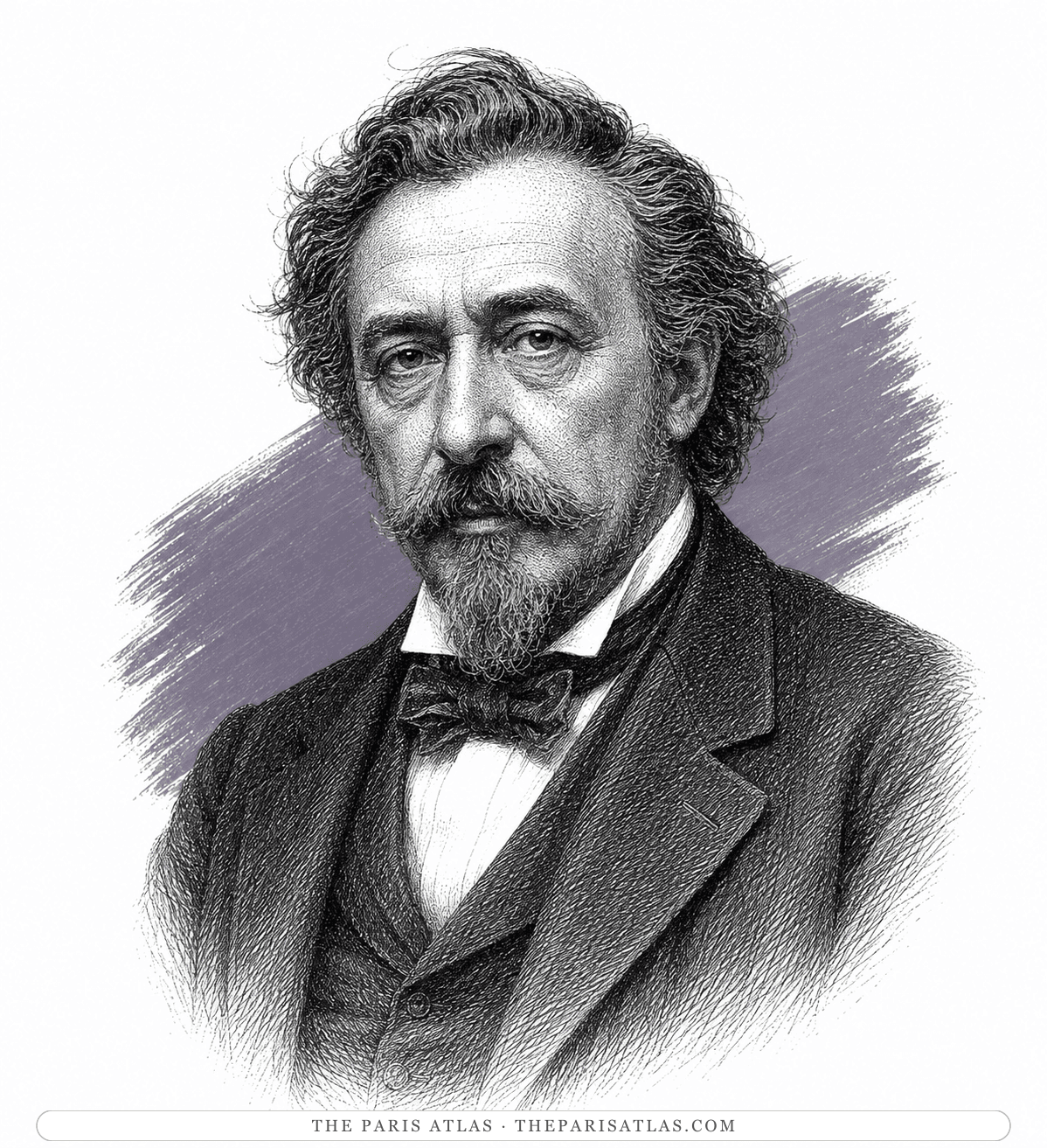
The Tours folio of 1866
The publisher Alfred Mame at Tours issued the two-volume folio Bible in 1866, with 241 wood-engraved plates after Doré's drawings — the most ambitious of all his book projects. An English edition followed from Cassell, and the plates were licensed and reprinted so widely that the images detached from any single edition.
The plates run from the Creation of Light through the Deluge, the patriarchs and the battles of the Old Testament to the Passion and the Apocalypse. Doré's instincts — vast landscapes, dramatic single light sources, crowds in motion — suited the material, and the Old Testament scenes in particular carry the same epic scale as his Dante.
The Bible most families actually saw
For decades after 1866, buying an illustrated family Bible in much of Europe or America meant buying Doré's images. The Deluge, Moses breaking the tablets, Samson at the temple, David standing over Goliath — these compositions were reprinted, copied and adapted in sermons, prints and eventually film epics. The plates remain the most widely distributed religious images made in the nineteenth century.
Close reading
Reading the work, detail by detail
The Deluge plate demonstrates how Doré made biblical catastrophe legible through human scale. Its details show bodies climbing, water overwhelming the frame, and brief acts of protection carrying the story inside an immense disaster.
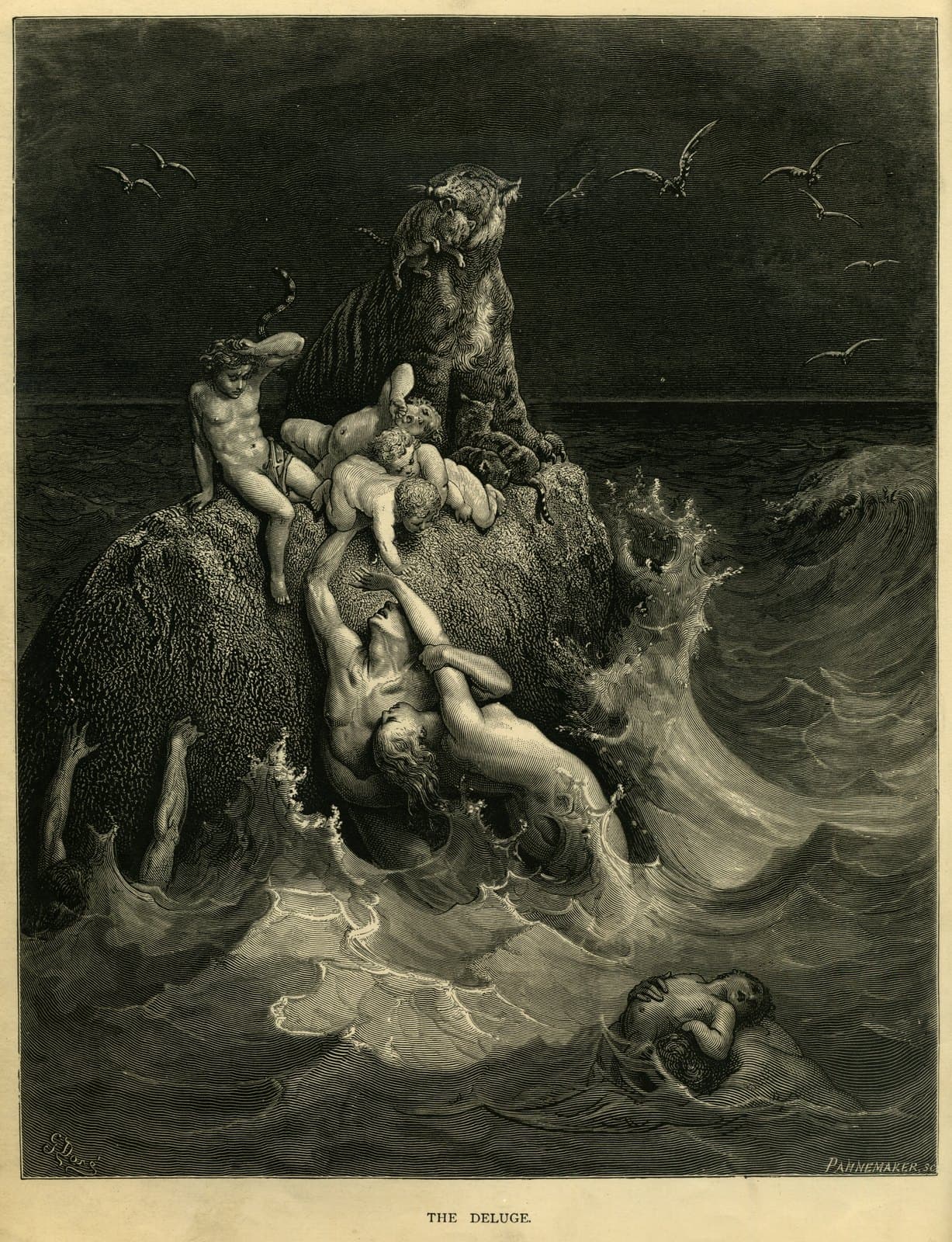
1.The last height becomes a crush of bodies
Every figure seeks the same diminishing refuge, producing a chain of reaching arms and unstable backs. Individual survival and collective pressure become impossible to separate.
2.Water and sky remove the ordinary horizon
Diagonal rain and turbulent water join into an environment with no stable distance. Doré makes the catastrophe feel total by denying a calm boundary between sea and air.
3.A protective gesture keeps the epic human
Within the mass struggle, bodies still turn toward children and companions. These small acts of care do not promise rescue; they make the scale of loss emotionally comprehensible.
4.Raised hands turn distance into individual panic
At first the crowd reads as one dark mass. Enlarged, separate hands reach upward with different angles and degrees of strength, restoring individual fear inside the scale of the disaster.
5.The last rock is refuge measured in inches
The remaining stone is too small for the number of bodies pressing toward it. Doré makes the shortage of safe ground immediately legible without needing to show the entire flood.
6.Parallel cuts make the weather relentless
Fine repeated lines fill sky, water, and spray. Their persistence removes any quiet patch from the image and makes the catastrophe feel continuous rather than like a single dramatic wave.
Where to see it
A viewing location has not yet been listed for this work.
Frequently asked questions
What is the Doré Bible?
The illustrated folio Bible published by Alfred Mame at Tours in 1866 — La Grande Bible de Tours — with 241 wood-engraved plates by Gustave Doré. English-language editions followed immediately, and the plates were reprinted in family Bibles for over a century.
How many illustrations are in the Doré Bible?
241 plates in the original 1866 folio, covering both Testaments from the Creation of Light to the Apocalypse. Later editions selected from the set, which is why reprints vary in count.
Which Doré Bible plates are the most famous?
The Deluge scenes — survivors clinging to a rock as the waters rise — the Creation of Light, Moses with the tablets, Samson destroying the temple, David and Goliath, and the Crucifixion. Most later depictions of these scenes in print and film descend from Doré's staging.
Why did the Doré Bible become so widespread?
Because the plates were licensed and reprinted rather than confined to one luxury edition. Publishers across Europe and America bound Doré's images into their own Bibles, so the pictures reached ordinary households on a scale no painting could.
Where can I see the Doré Bible today?
Original 1866 folios sit in rare-book libraries and appear on the collectors' market, but the images themselves are in the public domain and available in complete modern reprints and online scans.
More by Gustave Doré
If you like Gustave Doré
Explore painters from the same movements and circles.

Tarsila do Amaral
Brazilian painter who spent the 1920s moving between São Paulo and Paris, studied Cubism under André Lhote, Albert Gleizes and Fernand Léger, and used what she learned to paint Brazilian towns, railways, plants and bodies. Her 1928 painting Abaporu prompted the manifesto that gave the Anthropophagic movement its name.
View artist
Arman
French-American artist, lifelong friend of Yves Klein, and a founder of New Realism.
View artist
Jean Arp
Strasbourg-born sculptor and poet — Hans in German, Jean in French, both all his life — who co-founded Dada at the Cabaret Voltaire in 1916, composed collages by dropping torn paper 'according to the laws of chance', and settled at Meudon outside Paris in a house his wife Sophie Taeuber-Arp designed.
View artist
In images
References
The sources below include collection records, catalogues, scholarly research, and primary materials that informed this page. They document The Doré Bible, its making, and its place in cultural history.


1Gustave Doré
WebsiteWikipediaUsed forWeb source consulted for documented facts and historical context presented on the The Doré Bible page.
2Gustave Doré — Encyclopaedia Britannica
WebsiteEncyclopaedia BritannicaUsed forWeb source consulted for documented facts and historical context presented on the The Doré Bible page.
3La vie de Gustave Doré : une chronologie
WebsiteBnF EssentielsUsed forWeb source consulted for documented facts and historical context presented on the The Doré Bible page.
4Gustave Doré (1832–1883): Master of Imagination — exhibition
WebsiteMusée d'OrsayUsed forWeb source consulted for documented facts and historical context presented on the The Doré Bible page.
These references provide the documented foundation for this work's history and interpretation. Claim-level citations remain attached to the specific claims they support.
 Explore more resources