

The Days Run Away Like Wild Horses Over the Hills
The collection these nine poems were cut from during editing — and the home of the Jane elegies the title poem's dedication joins.
Read our take
Nine poems cut from The Days Run Away during editing, rescued into the last of the early Bukowski chapbooks.
Fire Station, published by Capra Press of Santa Barbara in March 1970, is a chapbook of nine Charles Bukowski poems with an unusual origin: they were cut from The Days Run Away Like Wild Horses Over the Hills during its editing the year before — length and cost constraints as well as selection were involved. The bibliographer Sanford Dorbin gathered the leftovers and took them to Capra, which produced the book — designed, printed and bound by Noel Young and Graham Mackintosh — by special arrangement with Black Sparrow Press, in hardcover and softcover. The title poem, "Fire Station (For Jane, With Love)", is an afternoon spent drunk playing cards with firemen, and its dedication ties the little book to the woman whose elegies fill the collection it was cut from. It is generally counted the last of the early Bukowski chapbooks.
The book is a footnote that documents an editorial process: what was cut from the 1969 collection, and what a fledgling second press did with the cut material. Capra and Black Sparrow shared a printer in Noel Young, which is how a second imprint came to publish the cut material with Black Sparrow's blessing. After Fire Station, the era of the scattered Bukowski chapbook effectively closes; from the 1970s on, the poems flowed into the Black Sparrow collections instead.
In “2 Flies,” the speaker treats an interruption as a personal persecution, attributing resentment and frustrated ambition to the insects. His comparison with people enduring political oppression or tragic love makes his own grievance comically disproportionate. Yet the attempt to restore his peace destroys the very newspaper he wanted to read: an instrument of attention becomes a weapon and is spoiled in use. The ending also unsettles his victory. Watching the surviving fly, he recognizes a shared, diminishing span of life. Irritation has not vanished, but the boundary between a suffering human and supposedly worthless creatures has become harder to maintain.
“A Killer Gets Ready” makes military readiness visible through grooming rather than combat. The young Marine repeatedly checks his reflection, changes his coat and polishes his buckle, turning the railway carriage into a stage. But the watching speaker is hardly impartial: he admits his dislike, resents the attention the Marine receives and never speaks to him. Memories of other journeys and wars darken this display of youth. The description of the departing man as already dead is the speaker's judgment, not a narrated casualty. His relief after the man's departure leaves antiwar unease entangled with personal irritation and rivalry.
The rare chance to read what was cut from a major collection during its editing — the book's making, visible in the negative.
The title poem's dedication adds a coda to the Jane elegies of The Days Run Away.
The nine-poem format gives readers a small, focused selection rather than another large retrospective volume.
Circa 1967
Bukowski writes the title poem, Fire Station (For Jane, With Love), before it is gathered with the other poems.
1969
The poems are cut from The Days Run Away Like Wild Horses Over the Hills during editing.
1970
Capra Press publishes the nine cut poems as Fire Station, in March, by arrangement with Black Sparrow.
The collection these nine poems were cut from during editing — and the home of the Jane elegies the title poem's dedication joins.
Read our take
The next Black Sparrow collection, once the chapbook era had closed.
Read our take
The in-print selected volume for the period around these poems.
Read our takeA chapbook of nine Charles Bukowski poems published by Capra Press of Santa Barbara in March 1970 — poems cut from The Days Run Away Like Wild Horses Over the Hills during its editing.
The bibliographer Sanford Dorbin gathered the cut poems and took them to Capra Press, which published them by special arrangement with Black Sparrow. The two presses shared the printer Noel Young.
"Fire Station (For Jane, With Love)" recounts an afternoon spent drunk playing cards with firemen. The dedication is to Jane Cooney Baker, the woman mourned throughout The Days Run Away.
After 1970, Bukowski's poems went into the Black Sparrow collections rather than scattering across small one-off imprints. Fire Station closes the chapbook era that began with Flower, Fist and Bestial Wail in 1960.
Only via the rare-book market or special collections — it has never been reprinted as a standalone volume.
Explore authors with a similar voice, perspective, and influence.
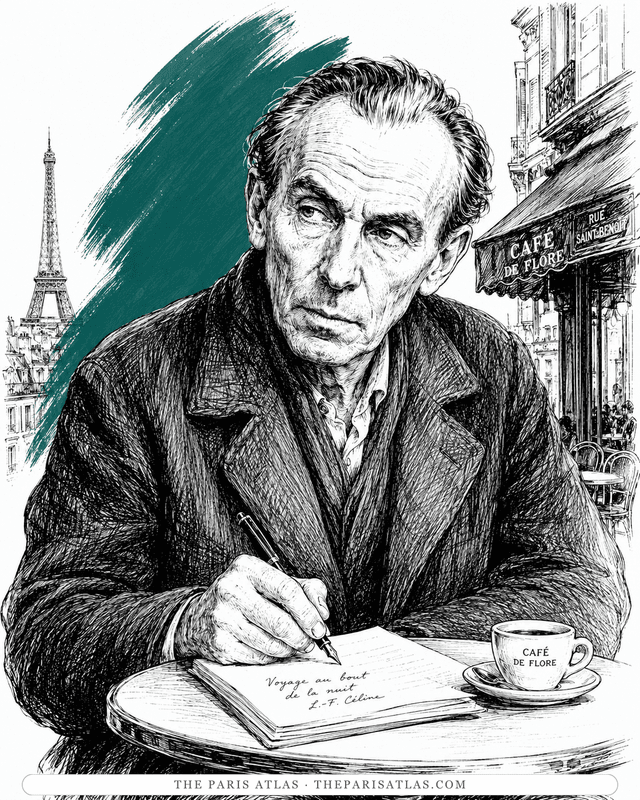
The doctor of the Paris slums who wrote the century's blackest, funniest novel — and changed the sound of French prose.
View author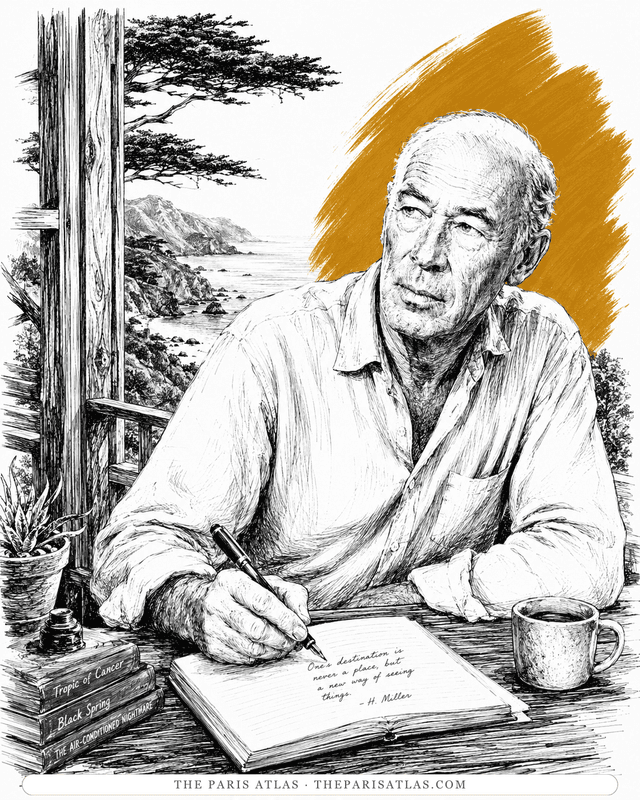
The Brooklyn dropout who arrived in Paris broke at thirty-eight and wrote the exuberant, banned books that ended American censorship.
View author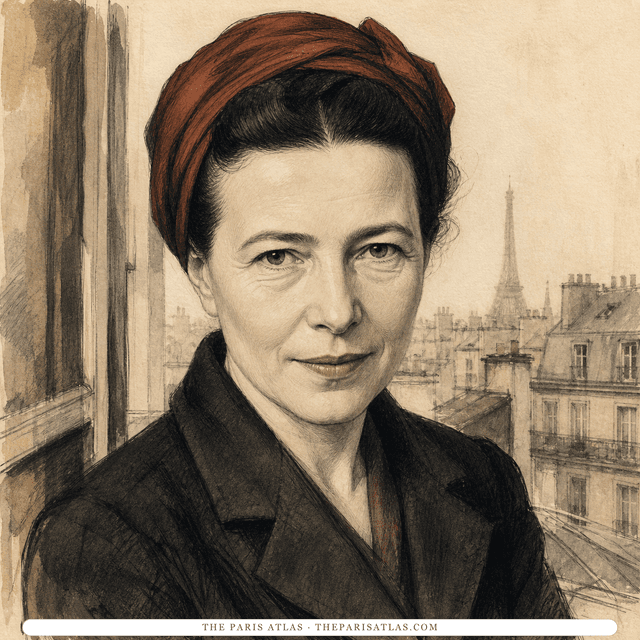
French writer and philosopher whose novels, memoirs, and social analysis examined freedom, gender, responsibility, aging, and the material conditions that shape a life.
View authorThe sources below include the primary text, editions, scholarship, archival materials, and other records that informed this page. They document Fire Station, its publication, and its place in literary history.


The primary text represented by this page, used for descriptions of the work’s contents and for any quoted passages shown here.

The Bukowski papers, which hold the manuscripts and correspondence of the chapbook years.

The Capra publication, the Dorbin assembly, the poems cut from The Days Run Away, and the title poem's dedication.
Bibliographic details of the Capra edition checked against the checklist.
The close of the chapbook era in the career arc.
Web source consulted for documented facts and historical context presented on the Fire Station page.
Complete public transcription of 2 Flies; used for the close reading, not a collation with the 1970 chapbook.
Complete public transcription of A Killer Gets Ready; the website's later-collection tags are not used to date the poem.
Independent collection membership for 2 Flies (p. 12) and A Killer Gets Ready (p. 27); a specialist bibliography, not a first-edition facsimile.
The primary text is the baseline reference for every book page. Additional references document publication history, interpretation, and historical context where that evidence is available.
 Explore more resources