


Burning in Water, Drowning in Flame
Eighteen years of poems in one volume — the in-print gateway to the three rare early collections, plus a section of new work.
- 1974
About Charles Bukowski
The story, briefly
Spoiler-freeBurning in Water, Drowning in Flame, published by Black Sparrow Press in 1974, is the selected volume that keeps Charles Bukowski's early poetry in reach. Its first three sections draw on the three collections that had gone out of reach almost as soon as they appeared — It Catches My Heart in Its Hands (1963), Crucifix in a Deathhand (1965), and At Terror Street and Agony Way (1968) — and a fourth section adds new poems from 1972 and 1973. The span is eighteen years, from the little-magazine poet working at the post office to the full-time writer of the early Black Sparrow years. For most readers this book is the early Bukowski: the hand-printed Loujon editions and the first Black Sparrow printing are rare-book-market objects, and this is where their poems still circulate.
The story, in more detail
The selection shows the voice assembling itself: the lyrical, elegiac writing of the late 1950s giving way, book by book, to the flat, anecdotal line of the 1970s. Reading it front to back is the shortest way to watch that change happen. The volume has been in print continuously since 1974 — first from Black Sparrow, then from Ecco after the 2002 transfer of the Bukowski catalogue — and it remains the standard companion to the individual collections that follow it on the shelf.
Themes and analysis
The collection round
In “the trash men,” the truck’s noise and the workers’ hurried movements turn a collection round into a spectacle. The speaker supplies a whole life around their work: applications, homes, cars and Saturday drinking. These are his assertions about men who have not spoken to him. The ending reverses that apparent familiarity: he has watched them closely, but they do not know he exists. Their departure makes the gap between noticing people and being noticed suddenly personal. The company name that closes the poem leaves an impersonal public label where mutual recognition might have been.
The elephants at the zoo
“zoo” begins with animals described through the visitor’s disappointment: tiredness, stillness and indifference seem to fill the enclosures. The monkeys interrupt that mood, but the poem’s decisive movement happens afterward, when the couple’s conversation and the speaker’s reflection make the human observer resemble what he has watched. His position outside the display no longer guarantees superiority. The final return of his thoughts to the elephants also prevents the sexual joke from settling everything. Their weariness remains with him, and the wish to visit again leaves curiosity and unease together rather than resolving either.
Why we recommend it
The gateway to the early period
The practical way to read the Loujon-era and first Black Sparrow poems — eighteen years of work, in print continuously since 1974.
The development, visible
Because the sections follow the original collections in order, the change in the voice is laid out book by book.
Old collections beside new work
The final section places newer poems after the earlier selections, allowing a direct comparison within one volume.
What this book explores
Timeline
1955–1973
The span of the poems: from the little-magazine years through the first years of full-time writing.
1974
Black Sparrow Press publishes the selected volume.
2002
The Bukowski catalogue passes to Ecco, which keeps the book in print.
Book editions
Hardcover
- Hardcover
- Black Sparrow Press
- 1974

- Paperback
- Ecco
- 2002
- 9780876851913
Reader reviews
Readers may also like


At Terror Street and Agony Way
The 1968 Black Sparrow collection behind its third section.
Read our take
The Pleasures of the Damned
The career-spanning selected volume — the same service this book performs for the early years, extended to the whole life.
Read our takeBurning in Water, Drowning in Flame: frequently asked questions
What is Burning in Water, Drowning in Flame?
Charles Bukowski's selected poems of 1955 to 1973, published by Black Sparrow Press in 1974. Three sections draw on his three rare early collections, and a fourth adds new poems from 1972 and 1973.
Is it the best introduction to Bukowski's poetry?
It is the best introduction to the early poetry. For the fully formed later voice, Love Is a Dog from Hell is the usual door; for the whole career in one volume, The Pleasures of the Damned.
Which collections does it select from?
It Catches My Heart in Its Hands (1963), Crucifix in a Deathhand (1965), and At Terror Street and Agony Way (1968) — followed by a section of new poems.
Why do the early collections need a selected volume?
Because the originals barely circulate. The two Loujon books were hand-printed in editions of 777 and 3,100 copies, and the first Black Sparrow book ran to under 900 — all three are rare-book-market objects.
Is it still in print?
Yes — continuously since 1974, currently from Ecco under the original Black Sparrow ISBN.
How long has it been in print?
Continuously since 1974 — first from Black Sparrow, then from Ecco after the 2002 transfer, under the same ISBN.
If you like Charles Bukowski
Explore authors with a similar voice, perspective, and influence.
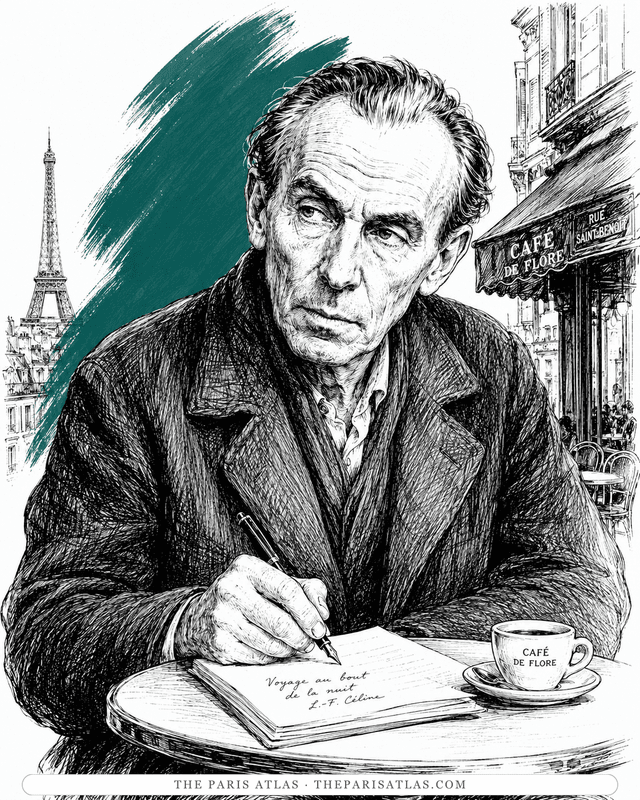
Louis-Ferdinand Céline
The doctor of the Paris slums who wrote the century's blackest, funniest novel — and changed the sound of French prose.
View author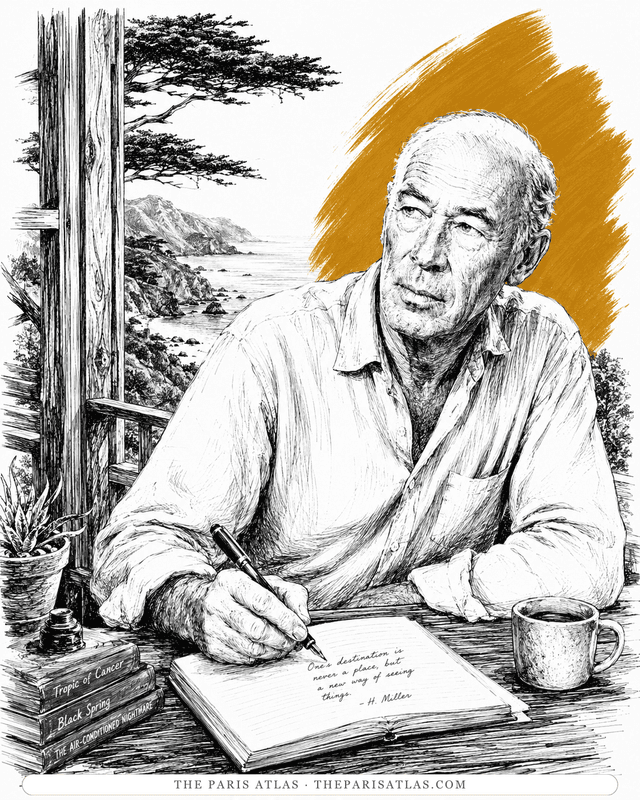
Henry Miller
The Brooklyn dropout who arrived in Paris broke at thirty-eight and wrote the exuberant, banned books that ended American censorship.
View author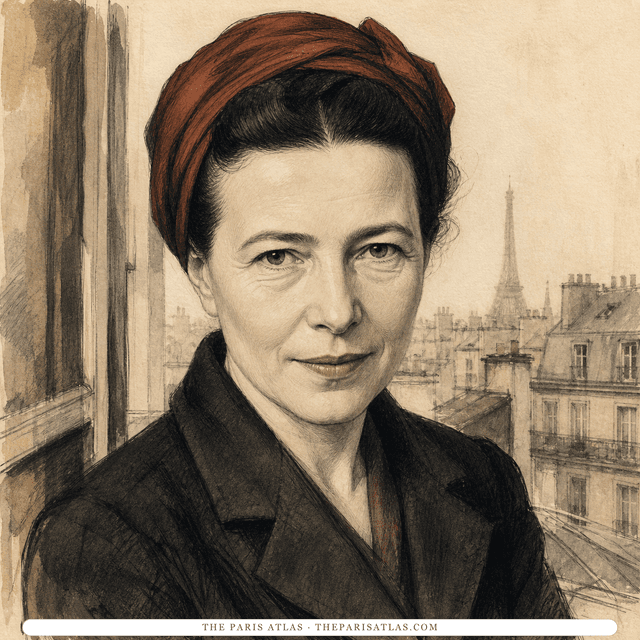
Simone de Beauvoir
French writer and philosopher whose novels, memoirs, and social analysis examined freedom, gender, responsibility, aging, and the material conditions that shape a life.
View author
References
References
The sources below include the primary text, editions, scholarship, archival materials, and other records that informed this page. They document Burning in Water, Drowning in Flame, its publication, and its place in literary history.

1Burning in Water, Drowning in Flame
PoetryCharles Bukowski, 1974Used forThe primary text represented by this page, used for descriptions of the work’s contents and for any quoted passages shown here.

2Charles Bukowski timeline (bukowski.net)
WebsiteUsed forPublication year and the volume's relation to the three early collections.
3Charles Bukowski: books and chapbooks (Verdant Press checklist)
WebsiteUsed forBibliographic details checked against the checklist.
4Charles Bukowski (Poetry Foundation)
WebsiteUsed forCareer arc across the years the selection covers.

5Burning in Water, Drowning in Flame — edition record
Official recordOpen Library, Internet ArchiveUsed forOfficial record used to verify names, dates, institutional details, or other factual information on this page.
6Burning in Water Drowning in Flame — the trash men and zoo transcriptions
WebsiteZanotowane.pl (third-party Literature Online transcription)Used forComplete public transcriptions of the trash men and zoo in a later collected edition, displayed on pages 156–158. The readings concern these two poems; this is not a first-edition facsimile or manuscript comparison.
i
Why these sources are here
The primary text is the baseline reference for every book page. Additional references document publication history, interpretation, and historical context where that evidence is available.
 Explore more resources