
Giovanni's Room
Both books explore the consequences of trying to inhabit a conventional heterosexual life while denying male desire.
Read our take
by Philippe Besson
A writer looks back on the boy he loved and the fear that made an honest shared life impossible.
A writer remembers a secret teenage relationship in provincial France. One boy can imagine sexuality becoming part of an honest life; the other cannot escape the expectations surrounding him.
The novel alternates between adult memory and the affair in 1984. Philippe and Thomas are classmates in Barbezieux, a provincial town in southwestern France. Philippe expects education and escape; Thomas sees himself inheriting family obligations and a public heterosexual role. Thomas initiates the affair but insists on secrecy.[1]
Their physical relationship becomes emotionally decisive for Philippe even though Thomas limits what can be acknowledged outside their meetings. Philippe gradually understands that Thomas's secrecy is not temporary caution but part of a larger decision about how he intends to survive. The boys separate without building a shared future, and Philippe converts what he cannot keep into memory and, later, writing.[1]
Years afterward, Philippe encounters Lucas, Thomas's son. Lucas reveals that Thomas married, became a father, struggled with himself, and eventually died by suicide. Each man possesses a different fragment of Thomas, and their meeting allows those fragments to speak to one another.[1]
An adult narrator returns to a hidden adolescent love and the different futures fear made for the two boys.
As an adult, Philippe sees a young man who resembles Thomas Andrieu so strongly that the sight breaks through decades of practiced composure. The recognition carries him back to 1984, when both boys were seventeen and students in Barbezieux. Philippe was already marked as different and expected to leave through education; Thomas, handsome and quiet, came from a farming family.
Thomas surprises Philippe by initiating contact, but he establishes the terms immediately: no public acknowledgment, no visible couple, and no future promised aloud. Philippe experiences the relationship as both liberation and bewilderment because Thomas chooses him while refusing the social meaning that choice could carry.
The affair develops through hidden sexual encounters and brief private conversations. Philippe falls in love and imagines that the intensity between them could lead to a future. Thomas remains fatalistic: Philippe will leave and make something of himself, while Thomas will stay, work, and fit himself into family and local expectations.
Thomas can be passionate in private and distant in public. The relationship teaches Philippe two opposite lessons at once: that he can be deeply desired, and that desire can coexist with a person's refusal to build a life around it.
The boys part without a clean mutual decision. Philippe leaves town and becomes a writer, fulfilling the future Thomas predicted for him. He also becomes a person capable of giving public language to what Thomas wanted kept hidden.
In adulthood Philippe encounters Lucas, Thomas's son. Lucas reveals that Thomas married a woman, became a father, and tried to inhabit the conventional life he had foreseen as a teenager. The life did not erase his conflict, and Thomas ultimately died by suicide.
Philippe and Lucas join two incomplete memories. Philippe can tell Lucas about the hidden young man his father once was; Lucas can tell Philippe about the adult Thomas became. Their exchange lets a relationship required to remain secret finally be spoken and passed on.
Thomas's suicide changes the meaning of the teenage sections without reducing his life to a single cause. The novel offers no clinical explanation. It shows a long pattern of self-denial already visible when seventeen-year-old Thomas believes that the life he wants and the life he is permitted to live are different things.
Lucas prevents Thomas from existing only as Philippe's lost lover. To Philippe, Thomas has remained seventeen; to Lucas, he was a father whose absences and silences caused another kind of pain. The perspectives complicate rather than cancel one another.
Writing becomes the opposite of Thomas's strategy. Thomas survives by hiding and dividing his life; Philippe survives by turning memory into language. The French title points both toward personal concealment and toward Besson's own practice of transforming truth into fiction.
Philippe cannot recover Thomas or correct the past. What he can do is refuse the disappearance Thomas once demanded. Telling the story gives public existence to a love that was required to behave as though it did not exist.
The novel argues that duration is not the only measure of importance. A brief relationship at seventeen can remain one of the reference points by which a person understands later intimacy and loss.
Both boys are vulnerable, but they imagine the future differently. Philippe can envision leaving and eventually speaking openly. Thomas believes secrecy is the price of remaining where he belongs. Geography, class, family expectation, and temperament make the same desire carry different consequences.
Thomas is a farmer's son and assumes continuity with family labor and rural life. Philippe's education gives him a route outward. Their separation is not explained only by sexuality; it is also about who believes he has permission to leave the world that formed him.
The title refers to concealment and to fiction itself. Besson is a novelist presenting material unusually close to his own life. The book explores the paradox that invention can disclose an emotional truth.
Lucas discovers that his father had a love story and identity he never knew; Philippe discovers the adult father Thomas became. Their meeting asks how well children know their parents and how much of any interior life remains inaccessible even to family.
Thomas's defense is silence, while Philippe's is language. Barbezieux is both home and constraint: Philippe's escape gives him freedom but makes him the person who leaves; Thomas's staying gives him continuity but not necessarily belonging to himself. Neither path is emotionally free.
Besson writes in short, controlled sections with a confessional first-person voice. A glance or sentence can trigger a long retrospective interpretation because the adult narrator has had decades to understand what his teenage self could not.
The book uses repetition deliberately. Thomas's statements about who will leave and who will remain become prophetic, and the narrator returns to particular phrases as though testing whether time has changed their meaning. Molly Ringwald's English translation preserves the spare, intimate quality.
Although marketed as a novel, Lie with Me intentionally resembles memoir. The narrator shares Philippe Besson's profession and biographical markers, and Thomas is presented with the specificity of memory. It is best described as an autobiographical novel or autofiction, not as a documentary transcript.
Julliard published Arrête avec tes mensonges in France on January 5, 2017. Molly Ringwald's English translation appeared in 2019 through Scribner in the United States and Penguin in the United Kingdom. Paperback, ebook, audiobook, and other translated editions followed; edition-specific translators should be verified from publishers or library catalogs.
Olivier Peyon's French film Arrête avec tes mensonges was completed in 2022 and released theatrically in France in 2023. It renames the adult author figure Stéphane Belcourt and develops a more external return-to-hometown plot. Those film-only names and events should not be used to fill gaps in the novel.
Its tragedy is not a failure to love, but a failure to live honestly with that love.
The retrospective account measures an early relationship against what becomes possible, or impossible, afterward.
The lovers’ unequal ability to imagine an open future gives their relationship a conflict beyond attraction.

A successful writer remembering the secret first love that shaped his understanding of intimacy and loss.

Philippe's secret first love, passionate in private but convinced he must inhabit the conventional life expected of him.
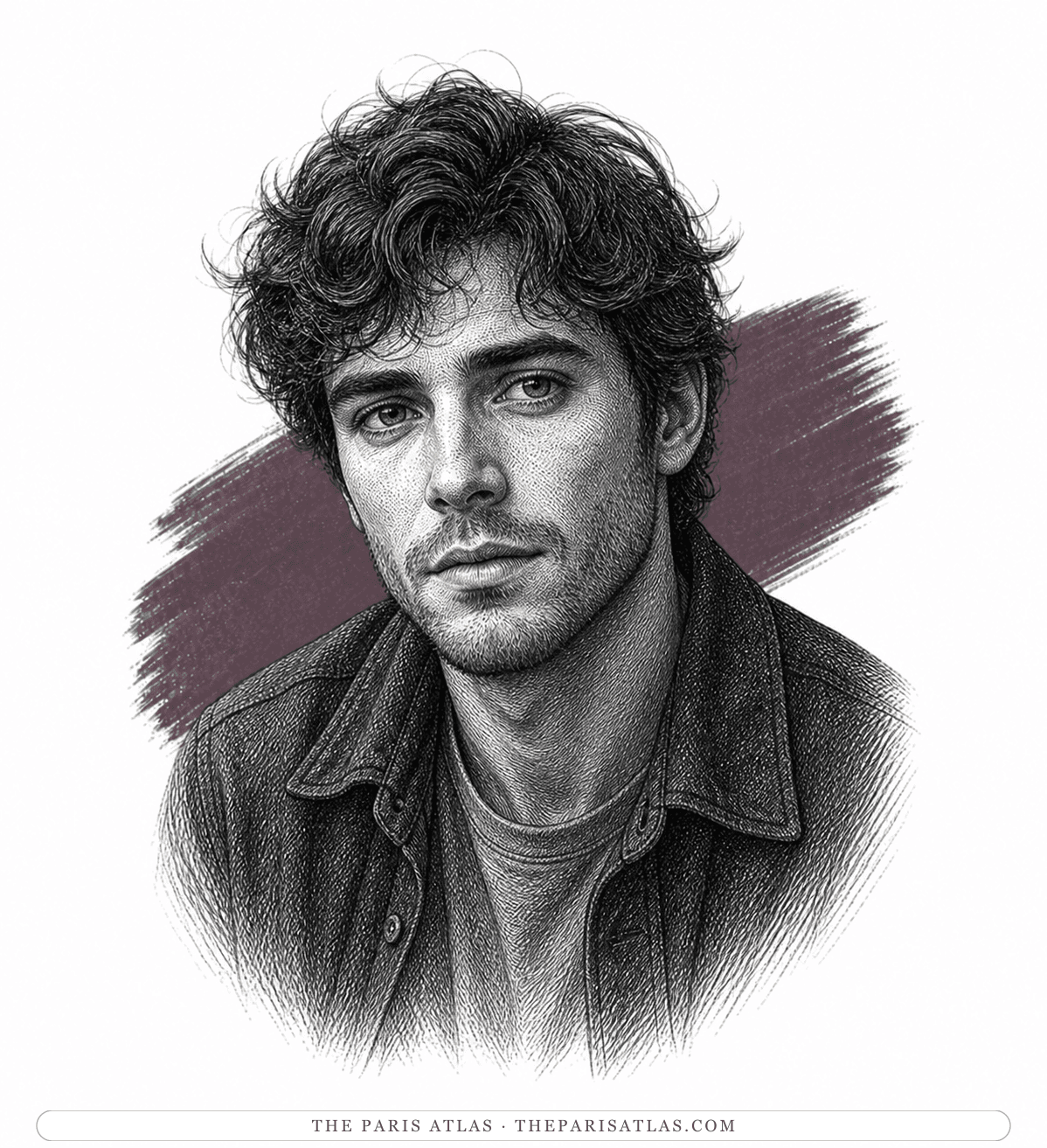
Thomas's adult son, whose resemblance to his father brings Philippe's preserved memory into the present.
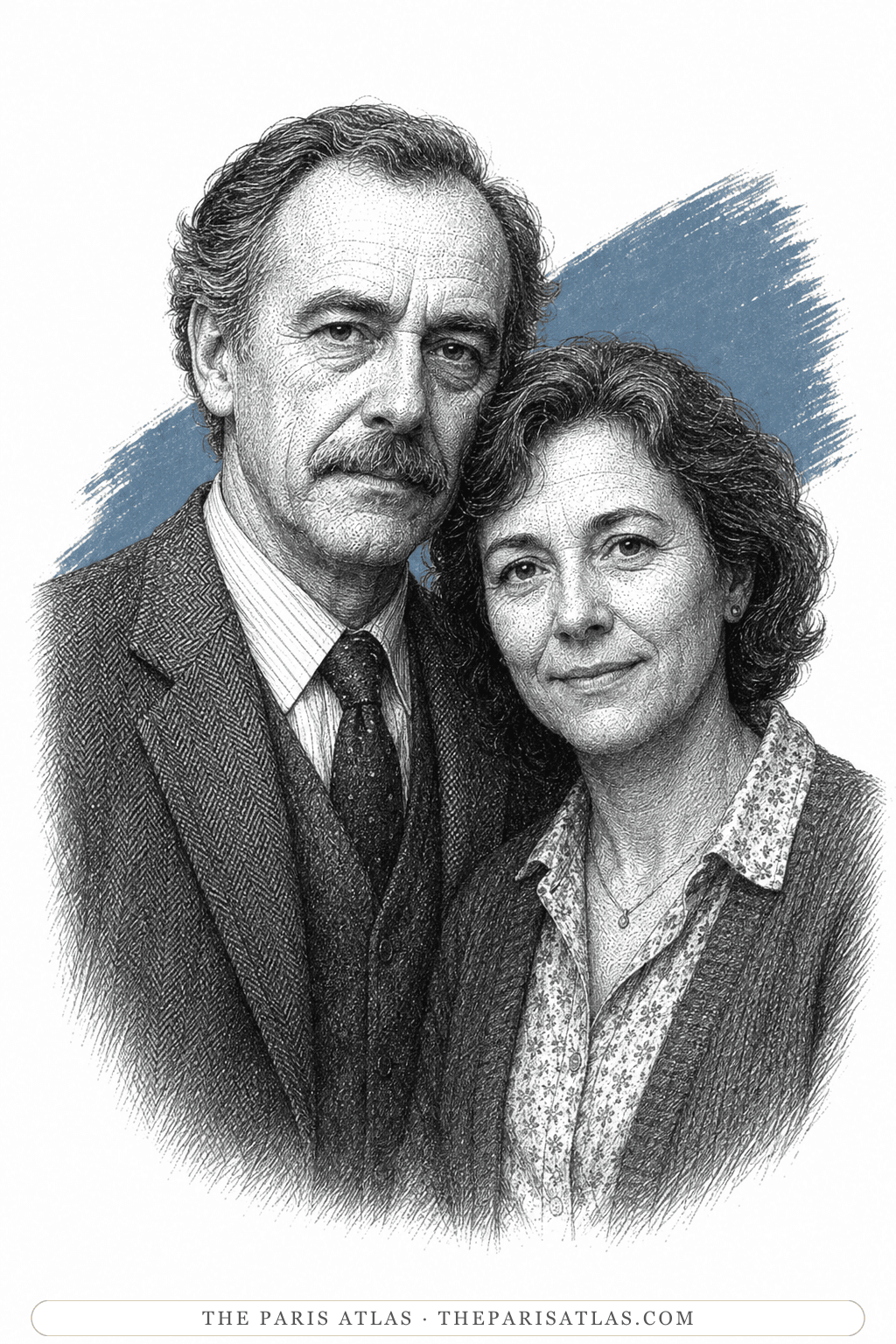
The respectable school-connected family whose educational expectations give Philippe a route out of Barbezieux.

The rural family world of work, continuity, and conventional adulthood that Thomas believes he must inherit.
1984
Seventeen-year-old Philippe and Thomas begin their secret relationship in Barbezieux.
2017
Julliard publishes Arrête avec tes mensonges in France.
2019
Molly Ringwald's English translation appears through Scribner and Penguin.
2022–2023
Olivier Peyon's film adaptation enters festivals and receives its French theatrical release.
Both books explore the consequences of trying to inhabit a conventional heterosexual life while denying male desire.
Read our take
Both use a later narrator to preserve the intensity of a formative male love that did not become a shared lifelong partnership.
Read our take
Isherwood offers a mature meditation on the continuing life of love after the beloved is absent.
Read our takeIt is published as a novel but is strongly autobiographical. Autofiction or autobiographical novel is safer than either pure fiction or fully verified memoir.
Arrête avec tes mensonges, roughly Stop with your lies or Stop telling your lies.
Actor and writer Molly Ringwald translated it from French.
They are both seventeen during the central 1984 relationship.
In and around Barbezieux in southwestern France.
Lucas is Thomas's son, and he supplies information about the adult life Philippe never witnessed.
Thomas marries, becomes a father, and later dies by suicide. The novel does not reduce this to one clinical cause.
No. Olivier Peyon's adaptation creates a more developed return narrative and renames the adult writer Stéphane Belcourt.
Philippe gives language to a relationship that secrecy had threatened to erase.
The affair is central, but the novel is equally about memory, class, secrecy, fatherhood, grief, and adult consequences.
Explore authors with a similar voice, perspective, and influence.
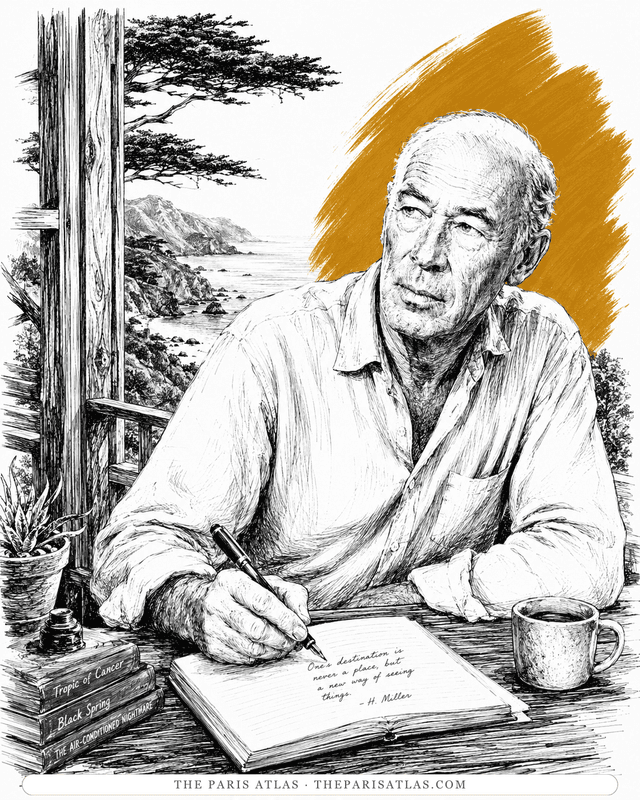
The Brooklyn dropout who arrived in Paris broke at thirty-eight and wrote the exuberant, banned books that ended American censorship.
View author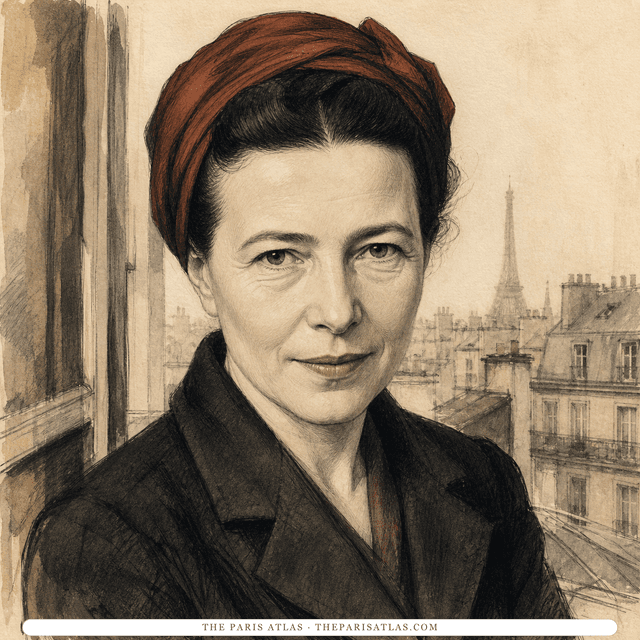
French writer and philosopher whose novels, memoirs, and social analysis examined freedom, gender, responsibility, aging, and the material conditions that shape a life.
View author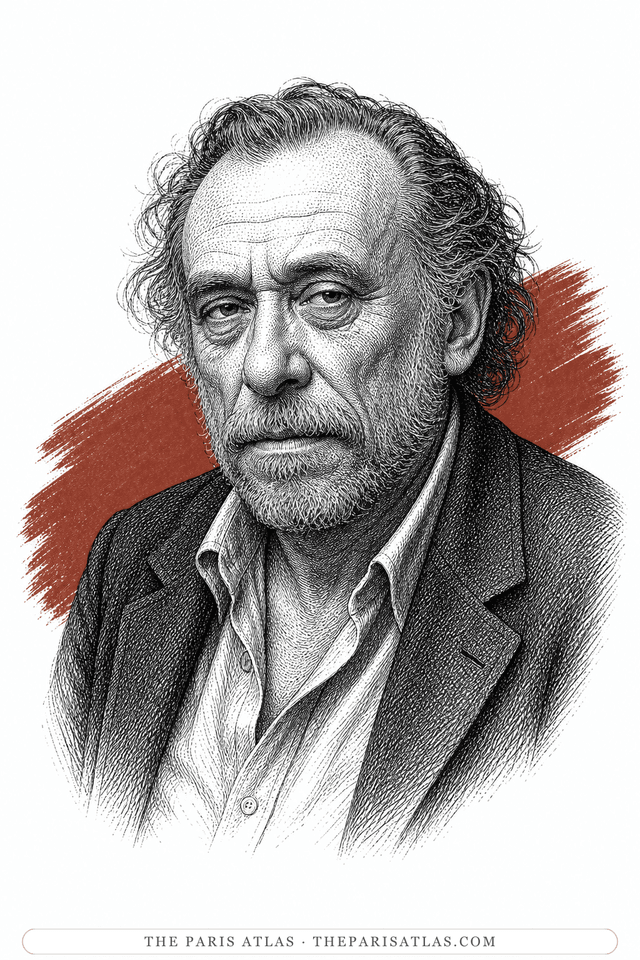
American poet and novelist of Los Angeles rooming houses, racetracks and the post office, who quit his job to write when a publisher offered him a hundred dollars a month. He came to Paris once, in September 1978, drank his way through a live television book programme and walked off the set — and French television has been replaying it ever since.
View authorThe sources below include the primary text, editions, scholarship, archival materials, and other records that informed this page. They document Lie with Me, its publication, and its place in literary history.


Google Books catalogue record used to cross-check the title and edition metadata.
Internet Archive ISBN catalogue used to cross-check the edition and its availability in library holdings.
Library of Congress books catalogue used to cross-check the bibliographic record by ISBN.
French trade bibliographic record verifies the Julliard edition, original title, publication date, and ISBN.
Official publisher page verifies Molly Ringwald's translation and UK edition information.
U.S. edition record verifies the 2019 Scribner edition, translator, setting, and Lucas's importance.
Official French distributor record verifies Olivier Peyon's feature-film adaptation and release information.

Primary opening text for the narrator's invention of strangers' lives, his mother's description of those stories as lies, and the interruption of his interview. This sample does not establish the later plot chronology.
The primary text is the baseline reference for every book page. Additional references document publication history, interpretation, and historical context where that evidence is available.
 Explore more resources