
Giovanni's Room
Both novels treat gay male intimacy as emotionally serious under social constraint, but Isherwood’s quiet domestic grief contrasts with Baldwin’s confession-driven tragedy.
Read our take
by Christopher Isherwood
One ordinary day carries the private weight of a love the outside world barely recognizes.
George moves through a day of teaching, eating, talking, and continuing to exist after the death of his longtime partner. The novel makes loneliness and grief precise without making them grand.
George begins the day by assembling himself out of sleep, memory, habit, and social performance. His home is filled with traces of Jim, but the neighborhood around him treats George as an odd, solitary bachelor rather than a widower. He drives to the college where he teaches English and finds himself alternating between irritation with his students and moments of renewed engagement. Kenny, one of those students, pays unusually close attention to him.[1]
After work, George visits Doris, a dying woman who once had a brief affair with Jim, and later spends the evening with Charlotte, an English expatriate friend. Charlotte is lonely and drinks heavily; her affection for George contains a romantic element he cannot return. Their conversation exposes the limits of friendship when two people need different things from each other.[1]
George eventually goes to the Starboard Side, a bar associated with memories of Jim, and unexpectedly meets Kenny. They drink, talk, swim naked in the ocean, and return to George’s home. No simple new romance emerges. Instead, the night gives George a temporary sensation of connection and possibility. After Kenny leaves, George returns to sleep, and the novel ends with a sudden imagined account of his death from a physical failure within the body.[1]
A grieving professor moves through one day while the life he shared with his partner remains present in everything he does.
George wakes alone in the Southern California house he shared with Jim. The process of washing, dressing, eating, and leaving for work becomes the daily reconstruction of a public self. Neighbors tolerate him as a solitary bachelor without recognizing him as a widower, while Jim’s absence remains present in every routine.
At the college, George lectures on literature and lets his anger about social categories and minority status enter the classroom. Kenny Potter, a student, is intrigued and later walks with him to the bookstore. Kenny’s attention briefly interrupts George’s sense of himself as aging and invisible.
George visits Doris, a terminally ill woman who once had an affair with Jim. The visit brings old jealousy into contact with approaching death. He then spends the evening with Charlotte, or Charley, a lonely English expatriate who knew Jim but wants a romantic closeness George cannot return.
At the Starboard Side, a bar tied to memories of Jim, George unexpectedly meets Kenny. They drink, talk, and swim naked in the ocean before returning to George’s home. Attraction and generational curiosity remain unresolved; George falls asleep, and Kenny leaves a friendly note.
George wakes after Kenny has gone, reads the note, and returns to bed. The narrator then moves beyond George’s awareness and imagines a sudden internal failure—an artery or bodily mechanism giving way—that causes him to die in his sleep.
The ending is not a suicide. The explicit plan, gun, and farewell preparations belong to Tom Ford’s 2009 film adaptation, not Isherwood’s novel.
George has survived the day emotionally. Teaching, memory, friendship, irritation, appetite, and Kenny’s attention have pulled him back toward life without curing his grief. His death arrives as an arbitrary bodily interruption just when tomorrow seems possible again.
The ending also completes the book’s idea of identity as temporary construction. The opening assembles George each morning; the final pages show that the self dissolves when the body can no longer sustain it.
George has lost a long-term partner, but his neighbors and Jim’s family do not automatically recognize him as a widower. Jim’s absence is therefore joined by the social minimization of that loss. The novel makes visible the extra labor of mourning without an accepted public script.
George gets dressed into himself, teaches himself into himself, and speaks differently depending on who is present. His private mind is sharper, crueler, funnier, and more vulnerable than the respectable professor his neighbors and students see.
His awareness of being part of a stigmatized minority gives him insight and justified anger, but it also feeds contempt and defensive generalization. Isherwood refuses the simple idea that marginalization automatically makes a person generous.
George is conscious of physical decline and compares himself with younger bodies. Kenny’s attention matters because it briefly counters his fear of invisibility. Charlotte offers companionship but wants a kind of romantic reciprocity he cannot provide. The sudden ending finally gives the body, rather than George’s arguments about living, the last word.
Isherwood uses a close third-person narration that often feels almost like first person because the prose stays tightly attached to George’s consciousness. The opening is especially experimental, describing the self as a mechanism that reassembles after sleep.
The writing is economical but not bare. Precise descriptions of Southern California houses, freeways, bodies, classrooms, and social types coexist with humor, lust, snobbery, irritation, and sudden tenderness. Several emotional truths can occupy the same scene, keeping grief from becoming sentimental.
Because the action covers one day, structure depends on changes in George’s state of mind rather than major external events. Home, college, hospital, Charlotte’s house, bar, beach, and home again become distinct emotional chambers before the final abrupt movement from renewed connection to death.
Simon & Schuster published A Single Man in the United States in 1964, with Methuen publishing the first UK edition. The novel has remained in print through many paperback, international, and translated editions. Translation credits and dates should be attached to specific publisher or national-library records rather than inferred from modern reissues.
Tom Ford directed the 2009 film from a screenplay by Ford and David Scearce, with Colin Firth as George, Julianne Moore as Charlotte, Matthew Goode as Jim, and Nicholas Hoult as Kenny. The film preserves the central grief and period setting but adds a suicide plan, gun, farewell preparations, Carlos, and other dramatic material absent from the book. Those film details should never be used to summarize Isherwood’s plot.
It is quieter than Giovanni's Room but equally precise about loneliness and private grief.
Teaching, meals, and conversations give the novel a clear structure without reducing the depth of George’s grief.
The contrast between ordinary encounters and George’s bereavement makes small moments of connection matter.

A fifty-eight-year-old English professor trying to function after the death of his partner, Jim.

A curious student whose attention briefly restores George’s sense of possibility and desirability.

George’s deceased long-term partner, present throughout the novel through memory, habit, and absence.

George’s lonely English friend, whose affection asks for a romantic future he cannot provide.

A dying woman whose past affair with Jim forces jealousy and mortality into the same hospital room.

A student who helps define the younger social world surrounding Kenny and George’s classroom.

The respectable suburban families George watches with alienation, defensiveness, and reluctant fascination.
1964
Simon & Schuster publishes the first U.S. edition, with Methuen publishing the first UK edition.
2009
Tom Ford’s film adaptation is released with Colin Firth as George.
2010
A Vintage London edition continues the novel’s modern-classic circulation.
Both novels treat gay male intimacy as emotionally serious under social constraint, but Isherwood’s quiet domestic grief contrasts with Baldwin’s confession-driven tragedy.
Read our take
Both insist on the reality of a relationship that its society struggles to recognize, though Isherwood begins after the shared life has already ended.
Read our take
Hollinghurst looks back across generations of gay life and repression, extending Isherwood’s concern with how private relationships meet public history.
Read our takeThe novel follows one day in the life of George, an English professor grieving his partner Jim. He teaches, visits Doris, spends an evening with Charlotte, meets Kenny, swims with him, and later dies unexpectedly in his sleep.
The novel is deeply concerned with death, but the explicit suicide plan and gun belong to the 2009 film adaptation, not Isherwood’s book.
Jim died in a car accident before the novel begins, leaving George alone in the house they shared.
The novel leaves Kenny’s feelings deliberately ambiguous. Curiosity, admiration, attraction, and experimentation are all possible, but no confirmed romance is established.
No. They drink, swim naked, return to George’s home, and share an intimate but unresolved night.
Charlotte knew Jim and shares George’s cultural past, but she also wants a romantic closeness George cannot give her. Their friendship is both necessary and painful.
Doris once had a brief affair with Jim. Seeing her as she is dying brings jealousy, memory, mortality, and George’s continuing attachment to Jim together.
After Kenny leaves, George returns to sleep and dies from a sudden internal bodily failure. The ending is not a suicide.
It preserves the central situation and characters but makes major changes, especially by adding George’s suicide plan, a gun, farewell preparations, and Carlos.
In 1964 it treated the grief and inner life of a gay middle-aged man with unusual directness, presenting his partnership as emotionally serious rather than making homosexuality the pathology.
Explore authors with a similar voice, perspective, and influence.
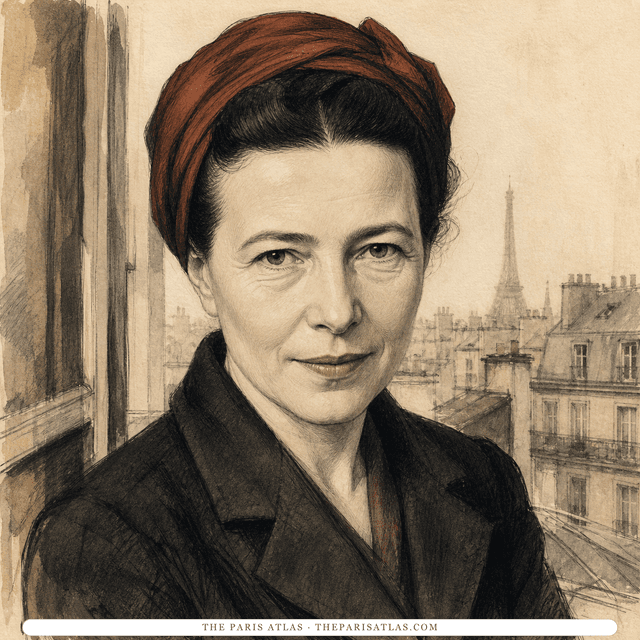
French writer and philosopher whose novels, memoirs, and social analysis examined freedom, gender, responsibility, aging, and the material conditions that shape a life.
View author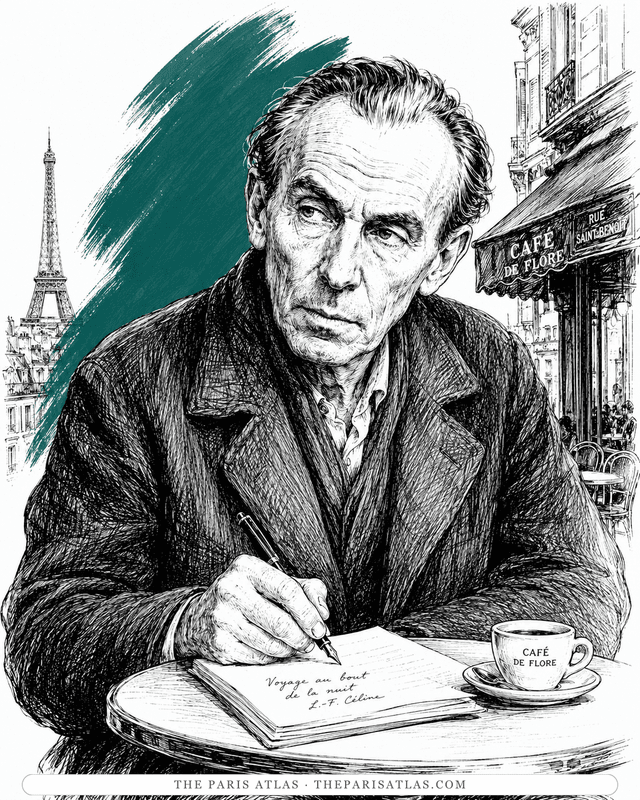
The doctor of the Paris slums who wrote the century's blackest, funniest novel — and changed the sound of French prose.
View author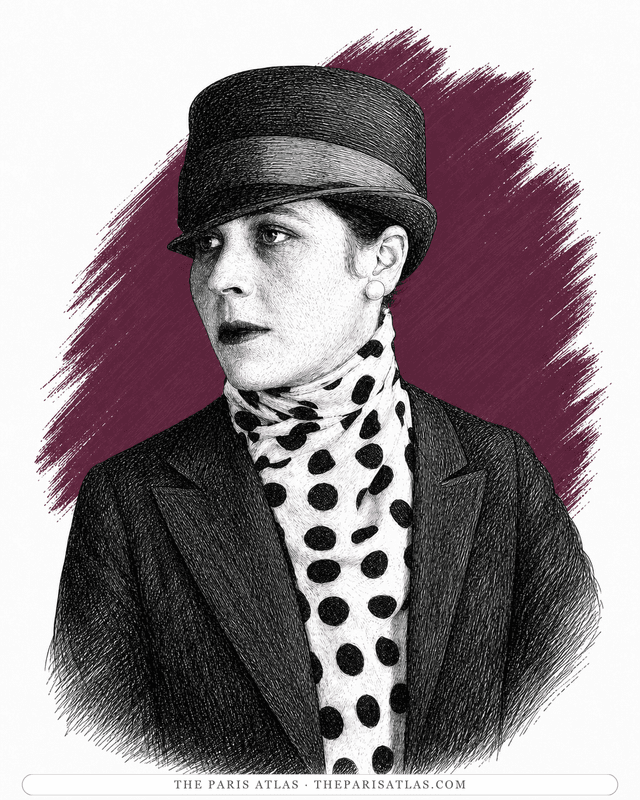
American writer and illustrator (1892–1982). She was a New York newspaper reporter for eight years before she was a novelist, spent the 1920s and 1930s in Paris, and wrote Nightwood, the 1936 novel T. S. Eliot took to Faber and introduced.
View authorThe sources below include the primary text, editions, scholarship, archival materials, and other records that informed this page. They document A Single Man, its publication, and its place in literary history.


Google Books catalogue record used to cross-check the title and edition metadata.
Internet Archive ISBN catalogue used to cross-check the edition and its availability in library holdings.
Library of Congress books catalogue used to cross-check the bibliographic record by ISBN.
Archival exhibition record for the novel and its place in Isherwood’s work.
British Film Institute record for Tom Ford’s 2009 adaptation.
American Film Institute record used to cross-check the film credits and release history.
The primary text is the baseline reference for every book page. Additional references document publication history, interpretation, and historical context where that evidence is available.
 Explore more resources