
Apollon
The narrator’s older servant, whose composed resistance defeats attempts at intimidation.
To receive the wages he is owed and preserve self-respect without yielding to his employer’s erratic efforts at domination.
The book

At a glance
- The narrator’s servant
- Withheld wages
- Calm resistance
Who they are in the book
Spoiler-freeApollon performs domestic work but refuses to act frightened or grateful. When the narrator withholds wages to force submission, Apollon waits with calm, reproachful silence.
Because the servant can see through his employer’s performance, their conflict leaves the narrator exposed just before Liza arrives.
How Apollon Is Portrayed
- Older Russian servantAge and experience support his composure.
- Formal domestic clothingClass role is clear without props.
- Unimpressed gazeHe refuses intimidation.
- Rigid calm postureStillness becomes resistance.
- Close engraved bustNo tray, room, or money appears.
- Muted olive accentThe grounded color suits steadiness.
Apollon outlasts the narrator’s attempt to withhold his pay and witnesses part of Liza’s visit. He remains in service when the narrated episode ends.
If you like Notes from Underground


If you like Fyodor Dostoevsky
Explore authors with a similar voice, perspective, and influence.
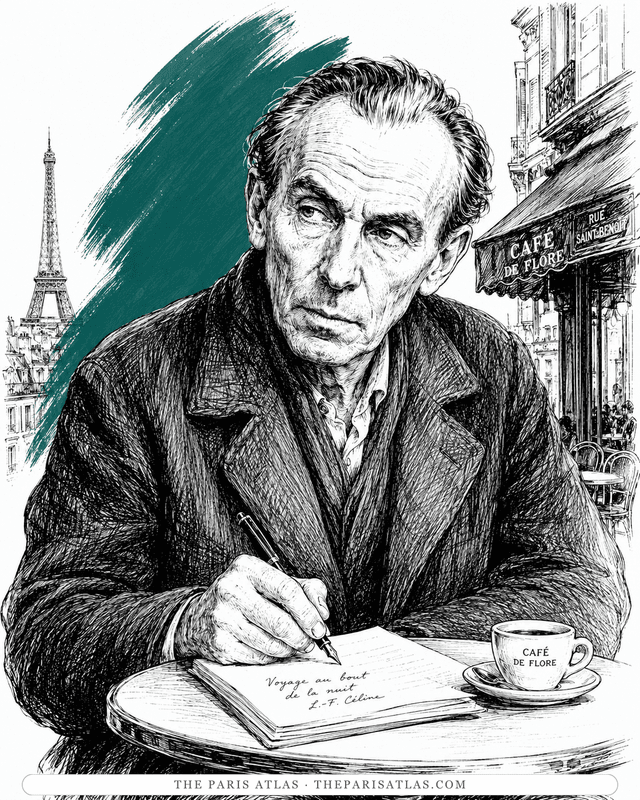
Louis-Ferdinand Céline
The doctor of the Paris slums who wrote the century's blackest, funniest novel — and changed the sound of French prose.
View author
Simone de Beauvoir
French writer and philosopher whose novels, memoirs, and social analysis examined freedom, gender, responsibility, aging, and the material conditions that shape a life.
View author
Paul Bowles
American novelist and composer whose expatriate fiction explores dislocation, unstable intimacy, fatalism, and North Africa.
View author