

Stoner
by John Williams
A university professor’s apparently ordinary life gains its weight through exact, restrained prose.
- 1965
- Spare
- Melancholy
- spare
- intimate
- voice-driven
The story, briefly
Spoiler-freeWilliam Stoner leaves a poor Missouri farm to study agriculture, discovers literature instead, and becomes a university teacher. His quiet life contains a damaging marriage, an estranged daughter, academic conflict, one great love affair, meaningful work, and an ordinary death.
The story, in more detail
William Stoner grows up on a poor Missouri farm and goes to the state university to study agriculture. A literature course changes his life. He abandons the future his parents expected and becomes a teacher of English.[1]
Nothing that follows is spectacular in the conventional sense. Stoner marries badly, struggles with departmental politics, watches his relationship with his daughter deteriorate, has one great love affair, teaches, ages, becomes ill, and dies. John Williams makes that ordinariness the subject rather than a limitation.[1]
The novel is austere, compassionate, and unsentimental. Stoner is not a secret genius whose greatness the world fails to recognize. He is a serious teacher who finds meaning in literature and work even when most of his personal life is disappointing.[1]
The full plot
William Stoner is born near the end of the nineteenth century into a poor Missouri farming family. His parents send him to the University of Missouri to learn modern agricultural methods. In a required literature course, Professor Archer Sloane asks him about a Shakespeare sonnet, and Stoner experiences an intellectual awakening he can barely explain.[1]
Stoner changes his field to English, earns advanced degrees, and joins the university faculty. The decision confuses and disappoints his parents, who expected him to return to the farm. His early teaching is uncertain, but he gradually discovers that the classroom gives his quiet life purpose and form.[1]
He meets Edith, a young woman from a more socially polished family, and marries her quickly. The marriage is unhappy almost from the beginning. Edith is unprepared for physical and emotional intimacy, then becomes increasingly hostile. Their daughter, Grace, becomes the center of Stoner’s affection until Edith deliberately interferes with their closeness.[1]
At the university, Stoner enters a conflict with his colleague Hollis Lomax over Charles Walker, a graduate student whom Stoner considers intellectually dishonest and academically unqualified. Stoner refuses to pass him. Lomax retaliates with undesirable teaching schedules and uses departmental authority to limit Stoner’s career.[1]
Stoner later begins an affair with Katherine Driscoll, a younger scholar. Their relationship gives both of them the intellectual companionship, tenderness, and physical ease missing from his marriage. When Lomax’s pressure makes scandal and professional destruction likely, Katherine leaves the university rather than let the conflict consume them.[1]
Stoner returns to his constrained domestic and professional life, but he continues teaching with increasing authority. Grace marries, has a child, and struggles with alcohol and disappointment. Near retirement, Stoner develops terminal cancer and understands that the ordinary life already summarized by the university is coming to an end.[1]
How it ends — spoilers ahead
As Stoner nears death, he reviews his life without turning it into a grand success or a complete failure. He recognizes his passivity, damaged relationships, and lost possibilities, yet he also remembers genuine moments of love, teaching, and intellectual discovery.
He holds a copy of his own scholarly book, a modest academic work that never made him famous. The object is not proof that he defeated obscurity. It is evidence that he participated in the life of reading and thought he chose when he left agriculture.
The book slips from his weakening hand, and Stoner dies quietly. Williams refuses both heroic triumph and nihilistic tragedy. Mortality belongs to the same ordinary continuity as the work, compromises, pleasures, and losses that preceded it.
Themes and analysis
Vocation
Stoner’s love of literature gives his life structure even when career advancement does not. Vocation is not presented as constant inspiration. It is a durable commitment to teaching and reading that survives boredom, humiliation, and disappointment.
Ordinary failure
The novel asks whether a life can be meaningful without happiness, fame, or visible success. Stoner loses many of the people and opportunities he values, but Williams does not treat those losses as proof that the whole life was wasted.
Marriage and emotional cruelty
Edith’s behavior makes the marriage painful, especially when she uses Grace to hurt Stoner. Williams also shows how quickly both people entered a permanent relationship they barely understood. Stoner’s endurance is not the same as innocence; his passivity helps the pattern continue.
Teaching
The classroom becomes one of the places where Stoner is most fully himself. His growth as a teacher is quiet but real: he learns to make difficult language available to students without turning learning into performance or career theater.
Institutional power
The Lomax-Walker conflict shows that universities contain vanity, faction, favoritism, and punishment as well as scholarship. Stoner’s refusal to pass Walker is principled, but the long retaliation also tests how much suffering he will accept rather than negotiate.
Love and renunciation
Katherine gives Stoner genuine intimacy and intellectual companionship. Their relationship is sacrificed not because the feeling disappears but because Lomax can use scandal to threaten both careers. Renunciation protects their work while ending one of the few periods of shared happiness in the novel.
Writing style
Williams writes in calm, lucid, classically balanced prose. The sentences rarely call attention to themselves. Emotional force comes from accumulation and exact observation rather than stylistic fireworks.
The restraint is deceptive. A sentence about a classroom, a marriage, an aging body, or an object falling from a hand can carry enormous weight because Williams refuses to oversell it. The narration remains compassionate without protecting any character from judgment.
Editions and translations
The 2006 NYRB Classics edition, with an introduction by John McGahern, was central to the novel’s revival. International translations helped create its second life. NYRB’s special anniversary hardback also includes correspondence between Williams and his agent about the book’s writing and publication.
Major adaptations
Film versions have been announced and developed over the years, but no single completed screen adaptation has displaced the novel. Because production plans can change, an adaptation entry should be added only after a release is verified.
Why we recommend it
An ordinary life without inflation
Williams gives work, disappointment, love, and aging their full emotional weight without claiming that Stoner is secretly extraordinary.
One of fiction’s clearest portraits of vocation
Literature and teaching matter because they structure a life, not because they make Stoner famous.
Tender and ruthless at once
The narration understands the characters’ limitations while refusing to excuse the harm they cause.
What this book explores
The people in its pages

William Stoner
A Missouri farm boy who becomes an English professor and finds durable meaning in literature despite personal disappointment.
Also in the book

Edith Stoner
Stoner’s wife, whose fear of intimacy and growing hostility make their marriage a long source of pain.

Grace Stoner
William and Edith’s daughter, whose early closeness with her father is damaged by her mother’s control.

Katherine Driscoll
A younger scholar whose affair with Stoner gives both of them intellectual companionship and genuine intimacy.
Hollis Lomax
Stoner’s colleague and departmental opponent, who uses institutional authority to punish him over Charles Walker.

Charles Walker
A graduate student whose confident performance cannot persuade Stoner that he meets the department’s academic standards.

Gordon Finch
Stoner’s friend and colleague, whose greater social ease and institutional success do not erase their loyalty.

Archer Sloane
The older professor whose Shakespeare course awakens Stoner’s love of literature and who becomes his mentor.
Bring it to book club
- Is Stoner passive or principled?
- How responsible is he for the failure of his marriage?
- How should readers understand Edith?
- Why does the Walker conflict matter so much?
- Is Katherine the great lost possibility of Stoner’s life?
- What makes teaching a vocation for him?
- Does Grace repeat her parents’ failures?
- What does the final scene with Stoner’s book mean?
Timeline
1965
Viking Press publishes Stoner.
2006
NYRB Classics reissues the novel with an introduction by John McGahern.
2013
Renewed European and British attention helps the novel become an international bestseller.
2015
The fiftieth anniversary of the novel’s first publication brings further critical attention.
2019
NYRB publishes its special anniversary hardback with correspondence about the writing and publication of Stoner.
Book editions
Hardcover
- Hardcover
- Viking Press
- 1965

- Paperback
- NYRB Classics
- 2006
- 9781590171998

- Hardcover
- NYRB Classics
- 2019
- 9781681374574
Reader reviews
Readers may also like


Stoner: frequently asked questions
Is Stoner based on John Williams?
Not directly, although Williams also spent much of his life as a university teacher and understood academic work from experience.
Why is the book called Stoner?
It is simply the protagonist’s surname and has no connection to marijuana.
Does Stoner leave Edith?
No. He remains married to her through his illness and death.
Does Katherine stay with him?
No. She leaves when their relationship becomes vulnerable to scandal and professional retaliation.
Does Grace reconcile with Stoner?
Their relationship remains damaged. Grace visits and he continues to care about her, but they do not recover their early closeness.
Is Stoner a successful professor?
He has a long teaching career and a meaningful vocation but limited institutional prestige and no broad fame.
Why did the book become famous so late?
The 2006 NYRB Classics reissue and strong European reception helped produce a major rediscovery decades after the first publication.
Is the ending depressing?
It is sad but not nihilistic. Stoner’s final assessment includes failure and loss alongside genuine meaning in love, teaching, and literature.
If you like John Williams
Explore authors with a similar voice, perspective, and influence.
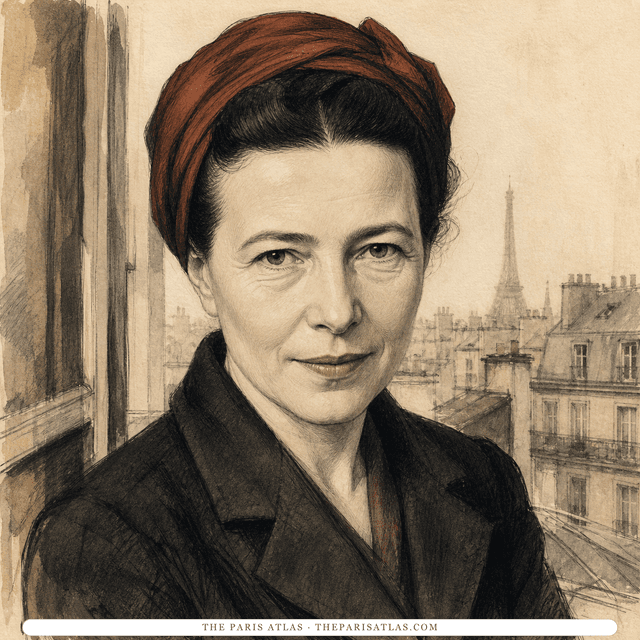
Simone de Beauvoir
French writer and philosopher whose novels, memoirs, and social analysis examined freedom, gender, responsibility, aging, and the material conditions that shape a life.
View author
Louis-Ferdinand Céline
The doctor of the Paris slums who wrote the century's blackest, funniest novel — and changed the sound of French prose.
View author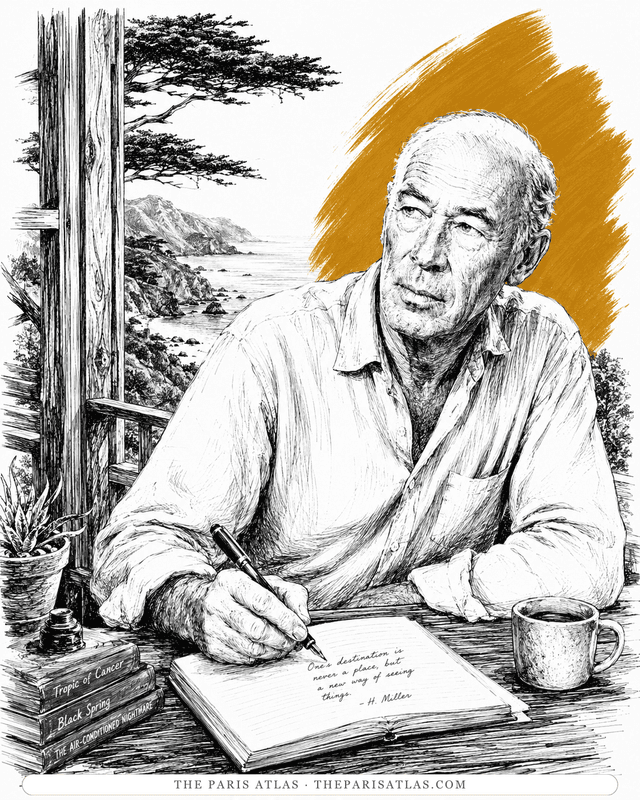
Henry Miller
The Brooklyn dropout who arrived in Paris broke at thirty-eight and wrote the exuberant, banned books that ended American censorship.
View author
References
References
The sources below include the primary text, editions, scholarship, archival materials, and other records that informed this page. They document Stoner, its publication, and its place in literary history.


2Stoner — Google Books catalogue
Official recordGoogleUsed forGoogle Books catalogue record used to cross-check the title and edition metadata.
3Stoner — Internet Archive ISBN catalogue
Official recordInternet ArchiveUsed forInternet Archive ISBN catalogue used to cross-check the edition and its availability in library holdings.
4Stoner — Library of Congress books catalogue
Official recordLibrary of CongressUsed forLibrary of Congress books catalogue used to cross-check the bibliographic record by ISBN.
5Stoner
Official recordNew York Review Books, 2006Used forPublisher record used to verify the core plot, 2006 reissue, John McGahern introduction, ISBN, and revival context.
6Stoner: 50th Anniversary Edition
Official recordNew York Review Books, 2019Used forPublisher record used to correct the anniversary edition to 2019 and verify its correspondence material.
7John Williams
Official recordNew York Review BooksUsed forPublisher biography used to verify Williams’s academic career and publication context.
i
Why these sources are here
The primary text is the baseline reference for every book page. Additional references document publication history, interpretation, and historical context where that evidence is available.
 Explore more resources