
Tom Sawyer
Aunt Polly's inventive nephew, whose wish to impress others can produce both cruelty and courage.
He wants admiration, adventure and Becky's affection, while trying to escape the duties adults assign him.
The book

Who they are in the book
Spoiler-freeTom is alert to what other people want to believe. His schemes often turn that knowledge into power, but the same attention can help him recognize another child's distress.
How Tom Sawyer Is Portrayed
- Knowing his audienceIn Chapter I, Tom escapes Aunt Polly by distracting her and nearly conceals an illicit swim. He succeeds by anticipating how she will look for evidence; Sid's knowledge of the thread in his collar defeats him.
- Making work desirableIn Chapter II, Tom treats whitewashing as an exclusive privilege. Other boys surrender their possessions for a turn, exposing how restriction and performance can create value.
- Taking another child's punishmentIn Chapter XX, Tom claims responsibility for the page Becky has torn. His lie protects her from the schoolmaster, giving deception a different purpose from his earlier evasions.
- Speaking despite fearIn Chapter XXIII, Tom testifies at Potter's trial. The truth carries a risk that his performances at school have not: the real killer escapes through a window.
- A toy becomes a practical toolIn Chapters XXXI–XXXII, Tom explores the cave using kite string to preserve his route. Ingenuity matters here because an impressive story alone cannot bring Becky home.
- Respectability as a rule of rebellionIn Chapter XXXV, he tells Huck that a robber band needs respectable members. His invented society reproduces the exclusions of the adult world he likes to evade.
If you like The Adventures of Tom Sawyer


If you like Mark Twain
Explore authors with a similar voice, perspective, and influence.
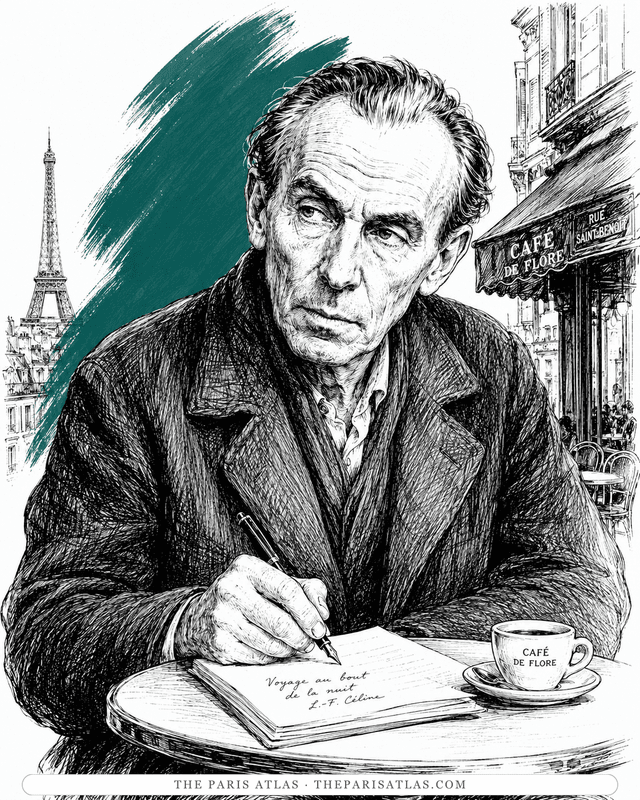
Louis-Ferdinand Céline
The doctor of the Paris slums who wrote the century's blackest, funniest novel — and changed the sound of French prose.
View author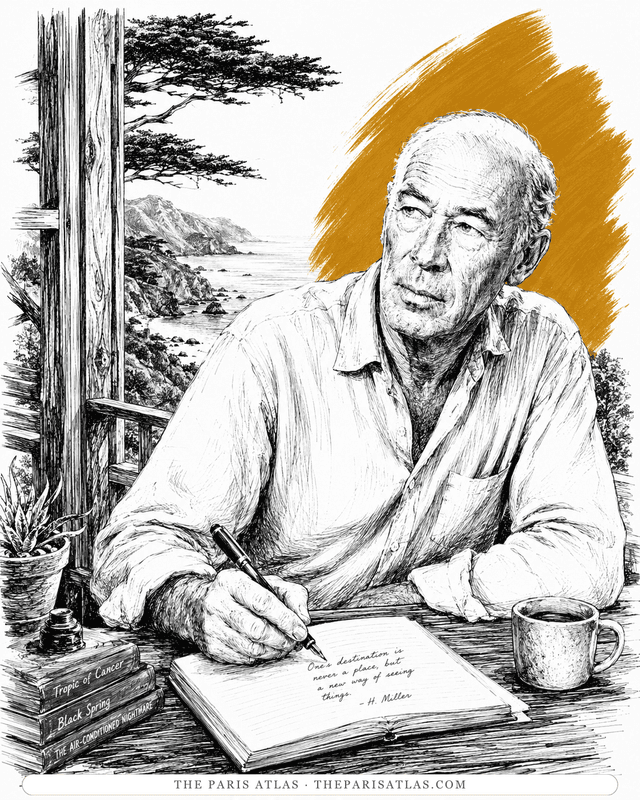
Henry Miller
The Brooklyn dropout who arrived in Paris broke at thirty-eight and wrote the exuberant, banned books that ended American censorship.
View author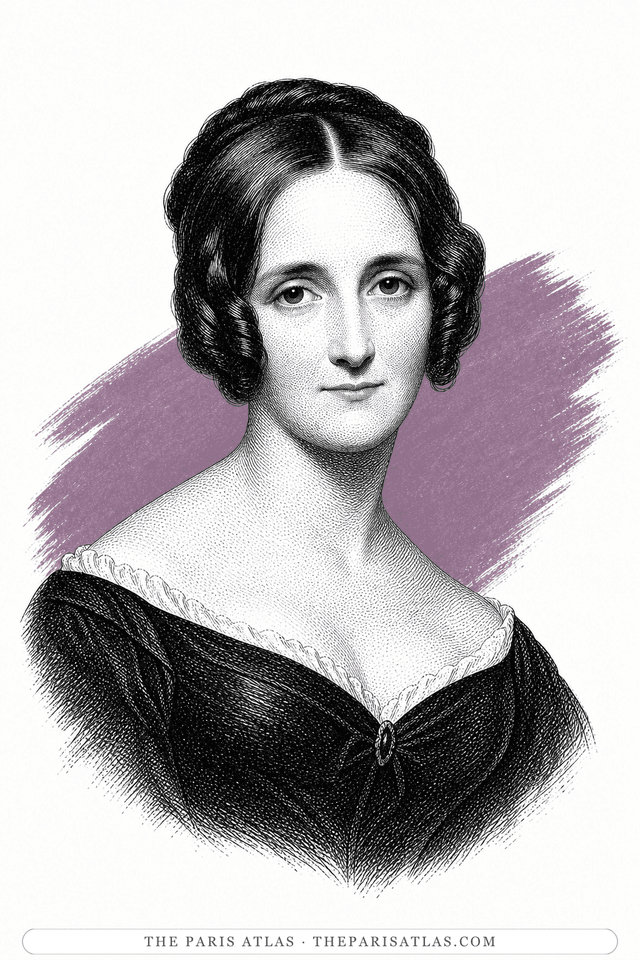
Mary Shelley
The author of Frankenstein, who first saw Paris at sixteen as a runaway. In the summer of 1814 she crossed from England to Calais with the poet Percy Bysshe Shelley and her stepsister Claire Clairmont, spent a week trapped in an expensive Paris hotel with no money, then bought a donkey and walked south-east across a France still wrecked by the Napoleonic wars. That journey became her first published book. Two years later, on a lake in Switzerland, she began her second.
View author