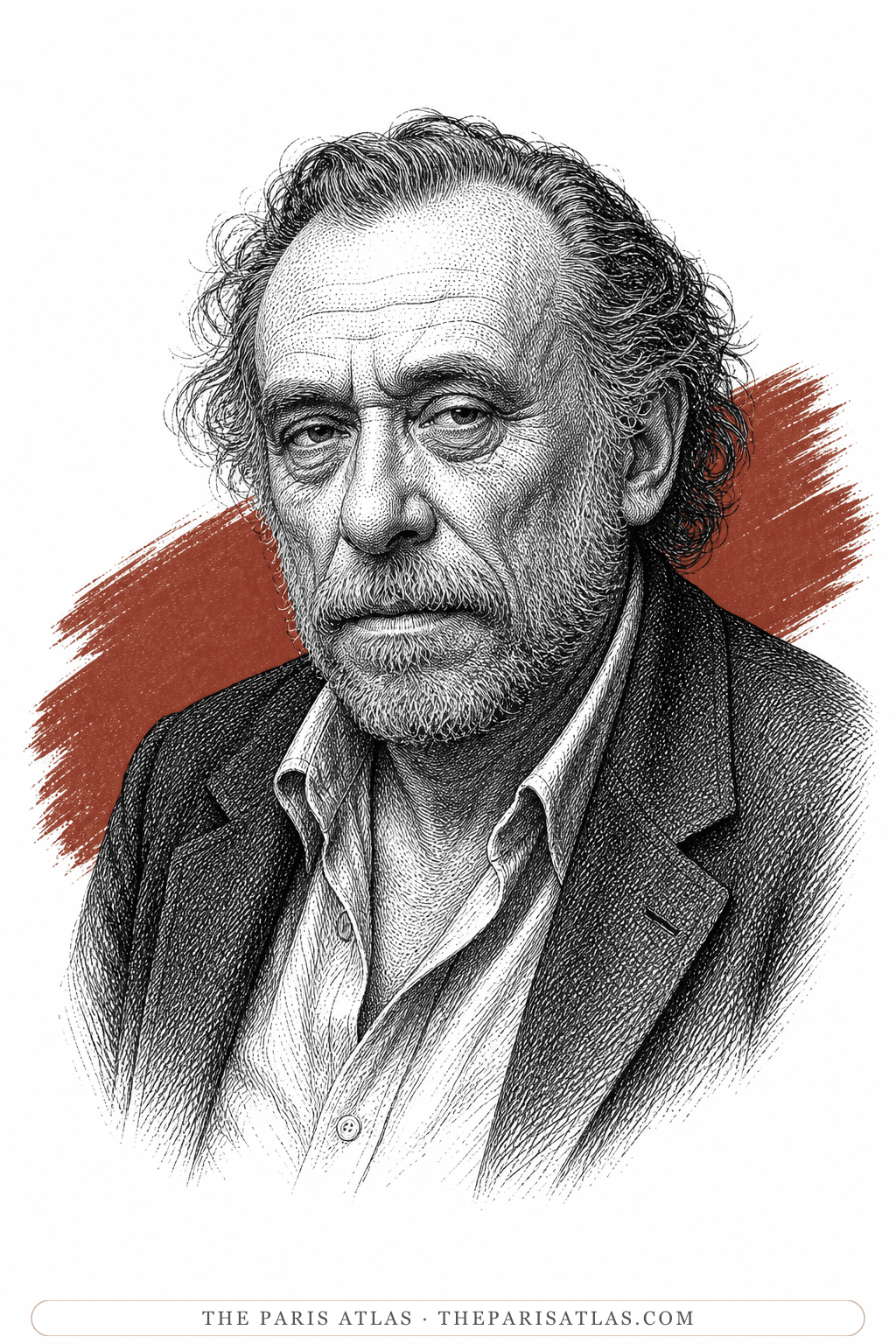

Sifting Through the Madness for the Word, the Line, the Way
The volume before it — the first of the Ecco era.
Read our take
143 previously unpublished poems from the archive, a decade into the posthumous program.
The Flash of Lightning Behind the Mountain, published by Ecco in 2004, brought 143 previously unpublished Charles Bukowski poems out of the archive he left at his death — the second volume of the Ecco era, ten years after he died. The archive was larger than readers had guessed: ten years of posthumous books had not emptied it. This volume works the familiar late subjects — the city, the racetrack, remembered women, the typewriter. The title's image of lightning behind a mountain is quieter than most Bukowski titles, and that is representative of the book. Like the rest of the series, these poems were altered before printing — a change the writer Michael Phillips documented in 2013 by comparing them with Bukowski's manuscripts.
By 2004 the posthumous program had become its own subject among readers: reviewers weighed each new volume against the lifetime books, and the question of how much archive remained — and how it was being handled — attached to every release. In 2013, manuscript comparisons published by Michael Phillips documented that the posthumous poems had been altered in editing, and the restored editions that followed printed the manuscripts as written. Within the series, this volume sits in the middle of the Ecco run — after Sifting Through the Madness (2003), the first Ecco volume, and before the final volumes of the late 2000s.
“Gas” recalls Sunday dinner through details that a child cannot politely ignore. The grandmother's brooch gives memory a fixed visual point while her bodily interruptions impose a competing rhythm on the meal. Her announcement that she will outlive everyone turns age into a claim of authority, rather than a reason for frailty or reassurance. The child's silence leaves that claim unanswered. By repeating the food, the brooch and the threat together, the adult telling preserves the discomfort of a family ritual in which nobody needs to explain the rules because everyone already knows them.
The train journey at the end of “Gas” does not resolve a particular disagreement. The speaker barely specifies the argument's subject; its recurrence matters more than its cause. Dessert, dispute and departure belong to the same remembered sequence. Once the grandmother leaves, the father's newspaper-fanning reduces his response to an ineffectual attempt to clear the room, while his explanation blames her food. The poem closes on that small domestic action rather than the grandmother's grand prediction about death. Her departure is a weekly ending, leaving the family poised to repeat the scene instead of reaching reconciliation.
A full-length volume of unpublished work ten years after the author's death — the measure of how much Bukowski held back.
Late poems in which memory and landscape appear alongside the usual racetrack and bars.
The many short pieces let readers consider memory, work, and desire through particular episodes rather than one continuous life story.
2004
Ecco publishes the collection — 143 poems from the archive, ten years after Bukowski's death.
2005
Ecco publishes the paperback edition of the posthumous poems.
2013
Michael Phillips's manuscript comparisons document the posthumous editing question.


The volume before it — the first of the Ecco era.
Read our take

The final lifetime collection — the register these archive volumes keep returning to.
Read our takeA posthumous collection of 143 previously unpublished Charles Bukowski poems, published by Ecco in 2004 from the archive he left at his death in 1994.
Bukowski wrote faster than his publisher could print and deliberately left a large reserve for posthumous publication. A decade of volumes had not exhausted it.
The posthumous volumes carry a documented editing question: 2013 manuscript comparisons showed substantial alterations, and Abel Debritto's restored editions — backed by Bukowski's widow Linda Lee Bukowski — print the manuscripts unrevised.
In the middle of the Ecco run: after Sifting Through the Madness moved the program to its new house in 2003, and before the volumes that wound the archive down at the end of the 2000s.
Yes — Ecco keeps it in its catalogue in paperback.
Explore authors with a similar voice, perspective, and influence.
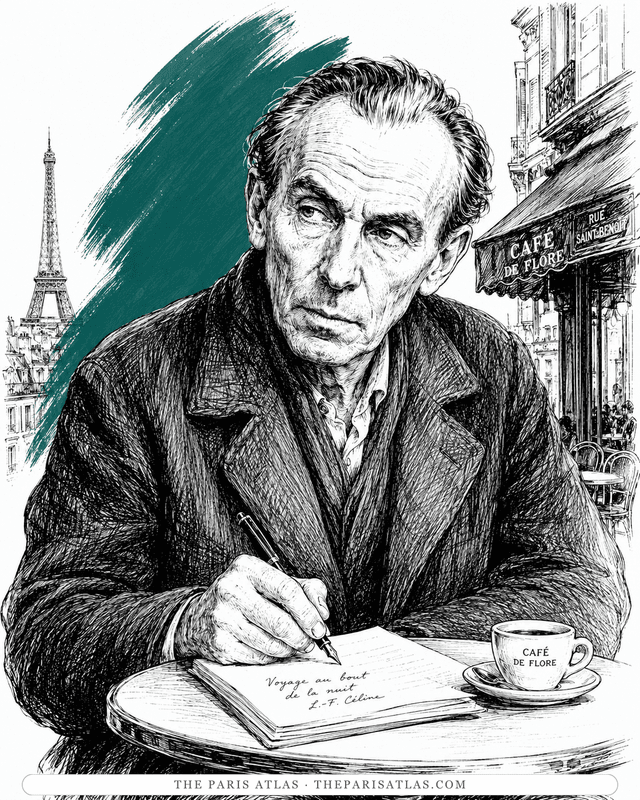
The doctor of the Paris slums who wrote the century's blackest, funniest novel — and changed the sound of French prose.
View author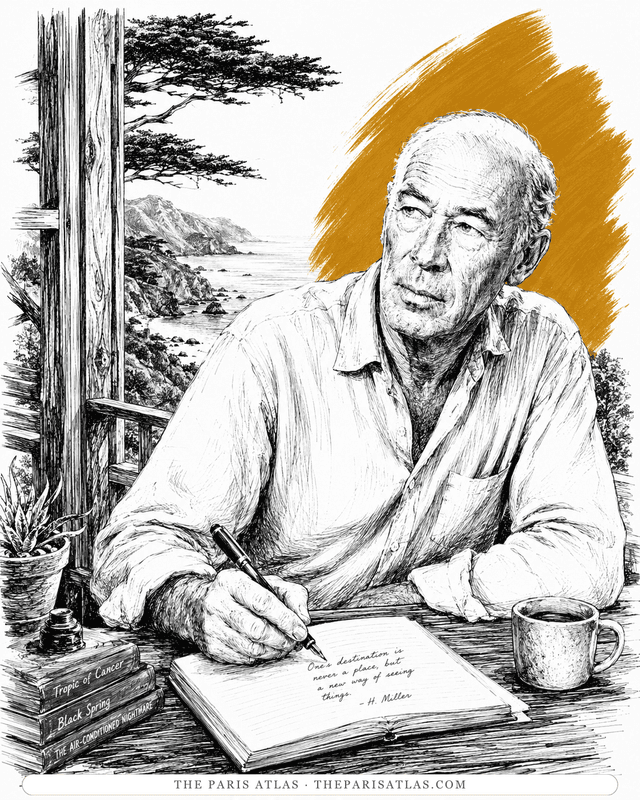
The Brooklyn dropout who arrived in Paris broke at thirty-eight and wrote the exuberant, banned books that ended American censorship.
View author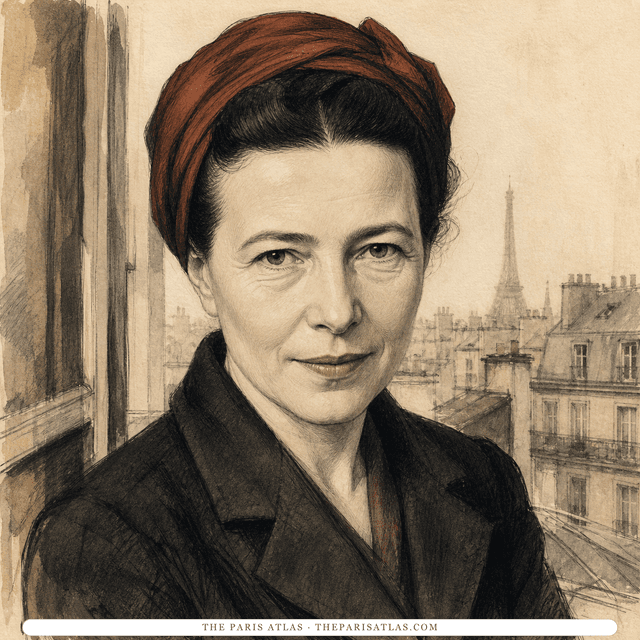
French writer and philosopher whose novels, memoirs, and social analysis examined freedom, gender, responsibility, aging, and the material conditions that shape a life.
View authorThe sources below include the primary text, editions, scholarship, archival materials, and other records that informed this page. They document The Flash of Lightning Behind the Mountain, its publication, and its place in literary history.
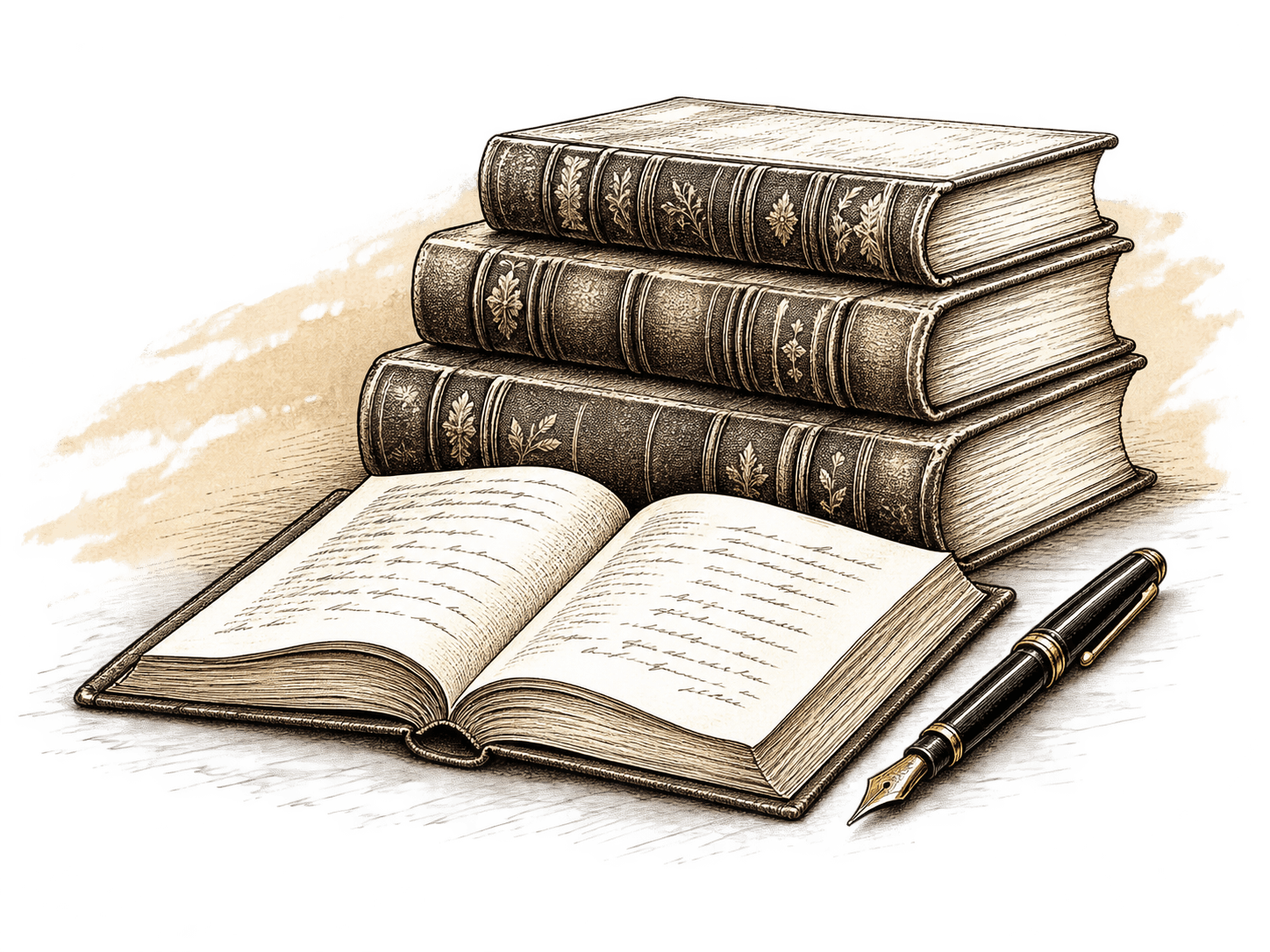

The primary text represented by this page, used for descriptions of the work’s contents and for any quoted passages shown here.

Publication year and the volume's place in the Ecco run.
The documented editing of the posthumous poems and the restored editions.
Critical account of the posthumous program.
Official record used to verify names, dates, institutional details, or other factual information on this page.
Web source consulted for documented facts and historical context presented on the The Flash of Lightning Behind the Mountain page.
Complete Gas, reprinted with permission by The Writer's Almanac on September 26, 2010 and credited to The Flash of Lightning Behind the Mountain, HarperCollins, 2004. Supports both readings of the poem's recurring dinner and departure. No whole-volume reading, original-manuscript comparison or independent family-history verification is claimed.
The primary text is the baseline reference for every book page. Additional references document publication history, interpretation, and historical context where that evidence is available.
 Explore more resources