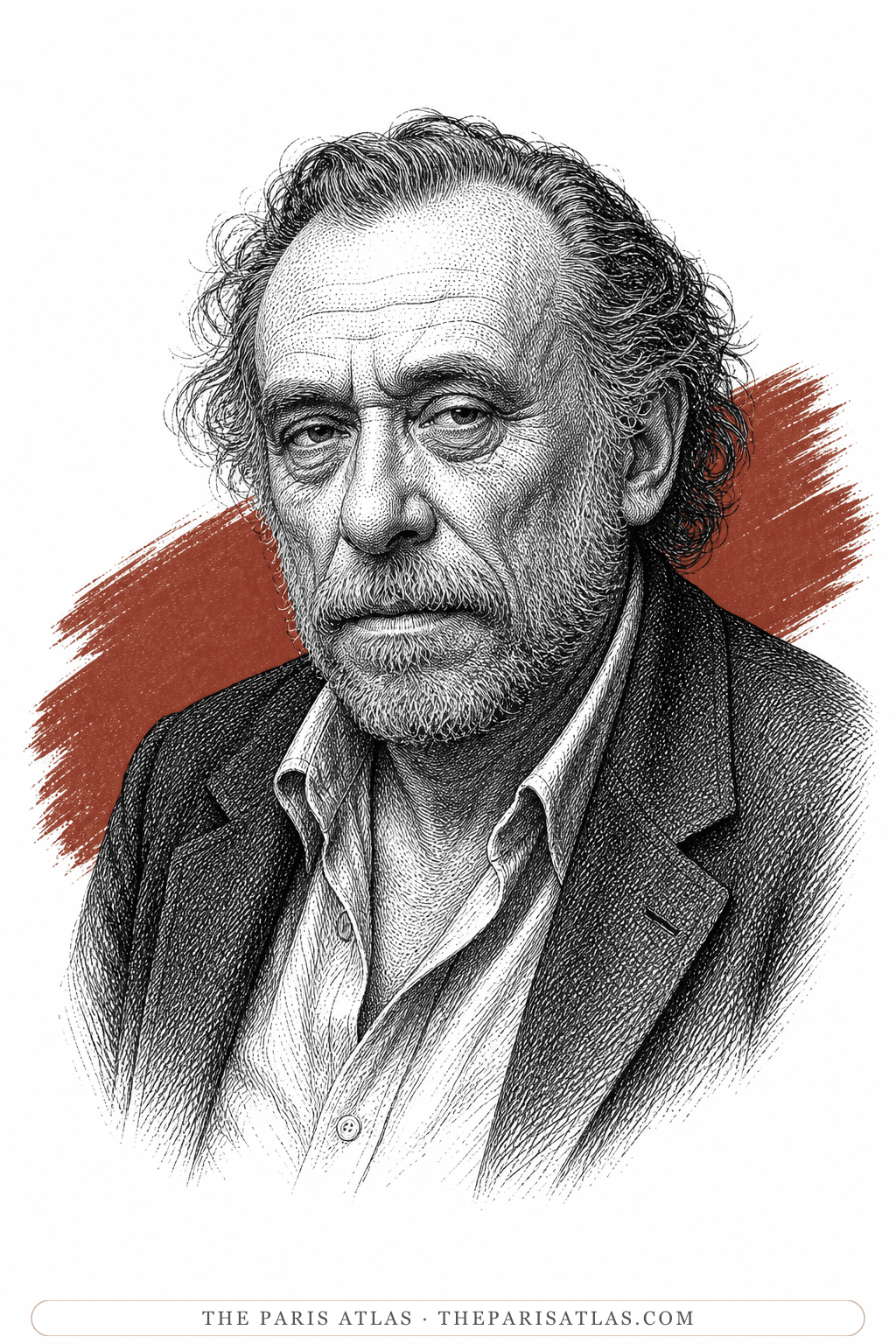

The Night Torn Mad with Footsteps
The volume before it — the last with Black Sparrow's name on it.
Read our take
The first posthumous Bukowski volume published by Ecco, after Black Sparrow Press closed in 2002.
Sifting Through the Madness for the Word, the Line, the Way, published by Ecco in 2003, was the first new volume of the posthumous Charles Bukowski series to appear after Black Sparrow Press closed in 2002 and the catalogue moved to the HarperCollins imprint. The change of publisher changed nothing about the contents: the poems still come from the archive of unpublished work Bukowski left at his death, and their subjects are the usual late ones — the city, the past, and the writing life. The title describes the work of writing itself: sifting through everything for the right word, the right line. In 2013 the writer Michael Phillips showed that poems in these posthumous volumes had been altered before printing; the restored editions that followed print Bukowski's manuscripts.
The Ecco era gave the posthumous program a second, longer life: from this volume in 2003 to The Continual Condition in 2009, and then the restored editions of the 2010s, the archive kept producing books at a major New York house that Black Sparrow had run from Santa Barbara. The title — the word, the line, the way — is the plainest statement Bukowski left of what he thought writing was for, and it is often quoted for that reason.
In “the great escape,” a postal colleague compares workers to crabs that prevent one another from leaving a bucket. When a supervisor forbids conversation, the speaker turns that borrowed metaphor into an absurdly physical exit, climbing the supervisor himself. The leap from eleven and a half years of confinement to effortless escape makes this a comic account of liberation, not a literal resignation scene. Its ending complicates the triumph: nobody follows, and remembering his former workplace becomes something he does while eating seafood. The eventual change of menu suggests how easily a survivor can stop thinking about those left behind.
“Unblinking Grief” begins with small actions already completed: cigarettes consumed and bread cut. Such ordinary activity cannot make the loss manageable, and the poem explicitly resists treating sorrow as a wry observation. When the speaker addresses the absent person, the images become more impossible: a self imagined as a receptacle for remains, then a hand trying to grasp what has vanished. These are figures for bereavement, not evidence of a particular funeral or household. The compressed ending refuses a consoling lesson. Its force comes from discovering that familiar objects and available words cannot restore the life they now evoke.
Black Sparrow closed in 2002; this volume showed the posthumous series would continue at Ecco.
The title is the plainest statement Bukowski left of what he thought writing was for.
The collection gives attention to the act of writing itself alongside the remembered city and earlier life.
2002
Black Sparrow closes; the Bukowski catalogue moves to Ecco.
2003
Ecco publishes the collection — the posthumous series' first volume at its new house.
2004
The first Ecco paperback edition follows the original hardcover collection.


The volume before it — the last with Black Sparrow's name on it.
Read our take
The next volume of the Ecco run, the following year.
Read our take
A posthumous collection of previously unpublished Charles Bukowski poems, published by Ecco in 2003 — the first volume of the archive series to appear after Black Sparrow Press closed.
It describes the work of writing: sifting through the noise of a life for the right word and the right line. It is the plainest statement Bukowski left of what he thought writing was for.
The posthumous volumes carry a documented editing question: 2013 manuscript comparisons showed substantial alterations, and Abel Debritto's restored editions — backed by Bukowski's widow Linda Lee Bukowski — print the manuscripts unrevised.
John Martin wound Black Sparrow down in 2002 and sold the Bukowski rights to Ecco, an imprint of HarperCollins, which has continued the catalogue since.
Yes — Ecco keeps both hardcover and paperback editions in its catalogue.
Explore authors with a similar voice, perspective, and influence.
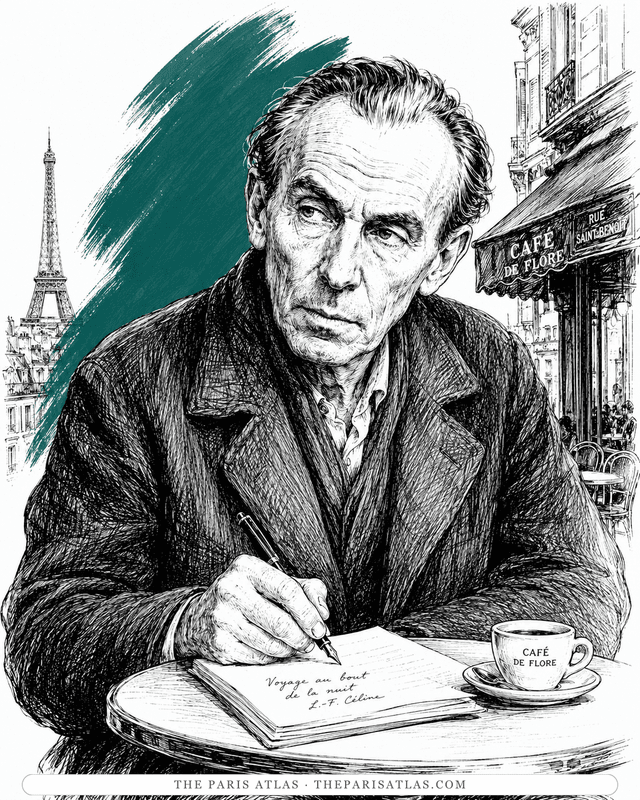
The doctor of the Paris slums who wrote the century's blackest, funniest novel — and changed the sound of French prose.
View author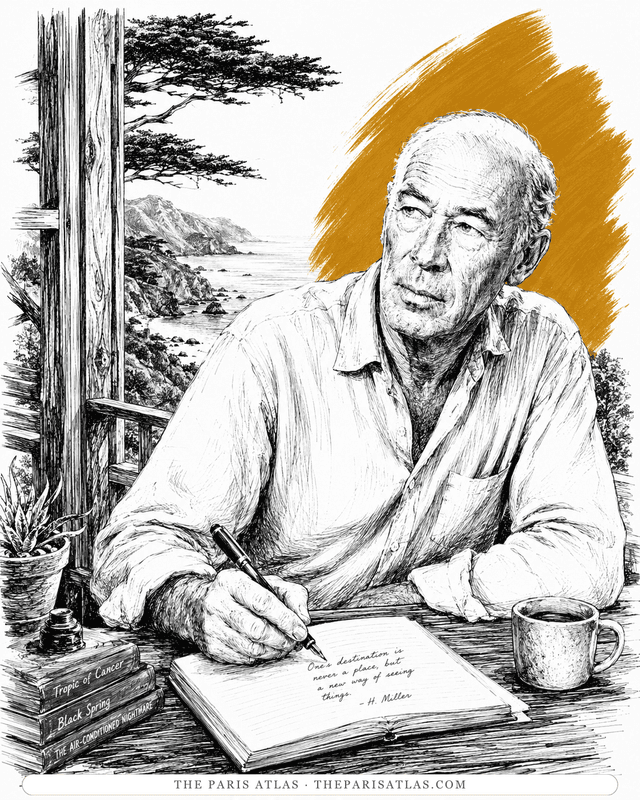
The Brooklyn dropout who arrived in Paris broke at thirty-eight and wrote the exuberant, banned books that ended American censorship.
View author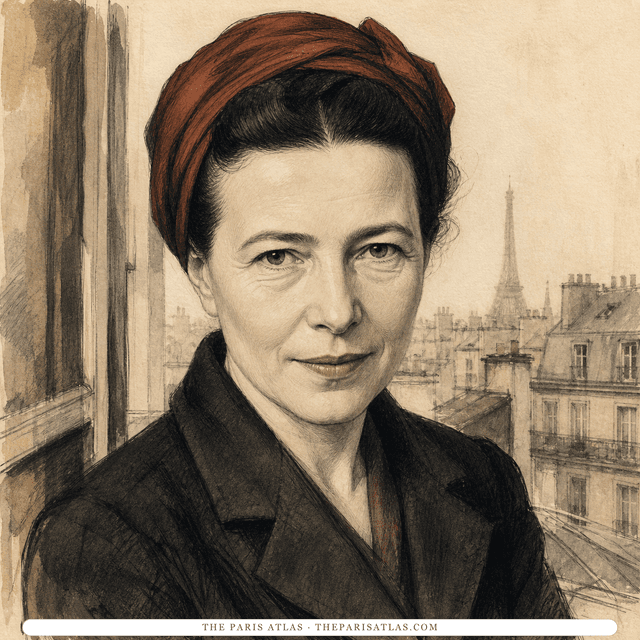
French writer and philosopher whose novels, memoirs, and social analysis examined freedom, gender, responsibility, aging, and the material conditions that shape a life.
View authorThe sources below include the primary text, editions, scholarship, archival materials, and other records that informed this page. They document Sifting Through the Madness for the Word, the Line, the Way, its publication, and its place in literary history.

The primary text represented by this page, used for descriptions of the work’s contents and for any quoted passages shown here.

Publication year and the Ecco transition in the chronology.
The documented editing of the posthumous poems and the restored editions.
Critical account of the posthumous program.
Official record used to verify names, dates, institutional details, or other factual information on this page.
Web source consulted for documented facts and historical context presented on the Sifting Through the Madness for the Word, the Line, the Way page.
Complete poem on The Writer's Almanac, attributed there to this Ecco collection; used for the reading of the crab metaphor and its closing reversal.
Complete Unblinking Grief text reproduced by the Southend High School for Girls English department; no named bereaved person or first-edition collation is inferred.
Specialist contents corroborate The Great Escape (p. 28) and Unblinking Grief (p. 101). The bibliography's late-2002 date is not used to silently change the page's 2003 edition metadata.
The primary text is the baseline reference for every book page. Additional references document publication history, interpretation, and historical context where that evidence is available.
 Explore more resources