The Sheltering Sky
Both novels send a damaged Western marriage far from home, where illness and travel expose what the couple can no longer pretend.
Read our take
by W. Somerset Maugham
After an affair destroys her marriage, a young Englishwoman enters a cholera epidemic and begins the harder work of understanding herself.
Kitty Garstin grows up believing that beauty and a good marriage will secure her future. At twenty-five, frightened that her younger sister will marry first, she accepts Dr Walter Fane, a quiet bacteriologist she does not love. In Hong Kong, Kitty begins an affair with the charming colonial official Charlie Townsend. Walter discovers them and gives her a brutal choice: Charlie must divorce his wife and marry her, or Kitty must accompany Walter to Mei-tan-fu, an inland Chinese city devastated by cholera. Charlie refuses to risk his marriage or career. Kitty goes with Walter and enters a world where social charm has little value. Work at a French convent, Walter's dangerous medical service, and the epidemic force her to see other people—and herself—with greater honesty.[1]
The novel begins with a locked bedroom door and the fear that Walter has caught Kitty with Charlie. It then moves backward to show how Kitty was raised. Her mother trained her to treat marriage as a contest for status. Kitty delayed choosing while she was young and admired, then married Walter quickly when her less attractive younger sister made an impressive match. The marriage is unequal from the start: Walter loves an ideal version of Kitty, while Kitty accepts the security he offers and soon finds him dull.[1]
The journey to Mei-tan-fu is not a romantic adventure. Walter admits that, at first, he wanted the epidemic to kill Kitty. Kitty knows the trip may also be his way of destroying himself. Their shared danger does not instantly repair the marriage. Instead, they live in a cold truce while Walter works among the sick and Kitty slowly becomes useful at a convent that cares for orphans and wounded soldiers.[1]
Kitty's growth is incomplete and therefore convincing. She becomes less impressed by status, learns to value courage and work, and begins to recognize the damage caused by her mother's ambitions. Yet she does not suddenly love Walter, and after his death she falls back into Charlie's arms once more. The ending gives her a direction rather than a perfect transformation: she chooses a new relationship with her father and imagines raising her child to possess a freedom that Kitty herself was never taught.[1]
Kitty Garstin is raised in South Kensington by a socially ambitious mother, Mrs. Garstin. Kitty is beautiful, enjoys attention, and rejects several possible husbands while waiting for a brilliant match. When her younger sister Doris becomes engaged to the heir of a baronet, twenty-five-year-old Kitty panics at the prospect of appearing a failure. She accepts Dr Walter Fane, a reserved bacteriologist based in Hong Kong, although she does not love him.[1]
In Hong Kong, Walter spends long hours at his laboratory and Kitty feels that his professional position gives her too little social importance. She begins an affair with Charles ‘Charlie’ Townsend, the handsome, married assistant colonial secretary. Charlie is charming, athletic, and skilled at making Kitty feel that their relationship is exceptional. Kitty imagines that he is trapped in a cold marriage to Dorothy Townsend and would choose Kitty if he were free.[1]
Walter discovers the affair. He tells Kitty that he will allow a quiet divorce if Charlie divorces Dorothy and promises to marry her within a week. If Charlie refuses, Walter expects Kitty to travel with him to Mei-tan-fu, where he has volunteered to fight a deadly cholera outbreak. Kitty runs to Charlie, certain that he will rescue her. Instead, Charlie explains that Dorothy will never divorce him, dismisses Walter's demand as unreasonable, and protects his family, reputation, and career.[1]
Kitty accompanies Walter into inland China. Their journey is polite, silent, and hostile. At Mei-tan-fu, Walter works almost constantly with local officials and medical staff. Kitty is frightened by the epidemic and isolated in their bungalow. She befriends Waddington, a small, bald, witty British deputy commissioner who speaks Chinese and has lived in the country for years. He tells her plainly that Charlie has had other affairs and that Dorothy understands her husband better than Kitty ever did.[1]
Waddington takes Kitty to a French convent inside the city. The Mother Superior and the sisters care for orphaned children and make their infirmary available during the epidemic. The nuns admire Walter's courage and tenderness with babies, qualities Kitty has never seen. Kitty asks to help. She begins sewing, organizing work, and caring for children each day. The routine gives her a purpose unrelated to beauty, flirtation, or status.[1]
Kitty comes to respect Walter, but their marriage does not become conventionally happy. She realizes that he fell in love with an imaginary version of her and now despises himself for that mistake. Walter admits that when he forced her to come, he initially wanted her to die. Kitty later learns that she is pregnant and cannot tell whether Walter or Charlie is the father. When Walter asks directly, she refuses to lie and says she does not know.[1]
Walter continues fighting the epidemic and trains a Chinese regimental surgeon. He contracts cholera and is taken to Colonel Yü's yamen. Colonel Yü stays beside him, deeply distressed. Kitty reaches Walter during his final illness. She asks for forgiveness, but he does not offer the clear reconciliation she wants. He dies while she is present, leaving their marriage morally and emotionally unfinished.[1]
After the funeral, Kitty returns to Hong Kong. Dorothy Townsend welcomes the new widow into her home, unaware of the affair. Kitty sees Charlie again and, despite now understanding his vanity and cowardice, allows him to seduce her. She is horrified by her own relapse. She leaves China after learning that her mother has died in England.[1]
Back in South Kensington, Kitty recognizes that her father Bernard has spent almost thirty years obeying a wife who despised and controlled him. Mrs. Garstin's death brings him grief, but also a relief he is ashamed to feel. He has just accepted an appointment as Chief Justice of the Bahamas and expects to begin the new life alone.
Kitty asks to go with him. Bernard's face falls because he thinks his duty will require another sacrifice. Kitty then makes clear that she will not claim his care simply because she is his daughter. She wants them to learn kindness toward each other and to give him companionship rather than take away his freedom. For the first time, father and daughter speak honestly and embrace.
Kitty imagines that her unborn child is a girl. She wants to raise her to be fearless, frank, independent, and able to stand on her own feet—not trained to make marriage her only possible future. The baby's biological father remains unknown, and the novel does not turn Kitty into a perfect person. Her plan matters because it is the first future she has chosen through responsibility rather than vanity or fear.
The final movement is therefore away from Charlie and from the social world that formed Kitty. She travels toward the Bahamas with Bernard, her pregnancy, and a difficult hope that the next generation can be freer. The ending offers a beginning, not a guarantee.
Walter has every reason to feel betrayed, but his answer is deliberately dangerous. He uses the threat of public divorce to force Kitty into an epidemic and later admits that he first wanted her to die. He also puts himself in the same danger. The journey is therefore an act of revenge and a possible double suicide, not a wise plan to save the marriage.
The novel does not divide the couple into an innocent husband and a guilty wife. Kitty lies and betrays him. Walter loves an imagined woman, hides his feelings behind contempt, and chooses punishment instead of separation. Mei-tan-fu changes them because the work and deaths around them expose their illusions, not because suffering automatically makes either person good.
In Hong Kong, Kitty judges men by charm, position, dancing, and the attention they give her. In Mei-tan-fu, those measures become useless. Walter's calm work saves lives. Colonel Yü organizes transport, guards, and supplies. A Chinese surgeon applies the training Walter has given him. The nuns keep caring for children even as members of their own community die.
Kitty does not become important because she watches Walter act bravely. Her change begins when she accepts ordinary work herself. The epidemic reduces her social world to immediate questions: who will carry water, comfort a child, keep records, or stay beside someone who is dying? Useful action gives her a way to judge character that is more reliable than attraction.
The Mother Superior does not flatter Kitty or demand a dramatic religious conversion. She gives her a place to work and warns that peace cannot be found automatically in work, pleasure, society, or a convent. That distinction matters. Work helps Kitty because it directs her attention outward, but it cannot erase guilt or solve every conflict inside her.
Sister St. Joseph's laughter, the Mother Superior's discipline, and the children's daily needs show Kitty a community built around service rather than social rank. The convent is not presented as a magical refuge from the world. It is short of money and staff, the work is exhausting, and death remains close. Its value lies in the nuns' steadiness.
After Walter's death, Kitty understands Charlie clearly and still yields to him. That scene prevents readers from treating her months in Mei-tan-fu as a simple moral cure. Knowledge does not instantly remove desire, habit, loneliness, or weakness. Kitty's disgust afterward is painful because she can no longer hide behind the romantic story she once believed.
Her final choice is smaller and more credible than a declaration that she has become a new woman. She tries to be kind to her father, refuses to use family duty against him, and thinks seriously about how to raise a daughter. She cannot undo her marriage or know the child's paternity. She can decide what she will do next.
The story takes place within British colonial society and is mostly told through Kitty's English point of view. At first she treats Chinese people and places as unpleasant background. Waddington, the Manchu woman he loves, Colonel Yü, and the convent's work begin to challenge her ignorance, but the novel still gives much more interior life to its British characters than to the Chinese people living through the epidemic.
That limitation should be stated plainly. The book can criticize the emptiness of the colonial social circle and show Chinese officials as capable partners while still using period language and broad descriptions that reduce local people to a crowd. Readers do not need to ignore this problem in order to understand Kitty's development.
Maugham writes in clean, quick sentences and moves rapidly between dialogue, social observation, and Kitty's thoughts. Important information often arrives through a short exchange rather than a long explanation. Charlie's refusal to leave Dorothy is devastating because his practical excuses expose the emptiness behind months of romantic language.
The narration stays close to Kitty but does not automatically agree with her. Early in the book, she believes she understands everyone around her. The gap between her confident judgments and what other characters reveal creates much of the irony. As Kitty becomes more honest, the same close viewpoint lets readers see her intelligence grow.
The plot contains adultery, revenge, epidemic disease, uncertain paternity, and death, yet the prose remains restrained. Maugham avoids turning Walter's death into a full reconciliation scene and avoids giving Kitty a flawless conversion. The cool style makes the unresolved emotions harder to dismiss.
MGM released The Painted Veil in 1934, directed by Richard Boleslawski and starring Greta Garbo, Herbert Marshall, and George Brent. The studio remade the material in 1957 as The Seventh Sin, with Eleanor Parker, Bill Travers, and George Sanders; Ronald Neame received the directing credit, although AFI records that Vincente Minnelli finished the production after Neame left.
John Curran's 2006 adaptation stars Naomi Watts, Edward Norton, Liev Schreiber, Toby Jones, and Diana Rigg. It preserves the marriage, affair, and epidemic but develops Walter and Kitty's relationship into a more complete romance than the novel does. Readers comparing versions should not assume that the film's emotional reconciliation or ending is Maugham's.
Her growth is convincing because the novel lets her become more perceptive while remaining lonely, vulnerable, and capable of repeating a destructive choice.
Kitty's betrayal is real, and Walter's revenge is cruel. Their time in the epidemic reveals courage and weakness in both of them.
The prose is direct and the plot moves quickly, but nearly every conversation reveals a character telling a flattering story about themselves.

The beautiful young woman whose affair, forced journey, work, grief, and relapse form the novel's central story.

Kitty's reserved bacteriologist husband, whose scientific courage coexists with wounded pride and a dangerous desire for revenge.

The married colonial official whose charm allows Kitty to mistake an affair he can afford for a love that will cost him something.

Charlie's composed wife, who understands his pattern of affairs and offers the widowed Kitty hospitality without knowing Kitty was one of them.

A wry deputy commissioner who becomes Kitty's friend and gives her more honest information about Walter, Charlie, and China.

The disciplined French nun whose authority, service, and spiritual clarity give Kitty a model of adulthood beyond beauty and marriage.

A cheerful French nun whose warmth and practical knowledge draw Kitty into the convent's daily work.

Waddington's unnamed Chinese partner, whose quiet self-possession makes Kitty recognize a life beyond her colonial social world.

Kitty's ambitious mother, who treats marriage as her daughters' route to rank and shapes the values Kitty must later unlearn.

Kitty's overworked father, long treated as the family's provider, who receives a late chance at freedom and a real relationship with his daughter.
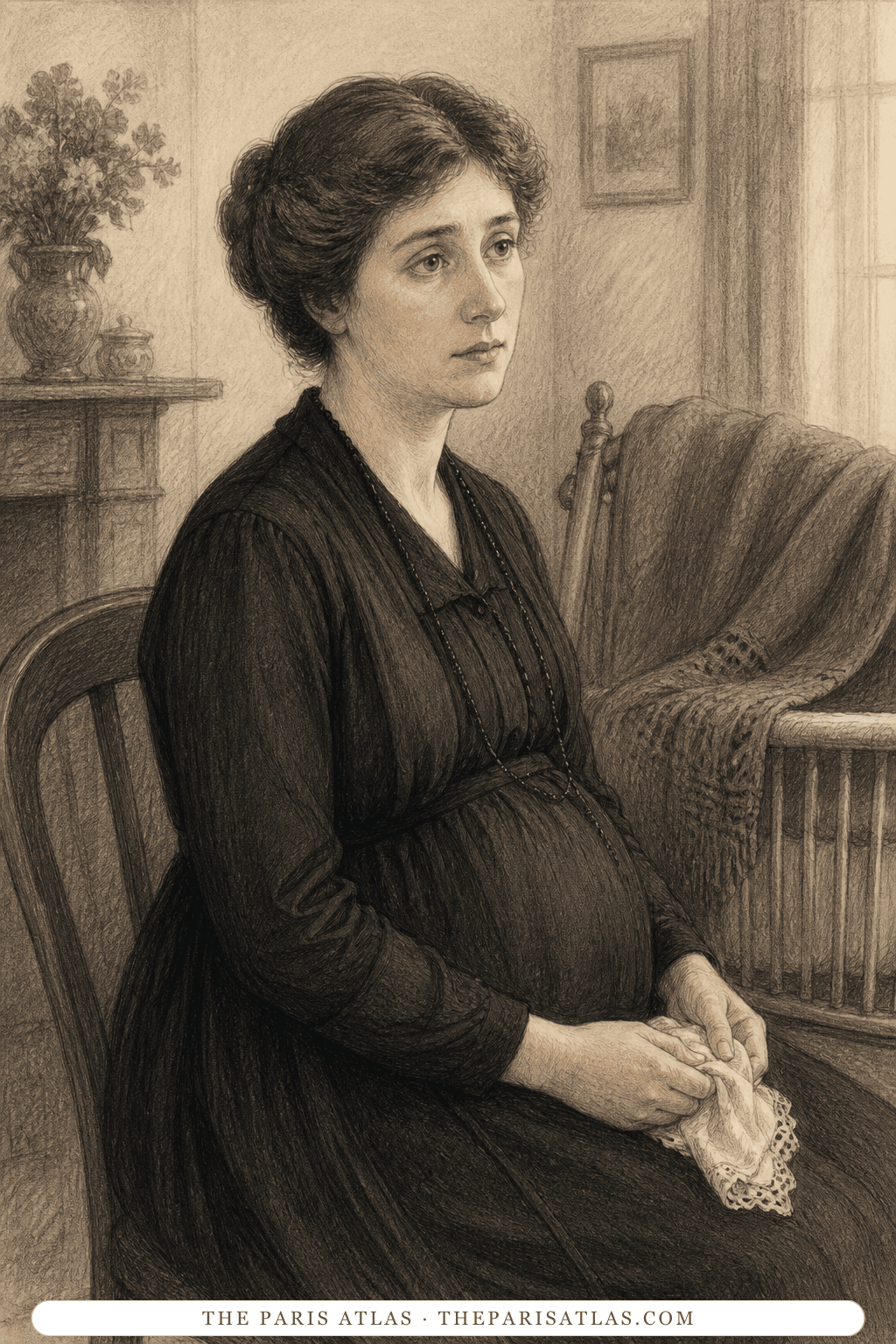
Kitty's younger sister, whose engagement and pregnancy expose the marriage competition Mrs. Garstin created between her daughters.
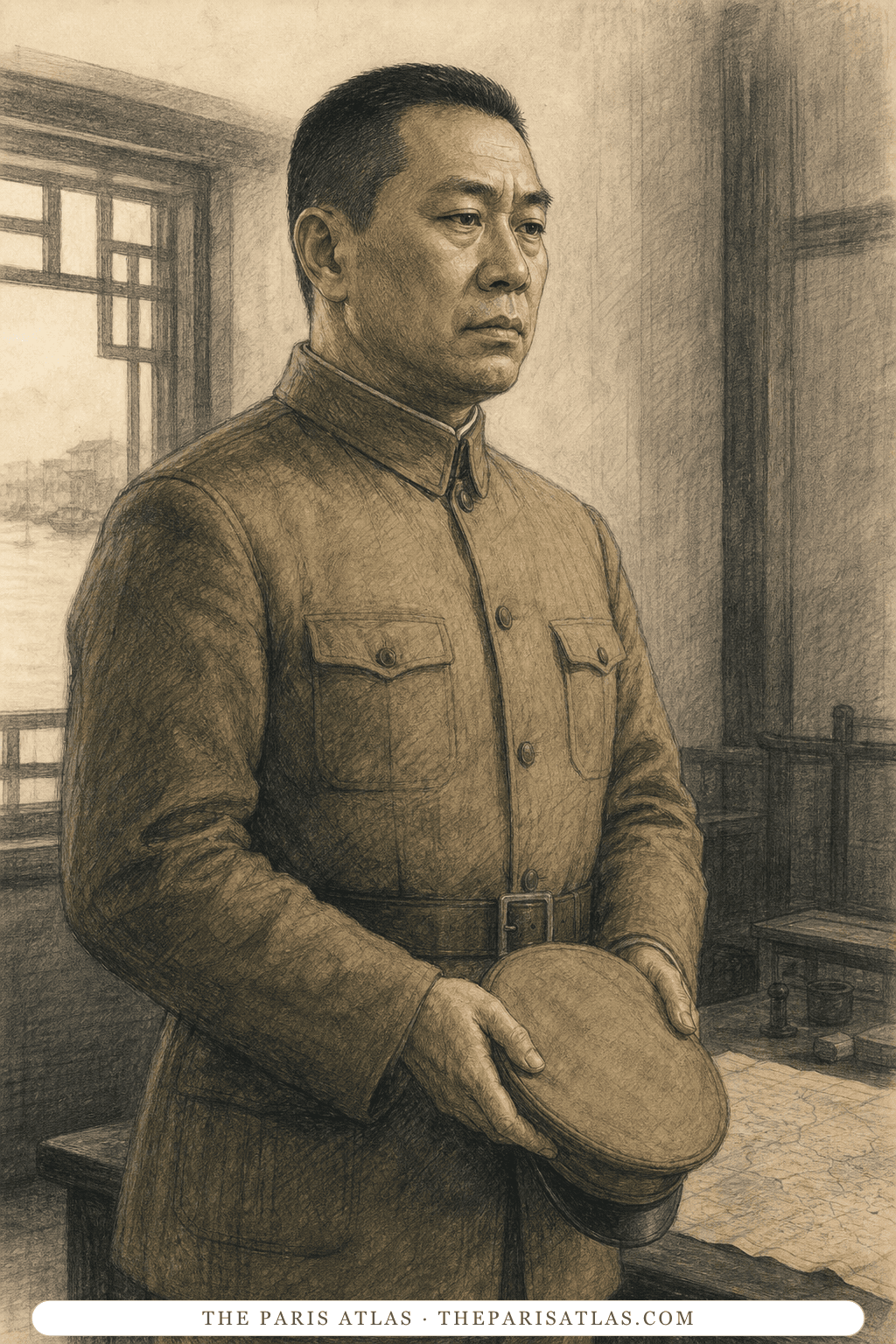
The Chinese military official who supports the epidemic response, works closely with Walter, and remains beside him at the end.
1924
Serial publication begins before the 1925 book editions; Maugham's preface later records legal objections raised during serialization.
1925
The Painted Veil is published in book form in the United States and Britain. Maugham changes the central surname from Lane to Fane and, in some issues, replaces Hong Kong with the fictional Tching-Yen after legal threats.
1934
MGM releases the first film adaptation, directed by Richard Boleslawski and starring Greta Garbo, Herbert Marshall, and George Brent.
1957
MGM returns to the story as The Seventh Sin, with Eleanor Parker, Bill Travers, and George Sanders.
2004
Vintage publishes the 256-page paperback edition now used as this page's edition of record.
2006
John Curran's film starring Naomi Watts and Edward Norton brings the novel to a wide modern audience while changing the marriage's emotional resolution.

Both novels send a damaged Western marriage far from home, where illness and travel expose what the couple can no longer pretend.
Read our take
Greene also places adultery, duty, pity, and private moral failure inside a British colonial community where public respectability hides despair.
Read our take
Ford's novel likewise dismantles a civilized social surface and asks how badly people can misunderstand their marriages while believing they know the truth.
Read our take
Both books use an intimate triangle in colonial Asia to expose the stories Western characters tell themselves about love, virtue, and local life.
Read our takeIt follows Kitty Fane, an Englishwoman whose husband discovers her affair and forces her to accompany him into a cholera epidemic in inland China. The journey exposes the illusions in her marriage and affair and begins a difficult, incomplete moral growth.
At first, yes. Walter later admits that when he demanded she come, he wanted the epidemic to kill her. He also endangers himself, so the decision combines revenge, despair, and genuine medical service.
Kitty does not know whether Walter or Charlie is the father, and the novel never resolves the question. The ending shifts attention from biological paternity to the kind of mother Kitty intends to become.
She develops respect, pity, tenderness, and a much more accurate understanding of him. Maugham does not give them a clear romantic reconciliation before Walter dies.
He contracts cholera while working during the epidemic and dies in Colonel Yü's yamen. Kitty is present, but their last exchange does not settle every injury between them.
The relapse shows that self-knowledge is not the same as perfect self-control. Kitty now sees Charlie's vanity and cowardice, but loneliness, desire, and old habit still overwhelm her in the moment.
It keeps the affair, epidemic, and central marriage but makes Walter and Kitty's relationship more conventionally romantic. The novel's reconciliation is less complete, and its final movement toward Kitty's father and unborn child is essential.
Explore authors with a similar voice, perspective, and influence.
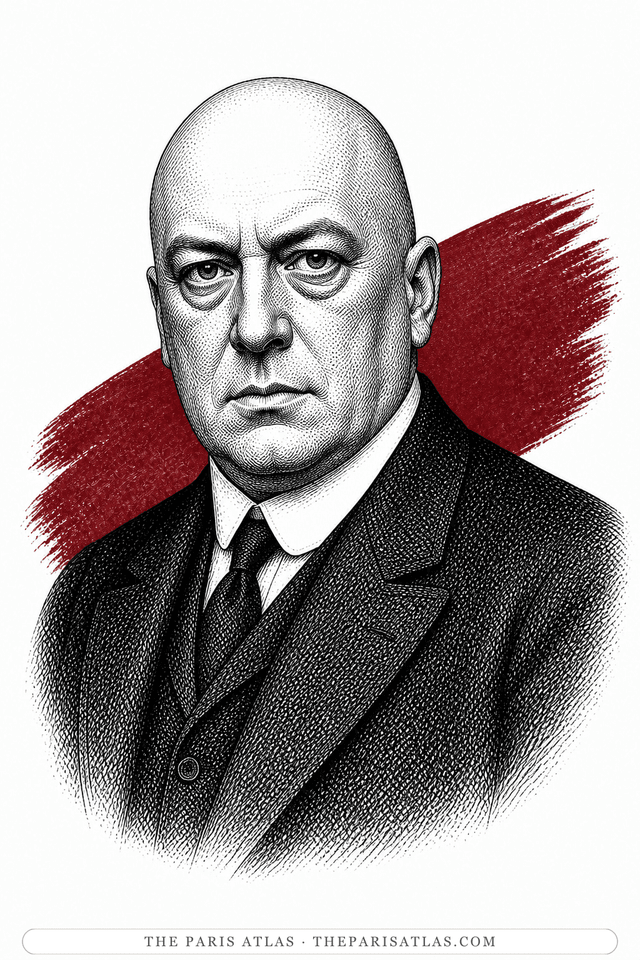
English occultist, writer, mountaineer and founder of Thelema whose long relationship with Paris connected ritual magic to the city’s Belle Époque and interwar artistic worlds.
View author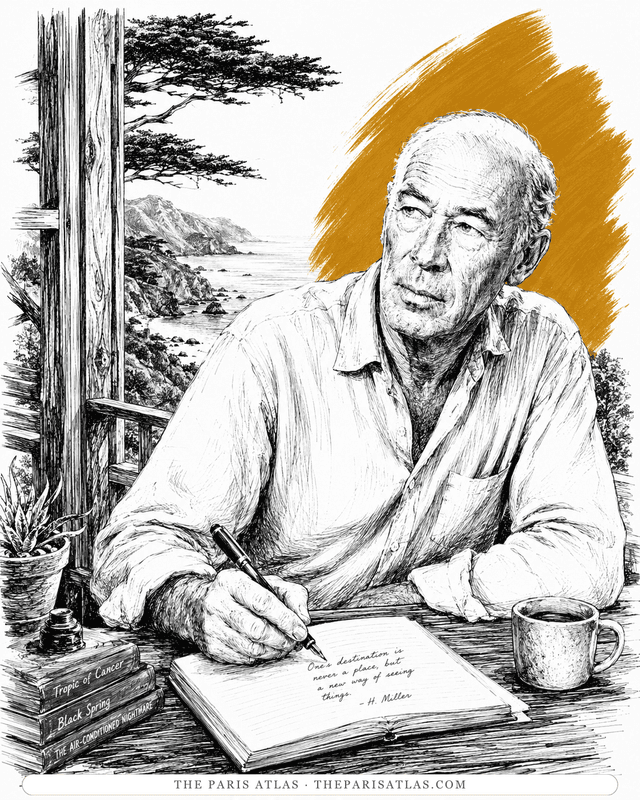
The Brooklyn dropout who arrived in Paris broke at thirty-eight and wrote the exuberant, banned books that ended American censorship.
View author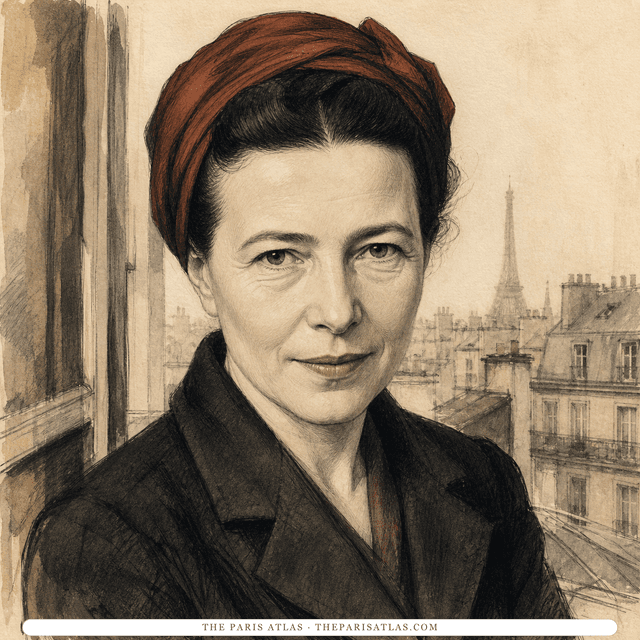
French writer and philosopher whose novels, memoirs, and social analysis examined freedom, gender, responsibility, aging, and the material conditions that shape a life.
View authorThe sources below include the primary text, editions, scholarship, archival materials, and other records that informed this page. They document The Painted Veil, its publication, and its place in literary history.

Publisher record used to verify the current Vintage edition's publication date, ISBN, and page count.
Museum catalogue used to verify the 1925 Heinemann edition and pagination.
AFI catalogue used for the 1934 film's date, director, cast, and adaptation history.
AFI catalogue used for the 1957 film's title, cast, credits, and production history.
AFI catalogue used for the 2006 film's cast, director, writer, release, and literary source.
Open Library's ISBN catalogue retained to cross-check an alternate modern edition.
Google Books catalogue used to cross-check early publication metadata.
Internet Archive catalogue retained for edition discovery and library availability.
Library of Congress catalogue retained for bibliographic cross-checking.
The primary text is the baseline reference for every book page. Additional references document publication history, interpretation, and historical context where that evidence is available.
 Explore more resources