
A Farewell to Arms
Both test whether private love can shelter people from history and mortality.
Read our take
by Paul Bowles
A failing marriage travels deeper into North Africa and loses every familiar form of protection.
Soon after the Second World War, Port Moresby and his wife Kit arrive in North Africa with their friend Tunner. Port insists they are travelers rather than tourists: tourists expect to return home on schedule, while travelers keep moving without knowing when the journey will end. He hopes distance from American life and movement toward the Sahara can give his failing marriage a new form. Instead, secrecy, infidelity, a stolen passport, illness, and unequal power make the travelers less secure at every stage.
Port and Kit remain emotionally isolated even when they share a room. Tunner's attraction to Kit increases the tension, and both spouses make choices they do not discuss. The abrasive travel writer Mrs. Lyle and her dishonest son Eric add practical complications to an already unstable route.
As the group moves from coastal cities toward smaller settlements, passports, transport, health, money, and language become immediate dangers. Port's claim to live beyond national identity collapses when his passport disappears and officials no longer know what to do with him.
Bowles does not present travel as automatic self-discovery. The farther Port and Kit move from familiar systems, the less able they are to explain themselves to one another or understand the people around them. After Port's death, the novel transfers its center to Kit and becomes more disorienting and violent.
Port, Kit, and Tunner arrive at an unnamed North African port generally understood as Oran. Port wanders alone and follows Smaïl outside the city walls to Mahrnia. He has sex with her and flees when his wallet is threatened.
Kit conceals Port's absence from Tunner. Port misreads a changed bed and suspects Tunner stayed with her. Their marriage is already governed by secrecy and imagined evidence.
The travelers encounter Mrs. Lyle, an abrasive Australian travel writer, and her dependent son Eric. The Lyles attach themselves to others while complaining about the people and places supporting them.
Travel arrangements separate the trio. Kit and Tunner take a train, drink champagne, and sleep together. Port travels with the Lyles. Kit experiences the encounter as betrayal; Tunner treats it more casually.
Port wants to be alone with Kit and arranges for Eric to take Tunner toward Messad. Eric steals passports and money. Port's missing passport makes his wish to live beyond national identity immediately dangerous.
Port and Kit continue through Bou Noura toward El Ga'a. Port becomes severely ill on the bus. A hotel refuses them because of infection, and they struggle to reach Sbâ.
Captain Broussard diagnoses typhoid and provides limited help. Kit nurses Port in a small room. Delirious, Port finally admits how completely he fears separation from her.
Tunner reaches Sbâ. Kit goes out toward him while Port is dying. She returns to find Port dead, tells no one, takes their money, and leaves alone.
Kit joins a caravan south. Two men repeatedly rape her. The younger, Belqassim, disguises her as a boy and confines her in his household. She becomes attached to his visits despite the violence and lack of freedom.
Belqassim's wives discover Kit. After further violence and a coercive marriage arrangement, Kit fears she is being poisoned. The wives eventually help her escape because her presence has destabilized the household.
Kit meets Amar, a French-speaking man who offers immediate shelter. She has sex with him in exchange for safety, but Amar and Atallah take her money and deliver her to authorities.
Catholic nuns and the American consulate arrange Kit's return to Oran. She refuses ordinary communication and resists being returned to the identity and relationships she abandoned.
Miss Ferry from the American consulate escorts Kit toward the Majestic Hotel and says Tunner has spent months sending messages and is waiting there. The news makes Kit panic because a reunion would force her back into the shared story of Port's death and her disappearance.
Before the reunion, Kit slips away and boards a crowded streetcar toward the Arab quarter. It reaches the end of its route and turns around. The novel does not show her seeing Tunner or returning home, and does not say what happens next.
The ending differs from the 1990 film's return to a café, where Paul Bowles appears as a narrator figure. The book ends with Kit's streetcar disappearance. The film's café scene should not be substituted for it.
Port uses traveler as a claim about seriousness and freedom. The plot tests it against tickets, passports, illness, money, and local authority. Refusing an itinerary does not remove dependence on the systems that make travel possible.
Port and Kit guess what the other feels instead of asking. They hide sexual encounters, interpret rooms and gestures as evidence, and wait for the other person to solve a loneliness neither can state plainly. Port's late honesty arrives after illness removes the possibility of repair.
Port imagines the desert as a place beyond nations, but losing his passport makes him half alive in an administrative sense. Papers determine whether officials believe him, whether he can travel, and which state is responsible for him. Kit later tries to escape even the identity that lets the consulate recover her.
The title turns the visible sky into a thin covering over mortality and nothingness. The journey removes routine without supplying a more secure meaning.
Port treats the Sahara as a space where identity might dissolve. That desire makes him overlook actual towns, languages, labor, law, and people. The landscape does not repair the marriage or reward his theory of authentic travel.
The American and European travelers filter people through limited knowledge and colonial assumptions. Bowles sometimes exposes their ignorance; elsewhere the novel itself relies on broad stereotypes, especially during Kit's final journey. The page should acknowledge both facts plainly.
Bowles writes with calm visual precision. Heat, stone, dust, hotel rooms, buses, wind, and distance are described carefully even when the characters are frightened. The controlled prose makes danger more unsettling.
The third-person point of view moves chiefly between Port and Kit. Readers hear private interpretations while seeing how badly those interpretations match the other person's experience. Objects and landscape often expose what a character cannot say.
The pace is deliberate. Travel arrangements, meals, waiting, illness, and light accumulate before the plot breaks open. After Port's death, Kit's section grows more fragmented and repetitive as her sense of time and identity weakens.
Bernardo Bertolucci's film stars Debra Winger, John Malkovich, and Campbell Scott. It keeps the central journey but compresses and changes events. Its final café scene with Bowles is not the novel's streetcar ending.
Bowles shares Hemingway's emotional coolness and sense that disaster needs no moral meaning.
The desert does not heal the visitors; it exposes how little they understand themselves or their surroundings.
Port and Kit’s journey makes distance and secrecy active parts of their failing relationship.
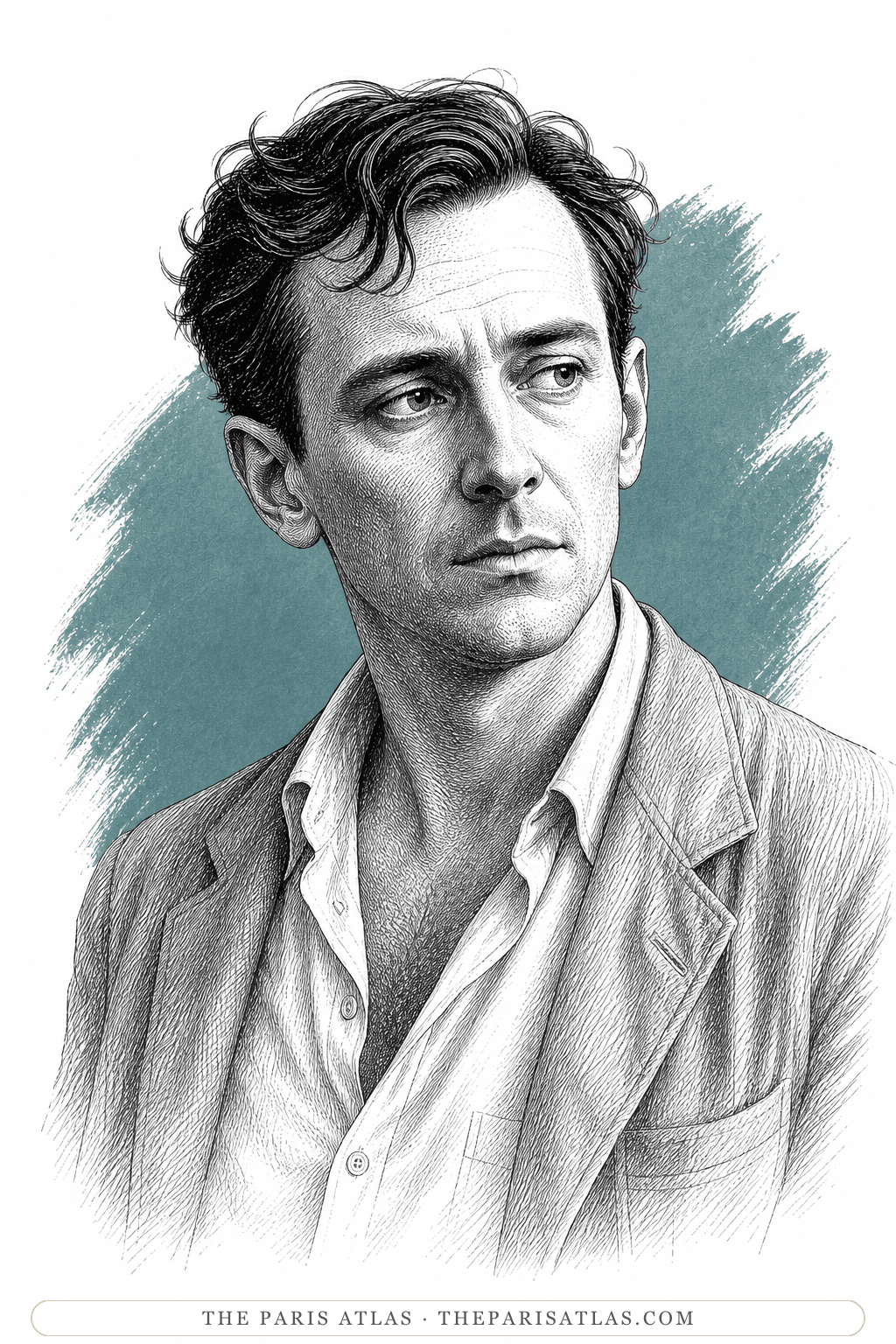
An American traveler who hopes distance can repair his marriage and release him from national identity.

Port's intelligent, anxious wife and the center of the final section.

The conventional American friend whose attraction to Kit deepens the marriage crisis.
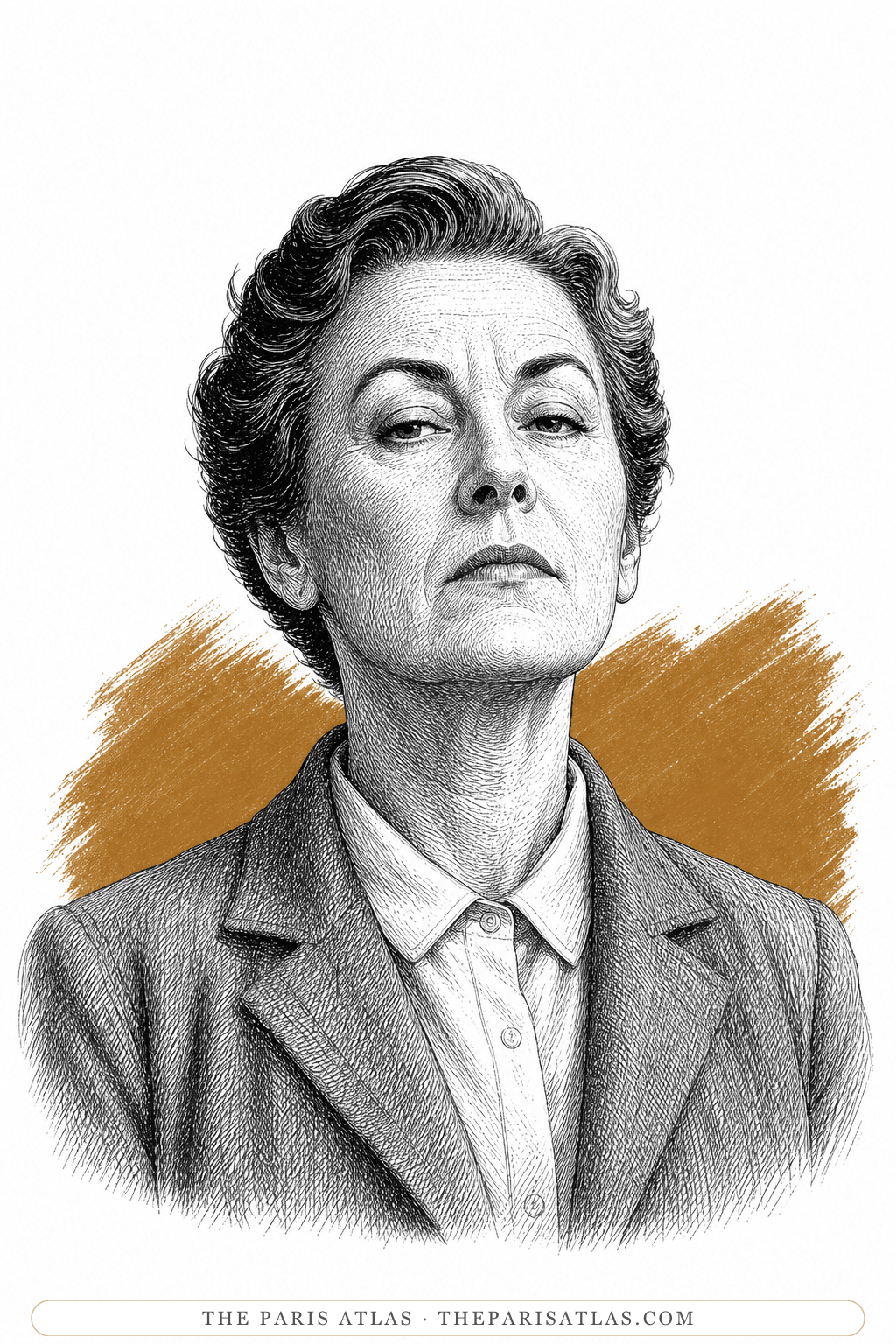
An abrasive Australian travel writer who depends on the places she disparages.

Mrs. Lyle's dependent, opportunistic son.

The local guide who leads Port outside the city walls.
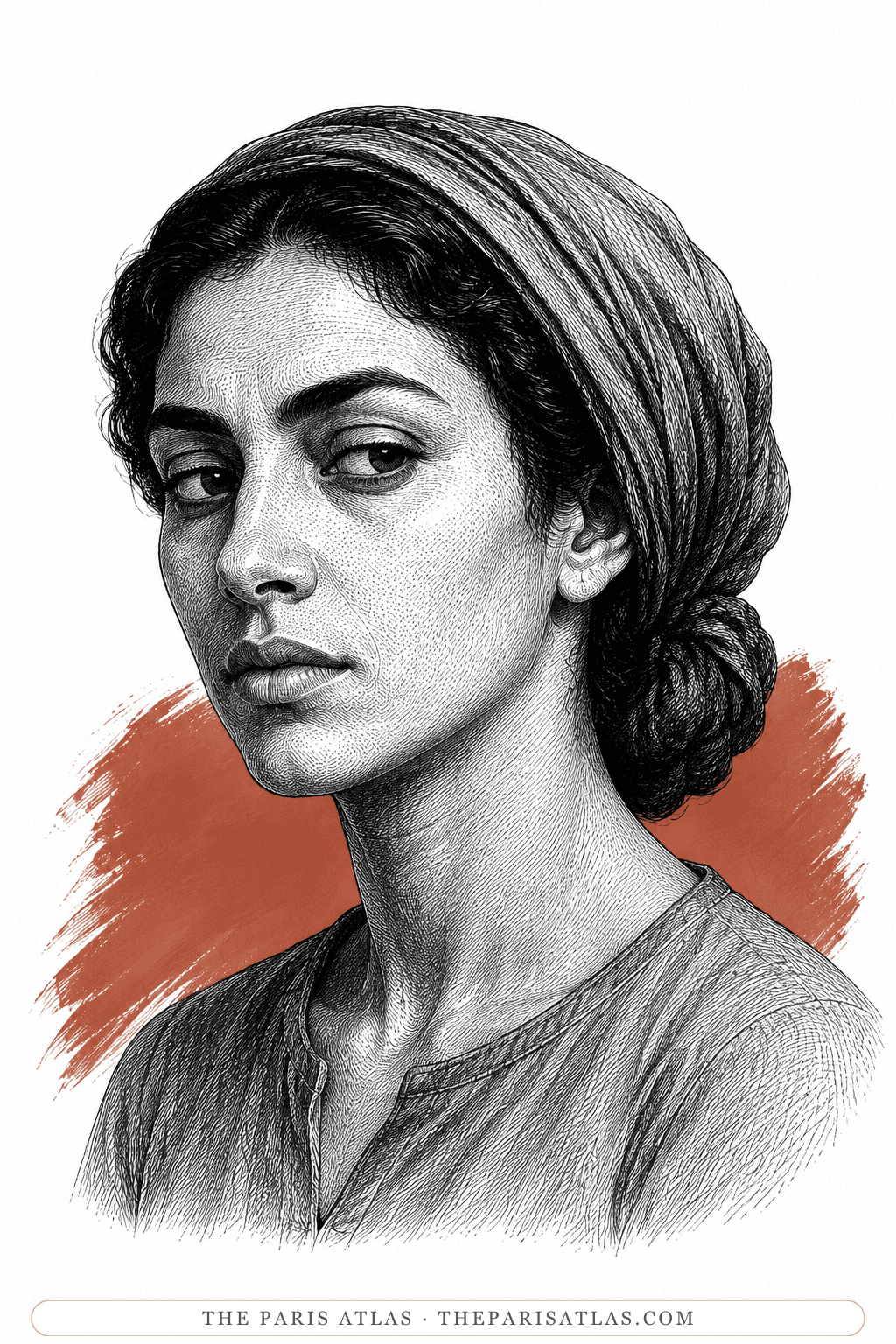
The sex worker Port visits during his first night alone.

The French officer who provides limited practical help during Port's illness.

The caravan leader who rapes, disguises, and confines Kit.

The French-speaking man who offers Kit immediate shelter and then exploits her.

The consulate employee who brings Kit close to her former life.
1949
John Lehmann publishes the British first edition; New Directions publishes the American edition.
1990
Vintage International publishes its paperback.
1990
Bernardo Bertolucci's film adaptation opens.
2002
Library of America collects the novel with two later Bowles novels.
2005
Ecco publishes a 352-page paperback.


Both test whether private love can shelter people from history and mortality.
Read our take
Both follow Americans abroad while questioning what travel actually changes.
Read our takeIn French colonial North Africa, moving from a coastal port generally understood as Oran toward the Sahara.
A tourist expects to return home; a traveler keeps moving without a fixed end. The plot tests that claim against practical dependence.
Yes. He contracts typhoid and dies in Sbâ.
She joins a caravan, is raped and held by Belqassim, escapes, is robbed, and is recovered by authorities.
No reunion occurs. She flees before seeing him and rides a streetcar toward the Arab quarter.
The sky represents the thin feeling of protection that keeps people from constantly seeing mortality and emptiness.
It draws on Bowles's travel and residence in North Africa, but Port and Kit's story is fiction.
The film compresses events and adds a final café scene; the novel ends with Kit on a streetcar.
Explore authors with a similar voice, perspective, and influence.
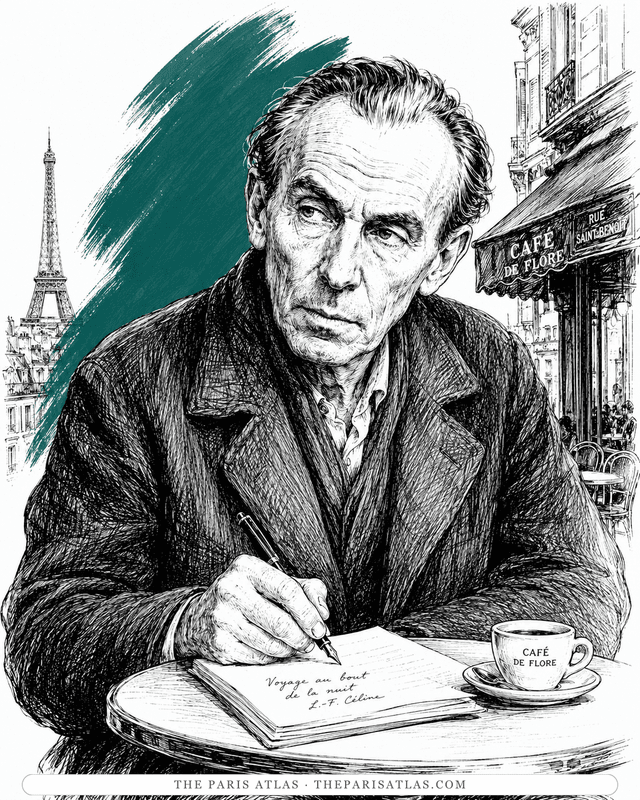
The doctor of the Paris slums who wrote the century's blackest, funniest novel — and changed the sound of French prose.
View author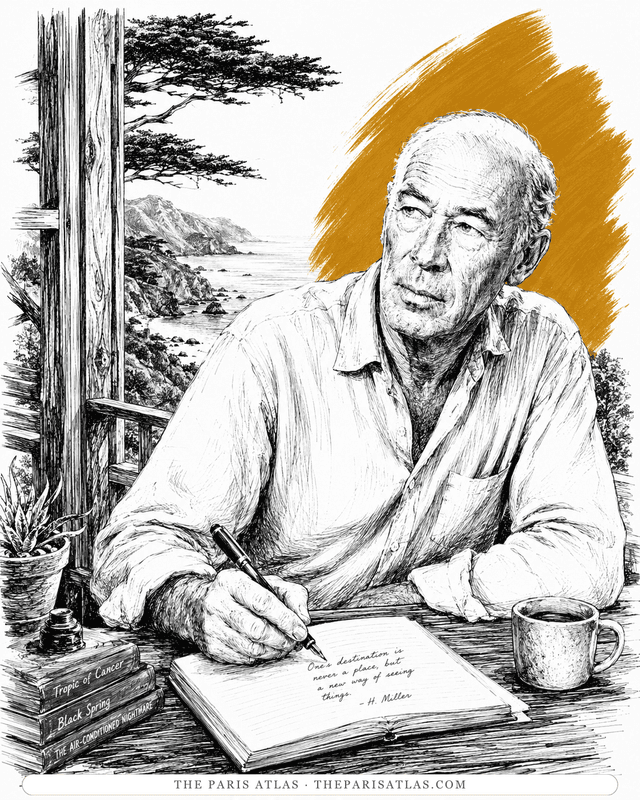
The Brooklyn dropout who arrived in Paris broke at thirty-eight and wrote the exuberant, banned books that ended American censorship.
View author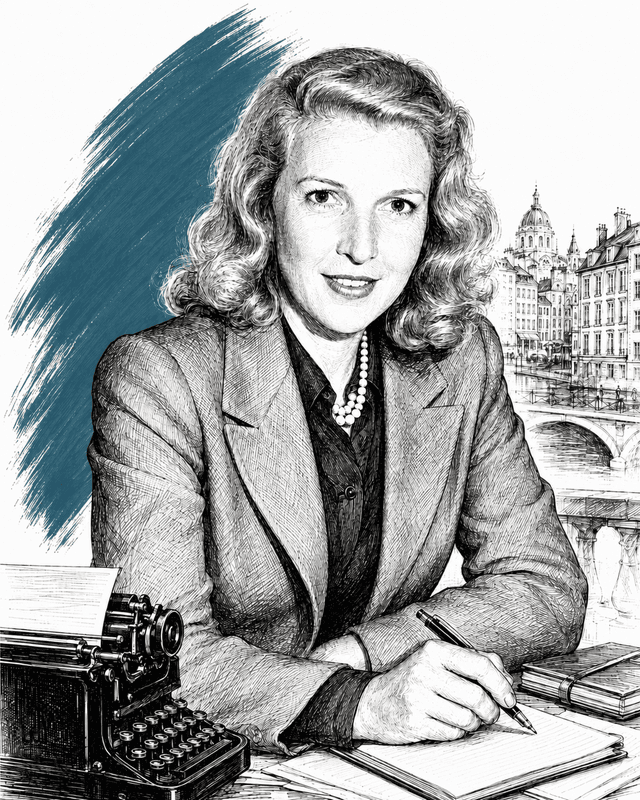
War correspondent who covered the Spanish Civil War, D-Day, and conflicts across five more decades; Hemingway's third wife, 1940–1945.
View authorThe sources below include the primary text, editions, scholarship, archival materials, and other records that informed this page. They document The Sheltering Sky, its publication, and its place in literary history.


Publication context, editions, and style.

Plot, themes, and reading questions.
First-edition cross-check.
Film year and classification history.
Edition cross-check.
Edition cross-check.
Library availability cross-check.
Bibliographic cross-check.
The primary text is the baseline reference for every book page. Additional references document publication history, interpretation, and historical context where that evidence is available.
 Explore more resources