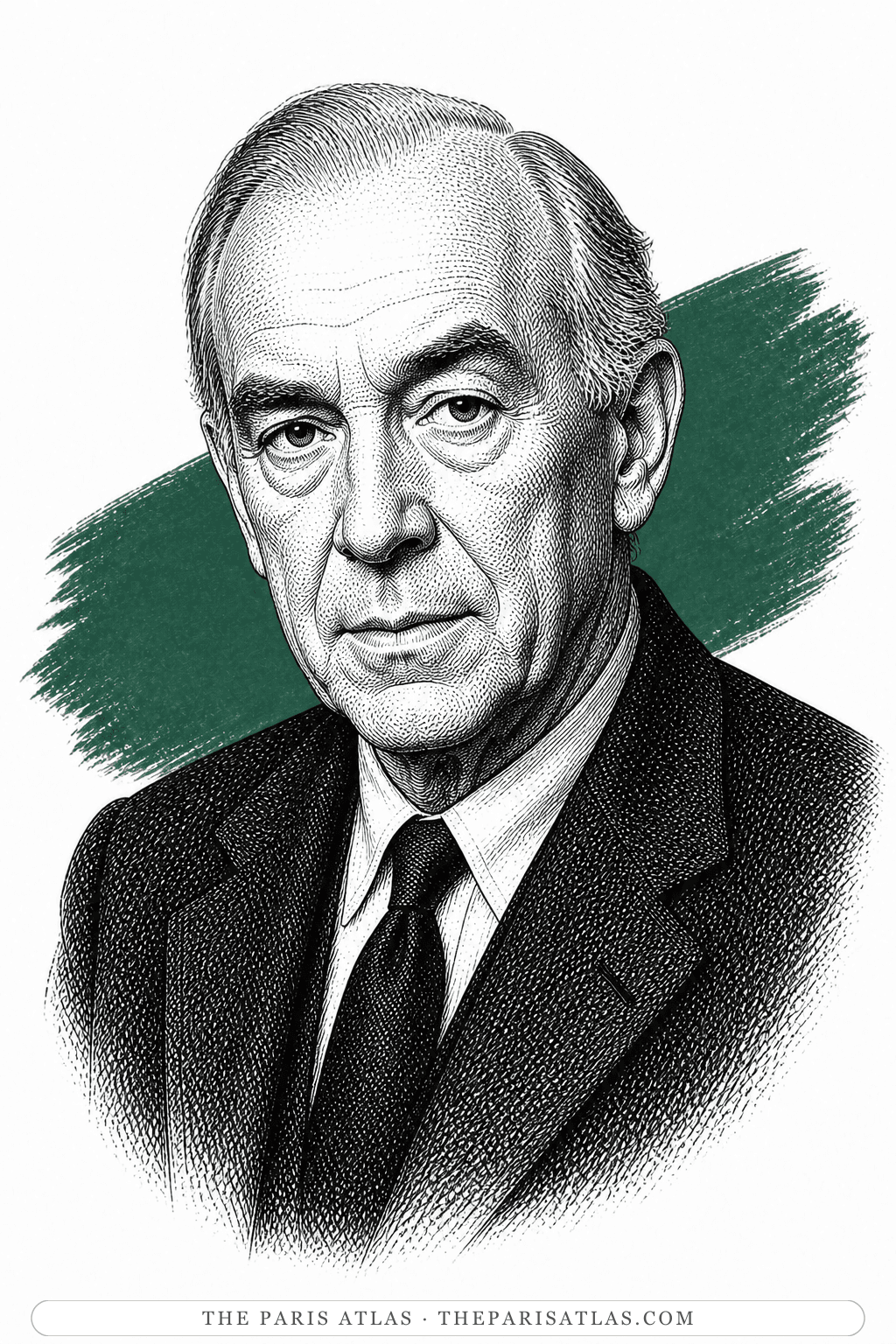

The Sheltering Sky
Both novels follow Westerners abroad whose confidence in their own understanding breaks down in a place they continue to misread.
Read our take
A British reporter in 1950s Saigon learns that an American idealist can cause terrible harm without ever believing himself cruel.
Thomas Fowler is a British journalist covering the war between French colonial forces and the Viet Minh in early-1950s Vietnam. He prides himself on reporting what he sees without choosing a side. That position becomes harder to defend when he meets Alden Pyle, a soft-spoken American aid worker who secretly supports a nationalist general in the hope of creating a democratic “Third Force.” Pyle also falls in love with Phuong, the young Vietnamese woman who lives with Fowler. The novel begins after Pyle has been murdered, then moves backward to show how political violence, romantic jealousy, and Fowler’s fear of losing Phuong led him to help arrange the killing. Graham Greene makes the central question uncomfortable on purpose: Fowler may have stopped a dangerous man, but that does not make his motives pure or his choice innocent.[1]
The Quiet American is set in Vietnam during the First Indochina War, when France was fighting the communist-led Viet Minh and the United States was sending money and equipment to support the French side. You do not need to know that history before reading. Fowler explains the immediate situation as he encounters it, and the clash between his experience and Pyle’s theories supplies the necessary political context.[1]
The story works at once as a murder mystery, a love triangle, and a political thriller. Pyle is dead on the first page, so the mystery is not simply who killed him. The deeper suspense comes from learning why Fowler, who repeatedly says he does not take sides, became willing to help other people kill a man who had once saved his life.[1]
Phuong stands at the center of the rivalry, but readers know her mainly through Fowler’s narration and Pyle’s plans. Both men claim to understand what she needs. Fowler offers familiar companionship but cannot initially marry her; Pyle offers marriage and a future in the United States. The novel shows how easily their concern for her becomes another form of possession, even while it gives only limited access to Phuong’s own thoughts.[1]
The novel opens in Saigon after Alden Pyle fails to arrive at Thomas Fowler’s apartment. Inspector Vigot of the French Sûreté tells Fowler that Pyle’s body has been found near the river. Fowler admits knowing him but denies any role in his death. The story then moves backward through Fowler’s memories.[1]
Fowler first meets Pyle in Saigon. Pyle is thirty-two, Harvard educated, and officially employed by the American Economic Aid Mission. He has built his view of Vietnam from the books of York Harding, a fictional political writer who argues that the country needs a democratic “Third Force” between French colonial rule and communism. Fowler has spent years observing the war and believes Pyle understands theories better than people.[1]
Pyle meets Phuong, the twenty-year-old Vietnamese woman who lives with Fowler, and decides he wants to marry her. Fowler is still married to Helen, who lives in England, and cannot offer Phuong a legal marriage unless Helen agrees to a divorce. Pyle treats the rivalry with formal honesty: he tells Fowler what he intends and promises Phuong security, marriage, and a life in the United States.[1]
During a dangerous journey near Phat Diem, Pyle crosses a war zone to find Fowler and later saves him after Fowler is injured at an isolated watchtower. Fowler cannot dismiss him as merely foolish after seeing his courage and loyalty. Back in Saigon, however, Fowler lies to Phuong and Pyle about Helen’s refusal to grant a divorce. When the lie is exposed, Phuong leaves Fowler for Pyle.[1]
Fowler’s assistant Dominguez directs him to Mr. Chou’s warehouse in Cholon. There Mr. Heng shows Fowler American plastic material and a metal mold connected to General Thé, a nationalist commander whom Pyle sees as a possible leader of the “Third Force.” Fowler gradually realizes that Pyle’s aid work includes secret support for Thé’s armed faction.[1]
A bomb explodes in a crowded square in central Saigon, killing and injuring civilians. Fowler finds Pyle at the scene and understands that Thé’s people used the explosives with Pyle’s support. Pyle calls the dead innocent victims of a larger political cause. Fowler sees that Pyle’s good intentions will not stop him from helping to create more violence.[1]
Fowler goes to Mr. Heng and agrees to help place Pyle where Heng’s associates can reach him. He invites Pyle to dinner near the bridge at Dakow and gives him one final chance to abandon General Thé. Pyle refuses. Fowler leaves him to the meeting that has been prepared and later returns home to wait for news.[1]
Mr. Heng’s associates kill Pyle and leave his body near the river. Vigot strongly suspects that Fowler helped arrange the murder, but he cannot prove it. Fowler continues to deny responsibility even though the reader now knows that he deliberately placed Pyle in danger.
Phuong returns to Fowler after Pyle’s death. Soon afterward, Helen sends a telegram saying that she has changed her mind and will allow the divorce. Fowler can finally promise Phuong the marriage and security that he could not offer while Pyle was alive.
Fowler receives almost everything he wanted, but the ending does not feel like a victory. He thinks of Pyle and wishes there were someone to whom he could apologize. He has finally taken a side, yet he cannot separate his horror at the bombing from his jealousy, his fear of loneliness, and the personal benefit he gains from Pyle’s death.
Pyle is not dangerous because he enjoys suffering. He is dangerous because he believes so strongly in his political plan that real people become secondary to it. He has read that Vietnam needs a “Third Force,” finds a general who appears to fit the theory, and helps supply that general without understanding the country or controlling what happens next. His sincerity makes him harder to stop because he treats every disaster as a reason to continue rather than a reason to question the plan.
Fowler calls himself a reporter rather than a correspondent because he wants to record facts without promoting a cause. That distinction sounds principled, but it also protects him. If he never takes a side, he never has to accept responsibility for choosing badly. The war keeps showing him that observation is not always separate from action: access depends on armies, his reports shape what distant readers know, and silence can help the people already using power.
The bombing destroys Fowler’s claim that he can remain outside the conflict. Yet his decision to act is still morally mixed. He wants to prevent more civilian deaths, but he also wants Phuong back and resents the younger man who can marry her. Greene does not ask readers to choose one motive and ignore the others. Fowler acts for public and private reasons at the same time.
Fowler and Pyle disagree about politics, but they often treat Phuong in similar ways. Fowler assumes that familiarity means he understands her. Pyle assumes that marriage and life in America are what she needs. Both men discuss her future with each other while she is present, and each turns her into evidence that his own way of living is more honest or more generous.
Phuong does make practical choices. She leaves Fowler after learning that he lied about the divorce, accepts the security Pyle offers, and returns after Pyle dies. The difficulty is that Fowler controls the narration, so her reasoning is usually guessed at by a jealous older man. The book exposes the foreigners’ habit of turning Vietnam into an idea, but its limited view of Phuong also shows how deeply that habit shapes the novel itself.
Greene writes in short, controlled scenes filled with concrete details: a drink on a café table, a dog following Pyle, an opium pipe prepared at night, a damaged body in a city square. Political information arrives through conversation and discovery rather than long explanation. The result is fast and readable even when the subject is morally complicated.
Fowler’s first-person voice is dry, observant, jealous, and often funny. He notices other people’s evasions more quickly than his own. Because Pyle is already dead when the story begins, Greene replaces ordinary suspense with a harder question: what could make Fowler decide that this earnest young man must die? The movement between the investigation and earlier events lets every friendly scene carry the knowledge of betrayal.
Greene wrote from direct reporting experience in French Indochina during the early 1950s. At that time, France was fighting the Viet Minh while the United States supplied growing military and economic support to the French Union and the associated governments of Vietnam, Laos, and Cambodia. The novel appeared before large numbers of American combat troops entered Vietnam, which is one reason its warning about American intervention later seemed so prescient. Its warning concerns an earlier stage: outsiders using money, covert support, and political theory to shape a country they do not understand. Modern editions often include introductions explaining the French Indochina War and Greene’s reporting from the region.
The story has been filmed twice. Joseph L. Mankiewicz’s 1958 version stars Audie Murphy, Michael Redgrave, and Claude Dauphin and changes the political meaning enough that it should not be treated as a direct guide to the novel. Greene strongly disliked what the film did to his book. Phillip Noyce’s 2002 adaptation, starring Michael Caine, Brendan Fraser, and Đỗ Thị Hải Yến, keeps much more of Greene’s criticism of intervention. Caine received an Academy Award nomination for playing Fowler.
The murder is known from the beginning. What keeps the story moving is the question of how Fowler came to help kill a man he sometimes admired.
Greene follows explosives from an aid network to a crowded city square and shows the people harmed by someone else’s theory.
Fowler sees through Pyle’s innocence but remains evasive about his own jealousy, dishonesty, and fear of being left alone.
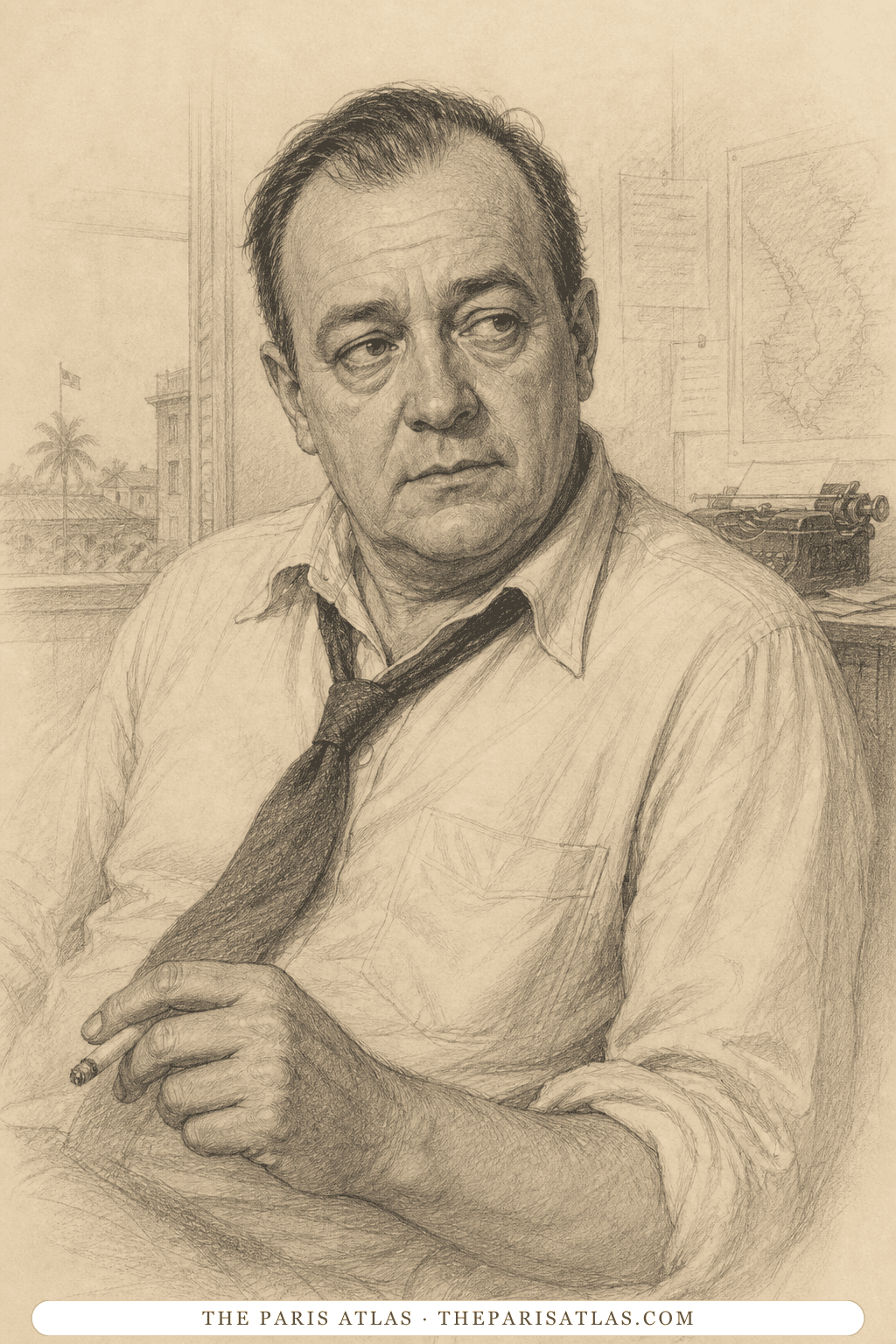
The British reporter and narrator who claims to be neutral until violence and fear of losing Phuong push him into action.
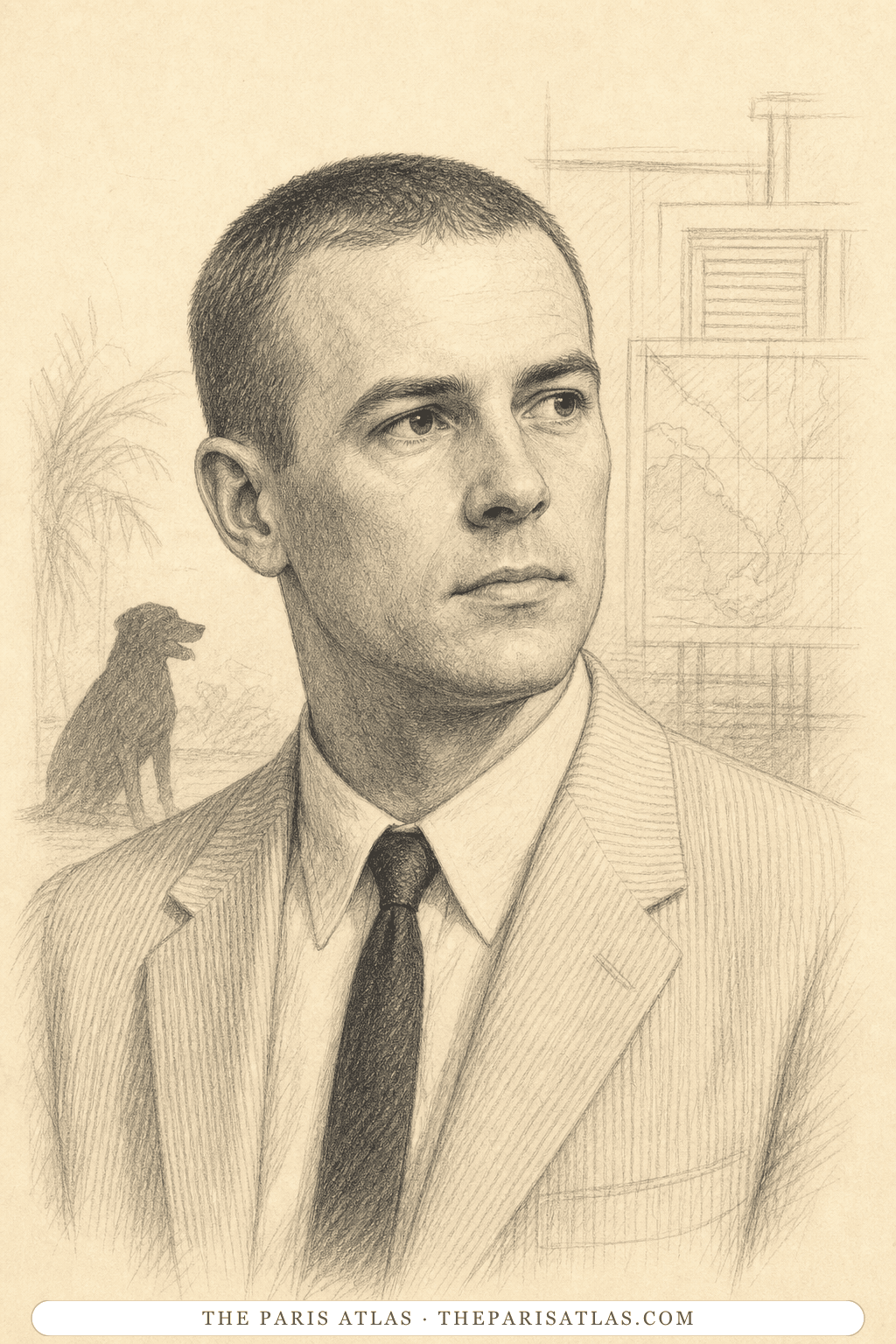
The soft-spoken American aid worker whose faith in a democratic “Third Force” leads him into covert support for political violence.

The young Vietnamese woman whose practical choices are repeatedly interpreted—and often controlled—by the two foreign men competing for her.
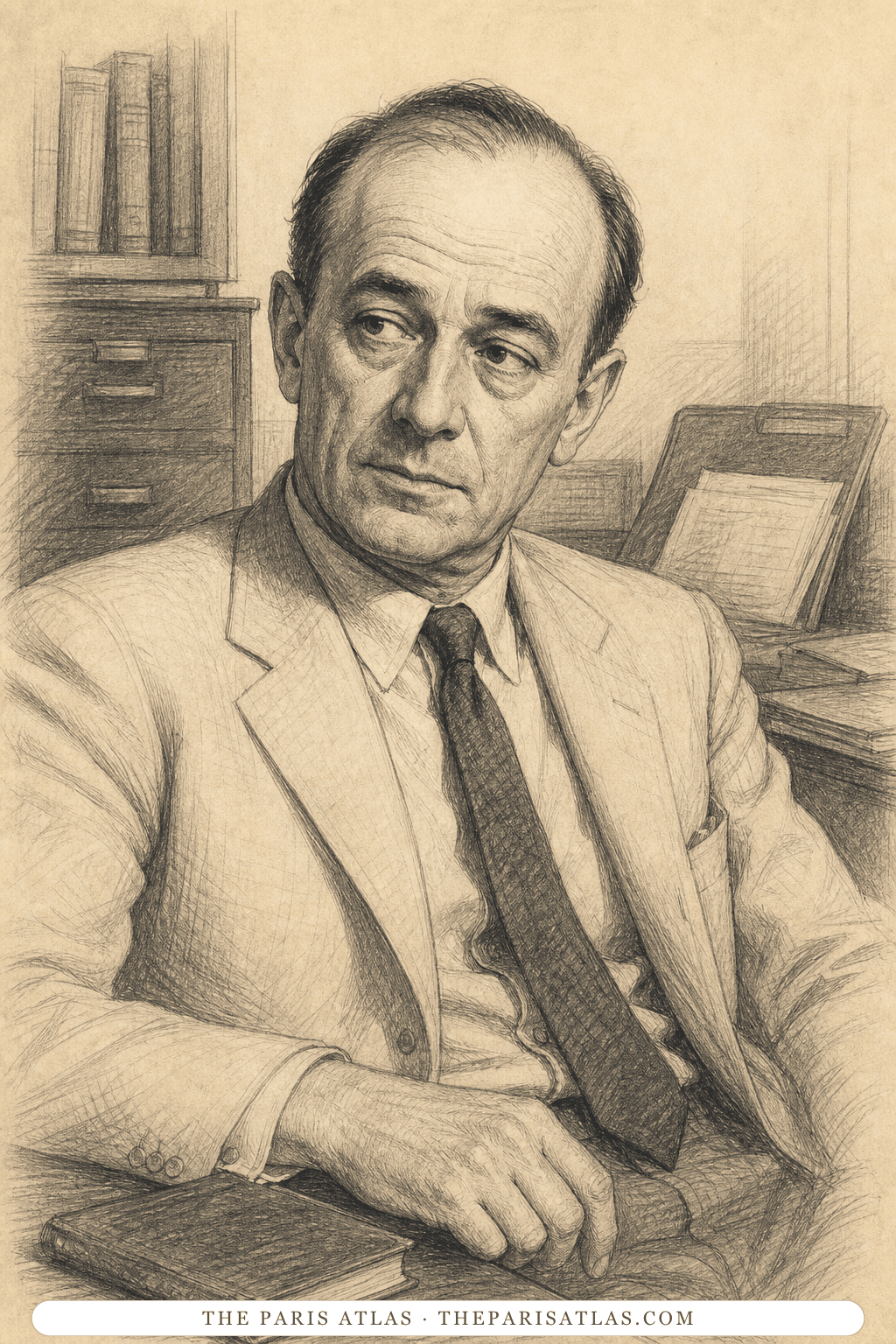
The weary French police inspector who suspects Fowler’s part in Pyle’s murder but cannot turn suspicion into proof.
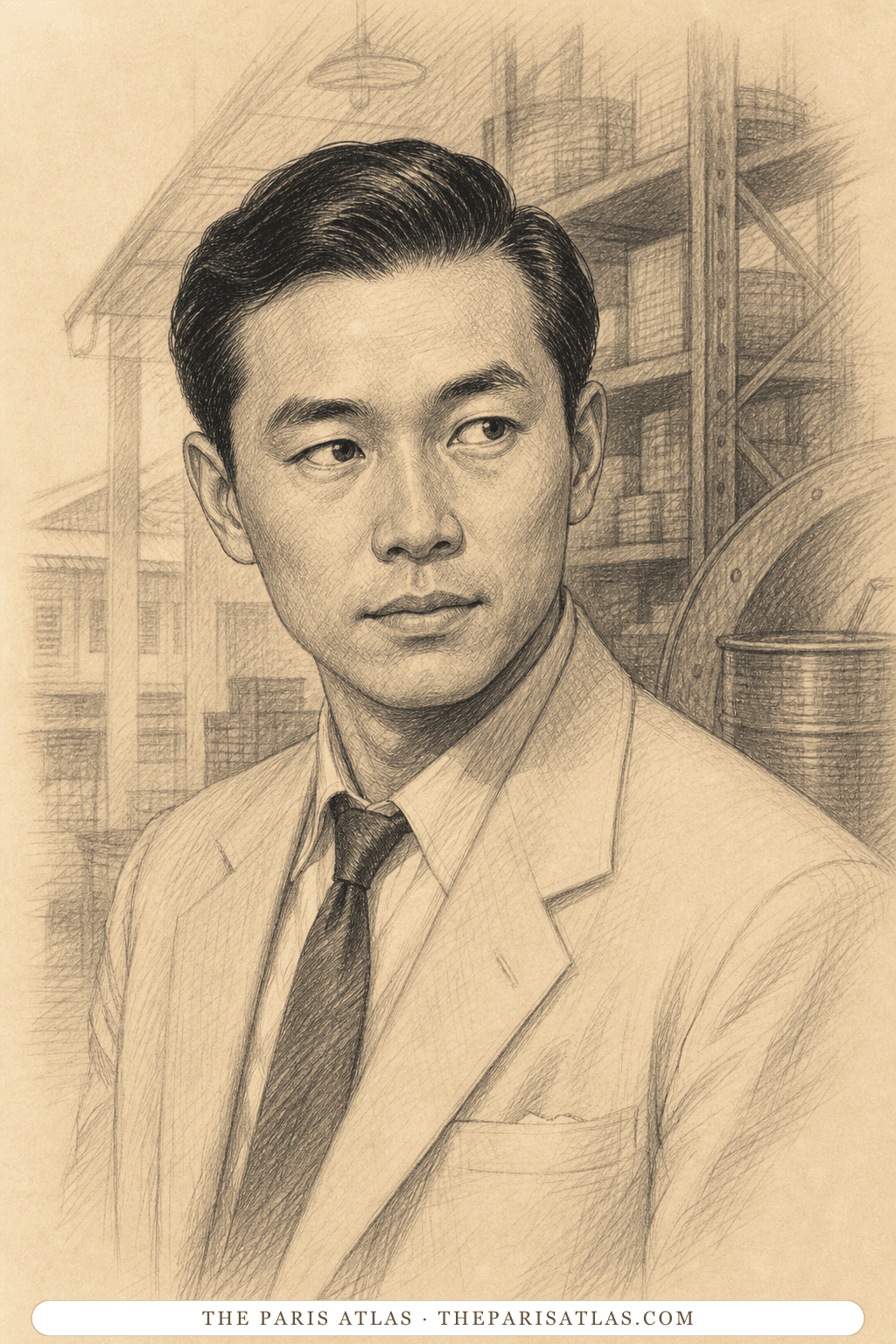
The calm warehouse manager and communist contact who reveals Pyle’s link to explosives and organizes the plan that kills him.

Phuong’s forceful older sister, who judges each suitor by whether he can offer marriage, security, and a future beyond wartime Saigon.

Fowler’s estranged wife in England, whose refusal and later agreement to divorce him determine what future he can offer Phuong.
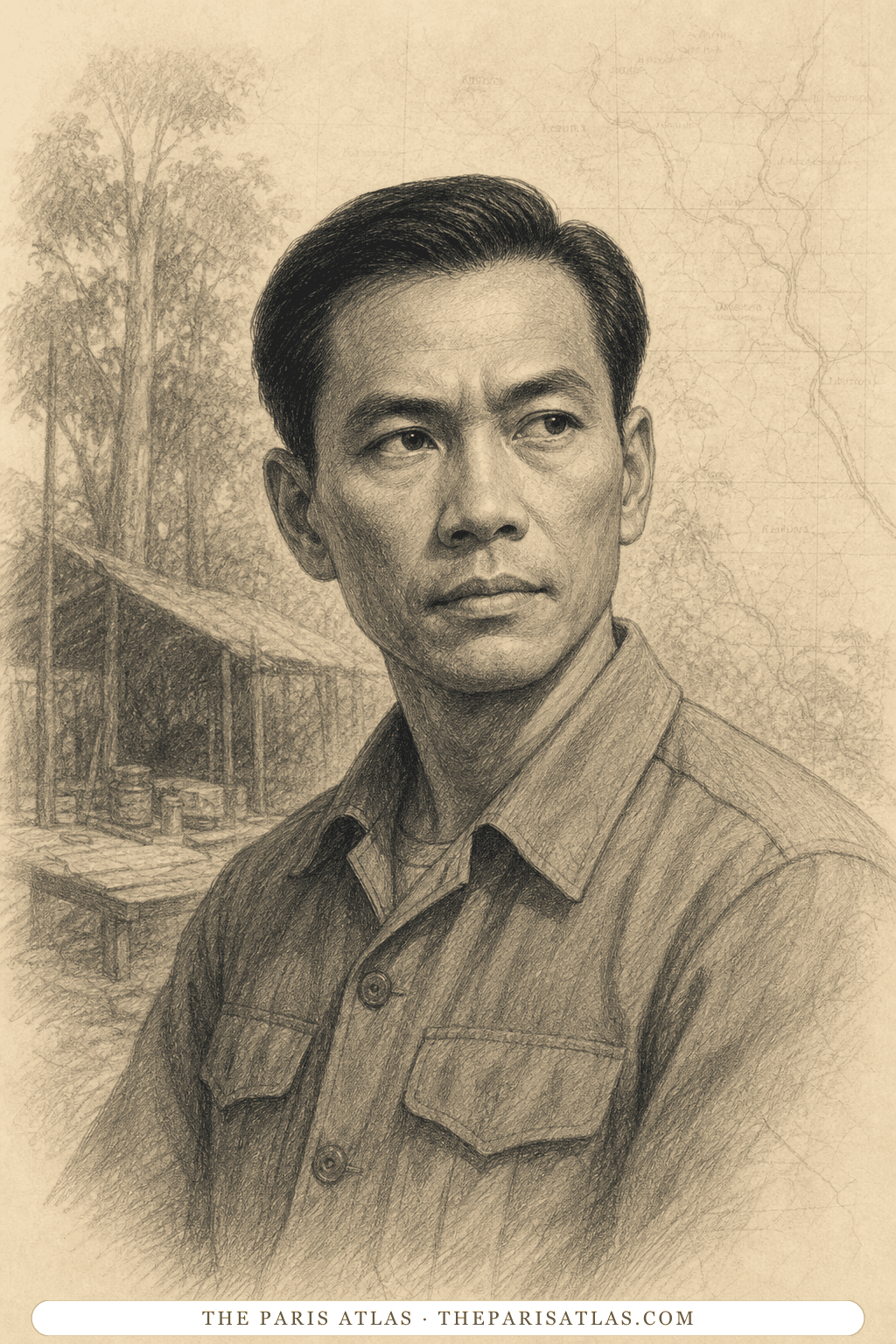
The nationalist commander whom Pyle supports as a democratic alternative, despite evidence that Thé’s faction uses terror against civilians.
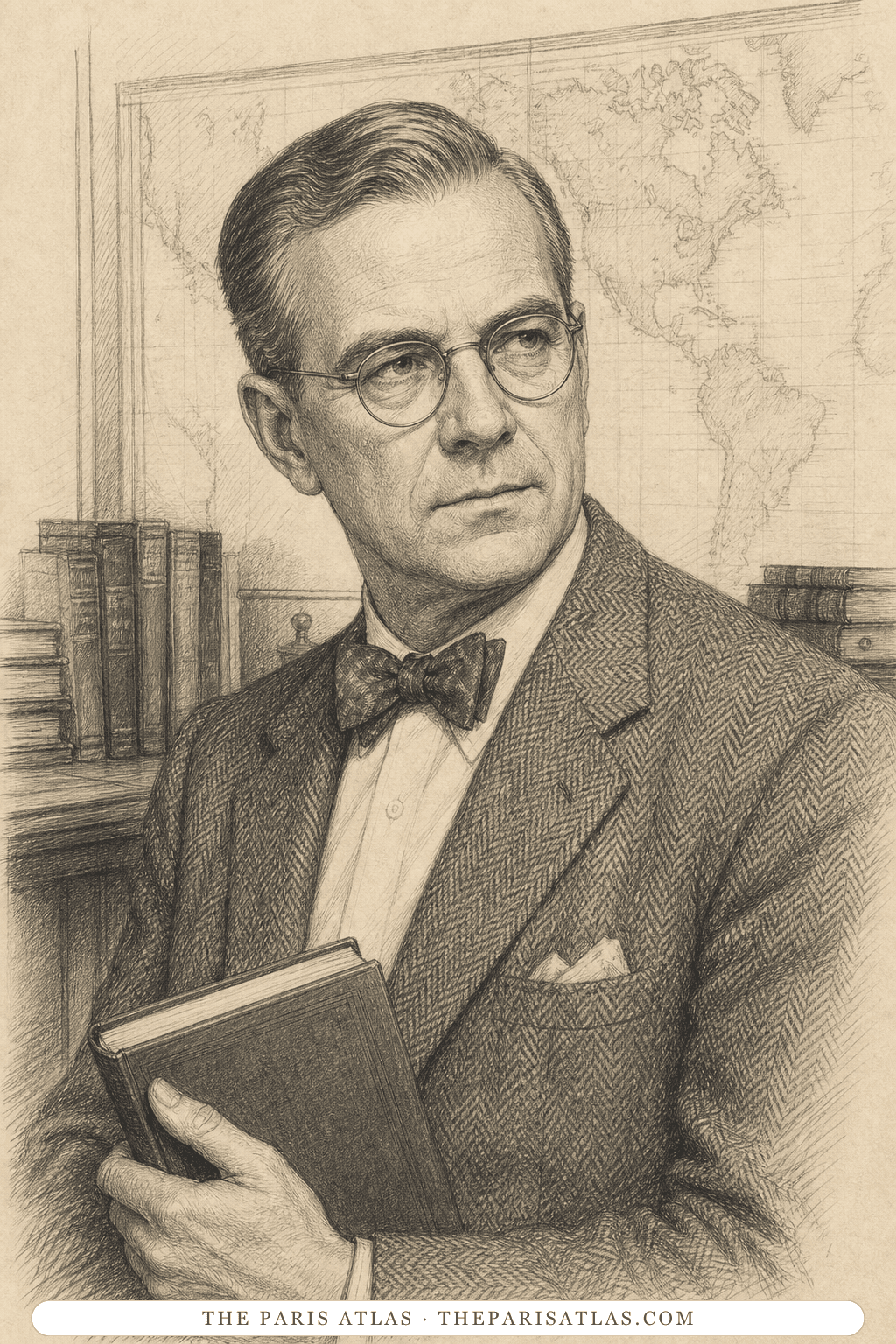
The absent American political writer whose “Third Force” theory gives Pyle a confident answer to a country Harding does not know firsthand.
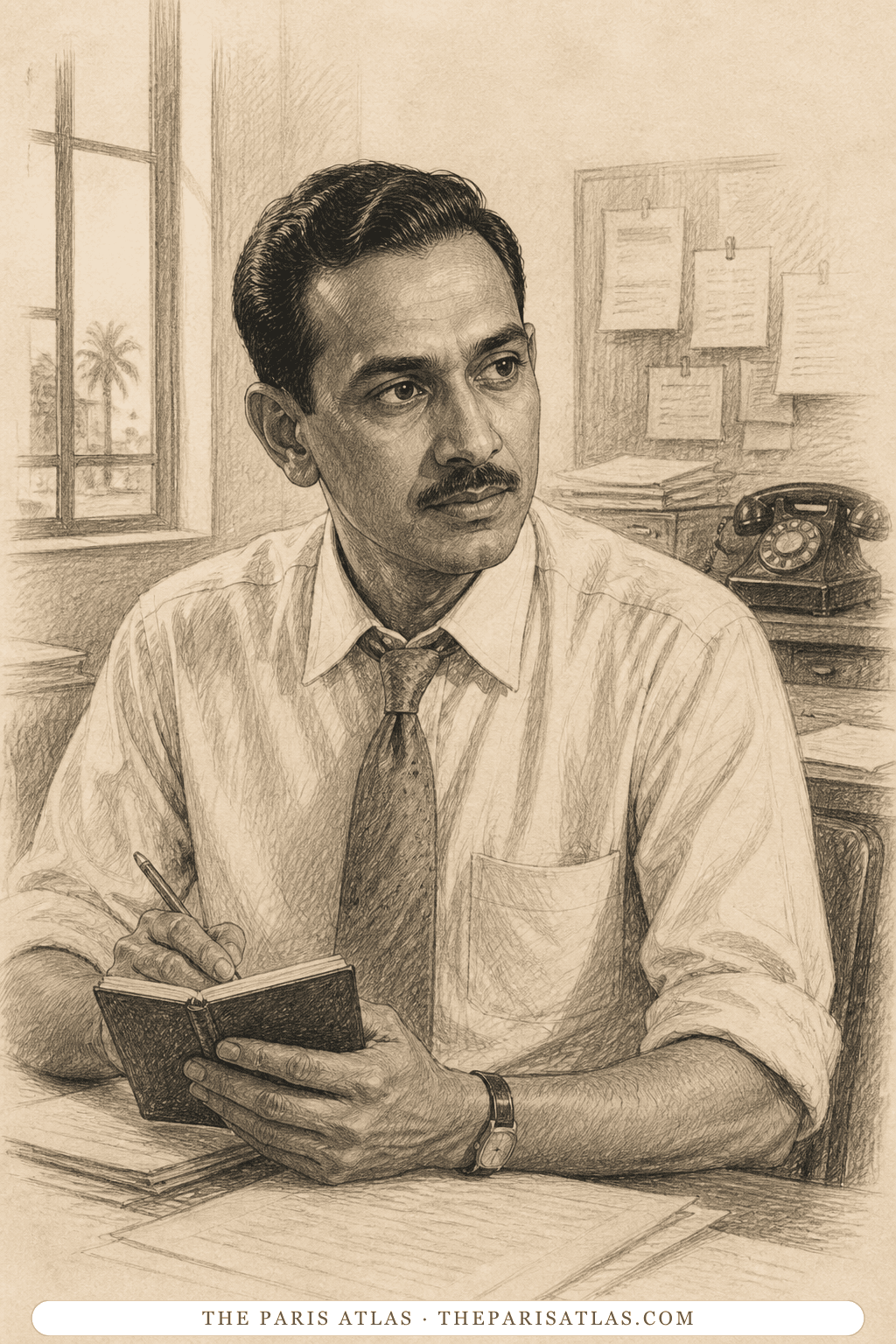
Fowler’s highly capable Indian assistant, whose contacts and careful reporting uncover the material trail behind Pyle’s political work.
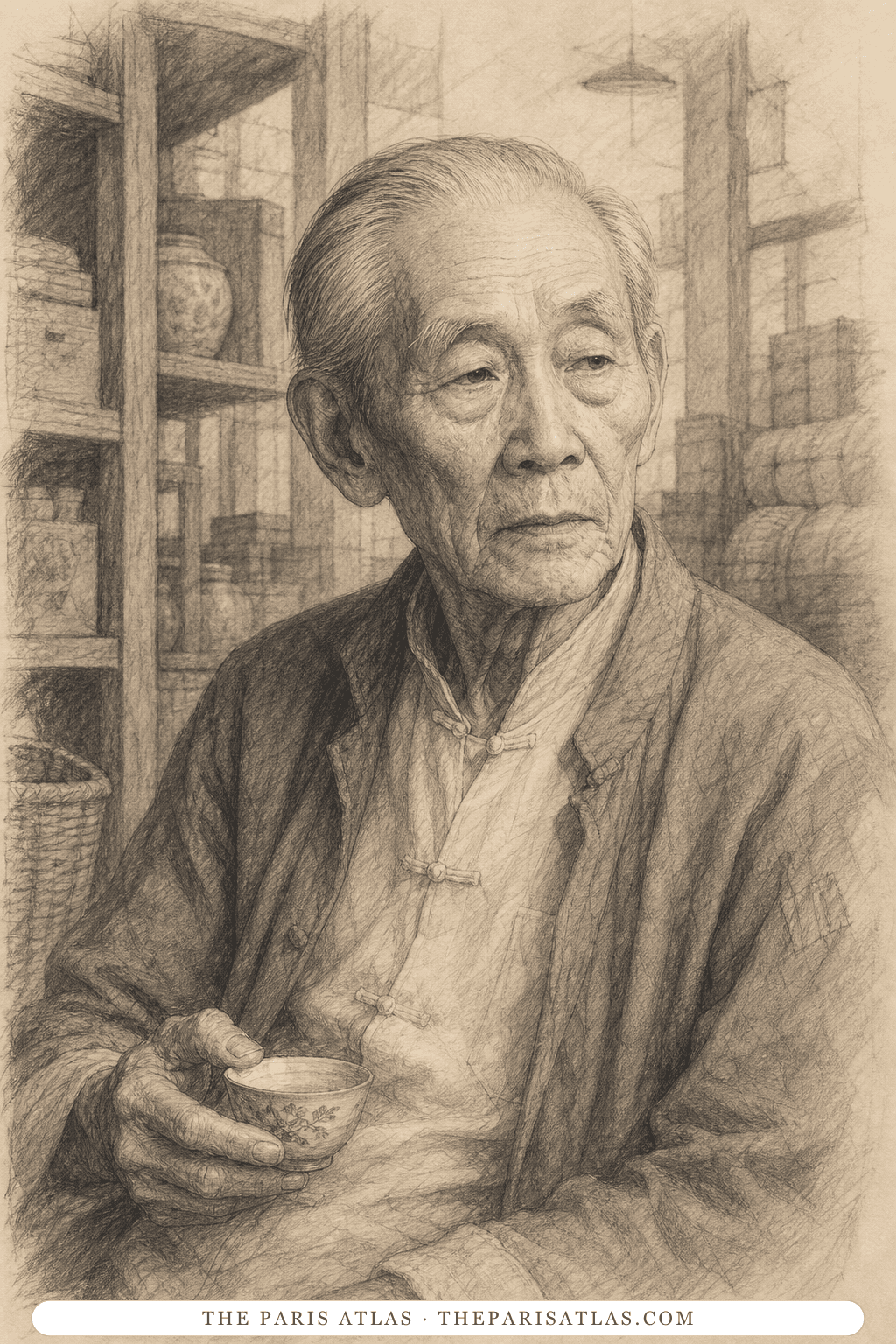
The elderly Chinese warehouse owner whose business hides the first physical evidence linking American material to General Thé.
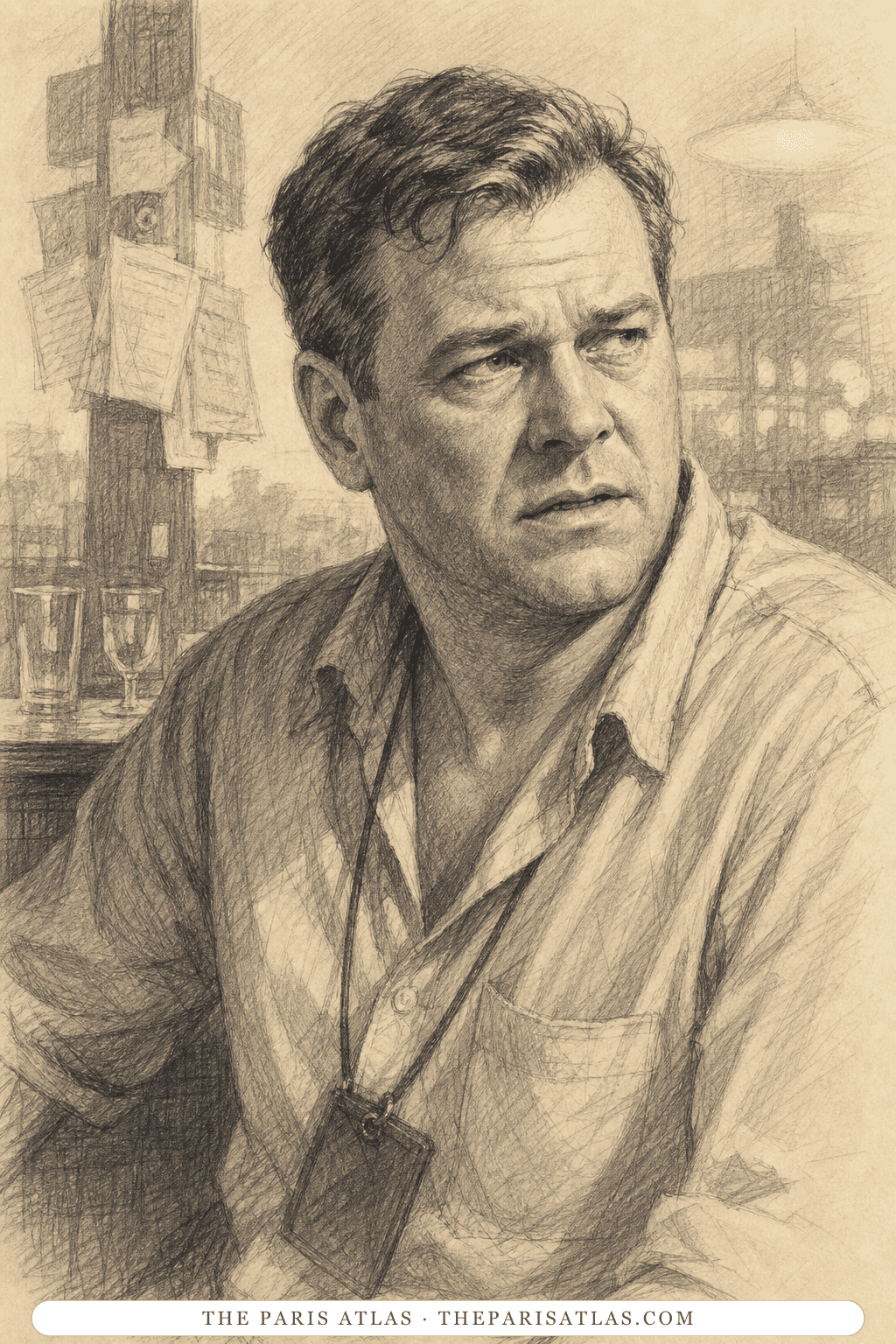
A loud American reporter whose crude public behavior briefly gives way to fear for his dangerously ill child at home.
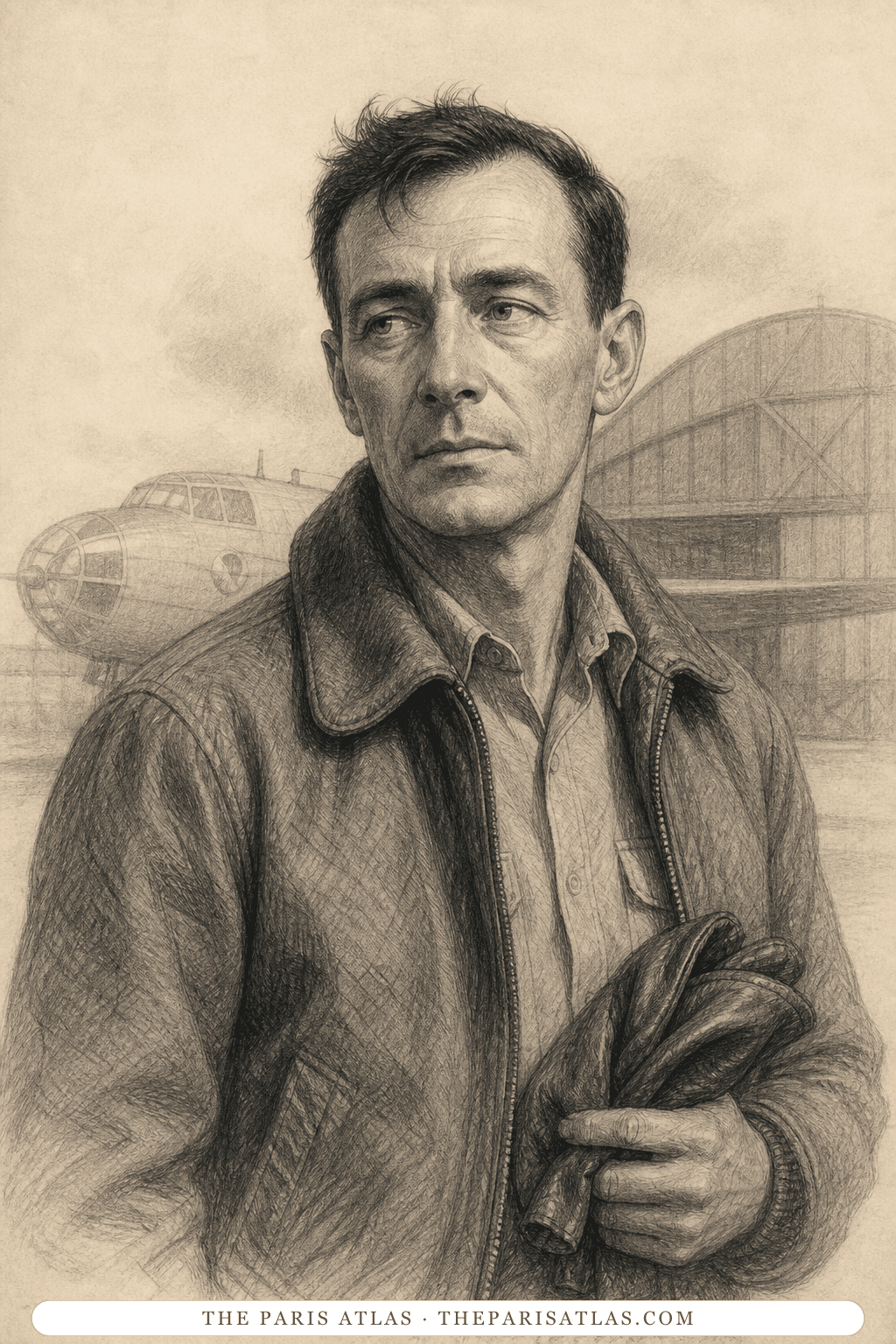
The French bomber pilot who shows Fowler how duty, disgust, and participation can exist inside the same person.
1951–1954
Graham Greene reports from French Indochina, gathering experiences that inform the setting and politics of the novel.
1955
William Heinemann publishes the first British edition of The Quiet American.
1956
Viking Press publishes the first American edition.
1958
Joseph L. Mankiewicz’s film adaptation opens with Audie Murphy as the American and Michael Redgrave as Fowler.
2002
Phillip Noyce releases a new adaptation starring Michael Caine, Brendan Fraser, and Đỗ Thị Hải Yến.
2003
Michael Caine receives an Academy Award nomination for Actor in a Leading Role for his performance as Fowler.
2004
Penguin Classics publishes the centennial edition with an introduction by Robert Stone.

Both novels follow Westerners abroad whose confidence in their own understanding breaks down in a place they continue to misread.
Read our take
Both books test what happens when an abstract political future is used to excuse violence against actual people in the present.
Read our take
O’Brien writes from a later American war in Vietnam and likewise joins physical danger to memory, guilt, storytelling, and the unstable line between fact and explanation.
Read our take
Greene’s earlier novel also uses a jealous first-person narrator whose emotional intelligence does not prevent deception, possession, or self-serving judgment.
Read our takeThe Quiet American follows a British reporter in 1950s Vietnam who becomes caught between an idealistic American’s dangerous political project and their rivalry over a young Vietnamese woman.
The title refers to Alden Pyle, a soft-spoken American aid worker whose calm manners hide covert support for General Thé’s armed political faction.
Mr. Heng’s associates kill Pyle, but Fowler knowingly helps arrange the meeting that places Pyle in their path.
Fowler believes Pyle will cause more civilian deaths by supporting General Thé, but jealousy and his desire to win Phuong back also influence the decision.
He means a supposedly democratic Vietnamese movement positioned between French colonial rule and the communist Viet Minh; he believes General Thé can lead it.
Yes. She returns to Fowler after Pyle’s death, and Helen later agrees to a divorce, allowing Fowler to offer marriage.
The novel criticizes intervention based on good intentions and shallow knowledge rather than condemning every American person; its main target is power used without responsibility.
No. The book explains the immediate conflict through Fowler’s reporting, though knowing that it takes place during the French war against the Viet Minh adds useful context.
Explore authors with a similar voice, perspective, and influence.
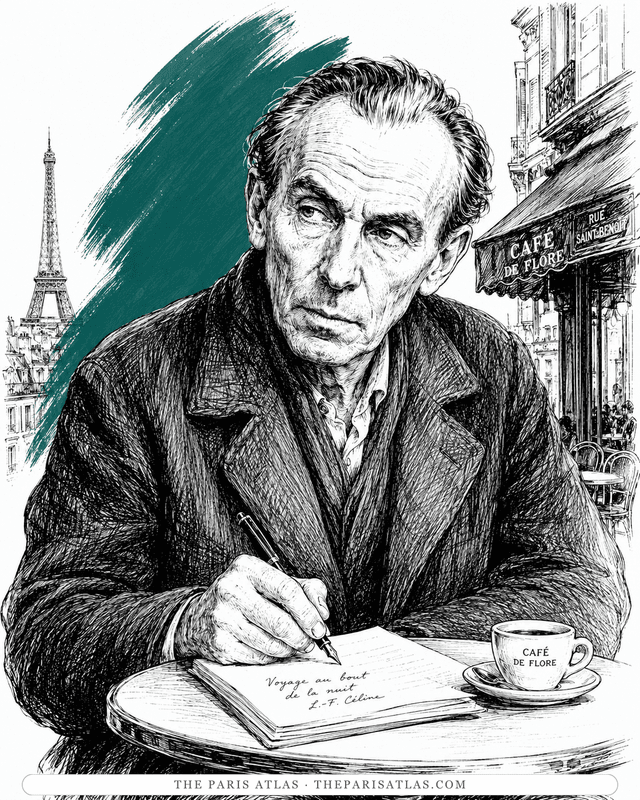
The doctor of the Paris slums who wrote the century's blackest, funniest novel — and changed the sound of French prose.
View author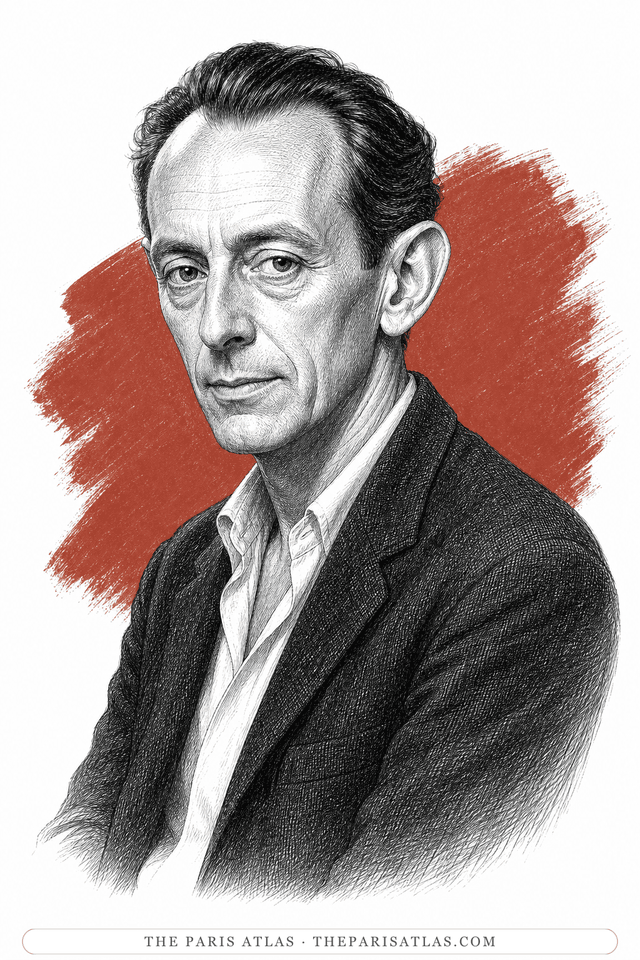
American novelist and composer whose expatriate fiction explores dislocation, unstable intimacy, fatalism, and North Africa.
View author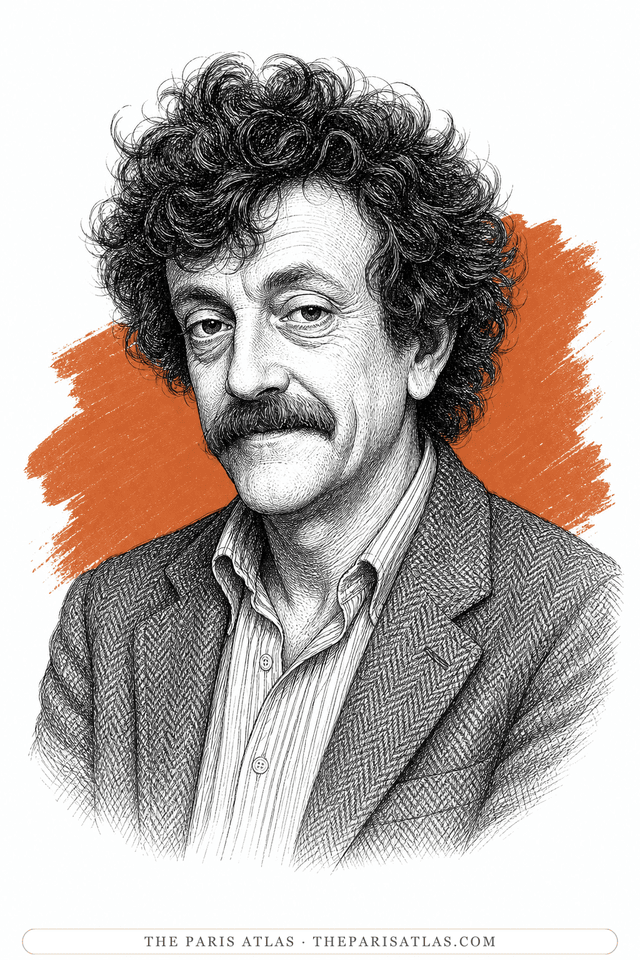
American novelist whose fiction combines satire, science fiction, and the experience of surviving the bombing of Dresden.
View authorThe sources below include the primary text, editions, scholarship, archival materials, and other records that informed this page. They document The Quiet American, its publication, and its place in literary history.


Penguin Random House record used for the 2004 edition, ISBN, page count, and Robert Stone introduction.
U.S. Office of the Historian document used for the contemporary American aid context.
British Film Institute record used for the 1958 adaptation.
American Film Institute record used for the 2002 adaptation.
Academy record used for Michael Caine’s nomination.
Open Library ISBN catalogue used to cross-check title and edition metadata.
Google Books catalogue record used to cross-check title and edition metadata.
Internet Archive ISBN catalogue used to cross-check edition and availability.
Library of Congress catalogue used to cross-check the ISBN record.
The primary text is the baseline reference for every book page. Additional references document publication history, interpretation, and historical context where that evidence is available.
 Explore more resources