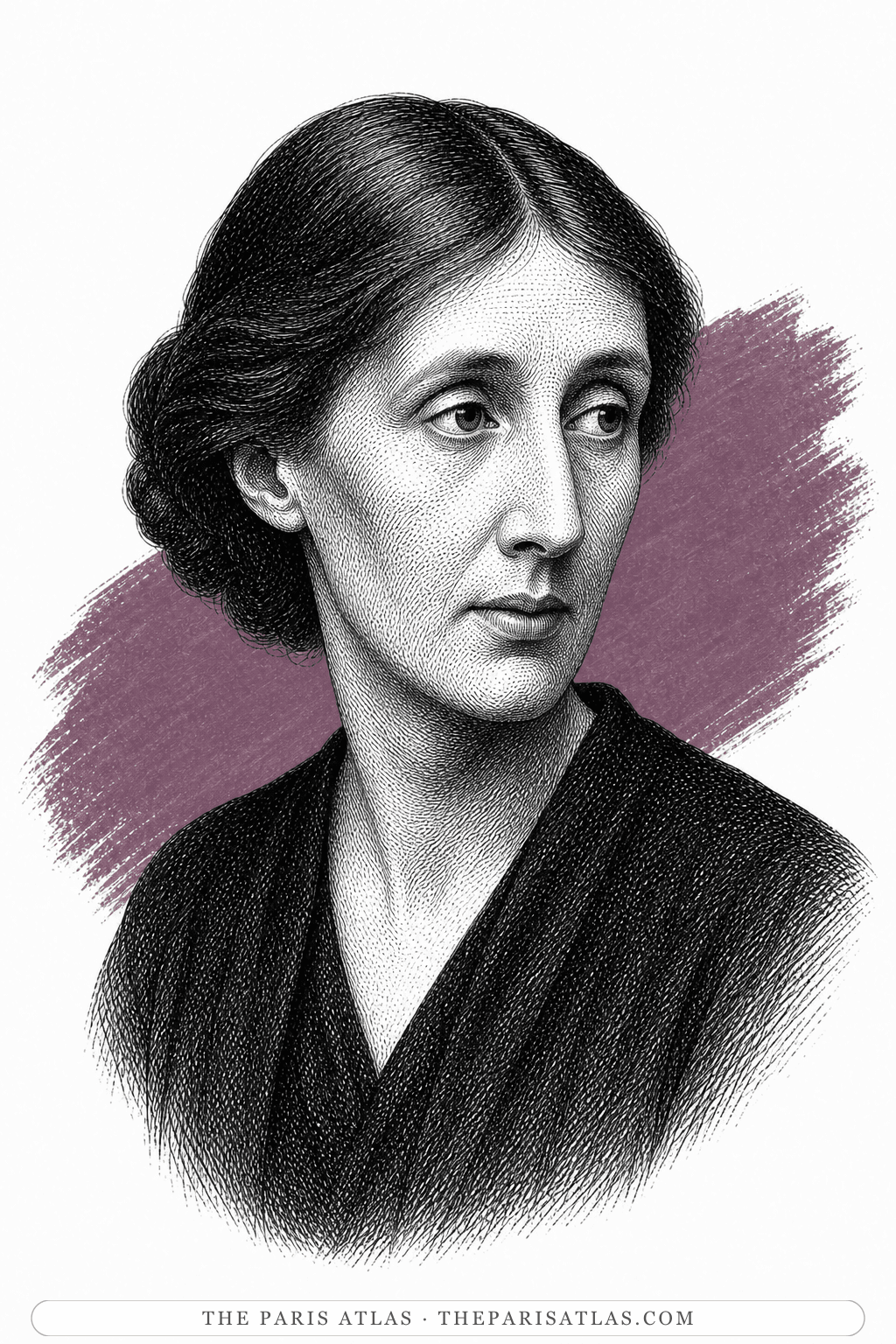

Mrs. Dalloway
Another Woolf novel moves among private viewpoints and turns a gathering into an examination of connection, exclusion and memory.
Read our take
A postponed trip, a family dinner and an unfinished painting survive differently in the minds of those who return.
At a holiday house on the Isle of Skye, the Ramsay family and their guests consider a trip to a nearby lighthouse. A child waits for a promise to be kept, a philosopher worries about his work, and Lily Briscoe tries to paint what she sees. Virginia Woolf's 1927 novel moves through their competing perceptions, then across years of absence, asking how memory and art give shape to lives that cannot be held still.
Mrs. Ramsay keeps a household of eight children and numerous guests moving through the day. Her care includes practical errands, attention to hurt feelings and arrangements for a dinner. She also expects other women to find fulfillment in marriage, an assumption that Lily admires her too much to dismiss easily and resists too strongly to accept.
Mr. Ramsay's commitment to intellectual accuracy can become cruelty when he refuses to soften an unwelcome fact. His fear of failing as a philosopher sends him back to his wife for reassurance. Woolf presents the force of his thinking together with the demands it places on the people around him.
Lily's painting offers another kind of work. She has to bring what she sees onto a canvas, tolerate being observed and continue despite Charles Tansley's claim that women cannot paint or write. Her changing feelings about the Ramsays become part of the problem of arranging light, color and shape.
In The Window, Mrs. Ramsay offers her young son James the possibility of visiting the lighthouse the next day. His father insists the weather will prevent it. The disagreement spreads through a day of work, conversation and private thought, while Lily paints near the house and the guests Paul Rayley and Minta Doyle become engaged.
The evening dinner begins with fatigue and people feeling separate. Candlelight, food and conversation gradually create a shared occasion. Mrs. Ramsay later settles a dispute between James and his sister Cam, then sits with her husband as each reads. A smile and a concession about the weather communicate affection she cannot say directly.
In Time Passes, the house falls toward ruin while years and the First World War intervene. Brief bracketed notices report Mrs. Ramsay's sudden death, Prue's death from an illness associated with childbirth, and Andrew's death in France. Mrs. McNab and Mrs. Bast, helped by Mrs. Bast's son George, clean and repair the house for another visit.
In The Lighthouse, Mr. Ramsay finally makes the crossing with the now adolescent James and Cam. James's resentment changes as he distinguishes his father from the tyranny he fears; his father's eventual praise for his steering matters deeply. Ashore, Lily returns to the design she had left unresolved. As the boat reaches its destination, she draws a final line on her canvas and recognizes that she has achieved her vision.
The opening weather dispute looks different from each position in the household. Mr. Ramsay values accuracy; James hears an attack on the hope his mother has offered him. Mrs. Ramsay knows the practical uncertainty but also attends to the child's disappointment. Woolf places these interpretations beside one another without giving one person possession of the whole scene.
Lily's view of Mrs. Ramsay is similarly divided. She admires her power to create an occasion and resists her insistence that marriage should organize other women's lives. Affection does not eliminate disagreement, and the novel's movement between minds makes that coexistence part of its form.
The dinner gradually holds together through food, candlelight, seating and conversation. Mrs. Ramsay's attention helps people feel connected, but the occasion also depends on the cook's work and on guests participating. The effect that seems momentarily complete has material conditions and requires effort.
This achievement cannot be stored for later use. Some guests will remember it differently, and the relationships it appears to settle will change. The dinner therefore becomes a model for a kind of making that succeeds in the present without acquiring permanent control over the lives it brings together.
In Time Passes, the house continues through darkness, weather and decay while human deaths enter in brief bracketed notices. The disproportion is disturbing because people who occupied so much attention in the first part disappear with little narrative ceremony. The form refuses to make historical time match the scale of private grief.
When the house becomes habitable again, cleaning and repair are necessary. Mrs. McNab and Mrs. Bast do work that the Ramsays' return depends on. Survival of a setting is not automatic, and a restored room does not restore the people whose absence the final part must accommodate.
Lily returns to the earlier problem of her painting on a new canvas. Memories of Mrs. Ramsay interrupt and assist her effort, but the task is to make relations of color and form work in the present. The painting is not a substitute body or a recovered day.
The arrival at the lighthouse and the completion of the painting occur beside one another. James can receive his father's praise without every earlier injury being undone; Lily can finish without knowing whether anyone will value the result. Each ending establishes a particular achievement rather than a final settlement of the family's history.
The Window, especially sections 1 and 17–19; Time Passes; and The Lighthouse, including Lily's new canvas and the closing boat and painting sequences.
For nothing was simply one thing.
I have had my vision.
The dinner shows Mrs. Ramsay directing attention, easing discomfort and drawing on the cook's labor to make a shared occasion possible.
Lily works through color, placement, doubt and revision. The novel gives sustained attention to what it takes to make the first mark and decide on the last one.
The caretakers’ cleaning and repairs keep the house from disappearing into decay. Their labor connects the family’s remembered world with its later visit.

The fictional painter whose effort to make a picture continues through doubt, bereavement and resistance to prescribed roles.

The fictional mother and hostess whose care sustains the household and whose expectations can also constrain other lives.

The fictional philosopher and father whose intellectual discipline is accompanied by insecurity and a strong demand for reassurance.
1925–1927
The manuscript of Part I preserved at the New York Public Library bears dates from August 6, 1925 to March 16, 1927, referring to the work as a whole.
1927
The Hogarth Press publishes the original British edition; Harcourt, Brace publishes an American edition in the same year.
2023
Vintage publishes the selected US paperback on January 3, with an introduction by Susan Choi.

Another Woolf novel moves among private viewpoints and turns a gathering into an examination of connection, exclusion and memory.
Read our take
The essay considers the independence and material support women need to write, questions that can be read beside Lily’s struggle to paint.
Read our take
Ernest Hemingway follows a very different sea journey, giving practical work and endurance a more direct narrative form.
Read our takeIt follows the Ramsays and their guests at a holiday house, then returns to the surviving family after years of absence and loss. A postponed lighthouse trip and Lily Briscoe’s painting connect questions about family, memory and creative work.
The fictional holiday house is on the Isle of Skye in Scotland. Woolf drew on childhood holidays in Cornwall, but those memories should be distinguished from the location she gives the Ramsays.
The Window develops a day before the First World War. Time Passes follows the house through roughly a decade of absence and loss. The Lighthouse brings surviving family members and guests back for a morning of renewed work and a long-delayed crossing.
Lily is a painter visiting the Ramsays. She tries to work according to her own vision while resisting assumptions that a woman should marry and that women cannot paint. Her relation to Mrs. Ramsay includes both affection and disagreement.
The first proposed trip is postponed. In the final part, Mr. Ramsay crosses with James and Cam. The changed experience of the destination matters alongside the fact of arriving.
The selected paperback is Vintage’s January 3, 2023 US edition, 224 pages, ISBN 9780593468869. The commentary and quotations use the chapter structure of the Project Gutenberg Australia text rather than that paperback’s page numbers.
Explore authors with a similar voice, perspective, and influence.

The doctor of the Paris slums who wrote the century's blackest, funniest novel — and changed the sound of French prose.
View author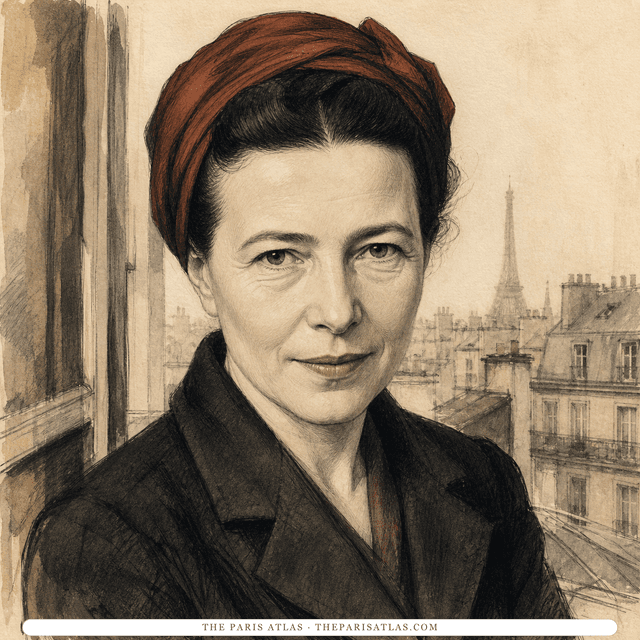
French writer and philosopher whose novels, memoirs, and social analysis examined freedom, gender, responsibility, aging, and the material conditions that shape a life.
View author
The Brooklyn dropout who arrived in Paris broke at thirty-eight and wrote the exuberant, banned books that ended American censorship.
View authorThe sources below include the primary text, editions, scholarship, archival materials, and other records that informed this page. They document To the Lighthouse, its publication, and its place in literary history.


The primary text represented by this page, used for descriptions of the work’s contents and for any quoted passages shown here.
All three parts read for the narrative, eighteen character readings, physical descriptions and two quotations. The electronic transcription is not treated as a first-edition facsimile.
Confirms the novel and first publication year.
Catalogue of the original London Hogarth Press edition.
Manuscript catalogue supplies the dates August 6, 1925–March 16, 1927; no claim to have read the handwritten draft.
Selected paperback date, publisher, ISBN, page count and Susan Choi introduction.
Explains the novel’s use of Cornwall memories and its conception in part as an elegy for Woolf’s parents.
The primary text is the baseline reference for every book page. Additional references document publication history, interpretation, and historical context where that evidence is available.
 Explore more resources