The Paris AtlasCharting the artists, works, and places worth returning to.
  • Author
· Russian · 1918–2008

Aleksandr Solzhenitsyn

Russian novelist and dissident whose work documented Soviet prisons, labor camps, state violence, and moral endurance.

1 book on our shelves

Details

Lived
1918–2008
Born
11 December 1918
Birthplace
Kislovodsk, Russia
Birth name
Aleksandr Isayevich Solzhenitsyn
Died
3 August 2008 · aged 89
Place of death
Moscow
Nationality
Russian
Profession
Novelist, essayist and historian
Major works
One Day in the Life of Ivan Denisovich, The First Circle, Cancer Ward, The Gulag Archipelago, August 1914
Married
Natalia Reshetovskaya · married 1940, divorced 1952; remarried 1957, divorced 1972Natalia Svetlova · married 1973 until his death in 2008
Children
Yermolai Solzhenitsyn, Ignat Solzhenitsyn, Stepan Solzhenitsyn
Roles
Author

About Aleksandr Solzhenitsyn

Russian novelist of the labor camps, the author of The Gulag Archipelago

Aleksandr Solzhenitsyn was a Russian novelist and historian. He was born in Kislovodsk, in the Caucasus, on 11 December 1918. He spent eight years in Soviet prisons and labor camps, then years of forced exile inside the country. Out of that sentence came One Day in the Life of Ivan Denisovich (1962), The First Circle, Cancer Ward, and the three-volume history The Gulag Archipelago (1973). He won the Nobel Prize in Literature in 1970.[1]

What he changed was what the world could claim not to know. The Gulag Archipelago assembled his own camp years, the testimony of more than two hundred fellow prisoners, and the history of the Soviet penal system into a single indictment. It has sold tens of millions of copies in dozens of languages.[2] Publication abroad cost him his citizenship: in February 1974 the Soviet state arrested him, put him on a plane to West Germany, and kept him out for twenty years. He wrote through the exile from a farmhouse in Cavendish, Vermont, and went home in 1994.

He died of heart failure in Moscow on 3 August 2008, aged 89, and is buried at the Donskoy Monastery, in a plot he chose himself.

Kislovodsk, Rostov, and the loyal student, 1918–1941

Aleksandr Isayevich Solzhenitsyn was born in Kislovodsk, a spa town in the northern Caucasus, on 11 December 1918. His father, Isaakiy Solzhenitsyn, an officer in the Imperial Russian Army, had been killed in a hunting accident six months before the birth. His mother, Taisiya Shcherbak, the daughter of a self-made Ukrainian landowner, raised the boy alone and in poverty, keeping her dead husband's Imperial service a secret. By 1930 the family land had been swallowed into a collective farm.[3]

His mother raised him in the Russian Orthodox faith, but the young Solzhenitsyn became an atheist and a convinced Marxist-Leninist. He studied mathematics and physics at Rostov State University, took ideological correspondence courses from Moscow, and by his own account never questioned the state or its ideology until the state imprisoned him. He was already, at seventeen, sketching characters for an epic on the Russian Revolution, a project that surfaced thirty-five years later as August 1914.

The war, the arrest, and eight years in the camps, 1941–1953

In the Second World War, Solzhenitsyn commanded a sound-ranging battery in the Red Army, locating German artillery by acoustics, and was twice decorated, including the Order of the Red Star in July 1944. Advancing through East Prussia, he watched Soviet troops rob and rape German civilians, and later put what he saw into the narrative poem Prussian Nights, composed in his head in the camps. In The Gulag Archipelago he turned the judgment on himself, remembering his captain's shoulder boards and asking: so were we any better?

In February 1945 the counterintelligence agency SMERSH arrested him at the front. The evidence was private correspondence with a school friend in which he had mocked Joseph Stalin under the code name 'the boss', plus a confiscated sketch for a political program. He was interrogated in the Lubyanka prison in Moscow, and on 9 May 1945 watched the victory fireworks from his cell window, a former front-line officer with, as he wrote, no share in the victory. In July a special council sentenced him in his absence to eight years of labor camps.[3]

He served the middle of the sentence in a sharashka, a prison research institute staffed by convict scientists, the world of The First Circle. In 1950 he was moved to a special camp for political prisoners at Ekibastuz in Kazakhstan, where he worked as a miner, bricklayer and foundry foreman, the world of One Day in the Life of Ivan Denisovich. A tumor was removed there without a cancer diagnosis. In March 1953 his sentence ended and internal exile for life in southern Kazakhstan began. The undiagnosed cancer nearly killed him before treatment in Tashkent in 1954 sent it into remission, which gave him Cancer Ward. In exile and near death, the atheist of 1941 completed a long conversion to Orthodox Christianity.[4]

Ivan Denisovich and the Khrushchev opening, 1953–1964

Freed from exile and exonerated after Nikita Khrushchev's 1956 denunciation of Stalin, Solzhenitsyn taught school by day and wrote in secret at night, convinced nothing he wrote would be printed in his lifetime. In 1960 he brought the manuscript of One Day in the Life of Ivan Denisovich, a single camp day told through one bricklayer, to Aleksandr Tvardovsky, editor of the journal Novy Mir. Khrushchev personally approved publication, telling the Politburo hearing that there was a Stalinist in each of them, and the evil had to be rooted out.

The story appeared in November 1962 and sold out instantly. It was the first major Soviet work on the camps by a non-party writer, published with official permission, and it was studied in Soviet schools while the opening lasted. The opening did not last. After Khrushchev fell in 1964, Solzhenitsyn's publishing in his own country stopped; the short story "Matryona's Home" (1963) was the last of his work printed there for twenty-seven years.[3]

The secret book, the Nobel Prize, and the expulsion, 1964–1974

Blocked in public, he worked in secret. The KGB seized his papers in 1965, including the manuscript of The First Circle, after which Cancer Ward and The First Circle could only appear abroad. Between 1958 and 1967 he composed The Gulag Archipelago, drawing on his own sentence, the testimony of 256 former prisoners, and the history of the penal system from Lenin's founding of it. Friends typed the drafts in hiding in Soviet Estonia, and the handwritten original stayed hidden there until the Soviet Union collapsed.

The Writers' Union expelled him in 1969. In 1970 he won the Nobel Prize in Literature, cited for the ethical force with which he had pursued the indispensable traditions of Russian literature. He did not dare travel to accept it, fearing he would not be let back in. In August 1971 he fell violently ill after what was later reported as a KGB poisoning attempt with an unknown agent. In 1973 the KGB broke the book's secrecy: after five days of interrogation, his typist Elizaveta Voronyanskaya revealed the location of a hidden copy and, returned home, hanged herself. Solzhenitsyn signalled Paris to publish, and the first volume of The Gulag Archipelago appeared in Russian in December 1973.[1]

The state answered in weeks. Pravda called him a traitor choking with hatred for his country; the cellist Mstislav Rostropovich, who had sheltered him at his dacha, was driven into exile for it. On 12 February 1974 Solzhenitsyn was arrested, charged with treason, stripped of his citizenship, and the next day flown to Frankfurt, West Germany. An American military attaché, William Odom, smuggled out much of his archive.

Zurich, Vermont, and the argument with the West, 1974–1994

He landed first at the house of the German novelist Heinrich Böll, moved to Zurich, and in 1976 settled with his family in Cavendish, Vermont, a village that famously refused to give directions to his gate. He received the Nobel medal at last at the 1974 ceremony in Stockholm. His wife, Natalia Svetlova, a mathematician he had married in 1973, ran the household and the archive; their three sons, Yermolai, Ignat and Stepan, grew up American.

The West expected an ally and got a judge. In his 1978 Harvard commencement address he condemned Western materialism, the press, and the loss of civic courage, and the applause cooled. Conservatives kept quoting him on Soviet aggression; liberal opinion increasingly read him as a Russian nationalist nostalgic for the tsars. Through seventeen Vermont years he worked mostly on The Red Wheel, his multi-volume dramatized history of the Revolution of 1917, and stayed out of sight while the KGB ran a long campaign of forged rumors and hostile books against him.[3]

Return, the last years, and death in Moscow, 1994–2008

His citizenship was restored in 1990, and treason charges were dropped the next year. In May 1994 he returned to Russia through Vladivostok and crossed the country by train, looking at what seventy years had left. He settled at a dacha in Troitse-Lykovo, west of Moscow, and briefly hosted a television talk program until it was cancelled in 1995. His essays urged a Russia rebuilt on local self-government of the kind he had watched in Switzerland and New England. He refused the Order of St. Andrew from President Boris Yeltsin in 1998, saying he could not accept it from the authority that had brought Russia to its condition, and accepted the State Prize from Vladimir Putin in 2007.

Solzhenitsyn died of heart failure at his home near Moscow on 3 August 2008, aged 89. The burial service was held at the Donskoy Monastery on 6 August, in a plot he had chosen himself, with President Dmitry Medvedev among the mourners.[3]

How Solzhenitsyn worked

His first tools were memory and secrecy. In the camps, writing was punishable, so he composed verse in his head and stored it there, thousands of lines, rehearsed daily; the poem Prussian Nights and twenty-eight camp poems survived this way. Free but unpublishable, he wrote at night, microfilmed drafts, scattered copies among trusted friends, and kept no complete manuscript in one place. The Gulag Archipelago's subtitle, An Experiment in Literary Investigation, names the method: personal testimony, collected witness, and historical research braided into one voice, documentary in content and literary in form.

The fiction runs on compression of time and place: one day for Ivan Denisovich, one hospital ward, one prison institute, each a working model of the state around it. Character after character carries a real original, Lev Kopelev standing behind Rubin in The First Circle, the author's own tumor behind Cancer Ward. In the late Red Wheel cycle he mixed fictional narrative with documentary montage, newspaper fragments and historical figures, at a scale that few readers followed to the end.

Reception and changing reputation

One Day in the Life of Ivan Denisovich made him famous in both halves of the divided world at once. The Gulag Archipelago made him, for a time, the most consequential living writer. The historian Anne Applebaum ranks it among the most influential books of the twentieth century for the way its testimony, analysis and indictment move as one. Professional historians have disputed its numbers; Stephen Wheatcroft notes it never claimed statistical method, and J. Arch Getty has objected to its reliance on hearsay. The argument over method has not moved the book's standing as witness.

His political afterlife is argued over as sharply. Critics such as the scholar William Harrison have read the later Solzhenitsyn as a reactionary, an opponent of Ukrainian independence looking back to an idealized tsarist and Orthodox past. Admirers read the same essays as a consistent case for repentance, self-limitation and local democracy. His late book Two Hundred Years Together, on the shared history of Russians and Jews, renewed the controversy. In Russia his standing was restored formally and personally: the citizenship in 1990, the State Prize in 2007, and a state funeral in 2008.

Life events

  1. 1918

    Born in Kislovodsk, in the northern Caucasus, on 11 December, six months after his father's death in a hunting accident.

    — Aleksandr Solzhenitsyn

  2. 1941

    Graduates in mathematics and physics from Rostov State University as the German invasion begins.

    — Aleksandr Solzhenitsyn

  3. 1945

    Arrested at the East Prussian front in February for mocking Stalin in private letters; sentenced to eight years in the labor camps.

    — Aleksandr Solzhenitsyn

  4. 1950

    Transferred to the special political camp at Ekibastuz, Kazakhstan, the setting later compressed into One Day in the Life of Ivan Denisovich.

    — Aleksandr Solzhenitsyn

  5. 1953

    Released into internal exile in southern Kazakhstan; undiagnosed cancer brings him near death before treatment in Tashkent.

    — Aleksandr Solzhenitsyn

  6. 1956

    Freed and exonerated in the thaw after Khrushchev's secret speech; teaches school and writes at night.

    — Aleksandr Solzhenitsyn

  7. 1962

    One Day in the Life of Ivan Denisovich appears in Novy Mir with Khrushchev's personal approval and sells out instantly.

    — Aleksandr Solzhenitsyn

  8. 1965

    The KGB seizes his papers, including The First Circle; from now on his books can appear only abroad.

    — Aleksandr Solzhenitsyn

  9. 1970

    Awarded the Nobel Prize in Literature, and does not travel to Stockholm for fear of being barred from returning.

    — The Nobel Prize in Literature 1970

  10. 1973

    After his typist reveals a hidden copy under interrogation and takes her own life, he orders The Gulag Archipelago published in Paris.

    — Aleksandr Solzhenitsyn

  11. 1974

    Arrested on 12 February, stripped of Soviet citizenship, and deported to West Germany the next day.

    — Aleksandr Solzhenitsyn

  12. 1976

    Settles with his family in Cavendish, Vermont, where he writes The Red Wheel over seventeen years.

    — Aleksandr Solzhenitsyn

  13. 1978

    Delivers the Harvard commencement address, condemning Western materialism and the press, and startling his hosts.

    — Aleksandr Solzhenitsyn

  14. 1994

    Returns to Russia through Vladivostok, crossing the country by train, his citizenship restored four years earlier.

    — Aleksandr Solzhenitsyn

  15. 2007

    Accepts the State Prize of the Russian Federation, presented on behalf of the state he had outlasted.

    — Aleksandr Solzhenitsyn

  16. 2008

    Dies of heart failure near Moscow on 3 August, aged 89, and is buried at the Donskoy Monastery.

    — Michael T. Kaufman, Solzhenitsyn, Literary Giant Who Defied Soviets, Dies at 89 (2008)

Who Inspired Aleksandr Solzhenitsyn

People whose work inspired Aleksandr Solzhenitsyn. They did not necessarily meet or know one another.

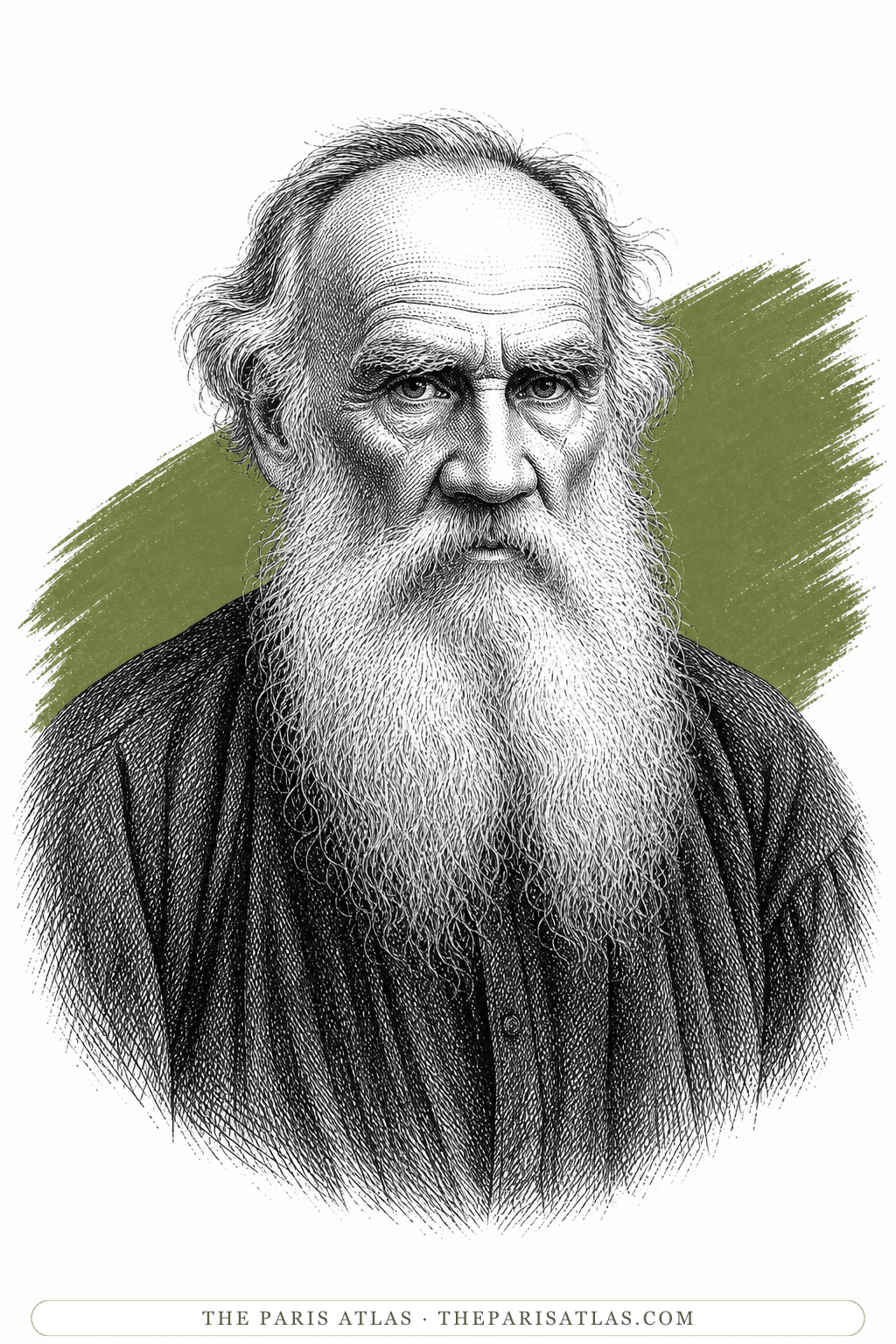
Illustrated portrait of Leo Tolstoy

Leo Tolstoy

Solzhenitsyn read War and Peace at ten and set out to be his generation's Tolstoy; August 1914 answers War and Peace at its own scale, and even opens with a young man visiting Tolstoy to argue with him. The argument is the influence: Solzhenitsyn absorbed the panoramic war novel and rejected its thesis that individuals cannot move history.

— Node I: August 1914

Books by Aleksandr Solzhenitsyn

Questions about Aleksandr Solzhenitsyn

Who was Aleksandr Solzhenitsyn?

Aleksandr Solzhenitsyn (1918–2008) was a Russian novelist and historian who spent eight years in Soviet labor camps. He turned the experience into the books that exposed the camp system to the world: One Day in the Life of Ivan Denisovich, The First Circle, Cancer Ward and The Gulag Archipelago. He won the Nobel Prize in Literature in 1970, was deported from the Soviet Union in 1974, lived in exile in Vermont for many years, and returned to Russia in 1994.

Why was Solzhenitsyn sent to the Gulag?

For private letters. In February 1945, while serving as a decorated Red Army artillery captain in East Prussia, he was arrested by the counterintelligence agency SMERSH. The evidence was nineteen months of correspondence with a school friend in which he had criticized Stalin under a code name, plus a confiscated sketch for a political program. He was convicted of anti-Soviet propaganda and founding a hostile organization, and sentenced in his absence to eight years in the labor camps, followed by internal exile for life.

What is The Gulag Archipelago?

A three-volume account of the Soviet prison-camp system, composed in secret between 1958 and 1967 from Solzhenitsyn's own eight-year sentence, the testimony of 256 fellow prisoners, and his research into the penal system from Lenin onward. Its subtitle, An Experiment in Literary Investigation, describes the form: testimony, history and personal confession in a single voice. First published in Paris in December 1973 after the KGB seized a hidden copy, it has sold over thirty million copies in some thirty-five languages, and publication cost Solzhenitsyn his citizenship within weeks.

Why was Solzhenitsyn expelled from the Soviet Union?

Because The Gulag Archipelago was published abroad. After the book appeared in Paris in December 1973, the Soviet press denounced him as a traitor, and the Politburo weighed imprisoning him against deporting him. On 12 February 1974 he was arrested and charged with treason, stripped of his Soviet citizenship, and flown the next day to Frankfurt, West Germany. He remained stateless until his citizenship was restored in 1990, and returned to Russia in 1994.

Where did Solzhenitsyn live in America?

In Cavendish, Vermont, from 1976 to 1994, on a wooded property where he wrote for up to eighteen years on The Red Wheel, his cycle on the Russian Revolution. The townspeople famously protected his privacy, declining to direct visitors to the house. He had come to the United States by way of Heinrich Böll's house in West Germany, Zurich, and a stay at Stanford's Hoover Institution. His sons grew up as Americans; all three became U.S. citizens.

How did Aleksandr Solzhenitsyn die?

He died of heart failure at his home near Moscow on 3 August 2008, at the age of 89. The burial service was held three days later at the Donskoy Monastery in Moscow, attended by President Dmitry Medvedev, and he was buried in the monastery grounds in a spot he had chosen himself. He had returned to Russia fourteen years earlier, after two decades of exile.

What did Solzhenitsyn say in the Harvard address?

Accepting an honorary degree on 8 June 1978, Solzhenitsyn used the commencement platform to indict the West rather than thank it. He condemned the press's herd judgments, the spiritual emptiness he saw beneath Western prosperity, legalism without conscience, and a decline in civic courage. The speech startled an audience expecting a Cold War ally's gratitude, and it marks the point where much Western liberal opinion cooled on him. He always distinguished his criticism from rejection, praising the West's political liberty and rule of law to the end of his life.

Connections and Sources

Aleksandr Solzhenitsyn’s connections to people, places, and works, with the sources behind each one.

Influenced by

Leo Tolstoy

Solzhenitsyn read War and Peace at ten and set out to be his generation's Tolstoy; August 1914 answers War and Peace at its own scale, and even opens with a young man visiting Tolstoy to argue with him. The argument is the influence: Solzhenitsyn absorbed the panoramic war novel and rejected its thesis that individuals cannot move history.

— Node I: August 1914

References

References

The sources below include biographies, scholarly essays, interviews, and primary materials that informed this page. They reflect both the historical record and ongoing critical conversations about Aleksandr Solzhenitsyn and their work.

  1. 1abThe Nobel Prize in Literature 1970

    Website
    The Nobel Foundation
    Used for

    The Nobel Foundation's record of the 1970 literature prize and its citation.

    View source
  2. 2↑Gulag: A History

    Nonfiction
    Doubleday, 2003
    Used for

    Anne Applebaum's history of the camp system, for the assessment of The Gulag Archipelago's influence.

  3. 3abcdeSolzhenitsyn, Literary Giant Who Defied Soviets, Dies at 89

    Periodical
    The New York Times, 2008
    Used for

    Michael T. Kaufman's obituary of 4 August 2008: the death from heart failure and the career summary.

    View source
  1. 4↑The Gulag Archipelago

    Nonfiction
    YMCA-Press, 1973
    Used for

    The work itself, for its subtitle, structure, and the account of the author's own transformation in part four.

  2. 5Aleksandr Solzhenitsyn

    Website
    Wikipedia
    Used for

    Reference article cross-checked for the arrest and sentence, the publication history, the deportation, and the return to Russia.

    View source
i
Why these sources are here

These references anchor the page in the documented record and in the scholarly conversations around Aleksandr Solzhenitsyn. Every claim on this page traces back to one or more of the works listed here.

Explore more resources
Browse all authors