The Paris AtlasCharting the artists, works, and places worth returning to.
  • Author
  • Journalist
· Hungarian-British · 1905–1983

Arthur Koestler

Hungarian-British novelist and essayist whose fiction examined revolution, ideology, imprisonment, and political disillusionment.

1 book on our shelves

Details

Lived
1905–1983
Born
5 September 1905
Birthplace
Budapest, Austria-Hungary
Birth name
Kösztler Artúr
Died
1 March 1983 · aged 77
Place of death
London
Nationality
Hungarian-British
Profession
Novelist, journalist and essayist
Major works
Darkness at Noon, Scum of the Earth, The God That Failed, Arrow in the Blue, The Sleepwalkers, The Act of Creation
Married
Dorothy Ascher · married 1935, divorced 1949Mamaine Paget · married 1950, separated 1952Cynthia Jefferies · married 1965 until their deaths in 1983
Children
Cristina Koestler
Roles
AuthorJournalist

About Arthur Koestler

Hungarian-British novelist of political disillusion, the author of Darkness at Noon

Arthur Koestler was a Hungarian-born novelist, journalist and essayist who wrote in German and then in English. He was born in Budapest on 5 September 1905, joined the Communist Party of Germany in 1931, resigned in 1938 over the Moscow show trials, and put the break into a novel. Darkness at Noon (1940), the interrogation of an old Bolshevik by the revolution he served, became one of the most influential political novels of the twentieth century.

Few writers' lives held more of the century. Koestler was a Zionist in Palestine at twenty, the only journalist aboard the Graf Zeppelin's 1931 polar flight, a Comintern propagandist in Paris, and a prisoner under sentence of death in one of Francisco Franco's jails in 1937. He was interned by France in 1939, escaped through the Foreign Legion, and reached England in 1940 through a prison cell. After the war he became one of the most prominent anti-communist intellectuals in Europe, a founder of the Congress for Cultural Freedom, and later a writer on science, creativity and the paranormal.[1]

Suffering from Parkinson's disease and terminal leukaemia, Koestler died by suicide at his London home on 1 March 1983, aged 77, taking an overdose of barbiturates. His third wife, Cynthia, who was 55 and healthy, died with him by the same means, writing that she could not live without him.

Budapest, Vienna, and the abandoned degree, 1905–1926

Arthur Koestler was born in Budapest on 5 September 1905, the only child of Henrik Koestler, a self-made Hungarian Jewish textile importer, and Adele Jeiteles, from a prominent Prague family. He began school at an experimental kindergarten, and his mother was briefly a patient of Sigmund Freud. The First World War destroyed his father's business, and the family shuttled between Budapest and Vienna; the teenaged Koestler watched the Hungarian revolution of 1919, the Romanian occupation, and the White Terror that followed.[1]

In 1922 he enrolled at the University of Vienna to study engineering and joined a Zionist duelling fraternity. When his father's latest business failed he could not pay the fees, stopped attending, and was expelled. In April 1926, aged twenty, he left for Palestine, telling his parents it was a one-year engineering apprenticeship.

Palestine, Paris, Berlin, and the Zeppelin, 1926–1932

Palestine nearly starved him. A kibbutz rejected his application, and he lived a year on odd jobs in Haifa, Tel Aviv and Jerusalem before catching on as Middle East correspondent for Ullstein, the great Berlin newspaper group. He interviewed kings, presidents and prime ministers, concluded he could never make a career in Hebrew, and in 1929 got himself transferred to the Ullstein bureau in Paris.

By 1931 he was science editor of the Vossische Zeitung in Berlin, and in July of that year he was the only journalist aboard the Graf Zeppelin's week-long polar flight, broadcasting live by wireless from 82 degrees North. The flight made him one of the best-known young journalists in Europe, and Ullstein made him foreign editor of a mass-circulation Berlin daily. On the last day of 1931, impressed by the Soviet Union and convinced that only the Communists could stop the Nazis, he applied to join the Communist Party of Germany.[1]

The Soviet journey, the Comintern, and Spain, 1932–1938

In 1932 Koestler travelled through Soviet Turkmenistan and Central Asia, where he met and travelled with the American poet Langston Hughes. Passing through Kharkiv during the man-made famine, he saw starving peasant women holding infants up to the train windows. At the time he repeated the official line that they were enemies of the people. The honesty about what he had seen, and what he had told himself, came later, in print. From 1933 he worked in Paris for Willi Münzenberg, the Comintern's chief propagandist in the West, and in 1935 married Dorothy Ascher, a fellow Communist.

Spain made his name and nearly ended his life. In 1936 he entered Francisco Franco's headquarters at Seville posing as a sympathiser, gathering proof of German and Italian intervention, and escaped when a former colleague recognised him. Returning as a war correspondent, he was captured at the fall of Málaga in February 1937 and held for months in Seville under sentence of death, listening to other prisoners being shot at night. A prisoner exchange freed him in June. Dialogue with Death, his account of those months, and his estranged wife Dorothy's tireless campaign in Britain had made his case famous.[1]

The show trials in Moscow finished his Communism. Koestler resigned from the party in 1938, after seven years. He began a novel about an old Bolshevik arrested by his own revolution, interrogated by two generations of the machine he had helped build, and brought to confess to crimes he had not committed.[1]

Darkness at Noon and the escape from France, 1939–1941

Koestler wrote the novel in German in Paris while the sculptor Daphne Hardy, his companion, translated it into English in the same flat. War overtook them. France interned him as an undesirable alien at Le Vernet camp in 1939. Released under British pressure in early 1940, he joined the French Foreign Legion to get out of the country, deserted in North Africa, and made his way toward England. Hardy smuggled the manuscript out of France. On a false report that the ship carrying her and the translation had sunk, Koestler attempted suicide with pills he had borrowed from the philosopher Walter Benjamin; he survived.

He reached Britain without an entry permit and was in prison, still, when Darkness at Noon was published in London in early 1941 under the title Hardy had chosen. George Orwell reviewed it at once. The novel's post-war French edition sold in the hundreds of thousands and is credited with helping swing French opinion against the Communists in the referendum battles of 1946. Released, Koestler served a year in the Pioneer Corps, wrote propaganda for the Ministry of Information, and wrote Scum of the Earth, his account of France's collapse and his internment, the first book he composed in English.

The Cold War intellectual, 1945–1955

From a farmhouse in the Vale of Ffestiniog in Wales, Koestler spent the late 1940s as one of anti-communism's loudest voices, with Bertrand Russell nearby and George Orwell a close friend and visitor. His essay in The God That Failed (1949), the collective confession of six ex-Communist writers, became the anthology's spine. In 1949 he also began working secretly with the Information Research Department, a British Cold War propaganda unit that republished and circulated his work. In June 1950 he delivered the opening address of the Congress for Cultural Freedom in Berlin, the anti-communist cultural organisation whose CIA funding was then unknown to most participants; Koestler always said it was unknown to him.

He became a British subject in 1949, married Mamaine Paget in 1950, and briefly owned an island house on the Delaware River in Pennsylvania. A private act of the United States Congress, sponsored in the House by Richard Nixon, granted him permanent residence in 1951. The Broadway dramatisation of Darkness at Noon won the New York Drama Critics award that year, and Koestler gave its royalties to a fund he had created for struggling writers. In 1953 he settled for good at Montpelier Square in London. His two-volume autobiography, Arrow in the Blue (1952) and The Invisible Writing (1954), closed the political period of his life; The Trail of the Dinosaur (1955) announced his farewell to politics.

Science, creativity, and the fringe, 1955–1976

The second Koestler wrote about the mind and the history of science. The Sleepwalkers (1959) retold the story of Copernicus, Kepler and Galileo as a chain of discoveries made half-blind. The Act of Creation (1964) argued that new ideas come from the collision of frames of thought that had never touched. The Ghost in the Machine (1967) attacked the behaviourist school of psychology. He campaigned against capital punishment in Britain in Reflections on Hanging (1956), tried psilocybin with Timothy Leary at Harvard and reported the trips unenthusiastically, and drifted further into the scientific fringe: coincidence, levitation, the paranormal.

In 1962 he founded what became the Koestler Awards, rewarding art made by prisoners; the scheme, now Koestler Arts, still runs annual exhibitions of work from British prisons. He married his long-time secretary Cynthia Jefferies in 1965. The Sonning Prize came in 1968, appointment as CBE in 1972, and The Thirteenth Tribe, his contested history arguing a Khazar origin for Ashkenazi Jewry, in 1976.

Illness and the double suicide, 1976–1983

Koestler was diagnosed with Parkinson's disease in 1976, and in 1980 with chronic lymphocytic leukaemia, which he kept secret from even close friends. He was a vice-president of the Voluntary Euthanasia Society and wrote its pamphlet on how to die. In June 1982 he typed a suicide note explaining his reasons, Parkinson's and the slow-killing leukaemia, and his wish to go before he could no longer act. In early 1983 his doctor found a swelling in the groin that indicated the cancer had spread.

I wish my friends to know that I am leaving their company in a peaceful frame of mind, with some timid hopes for a de-personalised after-life beyond due confines of space, time and matter and beyond the limits of our comprehension.

Arthur Koestler, suicide note, June 1982

On the evening of 1 March 1983, Koestler and Cynthia died by suicide together at 8 Montpelier Square, swallowing overdoses of the barbiturate Tuinal with alcohol. Their bodies were found on the morning of 3 March. Koestler was 77. Cynthia was 55 and believed to be healthy; she added to his note that after thirty-four years of working together she could not face life after his death. The question of his responsibility for her death troubled their friends immediately and has shadowed his reputation since; Julian Barnes put it plainly: if he didn't bully her into it, why didn't he bully her out of it? Koestler left about £1 million to endow a chair of parapsychology, which the University of Edinburgh eventually accepted.

How Koestler wrote

Koestler wrote his first books in Hungarian's shadow, his middle books in German, and everything after 1940 in English, his third or fourth language. The novels run on argument. Darkness at Noon is built as three interrogation hearings. Its force comes from giving the strongest possible voice to the logic the book means to destroy, the arithmetic that sacrifices the living generation for the future one. The nonfiction works the same way, personal experience pushed until it yields a general claim.

His raw material was almost always his own life. The Seville death cell became Dialogue with Death and fed the execution scenes of Darkness at Noon. The French camps became Scum of the Earth. The broken faith became The God That Failed and two volumes of memoir. In the science books he wrote as a reporter of ideas, building broad stories from other people's research. The method made The Sleepwalkers absorbing, and it left the late paranormal books exposed.

Reception and changing reputation

For two decades after 1940, Koestler stood with George Orwell as the imaginative writer who had explained totalitarianism from the inside. Darkness at Noon has never been out of print, and its standing survived even the 2015 discovery of the lost original German typescript, which showed how much the famous English text was shaped in translation. The middle-period science books kept serious readers; the late paranormal enthusiasms cost him most of them.

His personal reputation fell hardest after his death. David Cesarani's 1998 biography, Arthur Koestler: The Homeless Mind, reported that Koestler had been violent toward women. It reported that he had raped the filmmaker Jill Craigie, the wife of the politician Michael Foot, in 1952, and Craigie confirmed the account publicly. After student protests, the University of Edinburgh moved his bust out of public display. Michael Scammell's 2009 biography reweighed the whole life, and the arguments over both the man and the work continue; the books themselves, above all Darkness at Noon, remain the reason anyone argues.

Life events

  1. 1905

    Born in Budapest on 5 September, the only child of a Hungarian Jewish textile importer and a mother from a prominent Prague family.

    — Arthur Koestler

  2. 1926

    Abandons his engineering studies in Vienna and leaves for Palestine at twenty.

    — Arthur Koestler

  3. 1931

    Reports from aboard the Graf Zeppelin's polar flight as its only journalist; on 31 December applies to join the Communist Party of Germany.

    — Arthur Koestler

  4. 1932

    Travels Soviet Central Asia with Langston Hughes, and passes through the Ukrainian famine he would only later describe honestly.

    — Arthur Koestler

  5. 1937

    Captured at the fall of Málaga while reporting the Spanish Civil War; imprisoned in Seville for months under sentence of death, then exchanged.

    — Arthur Koestler

  6. 1938

    Resigns from the Communist Party over the Moscow trials and begins Darkness at Noon.

    — Arthur Koestler

  7. 1940

    Interned at Le Vernet, escapes France through the Foreign Legion; Daphne Hardy smuggles out her English translation of the novel.

    — Arthur Koestler

  8. 1941

    Darkness at Noon is published in London while its author sits in a British cell as an illegal entrant.

    — Arthur Koestler

  9. 1949

    His essay anchors The God That Failed; Britain grants him citizenship; he begins secretly working with the Information Research Department.

    — Arthur Koestler

  10. 1950

    Delivers the opening address of the Congress for Cultural Freedom in Berlin.

    — Arthur Koestler

  11. 1959

    The Sleepwalkers opens the scientific half of his career.

    — Arthur Koestler

  12. 1962

    Founds the prison-arts awards that continue today as Koestler Arts.

    — Arthur Koestler

  13. 1968

    Receives the Sonning Prize for his contribution to European culture; appointed CBE four years later.

    — Arthur Koestler

  14. 1976

    Diagnosed with Parkinson's disease; publishes The Thirteenth Tribe the same year.

    — Arthur Koestler

  15. 1983

    Dies by suicide with his wife Cynthia at their London home on 1 March, by barbiturate overdose, facing Parkinson's and terminal leukaemia.

    — Arthur Koestler

  16. 1998

    David Cesarani's biography reports his violence toward women, including the rape of Jill Craigie; Edinburgh University later removes his bust from display.

    — David Cesarani, Arthur Koestler: The Homeless Mind (1998)

People Arthur Koestler Knew

Relationships with other people, with sources for each connection.

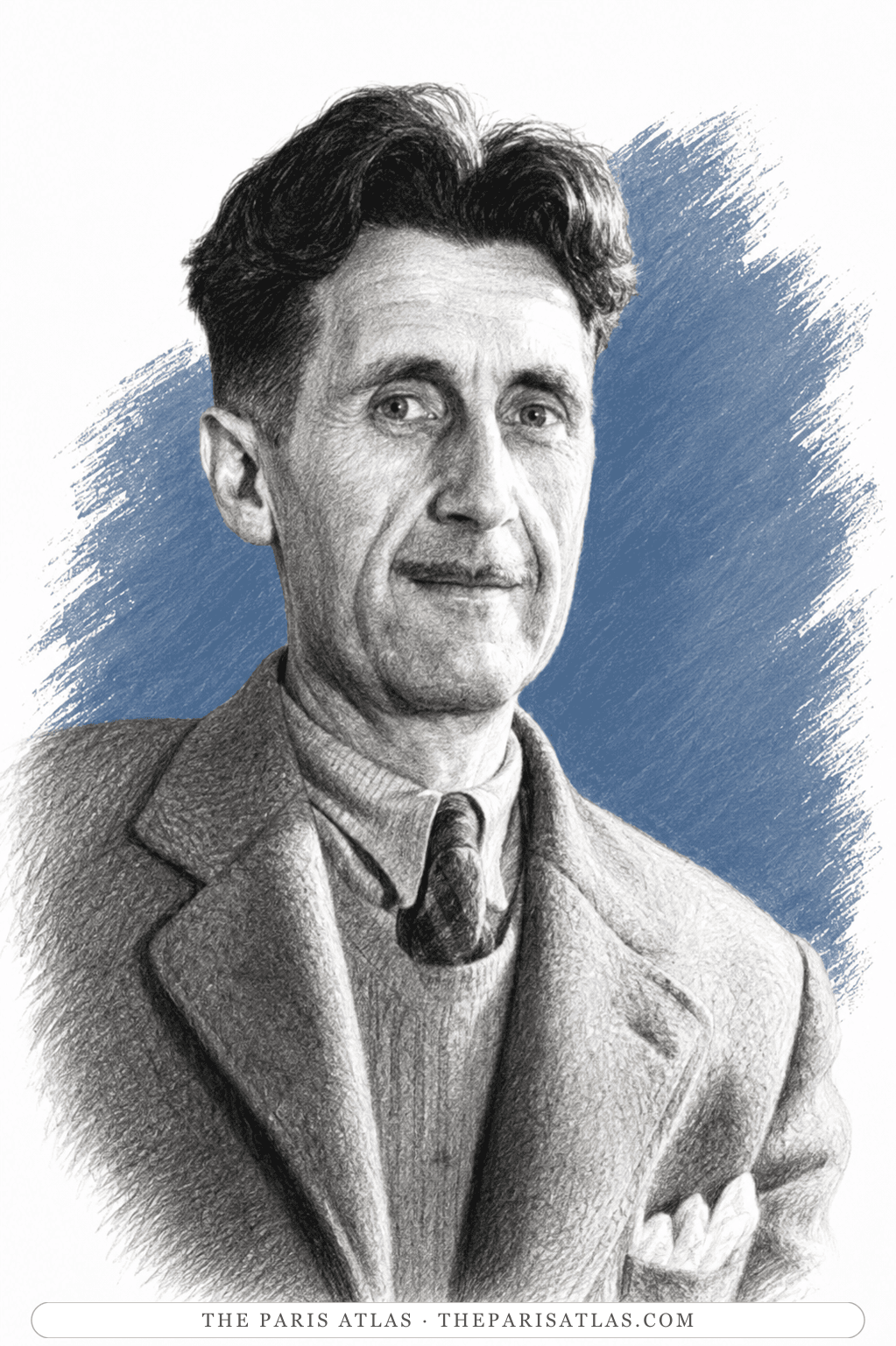
Illustrated portrait of George Orwell

George Orwell

  • Author
  • Journalist

Met · 1941–1948

The two chief anti-totalitarian novelists of the 1940s were close friends. Orwell reviewed Darkness at Noon in 1941 and wrote a long essay on Koestler in 1944; from 1945, with Koestler living at a farmhouse in the Vale of Ffestiniog in Wales, the friendship deepened, and the two discussed founding a league for the rights of man. It lasted until Orwell's death in 1950.
— Arthur Koestler

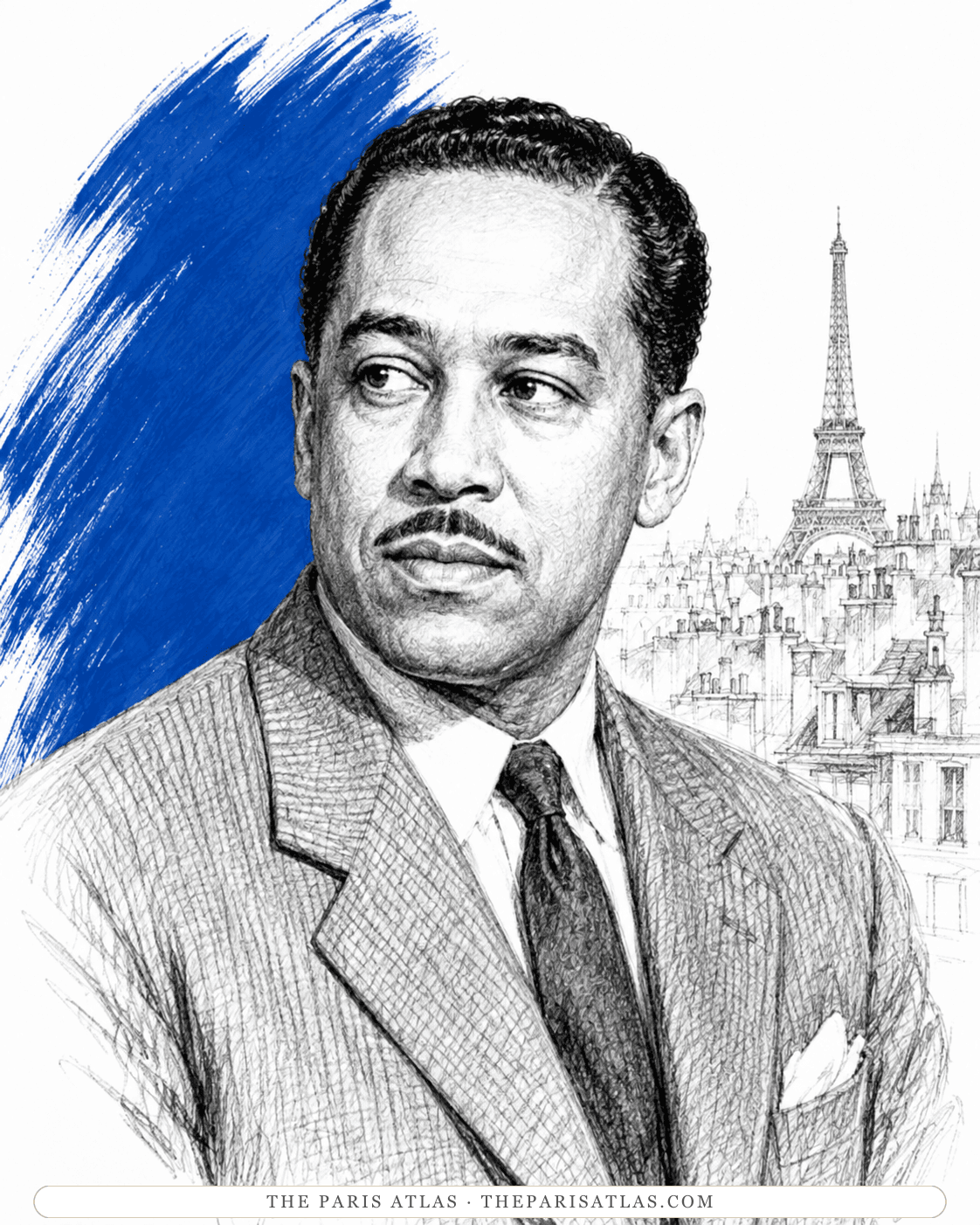
Illustrated portrait of Langston Hughes

Langston Hughes

  • Poet
  • Author
  • Playwright
  • +1

Met · 1932

They met in Soviet Turkmenistan in 1932 and travelled together through Central Asia: Koestler a convinced young Communist reporting on the Five-Year Plan, Hughes touring after the collapse of the Soviet film project that had brought him to Moscow. Both later wrote about the journey, Hughes in his memoir I Wonder as I Wander.

— Arthur Koestler

Books by Arthur Koestler

Cover of Darkness at Noon by Arthur Koestler

Dystopian fiction

A revolutionary is arrested by the state he helped create and ordered to confess to crimes he did not commit.

4.6

Questions about Arthur Koestler

Who was Arthur Koestler?

Arthur Koestler (1905–1983) was a Hungarian-born, British-naturalised novelist, journalist and essayist, best known for Darkness at Noon (1940), the novel of the Moscow show trials. A Communist from 1931 to 1938, he reported the Spanish Civil War, survived one of Franco's death cells, escaped falling France, and became one of the leading anti-communist intellectuals of the Cold War. His later books turned to the history of science, creativity and the paranormal.

What is Darkness at Noon about?

An old Bolshevik named Rubashov is arrested by the revolutionary state he helped create, interrogated through three hearings, brought to confess publicly to crimes he did not commit, and shot. Koestler built the novel from the Moscow show trials of the 1930s, his own months in a Spanish death cell, and his seven years inside the Communist Party. Its subject is the logic that justifies present cruelty by a future paradise. Published in London in 1941, it became one of the century's most influential political novels, and its post-war French edition is credited with denting Communist support in France.

Was Arthur Koestler really sentenced to death?

Yes. Captured at the fall of Málaga in February 1937 while covering the Spanish Civil War for the News Chronicle, Koestler was imprisoned by Franco's forces in Seville under sentence of death, having earlier infiltrated Franco's headquarters as a Comintern agent. He spent months listening to fellow prisoners taken out and shot at night. In June 1937 he was exchanged for a prisoner held by the Republicans, the wife of one of Franco's fighter pilots. Dialogue with Death is his account of the cell.

How did Arthur Koestler die?

By suicide, jointly with his wife. On the evening of 1 March 1983, Koestler, who had Parkinson's disease and terminal chronic lymphocytic leukaemia, and Cynthia Koestler took fatal overdoses of the barbiturate Tuinal with alcohol at their home at 8 Montpelier Square, London. He was 77; his suicide note, typed the previous June, named the two diseases as his reasons. Cynthia, 55 and apparently healthy, added that she could not live without him, and the question of his part in her decision has been argued ever since.

What was Koestler's connection to George Orwell?

Friendship between the two great anti-totalitarian writers of the 1940s. Orwell reviewed Darkness at Noon in 1941, judged it the best novel yet written about the show trials, and published a long essay on Koestler in 1944. After the war, with Koestler living in North Wales, they visited, corresponded, and planned a league for the rights of man together. The friendship lasted until Orwell's death in 1950, and the two names have been paired in arguments about political writing ever since.

What is the Koestler Trust?

A prison-arts charity, now called Koestler Arts, that grew out of a scheme Koestler set up in 1962 with his agent A. D. Peters and the Observer editor David Astor to reward art made by prisoners. He left it £10,000 in his will. It now receives over 7,000 entries a year from UK prisons, gives awards in fifty art forms, and mounts an annual exhibition, usually at London's Southbank Centre.

Why is Arthur Koestler controversial today?

Mainly because of what emerged about his treatment of women. David Cesarani's 1998 biography reported, from interviews with women who had known him, that Koestler was routinely violent toward women. It reported that in 1952 he raped the documentary filmmaker Jill Craigie, wife of the Labour politician Michael Foot, and Craigie confirmed it publicly. After protests, the University of Edinburgh, which holds the parapsychology chair his estate endowed, removed his bust from public display. The books are still read, and readers now weigh them against the record of the man.

Connections and Sources

Arthur Koestler’s connections to people, places, and works, with the sources behind each one.

Met · 1941–1948

George Orwell

The two chief anti-totalitarian novelists of the 1940s were close friends. Orwell reviewed Darkness at Noon in 1941 and wrote a long essay on Koestler in 1944; from 1945, with Koestler living at a farmhouse in the Vale of Ffestiniog in Wales, the friendship deepened, and the two discussed founding a league for the rights of man. It lasted until Orwell's death in 1950.
— Arthur Koestler

Met · 1932

Langston Hughes

They met in Soviet Turkmenistan in 1932 and travelled together through Central Asia: Koestler a convinced young Communist reporting on the Five-Year Plan, Hughes touring after the collapse of the Soviet film project that had brought him to Moscow. Both later wrote about the journey, Hughes in his memoir I Wonder as I Wander.

— Arthur Koestler

References

References

The sources below include biographies, scholarly essays, interviews, and primary materials that informed this page. They reflect both the historical record and ongoing critical conversations about Arthur Koestler and their work.

  1. 1abcdeKoestler: The Literary and Political Odyssey of a Twentieth-Century Skeptic

    Biography
    Random House, 2009
    Used for

    Michael Scammell's full biography, the standard account of the political odyssey.

  2. 2Arthur Koestler

    Website
    Wikipedia
    Used for

    Reference article cross-checked for the chronology, the Spanish imprisonment, the wartime escapes, the Cold War organisations, and the deaths.

    View source
  3. 3Arthur Koestler: The Homeless Mind

    Biography
    William Heinemann, 1998
    Used for

    The 1998 biography whose findings about Koestler's violence toward women, including the rape of Jill Craigie, reshaped his reputation.

  4. 4U. of Edinburgh Removes Bust of Dishonored Benefactor

    Periodical
    The Chronicle of Higher Education, 1999
    Used for

    Report of Edinburgh University's removal of the Koestler bust after the Cesarani revelations.

    View source
  1. 5Papers of Arthur Koestler (Coll-146)

    Archive
    University of Edinburgh Library Heritage Collections
    Used for

    Koestler's own archive, 34 linear metres of manuscripts, correspondence, diaries, medical files and papers on euthanasia and extra-sensory perception, left to the University of Edinburgh with the endowment for its parapsychology chair.

    View source
  2. 6Arthur Koestler

    Essays
    The Orwell Foundation, 1944
    Used for

    George Orwell's 1944 essay on Koestler, written from the friendship, covering the News Chronicle assignment in Spain, the months under sentence of death, Darkness at Noon and Scum of the Earth.

    View source
  3. 7A Different 'Darkness at Noon'

    Periodical
    The New York Review of Books, 2016
    Used for

    Michael Scammell on Daphne Hardy's translation, the German typescript found in the Emil Oprecht papers at Zurich in 2015, and the novel's sales in France in 1946.

    View source
  4. 8Our History

    Website
    Koestler Arts
    Used for

    The prison-arts charity's own history of the awards Koestler set up in 1962 with A. D. Peters and David Astor, and of the £10,000 he left it.

    View source
i
Why these sources are here

These references anchor the page in the documented record and in the scholarly conversations around Arthur Koestler. Every claim on this page traces back to one or more of the works listed here.

Explore more resources
Browse all authors