

Animal Farm
Orwell also shows a revolution devouring its own principles and rewriting betrayal as loyalty.
Read our take
A revolutionary is arrested by the state he helped create and ordered to confess to crimes he did not commit.
Rubashov spent his life defending a revolutionary system that now imprisons and interrogates him. The novel forces him to confront the human cost of the ideology he served.
Nikolai Rubashov is an aging revolutionary who once helped build the unnamed communist state that now arrests him. He has survived foreign prisons, enforced Party discipline across Europe, and sacrificed other people whenever the movement declared that history required it. When officers come for him in the night, he understands immediately that his own turn has arrived.
Most of the novel takes place inside a prison cell and interrogation rooms. Rubashov debates his former comrade Ivanov, endures the harsher methods of the younger interrogator Gletkin, and remembers the people he abandoned in the name of the Party. The government wants him to confess publicly to crimes it knows he did not commit. The question is not whether the confession is false. The question is why an intelligent man might decide to make it anyway.
Koestler uses Rubashov’s imprisonment to examine the logic of the Moscow show trials without naming Stalin or the Soviet Union directly. The novel is political, but its deepest conflict is personal: Rubashov spent his life treating individual suffering as a number in a historical calculation. In prison he begins hearing the voice of the self he had trained himself to dismiss.
Secret-police officers arrest Rubashov at night and take him to prison. He expects execution and feels an odd relief that the waiting is over. In the next cell, Prisoner No. 402 communicates with him by tapping on the wall. No. 402 is a monarchist officer who hates communists, yet the two develop a rough companionship based on prison ritual, arguments about honor, and the shared knowledge that the state can kill either of them.
Rubashov is questioned by Ivanov, an old revolutionary and former civil-war comrade. Ivanov once wanted to kill himself after losing a leg, and Rubashov talked him out of it. Now Ivanov hopes to repay that debt by persuading Rubashov to confess and accept a prison sentence rather than force the authorities to execute him. Their discussions barely concern evidence. Both men understand that the charges are political inventions and that the real question is whether Rubashov’s final service to the Party should be a useful lie.
Alone in his cell, Rubashov remembers missions in which he enforced Party discipline. In Germany he expelled a young communist named Richard for distributing material that departed from the official line, leaving him exposed to the Gestapo. In Belgium he ordered dockworkers to permit shipments that contradicted the Party’s public policy. Their loyal organizer, Little Loewy, could not reconcile the betrayal with his faith in the movement and killed himself. Rubashov had treated both men as expendable because he believed the future justified whatever the Party required in the present.
He also remembers Arlova, his secretary and lover. When she was accused during an earlier purge, Rubashov did not defend her because doing so would have endangered him. She was executed. These memories are accompanied by the pain of an abscessed tooth and by a new interior sensation he calls the “grammatical fiction”—the forbidden first-person self that revolutionary logic reduced to an error in the historical equation.
Ivanov and the younger official Gletkin disagree about how to handle the prisoner. Ivanov believes Rubashov can be argued into confession because the older revolutionaries still live by ideas. Gletkin trusts exhaustion, light, repetition, and physical pressure. To weaken Rubashov, the prison stages the execution of Michael Bogrov, a famous naval commander and old friend who cries Rubashov’s name while being dragged past the cell. Ivanov later tells Rubashov that the scene was calculated.
Ivanov is arrested and executed, and Gletkin takes control. He deprives Rubashov of sleep, keeps a glaring lamp trained on him, and forces him through the invented accusations point by point. A young prisoner known as Hare-lip is used to support a claim that Rubashov plotted against the leader called No. 1. Rubashov recognizes that logical debate has been replaced by a process designed to produce the required text.
Rubashov finally agrees to confess. Part of him hopes that submission may still serve the revolution; part recognizes that he is receiving the same treatment he once authorized for others. At his public trial, he accepts responsibility for sabotage and treason he did not commit. The confession helps the regime transform political disagreement into criminal guilt and presents his death as an act demanded by history rather than by No. 1’s power.
After the trial, Rubashov returns to prison and waits for execution. He exchanges a final tapped conversation with No. 402. The monarchist condemns his confession as dishonorable, while Rubashov no longer believes the old categories of honor and political logic can fully explain what has happened.
Guards lead him through the prison as the other inmates drum on their walls in a gesture of solidarity. On the way to the place of execution, Rubashov experiences flashes of the private self he spent years suppressing. The revolution’s historical arithmetic gives him no comfort. The people he sacrificed return in memory as individuals rather than necessary losses.
Rubashov is shot. Koestler does not rescue him through a final political revelation or conversion. His last awareness moves between physical terror, memory, and an almost oceanic sense of the self dissolving into something larger. The state obtains the confession and the body, but the ending refuses to make that victory intellectually clean.
The regime continues under No. 1, and Gletkin’s generation replaces Rubashov’s. The novel offers no immediate political collapse. Its judgment falls instead on a movement that taught its founders to erase conscience and then used the same logic to erase them.
Rubashov’s career rests on the belief that present suffering can be justified by a future society. The prison forces him to confront the people hidden inside that calculation. Koestler does not deny that political choices have consequences; he attacks the fantasy that history can convert cruelty into innocence.
Ivanov and Rubashov belong to a generation that argued, doubted, and treated theory as a serious moral problem. Gletkin belongs to a system that inherited their conclusions without their hesitation. His stiff uniform and literal reasoning embody a revolution hardened into administration.
The government does not need Rubashov’s confession to discover truth. It needs the public performance to control how citizens interpret conflict inside the Party. A political opponent must be transformed into a criminal, and the victim must appear to validate the state’s version of events.
Rubashov calls the individual “I” a grammatical fiction because Party theory treats persons as temporary instruments of history. Yet conscience returns through tooth pain, dreams, memory, and guilt. The body and the private voice keep interrupting the clean abstractions by which he once lived.
Rubashov is innocent of the charges in the indictment but guilty of abandoning Richard, Little Loewy, Arlova, and others. That creates the novel’s moral trap. The state punishes him for invented crimes while his real guilt cannot be tried by the system that encouraged it.
Words such as “objective guilt,” “historical necessity,” and “political maturity” make violence sound impersonal. Koestler stages long arguments because the regime’s power does not rest only on guns. It also rests on a vocabulary that allows intelligent people to participate in cruelty while imagining themselves rational.
No. 402 despises Rubashov’s politics, but the prison wall permits a human relationship that official identities would forbid. The prisoners’ final drumming does not settle their ideological disagreements. It recognizes the condemned person whom the state wants to reduce to a case.
Koestler combines a prison thriller with philosophical dialogue and memory. The present-tense action is sparse: footsteps, a spyhole, tapping through walls, a glaring lamp, a bad tooth. Against that physical confinement, Rubashov’s mind moves across decades and countries. The flashbacks are not decorative biography; each one introduces a person whose fate changes how the interrogation should be understood.
The prose is controlled and analytical, but recurring bodily details prevent the book from becoming a political essay. Rubashov’s tooth throbs when his abstract reasoning approaches something his conscience resists. The 2019 Philip Boehm translation, made from the rediscovered German manuscript, is generally more concrete and abrasive than Daphne Hardy’s hurried 1940 English version. Readers comparing quotations should identify the translation because even section titles differ: Hardy used “hearing,” while Boehm uses the harsher “interrogation.”
For decades, English readers knew the novel through Daphne Hardy’s 1940 translation, prepared rapidly while Koestler was fleeing France. The original German manuscript was believed lost, and later German editions were reconstructed from Hardy’s English. That unusual history means the familiar English version became a source text for other languages even though it was itself a translation.
The recovery of a German typescript in 2015 led to a German publication in 2018 and Philip Boehm’s 2019 English translation. Boehm restores sharper physical language, names some Soviet mechanisms more directly, and translates the interrogation headings differently. Neither edition changes the central plot, but the voice and political texture can feel noticeably different. Readers should check which translator an edition uses.
Sidney Kingsley adapted the novel for Broadway in 1951. Claude Rains played Rubashov. The stage version necessarily turns interior memories and political arguments into scenes and dialogue, so it should not be used as evidence for details in Koestler’s text.
Television and radio versions have appeared in several countries. The adaptation history is less stable and less comprehensively documented than the translation history. Only productions documented by a reliable archive are included here.
It gives Boxer's tragic loyalty a human political counterpart.
Rubashov must examine arguments he once used to justify the system that now holds him.
Imprisonment makes the consequences of ideology immediate for the person who defended it.
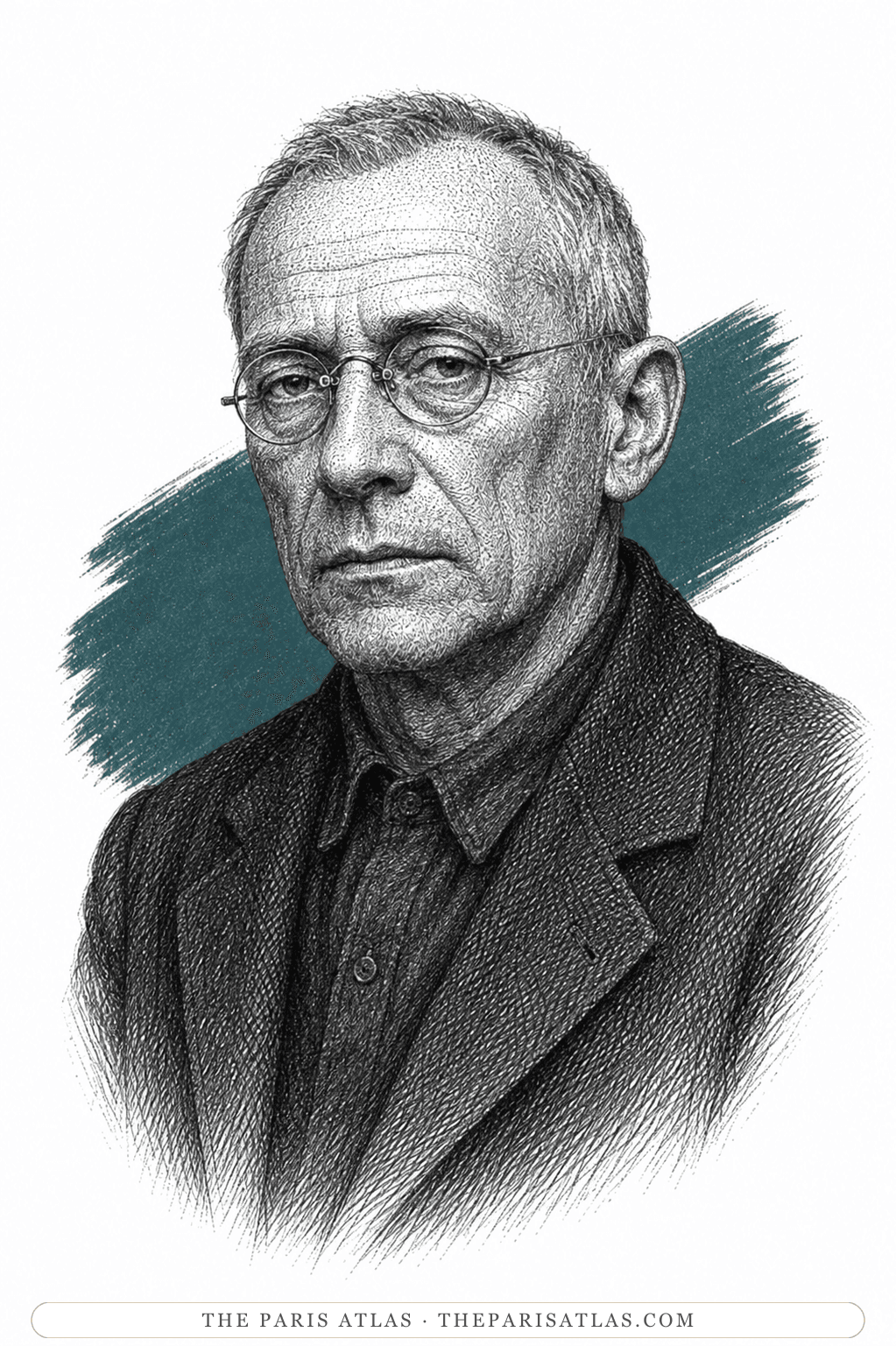
Rubashov is a veteran revolutionary, former Party leader, diplomat, and political enforcer.

Ivanov is Rubashov’s old comrade and first interrogator.

Gletkin is the younger interrogator who takes over after Ivanov’s fall.

No.

Bogrov is a celebrated revolutionary naval commander and an old friend of Rubashov.

Richard is a young German communist organizer whom Rubashov meets after the Nazi rise to power.

Little Loewy is a devoted communist organizer among Belgian dockworkers.

Arlova is Rubashov’s secretary and lover.

Hare-lip is a young prisoner brought into Rubashov’s final interrogation as a supposed witness to an assassination conspiracy.

The prisoner nicknamed Rip Van Winkle is an old revolutionary who has spent roughly two decades in confinement.

No.
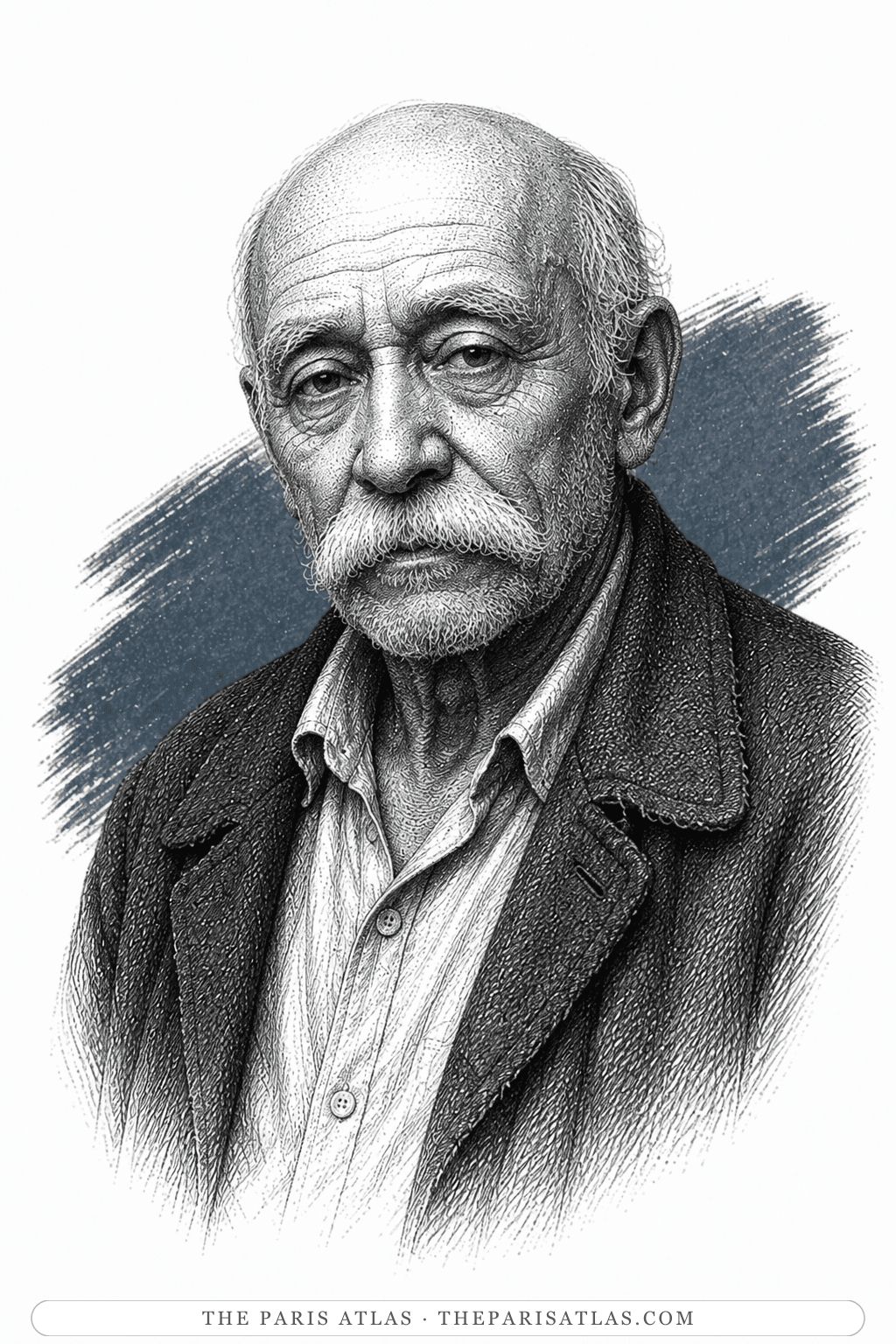
Wassilij is an elderly former porter and civil-war veteran who once admired Rubashov.

Vera is Wassilij’s daughter and a representative of the younger Soviet generation shaped by official language.
1939–1940
Koestler writes the novel in German while living in France; Daphne Hardy translates the manuscript into English under urgent wartime conditions.
1940
Jonathan Cape publishes Hardy’s English translation, the version through which the novel becomes internationally famous.
1951
Sidney Kingsley’s stage adaptation opens on Broadway, with Claude Rains as Rubashov.
1955
A television adaptation is produced for British television.
2015
A copy of Koestler’s original German typescript is identified in a Zurich archive.
2018
The recovered German text is published as Sonnenfinsternis.
2019
Philip Boehm’s new English translation from the recovered German manuscript is published.
Orwell also shows a revolution devouring its own principles and rewriting betrayal as loyalty.
Read our take
The Ministry of Love expands the same questions about confession, reality, and the destruction of political dissent.
Read our take
Both books place a man inside a legal process whose conclusion precedes any meaningful investigation, although Koestler’s machinery is historically specific.
Read our take
Solzhenitsyn shifts from Party leaders to an ordinary prisoner surviving the system’s daily material reality.
Read our take
Zamyatin likewise explores the attempt to eliminate the individual self in the name of a mathematically perfect collective.
Read our take
London’s frame history examines how authoritarian power justifies violence and how revolutionary movements understand sacrifice.
Read our takeHe is a composite rather than a portrait of one man. Koestler drew on the Old Bolsheviks who confessed during Stalin’s Moscow trials, including figures he knew or followed closely. Rubashov’s career allows several histories of revolutionary loyalty and purge to converge in one character.
The country is never named, but its leader, Party structure, purges, and show trials clearly evoke the Soviet Union under Stalin. The lack of names gives the argument wider reach without making the historical model obscure.
No. The state constructs the charges and pressures him to validate them. He is, however, morally implicated in the deaths and betrayals of people he sacrificed during his own Party career. The gap between legal innocence and moral guilt is central to the book.
There is no single reason. Torture and exhaustion weaken him, but his lifelong belief that the individual should serve history also makes capitulation intellectually possible. He recognizes the confession as false while still imagining that his final submission might serve the movement or complete the logic he once imposed on others.
It is Rubashov’s term for the individual “I.” Party theory taught him to treat private conscience as an illusion or grammatical convenience. In prison, that suppressed self returns through memory, guilt, bodily pain, and the need to recognize other people as more than numbers.
The toothache makes his abstract conflict physical. It often intensifies when memories or moral doubts break through his political reasoning. Koestler uses it as a recurring signal that the body and conscience resist the clean language of ideology.
He is arrested and executed after resisting Gletkin’s methods and failing to produce the confession quickly enough. His death marks the triumph of the younger, harsher bureaucracy over the old revolutionary generation.
He is the monarchist prisoner in the neighboring cell. Although he and Rubashov are political enemies, their tapped conversations create one of the novel’s few relationships based on direct human recognition rather than Party usefulness.
The 2019 Philip Boehm translation is the only English version made directly from the recovered original German manuscript. The Daphne Hardy version remains historically important and has a long-established cadence. Readers interested in the textual history may want to compare both.
The plot is clear and the novel is relatively short. The difficulty lies in its political arguments and shifting memories rather than in experimental language. Knowing the basic history of Stalin’s show trials helps, but the moral drama remains understandable without specialist knowledge.
Explore authors with a similar voice, perspective, and influence.
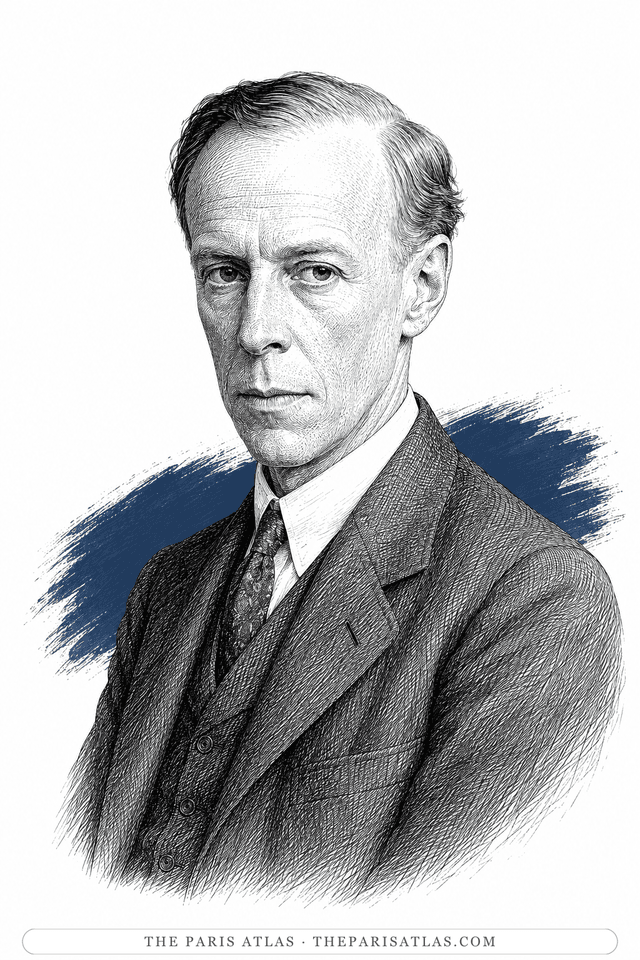
American novelist who satirised small-town conformity in Main Street and Babbitt, refused the Pulitzer Prize in 1926, and in 1930 became the first American to win the Nobel Prize in Literature.
View author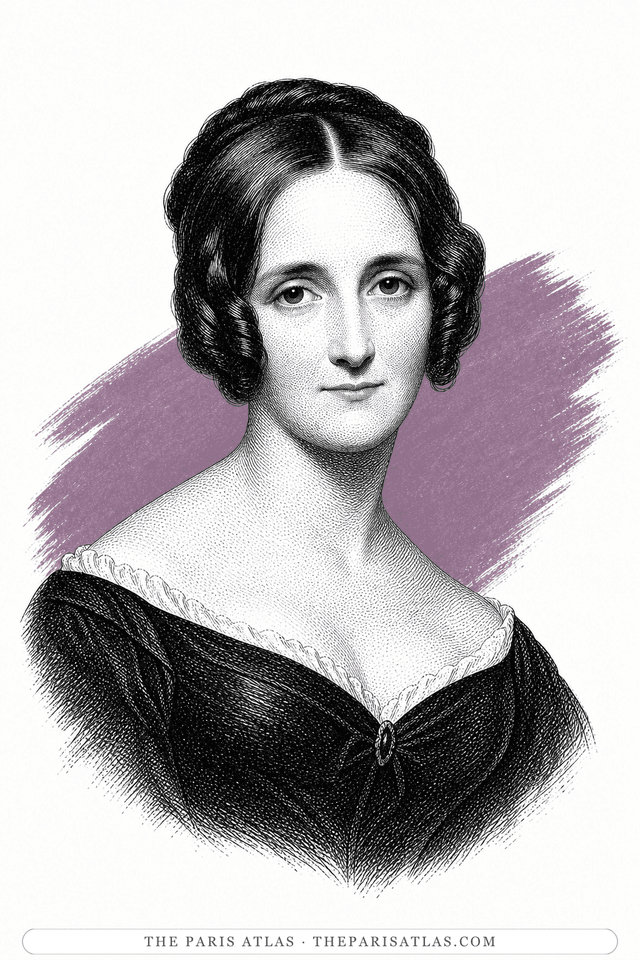
The author of Frankenstein, who first saw Paris at sixteen as a runaway. In the summer of 1814 she crossed from England to Calais with the poet Percy Bysshe Shelley and her stepsister Claire Clairmont, spent a week trapped in an expensive Paris hotel with no money, then bought a donkey and walked south-east across a France still wrecked by the Napoleonic wars. That journey became her first published book. Two years later, on a lake in Switzerland, she began her second.
View author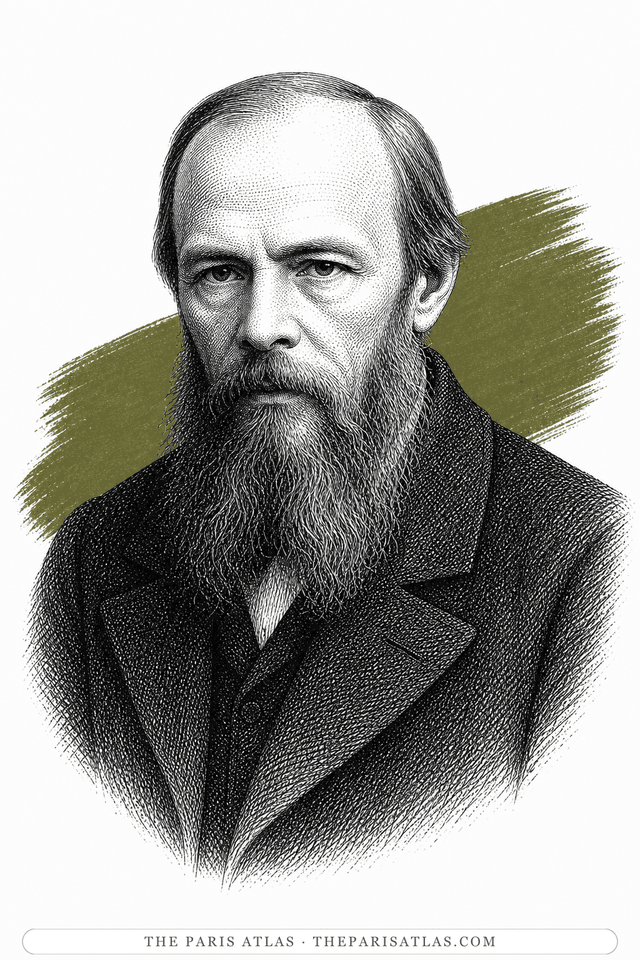
The Russian novelist who came to Paris twice in the 1860s, hated it with unusual precision, and wrote the result up as Winter Notes on Summer Impressions, a short, savage account of the French bourgeoisie that stands as the sharpest case ever made against the city by a writer passing through it.
View authorThe sources below include the primary text, editions, scholarship, archival materials, and other records that informed this page. They document Darkness at Noon, its publication, and its place in literary history.


Open Library ISBN catalogue used to verify the title, ISBN, and publication metadata.
Google Books catalogue record used to cross-check the title and edition metadata.
Internet Archive ISBN catalogue used to cross-check the edition and its availability in library holdings.
Library of Congress books catalogue used to cross-check the bibliographic record by ISBN.

National Endowment for the Humanities account; verifies the lost German manuscript, its rediscovery, and the translation history.
Publisher page for Philip Boehm’s translation; verifies that it was translated from the recovered German text.
Secondary plot and character cross-check; useful for sequence and named figures.
Licensing archive for Sidney Kingsley’s stage adaptation; verifies the adaptation and production context.
Internet Broadway Database; verifies the original Broadway production and cast.
Contemporary review of the 1951 stage production.
Bibliographic and adaptation cross-check; use with the institutional and publisher sources above rather than alone.
The primary text is the baseline reference for every book page. Additional references document publication history, interpretation, and historical context where that evidence is available.
 Explore more resources