The Paris AtlasCharting the artists, works, and places worth returning to.
  • Author
  • Poet
· American · 1942–

Erica Jong

American novelist, poet, and memoirist whose candid writing about women’s desire and freedom made Fear of Flying a cultural landmark.

Official site1 book on our shelves

Details

Lived
1942–
Born
26 March 1942
Birthplace
New York City
Birth name
Erica Mann
Nationality
American
Profession
Novelist, poet and memoirist
Major works
Fear of Flying, Fanny, Shylock's Daughter, Fear of Fifty, The Devil at Large
Married
Michael Werthman · married 1963, divorcedAllan Jong · married 1966, divorcedJonathan Fast · married 1977, divorcedKenneth David Burrows · married 1989 until his death in 2023
Children
Molly Jong-Fast
Roles
AuthorPoet

About Erica Jong

American novelist and poet, the author of Fear of Flying

Erica Jong is an American novelist, poet and memoirist, born Erica Mann in Manhattan on 26 March 1942. Her first novel, Fear of Flying (1973), followed a poet named Isadora Wing through marriage, analysis and desire, treated a woman's sexual appetite with a frankness fiction had reserved for men, and has sold over 37 million copies worldwide.

The book made her a figure in second-wave feminism and a permanent name for one idea: that a woman could want, say so, and write it down. She had arrived as a poet, with two collections published before the novel, and kept the two careers running together. Eight further novels followed, including the eighteenth-century pastiche Fanny and the Venice fantasy Shylock's Daughter, along with eight books of poetry and the memoirs Fear of Fifty and Seducing the Demon. Her study The Devil at Large repaid her debt to Henry Miller, who had championed Fear of Flying on publication.

Jong was diagnosed with dementia in the early 2020s and lives in a nursing home in Manhattan. Her daughter, the writer Molly Jong-Fast, published a memoir of their relationship, How to Lose Your Mother, in 2025.

Manhattan, the doll factory, and Barnard, 1942–1965

Erica Mann was born in Manhattan on 26 March 1942, the second of three daughters of Seymour Mann, a businessman whose company mass-produced porcelain dolls. Her mother, Eda Mirsky Mann, was a painter and textile designer who designed dolls for her husband's firm. The household was Jewish, artistic and ambitious. She attended the High School of Music & Art in Harlem, then Barnard College, where she edited the literary magazine and made poetry programs for Columbia's radio station.[1]

She graduated from Barnard in 1963, marrying and quickly divorcing a fellow student, Michael Werthman, along the way. In 1965 she took a master's degree at Columbia in eighteenth-century English literature, with a thesis on women in the poetry of Alexander Pope; the century's bawdy, satirical energy later powered her novel Fanny. In 1966 she married Allan Jong, a Chinese American psychiatrist, and kept his surname after the divorce. Three years on an army base in Heidelberg with him gave Fear of Flying its German chapters.

Fear of Flying, 1973

Jong began as a poet. She published two collections, Fruits & Vegetables (1971) and Half-Lives (1973), before the novel arrived and swallowed her name. Fear of Flying (1973) sent Isadora Wing, a twenty-nine-year-old poet, to a psychoanalysts' congress in Vienna with her husband, and off it with an analyst named Adrian Goodlove. Isadora chases an ideal of consequence-free desire that the book named in a famous two-word coinage that entered the language.[1]

The scandal and the sales fed each other: over 37 million copies worldwide, in the count her publishers keep. Henry Miller, whose Tropic of Cancer stood behind the book's voice, championed it in print, and John Updike praised it in The New Yorker. It became a reference point in second-wave feminism's argument over whether liberation and desire were allies or rivals. It also fixed Jong's public identity in a single title for the rest of her career, a fact she wrote about with rueful clarity for fifty years.

The Isadora sequels, Fanny, and Venice, 1977–2003

Isadora Wing returned in How to Save Your Own Life (1977) and Parachutes and Kisses (1984). At one remove, the sequels tracked Jong's third marriage, to the novelist Jonathan Fast, son of Howard Fast. Their daughter, Molly Jong-Fast, was born in 1978. The other novels ranged deliberately: Fanny (1980) rewrote the eighteenth-century erotic classic Fanny Hill from the woman's side, in period prose. Shylock's Daughter, first published as Serenissima in 1987, dissolved a modern actress into Shakespeare's Venice. Sappho's Leap (2003) took on the first woman poet directly.

The nonfiction ran alongside: Witches (1981), the Miller study The Devil at Large (1993), the memoir Fear of Fifty (1994), and What Do Women Want? (1998). In 1989 she married the New York litigator Kenneth David Burrows, her fourth marriage and her lasting one; it ended with his death in December 2023.[2]

The late books, the archive, and now

Columbia University acquired her literary archive in 2007. The late books closed her career's circle: the memoir Seducing the Demon (2006), the poetry collection The World Began with Yes (2019), and the novel Fear of Dying (2015), which gave the aging Isadora Wing a cameo. A Swiss documentary, Erica Jong: Breaking the Wall, appeared in 2023. Bob Dylan had already given her the odder immortality, listing her among the women authors read in "Highlands", the closing song of Time Out of Mind.

In the early 2020s Jong was diagnosed with dementia. She now lives in a nursing home in Manhattan, after decades in the Upper East Side apartment where she lived and worked. Her daughter Molly Jong-Fast's 2025 memoir, How to Lose Your Mother, is an unsparing account of writing and mothering in the Jong household. It was published with her mother no longer able to answer, and reviewed everywhere as the family's second famous book about itself.[3]

How Jong writes

The Jong voice is first-person, comic, learned and confessional at once: Isadora Wing narrates the way a well-read analysand talks, punning through Freud, quoting the poets, and reporting her own appetites as case material. The poetry came first and stayed audible in the prose, and the scholarship kept surfacing as pastiche, an entire eighteenth-century novel in Fanny, a Shakespearean Venice in Shylock's Daughter.

Her working model, absorbed and answered, was Henry Miller: the same unembarrassed sexual first person, claimed for a woman narrator, which is precisely what made the same reviewers who had canonised Miller call Jong shocking. She has written all her life about the imbalance in that reception, most directly in The Devil at Large and Fear of Fifty.[2]

Reception and standing

Fear of Flying divided reviewers in 1973 and has kept its divided afterlife: canonised as a feminist landmark, condescended to as a period piece, and re-read at every anniversary; The New York Times marked its fiftieth in 2023. The novel's sales figure and its two-word coinage remain fixtures of publishing history, and the book has never been out of print.

Jong's honours include Poetry magazine's Bess Hokin Prize (1971), the United Nations Award for Excellence in Literature (1998), and Italy's Fernanda Pivano Award for American literature. The larger verdict is generational: writers on candour, appetite and the female first person, from the memoirists of the 1990s onward, work in a space Fear of Flying cleared.

Life events

  1. 1942

    Born Erica Mann in Manhattan on 26 March, daughter of a doll manufacturer and a painter.

    — Erica Jong

  2. 1963

    Graduates from Barnard College, where she edited the literary magazine.

    — Erica Jong

  3. 1965

    Takes a Columbia master's degree in eighteenth-century English literature, with a thesis on women in Alexander Pope.

    — Erica Jong

  4. 1966

    Marries the psychiatrist Allan Jong; three years on a Heidelberg army base follow, later fed into Fear of Flying.

    — Erica Jong

  5. 1971

    Publishes her first poetry collection, Fruits & Vegetables, and wins Poetry magazine's Bess Hokin Prize.

    — Erica Jong

  6. 1973

    Fear of Flying is published and becomes a scandal, a best-seller, and a landmark of second-wave feminism.

    — Erica Jong

  7. 1977

    How to Save Your Own Life continues Isadora Wing's story; she marries the novelist Jonathan Fast.

    — Erica Jong

  8. 1980

    Fanny retells Fanny Hill from the woman's side in full eighteenth-century dress.

    — Erica Jong

  9. 1989

    Marries the litigator Kenneth David Burrows, her fourth and lasting marriage.

    — Erica Jong

  10. 1993

    Publishes The Devil at Large, her study of Henry Miller, who had championed Fear of Flying twenty years earlier.

    — Erica Jong, The Devil at Large: Erica Jong on Henry Miller (1993)

  11. 1994

    Fear of Fifty, her midlife memoir, becomes the defining book of her nonfiction.

    — Erica Jong

  12. 2007

    Columbia University acquires her literary archive.

    — Erica Jong

  13. 2015

    Fear of Dying returns to the territory of the first novel from the far side of age.

    — Erica Jong

  14. 2023

    Kenneth Burrows dies in December; the documentary Erica Jong: Breaking the Wall appears the same year.

    — Erica Jong

  15. 2025

    Living with dementia in a Manhattan nursing home, she is the subject of her daughter Molly Jong-Fast's memoir How to Lose Your Mother.

    — Alexandra Alter, The Devastating Book Erica Jong Always Knew Her Daughter Would Write (2025)

Who Inspired Erica Jong

People whose work inspired Erica Jong. They did not necessarily meet or know one another.

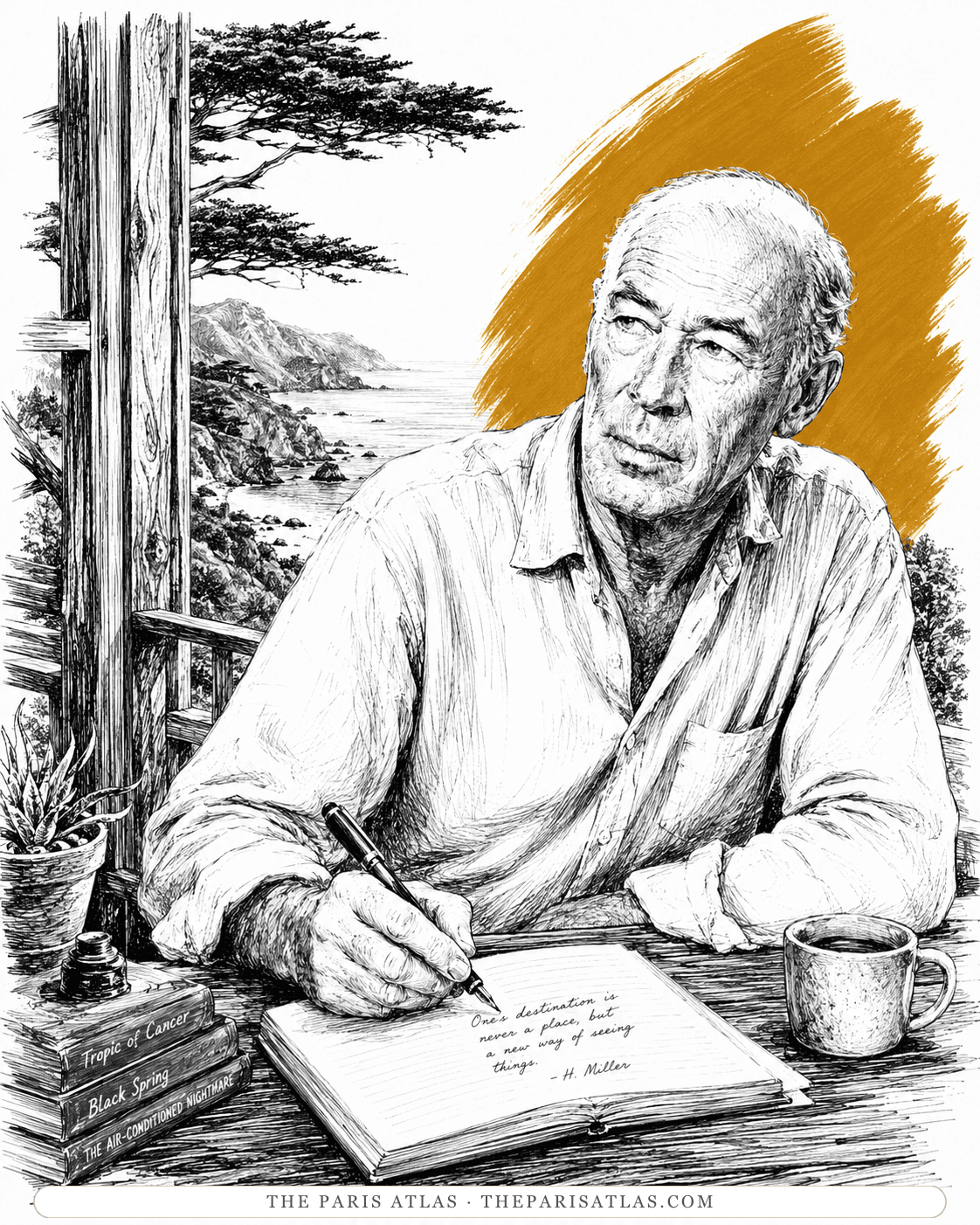
Illustrated portrait of Henry Miller

Henry Miller

Fear of Flying carries Miller's frank first-person sexual candour into a woman's voice, and Miller answered in kind, championing the novel on publication. The two became friends and correspondents, and Jong repaid the debt at book length in The Devil at Large: Erica Jong on Henry Miller (1993), her study of the man and what she took from him.

— Erica Jong, The Devil at Large: Erica Jong on Henry Miller (1993)

Books by Erica Jong

Cover of Fear of Flying by Erica Jong

Memoir & autofiction

Isadora Wing tests sexual fantasy, marriage, and freedom in a candid, feverish, and sharply self-mocking voice.

4.0

Questions about Erica Jong

Who is Erica Jong?

Erica Jong (born 26 March 1942 in New York City) is an American novelist, poet and memoirist. She is famous above all for her first novel, Fear of Flying (1973), whose frank treatment of a woman's sexual desire made it a landmark of second-wave feminism and a best-seller of over 37 million copies. She has published nine novels, eight books of poetry, and memoirs including Fear of Fifty. Her daughter is the writer Molly Jong-Fast.

What is Fear of Flying about?

Isadora Wing, a twenty-nine-year-old poet, flies to Vienna with her psychiatrist husband for a psychoanalytic congress and runs off across Europe with another analyst, chasing an ideal of guiltless, consequence-free desire that the novel names with a famous two-word coinage. It is a comedy of appetite, analysis and self-invention rather than a manifesto, but its frankness about what a woman wants, in 1973, made it both a scandal and a feminist landmark. It has sold over 37 million copies worldwide.

Is Fear of Flying autobiographical?

Jong has always answered: transformed, not transcribed. Like Isadora Wing, she was a young poet from a Jewish Manhattan family, educated at Barnard, married to a Chinese American psychiatrist, and had lived on a Heidelberg army base; the novel's texture is her life's. But Isadora is a made character who went on to two more novels, How to Save Your Own Life and Parachutes and Kisses, which fictionalised later chapters of Jong's life in turn, including her marriage to Jonathan Fast.

What was Erica Jong's connection to Henry Miller?

Miller was the model, then the champion, then the subject. Fear of Flying carried the unembarrassed sexual first person of Tropic of Cancer into a woman's voice, and Miller, then in his eighties, praised the novel publicly on publication and struck up a friendship and correspondence with Jong. Twenty years later she wrote a full-length study of him, The Devil at Large: Erica Jong on Henry Miller (1993), examining both his liberating example and the misogyny charge against him.

What has happened to Erica Jong?

She was diagnosed with dementia in the early 2020s and lives in a nursing home in Manhattan, after decades in her Upper East Side apartment. Her fourth husband, the lawyer Kenneth David Burrows, died in December 2023. Her daughter, Molly Jong-Fast, published a memoir about their relationship, How to Lose Your Mother, in 2025. Jong's literary archive has been at Columbia University since 2007.

What else has Erica Jong written besides Fear of Flying?

Eight further novels, among them Fanny (1980), a full-dress eighteenth-century retelling of Fanny Hill; Shylock's Daughter (1987), a time-slip romance of Shakespeare's Venice; Sappho's Leap (2003); and Fear of Dying (2015). Her nonfiction includes Witches, The Devil at Large, the memoir Fear of Fifty and Seducing the Demon, and she began and continued as a poet, from Fruits & Vegetables (1971) to The World Began with Yes (2019).

Connections and Sources

Erica Jong’s connections to people, places, and works, with the sources behind each one.

Influenced by

Henry Miller

Fear of Flying carries Miller's frank first-person sexual candour into a woman's voice, and Miller answered in kind, championing the novel on publication. The two became friends and correspondents, and Jong repaid the debt at book length in The Devil at Large: Erica Jong on Henry Miller (1993), her study of the man and what she took from him.

— Erica Jong, The Devil at Large: Erica Jong on Henry Miller (1993)

References

References

The sources below include biographies, scholarly essays, interviews, and primary materials that informed this page. They reflect both the historical record and ongoing critical conversations about Erica Jong and their work.

  1. 1abThe Fearless Erica Jong

    Periodical
    The Atlantic, 2015
    Used for

    The Atlantic's profile at the publication of Fear of Dying.

    View source
  2. 2abThe Devil at Large: Erica Jong on Henry Miller

    Nonfiction
    Random House, 1993
    Used for

    Her own book on Henry Miller, behind the influence claim this page carries.

  1. 3↑The Devastating Book Erica Jong Always Knew Her Daughter Would Write

    Periodical
    The New York Times, 2025
    Used for

    The Times report on Molly Jong-Fast's memoir, the dementia diagnosis, and Jong's current circumstances.

  2. 4Erica Jong

    Website
    Wikipedia
    Used for

    Reference article cross-checked for the family, the education, the marriages, the bibliography, and the sales figure.

    View source
i
Why these sources are here

These references anchor the page in the documented record and in the scholarly conversations around Erica Jong. Every claim on this page traces back to one or more of the works listed here.

Explore more resources
Browse all authors