


Fear of Flying
by Erica Jong
Isadora Wing tests sexual fantasy, marriage, and freedom in a candid, feverish, and sharply self-mocking voice.
- 1973
About Erica Jong
The story, briefly
Spoiler-freeTwenty-nine-year-old poet Isadora Wing travels to Vienna with her psychiatrist husband, meets the raffish analyst Adrian Goodlove, and leaves on a European road trip to test whether sexual fantasy can become an independent life.
The story, in more detail
Isadora is intelligent, funny, sexually restless, and unsure whether marriage has made her safe or merely bored. A psychoanalytic conference supplies both a new lover and a social world whose theories about freedom invite satire.[1]
Adrian appears to embody escape, but the affair soon reveals habits, selfishness, and unequal power. Isadora’s memories of family, writing, and her first husband show that no road trip can separate desire from history.[1]
The novel became famous for sexual candor, but Erica Jong’s central achievement is voice. Isadora mocks herself, revises fantasies in public, and discovers that liberation can be as awkward and disappointing as convention.[1]
The full plot
Isadora travels to Vienna with Bennett Wing, her Chinese American second husband, who is attending a psychoanalytic conference. Their marriage is functional and intellectually close, but sexually and emotionally strained.[1]
The conference gives Isadora a room full of analysts who discuss human freedom while displaying their own vanity and compulsions. She meets Adrian Goodlove, an English analyst whose irreverence and sexual confidence seem to offer an exit from the life she knows.[1]
Isadora has long imagined anonymous sex without guilt, history, obligation, or practical inconvenience—the fantasy the novel calls the ‘zipless’ encounter. Adrian appears to be a chance to turn the perfect idea into lived experience.[1]
She leaves Bennett and travels through Europe with Adrian. Their affair is intense but quickly develops ordinary discomforts. Adrian is not a magical alternative to marriage; he has habits, selfishness, and power of his own.[1]
During the journey, Isadora remembers childhood, her mother and sisters, her first husband Brian, her work as a poet, and the gender expectations she has absorbed. She begins to see how romantic fantasy has helped her postpone decisions about authorship and independence.[1]
How it ends — spoilers ahead
The affair with Adrian does not become a permanent new life. Its glamour weakens as Isadora discovers that escape with a lover can create another form of dependence.
She returns toward Bennett, but the ending does not restore the marriage as if nothing happened. The journey has forced her to confront the distance between perfect fantasy and freedom lived among real people and consequences.
Isadora ends more capable of imagining an identity that is not defined entirely by either husband or lover. The deepest change is in her relationship to her own desire, decisions, and authorship rather than in the selection of a man.
Themes and analysis
Sexual freedom
The novel takes female desire seriously without claiming that experimentation automatically creates liberation. Isadora’s fantasies identify real hunger, but acting on them reveals history, risk, embarrassment, and other people’s needs.
In the publisher’s interview, Jong says she considered killing Isadora, then rejected a pattern she associated with Anna Karenina and Madame Bovary: a woman’s sexual passion ending in death. That account makes survival a deliberate narrative choice, not simply a reward for finding the right relationship. Isadora can make mistakes without the story turning her death into its final judgment. The distinction matters because refusing a punitive ending does not require declaring every desire wise or every decision successful.
Marriage
Isadora wants intimacy and fears being absorbed into another person’s life. Bennett is neither a simple jailer nor a perfect husband; the marriage’s limits include his behavior, her projections, and the cultural roles available to both of them.
Fantasy
The ‘zipless’ fantasy can be perfect only while it excludes aftermath. Adrian initially seems to make it real, but travel introduces luggage, money, moods, habits, jealousy, and unequal power—the ordinary materials fantasy leaves out.
Writing
Isadora’s struggle to define a life cannot be separated from being a poet. Romantic stories can distract her from authorship, but the same restless self-observation becomes the material and energy of her voice.
Jong also identifies accusations of self-absorption as a revealing response to Isadora. In the publisher’s interview, she contrasts the tolerance granted to male protagonists examining themselves with the expectation that women attend to everyone else. This suggests another way to understand the novel’s first-person form: the sustained attention to Isadora’s mind is itself part of its argument about freedom. A reader need not admire all her choices to accept that her contradictory feelings deserve space. Self-examination becomes material for fiction rather than evidence that a woman has neglected her proper role.
Psychoanalysis
The conference lets Jong mock professionals who build theories about normal desire while remaining governed by vanity and habit. At the same time, Isadora’s narration performs its own unruly self-analysis through memory, association, and revision.
Female anger and comedy
Jong converts frustration with marriage, family, gender expectation, and literary ambition into comic energy. Self-mockery lets Isadora voice anger without turning herself into a flawless heroine.
Writing style
Jong writes in a direct conversational first person that can become feverish, sarcastic, confessional, or unexpectedly lyrical. Isadora frequently catches herself exaggerating and then makes the exaggeration funnier.
The prose is markedly self-mocking. Isadora can be selfish, contradictory, frightened, and sexually hungry without the novel pretending those qualities make her heroic. The ease of the voice keeps complicated arguments about marriage and freedom readable.
Editions and translations
The novel was written in English and has been translated widely. Penguin’s fortieth-anniversary edition provides useful modern framing. Translations must preserve not only sexual candor but jokes, shifts of register, literary allusion, and Isadora’s quick corrections of herself.
Major adaptations
Despite repeated interest, no single completed feature film has become the canonical adaptation. Announced projects should be verified at the time of publication rather than listed as finished works.
Why we recommend it
Female desire in a comic voice
Isadora claims the sexual monologue while making her own fantasies and contradictions part of the joke.
Freedom tested by ordinary life
The road trip replaces a perfect fantasy with another person’s habits, power, and needs.
A marriage novel about authorship
Choosing how to write and live becomes more important than simply choosing between two men.
What this book explores
The people in its pages

Isadora Wing
The twenty-nine-year-old poet whose affair tests her fantasies about sex, marriage, and independence.
Also in the book

Bennett Wing
Isadora’s second husband, a psychiatrist who represents both real partnership and feared confinement.

Adrian Goodlove
The English analyst who first appears to embody Isadora’s fantasy of erotic escape.

Brian
Isadora’s first husband, whose severe mental illness remains part of her emotional history.

Isadora’s family
Her mother and sisters, whose different lives provide competing examples of femininity, art, and marriage.
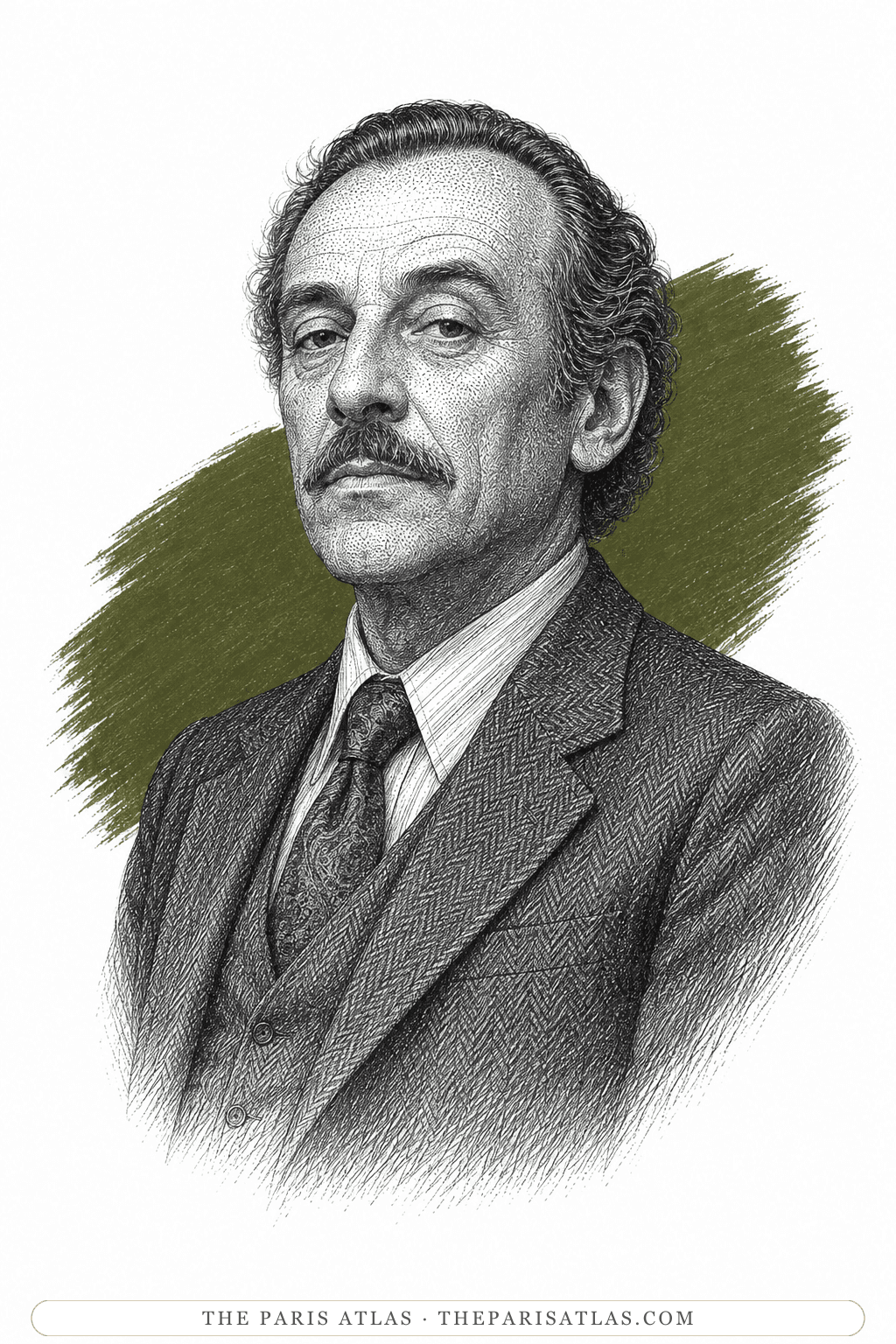
The conference circle
The analysts and spouses whose behavior turns professional certainty about sex into social comedy.
Bring it to book club
- What does Isadora really want from the zipless fantasy?
- Is Bennett oppressive, or does Isadora project confinement onto him?
- What does Adrian represent before and after the trip?
- How does Brian’s history affect Isadora’s choices?
- Why is psychoanalysis such a useful target for satire?
- Does sexual freedom help Isadora become a better writer?
- How does self-mockery change the narrator’s reliability?
- Is the ending a retreat or a more mature idea of freedom?
Timeline
1973
Holt, Rinehart and Winston publishes Fear of Flying; it becomes an international bestseller and cultural controversy.
1970s
The novel becomes a major reference point in arguments about women’s sexual writing and second-wave feminism.
2013
Penguin Classics issues a fortieth-anniversary deluxe edition.
Later decades
The book remains in print and widely discussed in literary histories of sex, marriage, and female authorship.
Book editions
Hardcover
- Hardcover
- Holt, Rinehart and Winston
- 1973
Paperback
- Paperback
- Penguin Classics
- 2013

- Paperback
- Signet Classics
- 2024
- 9780593817544
Reader reviews
Readers may also like


The Dud Avocado
A lighter young-woman-abroad comedy pursues independence through a similarly vivid voice.
Read our take
A Certain Smile
A cooler, shorter affair narrative also tests fantasy against consequence.
Read our take
The Bell Jar
A darker novel examines female ambition and the roles prescribed for adult life.
Read our takeFear of Flying: frequently asked questions
What is the ‘zipless’ fantasy?
It is Isadora’s fantasy of anonymous sex free from guilt, history, obligation, and practical complication.
Does Isadora leave Bennett permanently?
No. She returns toward him, although the journey changes her understanding of marriage and freedom.
Is Adrian a better partner?
Not really. Part of the novel’s point is that a perfect fantasy becomes ordinary and complicated when lived.
Is Isadora Erica Jong?
The character has autobiographical elements, but Isadora is a fictional narrator.
Why was the book controversial?
Its explicit female sexual voice challenged expectations about what women were permitted to admit wanting.
Is it feminist?
It is a major text in the history of second-wave-era sexual discussion, though readers debate some of its assumptions and limits.
Is the book mostly about sex?
Sex is central, but so are writing, marriage, family, ambition, and identity.
Is it funny?
Very. Comedy and self-mockery are defining parts of Isadora’s voice.
If you like Erica Jong
Explore authors with a similar voice, perspective, and influence.
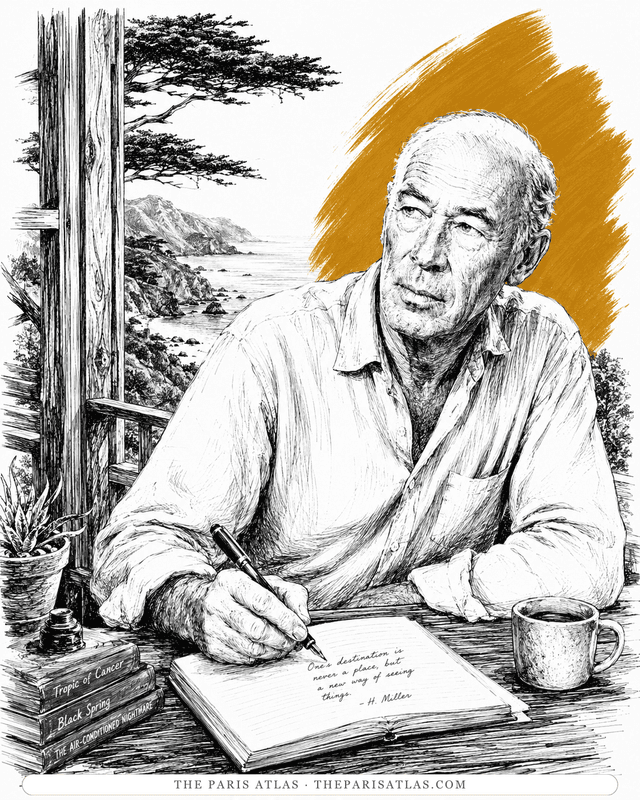
Henry Miller
The Brooklyn dropout who arrived in Paris broke at thirty-eight and wrote the exuberant, banned books that ended American censorship.
View author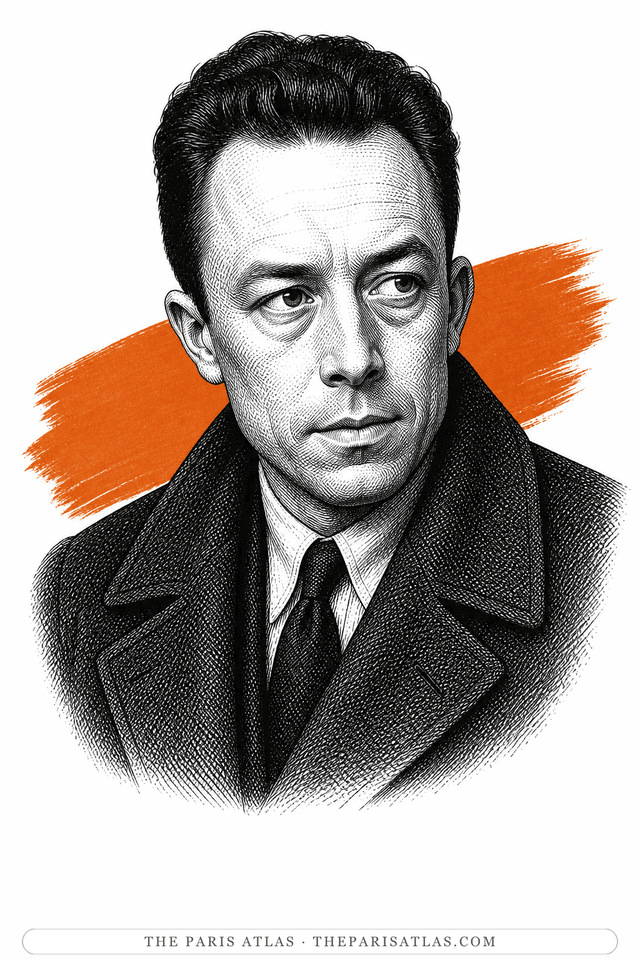
Albert Camus
French Algerian novelist, essayist, journalist and playwright who used the absurd and revolt to ask how people should live without false consolation.
View author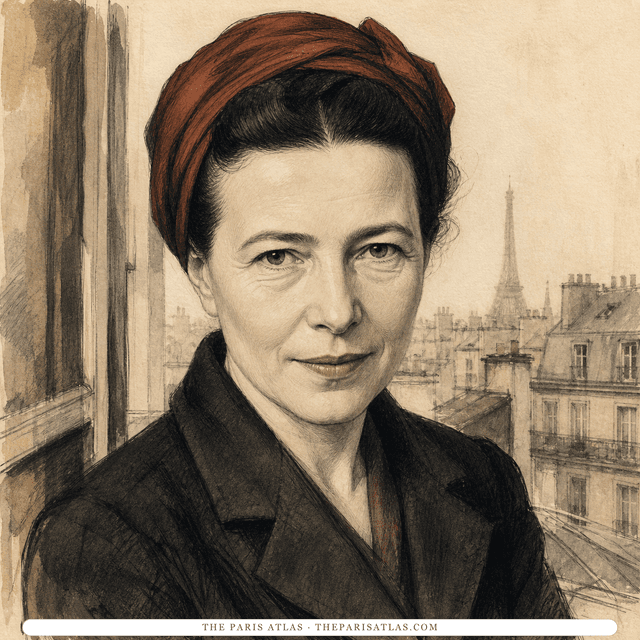
Simone de Beauvoir
French writer and philosopher whose novels, memoirs, and social analysis examined freedom, gender, responsibility, aging, and the material conditions that shape a life.
View author
References
References
The sources below include the primary text, editions, scholarship, archival materials, and other records that informed this page. They document Fear of Flying, its publication, and its place in literary history.


2Fear of Flying — Google Books edition record
Official recordGoogle BooksUsed forGoogle Books catalogue used to cross-check edition metadata.
3Fear of Flying — Internet Archive ISBN catalogue
Official recordInternet ArchiveUsed forInternet Archive used to cross-check library holdings.
4Fear of Flying — Library of Congress books catalogue
Official recordLibrary of CongressUsed forLibrary of Congress used to cross-check the bibliographic record.
5Fear of Flying — publisher book page
Official recordPenguin Random HouseUsed forPublisher page supplied for first publication, Isadora, cultural significance, and anniversary context.

6Erica Jong — official author site
WebsiteErica JongUsed forAuthor site supplied for biography and publication context.
7Fear of Flying — A Conversation with Erica Jong
WebsitePenguin Random HouseUsed forPublisher-hosted author interview used for the two added readings of narrative choice and first-person attention. These are interpretations of Jong's retrospective comments, not a fresh verification of every plot or biographical claim.
i
Why these sources are here
The primary text is the baseline reference for every book page. Additional references document publication history, interpretation, and historical context where that evidence is available.
 Explore more resources