The Paris AtlasCharting the artists, works, and places worth returning to.
  • Author
  • Playwright
· French · 1935–2004

Françoise Sagan

French novelist and playwright whose 1954 debut Bonjour Tristesse made its eighteen-year-old author famous for cool, concise stories of youth, freedom, desire, and emotional damage.

2 books on our shelves

Details

Lived
1935–2004
Born
21 June 1935
Birthplace
Cajarc, Lot, France
Birth name
Françoise Quoirez
Died
24 September 2004 · aged 69
Place of death
Honfleur, Calvados, France
Nationality
French
Married
Guy Schoeller · 1958–1960Robert Westhoff · 1962–1963
Children
Denis Westhoff
Roles
AuthorPlaywright

About Françoise Sagan

Françoise Sagan was a French novelist and playwright who published her first book at eighteen and spent the next fifty years being measured against it. She was born Françoise Quoirez at Cajarc, in the Lot in south-west France, on 21 June 1935, the youngest of three children in a wealthy industrial family.[1]

She wrote Bonjour Tristesse in 1953, after failing her first year at the Sorbonne, and the publisher René Julliard brought it out in March 1954. It won the Prix des Critiques from a jury that included the writers Jean Paulhan and Georges Bataille, sold in the millions, and was translated across Europe and the United States within two years.[1]

The scandal was not literary. The novel's narrator is a seventeen-year-old girl who has a sexual life, is not punished for it by pregnancy or marriage, and describes the adults around her without deference. The novelist François Mauriac, writing in Le Figaro, called its author a charming little monster, and the phrase followed her for decades.

She went on writing for half a century, producing around twenty novels along with plays, song lyrics and screenplays. A second reputation grew alongside the first, built on fast cars, casinos and money spent as quickly as it arrived, and in the public account of her it gradually became the larger of the two.

Cajarc, and a name borrowed from Proust

Françoise Quoirez grew up between the Lot and the Dauphiné, the youngest of three children of a prosperous industrialist. She passed her baccalauréat and enrolled at the Sorbonne, where she did not complete the year. Her education proceeded instead through reading and through the jazz cellars of Saint-Germain-des-Prés, to which her brother Jacques took her.[1]

For a pen name she took Sagan from Marcel Proust, whose In Search of Lost Time has a Princesse de Sagan among its aristocrats. The title of her first novel came from another French writer: the poem "À peine défigurée" by Paul Éluard opens by greeting sadness by name.

Bonjour Tristesse

The novel is narrated by Cécile, who is seventeen and spending the summer on the Mediterranean coast with her widowed father and his young mistress. When an older woman, Anne, arrives and begins to impose order on the household, Cécile sets out to break up the engagement, and the plan works better than she intended.

She described the writing of it without ceremony. "I simply started it," she told The Paris Review two years later. "I had a strong desire to write and some free time." It took two or three months at two or three hours a day, and while she was working she assumed nothing would come of it: "Finally, when it was done, I thought it was hopeless."[2]

Her editors asked for changes, and several endings were drafted, in one of which Anne did not die. The published version is the one in which she does, on the reasoning, Sagan said afterwards, that the book was the stronger for it.[2]

What the scandal was actually about

France in 1954 was nine years from the end of the war and a decade from the contraceptive pill. A novel in which a teenage girl has sex, feels no guilt about it, and is neither married off nor made pregnant by the last page was received as a provocation rather than as a book.[1]

Sagan herself declined to conduct the argument, and when she was asked what she thought of the reviews she said that she had read the agreeable ones and learned nothing whatever from any of them: "I was astonished by their imagination and fecundity. They saw intentions I never had."[2]

Otto Preminger filmed the novel in 1958, with Jean Seberg as Cécile and David Niven as her father. The film was poorly received in the United States and admired by the young critics in Paris, and the cropped haircut Seberg wore for it became, two years later, the most recognisable image of the French New Wave.

The crash near Milly-la-Forêt

In April 1957, at twenty-one, Sagan lost control of her Aston Martin on a road near Milly-la-Forêt, south of Paris, while driving fast with friends in the car. The car left the road and rolled, throwing her passengers clear while she remained inside it, and a priest was called to administer the last rites while she was still unconscious.

Accounts of the speed and of the exact injuries differ, but the outcome is not in dispute: she was gravely hurt, she spent months recovering, and the pain was managed with Palfium 875, a morphine derivative she became dependent on. She kept a journal of the nine days she spent in a clinic coming off it, and the painter Bernard Buffet illustrated it in Chinese ink. It was published as Toxique by Julliard in 1964, seven years after it was written.[1]

Money, speed and the house at Équemauville

Sagan earned a great deal from her first two books and disposed of it at a rate that became part of her public character. She drove a Jaguar XK120, a Gordini, a Ferrari and a Maserati. She played at the casinos, and at twenty-four she won enough in a night at Deauville to buy the manor of Le Breuil at Équemauville, near Honfleur on the Normandy coast, which she kept for the rest of her life.[1]

She described money as an instrument of freedom rather than an object in itself, and she spent it accordingly, which is the reason the last part of her life was financially precarious. By the time she died she had been ruined by a combination of debt and the attentions of the French tax authorities.[3]

Two marriages and a long partnership

In 1958 she married the publisher Guy Schoeller, who was twenty years her senior, and the marriage was dissolved two years afterwards. In 1962 she married the American Robert Westhoff, formerly an officer and later a sculptor. Their son, Denis Westhoff, was born that year, and the marriage ended the next.[1]

From 1976 she lived with the fashion stylist Peggy Roche, in what became the longest attachment of her life, lasting fifteen years until Roche's death in 1991. She did not discuss her relationships with women in public.[3]

Politics

Sagan signed the Manifesto of the 121 in 1960, the declaration supporting the right of French conscripts to refuse to serve in the Algerian war. In 1971 she signed the Manifesto of the 343, in which women publicly stated that they had had abortions, then a criminal offence in France, in order to force the law into the open.[3]

She supported François Mitterrand's presidential candidacy in 1974 and remained close to him after his election in 1981. Her signature on the two manifestos is the part of her public life least often mentioned alongside the cars and the casinos.[3]

Jean-Paul Sartre

In 1979 Sagan published an open letter to Jean-Paul Sartre, the French philosopher and novelist, whom she had admired since she was a teenager and had never met. Sartre had by then lost his sight. The letter was read aloud to him, and he asked to meet its author.[4]

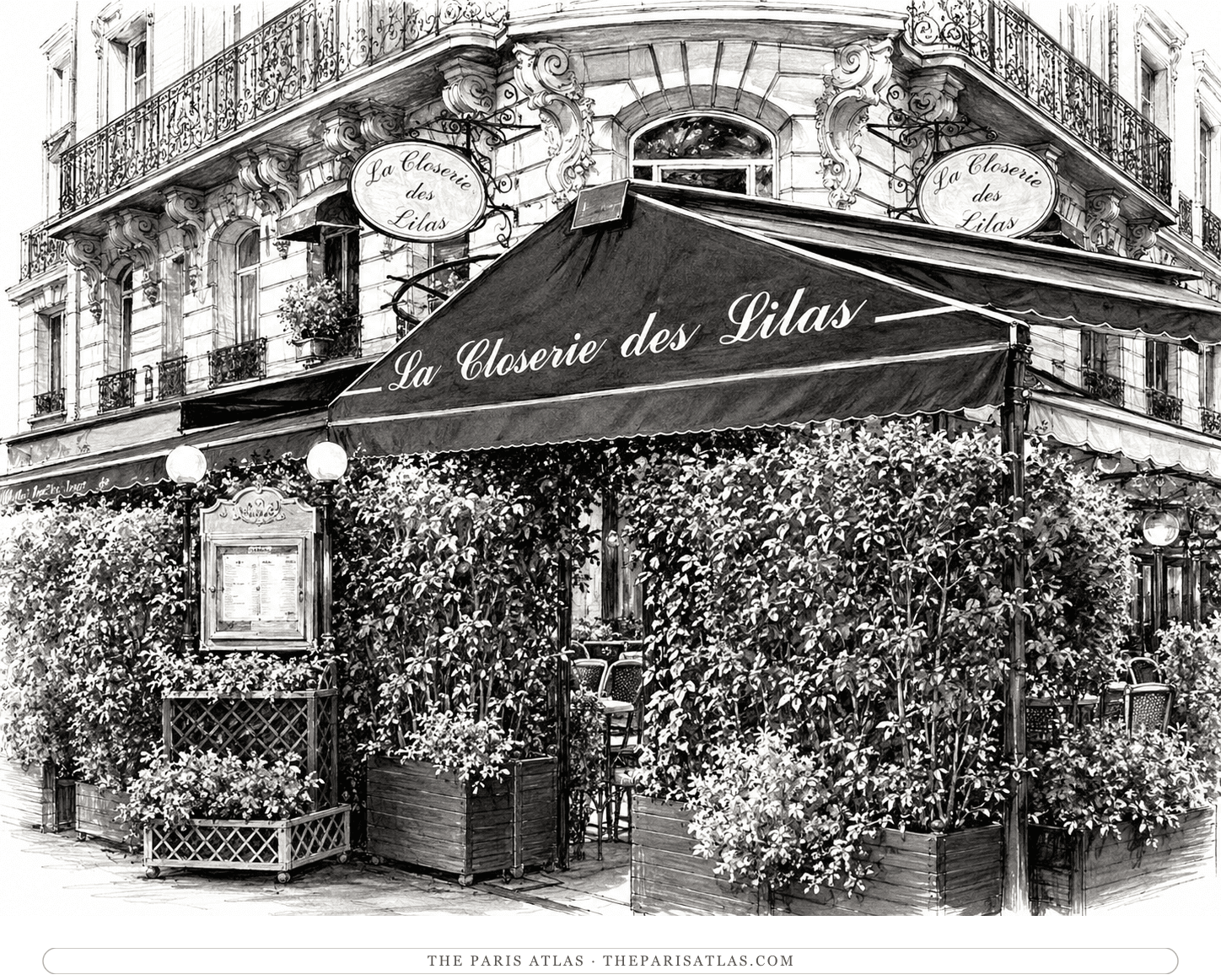
They spent the last year of his life in each other's company: dinners at the Closerie des Lilas in Montparnasse, drives around Paris, conversations that ran late. They had been born on the same day of the year, thirty years apart. Sartre died in April 1980.[4]

The later books, and the courts

The novels continued: A Certain Smile in 1956, Aimez-vous Brahms.. in 1959, La Chamade in 1965, and around twenty in all, several of them filmed. Château en Suède, her first play, won the Prix du Brigadier in 1960. In 1985 she received the Prix Albert de Monaco for her work as a whole.[1]

The 1990s took most of the people closest to her — Peggy Roche in 1991, Robert Westhoff, her brother Jacques, her parents, and her friend Jacques Chazot. She was convicted of drug offences and pursued for unpaid tax, and in 2002 was charged in the Elf affair, the corruption case surrounding the French state oil company.[1]

Honfleur

Françoise Sagan died of a pulmonary embolism in hospital at Honfleur, on the Normandy coast, on 24 September 2004. She was sixty-nine. She was buried at Cajarc, the village in the Lot where she was born, beside Peggy Roche.[3]

She had written her own epitaph six years earlier, in her last book. It records that she appeared in 1954 with a thin novel that caused a worldwide scandal, and that her disappearance, after a life and a body of work equally agreeable and hastily made, was a scandal only to herself.[5]

Life events

  1. 1935

    Born Françoise Quoirez on 21 June at Cajarc in the Lot, the youngest of three children of a prosperous industrialist.

    — Biographie — Françoise Sagan

  2. 1952

    Passes her baccalauréat and enrols at the Sorbonne, where she does not complete the year.

    — Biographie — Françoise Sagan

  3. 1953

    Writes Bonjour Tristesse at eighteen, in two or three months of two or three hours a day.

    — Blair Fuller and Robert B. Silvers, Françoise Sagan, The Art of Fiction No. 15 (1956)

  4. 1954

    René Julliard publishes Bonjour Tristesse in March. It wins the Prix des Critiques from a jury including Jean Paulhan and Georges Bataille, and sells in the millions.

    — Biographie — Françoise Sagan

  5. 1954

    François Mauriac, writing in Le Figaro, calls her a charming little monster. The phrase attaches to her for the rest of her career.

  6. 1956

    Publishes her second novel, A Certain Smile, dedicated to Florence Malraux.

    — Biographie — Françoise Sagan

  7. 1956

    Is interviewed in Paris by Blair Fuller and Robert B. Silvers for The Paris Review's Art of Fiction series, at twenty.

    — Blair Fuller and Robert B. Silvers, Françoise Sagan, The Art of Fiction No. 15 (1956)

  8. 1957

    Loses control of her Aston Martin on a road near Milly-la-Forêt in April. The car rolls, her passengers are thrown clear, and a priest gives her the last rites while she is unconscious.

  9. 1957

    Becomes dependent on Palfium 875, the morphine derivative prescribed for the pain, and keeps a journal of the nine days she spends in a clinic withdrawing from it.

  10. 1958

    Marries the publisher Guy Schoeller, twenty years her senior.

    — Biographie — Françoise Sagan

  11. 1958

    Otto Preminger releases his film of Bonjour Tristesse, with Jean Seberg as Cécile and David Niven as her father.

    — Biographie — Françoise Sagan

  12. 1959

    Publishes Aimez-vous Brahms.., filmed the following year.

  13. 1959

    Wins enough in a night at the Deauville casino, at twenty-four, to buy the manor of Le Breuil at Équemauville near Honfleur, which she keeps for the rest of her life.

    — Biographie — Françoise Sagan

  14. 1960

    Her first play, Château en Suède, wins the Prix du Brigadier.

    — Biographie — Françoise Sagan

  15. 1960

    Divorces Guy Schoeller.

    — Biographie — Françoise Sagan

  16. 1960

    Signs the Manifesto of the 121, supporting the right of French conscripts to refuse to serve in the Algerian war.

    — Françoise Sagan — biographical entry

  17. 1962

    Marries the American Robert Westhoff. Their son, Denis Westhoff, is born the same year.

    — Biographie — Françoise Sagan

  18. 1963

    The marriage to Robert Westhoff ends.

  19. 1964

    Julliard publishes Toxique, the journal of her withdrawal, illustrated in Chinese ink by the painter Bernard Buffet.

  20. 1965

    Publishes La Chamade, filmed in 1968.

    — Biographie — Françoise Sagan

  21. 1971

    Signs the Manifesto of the 343, in which women state publicly that they have had abortions, then a criminal offence in France.

    — Françoise Sagan — biographical entry

  22. 1974

    Supports François Mitterrand's presidential candidacy.

    — Françoise Sagan — biographical entry

  23. 1976

    Begins living with the fashion stylist Peggy Roche. The relationship lasts fifteen years.

    — Biographie — Françoise Sagan

  24. 1979

    Publishes an open letter to Jean-Paul Sartre, whom she has admired since adolescence and never met. Sartre, by then blind, has it read aloud to him and asks to meet her.

    — A Certain Sagan

  25. 1980

    Spends the last year of Sartre's life in his company — dinners at the Closerie des Lilas, drives around Paris, conversations that run late. He dies in April.

    — A Certain Sagan

  26. 1984

    Publishes Avec mon meilleur souvenir, a book of autobiographical pieces.

    — Biographie — Françoise Sagan

  27. 1985

    Receives the Prix Albert de Monaco for her work as a whole.

    — Biographie — Françoise Sagan

  28. 1990

    Robert Westhoff dies.

    — Biographie — Françoise Sagan

  29. 1991

    Peggy Roche dies. Sagan loses her brother Jacques, her parents and her friend Jacques Chazot across the same decade.

    — Biographie — Françoise Sagan

  30. 1998

    Publishes Derrière l'épaule, her last book, in which she writes her own epitaph.

    — Biographie — Françoise Sagan

  31. 2002

    Is charged in the Elf affair, the corruption case surrounding the French state oil company.

    — Biographie — Françoise Sagan

  32. 2004

    Dies of a pulmonary embolism in hospital at Honfleur on 24 September, aged sixty-nine, heavily in debt. She is buried at Cajarc, beside Peggy Roche.

    — Françoise Sagan — biographical entry

Françoise Sagan quotes

Verbatim, as recorded by the witnesses of the era — sources on every quotation.

Art must take reality by surprise.
— Françoise Sagan, interviewed by Blair Fuller and Robert B. Silvers, The Paris Review, issue 14, Autumn 1956
The illusion of art is to make one believe that great literature is very close to life, but exactly the opposite is true. Life is amorphous, literature is formal.
— Françoise Sagan, interviewed by Blair Fuller and Robert B. Silvers, The Paris Review, issue 14, Autumn 1956
Instead of leaving for Chile with a band of gangsters, one stays in Paris and writes a novel. That seems to me the great adventure.
— Françoise Sagan, interviewed by Blair Fuller and Robert B. Silvers, The Paris Review, issue 14, Autumn 1956
All 7 Françoise Sagan quotes

People Françoise Sagan Knew

Relationships with other people, with sources for each connection.

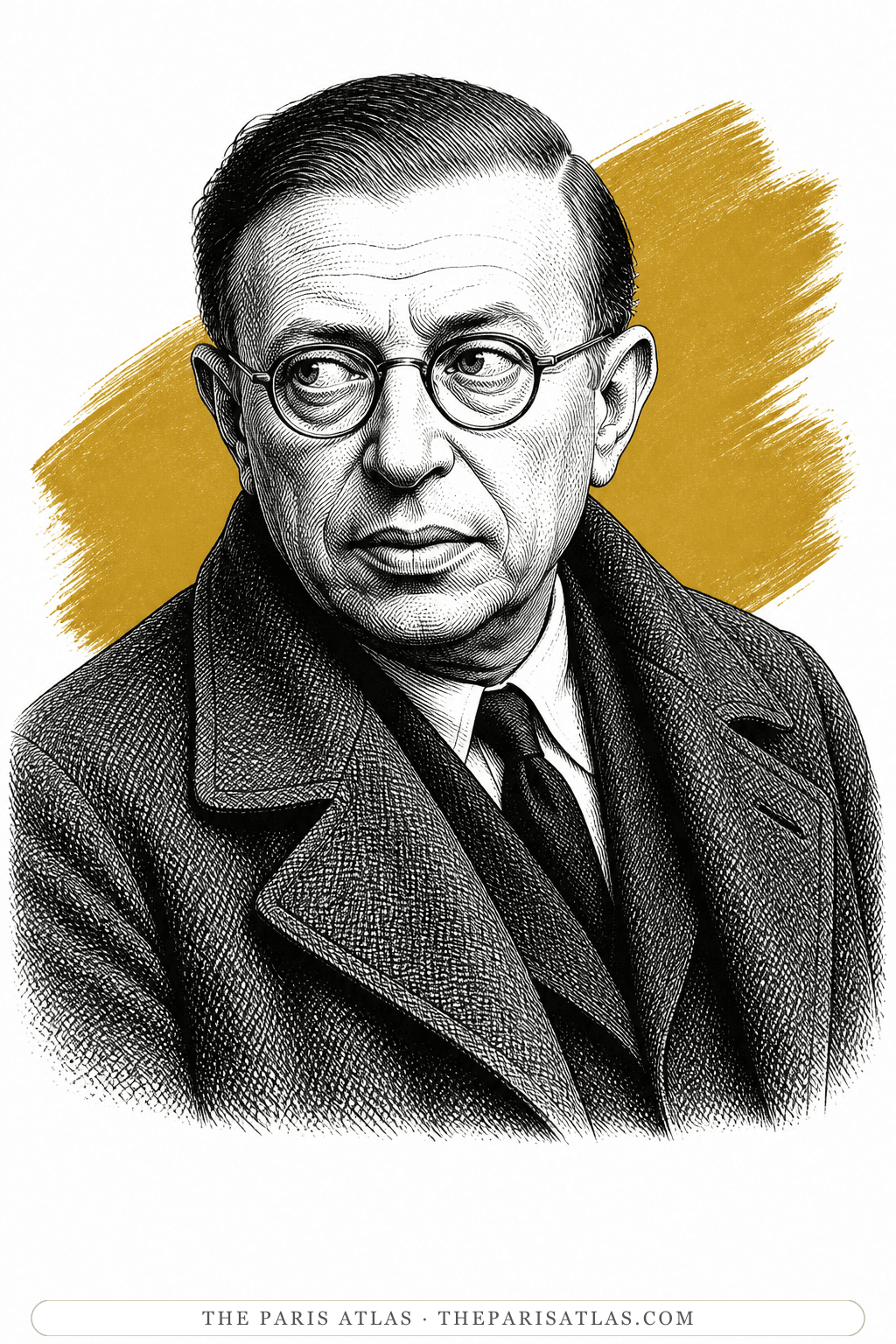
Illustrated portrait of Jean-Paul Sartre

Jean-Paul Sartre

  • Philosopher
  • Author
  • Playwright
  • +1

Met · 1979–1980

Sagan had admired Sartre since adolescence without meeting him. She published an open letter to him in 1979; Sartre, by then blind, had it read aloud and asked to meet her. They spent the last year of his life in each other's company until his death in April 1980.

— A Certain Sagan

Books by Françoise Sagan

Cover of Bonjour Tristesse by Françoise Sagan

Modernist fiction

Françoise Sagan’s brief, sunlit 1954 debut about a seventeen-year-old girl whose jealousy turns an easy Riviera summer into something irreversible.

4.5
Cover of A Certain Smile by Françoise Sagan

Modernist fiction

A young Paris student agrees to a temporary affair and learns that emotional detachment cannot be guaranteed in advance.

4.1

Françoise Sagan’s Places

The cataloged places connected to Françoise Sagan — through the books, and through the documented record.

Places you can enter today appear first, followed by addresses to see from outside and sites that have vanished.

Questions about Françoise Sagan

Who was Françoise Sagan?

A French novelist and playwright, born Françoise Quoirez in 1935 and dead in 2004. She published her first novel, Bonjour Tristesse, at eighteen, won the Prix des Critiques with it, and wrote around twenty novels along with plays, song lyrics and screenplays over the next fifty years.

What is Bonjour Tristesse about?

Cécile, seventeen, is spending the summer on the Mediterranean coast with her widowed father and his young mistress. An older woman, Anne, arrives and begins to impose order on the household, and Cécile sets out to break up the engagement. The plan works better than she intended.

How old was Françoise Sagan when she wrote Bonjour Tristesse?

Eighteen. She wrote it in 1953, after failing her first year at the Sorbonne, in two or three months of two or three hours a day. Julliard published it in March 1954, when she was still eighteen.

Why was Bonjour Tristesse a scandal?

Not for its style, which critics admired, but because its teenage narrator has a sexual life, expresses no guilt about it, and is not punished by pregnancy or marriage before the book ends. France in 1954 was a decade away from the contraceptive pill. The novelist François Mauriac called its author a charming little monster in Le Figaro.

Where does the name Sagan come from?

From Marcel Proust. In Search of Lost Time has a Princesse de Sagan among its aristocratic characters, and Françoise Quoirez took the name for the cover of her first book. The title of that book came from a poem by Paul Éluard, "À peine défigurée", which greets sadness by name.

What happened in Françoise Sagan's car crash?

In April 1957, at twenty-one, she lost control of her Aston Martin on a road near Milly-la-Forêt, south of Paris. The car rolled and her passengers were thrown clear. She was gravely injured and a priest gave her the last rites while she was unconscious. She recovered over several months, and became dependent on Palfium 875, the morphine derivative prescribed for the pain.

Was Françoise Sagan friends with Jean-Paul Sartre?

For the last year of his life. In 1979 she published an open letter to him, having admired him since adolescence without ever meeting him. Sartre was blind by then, had the letter read to him, and asked to meet her. They spent his final year having dinners at the Closerie des Lilas and driving around Paris. He died in April 1980.

How did Françoise Sagan die?

Of a pulmonary embolism, in hospital at Honfleur on the Normandy coast, on 24 September 2004. She was sixty-nine and heavily in debt after years of gambling, spending and unpaid tax. She is buried at Cajarc in the Lot, the village where she was born.

Connections and Sources

Françoise Sagan’s connections to people, places, and works, with the sources behind each one.

Frequented · 1979–1980

La Closerie des Lilas

The Montparnasse brasserie where Sagan and Jean-Paul Sartre had dinner through the last year of his life, between drives around Paris and conversations that ran late.

— A Certain Sagan

Met · 1979–1980

Jean-Paul Sartre

Sagan had admired Sartre since adolescence without meeting him. She published an open letter to him in 1979; Sartre, by then blind, had it read aloud and asked to meet her. They spent the last year of his life in each other's company until his death in April 1980.

— A Certain Sagan

References

References

The sources below include biographies, scholarly essays, interviews, and primary materials that informed this page. They reflect both the historical record and ongoing critical conversations about Françoise Sagan and their work.

  1. 1abcdefghiBiographie — Françoise Sagan

    Website
    Françoise Sagan estate
    Used for

    The estate's own biography, used for her family, the publication of Bonjour Tristesse, the marriages, the house at Équemauville and the later losses.

    View source
  2. 2abcFrançoise Sagan, The Art of Fiction No. 15

    Periodical
    The Paris Review, issue 14, 1956
    Used for

    The 1956 interview, given at twenty, two years after Bonjour Tristesse. Every quotation on this page comes from it.

    View source
  3. 3abcdeFrançoise Sagan — biographical entry

    Website
    FemBio Institute for Women's Biographical Research
    Used for

    Biographical entry used for the two manifestos, the partnership with Peggy Roche, and her death and burial.

    View source
  4. 4abA Certain Sagan

    Periodical
    3:AM Magazine
    Used for

    Essay on Sagan, the source for the open letter to Sartre and the year the two spent in each other's company.

    View source
  1. 5↑Françoise Sagan — official author site

    Website
    Françoise Sagan estate
    Used for

    The estate's author site, which carries the epitaph she wrote for herself.

    View source
  2. 6Françoise Sagan, l'éternelle jeunesse de Bonjour tristesse

    Official record
    Institut national de l'audiovisuel, 2024
    Used for

    French broadcast archive on Bonjour Tristesse and its reception.

    View source
  3. 7Bonjour Tristesse and A Certain Smile

    Official record
    Penguin Books UK, 2025
    Used for

    The current English edition pairing Bonjour Tristesse with A Certain Smile.

    View source
i
Why these sources are here

These references anchor the page in the documented record and in the scholarly conversations around Françoise Sagan. Every claim on this page traces back to one or more of the works listed here.

Explore more resources
Browse all authors