The Paris AtlasCharting the artists, works, and places worth returning to.
  • Author
  • Poet
· Scottish · 1918–2006

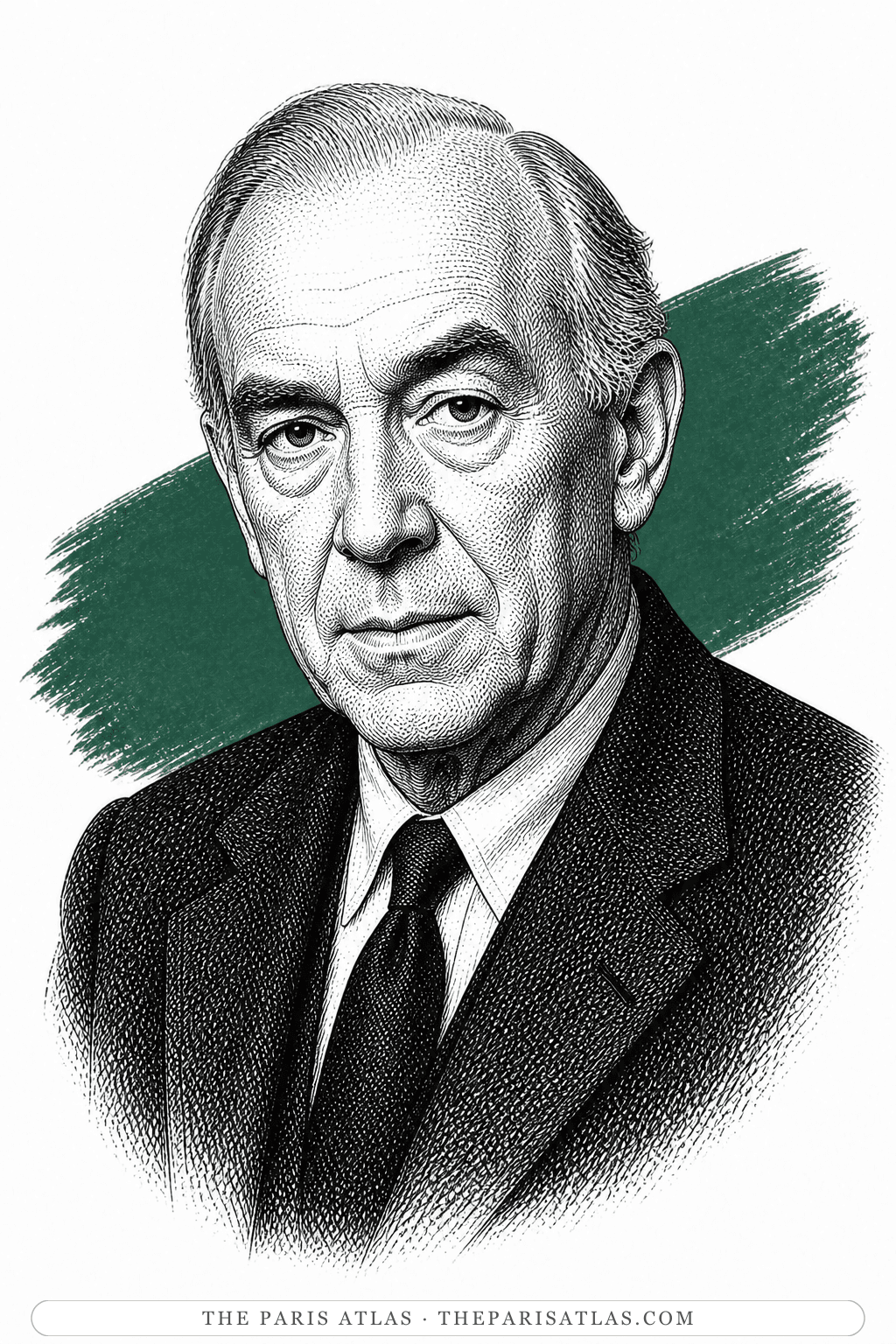
Muriel Spark

Scottish novelist known for cool, exact, darkly comic stories in which catastrophe arrives through controlled prose.

1 book on our shelves

Details

Lived
1918–2006
Born
1 February 1918
Birthplace
Edinburgh, Scotland
Birth name
Muriel Sarah Camberg
Died
13 April 2006 · aged 88
Place of death
Oliveto, Tuscany, Italy
Nationality
Scottish
Profession
Novelist, short-story writer and poet
Major works
Memento Mori, The Prime of Miss Jean Brodie, The Girls of Slender Means, The Mandelbaum Gate, The Driver's Seat, Loitering with Intent
Married
Sidney Oswald Spark · married 1937, separated 1940
Children
Samuel Robin Spark
Roles
AuthorPoet

About Muriel Spark

Scottish novelist of cool, dark comedy, author of The Prime of Miss Jean Brodie

Muriel Spark was a Scottish novelist, short-story writer and poet, born Muriel Sarah Camberg in Edinburgh on 1 February 1918. Across twenty-two novels she wrote a cool, exact, darkly comic prose in which small worlds, a girls' school, a boarding house, a convent, tip without warning into cruelty and death. Her most famous book is The Prime of Miss Jean Brodie (1961), the story of a charismatic Edinburgh schoolteacher and the pupils she shapes and betrays.

Her method was control. Spark told the reader early, in a cold aside, exactly how a character would die, then let the novel move toward it with what looks like detachment and is really precision. She dated her power as a novelist to her 1954 conversion to Roman Catholicism, which she said let her see human existence whole, and to the example of Graham Greene, who backed both the conversion and the young writer.

She left Scotland young, survived a violent early marriage in Southern Rhodesia, worked in wartime intelligence, and spent her later decades in New York, Rome and finally Tuscany, where she lived and worked with the artist Penelope Jardine. Spark was made a Dame in 1993 and died in Tuscany on 13 April 2006, aged 88.[1]
Edinburgh, Rhodesia, and the war, 1918–1944

Muriel Camberg was born in the Bruntsfield district of Edinburgh on 1 February 1918, daughter of a Jewish engineer of Lithuanian descent and an English mother raised Anglican. She was educated at James Gillespie's School for Girls, the model, decades later, for the school in The Prime of Miss Jean Brodie, and took a business-writing course at Heriot-Watt College.[2]

In 1937 she married Sidney Oswald Spark and followed him to Southern Rhodesia, now Zimbabwe. Their son, Robin, was born in 1938, but the marriage was violent, and she left it in 1940. She kept the surname Spark for its writing sound. Returning to Britain in 1944, she took a room at the Helena Club in London, later the model for The Girls of Slender Means, and worked in intelligence for the rest of the war.[2]

Poetry, conversion, and the first novels, 1944–1961

Spark began after the war as a poet and critic, editing the Poetry Review in 1947 and writing studies of Mary Shelley and the Brontës. The turn to fiction came with faith. Baptised in the Church of England in 1953, she was received into the Roman Catholic Church in 1954, a decision she considered crucial to becoming a novelist: it let her, she said, see human existence as a whole. Graham Greene, Evelyn Waugh and others supported her, and Greene helped her financially through the lean years.[2]

Her first novel, The Comforters (1957), a book whose heroine realises she is a character in a novel, was acclaimed at once. Memento Mori (1959), in which elderly characters receive anonymous phone calls saying only remember you must die, and The Ballad of Peckham Rye (1960) followed. Then came The Prime of Miss Jean Brodie (1961), the story of an Edinburgh teacher's grip on her chosen girls, told with flashforwards that reveal each fate in advance. It made her famous, and became a play, a 1969 film that won Maggie Smith an Oscar, and a byword.[2]

New York, Rome, and Tuscany, 1962–2006

Success took her out of Britain. Spark lived for some years in New York, writing for The New Yorker, then moved to Rome. In the early 1970s she settled in the Tuscan village of Oliveto with the artist and sculptor Penelope Jardine, her companion for the rest of her life. She kept writing at a steady clip: The Mandelbaum Gate (1965), which won the James Tait Black Memorial Prize, the icy The Driver's Seat (1970), and Loitering with Intent (1981), three of them Booker-shortlisted.[3]

Her relationship with her son, Robin, raised in Scotland by her parents, was distant and finally broke down publicly in the 1990s over a dispute about whether her mother had been Jewish. Spark disinherited him, leaving her whole estate to Jardine. She was made a Dame in 1993, received eight honorary doctorates, and kept a vast personal archive now held by the National Library of Scotland. She died at Oliveto in Tuscany on 13 April 2006, aged 88, and is buried nearby.[3]

How Spark wrote

Spark's signature is the cold flashforward. Early in a novel she will tell you, in a flat clause, exactly how and when a character dies, then narrate toward that fixed point with apparent serenity, so that the reader watches events close like a trap. The prose is short, exact and withholding, comic and cruel at once, and the books are correspondingly brief; she rarely wrote long.

Underneath the control is her Catholicism. Spark said she could only see life whole, as a novelist must, after her conversion, and her narrators watch their characters with something like a God's-eye foreknowledge, knowing the end from the beginning. Small enclosed communities, a school, a boarding house, a convent, a retirement circle, are her recurring theatres, and the model of Graham Greene's morally serious, tightly plotted fiction stands behind her own.[2]

Reception

Spark is regarded as one of the finest British novelists of the postwar era; The Times ranked her eighth on its 2008 list of the fifty greatest British writers since 1945. The Prime of Miss Jean Brodie is her monument, but the whole run of short, exact novels is admired for a technical control few match. She won the James Tait Black Prize, the David Cohen Prize and the Golden PEN Award, and was shortlisted for the Booker three times.[3]

Her influence reaches oddly wide: John Lydon named his post-Sex Pistols band Public Image Ltd after her novel The Public Image. She guarded her own story carefully, writing the memoir Curriculum Vitae and refusing to authorise Martin Stannard's biography, which appeared only after her death. The archive she kept for sixty years has made her one of the best-documented writers of her century.[1]

Life events

  1. 1918

    Born Muriel Sarah Camberg in Edinburgh on 1 February.

    — Muriel Spark

  2. 1937

    Marries Sidney Oswald Spark and moves to Southern Rhodesia; their son Robin is born the next year.

    — Muriel Spark

  3. 1944

    Returns to Britain and works in wartime intelligence.

    — Muriel Spark

  4. 1947

    Becomes editor of the Poetry Review, one of the few female editors of the time.

    — Muriel Spark

  5. 1954

    Received into the Roman Catholic Church, a turn she called crucial to becoming a novelist.

    — Muriel Spark

  6. 1957

    Publishes her first novel, The Comforters, to critical acclaim.

    — Muriel Spark

  7. 1961

    The Prime of Miss Jean Brodie makes her internationally famous.

    — Dame Muriel Spark

  8. 1965

    The Mandelbaum Gate wins the James Tait Black Memorial Prize.

    — Muriel Spark

  9. 1970

    Publishes the coldly experimental The Driver's Seat, later her Lost Man Booker shortlisting.

    — Muriel Spark

  10. 1993

    Made a Dame Commander of the Order of the British Empire.

    — Muriel Spark

  11. 2006

    Dies at Oliveto in Tuscany on 13 April, aged 88, and is buried nearby.

    — Muriel Spark

Who Inspired Muriel Spark

People whose work inspired Muriel Spark. They did not necessarily meet or know one another.

Illustrated portrait of Graham Greene

Graham Greene

Graham Greene was both a model and a practical patron. As the leading English Catholic novelist he stood behind Spark's own path, supporting her 1954 conversion to Catholicism, which she called crucial to becoming a novelist, and helping her financially in her lean early years. His example of moral seriousness inside tautly plotted fiction shaped the darkly comic Catholic novels she began with The Comforters in 1957.

— Muriel Spark

Books by Muriel Spark

Cover of The Driver’s Seat by Muriel Spark

Modernist fiction

A woman enters a foreign city, makes sure strangers remember her, and searches for the man she has chosen to end her life.

4.4

Questions about Muriel Spark

Who was Muriel Spark?

Muriel Spark (1918–2006) was a Scottish novelist, short-story writer and poet, one of the leading British novelists of the postwar era. Born in Edinburgh, she wrote twenty-two novels of cool, dark comedy, most famously The Prime of Miss Jean Brodie (1961). She was made a Dame in 1993 and spent her later life in Italy. The Times ranked her among the greatest British writers since 1945.

What is The Prime of Miss Jean Brodie about?

It is the story of Jean Brodie, a charismatic and unconventional teacher at a girls' school in 1930s Edinburgh, and the small group of favourite pupils, her set, whom she moulds in her own image. The results turn dangerous, taking in her flirtation with fascism and a betrayal that ends her career. Spark based the school on her own, James Gillespie's, and told the story with characteristic flashforwards that reveal the girls' fates in advance. The 1969 film won Maggie Smith an Academy Award.

Why did Muriel Spark convert to Catholicism?

Spark was received into the Roman Catholic Church in 1954, having been baptised in the Church of England the year before, and she considered the conversion crucial to becoming a novelist. She said it was only afterward that she could see human existence as a whole, as a novelist must. Graham Greene and Evelyn Waugh, the leading English Catholic novelists, supported the decision, and her fiction from The Comforters (1957) onward is shaped by a narrator's near-omniscient view of her characters' fates.

What is distinctive about Spark's writing style?

Control and the cold flashforward. Spark often tells the reader early, in a flat aside, exactly how a character will die, then narrates toward that fixed end with apparent detachment, so the story closes like a trap. Her prose is short, precise and withholding, comic and cruel at once, and her novels are correspondingly brief. She favours small enclosed communities, a school, a convent, a boarding house, as the settings for sudden catastrophe.

How did Muriel Spark die?

She died on 13 April 2006 at Oliveto, in Tuscany, Italy, at the age of 88, and is buried in the cemetery of Sant'Andrea Apostolo nearby. She had lived in Tuscany since the early 1970s with the artist Penelope Jardine, to whom she left her entire estate. She had continued publishing novels almost to the end, her last, The Finishing School, appearing in 2004.

Did Muriel Spark have a good relationship with her son?

No; they were long estranged. Robin Spark was raised largely by his grandparents in Scotland, and the distance became a public rift in the 1990s over a dispute about whether Spark's mother had been Jewish, which touched on Robin's own Jewish identity. Spark disinherited her son and left everything to her companion Penelope Jardine. Asked near the end of her life whether she would see him again, she replied that she knew by now how best to avoid him.

Connections and Sources

Muriel Spark’s connections to people, places, and works, with the sources behind each one.

Influenced by

Graham Greene

Graham Greene was both a model and a practical patron. As the leading English Catholic novelist he stood behind Spark's own path, supporting her 1954 conversion to Catholicism, which she called crucial to becoming a novelist, and helping her financially in her lean early years. His example of moral seriousness inside tautly plotted fiction shaped the darkly comic Catholic novels she began with The Comforters in 1957.

— Muriel Spark

References

References

The sources below include biographies, scholarly essays, interviews, and primary materials that informed this page. They reflect both the historical record and ongoing critical conversations about Muriel Spark and their work.

  1. 1abMuriel Spark Archive

    Website
    National Library of Scotland
    Used for

    The National Library of Scotland's account of the Spark archive.

    View source
  2. 2abcdeDame Muriel Spark

    Website
    Encyclopaedia Britannica
    Used for

    Encyclopaedia Britannica's biography, used to confirm dates and the career outline.

    View source
  1. 3abcMuriel Spark, Novelist Who Wrote 'The Prime of Miss Jean Brodie,' Dies at 88

    Periodical
    The New York Times, 2006
    Used for

    The New York Times obituary of April 2006, used for the death and the career summary.

    View source
  2. 4Muriel Spark

    Website
    Wikipedia
    Used for

    Reference article cross-checked for the biography, the conversion, the novels, the honours, and the death.

    View source
i
Why these sources are here

These references anchor the page in the documented record and in the scholarly conversations around Muriel Spark. Every claim on this page traces back to one or more of the works listed here.

Explore more resources
Browse all authors