
Giovanni's Room
Another major novel about male desire and social shame, but with a far more tragic ending.
Read our take
by E. M. Forster
A respectable Englishman stops treating his love for men as an illness and chooses a dangerous but honest future.
Maurice Hall grows up expecting school, Cambridge, work, marriage, and respectability. His love first for Clive Durham and then for Alec Scudder forces him to decide whether fear will define the rest of his life.
Maurice Hall grows up expecting the standard future of an upper-middle-class Englishman: school, Cambridge, work, marriage, and respectability. What he cannot make fit into that future is his attraction to men.[1]
At Cambridge he falls in love with Clive Durham. Their relationship is intellectually and emotionally intense, but Clive insists on keeping it nonsexual. Later Clive decides he has become heterosexual, marries Anne Woods, and expects Maurice to adapt as though their shared past can simply be filed away.[1]
Maurice cannot. He seeks medical and psychological ‘cures,’ then meets Alec Scudder, a gamekeeper on Clive’s estate. The relationship with Alec forces Maurice to choose between the respectable life available to him and a socially dangerous life built around what he actually wants.[1]
Maurice’s childhood and school years establish his discomfort with conventional accounts of sex and masculinity. At Cambridge he meets Clive Durham and gradually recognizes that his feelings for men are not a passing confusion.[1]
Clive declares his love for Maurice, and the two form a close relationship. Influenced by classical ideals, Clive insists that their bond should remain largely spiritual. Maurice wants greater physical intimacy but accepts the arrangement because it offers a name for feelings he had been taught to fear.[1]
After an illness and a trip abroad, Clive announces that he has changed and is now attracted to women. He marries Anne Woods. Maurice is devastated and feels abandoned inside a society that gives Clive an easy route back to respectability.[1]
Maurice seeks help from doctors, including the dismissive Dr. Barry and later the hypnotist Lasker Jones, hoping to eliminate his homosexuality. The attempts fail. During visits to Clive’s country estate, Penge, Maurice encounters Alec Scudder, the young gamekeeper.[1]
Maurice and Alec begin a sexual relationship. Their class difference, fear of blackmail, and Alec’s planned emigration create distrust. After a painful confrontation, each recognizes that the other is risking something real rather than merely seeking advantage.[1]
Alec gives up his passage abroad. Maurice gives up the respectable future that has never fitted him. Their decision does not make English society safer, but it makes an honest shared life possible.[1]
Alec decides not to emigrate. He and Maurice meet at the boathouse on the Penge estate, where it becomes clear that they intend to disappear from conventional society and build a life together.
Maurice visits Clive one final time and tells him about Alec. Clive is shocked and cannot fully understand a choice that rejects the class system, marriage, and public respectability he has embraced.
The novel ends with Maurice leaving Clive’s world behind. Forster deliberately gives his gay protagonist a happy ending, which he considered essential to the book’s emotional and political purpose.
Maurice’s central journey is not discovering desire but ceasing to treat it as a defect. The change is difficult because nearly every institution around him offers concealment or ‘cure’ instead of a livable identity.
Mr Ducie’s lesson on the beach turns on a contradiction between speech and action. He presents sex as something that need not be mysterious, then panics that a passing woman might see his diagrams in the sand. Maurice’s correct answers have already concealed his lack of understanding; now the teacher’s panic exposes the shame beneath the confident explanation. The rising tide saves Ducie from embarrassment, but not from the boy’s momentary contempt. Maurice briefly judges the adult authority instead of simply accepting its account of his future.
Clive chooses the socially approved life of marriage, property, and public standing. Maurice eventually refuses it, accepting insecurity rather than continuing to perform a version of himself designed for other people.
Alec is not only male but working class. Maurice’s choice crosses the social boundary that structures Penge and requires him to give up the authority his own class would otherwise grant him.
The doctors embody a society that treats Maurice’s identity as illness. Dr. Barry dismisses him, while Lasker Jones is more humane but still offers treatment aimed at changing the patient rather than the hostile world around him.
Clive’s transformation feels to Maurice like abandonment because their intimacy had seemed to promise a shared opposition to convention. Clive experiences his new life as correction; Maurice experiences it as the erasure of their past.
Forster insisted that Maurice and Alec survive together. The ending is a refusal of the tragic convention that queer characters must be punished, cured, separated, or killed.
The boathouse reunion turns on a message Maurice has not received. Alec assumes that his telegram brought Maurice there; Maurice has instead followed their earlier promise without knowing whether Alec will keep it. The silence outside briefly makes that trust look mistaken. Inside, Alec is asleep, and his tired, affectionate greeting replaces Maurice’s fear with the ordinary fact of his presence. The scene makes their agreement tangible through rest and touch, not a grand declaration witnessed by society. They have found each other without first securing permission or certainty.
Forster’s prose is clear, ironic, psychologically observant, and often gently comic. He exposes the absurdity of English manners and institutions without losing sympathy for people trapped inside them.
The novel can feel less formally polished than Howards End or A Passage to India because Forster revised it over decades but refused publication during his lifetime. Its emotional directness, especially around Maurice’s fear and hope, is part of its force.
The posthumous textual history matters. Penguin Classics editions commonly use the Abinger text prepared in relation to Forster’s manuscripts; notes and introductions help explain his revisions and his insistence on a happy ending.
The major screen adaptation is the 1987 Merchant Ivory film directed by James Ivory and starring James Wilby, Hugh Grant, and Rupert Graves. It is influential and broadly faithful, but its character emphases should not be used to overwrite details in Forster’s text.
Forster makes a shared future—not punishment or cure—the necessary conclusion of Maurice’s growth.
Cambridge, medicine, marriage, and the country estate all teach Maurice to hide before he chooses another life.
Choosing Alec means crossing not only a sexual boundary but the hierarchy that gives Maurice social power.

A conventional upper-middle-class Englishman who gradually accepts that he is gay and chooses Alec over social respectability.

The young gamekeeper at Penge who becomes Maurice’s lover and chooses him instead of emigration.

Maurice’s Cambridge love, who later claims heterosexuality, marries Anne, and returns fully to conventional upper-class life.

Clive’s socially composed wife and the heterosexual domestic future he chooses after ending his relationship with Maurice.

The hypnotist Maurice consults in an attempt to change his sexuality, who is more candid than the other medical authorities.

The conventional family doctor whose dismissive response represents the prejudice Maurice encounters in medicine.
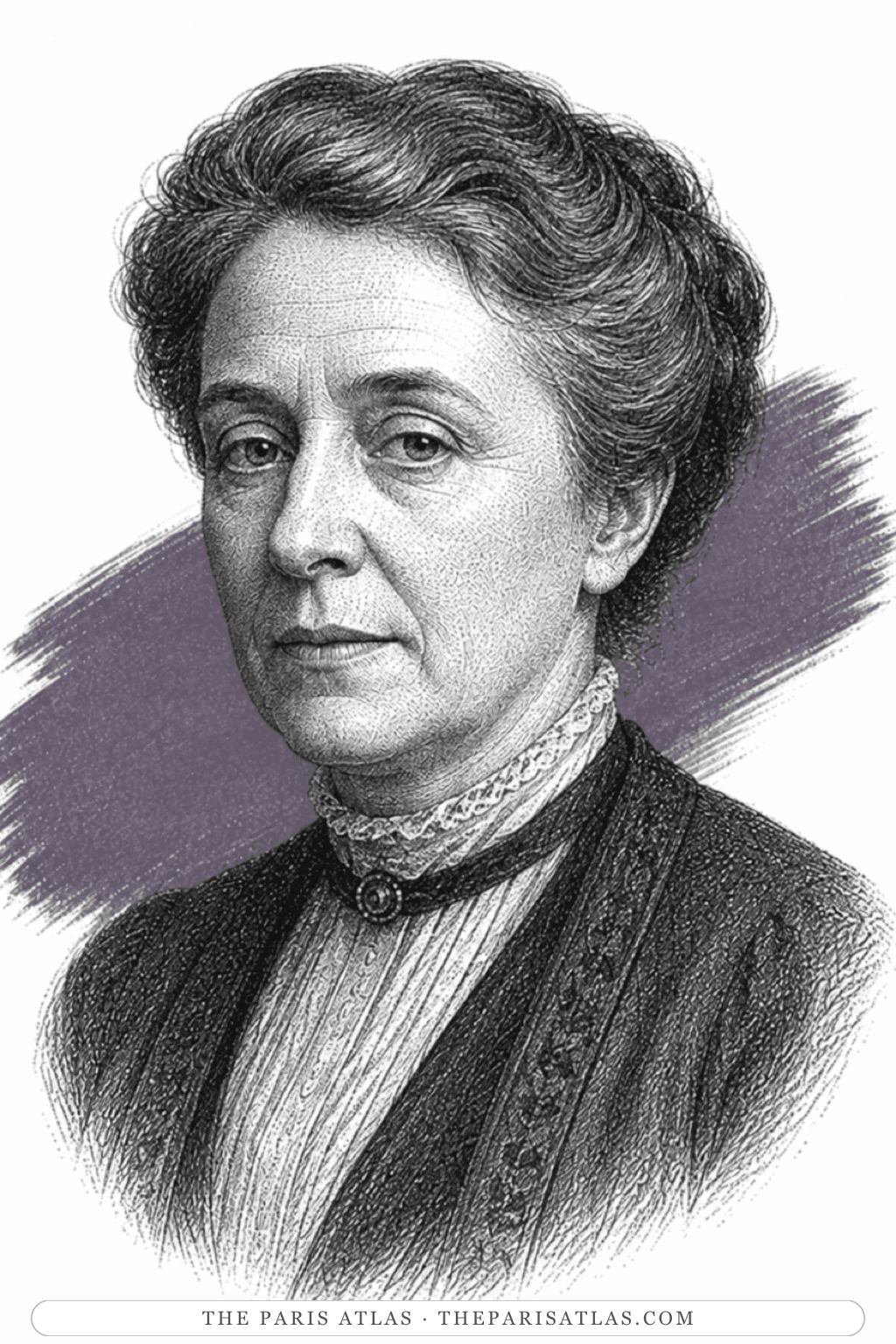
Maurice’s respectable mother, connected to the family expectations and domestic future he eventually leaves.
1913–1914
Forster writes the main body of Maurice and completes a version in 1914.
1914 onward
He revises the novel repeatedly but refuses publication during his lifetime.
1970
E. M. Forster dies.
1971
Edward Arnold publishes Maurice posthumously.
1987
Merchant Ivory releases James Ivory’s film adaptation starring James Wilby, Hugh Grant, and Rupert Graves.

Another major novel about male desire and social shame, but with a far more tragic ending.
Read our take
Another queer classic notable for refusing the expected tragic ending.
Read our take


Desire destabilizes a respectable male life, with a much more morally ambiguous result.
Read our takeMale homosexual acts were criminalized in Britain, and publication could have exposed Forster and the book to severe legal and social consequences.
Yes. The novel is deeply connected to his own experience, although Maurice and the plot are fictional.
Yes. Maurice and Alec choose a life together.
The novel presents Clive’s claim as real within his own account, although readers debate how fully to trust or interpret the change.
Alec Scudder is the gamekeeper on Clive’s estate and Maurice’s eventual partner.
Choosing Alec means Maurice leaves not only heterosexual respectability but also the upper-class hierarchy that has protected him.
Not by modern standards, although its treatment of gay desire was extraordinarily frank for the period in which it was written.
Broadly, but it changes some emphases and characterization. The novel should remain the source for literary details.
Explore authors with a similar voice, perspective, and influence.
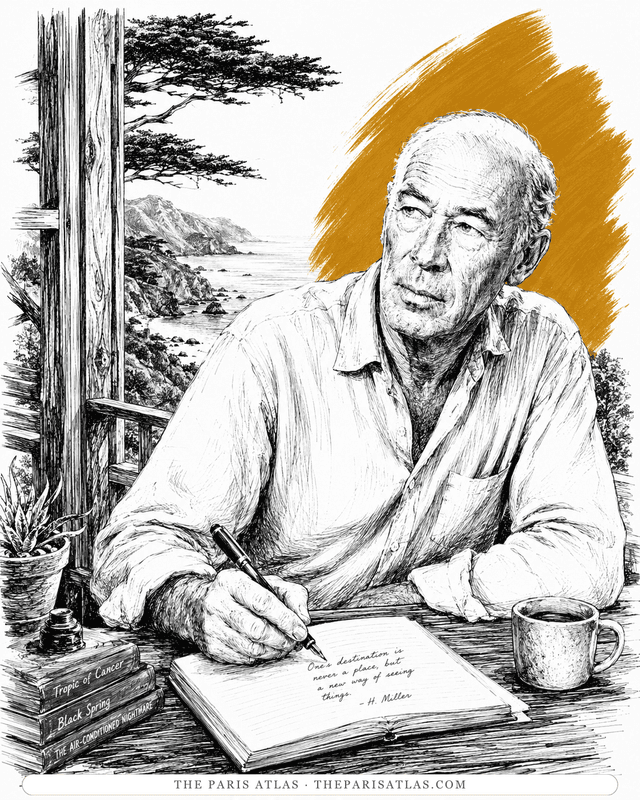
The Brooklyn dropout who arrived in Paris broke at thirty-eight and wrote the exuberant, banned books that ended American censorship.
View author
War correspondent who covered the Spanish Civil War, D-Day, and conflicts across five more decades; Hemingway's third wife, 1940–1945.
View author
The doctor of the Paris slums who wrote the century's blackest, funniest novel — and changed the sound of French prose.
View authorThe sources below include the primary text, editions, scholarship, archival materials, and other records that informed this page. They document Maurice, its publication, and its place in literary history.


New close readings use chapters 1 and 45 of the digital transcription. Its header mistakes the 1914 completion for first publication; it is not used as bibliographic evidence or collated with the Penguin Abinger text.

Publisher biography confirming Forster’s dates and the novel’s 1971 publication.
Edition and plot cross-check.
ISBN and library-catalogue cross-check.
Internet Archive ISBN catalogue used to cross-check the edition and library holdings.
Library of Congress catalogue used to cross-check the bibliographic record.
Film-history source for the Merchant Ivory adaptation.
The primary text is the baseline reference for every book page. Additional references document publication history, interpretation, and historical context where that evidence is available.
 Explore more resources