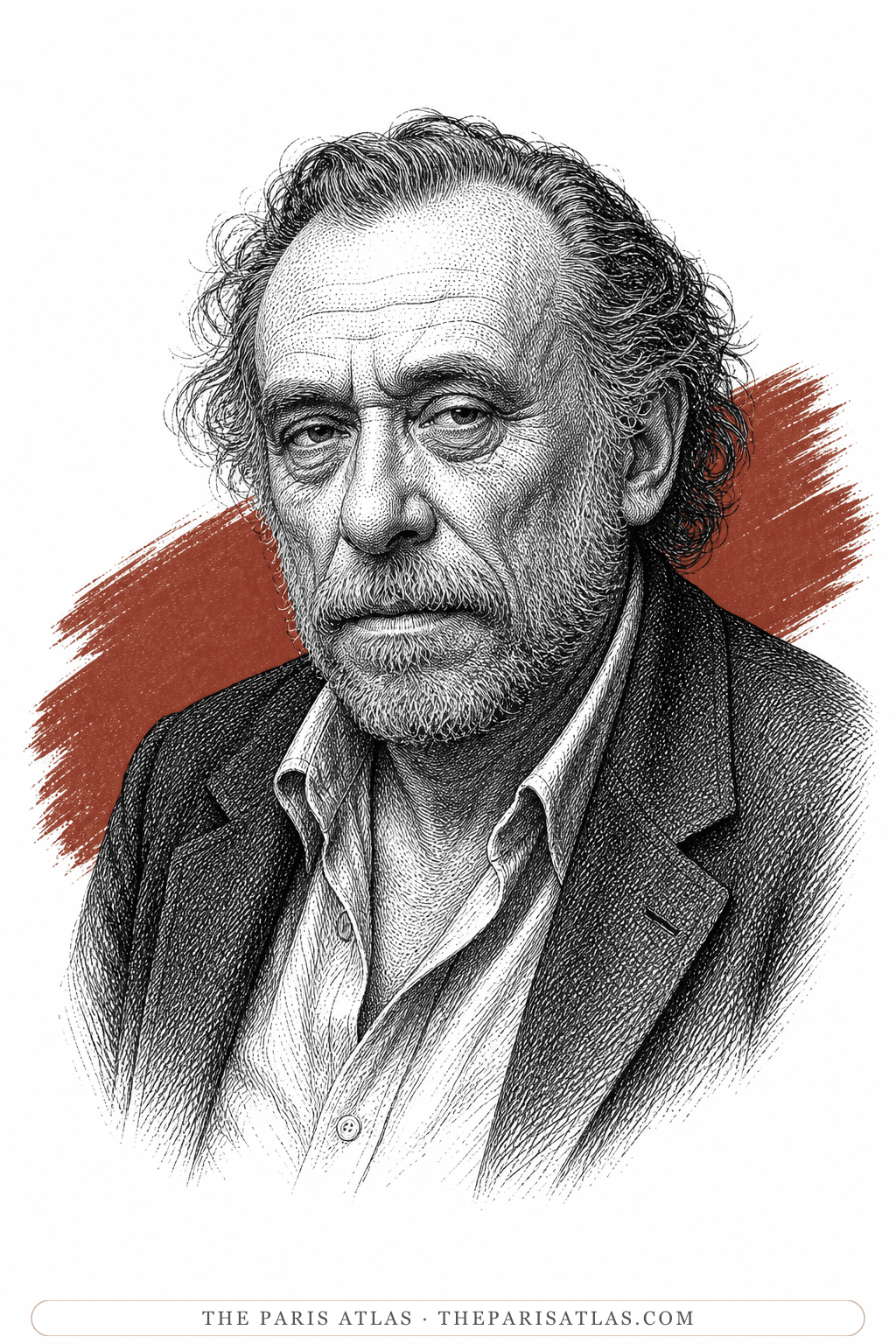

Play the Piano Drunk Like a Percussion Instrument Until the Fingers Begin to Bleed a Bit
The collection before it — the first of the San Pedro three.
Read our take
The poems between Play the Piano Drunk and Ham on Rye, named for the flowering shrub in the San Pedro garden years.
Dangling in the Tournefortia, published by Black Sparrow Press in 1981, collects Charles Bukowski's poems from the turn of the 1980s — after the European fame of 1978, settled in San Pedro, with Ham on Rye a year away. The tournefortia of the title is a flowering shrub: a plant name where earlier titles had rooming houses and terror streets, which is itself a fair summary of how the circumstances had changed. The first edition followed the Black Sparrow pattern of the years — 750 trade copies alongside 350 signed — and the collection has remained in print since. The subjects hold steady against the changed life: the track, the typewriter, the women, the past, now watched from a garden.
The collection continues the line that Play the Piano Drunk opened and War All the Time completed: the poet of poverty auditing his own comfort. Reading the three in order gives the whole San Pedro turn — fame arriving, the settling, and the past refusing to settle with it. This is the middle volume, written while Ham on Rye was taking shape at the same desk.
In “Night School,” the tiny pencil makes an adult compulsory class resemble a childhood lesson. Once the instructor leaves, the students exchange uncertain answers, while one circles every option. These small disruptions undercut the test’s promise of orderly knowledge. The speaker’s perfect score eventually establishes that he has listened, but his beer during the break separates remembered information from changed behavior. His final promotion of himself to class intellectual is consequently double-edged: a triumph over classmates whose confusion he mocks, achieved within a lesson whose practical purpose his own conduct unsettles.
The break changes the poem’s rhythm from overlapping classroom questions to a sequence of observed street movements. Alone outside the shop, the speaker watches a woman approach a car, speak and leave in it; he records an encounter without joining one. On returning, he finds that the other students have become sociable and converts their companionship into a reason for his own solitude. That judgment is his, not the poem’s neutral verdict on the group. His final slouch and sunglasses make the supposedly detached observer conspicuously visible as a performer himself.
The connective collection between Play the Piano Drunk and War All the Time — the settling, recorded as it happened.
A shrub in the title where the early books had terror streets: the changed circumstances, admitted in one word.
The contrast between a more comfortable home and persistent old concerns makes the collection useful for reading Bukowski’s response to success.
1978
The European trips and the move to San Pedro reset the circumstances the poems record.
1981
Black Sparrow Press publishes the collection: 750 trade copies and 350 signed.
1982
Ham on Rye, written across the same window, is published.

The collection before it — the first of the San Pedro three.
Read our take

A 1981 poetry collection by Charles Bukowski, published by Black Sparrow Press — the poems of the early San Pedro years, between Play the Piano Drunk and War All the Time.
A tournefortia is a flowering shrub. The title places the poems in the garden of the settled San Pedro life — a deliberate distance from the rooming-house titles of the 1960s.
The novel was being written during this collection's window and appeared the following year. The poems are the same years, seen from the desk instead of the childhood.
750 trade copies, with 350 numbered and signed alongside — the standard Black Sparrow pattern of those years.
Yes — Ecco keeps it in print under the original Black Sparrow ISBN.
John Fante, the novelist Bukowski discovered in a Los Angeles library and championed until Black Sparrow brought Ask the Dust back into print in 1980.
Explore authors with a similar voice, perspective, and influence.
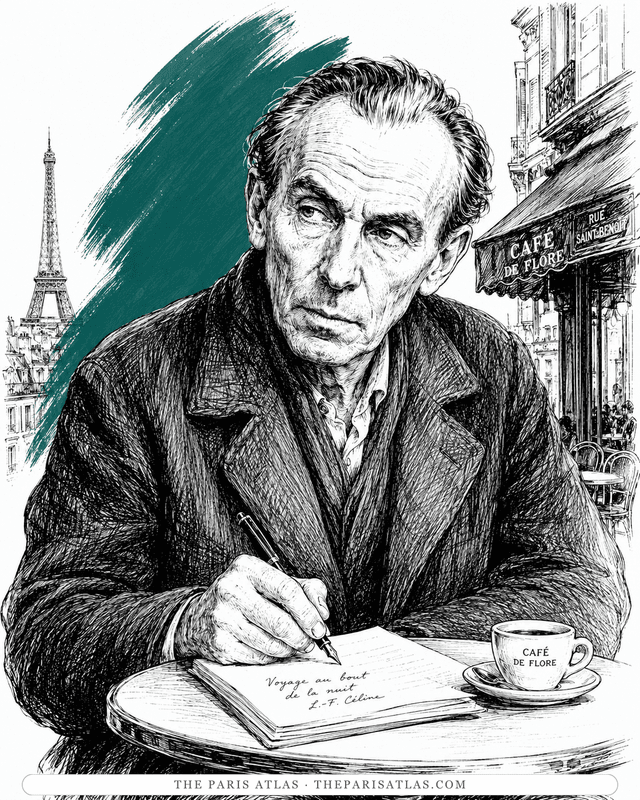
The doctor of the Paris slums who wrote the century's blackest, funniest novel — and changed the sound of French prose.
View author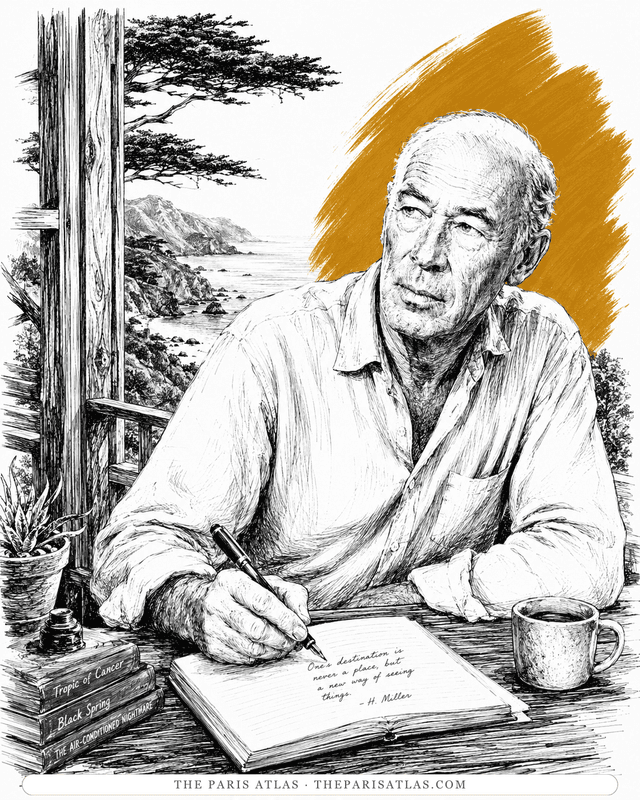
The Brooklyn dropout who arrived in Paris broke at thirty-eight and wrote the exuberant, banned books that ended American censorship.
View author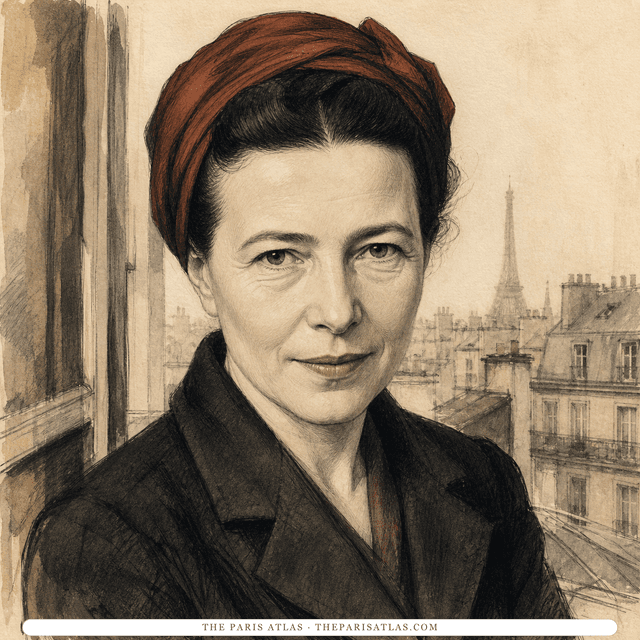
French writer and philosopher whose novels, memoirs, and social analysis examined freedom, gender, responsibility, aging, and the material conditions that shape a life.
View authorThe sources below include the primary text, editions, scholarship, archival materials, and other records that informed this page. They document Dangling in the Tournefortia, its publication, and its place in literary history.

The primary text represented by this page, used for descriptions of the work’s contents and for any quoted passages shown here.

Publication year, edition sizes, and the collection's place in the chronology.
Bibliographic details checked against the checklist.
The San Pedro years in the career arc.

Official record used to verify names, dates, institutional details, or other factual information on this page.
Complete third-party poem transcription; read as literary narration, not as current legal information or independently verified autobiography.
Publisher-distributed contents independently confirms the poem belongs to this collection; the listing is not the poem’s text.
The primary text is the baseline reference for every book page. Additional references document publication history, interpretation, and historical context where that evidence is available.
 Explore more resources