
Frankenstein
Both works examine a parent’s obligations and the isolation that follows a failed family bond.
Read our take
by Mary Shelley
A secluded young woman writes the history she has been unable to tell her only friend.
From a cottage on an English heath, twenty-year-old Mathilda addresses a final account of her life to the poet Woodville. She recalls a lonely childhood, her father’s return after sixteen years away, and his devastating confession of incestuous desire. Written in 1819 but unpublished until 1959, the novella follows her grief, secrecy and difficult attempt to accept friendship.
Mathilda has grown up with an emotionally distant aunt beside Loch Lomond in Scotland. Books, music and imagined meetings with her absent father supply the affection missing from her daily life. His return seems at first to fulfill those hopes.
When her father becomes withdrawn and angry, Mathilda presses him to explain. His confession destroys her sense of safety. She repeatedly blames herself for demanding the truth, but that self-accusation belongs to her distressed account. She is not responsible for his desire or conduct.
The later chapters bring her into friendship with Woodville, a poet grieving his fiancée. He listens without forcing her to reveal her history. Their conversations ask what companionship can offer when one person’s anguish remains largely hidden from the other.
Mathilda’s mother, Diana, dies shortly after her birth. Her unnamed father leaves her with his older half-sister and travels abroad. He returns when Mathilda is sixteen, and their early happiness gives way to his jealousy when a young man begins to court her. At the family home in Yorkshire, he finally tells her that he loves her with a desire he recognizes as forbidden.
Mathilda recoils from the confession and wishes for a separation that might make a safe reunion possible. Her father leaves a letter and departs. Fearing that he intends suicide, she follows with the steward Gaspar, but arrives too late to save him from drowning.
After recovering from a fever, Mathilda makes her relatives believe that she too has died. The text withholds the practical details of that deception. She retreats to a remote cottage, where Woodville eventually becomes her companion. When she proposes that they die together, he refuses and stays to comfort her.
Woodville leaves to attend his sick mother. During his absence, Mathilda becomes ill after spending a cold, wet night outside. She expects to die and completes the account addressed to him, while concealing the seriousness of her condition in her ordinary correspondence.
Her farewell imagines death as a release and a reunion with her father. Those hopes express her troubled state of mind. The narrative ends with her words to Woodville, before a death is witnessed or reported by anyone else.
Mathilda addresses Woodville from a position in which she expects their ordinary companionship to end. During their meetings she concealed the source of her distress; in writing she attempts to give him the history he lacked. The account is therefore shaped by both a need to be understood and a refusal to permit a reply within the story.
She also conceals the severity of her illness in everyday correspondence. The final narrative offers intimacy while preserving distance from the living person who might respond. Its form makes secrecy an ongoing action rather than merely the obstacle removed by a confession.
Mathilda repeatedly treats her insistence on discovering her father's secret as a cause of the catastrophe. Her earlier isolation helps explain why recovering his affection had become so important to her. It does not make her responsible for his incestuous desire or for the burden his disclosure places on her.
The reader has to distinguish her explanation from the events she relates. Pressing a parent to explain his withdrawal is not consenting to the desire he then declares. The narrative's first-person intensity makes that distinction essential: closeness to her suffering should not require agreement with the blame she directs toward herself.
Before her father's return, books, music and imagined reunions supply forms of companionship absent from her home. Her later retreat to the heath restores some of those practices, but now the imagined relationship is organized around loss. The landscape offers privacy while reducing opportunities for other people to interrupt her interpretation of what has happened.
Woodville introduces another way to live with bereavement. He has also lost someone he loves, yet maintains obligations to his mother and to people he may help. Their different responses prevent shared grief from becoming proof that they must choose the same future.
When Mathilda asks him to join her in dying, Woodville refuses without withdrawing his concern. He stays with her and argues for obligations that extend beyond their suffering. His refusal establishes a limit that care can require, even when the person receiving it experiences that limit as disappointment.
The farewell still imagines release and reunion with her father, but those hopes remain Mathilda's. No subsequent narrator confirms her death or ratifies her imagined resolution. The surviving address to Woodville leaves a different possibility in view: another person may preserve her account without accepting the conclusions her anguish has made persuasive to her.
Chapters I–XII of Mathilda in Elizabeth Nitchie's 1959 edition; the readings concern the novella, not the separate Fields of Fancy draft or a presumed autobiographical confession.
I did not desire sympathy and aid in ambition or wisdom, but sweet and mutual affection; smiles to cheer me and gentle words of comfort.
We know not what all this wide world means; its strange mixture of good and evil.
Mathilda’s account gives direct access to her self-accusation. Reading it carefully means attending both to those feelings and to the actions her father chooses.
Woodville offers company while remaining unaware of the history that explains much of Mathilda’s suffering. Their friendship shows both the value of listening and the limits imposed by secrecy.
Shelley completed the story in 1819, but it first appeared in Elizabeth Nitchie’s 1959 edition. That long delay matters when placing it beside the books Shelley published herself.
1819
Shelley writes Mathilda in August and September, then revises it. The manuscript is dated Florence, November 9, 1819.
1959
Elizabeth Nitchie edits the first publication, issued by the University of North Carolina Press in Chapel Hill.
2006
Melville House publishes the selected US paperback on May 1 in The Art of the Novella series.

Both works examine a parent’s obligations and the isolation that follows a failed family bond.
Read our take
Shelley again gives an isolated narrator the task of recording lost relationships, this time within a future history of plague.
Read our take
Kafka’s novella offers a different account of family exclusion and a person’s diminishing access to companionship.
Read our takeNo. Shelley wrote it in 1819, but it remained unpublished during her lifetime. Elizabeth Nitchie’s edition appeared in 1959; that is the first-publication year used here.
It is fiction. Readers and editors have discussed parallels with Shelley’s life, but the invented father-daughter relationship is not evidence that the same events occurred in her family.
Her father confesses incestuous desire, and she reacts with horror. The novella does not depict a sexual act between them or present the confession as a mutually accepted romance.
No. She adopts clothing she compares to a nun’s and lives in a remote cottage. She does not enter a religious order or a convent.
No. She expects to die after becoming ill and writes a farewell to Woodville. The story ends within her account, without an outside witness confirming her death.
The Melville House US paperback published May 1, 2006, ISBN 9780976658375, 144 pages. The quotations and chapter references use the Gutenberg transcription of Nitchie’s 1959 edition.
Explore authors with a similar voice, perspective, and influence.
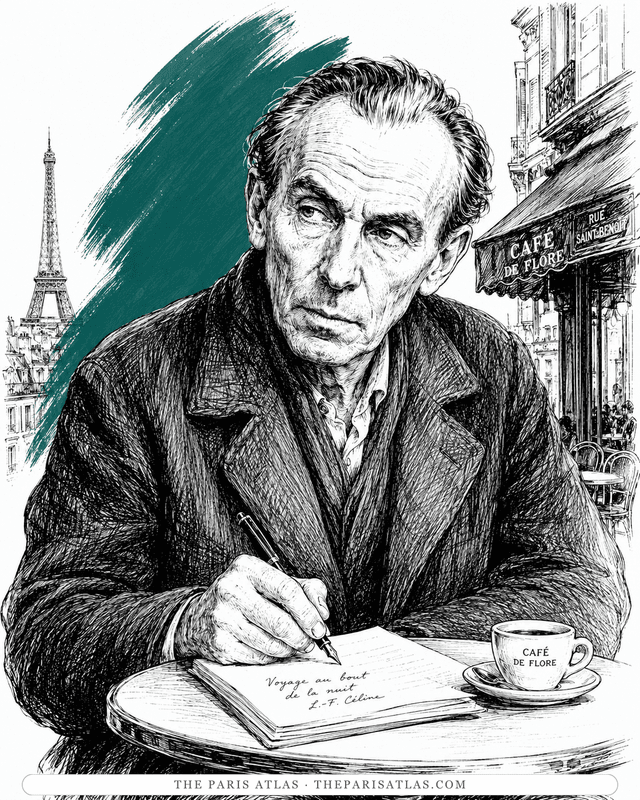
The doctor of the Paris slums who wrote the century's blackest, funniest novel — and changed the sound of French prose.
View author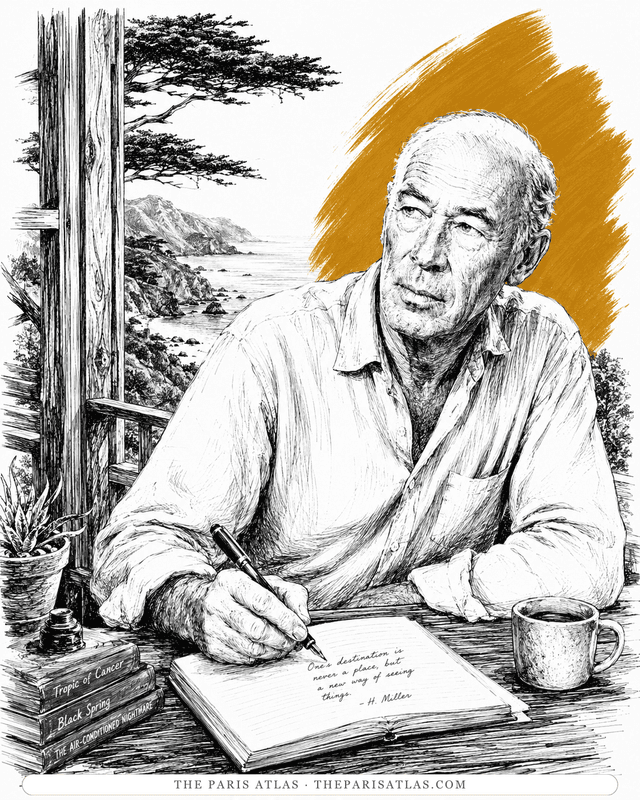
The Brooklyn dropout who arrived in Paris broke at thirty-eight and wrote the exuberant, banned books that ended American censorship.
View author
The Missouri newspaperman who became America's most famous writer, and whose first book made its reputation partly out of Paris: in 1867 he arrived with a shipload of American tourists, renamed his guide Ferguson, watched the high-kicking can-can through his fingers and wrote it all down. He kept coming back — and was living in Paris in the mid-1890s, broke, while finishing the novel he considered his best, Personal Recollections of Joan of Arc.
View authorThe sources below include the primary text, editions, scholarship, archival materials, and other records that informed this page. They document Mathilda, its publication, and its place in literary history.


The primary text represented by this page, used for descriptions of the work’s contents and for any quoted passages shown here.
The complete novella was read for plot, twelve character observations and quotations. The introduction supplies composition and publication history. The earlier draft The Fields of Fancy and the full notes apparatus were not read in full; no claim is made to have read the selected 2006 paperback.
Verifies the selected paperback’s publisher, date, ISBN and page count. The promotional description’s claims of a first standalone publication and direct autobiography are not used.
Corroborates the start of Mathilda’s composition in August 1819.
Independent catalogue evidence for Nitchie’s 1959 first publication, issued by the University of North Carolina Press as Studies in Philology, Extra Series 3.
Explains why transcriptions differ when the author never oversaw publication. The introduction was read in full; manuscript images and the complete archive transcription were not consulted. Its incorrect statement of Shelley’s age at Frankenstein’s publication is not adopted.
The primary text is the baseline reference for every book page. Additional references document publication history, interpretation, and historical context where that evidence is available.
 Explore more resources