
My Bondage and My Freedom
Douglass returns to his childhood with more detail and extends the account into his career as an independent abolitionist editor.
Read our take
Douglass's first autobiography follows his childhood in slavery, secret education, and beginnings as an abolitionist speaker.
Frederick Douglass published his first autobiography in 1845, seven years after escaping slavery. He describes separation from his mother, plantation violence in Maryland, and the effort to learn to read in Baltimore. His account connects these experiences to the laws and customs that sustain slavery. It ends with his early work in the abolitionist movement, when publishing his name and history still exposed him to capture.
Douglass begins with something other autobiographers can usually supply: a birth date. He does not know his own. He remembers his mother's nighttime visits but cannot establish his father's identity. These limits belong to the story. Enslavers control his access to family knowledge as well as his work, movement, and education.[1]
In Baltimore, Sophia Auld begins teaching him the alphabet. Her husband stops the lessons, arguing that literacy would make Douglass impossible to enslave. Douglass takes that warning as a reason to continue. He obtains lessons from neighborhood children, studies The Columbian Orator, and copies the letters that ship carpenters mark on timber.[1]
The book has eleven chapters, followed by an appendix on Christianity. William Lloyd Garrison supplies a preface and Wendell Phillips a letter. Douglass gives names and places that readers could investigate, while withholding information that could expose people who helped him or obstruct future escapes. That distinction explains both the narrative's precision and its deliberate silences.[1]
Douglass grows up separated from his mother on Maryland's Eastern Shore. He witnesses punishment and learns how food, clothing, family contact, and movement depend on enslavers' decisions. Moving to Hugh and Sophia Auld's Baltimore household gives him opportunities to learn, although Sophia eventually becomes an active opponent of his reading.[1]
After returning to the Eastern Shore, Douglass is hired to Edward Covey, whose overwork and beatings leave him exhausted. Douglass describes resisting Covey physically as a decisive recovery of self-respect. While later working for William Freeland, he teaches other enslaved people to read and joins an escape plan that ends in arrest.[1]
Back in Baltimore, Douglass learns the caulking trade, suffers an assault by white workers, and must surrender his earnings to Hugh Auld. He eventually reaches New York in September 1838. He deliberately does not explain the route or method here. David Ruggles helps him, Anna Murray joins him, and they marry before moving to New Bedford, Massachusetts.[1]
In New Bedford, Douglass takes paid work and begins reading Garrison's Liberator. At the Nantucket antislavery convention in August 1841, he overcomes his reluctance to address a white audience. The narrative ends with the speaking work that follows. The appendix then distinguishes his Christian faith from the religion used to justify slavery.
Douglass's uncertainty about his birthday is an early example of power operating through information. The missing date places him outside an ordinary form of family knowledge. His mother's visits happen at night, after her work, and his father remains a matter of rumor. These details make separation a continuing arrangement of life, with consequences that outlast any single beating.
The narrator distinguishes what he witnessed from what he was told or could only infer. That care strengthens the testimony without pretending slavery left him access to a complete record. The gaps themselves help explain the institution: people treated as property are denied authority over their own histories.
Hugh Auld's warning that education would make Douglass unfit for slavery gives the boy a reason to persist. But Chapter Seven complicates a simple success story. The Columbian Orator supplies arguments and language for feelings he could not express; it also makes his captivity harder to bear.
Knowledge exposes injustice before it provides a way out. Douglass describes moments when he wishes he could stop thinking. The later act of writing this book therefore carries a double achievement: he has survived the painful interval between understanding his condition and gaining the power to change it, and can now address readers directly.
The fight with Edward Covey is a turning point in Douglass's account of himself. He remains enslaved afterward, but no longer describes submission as inevitable. The scene separates a recovered sense of agency from the legal freedom that still lies ahead.
Other episodes show agency taking less spectacular forms. Trading help for reading lessons, teaching a Sabbath school, and planning escape with companions make learning a shared activity. Douglass's public voice grows out of these relationships as well as individual determination. The book's famous confrontation should not make its quieter acts of cooperation disappear.
The appendix distinguishes Christianity from the conduct of churches and believers who support slavery. Douglass identifies a contradiction between professions of holiness and the sale or punishment of human beings. Religious reputation can protect an enslaver from scrutiny instead of restraining his violence.
Ending with this argument directs attention beyond the men who personally held Douglass captive. Readers must also consider the institutions that give those men standing. The autobiography becomes an appeal to examine ordinary sources of respectability, not simply to condemn a few exceptionally cruel individuals.
Primary text: Chapters One, Six, Seven, Ten, and the religious appendix.
From that moment, I understood the pathway from slavery to freedom.
They came because they wished to learn.
Eleven chapters trace his early life with little digression. The account gives readers a clear starting point before the broader autobiographies of 1855 and 1881.
Bread exchanged for lessons, letters copied from shipyard timber, and a discarded copybook make self-education concrete. Douglass also explains why acquiring knowledge could be painful.
Douglass names people responsible for violence but protects people whose help could endanger them. Reading those choices together shows the practical responsibilities of publishing his testimony.
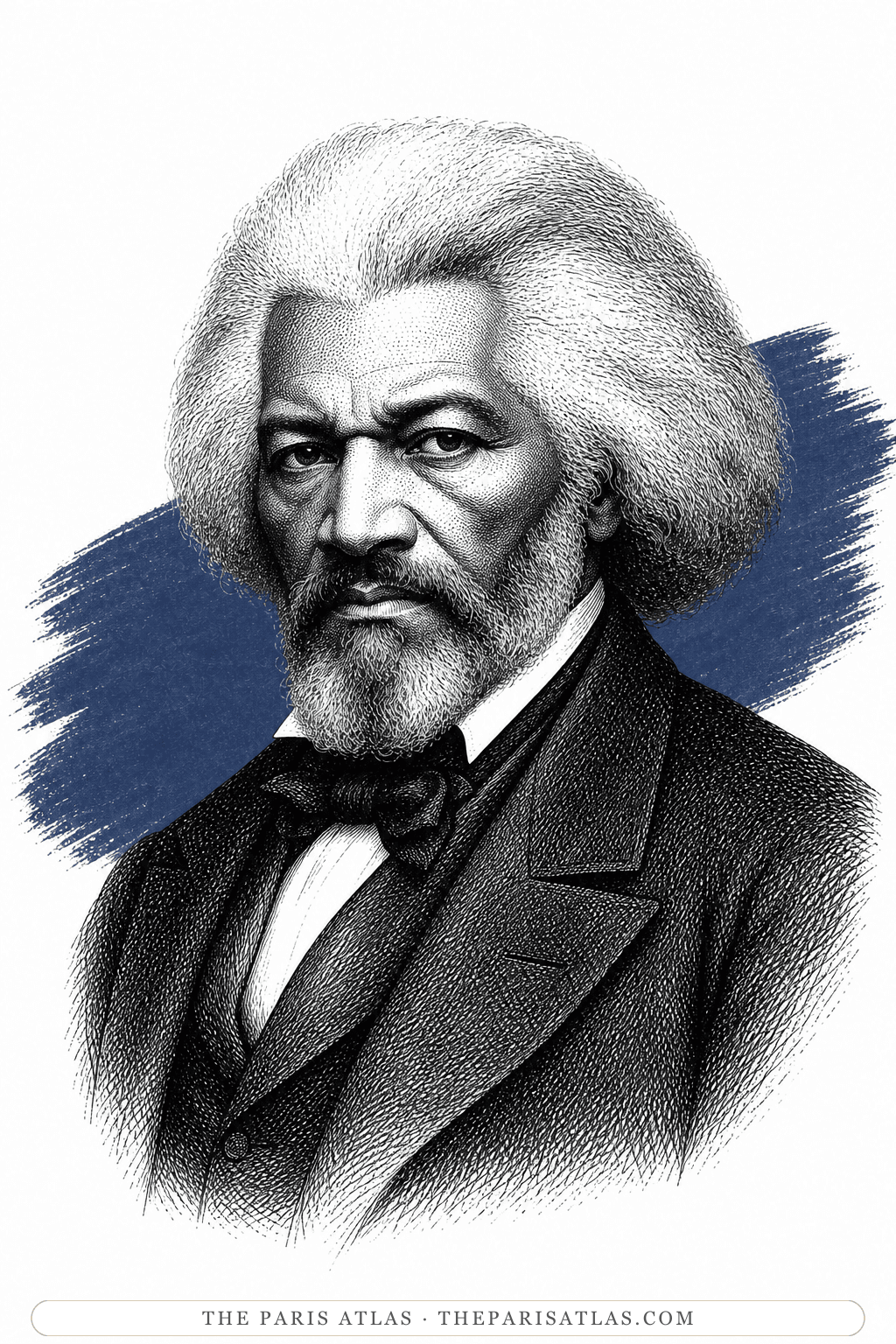
The narrator recalls his childhood, education, enslavement, and emergence as a public speaker.
1845
The Anti-Slavery Office in Boston publishes the Narrative. Its identification of people and places exposes Douglass to renewed danger of capture.
1845–1847
Douglass travels and lectures in Britain and Ireland after publication. Supporters secure his legal freedom in 1846 before his return to the United States.
1855
My Bondage and My Freedom retells and expands the early life, then follows Douglass's work after escape.
2021
Penguin Classics publishes the Penguin Vitae edition edited by Ira Dworkin, with additional Douglass writings.

Douglass returns to his childhood with more detail and extends the account into his career as an independent abolitionist editor.
Read our take
The final autobiography supplies the escape details withheld here and follows his work through the Civil War and its aftermath.
Read our take
A later Black American autobiography in which self-education and public speaking accompany changes in political understanding.
Read our takeIt is Douglass's autobiography, written as testimony about his enslavement and escape. It is also a deliberately organized argument against slavery, shaped by the adult author's memories and public purpose.
It was first published in Boston in 1845 by the Anti-Slavery Office. Douglass had escaped slavery in 1838.
The main narrative has eleven chapters. The original volume also includes Garrison's preface, Phillips's letter, and Douglass's appendix on religion. Modern editions may add further material.
He says disclosure could endanger helpers and make enslavers more vigilant. The omission in Chapter XI protects other people's chances of escape. He gives the method in Life and Times, published after slavery's abolition.
In the appendix, he distinguishes the Christianity he believes in from the religion of people who enslave, beat, and sell others. His criticism of slaveholding churches is not a rejection of all Christian faith.
The 1845 Narrative is the shortest starting point. My Bondage and My Freedom provides more detail about his early life and political development. Life and Times follows his longer public career and, in its revised edition, his later travels and diplomacy.
Explore authors with a similar voice, perspective, and influence.
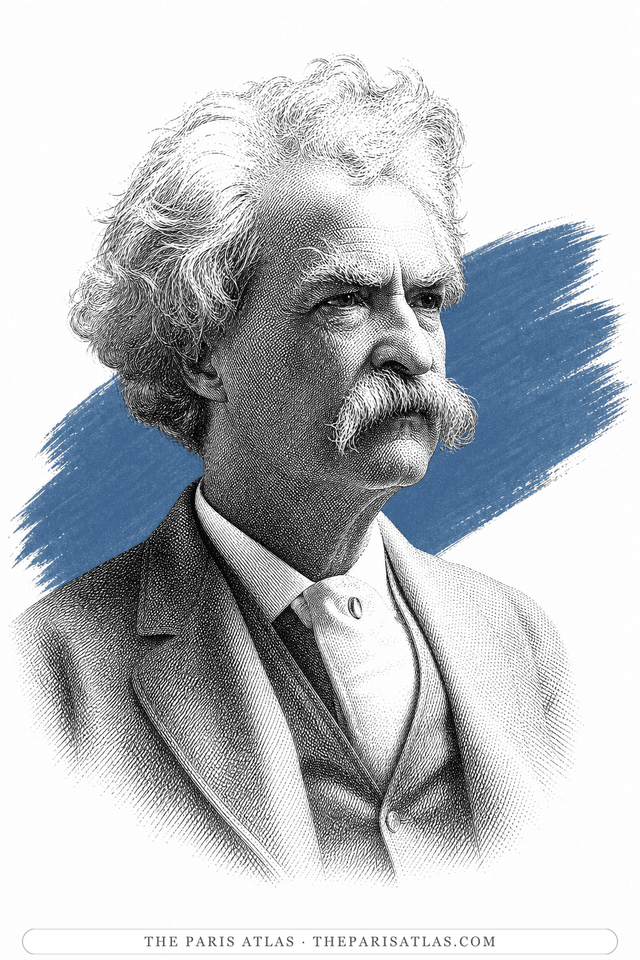
The Missouri newspaperman who became America's most famous writer, and whose first book made its reputation partly out of Paris: in 1867 he arrived with a shipload of American tourists, renamed his guide Ferguson, watched the high-kicking can-can through his fingers and wrote it all down. He kept coming back — and was living in Paris in the mid-1890s, broke, while finishing the novel he considered his best, Personal Recollections of Joan of Arc.
View author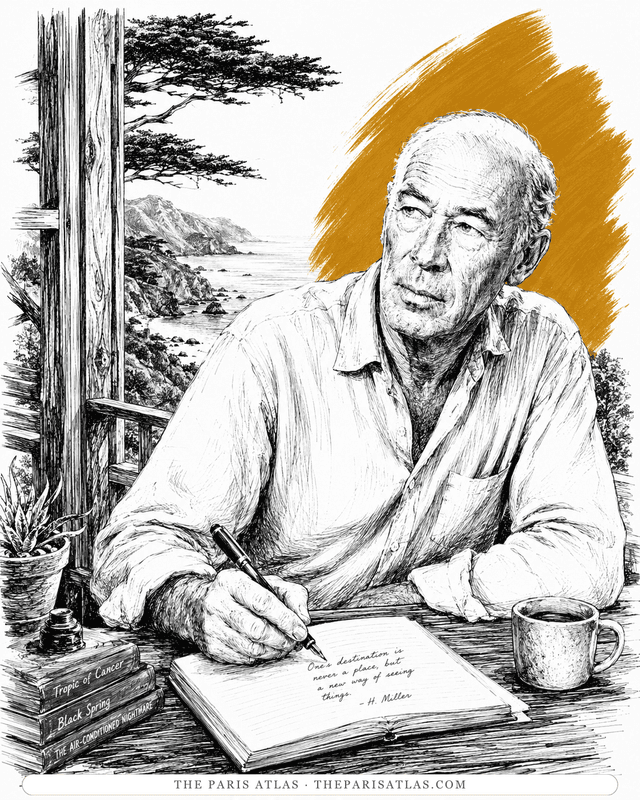
The Brooklyn dropout who arrived in Paris broke at thirty-eight and wrote the exuberant, banned books that ended American censorship.
View author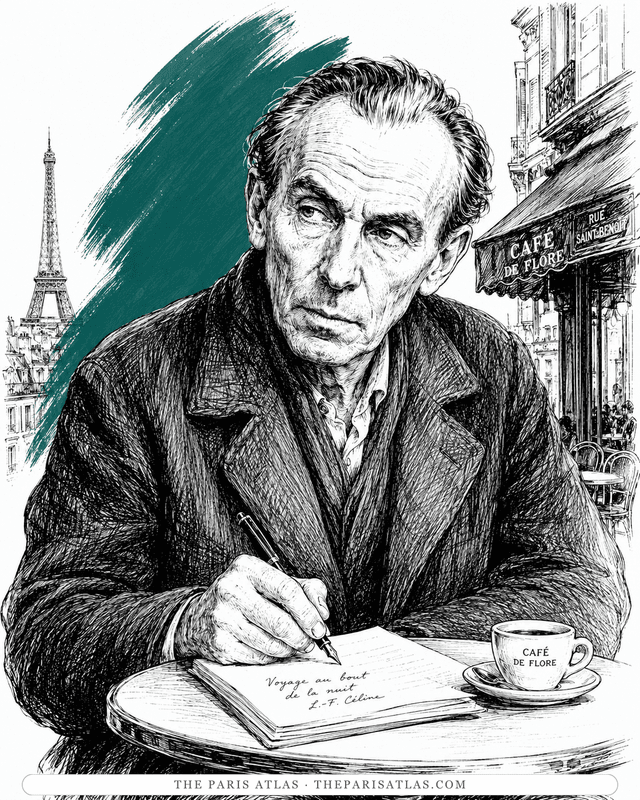
The doctor of the Paris slums who wrote the century's blackest, funniest novel — and changed the sound of French prose.
View authorThe sources below include the primary text, editions, scholarship, archival materials, and other records that informed this page. They document Narrative of the Life of Frederick Douglass, an American Slave, its publication, and its place in literary history.

Identifies the three autobiographies and their original publication dates.
Publication, overseas tour, legal freedom, and the second autobiography.

Selected edition's editor, ISBN, date, contents, and page count.
The primary text is the baseline reference for every book page. Additional references document publication history, interpretation, and historical context where that evidence is available.
 Explore more resources