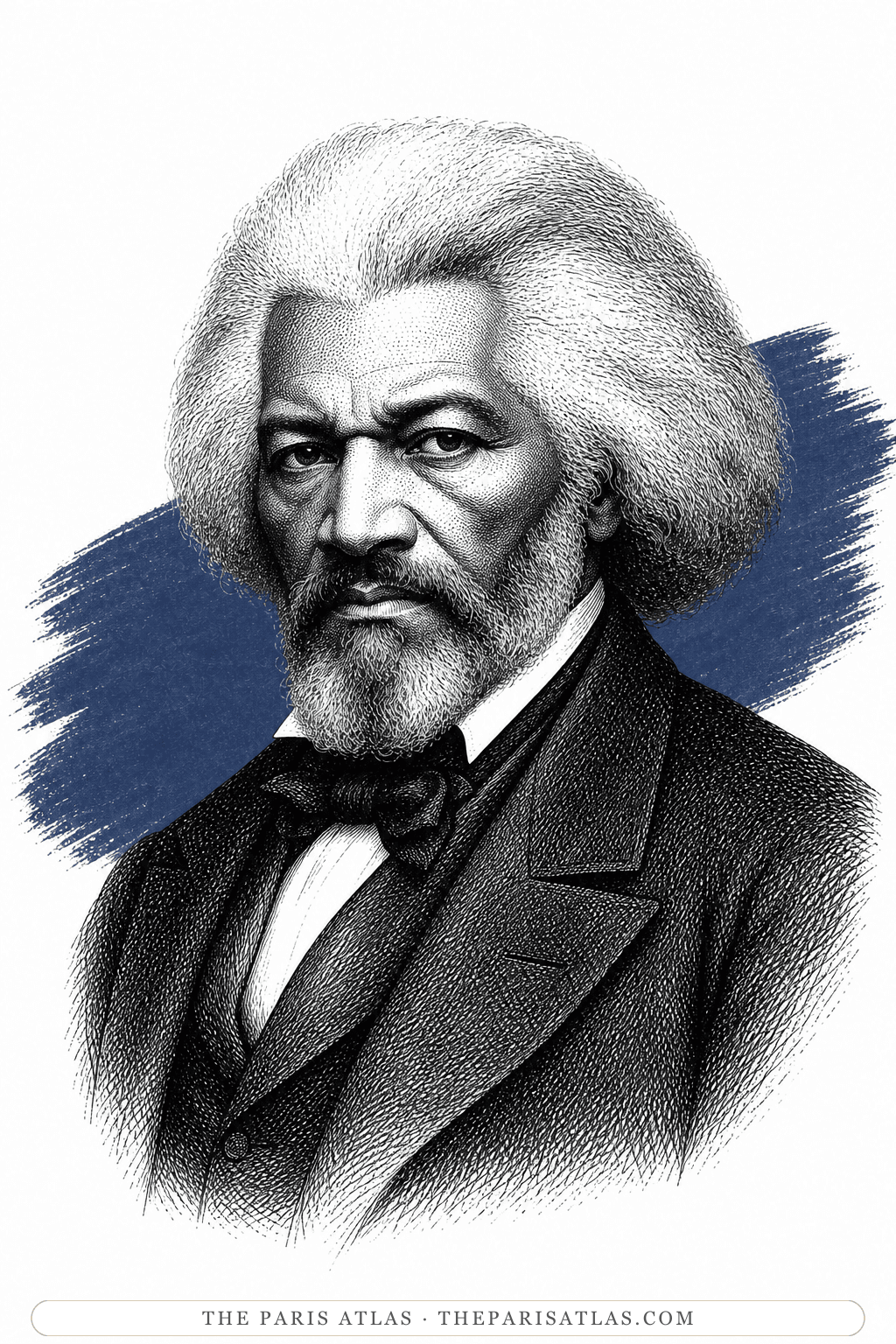

What to the Slave Is the Fourth of July?
Douglass's speech of the summer before, which makes the same charge as Tom Grant's confession: the country will not apply the principles of 1776 to Black Americans.
Read our take
Frederick Douglass's only work of fiction: a novella about Madison Washington, who led nineteen enslaved men in taking over the slave ship Creole in 1841.
The Heroic Slave is the only fiction Frederick Douglass published. The novella appeared in 1853 and runs to about sixty-five pages in its first printing.[1] The story is built on a real event. In November 1841, nineteen of the 135 enslaved people aboard the Creole, a ship carrying them from Richmond to the slave markets of New Orleans, broke free and took control of it. Their leader was Madison Washington. They made the crew sail to Nassau in the Bahamas, a British colony where slavery had been abolished, and there the captives went free.[2] Douglass tells the story in four parts, mostly through the eyes of white men who meet Washington and cannot forget him.[3]
The book opens with an admission. Douglass writes that Madison Washington loved liberty as much as Patrick Henry and fought for it as bravely as the man who led the armies of the Revolution. Yet the records of Virginia list him the way they list a horse or an ox. Only glimpses of the man survive, the narrator says, so glimpses are what the story offers.[1]
The first glimpse comes on a Sunday morning in the spring of 1835. A traveller from Ohio named Mr. Listwell stops to water his horse in a Virginia pine forest. He hears a man talking to himself among the trees, and hides beside a fallen tree to listen. The speaker is Madison, an enslaved man working himself up to run away. He cannot bear to leave his wife, Susan.[1]
Listwell rides home a changed man. The next two parts follow Madison's escape, through years hiding in the swamps and a winter night's walk to Listwell's farmhouse in Ohio. The two men meet a third time in circumstances neither could have planned.[1]
The last part moves to a coffee-house in Richmond two months after a slave ship has sailed for New Orleans. A sailor who was on board tries to explain to a room of hostile listeners what happened at sea, and why he has sworn never to work on a slave ship again.[1]
Part I. On a Sunday morning in spring 1835, Mr. Listwell, a traveller from Ohio, stops at a brook in a Virginia pine forest. He overhears Madison, an enslaved man, speaking alone among the trees. Madison compares himself to the birds and to a snake that escaped his blow, and decides to run. His one hesitation is his wife, Susan. Listwell goes home resolved to become an abolitionist.[1]
Part II. On a cold night in the winter of 1840, Listwell's watchdog growls at a stranger outside his Ohio farmhouse. The stranger is Madison. His first escape failed when clouds hid the North Star and he walked in a circle back to his master's land. He then lived five years in a cave in the swamps, fed by Susan once a week, until a forest fire drove him out. Listwell hides him for a day, then drives him to Cleveland, where a steamer takes him to Canada. A letter arrives from Windsor, Canada West, dated 16 December 1840.[1]
Part III. In 1841 Listwell is back in Virginia. He spends a night at a decaying tavern on the road from Petersburg to Richmond, once a haunt of gamblers, horse-racers and slave traders. In the morning he finds a chained gang of 130 people in the tavern's bowling alley on their way to market. One of them is Madison. He had gone back to rescue Susan, climbing a ladder to her window. The dogs woke the house, and Susan was shot dead as they ran. Madison was flogged and sold for the New Orleans market. At the Richmond wharf, Listwell slips three files into his pocket before the ship sails.[1]
Part IV. Two months later, in the Marine Coffee-house in Richmond, the ship's first mate, Tom Grant, is taunted by a sailor named Jack Williams. Grant tells what happened on the Creole. Madison filed through his irons and freed eighteen others, and they rose at twilight. The captain and Mr. Jameson, the owner of most of the slaves, were killed. Madison took the helm, spared Grant's life twice, and steered the ship through a violent storm to Nassau. There, Black soldiers sent to guard the property refused to treat people as property. The freed men and women marched ashore behind Madison Washington, cheered by the crowd on the wharf.
The Creole left Richmond, Virginia, at midnight on 25 October 1841, under Captain Robert Ensor. She carried 135 enslaved African Americans bound for sale in New Orleans. About a week into the voyage, at night, a group of the captives rose. Anita Rupprecht's study of the revolt, drawn from sworn statements taken at Nassau, describes what followed. A slave trader's agent named John Hewell was stabbed and bled to death, and Captain Ensor was badly wounded but survived.
The rebels made the crew sail for the Bahamas and reached Nassau on the morning of 9 November. British law no longer recognized anyone there as property. Most of the captives walked free, and many accepted a British offer of passage to Jamaica. The British held the nineteen men named as mutineers for nearly six months, but the charge of piracy against them collapsed. The Colored Conventions Project at the University of Delaware records that they too were freed in 1842.
Some of what sounds like invention in the novella is true. Madison Washington had escaped to Canada. Early in 1841 he went back to Virginia to find his wife. Abolitionists advised him against it, among them Robert Purvis, who had helped him reach Canada. He was captured and sold. After the revolt, Rupprecht writes, Washington and his companions disappear from the records.
Douglass changed a good deal. In the novella the captain and the slave owner, Mr. Jameson, both die on deck, and their bodies wash overboard in a storm. In the real revolt the dead man was Hewell, and the captain lived. Douglass sets the uprising at twilight, while the sworn statements put it in the dark of night. He also invents the white characters who carry the story, Mr. Listwell and the first mate Tom Grant.
Madison Washington is the hero, but the reader rarely sees him directly. Much of what we learn comes through Mr. Listwell, a white farmer from Ohio who overhears him in the Virginia woods. Patrick E. Horn, writing for the University of North Carolina's Documenting the American South, points out the name. Listwell is the man who listens well, and the novella asks its white readers to do the same.
Listwell's change of heart is immediate. From this hour I am an abolitionist, he thinks after Madison has gone, and he goes home to Ohio resolved to make up for his past indifference. Five years later he keeps his word. He gives the fugitive the best room in the house, a new winter suit and five dollars in silver, and drives him through the night to a steamer on Lake Erie bound for Canada.
Douglass does not make him a saint. At a Virginia tavern full of slave traders in Part III, Listwell lets the bar believe he has come to buy slaves. The narrator is blunt about why. Listwell hated slavery and believed every man should speak out against it, but bodily fear, not conscientious scruples, prevailed.
The same man then commits the most dangerous act in the book. In a Richmond hardware store he buys three strong files. At the wharf he slips them into Madison's pocket as the chained captives are rowed out to the ship. Robert S. Levine, one of the editors of the Yale edition, points out what the files do. They tie the white abolitionist to the violence that follows.
The revolt itself is told at second hand, in a Richmond coffee-house, by the Creole's first mate, Tom Grant. A loud old sailor named Jack Williams has been saying that he could have put the rebels in irons with half a dozen men. Grant answers him with the whole story. Douglass builds the climax as an argument between two white men in a bar.
In Grant's telling, Madison stands at the helm with the captain dying on the deck behind him and refuses the word murderer. God is my witness that LIBERTY, not malice, is the motive for this night's work, he says. Then comes the line the argument turns on. We have done that which you applaud your fathers for doing, and if we are murderers, so were they.
Mr. mate, you cannot write the bloody laws of slavery on those restless billows. The ocean, if not the land, is free.
Grant then makes an admission. He says that Madison's principles were not wrong in the abstract, for they are the principles of 1776. He simply could not bring himself to apply them to a man he thought his inferior. Douglass had made the same charge against the country from a platform in Rochester the summer before, in the speech now known as What to the Slave Is the Fourth of July?
The last scene is a march. British authorities send Black soldiers on board to protect the property. The soldiers reply that they do not recognize persons as property. The freed captives gather their baggage, form a procession on the Nassau wharf and walk ashore under their leader, cheered by the crowd.
Robert S. Levine argues that Douglass could not have written the novella while he was still a follower of William Lloyd Garrison. Garrison argued that the campaign against slavery had to be nonviolent. In 1850 Douglass announced publicly that he was no longer a Garrisonian. He had come to see slavery as an act of violence that should be met with violence.
Madison Washington had been in his speeches for years before the novella. Levine traces the thread:
The novella came out in 1853 in two places. One was Autographs for Freedom, a fundraising gift book of antislavery writing edited by Julia Griffiths and published by John P. Jewett and Company in Boston. The other was Douglass's own newspaper, Frederick Douglass' Paper, which ran it as a four-part serial in March 1853. Levine puts the book first. Horn's summary puts the newspaper first.
Penguin's description of its 2021 edition says the novella was written in part as a response to Uncle Tom's Cabin, the 1852 novel by Harriet Beecher Stowe. The two writers were in touch that same month. Stowe invited Douglass to her house in Andover, Massachusetts, before she sailed for England. He set out his ideas on her fundraising in a letter dated Rochester, 8 March 1853.
Liberty I will have, or die in the attempt to gain it.
From this hour I am an abolitionist.
Madison now felt himself no more a piece of merchandise, but a passenger
The novella shows him building scenes, dialogue and suspense, including a forest fire and a storm at sea. The same voice that argued from platforms here tells a story.
In 1841 nineteen enslaved men seized the Creole and forced the crew to sail 135 people to freedom in the Bahamas. The novella follows the leader of that revolt.
Madison asks why the revolt is murder when the American Revolution was glory. A white sailor admits he has no good answer.
The first printing runs about sixty-five pages, and the 1853 text is free online.

An enslaved Virginian who escapes to Canada, goes back for his wife, and leads the revolt on the Creole. Douglass's hero, seen almost entirely through other men's eyes.

A white farmer from Ohio who overhears Madison in a Virginia forest, becomes an abolitionist on the spot, and crosses his path twice more.

The first mate of the Creole, who tells the story of the revolt in a Richmond coffee-house and swears off slave ships for good.
1841
The Creole leaves Richmond on 25 October with 135 enslaved people bound for New Orleans. A week out, nineteen of them, led by Madison Washington, take the ship. They reach Nassau in the Bahamas on 9 November, and the captives go free.
1842
After nearly six months in British custody, the nineteen men charged as mutineers are released when the piracy charge collapses.
1845
Speaking in Cork, Ireland, Douglass praises Madison Washington for his love of freedom.
1850
Douglass announces publicly that he is no longer a follower of William Lloyd Garrison, who held that slavery must be ended without violence.
1853
The Heroic Slave appears in Autographs for Freedom, edited by Julia Griffiths and published by John P. Jewett in Boston, and as a four-part serial in the March issues of Frederick Douglass' Paper.
2003
The University of North Carolina's Documenting the American South publishes a free electronic text of the 1853 printing.
2015
Yale University Press publishes the first critical edition, edited by Robert S. Levine, John Stauffer and John R. McKivigan.
2016
Penguin Classics includes the novella in The Portable Frederick Douglass, edited by Henry Louis Gates Jr. and John Stauffer.


Douglass's speech of the summer before, which makes the same charge as Tom Grant's confession: the country will not apply the principles of 1776 to Black Americans.
Read our take
Douglass's own account of slavery and escape, published eight years earlier. Madison, like the young Douglass, pins his hopes on getting north.
Read our take
The autobiography Douglass published two years after the novella, written after the same break with the Garrisonians.
Read our take
Toni Morrison's novel is set in Ohio, where Madison finds shelter, among people who escaped slavery and still fear being taken back.
Read our takePartly. Madison Washington was real, and so was the revolt he led on the slave ship Creole in November 1841. His escape to Canada and his return to Virginia for his wife are also recorded. Douglass invented the white characters who tell the story, and he changed some facts. In the novella the captain dies, but the real captain survived.
No. The Heroic Slave, published in 1853, is his only work of fiction. His other books are three autobiographies, and the rest of his writing is speeches, letters and newspaper articles.
The novella appeared in 1853 in Autographs for Freedom, a fundraising gift book of antislavery writing published by John P. Jewett in Boston. The story also ran as a four-part serial in Douglass's newspaper, Frederick Douglass' Paper, in March 1853. Scholars disagree about which came first.
Nobody knows. The British in Nassau held him and eighteen other men for nearly six months on charges of mutiny, then released them in 1842. After that, as the historian Anita Rupprecht writes, he disappears from the records.
An invented white farmer from Ohio who overhears Madison in a Virginia forest and becomes an abolitionist. He shelters Madison on his way to Canada and later slips him the files he uses to break his chains. Scholars read the name as a hint: he is the man who listens well.
About sixty-five pages in its first printing, where it fills pages 174 to 239 of Autographs for Freedom. Most readers finish it in an hour or two.
No. The story moves between Virginia, Ohio, Canada and the Bahamas. Douglass's own visit to Paris came more than thirty years later, in the winter of 1886–87.
Explore authors with a similar voice, perspective, and influence.
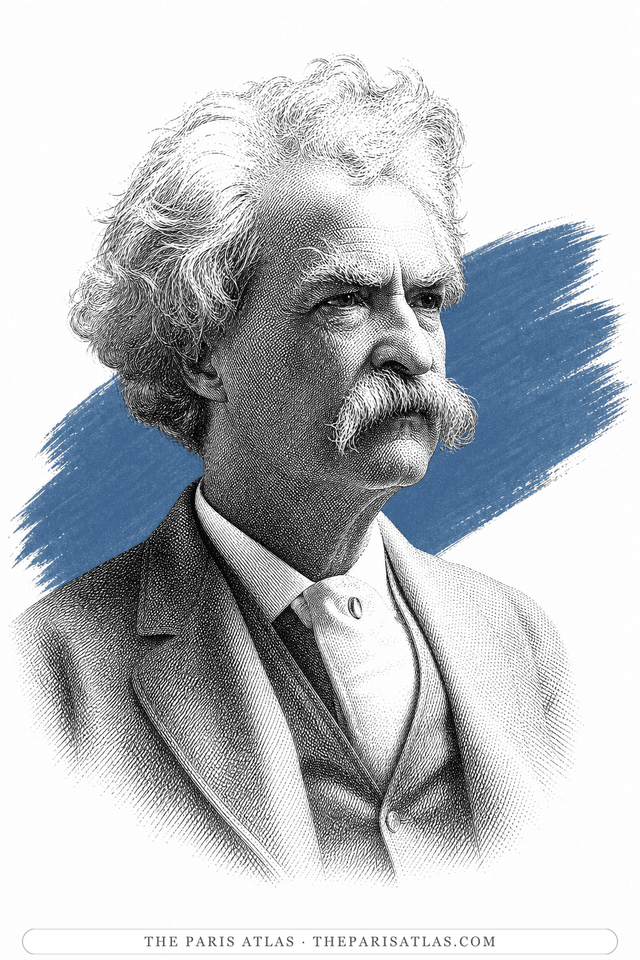
The Missouri newspaperman who became America's most famous writer, and whose first book made its reputation partly out of Paris: in 1867 he arrived with a shipload of American tourists, renamed his guide Ferguson, watched the high-kicking can-can through his fingers and wrote it all down. He kept coming back — and was living in Paris in the mid-1890s, broke, while finishing the novel he considered his best, Personal Recollections of Joan of Arc.
View author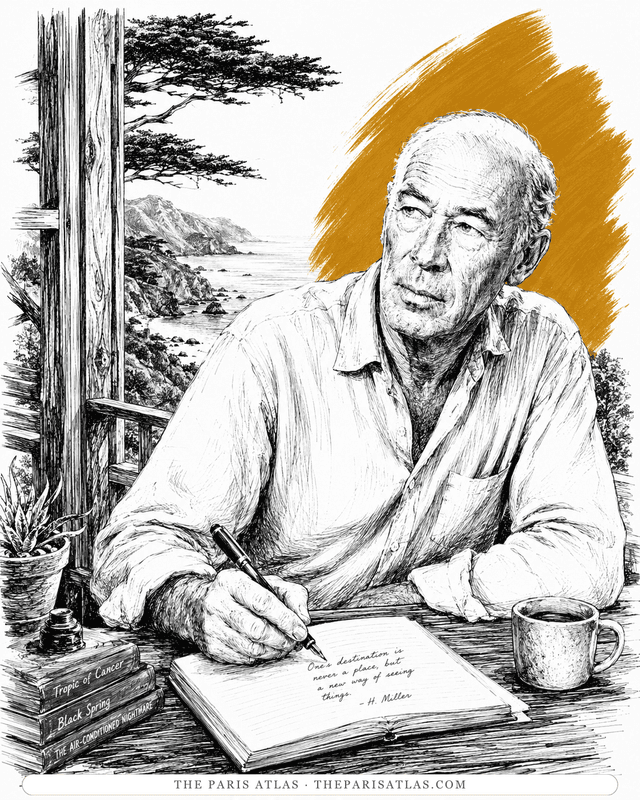
The Brooklyn dropout who arrived in Paris broke at thirty-eight and wrote the exuberant, banned books that ended American censorship.
View author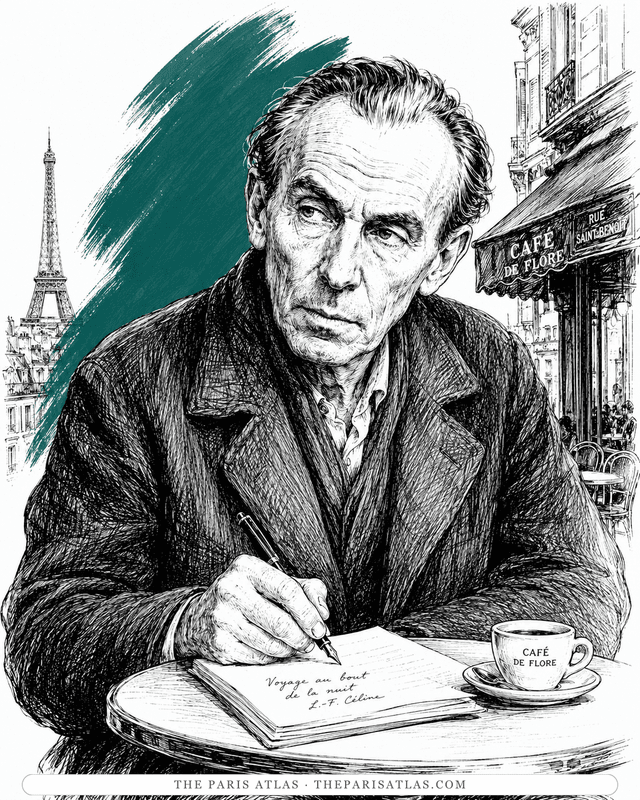
The doctor of the Paris slums who wrote the century's blackest, funniest novel — and changed the sound of French prose.
View authorThe sources below include the primary text, editions, scholarship, archival materials, and other records that informed this page. They document The Heroic Slave, its publication, and its place in literary history.


The primary text as printed in Autographs for Freedom (1853), with page numbers. Every quotation is checked against it.

Anita Rupprecht's study of the real revolt, reconstructed from the Nassau depositions.
Patrick E. Horn's summary for Documenting the American South: publication, structure, and the meaning of Listwell's name.
Robert S. Levine, an editor of the Yale edition, on the break with Garrison, the speeches about Madison Washington, and the files.
The Colored Conventions Project on Washington's escape, recapture and release.
The publisher's page for the critical edition: editors, contents, date and ISBNs.
Catalogue record for The Portable Frederick Douglass, listing its ISBN, page count and contents.
Penguin's description of its 2021 edition, which prints the novella and connects it to Uncle Tom's Cabin.
Douglass on his March 1853 meeting and letter to Harriet Beecher Stowe.

The 1852 speech whose argument about 1776 the novella's last part echoes.
The primary text is the baseline reference for every book page. Additional references document publication history, interpretation, and historical context where that evidence is available.
 Explore more resources