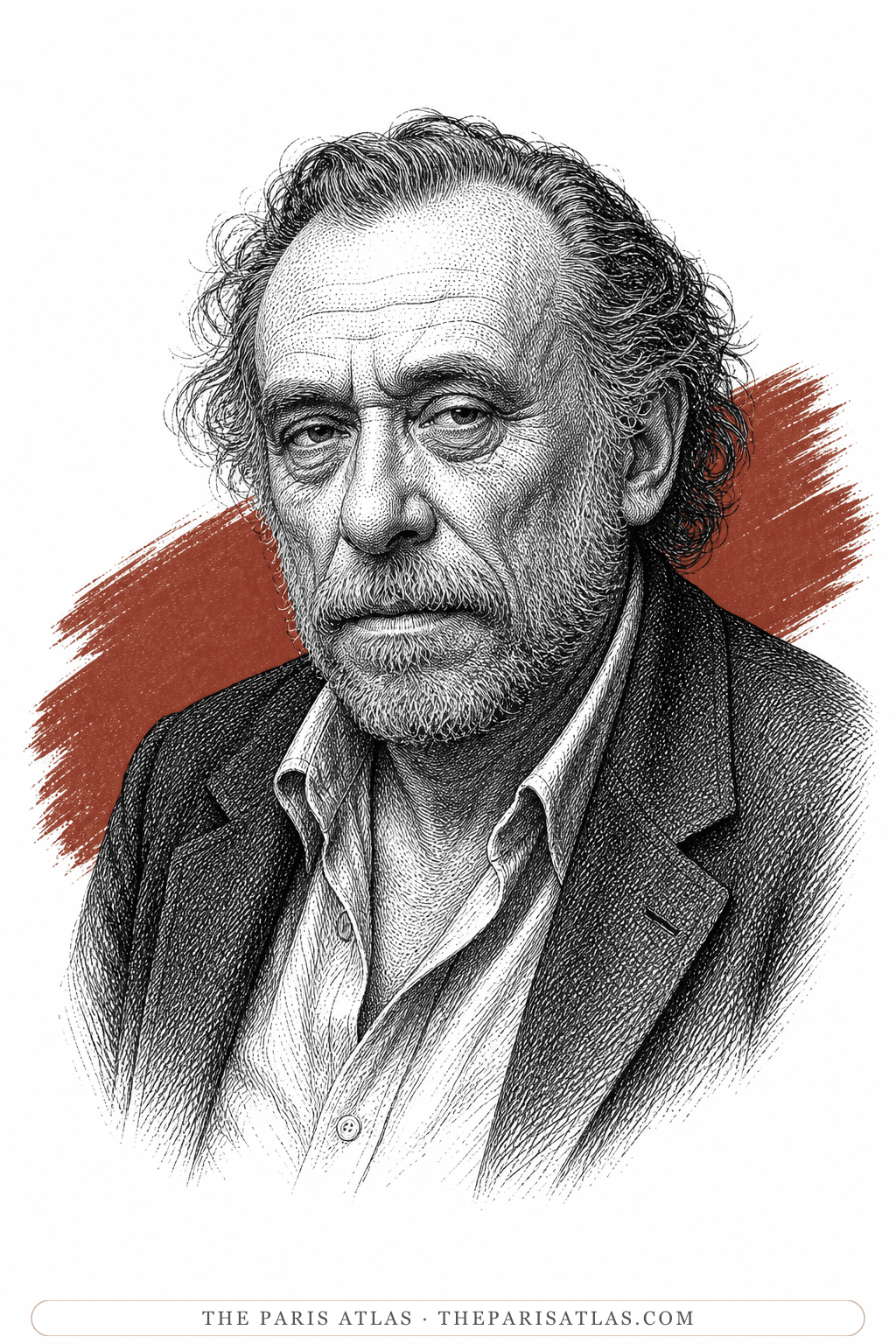


On Drinking
The subject he is most famous for, gathered across 272 pages: the drinking that fed the writing and put him in hospital.
- 2019
- Savage
- Wry
- Melancholy
- autobiographical
- voice-driven
- funny
- dark
About Charles Bukowski
The story, briefly
Spoiler-freeOn Drinking, published by Ecco in February 2019 and edited by Abel Debritto, is the fourth and last of the thematic Bukowski volumes. Across 272 pages it collects the poetry and prose about the subject he is most identified with, and the arrangement makes an argument the individual books never quite state: that alcohol was both the material and the cost. The pleasures are here in full, and so is the damage — the hospitalisations, the ruined mornings, the deaths of people who drank alongside him. It appeared in 2019, twenty-five years after his death and four years after the first of the thematic volumes.
The story, in more detail
Bukowski's drinking is the best-known thing about him and the least examined. Reading fifty years of it in sequence shows the treatment change: the early poems take drink as escape and company, the late ones count what it cost. He was hospitalised for a bleeding ulcer at thirty-five and told he would die if he continued; he continued for another thirty-eight years.
Themes and analysis
The hand around the beercan
In “brewed and filled by,” the hand is more than a prop identifying a drinker. The speaker first treats it as part of his sadness, then interrupts his own comparison with machinery. Its curl around the can becomes an organic movement, likened to roots pushing a flower upward. That change of scale briefly makes an automatic gesture seem astonishing. The poem locates vitality in the body’s ordinary action without resolving the sadness that frames it; the final drink is not presented as an argument that everything has improved.
The bottles and the paper sack
In “beer,” empty bottles measure waiting that has failed to become companionship. The speaker cannot count what he has drunk, but the damp sacks make accumulation tangible: their collapse produces the clatter that another person’s arrival has not supplied. His resentful generalizations about women belong to that aggrieved voice, not to an impartial explanation of loneliness. At the end, radio love songs supply an ironic soundtrack to the unanswered phone. The enlarged image of seas of beer offers quantity without movement; the room’s upright walls remain stubbornly unchanged.
Why we recommend it
The famous subject, examined
Fifty years of writing on drinking, arranged so the pleasures and the damage sit together.
The last volume of the series
Published in 2019, it closes Debritto's four-book thematic project.
Different forms around one subject
The combination of poetry and prose lets readers compare how the same recurring concern changes with narrative length and voice.
What this book explores
Timeline
1955
Bukowski is hospitalised with a bleeding ulcer and warned that further drinking will kill him.
2019
Ecco publishes On Drinking, the last of the four thematic volumes.
2020
Ecco publishes the paperback edition of the drinking anthology.
Book editions

- Hardcover
- Ecco
- 2019
- 9780062857934

- Paperback
- Ecco
- 2020
- 9780062857941
Reader reviews
Readers may also like


On Drinking: frequently asked questions
What is On Drinking?
A collection of Charles Bukowski's poetry and prose about alcohol, published by Ecco in February 2019 and edited by Abel Debritto. It runs 272 pages.
Does it romanticise drinking?
No. The arrangement puts the pleasures beside the hospitalisations, the ruined mornings and the deaths of people who drank alongside him.
Is it the last of the thematic volumes?
Yes — the fourth and final one, after On Writing and On Cats in 2015 and On Love in 2016.
Did Bukowski nearly die of drinking?
He was hospitalised with a bleeding ulcer at thirty-five and told another drink would kill him. He drank for another thirty-eight years and died of leukemia at seventy-three.
Where do the contents come from?
From across the whole body of work. The thematic volumes select existing poetry and prose by subject rather than printing new material.
If you like Charles Bukowski
Explore authors with a similar voice, perspective, and influence.
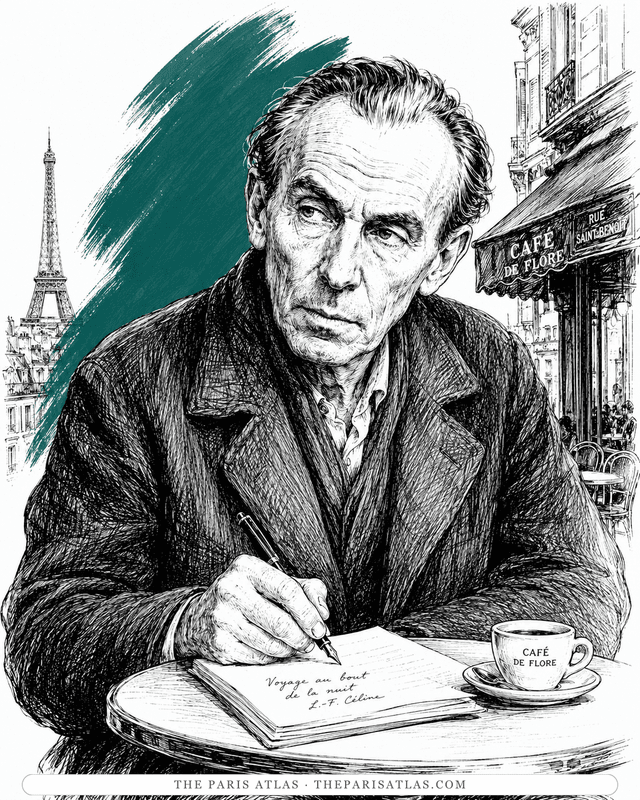
Louis-Ferdinand Céline
The doctor of the Paris slums who wrote the century's blackest, funniest novel — and changed the sound of French prose.
View author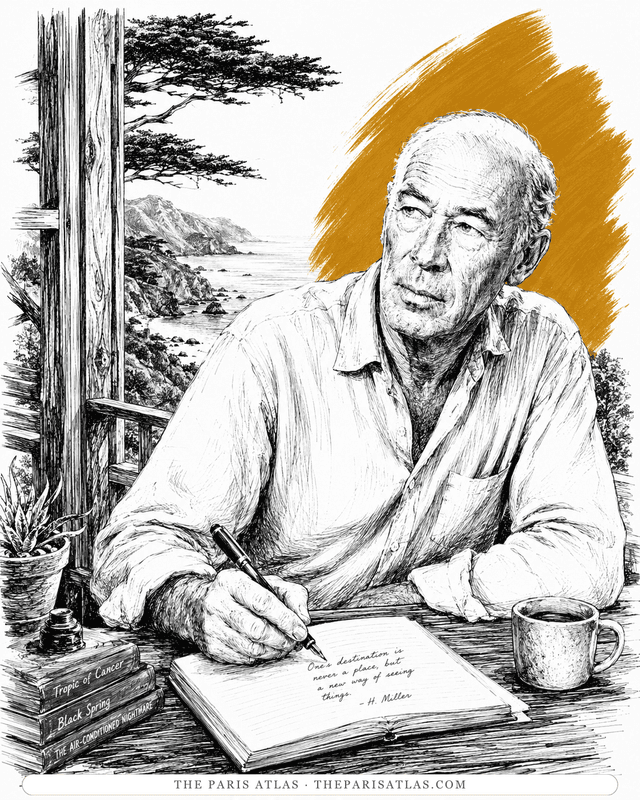
Henry Miller
The Brooklyn dropout who arrived in Paris broke at thirty-eight and wrote the exuberant, banned books that ended American censorship.
View author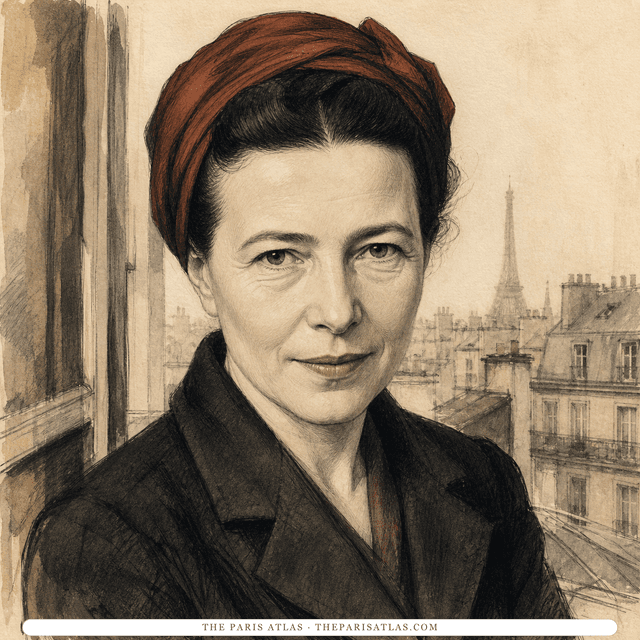
Simone de Beauvoir
French writer and philosopher whose novels, memoirs, and social analysis examined freedom, gender, responsibility, aging, and the material conditions that shape a life.
View author
References
References
The sources below include the primary text, editions, scholarship, archival materials, and other records that informed this page. They document On Drinking, its publication, and its place in literary history.

1On Drinking
PoetryCharles Bukowski, 2019Used forThe primary text represented by this page, used for descriptions of the work’s contents and for any quoted passages shown here.

2Charles Bukowski timeline (bukowski.net)
WebsiteUsed forPublication year, editor and edition details.
3Charles Bukowski
BiographyReaktion Books, 2012Used forCareer context for the material the volume draws on.
4Charles Bukowski (Poetry Foundation)
WebsiteUsed forThe poetry and prose the selection is made from.
5Charles Bukowski: books and chapbooks (Verdant Press checklist)
WebsiteUsed forBibliographic details checked against the checklist.
6On Drinking — authorized ebook sample, including the Confessions excerpt
WebsiteEcco (sample distributed by OverDrive), 2019Used forAuthorized sample supplies the complete hand-and-beercan poem and lists both poems discussed below.
7beer — poem reproduced in Charles Bukowski On Drinking
PoetryBrookston Beer Bulletin, compiled by Jay R. BrooksUsed forThird-party transcription of the complete poem; used for close reading, not for the surrounding article’s biographical or health claims.
i
Why these sources are here
The primary text is the baseline reference for every book page. Additional references document publication history, interpretation, and historical context where that evidence is available.
 Explore more resources