

Portnoy’s Complaint
by Philip Roth
A brilliant lawyer turns sex, family, guilt, and ambition into one breathless comic confession.
- 1969
The story, briefly
Spoiler-freeAlexander Portnoy lies on a psychoanalyst’s couch and tries to explain why desire, guilt, family, ambition, anger, and shame have become one enormous problem. His intelligence lets him diagnose himself endlessly, but insight alone cannot free him from obsession.
The story, in more detail
Almost the entire novel is Portnoy’s monologue. He moves between childhood in Newark, his parents’ expectations, masturbation, girlfriends, political ideals, sexual fantasy, and the conviction that every desire proves something terrible about him.[1]
As an adult, he is a successful public-interest lawyer whose admirable professional identity coexists with a private life he experiences as compulsive and humiliating. His relationship with Mary Jane Reed reveals how class contempt and misogyny enter his search for freedom.[1]
Philip Roth turns confession into stand-up comedy and self-attack at the same time. The book became a cultural scandal because its explicit sexual material made Jewish family life, male neurosis, and private shame into comic material.[1]
The full plot
Portnoy addresses his psychoanalyst, Dr. Spielvogel, and begins with childhood in Newark. His mother, Sophie, is intensely involved in every part of his life, while his father, Jack, sells insurance and suffers the chronic constipation that becomes one of the family story’s recurring comic images.[1]
Young Alexander becomes obsessed with masturbation and sexual fantasy while absorbing expectations about morality, success, Jewish identity, illness, and danger. Sexuality feels thrilling because it promises escape and incriminating because it seems to betray the family that formed him.[1]
As an adult, Portnoy becomes a lawyer working in civil rights and public service. He can perform a disciplined, socially admirable identity at work, yet privately pursues relationships and fantasies he describes as compulsive. The contrast gives him more evidence for both pride and self-disgust.[1]
His relationship with Mary Jane Reed, whom he calls ‘the Monkey,’ becomes the central example. He wants her sexual openness but ridicules her education and class background. His language reveals an inability to accept intimacy without making one person superior and the other contemptible.[1]
Portnoy travels to Israel hoping that a Jewish country might resolve something about his identity. Instead, he experiences humiliation and sexual failure. The journey shows that he cannot escape his American Jewish self merely by changing countries or finding a new erotic fantasy.[1]
How it ends — spoilers ahead
Portnoy’s long monologue finally stops after the humiliations in Israel. He has offered childhood scenes, family imitations, explicit fantasies, political achievements, accusations, and diagnoses without arriving at change.
Dr. Spielvogel speaks for the first time and announces, in effect, that now the analysis can begin. The silent listener becomes visible only after Portnoy exhausts his opening statement.
The punch line reframes the entire novel: hundreds of pages of confession have not been therapy but preparation for it. Portnoy’s ability to talk brilliantly about himself is not the same thing as understanding honestly or living differently.
Themes and analysis
Sex and guilt
Portnoy experiences desire as pleasure and accusation at once. Sex promises independence from family and social judgment, but every fantasy immediately creates new evidence for the shame he claims to be escaping.
Family
Sophie and Jack remain internal voices long after Alexander leaves home. His impersonations are exaggerated and comic, but the intensity of those performances shows how thoroughly he still organizes adult desire as rebellion against his parents.
Jewish American identity
Portnoy loves, mocks, and resents the cultural world that formed him. The trip to Israel removes the fantasy that Jewishness is only a family burden he could solve by reaching a more authentic place.
Misogyny and self-hatred
His contempt for women often reveals disgust with desires and vulnerabilities he refuses to accept in himself. Mary Jane’s humanity is easiest to see in the gap between what she does and the belittling nickname and class judgments through which he describes her.
Confession
The novel asks whether endless honesty can become a form of avoidance. Portnoy discloses humiliating details, yet controls the room through speed, performance, and interpretation until Spielvogel’s final line reminds him that another person may read the story differently.
Assimilation
Portnoy wants the freedom and status promised by secular American success while remaining psychologically bound to inherited identity. His career proves he has entered public life, but private fantasy keeps replaying the conflicts he thought achievement would settle.
Writing style
Roth builds the novel as one sustained comic monologue full of exaggeration, obscenity, mimicry, family voices, legal argument, self-mockery, and sudden shifts in register. The form makes reading feel like listening to a brilliant speaker who cannot stop performing.
Rhythm is crucial. Portnoy speaks as if thought is moving faster than censorship, and long accumulations break into punch lines or accusations. The prose becomes outrageous because it turns shame into velocity.
Editions and translations
The novel was written in English. Later editions differ mostly in introductions and historical context. Translation requires more than literal sexual vocabulary because the humor depends on Yiddish-inflected family speech, slang, imitation, and rapid changes of voice.
Major adaptations
Ernest Lehman’s 1972 film adapts the story but cannot reproduce the full force of a novel built almost entirely from one uninterrupted voice. It is best understood as a separate interpretation rather than a visual substitute for the monologue.
Why we recommend it
A voice that never stops
The sustained monologue turns argument, imitation, confession, and obscenity into comic momentum.
Insight without change
Portnoy can diagnose every contradiction while continuing to repeat it.
Private shame as public comedy
The novel tests how much a speaker can reveal while still hiding behind performance.
What this book explores
The people in its pages

Alexander Portnoy
The successful lawyer whose psychoanalytic monologue turns desire, family, and guilt into one problem.
Also in the book

Sophie Portnoy
Alexander’s loving, anxious, controlling mother and the dominant voice in his family memories.

Jack Portnoy
Alexander’s father, an insurance salesman whose warmth and frustration become family comedy.

Mary Jane Reed
Portnoy’s sexually adventurous girlfriend, whom his belittling nickname reduces but never fully defines.
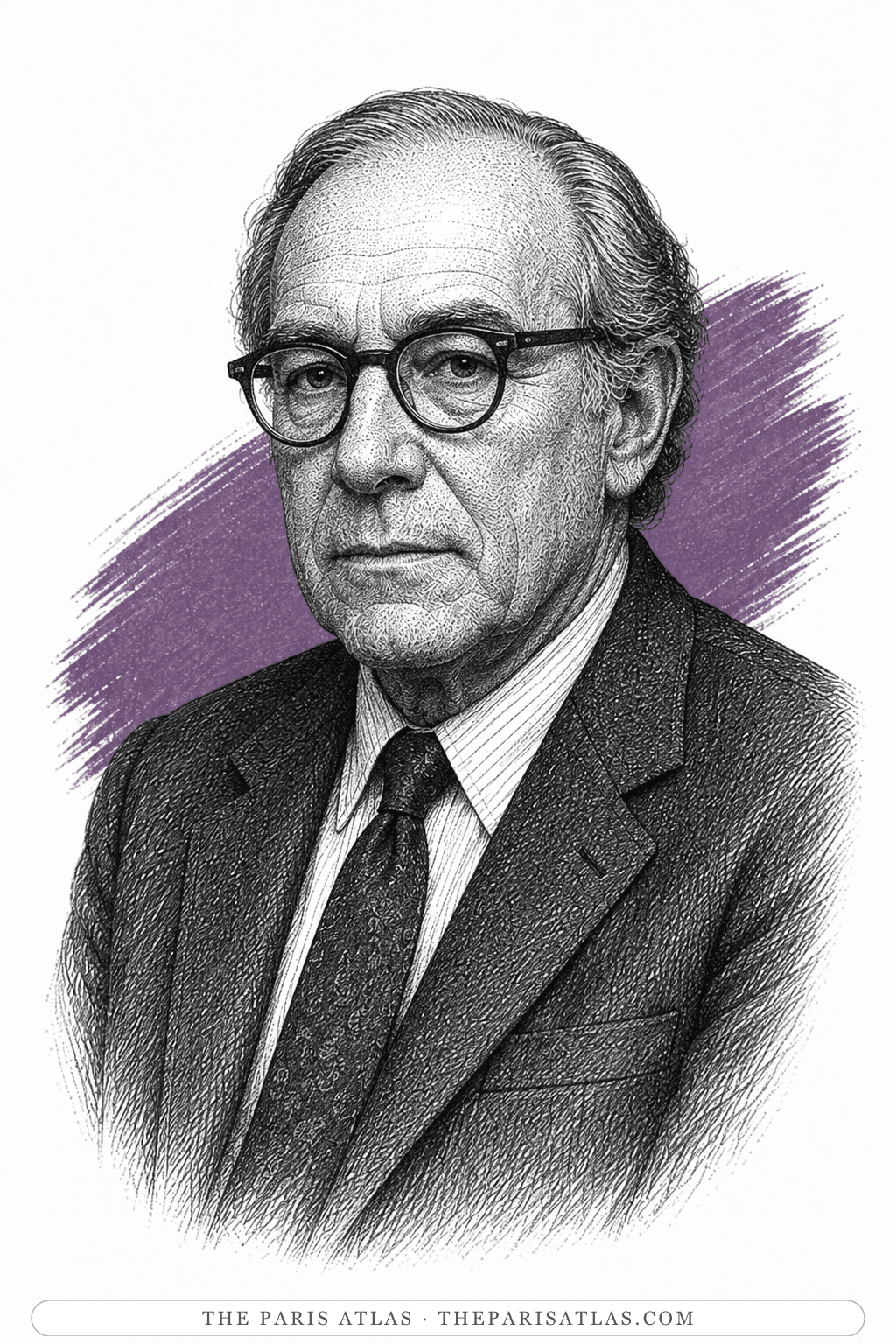
Dr. Spielvogel
The silent psychoanalyst whose one final sentence changes the meaning of the entire confession.
Bring it to book club
- Is Portnoy honest, exhibitionistic, or both?
- What does Sophie actually do, and what does her son exaggerate?
- Why does Portnoy treat sex as rebellion?
- How does class shape his treatment of Mary Jane?
- How does his public-interest career complicate the private portrait?
- What happens to Portnoy’s sense of identity in Israel?
- Why does Roth keep Spielvogel silent until the end?
- Is the final joke hopeful?
Timeline
1969
Random House publishes Portnoy’s Complaint; it becomes a bestseller and major cultural controversy.
1972
Ernest Lehman directs the film adaptation.
2005
Library of America includes the novel in Philip Roth: Novels 1967–1972.
2019
Library of America marks the novel’s fiftieth anniversary with new critical discussion.
Book editions
Hardcover
- Hardcover
- Random House
- 1969
Hardcover
- Hardcover
- Library of America
- 2005

- Paperback
- Vintage
- 1995
- 9780679756453
Reader reviews
Readers may also like


The Subterraneans
Jealous romantic self-exposure races through rapid autobiographical prose.
Read our take
Portnoy’s Complaint: frequently asked questions
Is Portnoy talking to a therapist the whole time?
Yes. Dr. Spielvogel remains silent until the final line, but Portnoy’s entire monologue is addressed to him.
Is the novel autobiographical?
Roth drew on Jewish American life and his cultural environment, but Alexander Portnoy is a fictional character.
Who is ‘the Monkey’?
It is Portnoy’s objectifying nickname for Mary Jane Reed, an important girlfriend whose actual behavior is more complex than his label.
Why was the book controversial?
Its explicit treatment of masturbation, sexual fantasy, Jewish family life, and misogyny shocked many readers in 1969.
Does Portnoy change?
Not within the novel. The ending jokes that the confession has only prepared him to begin analysis.
Is the novel antisemitic?
It satirizes Jewish family and identity from within a Jewish American perspective. Readers and critics have long debated whether its caricatures also reproduce harmful stereotypes.
Why does Portnoy go to Israel?
He hopes the trip may resolve or transform his identity, but it produces another crisis and exposes the limits of escape.
Is it supposed to be funny?
Yes. Comedy is central even when Portnoy’s behavior or language is ugly and painful.
If you like Philip Roth
Explore authors with a similar voice, perspective, and influence.

Henry Miller
The Brooklyn dropout who arrived in Paris broke at thirty-eight and wrote the exuberant, banned books that ended American censorship.
View author
Simone de Beauvoir
French writer and philosopher whose novels, memoirs, and social analysis examined freedom, gender, responsibility, aging, and the material conditions that shape a life.
View author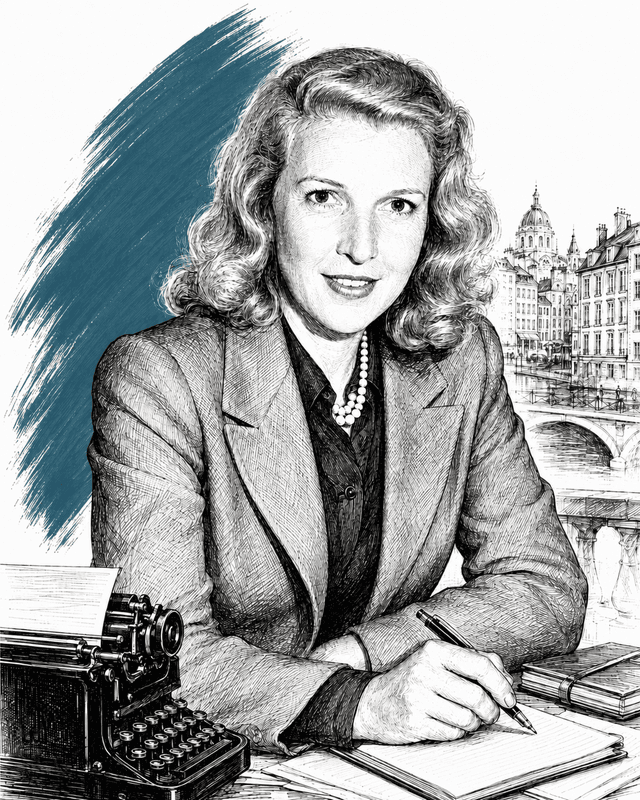
Martha Gellhorn
War correspondent who covered the Spanish Civil War, D-Day, and conflicts across five more decades; Hemingway's third wife, 1940–1945.
View author
References
References
The sources below include the primary text, editions, scholarship, archival materials, and other records that informed this page. They document Portnoy’s Complaint, its publication, and its place in literary history.


2Portnoy’s Complaint — Google Books edition record
Official recordGoogle BooksUsed forGoogle Books catalogue used to cross-check edition metadata.
3Portnoy’s Complaint — Internet Archive ISBN catalogue
Official recordInternet ArchiveUsed forInternet Archive catalogue used to cross-check library holdings.
4Portnoy’s Complaint — Library of Congress books catalogue
Official recordLibrary of CongressUsed forLibrary of Congress catalogue used to cross-check the bibliographic record.

5Revisiting Portnoy’s Complaints 50 years later
WebsiteLibrary of America, 2019Used forLibrary of America essay supplied for publication, controversy, and fiftieth-anniversary context.
6Philip Roth: Novels 1967–1972
Official recordLibrary of America, 2005Used forLibrary of America volume page supplied for collected-edition context.
7Philip Roth — author profile
WebsiteLibrary of AmericaUsed forLibrary of America author page supplied for Roth’s biography and major works.
i
Why these sources are here
The primary text is the baseline reference for every book page. Additional references document publication history, interpretation, and historical context where that evidence is available.
 Explore more resources