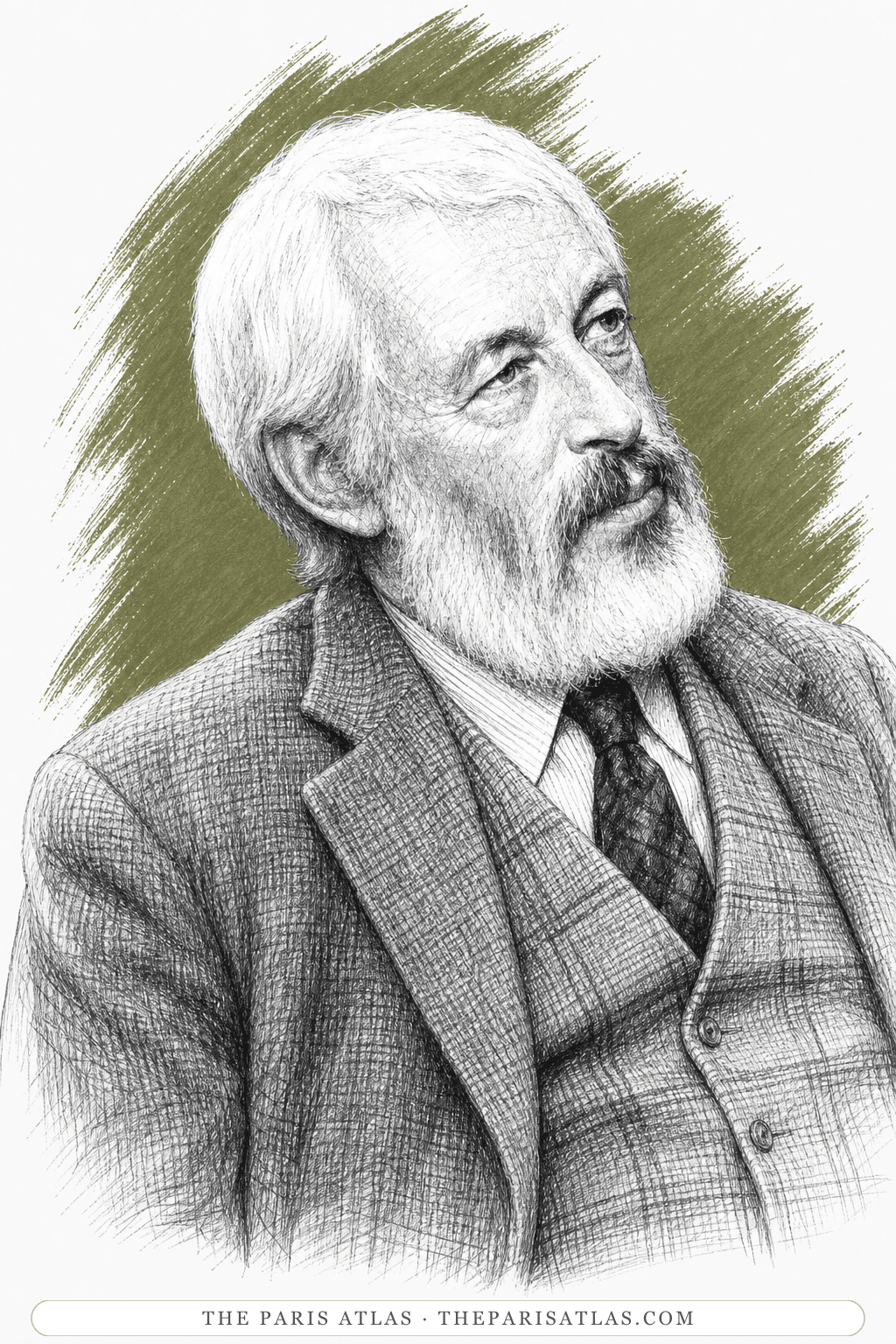


The Ginger Man
J. P. Donleavy’s blackly comic novel of a charming American disaster drinking and scheming his way through postwar Dublin.
- 1955
About J. P. Donleavy
The story, briefly
Spoiler-freeSebastian Dangerfield drinks, borrows, chases women, avoids responsibility, and leaves chaos behind him across postwar Dublin. Donleavy turns poverty, appetite, bad behavior, and relentless survival into a dark comic performance.
The story, in more detail
Sebastian Dangerfield is an American ex-serviceman studying law at Trinity College Dublin after World War II. He has a wife, a baby daughter, very little money, and almost no interest in becoming responsible. He drinks, lies, borrows, cheats, dodges bills, pursues women, and treats steady employment as a personal insult.[1]
The book follows Sebastian through Dublin and beyond as his marriage deteriorates and his schemes multiply. He is frequently cruel, but Donleavy gives him such verbal energy that readers must separate their enjoyment of the narration from their judgment of the man.[1]
The Ginger Man became famous for its sexual frankness, black comedy, and publication history. It first appeared in Paris through Olympia Press, a publisher associated with sexually explicit books. Donleavy later fought a long legal battle over the rights. The novel’s fast, fragmented, suddenly lyrical style has been as influential as its scandalous protagonist.[1]
The full plot
Sebastian Dangerfield lives in Dublin with his English wife, Marion, and their infant daughter, Felicity, while supposedly studying law. Money is almost always short. Sebastian spends what he has on drink, avoids creditors, and treats domestic responsibility as an inconvenience.[1]
His friend Kenneth O’Keefe, another American, provides companionship and contrast. O’Keefe also struggles with sex, money, and purpose, but Sebastian is far more reckless. Sebastian begins affairs, including one with Chris, while his relationship with Marion becomes increasingly hostile.[1]
Domestic arguments become destructive. Sebastian’s charm repeatedly turns into intimidation or violence, and Marion eventually leaves. He continues moving through pubs, rooms, friendships, and sexual encounters, refusing any sustained attempt to reform.[1]
He becomes involved with women including Miss Frost, who offer temporary shelter, affection, or fantasy. Each possibility of stability collapses because Sebastian’s appetite for freedom is inseparable from selfishness. He wants comfort without obligation and affection without accountability.[1]
The novel moves toward England and a series of reversals in Sebastian’s fortunes. He remains obsessed with survival and pleasure, improvising constantly. Money appears and disappears. Relationships begin and break. The picaresque structure makes his continued motion more important than a conventional moral arc.[1]
How it ends — spoilers ahead
Sebastian does not undergo a clean transformation. The novel closes with him still moving through the world with his appetite, self-pity, humor, and defiance intact.
Readers never receive the satisfaction of seeing him properly punished or reformed. Consequences accumulate, but Sebastian turns each consequence into another story about himself.
That refusal is central to Donleavy’s design. The book asks whether style, charm, and vitality can make a terrible man compelling without making him good.
Themes and analysis
Charisma and moral failure
Sebastian’s charm is real, but so is the damage he causes. The novel forces readers to hold those facts together instead of treating charm as proof of goodness.
In the opening conversation, Sebastian dresses up pawning an electric heater as a visit to his broker. O’Keefe immediately translates the elegant financial language back into a household loss and asks whether Marion knows. The joke depends on hearing both descriptions at once. Sebastian can make the transaction sound prosperous, but his friend restores the person whose comfort is at stake. Before Marion appears, that brief question gives his performance a cost outside the conversation.
Poverty and improvisation
Money drives many scenes. Sebastian’s refusal of steady work turns ordinary economic pressure into a constant comic emergency, usually paid for by somebody else.
Marriage and irresponsibility
Marion’s frustration is not prudishness. She is trapped with a husband who repeatedly chooses drink, affairs, and personal freedom over family stability.
Postwar dislocation
Sebastian and O’Keefe are Americans living in a Europe still marked by war and austerity. Their drifting has historical as well as personal roots, though Sebastian uses restlessness to excuse choices that remain his own.
O’Keefe’s account of his bath brings two versions of American privilege into collision. He remembers Harvard’s convenient showers while struggling to dry his washed underwear in Trinity, yet other students assume that American benefits make him rich. His complaint about a cheque that has never arrived turns that assumption into a bitter joke. The comparison gives postwar dislocation a practical scale: comfort remembered, money expected, and neither available when needed. It also lets O’Keefe’s irritation interrupt Sebastian’s more expansive talk.
Masculinity
Sebastian performs confidence, sexual conquest, and contempt for domestic duty as proof of freedom. The novel repeatedly shows the intimidation, misogyny, infidelity, and emotional abuse beneath that performance.
Style versus judgment
The prose can make Sebastian’s chaos exhilarating. That pleasure complicates moral judgment rather than resolving it. A lively sentence does not undo the domestic violence and suffering within the scene.
Writing style
Donleavy uses fragmented sentences, sudden shifts between first and third person, interior monologue, dark comedy, and lyrical bursts. The prose often speeds up when Sebastian escapes responsibility and slows into melancholy when his confidence cracks.
The style is part of Sebastian’s seductive force. A plain realist account would make his conduct much harder to tolerate. Donleavy instead lets the movement and music of the language show why people keep listening even when they know better.
Editions and translations
The Olympia Press first edition matters because censorship and the publisher’s erotic list shaped the novel’s reputation. Grove Press later became its principal American publisher and issued a major anniversary paperback in 2010.
Major adaptations
The novel has inspired stage and other adaptations, but none has displaced the book as the central version. Specific production histories should be checked independently before they are used to interpret the novel.
Why we recommend it
A charming disaster
Dangerfield’s poverty, sex, black comedy, and spectacular irresponsibility echo Miller at his most reckless.
Language as seduction
Fragmented perspective and lyrical bursts make Sebastian’s evasions compelling without making them admirable.
Postwar Dublin in motion
Pubs, cramped homes, unpaid bills, student life, and austerity give the antihero’s schemes a hard material setting.
What this book explores
The people in its pages

Sebastian Dangerfield
The American law student, husband, father, drinker, and adulterer whose charm powers the novel’s destructive comedy.

Marion Dangerfield
Sebastian’s English wife, who tries to protect herself and Felicity from the chaos he creates.
Also in the book

Felicity
Sebastian and Marion’s infant daughter, whose dependence makes his irresponsibility impossible to dismiss as harmless rebellion.

Kenneth O’Keefe
Sebastian’s American friend and fellow student, whose anxieties provide companionship and comic contrast.

Chris
One of Sebastian’s important lovers, who offers genuine warmth but cannot make him reliable.

Miss Frost
An observant woman whose involvement with Sebastian helps carry the later picaresque movement.
Bring it to book club
- Why is Sebastian entertaining despite his behavior?
- Does the novel criticize him enough, or is criticism the reader’s job?
- How does Marion change the moral balance of the book?
- What does money reveal about Sebastian’s idea of freedom?
- How does Donleavy use shifts in point of view?
- Is Kenneth O’Keefe a genuine alternative to Sebastian?
- What does postwar Dublin contribute to the atmosphere?
- Would the novel work in conventional prose?
Timeline
1955
Olympia Press publishes the first edition in Paris.
Late 1950s–1960s
The book becomes internationally notorious and is widely reprinted.
1960s–1970s
Donleavy fights publisher Maurice Girodias in a long rights dispute.
2010
Grove Press issues a major anniversary paperback with an introduction by Jay McInerney.
Book editions
Paperback
- Paperback
- Olympia Press
- 1955

- Paperback
- Grove Press
- 2010
- 9780802144669
Reader reviews
Readers may also like

On the Road
Another restless novel that turns irresponsible living into narrative energy.
Read our take

Sexus
Another semi-autobiographical book about sex, marriage, and refusal of conventional adulthood.
Read our take


The Ginger Man: frequently asked questions
Is Sebastian Dangerfield supposed to be likable?
He is designed to be charismatic, funny, selfish, and often appalling. Enjoying the voice is not the same as approving of him.
Is The Ginger Man autobiographical?
Donleavy drew from his postwar years as an American student in Dublin, but Sebastian is a fictional creation.
Why was the book controversial?
Its sexual content, obscenity laws, and publication by Olympia Press all contributed to its notoriety.
Is it a comedy?
Yes, but an extremely dark one. Domestic cruelty and real suffering sit beside farce.
Why does the perspective shift?
The unstable movement between first and third person keeps the reader close to Sebastian while also creating distance from him.
Does Sebastian change?
Not in a conventional redemptive sense. His circumstances change, but his appetite and evasions remain.
What does the title mean?
“Ginger man” becomes associated with Sebastian’s unruly, irrepressible identity rather than functioning as a simple plot label.
Is the book difficult to read?
The prose is fragmented and unusual, but its comic momentum often makes it easier to follow than denser modernist fiction.
If you like J. P. Donleavy
Explore authors with a similar voice, perspective, and influence.

Ernest Hemingway
Author of The Sun Also Rises and A Moveable Feast; his pared-down style, developed in 1920s Paris, became the most imitated in American prose.
View author
Louis-Ferdinand Céline
The doctor of the Paris slums who wrote the century's blackest, funniest novel — and changed the sound of French prose.
View author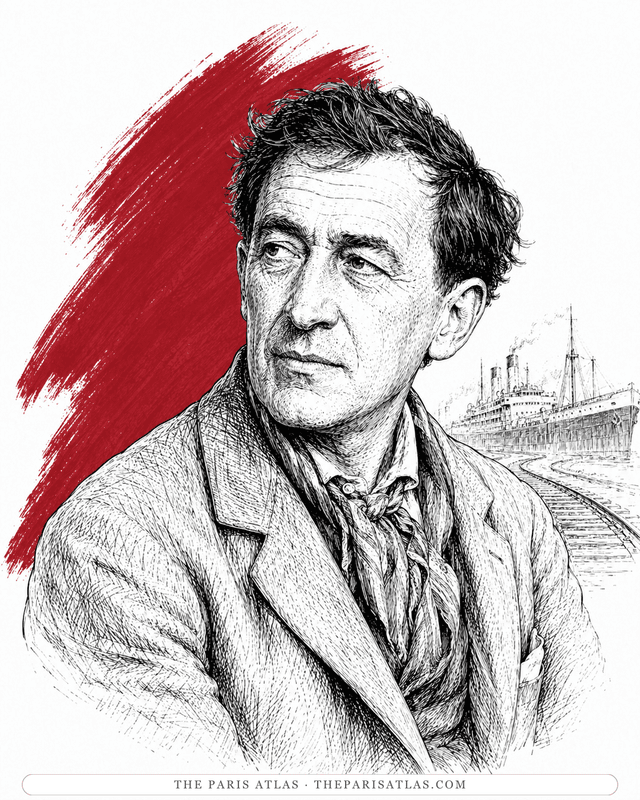
Blaise Cendrars
The one-armed adventurer-poet of the Paris avant-garde — La Prose du Transsibérien, Moravagine, the memoir tetralogy — and the living writer Henry Miller ranked above all others.
View author
References
References
The sources below include the primary text, editions, scholarship, archival materials, and other records that informed this page. They document The Ginger Man, its publication, and its place in literary history.


2The Ginger Man — Grove edition
Official recordGrove Atlantic, 2010Used forPublisher record for the Grove edition, setting, picaresque framing, and introduction.

3Tribute to Acclaimed Author, Playwright and Poet J. P. Donleavy
BiographyTrinity College DublinUsed forUniversity account of the novel’s Trinity origins, publication, and reception.
4J. P. Donleavy’s The Ginger Man at 60
PeriodicalThe Irish Times, 2015Used forDetailed account of the Olympia Press publication and rights history.
i
Why these sources are here
The primary text is the baseline reference for every book page. Additional references document publication history, interpretation, and historical context where that evidence is available.
 Explore more resources