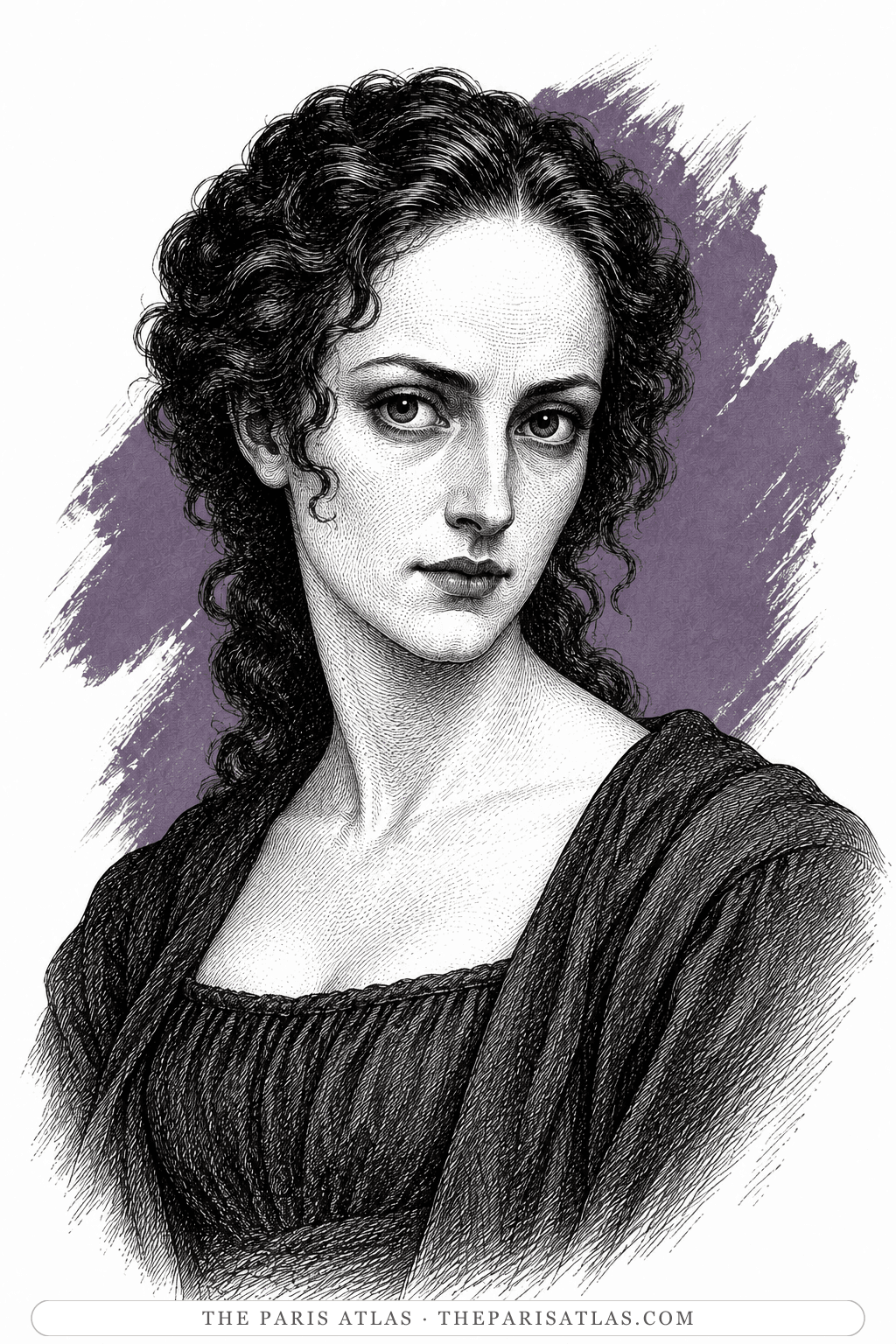
Ligeia
The narrator’s first wife, remembered for her learning, quiet voice, and powerful will.
The book

Who they are in the book
Spoiler-freeLigeia is the narrator's first wife in Edgar Allan Poe's story of that name. He remembers her beauty, learning, and exceptional intensity, but cannot recover basic facts about how they met. The portrait combines admiration with a serious problem of evidence: the more powerfully he evokes her presence, the less securely he can establish her ordinary history.
Vivid detail does not guarantee reliable memory
The narrator admits that he cannot remember when and where he first encountered Ligeia, and cannot supply her paternal name. He nonetheless offers an elaborate account of her face, hair, eyes, and voice. Poe places failures of memory beside claims of extraordinary precision.
That arrangement invites the reader to ask what kind of portrait is being produced. The description may preserve intense impressions without giving transparent access to the woman herself. Ligeia's mystery is partly something the narrator experiences, and partly something his account creates by substituting charged detail for verifiable context.
She is an intellectual authority
Ligeia's knowledge reaches beyond what the narrator believes he can master. He describes depending upon her guidance in difficult studies. Their relationship therefore includes an unequal distribution of intellectual power in which the wife is the stronger figure.
This matters because reducing Ligeia to an unusually beautiful object would miss the dependence the narrator acknowledges. He admires her capacity to lead his thinking. Her threatened loss would deprive him of both a beloved person and an authority through whom he understands the world.
The force of her desire to live
During illness, Ligeia's will becomes a focus of the narrator's attention. Her struggle gives emotional urgency to the story's speculation about whether human will can resist death. The question emerges through his account of a particular woman's intensity rather than through a demonstrated supernatural rule.
Readers should preserve that difference. Ligeia's determination is part of the portrait; the power that determination might possess remains a problem the story develops. The narrator's need to believe in her continuing presence can shape what he later thinks he sees.
Reading the version in this collection
The version printed in Tales of the Grotesque and Arabesque does not contain the later insertion of the poem The Conqueror Worm. A reading of this collection should therefore follow its treatment of Ligeia's illness and will without importing that later passage as though it were already present.
The distinction changes the evidence available for interpretation. It also gives the reader a useful reason to check editions: Poe revised stories, and a familiar modern text may not reproduce the form that appeared in an earlier volume.
Sources and passages
- Edgar Allan Poe, Ligeia, 1840 collection text
Primary text: pages 171–192, including the narrator's memory failures, Ligeia's learning, illness, and the concluding identification. This version precedes the insertion of The Conqueror Worm.
How Ligeia Is Portrayed
- An uncertain personal historyThe narrator cannot securely recall when or where he met Ligeia and says that he never knew her family name.
- A quiet arrivalHe remembers Ligeia entering his study so softly that her voice or hand on his shoulder first made him notice her.
- Distinctive featuresHis account gives her a pale forehead, dark curling hair, and unusually large black eyes. He dwells on their expression without claiming to understand it.
- Learning that exceeds her husband’sThe narrator describes Ligeia’s knowledge of languages and sciences as greater than his own. Her abilities guide their shared study.
- Calm speech and intense feelingLigeia’s low, musical voice contrasts with the force of what she says. The husband repeatedly tries to understand that combination.
- Resistance to illnessAs Ligeia becomes seriously ill, the narrator describes her strong desire to remain alive. He presents her outward calm alongside that struggle.
If you like Tales of the Grotesque and Arabesque


If you like Edgar Allan Poe
Explore authors with a similar voice, perspective, and influence.
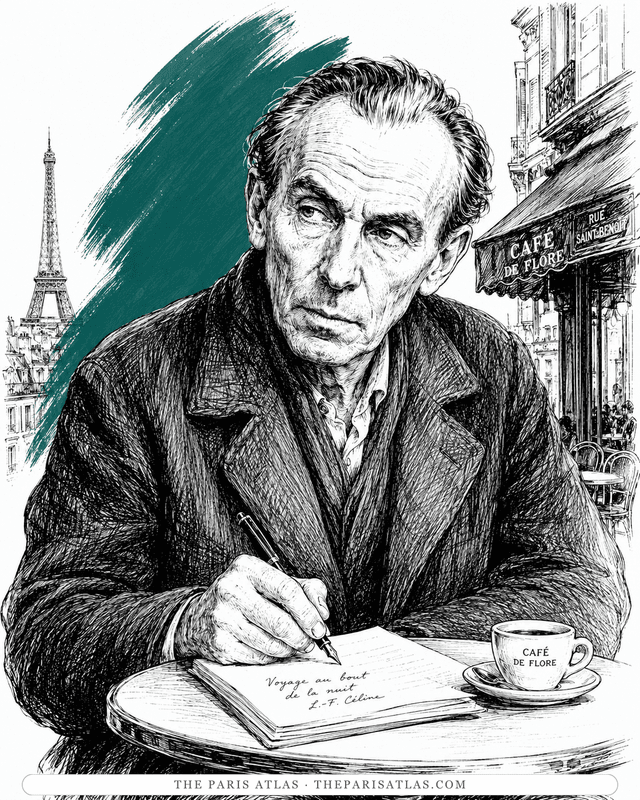
Louis-Ferdinand Céline
The doctor of the Paris slums who wrote the century's blackest, funniest novel — and changed the sound of French prose.
View author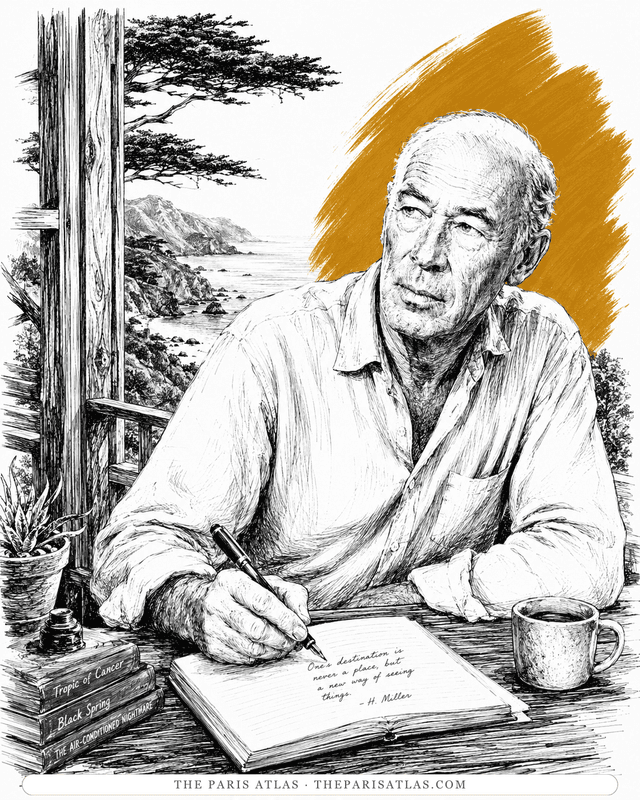
Henry Miller
The Brooklyn dropout who arrived in Paris broke at thirty-eight and wrote the exuberant, banned books that ended American censorship.
View author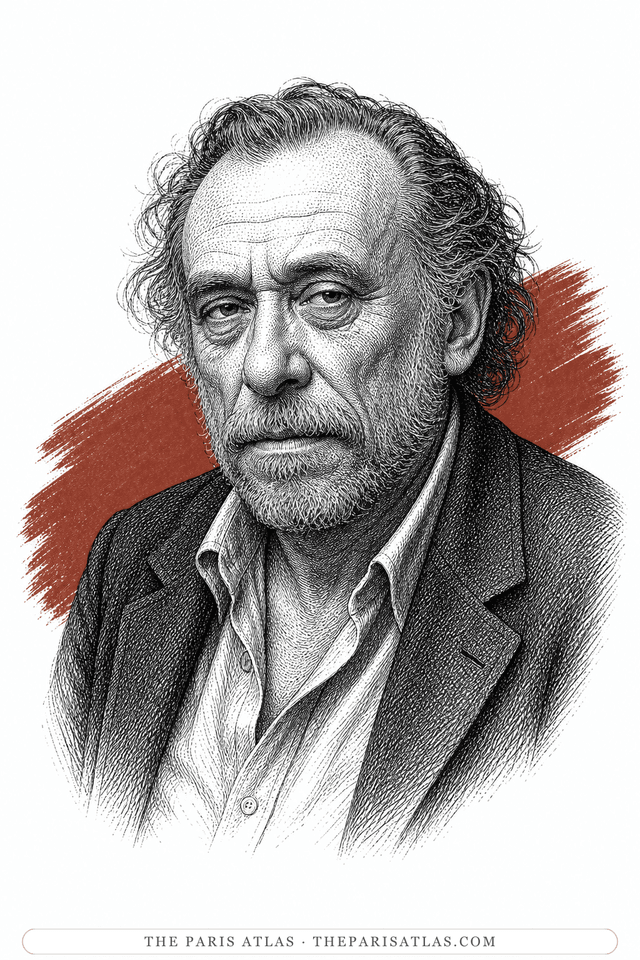
Charles Bukowski
American poet and novelist of Los Angeles rooming houses, racetracks and the post office, who quit his job to write when a publisher offered him a hundred dollars a month. He came to Paris once, in September 1978, drank his way through a live television book programme and walked off the set — and French television has been replaying it ever since.
View author