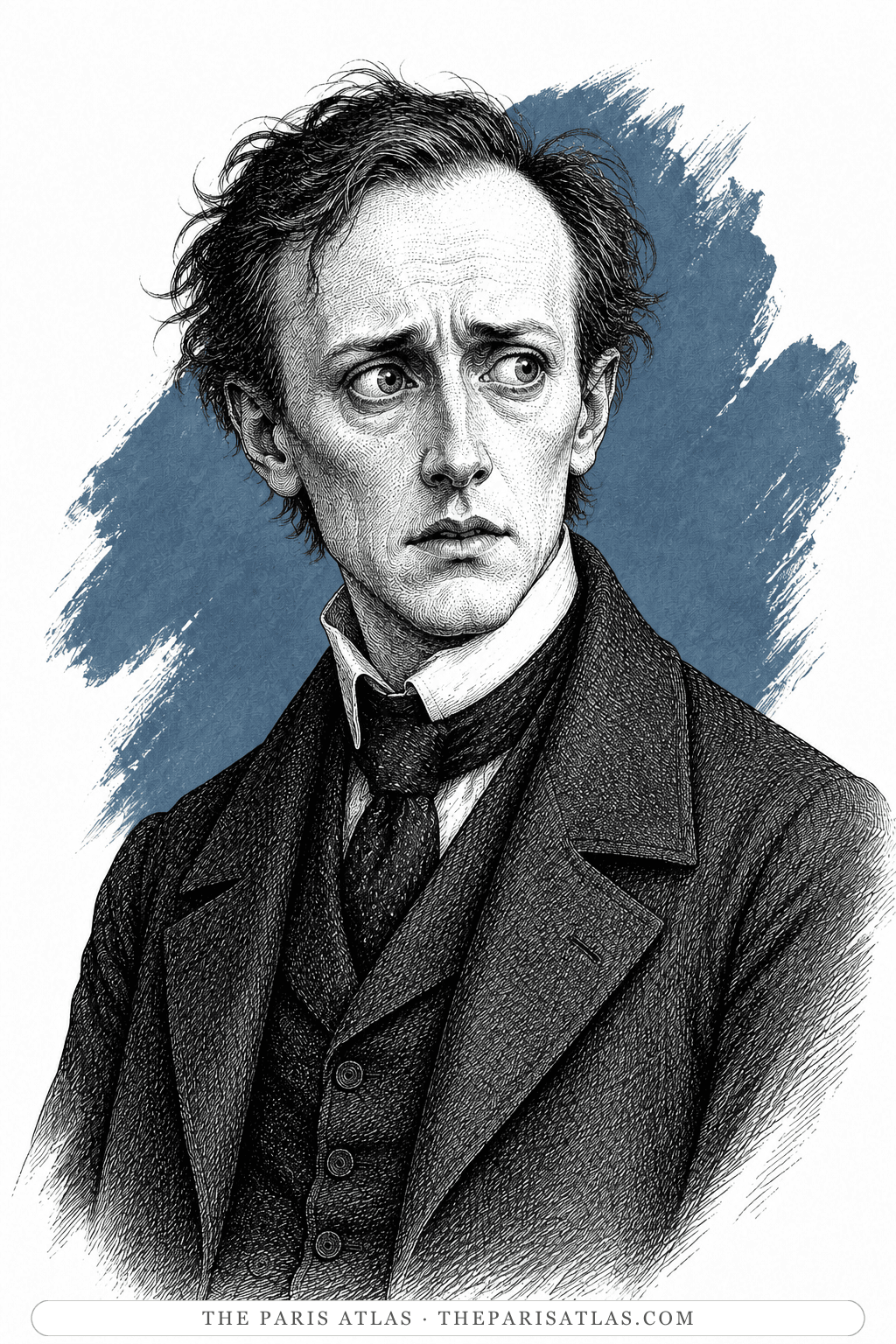
Roderick Usher
The ailing friend whose urgent invitation brings the narrator to the House of Usher.
The book

Who they are in the book
Spoiler-freeRoderick Usher is the ailing owner of the ancestral mansion in Edgar Allan Poe's The Fall of the House of Usher. He summons an old friend because he hopes companionship can relieve his distress. The visit gives the story its narrator and places an apparently outside observer inside a household governed by illness, isolation, and fear.
He fears what fear will do to him
Roderick describes unusually painful responses to light, smells, food, clothing, and sound. His world has contracted because ordinary sensations have become difficult to endure. The details make withdrawal understandable before his beliefs about the house become more extravagant.
His most revealing explanation concerns fear itself. He dreads the effect a future event might have on his already agitated mind. That creates a trap: anticipating another shock becomes a continuing source of shock. The narrator can offer distraction, but cannot simply remove the expectation through which Roderick experiences everything around him.
An artist who gives fear a form
Roderick paints, plays music, and makes up verses. The narrator hopes these activities will provide relief, yet Roderick's art repeatedly approaches the same territory as his anxieties. An imagined underground vault and the poem The Haunted Palace make confinement and damaged order perceptible in different forms.
His artistic sensitivity is therefore neither a simple cure nor proof of madness. It allows him to produce powerful images, while also giving the narrator new ways to imagine danger. The reader encounters a person whose capacity to perceive and invent is inseparable from the distress those perceptions and inventions may intensify.
Why the house and the family become difficult to separate
The name House of Usher refers both to the building and to the family. Roderick believes that the arrangement of the mansion and its surroundings has acquired influence over him. This is his explanation, not an independently established law of the story's world.
The narrator also finds correspondences between the old structure and its inhabitants. Because the visitor arrives already affected by the landscape, his account cannot function as a completely detached inspection. Roderick's beliefs become more persuasive within a voice that is itself increasingly susceptible to them.
His dependence on Madeline
Roderick describes his sister Madeline as his companion and remaining close relation. Her severe illness gives his anxiety an immediate cause. The possibility of losing her also means the loss of the small human world that has survived around him.
Yet readers mainly learn about Madeline through Roderick and the visiting narrator. His intense concern is not the same as reliable knowledge of her condition or wishes. That imbalance becomes essential to evaluating his conduct as the story develops. Compassion for his suffering cannot settle every question about what he does.
Sources and passages
- Edgar Allan Poe, The Fall of the House of Usher
Primary text: the 1840 collection version, pages 75–103. Roderick's sensory distress, art, and account of the mansion precede the burial and final confession.
How Roderick Usher Is Portrayed
- An urgent appealRoderick’s letter asks his old friend to relieve his distress through companionship. Its agitation persuades the narrator to come in person.
- A changed appearanceThe visitor finds Roderick extremely pale, with bright eyes and fine, unkempt hair. The familiar face has become difficult to recognize.
- Unstable speech and movementRoderick shifts between lively behavior and withdrawal. His voice moves from hesitation to slow, forceful utterance.
- Heightened sensitivityRoderick says that light, flower scents, many sounds, and some clothing textures distress him. Ordinary surroundings are hard for him to endure.
- Fear of fear itselfRoderick describes his dread of what future events may do to his mind. Even a small incident seems capable of overwhelming him.
- Attachment to his sisterRoderick calls Madeline his remaining relative and longstanding companion. Discussing her illness makes him fear the end of his family.
If you like Tales of the Grotesque and Arabesque


If you like Edgar Allan Poe
Explore authors with a similar voice, perspective, and influence.
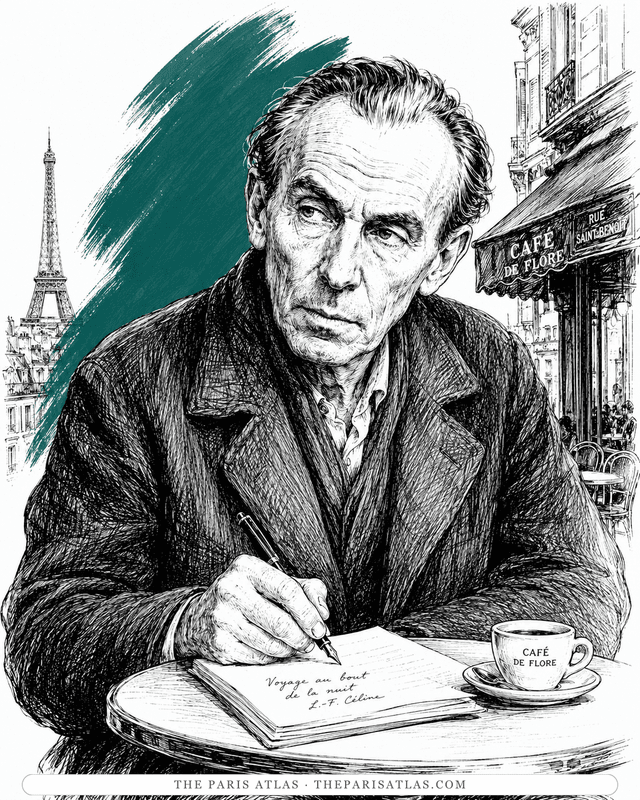
Louis-Ferdinand Céline
The doctor of the Paris slums who wrote the century's blackest, funniest novel — and changed the sound of French prose.
View author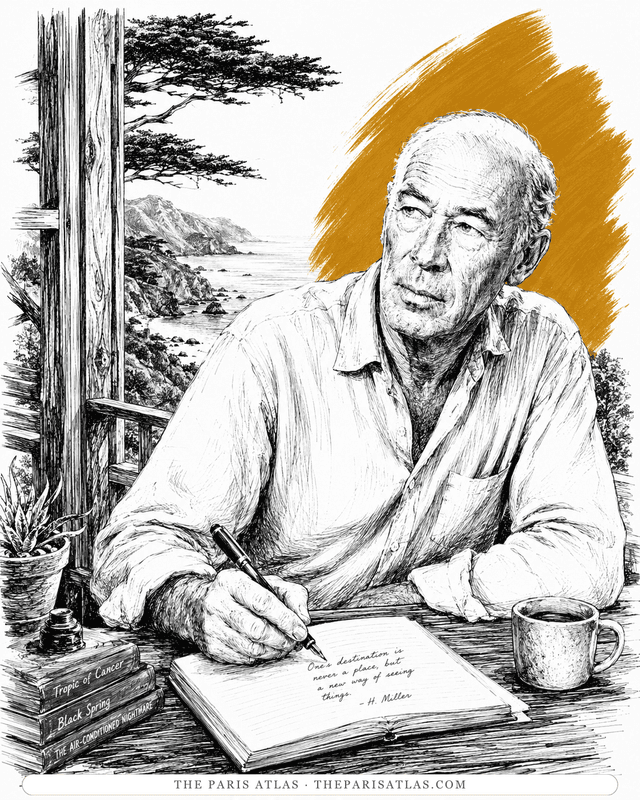
Henry Miller
The Brooklyn dropout who arrived in Paris broke at thirty-eight and wrote the exuberant, banned books that ended American censorship.
View author
Charles Bukowski
American poet and novelist of Los Angeles rooming houses, racetracks and the post office, who quit his job to write when a publisher offered him a hundred dollars a month. He came to Paris once, in September 1978, drank his way through a live television book programme and walked off the set — and French television has been replaying it ever since.
View author