

Bonjour Tristesse
Both short French novels center a teenage girl whose desire and choices are not reduced to a moral lesson. Sagan is more linear and socially comic; Duras is darker and more fragmented.
Read our take
A woman returns to the affair she began at fifteen and discovers that memory has changed what she thought she knew.
An unnamed French woman looks back on the relationship she began at fifteen and a half with a wealthy Chinese man about twelve years older than she was. They meet on a Mekong ferry in French-ruled Indochina, then begin seeing each other in his room in Cholon, the Chinese commercial district beside Saigon. Money, age, family violence, and racial prejudice shape every part of the affair. The girl says she does not love him, but the older narrator keeps returning to what that claim leaves out. Marguerite Duras tells the story in brief, shifting memories rather than a straight timeline, so the book becomes as much about how a life is remembered as about what happened.[1]
The narrator is an older writer remembering herself as a white French schoolgirl in colonial Indochina. Her family has the legal and social advantages attached to being French, but very little money. Her widowed mother is a teacher whose failed land purchase has left the household anxious and unstable. The mother favors a violent elder son, while the narrator feels fiercely protective of the brother she calls the younger one, even though he is two years older than she is.[1]
On the ferry between Vinh Long and Sadec, the girl wears an unusual combination: a worn silk dress, gold lamé evening shoes, and a man’s felt hat. A Chinese man in a chauffeur-driven limousine notices her and offers her a ride to Saigon. He is around twenty-seven, the son of a very rich property owner, and has returned from an unsuccessful period of study in Paris. Their relationship soon becomes sexual. The novel does not present this as a simple romance: she is a minor, he is an adult, she is drawn to his money as well as to him, and he has far more freedom of movement. Yet colonial racism also gives her poor white family a kind of social power that his wealth cannot erase.[1]
Duras wrote the book decades after the events it reshapes. The narrator moves between first person and third person, between Indochina and wartime Paris, and between what she knew then and what she believes now. Some details are stated confidently and others are corrected a page later. That instability is deliberate. The book asks what memory can reveal when it cannot produce a complete, orderly record.[1]
The book opens with the older narrator thinking about her aged face and about a photograph that was never taken. She then returns to the image that organizes the book: herself at fifteen and a half on a ferry crossing a branch of the Mekong between Vinh Long and Sadec. She is going back to her state boarding school in Saigon after a visit to her mother, who is headmistress of a girls’ school in Sadec.[1]
The girl’s clothes make her noticeable. She wears a threadbare silk dress that belonged to her mother, gold lamé shoes bought at a final sale, and a man’s flat-brimmed felt hat. Her family is almost broke, but because they are white French colonials they still have a household servant and social privileges denied to many local residents. Poverty and privilege exist together rather than canceling each other out.[1]
A wealthy Chinese man sees the girl from his large black limousine. He is about twelve years older than she is and has a chauffeur. He approaches nervously, offers her a cigarette, and asks whether he may drive her to Saigon. The girl accepts. He is the son of an extremely rich businessman whose property extends from Sadec to Cholon. The son has studied unsuccessfully in Paris and remains financially dependent on his father.[1]
The man takes the girl to a private room in Cholon. Their relationship becomes sexual. He is openly in love and often afraid of losing her. She repeatedly says that she does not love him and talks directly about the importance of his money. At the same time, the older narrator remembers tenderness, desire, grief, and dependence that make her younger self’s denial less certain than it sounds.[1]
The family crisis is always present. The girl’s widowed mother has lost money through a disastrous land purchase and moves between fierce determination and periods of despair. She favors the elder brother, who steals, intimidates the family, attacks the younger brother, and attempts to sexually assault Dô, the household worker. The narrator loves the younger brother and believes the elder brother’s violence helped destroy him.[1]
The Chinese man begins paying for expensive meals and outings with the girl’s family. Her mother and brothers accept what he buys but treat him with contempt because he is Chinese. The elder brother refuses to speak to him even while eating his food and drinking what he orders. The arrangement shows that money does not overturn every social hierarchy: the man is rich, but the poor French family still considers itself above him.[1]
At the Saigon boarding school, the girl’s closest companion is Hélène Lagonelle, a seventeen-year-old student from Da Lat. Hélène worries when the narrator stays out all night. The narrator is also strongly attracted to her. Duras does not give that desire a later identity label; she records it as part of the girl’s emotional and sexual life beside the affair with the man from Cholon.[1]
The school learns that the girl has missed class and slept elsewhere. A teacher says her mother must be informed. Instead of imposing stricter control, the mother persuades the school to let her daughter come and go. Gossip spreads in Sadec and the French girls at the high school stop speaking to her. The girl continues arriving in the black limousine and refuses to change her clothes or routine.[1]
The Chinese man asks his father to let him keep the girl and eventually marry her. His father refuses. He expects his son to marry the Chinese girl selected by their families and to produce an heir. The son will not risk his inheritance and family position by breaking with him. The narrator also refuses the possibility of staying. Both understand that her departure for France will end the affair.[1]
The girl, her mother, and the younger brother board a mail steamer for France. The Chinese man watches from his limousine at the harbor. The girl hides her tears from her family. During the long voyage, a Chopin waltz suddenly brings back the man from Cholon, and she realizes that she may have loved him in a way she could not recognize while they were together.[1]
After the girl leaves, the Chinese man obeys his father and marries the Chinese woman chosen for him. The narrator does not claim to know exactly what happened inside that marriage. She imagines possibilities, then marks them as possibilities rather than facts.
Years pass through war, marriages, children, divorces, and books. The younger brother dies at twenty-seven, a loss the narrator describes as shattering. Her grief for him becomes another example of the book’s method: a later death changes the meaning of the childhood scenes that came before it.
The novel ends years after the war. The Chinese man has come to Paris with his wife and telephones the narrator. She recognizes his voice immediately. He tells her that he has never stopped loving her and will love her until death. The call does not create a reunion or erase the differences that shaped the affair. It confirms that the relationship remained alive in memory for both of them, even though they built separate lives.
The main memories take place around 1929–1931 in the southern part of French Indochina, the colonial federation that included present-day Vietnam, Cambodia, and Laos. Saigon was the administrative and commercial center of southern Vietnam. Cholon, now part of Ho Chi Minh City, had a large Chinese population and a major business district. Sadec and Vinh Long were towns in the Mekong Delta.
French colonial rule gave white French residents legal and social advantages over many Vietnamese, Chinese, and mixed-ancestry residents. The narrator’s family is poor, but the girl still sits in the bus section reserved for white passengers and attends a French high school. The Chinese man is extremely wealthy, but the French family treats his ethnicity as a reason to reject and insult him. The book makes both facts visible at once.
The relationship begins when the girl is fifteen and a half and the man is about twenty-seven. That age difference matters. He is an adult with a car, money, private rooms, and experience in Paris. She is a schoolgirl whose family cannot reliably provide clothes, fees, or safety. A modern reader does not have to ignore that imbalance in order to understand why the relationship matters to her.
Because the forms of power point in different directions, neither person can be described simply as the stronger one in every situation. The man has adult and financial power. The girl has the racial status of a white French colonist and the ability to leave. His father has power over his son’s future. Duras keeps these pressures visible instead of turning the affair into a clean lesson or an uncomplicated love story.
The affair is not separate from the narrator’s home life. Her mother has invested in land that cannot be farmed successfully and spends years fighting officials. The household lives on a teacher’s salary while trying to preserve the habits and appearance of a French colonial family. The girl’s wish to write, her attention to money, and her willingness to enter the limousine all grow inside that pressure.
The elder brother rules through fear and is protected by his mother. The younger brother and the narrator share laughter, fear, and a quiet alliance. Dô stays with the mother even when she is unpaid and after the elder brother attacks her. The narrator’s later grief does not make these relationships orderly. Love, anger, loyalty, favoritism, and dependence remain mixed together.
The book draws on Duras’s childhood, but it is a crafted literary work, not a sworn record. The narrator resembles the author and becomes a writer, yet the book changes names, compresses time, imagines scenes, and sometimes gives different versions of the same event. Calling it autobiographical does not mean every sentence should be treated as documentary fact.
The central ferry image is described as a photograph that could have been taken but was not. That missing picture explains the method of the book. Duras cannot simply inspect the past, so she rebuilds it through clothing, river light, a hat, a car, a voice, and later knowledge. What survives is not a complete archive but a group of images that keep changing meaning.
The departure scene shows this change directly. While leaving, the girl hides her grief and maintains that she does not love the man. On the voyage, music breaks through that certainty. The older narrator does not replace the first version with a final answer. She lets denial, desire, regret, and love remain in the same memory.
Duras writes in short, controlled passages. A sentence may begin with the ferry, move to a family photograph, and end decades later in Paris. The transitions are abrupt, but the recurring images provide a clear path: the hat, the gold shoes, the limousine, the river, the boarding school, and the ship keep returning.
The narrator sometimes says “I” and sometimes calls her younger self “the girl.” The change creates distance without pretending that the older woman is a neutral observer. She is both the person who lived the events and the writer arranging them now.
Repetition is one of the book’s main tools. Important claims return with small changes. A detail is remembered, doubted, corrected, or made more precise. The result resembles the movement of memory: people often return to the same scene because the meaning is not finished, not because they have forgotten that they already told it.
The language is intimate without explaining every feeling. Duras can move from sex to money, from family cruelty to a dress, or from a ship’s music to grief in a few lines. Readers are asked to notice these connections rather than wait for a single statement that tells them what the affair finally meant.
Les Éditions de Minuit published L’Amant in 1984. It won that year’s Prix Goncourt and became Duras’s best-known book. Barbara Bray’s English translation appeared in 1985 in the United States and in 1986 in Britain. A 2024 French anniversary edition adds manuscript material and interviews about how the book developed.
Duras returned to the same material in L’Amant de la Chine du Nord, published by Gallimard in 1991 and translated as The North China Lover. The retelling was prompted partly by the film adaptation then being developed. It is not simply an expanded chapter of The Lover. It retells the relationship with more scenes and dialogue and should be read as another version of the memory.
Jean-Jacques Annaud directed the 1992 film adaptation, starring Jane March as the girl and Tony Leung Ka-fai as the Chinese man, with Jeanne Moreau providing the older narrator’s voice. The BFI lists the film at 115 minutes and gives it an 18 certificate for strong sexual content. The film makes the affair visually continuous in a way the novel does not; the book keeps interrupting it with family history, later memory, and uncertainty. Duras was dissatisfied with the adaptation and reworked the material herself in The North China Lover.
Its 128 pages hold a complete story, a difficult family, a colonial setting, and a sustained argument about how memory changes experience.
She can want money, deny love, feel desire, see danger, and revise her own claims without being forced into one clean explanation.
Duras replaces a straight timeline with recurring images, so the reader experiences memory being rebuilt rather than receiving a settled report.

The unnamed French schoolgirl who enters the affair at fifteen and a half, then retells it decades later as a writer.

A wealthy man from Cholon, about twenty-seven, whose love for the girl is limited by his dependence on his father.

A widowed French school headmistress whose determination, despair, favoritism, and financial losses shape the entire family.

The favored son whose theft, intimidation, and violence make the family home dangerous.

The gentle brother the narrator calls her child, although he is actually two years older than she is.

The narrator’s seventeen-year-old boarding-school friend, a source of comfort, worry, and intense desire.
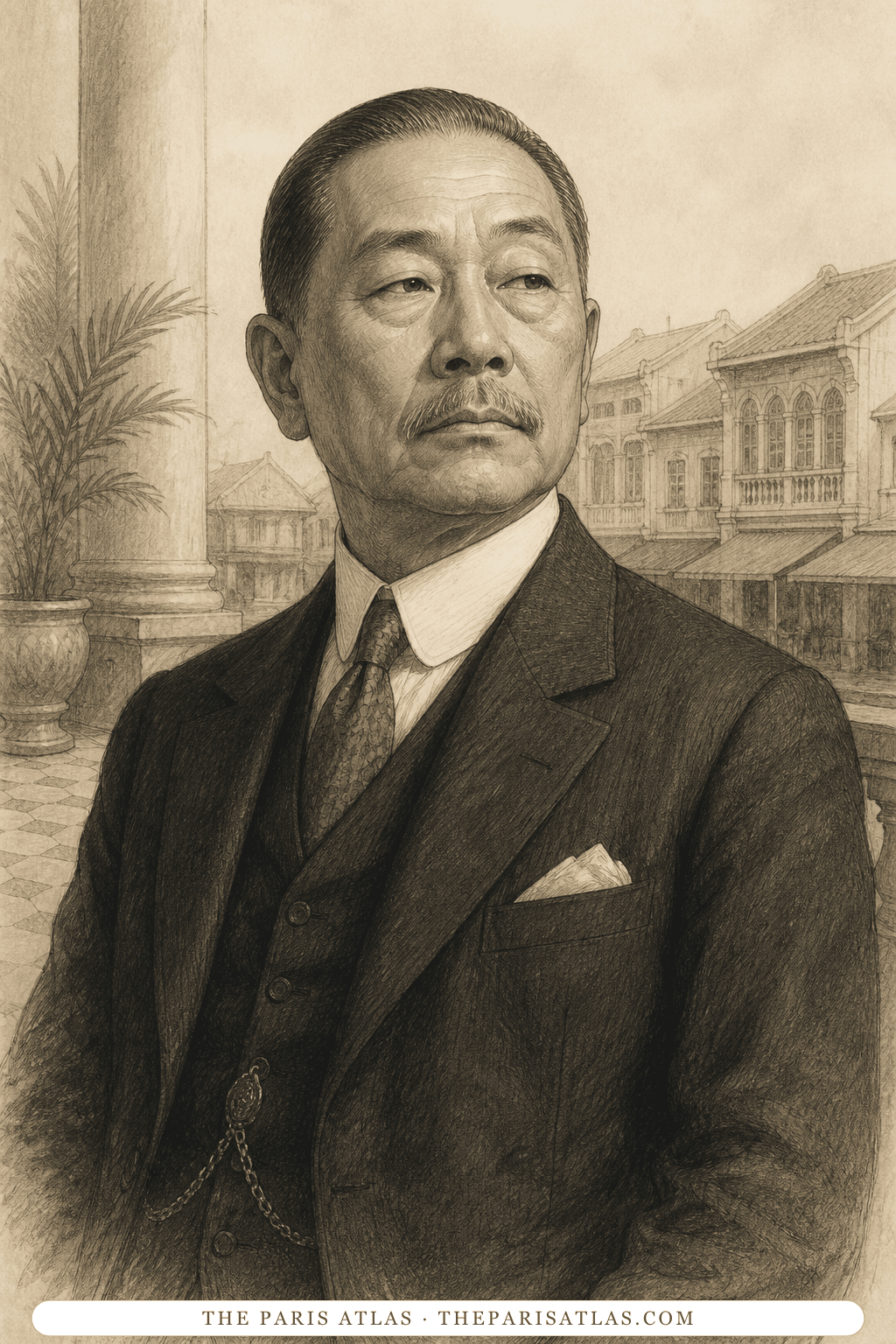
A rich property owner whose control of money and inheritance decides that his son cannot marry the girl.
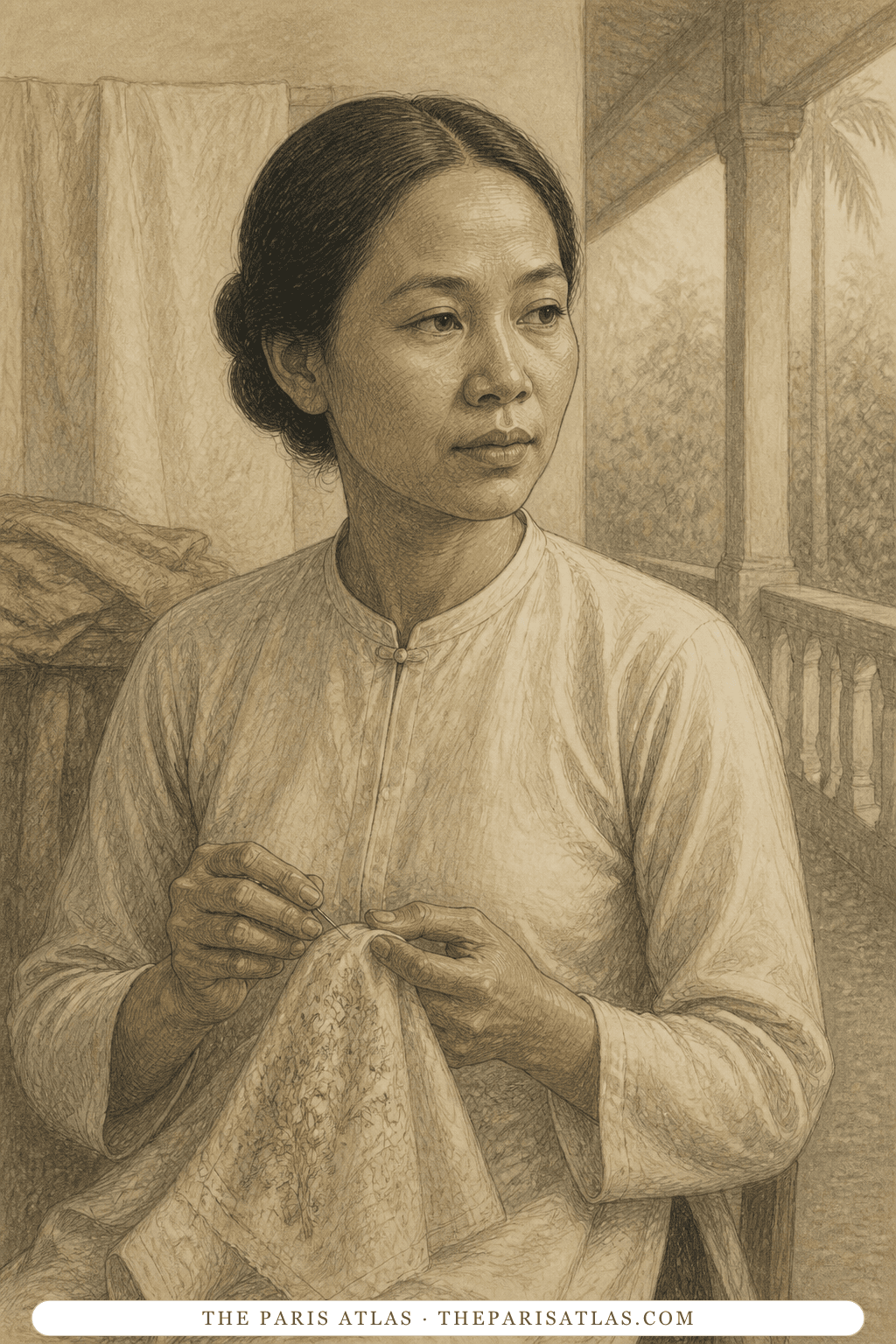
The family’s Vietnamese housekeeper and skilled seamstress, whose loyalty continues through unpaid work and danger.

An elegant and caring acquaintance from occupied Paris whose political collaboration complicates the narrator’s beautiful memory of her.

A wealthy American hostess in wartime Paris whose reserved gatherings become a memory of distance and unanswered questions.

An unnamed local woman whose nighttime pursuit becomes the child narrator’s lasting image of fear and mental collapse.

The unnamed young teacher who questions the girl’s absences and represents the school rules her mother later persuades officials to relax.
1929–1931
Approximate period of the central remembered affair in southern French Indochina; the book’s chronology is intentionally fluid.
1984
Les Éditions de Minuit publishes L’Amant in France; the novel wins the Prix Goncourt.
1985–1986
Barbara Bray’s English translation appears in the United States in 1985 and in Britain in 1986.
1991
Gallimard publishes L’Amant de la Chine du Nord, Duras’s fuller and different retelling of the same relationship, prompted partly by the film adaptation then being developed.
1992
Jean-Jacques Annaud’s film adaptation is released, starring Jane March and Tony Leung Ka-fai, with narration by Jeanne Moreau.
1998
Pantheon publishes the 128-page English paperback used as this guide’s edition of record.
2024
Les Éditions de Minuit publishes a fortieth-anniversary special edition with manuscript material and interviews.


Both short French novels center a teenage girl whose desire and choices are not reduced to a moral lesson. Sagan is more linear and socially comic; Duras is darker and more fragmented.
Read our take
Another restrained account of a young woman and an older man, told without pretending that emotional clarity arrives at the same time as experience.
Read our take
Both books connect desire to travel, illness, money, and self-justifying memory. Gide’s narrator builds a formal confession; Duras repeatedly breaks and revises hers.
Read our take
Ondaatje also builds a love story from fractured memory and the remains of empire, but across several voices and the larger scale of war.
Read our takeThe Lover is about an older writer remembering the sexual relationship she began at fifteen and a half with a wealthy Chinese man in colonial Indochina, and about how money, family, racism, and later memory changed what that relationship meant.
Yes, but autobiographical does not mean documentary. It is usually read as an autobiographical novel or autofiction: it draws closely on Marguerite Duras’s life but reshapes memory through fiction, compression, imagined scenes, and a deliberately unstable narrator.
The girl is fifteen and a half when they meet. The man says he is twelve years older, which makes him about twenty-seven.
Most of the story takes place around Saigon, Cholon, Sadec, and Vinh Long in southern French Indochina, largely in present-day Vietnam around 1929–1931.
No. The central figures are presented through roles and relationships rather than personal names. That choice keeps attention on the remembered arrangement—girl, lover, mother, brothers, father—rather than creating the feel of a documented case history.
She repeatedly says she does not love him, but later grief, the shipboard music, and the structure of the entire book complicate that denial. Duras leaves the contradiction open rather than replacing it with a single answer.
His father refuses and expects him to marry the Chinese woman selected by their families. The man will not give up his inheritance and family position, while the girl also intends to leave for France and refuses to stay.
It is Duras’s 1991 return to the same adolescent relationship. It expands and alters the material rather than replacing The Lover, and its more cinematic form grew partly out of Duras’s response to the film project.
Years after the affair, the Chinese man calls the narrator in Paris and tells her he has always loved her and will love her until death. They do not reunite in the novel.
The repetition shows memory working. The narrator returns to important images, corrects herself, imagines what she cannot know, and lets later losses alter the meaning of earlier events.
Hélène is the narrator’s seventeen-year-old friend at the Saigon boarding school. The narrator desires her intensely, but they do not become sexual partners, and the narrator never learns what happened to her later.
Explore authors with a similar voice, perspective, and influence.

War correspondent who covered the Spanish Civil War, D-Day, and conflicts across five more decades; Hemingway's third wife, 1940–1945.
View author
Author of The Sun Also Rises and A Moveable Feast; his pared-down style, developed in 1920s Paris, became the most imitated in American prose.
View author
The doctor of the Paris slums who wrote the century's blackest, funniest novel — and changed the sound of French prose.
View authorThe sources below include the primary text, editions, scholarship, archival materials, and other records that informed this page. They document The Lover, its publication, and its place in literary history.


Official publisher record used for the edition-of-record date, ISBN, page count, and publisher description.

Official French publisher record used for the original edition, ISBN, page count, publication year, and Goncourt status.
Bibliothèque nationale de France catalogue record used to cross-check the original French bibliographic record.
Académie Goncourt’s official laureates list used to verify the 1984 prize.
Official publisher record used for the 2024 special-edition date, contents, ISBN, and page count.
Publisher bibliography used to verify the 1991 publication of L’Amant de la Chine du Nord.
BFI record used for the film adaptation’s director, cast, year, running time, language, country, and certificate.
The primary text is the baseline reference for every book page. Additional references document publication history, interpretation, and historical context where that evidence is available.
 Explore more resources