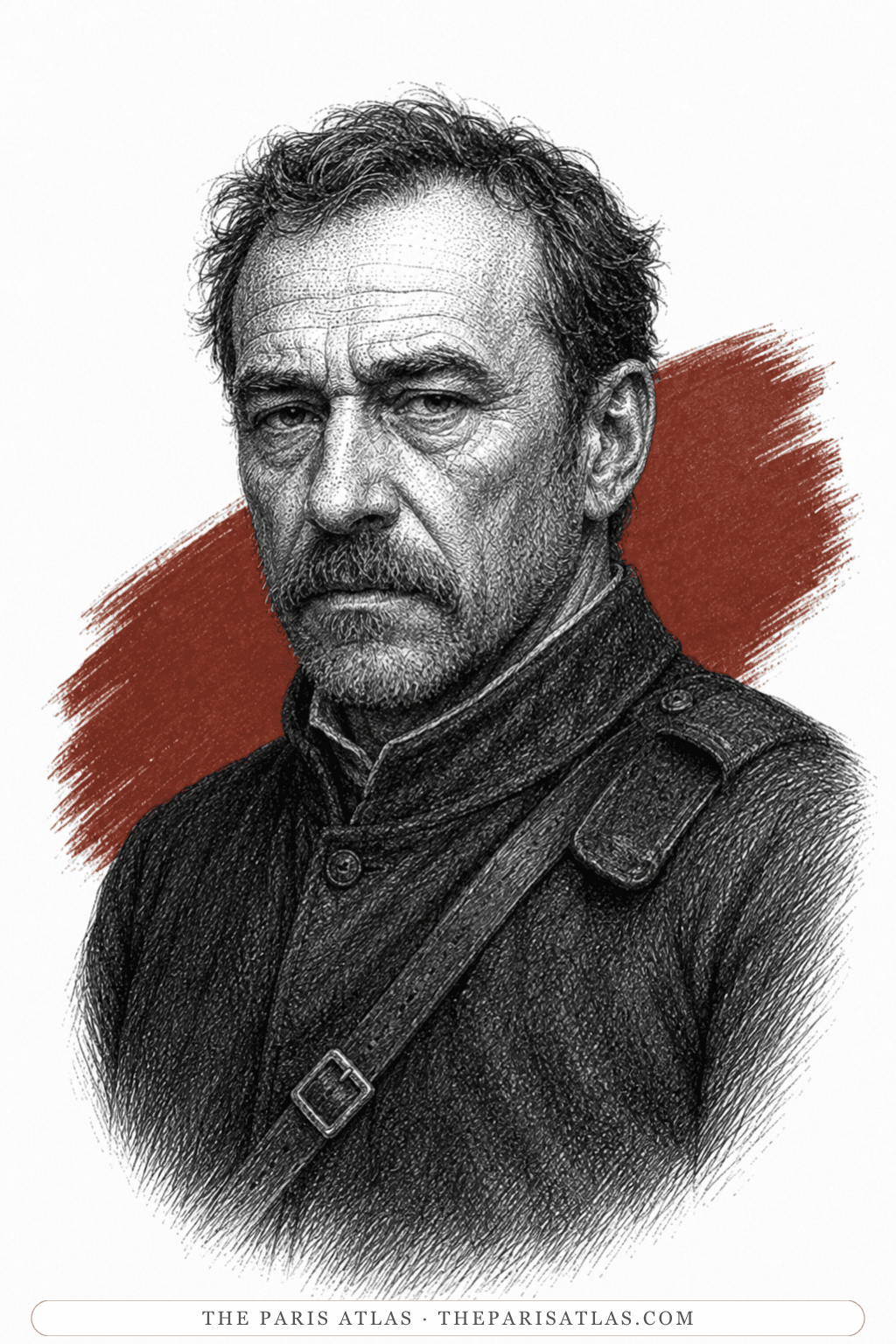
Mr. Samsa
Gregor’s father, who returns to paid work and directs much of the family’s fear and anger toward his transformed son.
To restore authority, protect the household, and keep the family financially secure after losing Gregor’s income.
The book

At a glance
- Gregor and Grete’s father
- Returns to employment after Gregor changes
- Wounds Gregor with an apple
Who they are in the book
Spoiler-freeMr. Samsa had become financially dependent on Gregor after a business failure, although he retained savings Gregor did not fully understand. Gregor’s transformation forces him back into work and gives him a new uniform and authority.
His energy returns at Gregor’s expense. He drives Gregor with a stick and newspaper, later throws the apple that causes a lasting wound, and treats the locked room as a threat to the household he is again trying to lead.
How Mr. Samsa Is Portrayed
- Older Central European manHe appears tired but physically imposing.
- Messenger’s work uniformThe uniform marks his return to employment.
- Stern guarded expressionFear often becomes aggression.
- Renewed formal bearingWork restores pride and authority.
- Close engraved bustNo apples, cane, or household scenery appears.
- Muted tobacco accentThe brown tone suits his institutional uniform.
Mr. Samsa’s apple attack leaves Gregor badly injured. After Gregor dies, he dismisses the lodgers, takes his wife and daughter out of the apartment, and begins planning a smaller home and a more hopeful future.
If you like The Metamorphosis


If you like Franz Kafka
Explore authors with a similar voice, perspective, and influence.
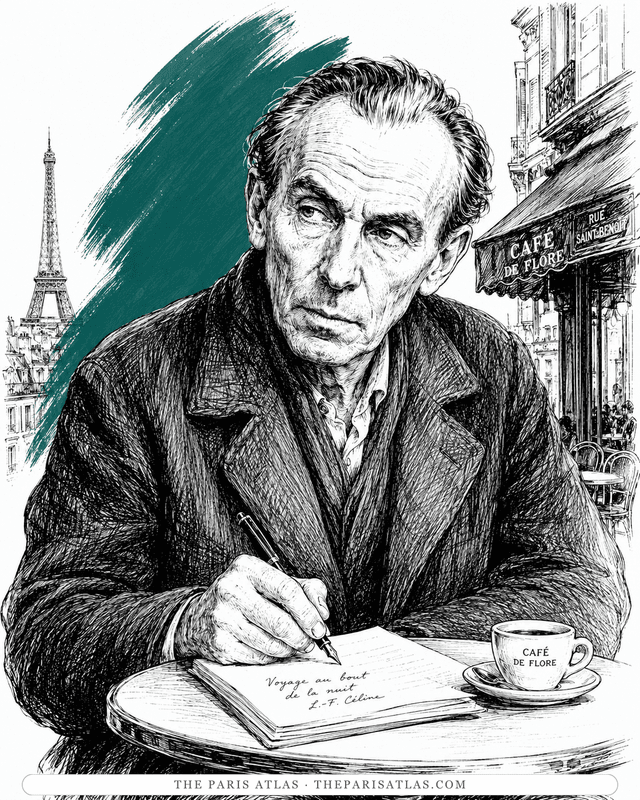
Louis-Ferdinand Céline
The doctor of the Paris slums who wrote the century's blackest, funniest novel — and changed the sound of French prose.
View author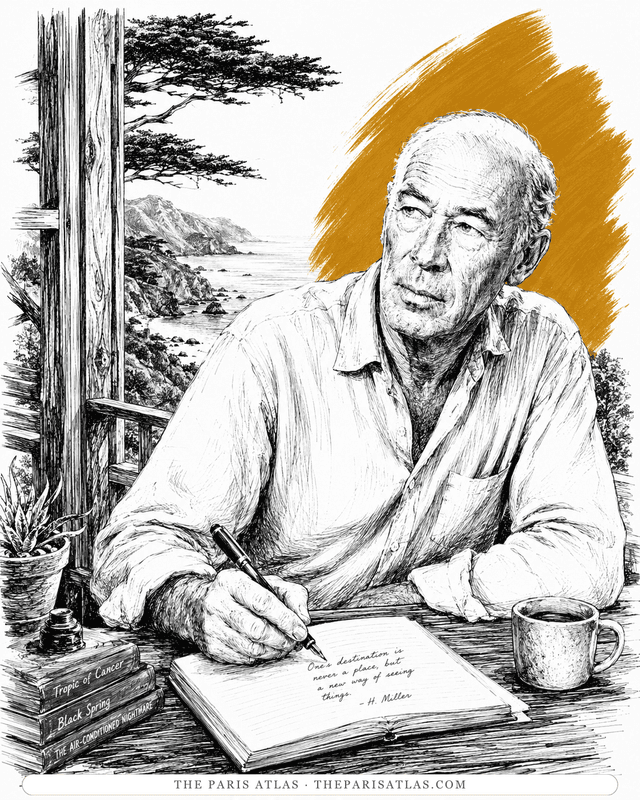
Henry Miller
The Brooklyn dropout who arrived in Paris broke at thirty-eight and wrote the exuberant, banned books that ended American censorship.
View author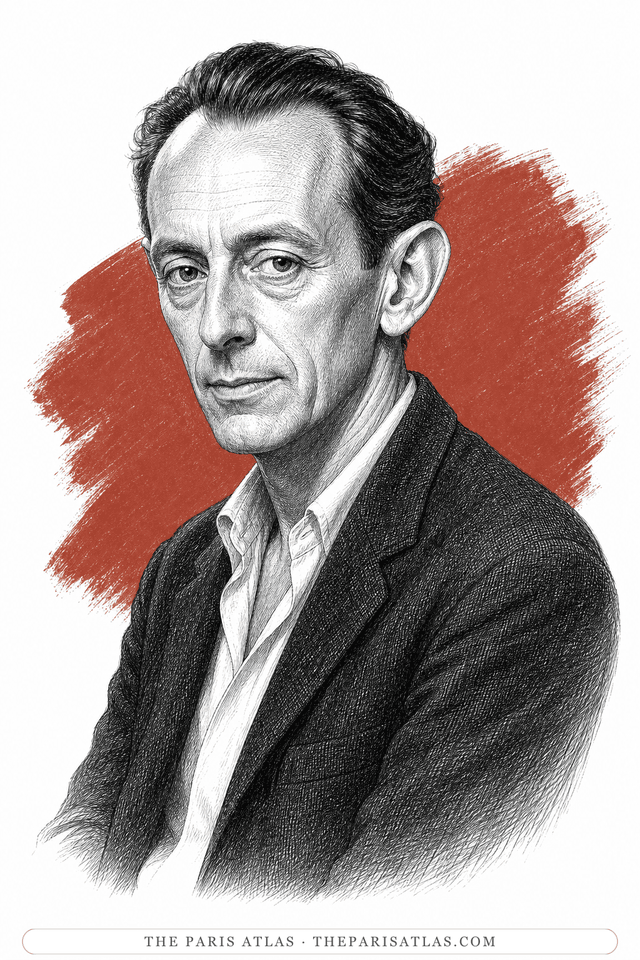
Paul Bowles
American novelist and composer whose expatriate fiction explores dislocation, unstable intimacy, fatalism, and North Africa.
View author