
The three lodgers
The demanding tenants whose presence reveals the Samsas’ financial decline and precipitates the final break with Gregor.
To receive orderly lodging and service on their own terms, without accepting the disorder the Samsa family has hidden from them.
The book

At a glance
- Three paying tenants
- Replace part of Gregor’s lost income
- Threaten to leave without paying
Who they are in the book
Spoiler-freeThe three men rent a room in the Samsa apartment after the family loses Gregor’s income. They expect strict order, occupy the household’s best space, and treat the family as service providers rather than hosts with equal authority.
Their interest in Grete’s violin briefly gathers everyone in one room. When Gregor appears, their disgust becomes a financial threat, which pushes Grete to say openly that he must go.
How The three lodgers Is Portrayed
- Representative middle-aged lodgerOne man represents the clearly grouped character entry.
- Formal dark suitHis dress is stiff and respectable.
- Judgmental composed faceHe expects the household to satisfy him.
- Carefully groomed beardThe lodgers’ uniform respectability is clear.
- Close engraved bustNo dining table, companions, or violin appears.
- Muted ochre accentThe warm neutral suits bourgeois authority.
After seeing Gregor, the lodgers announce that they will leave and refuse payment. The morning after Gregor’s death, Mr. Samsa orders all three men out of the apartment.
If you like The Metamorphosis


If you like Franz Kafka
Explore authors with a similar voice, perspective, and influence.
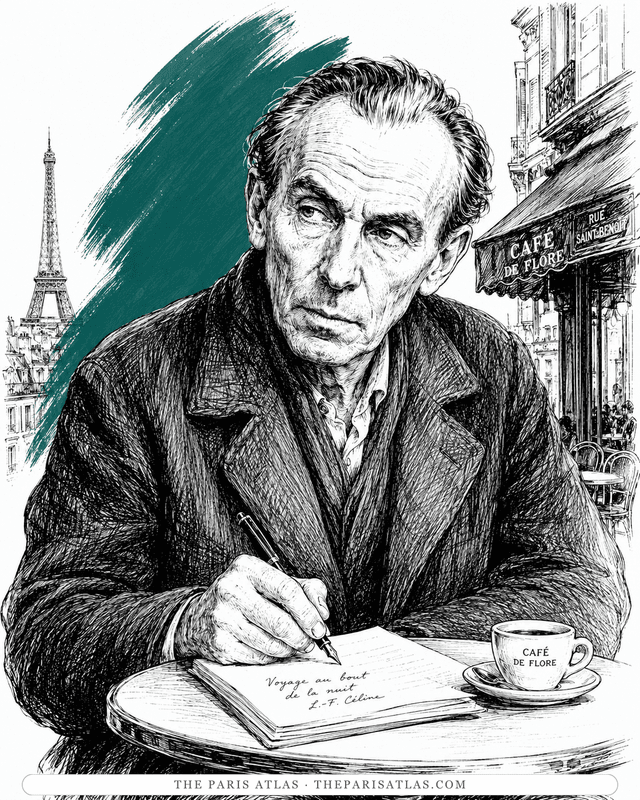
Louis-Ferdinand Céline
The doctor of the Paris slums who wrote the century's blackest, funniest novel — and changed the sound of French prose.
View author
Henry Miller
The Brooklyn dropout who arrived in Paris broke at thirty-eight and wrote the exuberant, banned books that ended American censorship.
View author
Paul Bowles
American novelist and composer whose expatriate fiction explores dislocation, unstable intimacy, fatalism, and North Africa.
View author