

The People Look Like Flowers at Last
Announced as the last of the archive collections — though two more followed it.
- 2007
- Melancholy
- Wry
- Savage
- autobiographical
- voice-driven
- spare
- funny
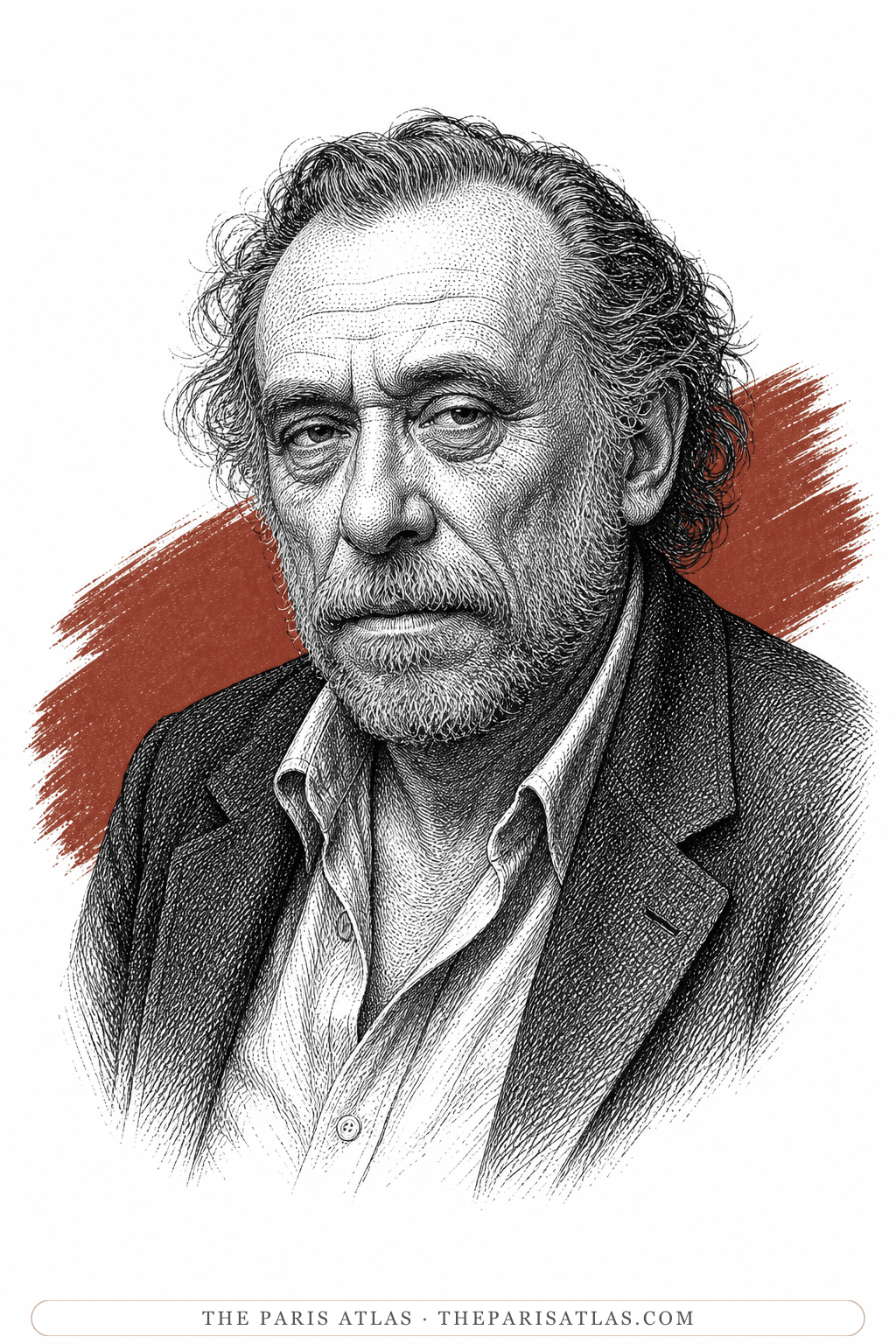
About Charles Bukowski
The story, briefly
Spoiler-freeThe People Look Like Flowers at Last, published by Ecco in 2007, was presented as the fifth and final volume of the posthumous Charles Bukowski poetry series that began with Bone Palace Ballet a decade earlier. It was not quite the end: The Continual Condition followed in 2009, and Abel Debritto's restored Storm for the Living and the Dead in 2017. The poems come from the same archive of unpublished work Bukowski left at his death, and the title is among the gentlest he ever put on a book, and is quoted far more often than the poems inside it are read. In 2013 the writer Michael Phillips showed that poems in this series had been altered before printing; the restored editions carry the manuscripts as Bukowski typed them.
The story, in more detail
By 2007 the archive series had been running for ten years, and the announcement that this was the last volume was treated as the close of the posthumous publishing. The two books that followed changed that, and the 2013 manuscript comparisons changed how all of them are read. Taken on its own, the collection works the subjects of his last decade: the city, memory, the racetrack, and death.
Themes and analysis
Only the cat, this time
In “1990 special,” the speaker’s language initially makes age seem theatrical: an old defiant persona has gone gray, and darkness becomes a partner in a dance. The question about a pursuer gathers these abstractions into an immediate suspicion. Recognizing the cat punctures that grandeur without making the preceding weariness disappear. Most importantly, the final qualification is stretched across two short lines. Relief belongs to this particular encounter, not to a promise of safety forever. The ordinary animal provides a comic reprieve from mortality rather than a miraculous answer to it.
The neatly stacked dishes
In “Near a Plate Glass Window,” the glass admits sunlight while holding the street outside, turning an ordinary dining place into a selective shelter. The repeated afternoon hour slows the poem around shared coffee and the unusual pleasure of being left alone in public. Its peace is modest and reciprocal: the diners neither suffer interference nor impose it. Stacking the dishes extends that reciprocity to the waitress. Rather than discovering a grand moral beyond the meal, the speaker makes a practical contribution to the small order that has protected his time.
Why we recommend it
The volume that was meant to close the series
Presented in 2007 as the last of the posthumous collections, which makes its two successors part of the story.
The title alone
One of Bukowski's most quoted lines, and this is the book it names.
A collection beyond its gentle title
Reading the poems provides a fuller account of the book’s concerns than the widely quoted title alone.
What this book explores
Timeline
1997
Bone Palace Ballet opens the posthumous archive series.
2007
Ecco publishes this volume, announced as the last of the series.
2009
The Continual Condition follows, and 2017 brings the restored Storm for the Living and the Dead.
Book editions

- Paperback
- Ecco
- 2007
- 9780061193286
Reader reviews
Readers may also like


What Matters Most Is How Well You Walk Through the Fire
The other archive volume whose title outran the book.
Read our takeThe People Look Like Flowers at Last: frequently asked questions
What is The People Look Like Flowers at Last?
A posthumous collection of Charles Bukowski poems, published by Ecco in 2007 from the archive of unpublished work he left at his death.
Was it really the last of the series?
It was announced as the fifth and final volume, but two more followed: The Continual Condition in 2009 and the restored Storm for the Living and the Dead in 2017.
Are these poems as Bukowski wrote them?
The posthumous volumes carry a documented editing question. In 2013 Michael Phillips showed the poems had been altered before printing, and Abel Debritto's restored editions print the manuscripts as typed.
Where does the title come from?
It is a Bukowski line, and one of the most widely quoted things he wrote — considerably better known than the collection it names.
Where should I start with the posthumous poetry?
With the restored editions if you want the manuscripts, or with Bone Palace Ballet if you are reading the series as it appeared.
If you like Charles Bukowski
Explore authors with a similar voice, perspective, and influence.
Louis-Ferdinand Céline
The doctor of the Paris slums who wrote the century's blackest, funniest novel — and changed the sound of French prose.
View author
Henry Miller
The Brooklyn dropout who arrived in Paris broke at thirty-eight and wrote the exuberant, banned books that ended American censorship.
View author
Simone de Beauvoir
French writer and philosopher whose novels, memoirs, and social analysis examined freedom, gender, responsibility, aging, and the material conditions that shape a life.
View author
References
References
The sources below include the primary text, editions, scholarship, archival materials, and other records that informed this page. They document The People Look Like Flowers at Last, its publication, and its place in literary history.

1The People Look Like Flowers at Last
PoetryCharles Bukowski, 2007Used forThe primary text represented by this page, used for descriptions of the work’s contents and for any quoted passages shown here.
2Charles Bukowski timeline (bukowski.net)
WebsiteUsed forPublication year, editor and edition details.
3Bukowski's poems were mangled by editors after his death. Now you can read his originals
PeriodicalPBS NewsHourUsed forThe documented editing of the posthumous poems and the restored editions.
4Charles Bukowski's Posthumous Poetry: As the Spirit Wanes, Shit Happens
PeriodicalLos Angeles Review of BooksUsed forCritical account of the posthumous publishing programme.
5Charles Bukowski: books and chapbooks (Verdant Press checklist)
WebsiteUsed forBibliographic details checked against the checklist.
61990 special — authorized poem text
PoetryAcademy of American Poets, by arrangement with Ecco, 2007Used forComplete poem, explicitly credited to this collection and published by arrangement with Ecco.
7Near a Plate Glass Window — poem transcription
PoetryYou and Capablanca, 2008Used forComplete third-party transcription read in indexed page text; not an authenticated edition or manuscript comparison.
8The People Look Like Flowers at Last — poem database contents
WebsiteBukowski.netUsed forSpecialist contents independently corroborates the two poems’ collection membership.
i
Why these sources are here
The primary text is the baseline reference for every book page. Additional references document publication history, interpretation, and historical context where that evidence is available.
 Explore more resources