
A Farewell to Arms
An American ambulance driver, an English nurse, and the Italian front — the Great War's great love story.
Read our take
by Tim O’Brien
War and grief carried in ordinary objects and unsaid feelings.
Connected stories follow soldiers in Vietnam through fear, friendship, shame, death, love, and memory.
Martha’s letters give Jimmy Cross something he can hold without giving him the love he wants. The distinction makes them more than comforting reminders of home. They carry the distance between an existing correspondence and an imagined relationship. In a book that inventories emotional as well as physical burdens, paper can weigh very little while asking a great deal of the person who keeps returning to it.
The inventory also interrupts the anonymity of military equipment. What a soldier chooses to keep tells a different story from what his role requires him to carry. Cross’s attachment lets the reader approach the platoon through a private vulnerability, not only through its weapons or duties. The objects make inner lives visible without suggesting that those lives are fully understood.
In Spin, Bowker and Dobbins’s checkerboard offers an unusually legible conflict. Its boundaries hold still, the opposing pieces remain visible, and a result can be recognized. The reassurance lies in knowing what counts as a move and what counts as an ending. Those qualities distinguish the game from the war around it. Their evening ritual is therefore not merely a miniature battle: it creates a temporary refuge from the uncertainty that makes real danger so difficult to interpret. The other men can share that refuge by watching.
O’Brien describes the linked stories as changing one another through their arrangement. A peaceful game does not cancel the violence elsewhere; its place among other episodes makes that peace precarious. Reading across the collection allows a small moment to acquire meanings that it could not carry alone.
War and grief carried in ordinary objects and unsaid feelings.
Recurring soldiers and memories give the collection connections beyond any single episode.
What the soldiers carry gives fear, duty, and attachment a physical presence in the narrative.
August 1986
The title story appears in Esquire before becoming the opening chapter of the book.
1990
The Things They Carried is published as a linked work of fiction.
1991
The book is a finalist for the Pulitzer Prize for Fiction.
An American ambulance driver, an English nurse, and the Italian front — the Great War's great love story.
Read our takeIt is a work of fiction in linked stories. Its autobiographical elements and concern with memory do not make every narrated event a documentary claim.
The stories connect through soldiers, relationships, memories, and recurring concerns rather than following a single uninterrupted plot.
The Vietnam War is central, but the act of remembering that war also matters. The stories move between experience and the effort to tell it afterward.
It directs attention to both soldiers’ physical burdens and the fear, shame, love, and memories they carry. Material objects and emotional experience remain closely connected.
The book asks how a story can communicate an experience that a bare factual account may not convey. Readers are invited to question the relationship between memory, invention, and truth.
Explore authors with a similar voice, perspective, and influence.
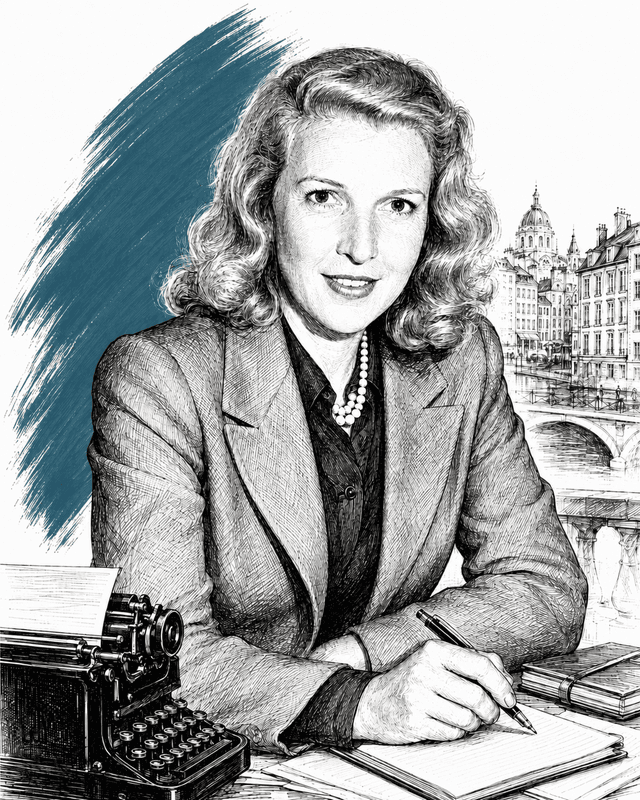
War correspondent who covered the Spanish Civil War, D-Day, and conflicts across five more decades; Hemingway's third wife, 1940–1945.
View author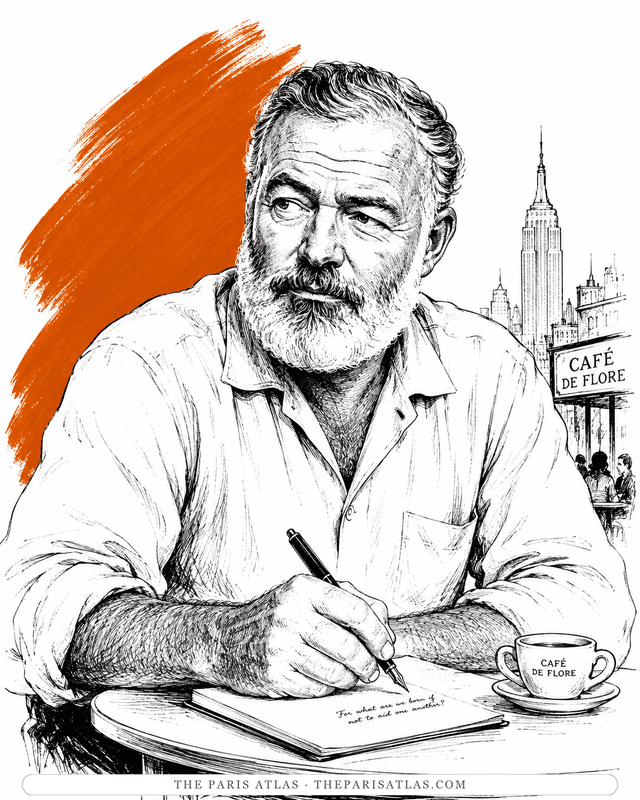
Author of The Sun Also Rises and A Moveable Feast; his pared-down style, developed in 1920s Paris, became the most imitated in American prose.
View author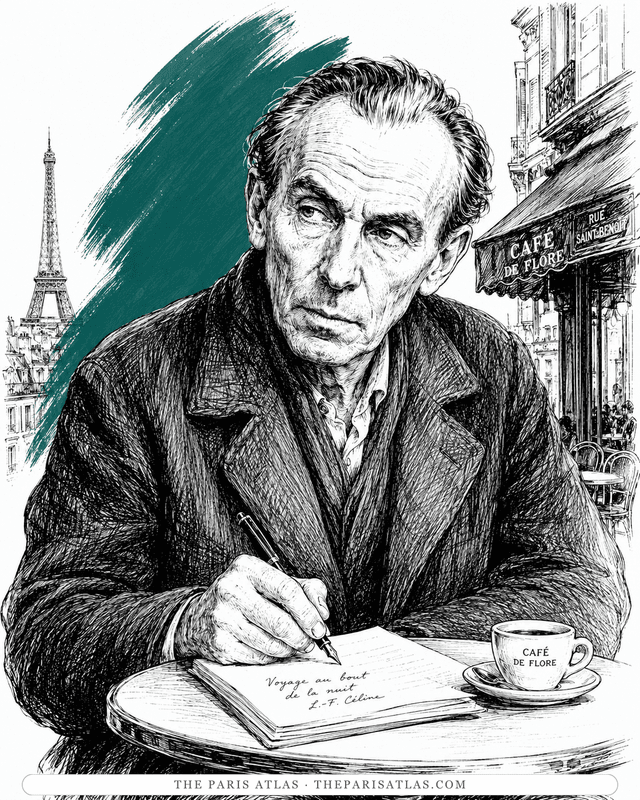
The doctor of the Paris slums who wrote the century's blackest, funniest novel — and changed the sound of French prose.
View authorThe sources below include the primary text, editions, scholarship, archival materials, and other records that informed this page. They document The Things They Carried, its publication, and its place in literary history.
Open Library ISBN catalogue used to verify the title, ISBN, and publication metadata.
Google Books catalogue record used to cross-check the title and edition metadata.
Internet Archive ISBN catalogue used to cross-check the edition and its availability in library holdings.
Library of Congress books catalogue used to cross-check the bibliographic record by ISBN.

Web source consulted for documented facts and historical context presented on the The Things They Carried page.
Web source consulted for documented facts and historical context presented on the The Things They Carried page.
Web source consulted for documented facts and historical context presented on the The Things They Carried page.
Primary quotation from Spin reproduced in the teaching unit.
The primary text is the baseline reference for every book page. Additional references document publication history, interpretation, and historical context where that evidence is available.
 Explore more resources