Sculpture · Paris avant-garde
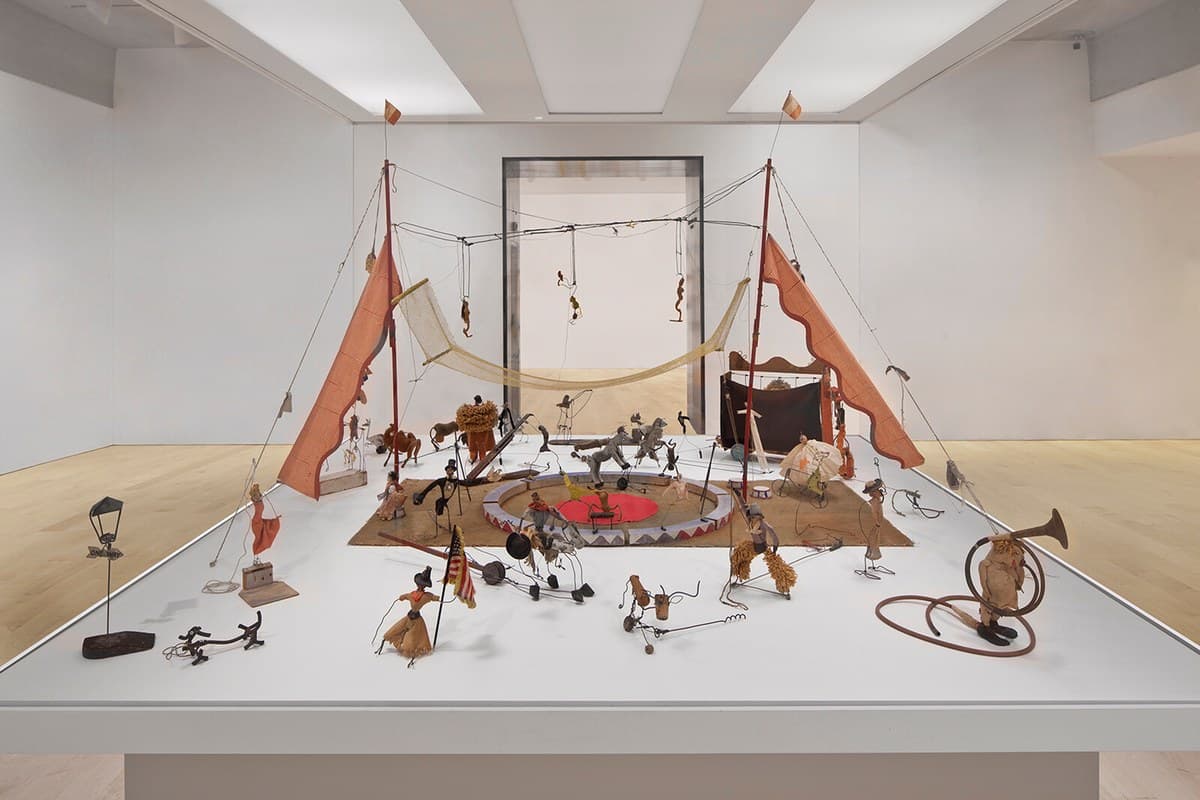
Cirque Calder
The miniature circus Calder built in Paris from 1926 and performed by hand — acrobats, lions and a sword swallower of wire and cork. Acquired by the Whitney Museum through a public campaign in 1983.
The American engineer-turned-sculptor who invented the mobile. Paris made him: his wire Cirque Calder charmed the avant-garde from 1926, and a 1930 visit to Piet Mondrian's studio tipped him into the abstractions that Marcel Duchamp named 'mobiles'.
Alexander Calder gave sculpture two things it had never had: motion, and a household name for it. The mobile — abstract shapes balanced on wires, moving with the air of the room — was invented by this trained mechanical engineer from a family of Philadelphia sculptors, and it happened in Paris.
He arrived in 1926, and his miniature circus of wire and cork, the Cirque Calder, became an avant-garde ticket: Joan Miró, Fernand Léger and Le Corbusier came to watch him animate acrobats by hand on the floor. In October 1930 he visited Piet Mondrian's studio, saw the coloured rectangles pinned to the walls, and turned abstract almost overnight. Marcel Duchamp christened the moving works 'mobiles' in 1931; Jean Arp named the still ones 'stabiles'; and Calder spent four more decades scaling them from tabletop toys to plaza-sized landmarks.
Calder was born on 22 July 1898 in Lawnton, Pennsylvania, into a dynasty of public sculptors: his grandfather made Philadelphia's William Penn, his father ran civic commissions, his mother painted. He trained as a mechanical engineer before drifting to art school in New York, and the engineering never left — balance, load and torque are the grammar of everything he made.[1]
He moved to Paris in 1926, taking a studio in Montparnasse, and began building a circus in miniature: acrobats, lions, a sword swallower and a bearded lady made of wire, cork, cloth and found scraps, packed into suitcases. Performances of the Cirque Calder — Calder on his knees, animating each act by hand — became a fixture of the avant-garde calendar, and the wire portraits that grew out of it were his first mature works.[2]
The circus was his passport. Through its audiences he met Joan Miró, Fernand Léger, Marcel Duchamp and Jean Arp — the friendships that framed the rest of his career.[3]
In October 1930 Calder visited Piet Mondrian's studio at 26 rue du Départ, where coloured cardboard rectangles were pinned to white walls for endless rearrangement. The room converted him: he later said he wanted to make those rectangles oscillate. Within weeks he was making wholly abstract constructions.[2]
When the abstractions began to move — first by cranks and motors, then by air alone — Marcel Duchamp supplied the name: mobile, a French pun on motion and motive, coined in 1931. Jean Arp, asking what the non-moving ones were by contrast, gave the standing works their name too: stabiles. The vocabulary of Calder's whole career was minted in Paris by two friends.[4]
In 1933 Calder and his wife Louisa bought a farmhouse in Roxbury, Connecticut, and he worked between America and France for the rest of his life — from 1963 with a large studio at Saché, in the Loire valley. The mobiles grew from tabletop to ceiling to civic scale, and the stabiles became plaza landmarks: monumental steel arches and beasts in Chicago, Grand Rapids, Montreal and Paris, where La Défense keeps a giant red one.[1]
He died in New York on 11 November 1976, weeks after the opening of his retrospective at the Whitney Museum. The Calder Foundation in New York documents the work; almost every major modern museum hangs at least one thing of his that moves.[1]
Born on 22 July in Lawnton, Pennsylvania, into three generations of sculptors.
Moves to Paris and begins the wire-and-cork Cirque Calder.
Visits Piet Mondrian's studio in October and turns to wholly abstract work.
Marcel Duchamp coins 'mobile' for the new moving sculptures; Jean Arp later counters with 'stabile' for the still ones.
Settles with Louisa Calder in Roxbury, Connecticut, working between America and France thereafter.
Dies in New York on 11 November, weeks after his Whitney Museum retrospective opens.
Sculpture · Paris avant-garde
The miniature circus Calder built in Paris from 1926 and performed by hand — acrobats, lions and a sword swallower of wire and cork. Acquired by the Whitney Museum through a public campaign in 1983.
Sculpture · Monumental stabiles
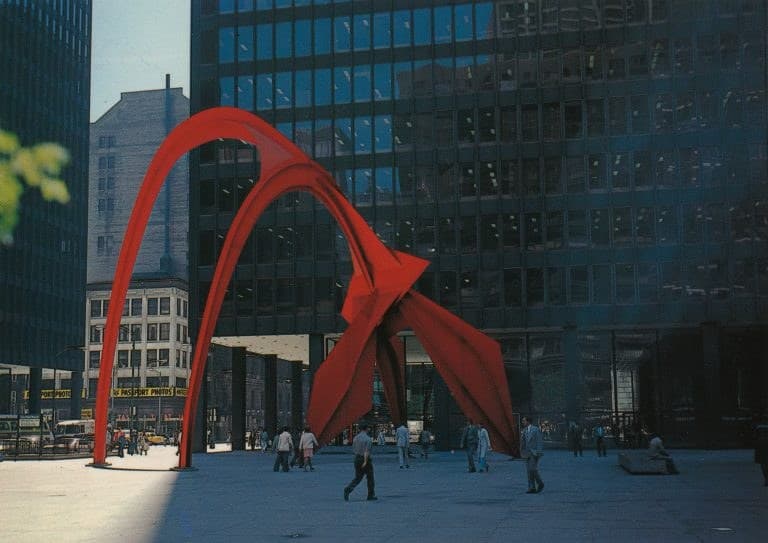
The 53-foot vermilion stabile arching over Chicago's Federal Center Plaza — Calder's answer to the black steel and glass of Mies van der Rohe's federal buildings, unveiled in 1974.
Sculpture · Monumental stabiles
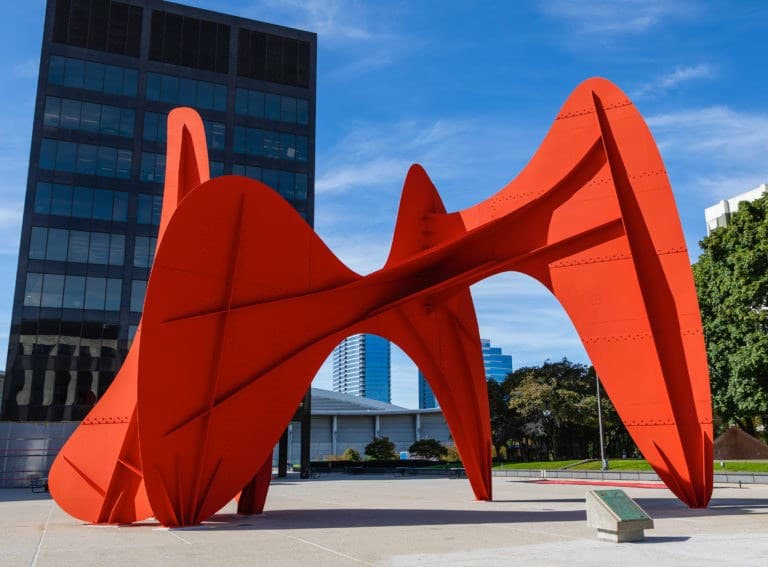
The 1969 vermilion stabile on Calder Plaza in Grand Rapids — the first NEA-funded public artwork in America, and so beloved the city put its silhouette in the official logo.
Sculpture · The first mobiles
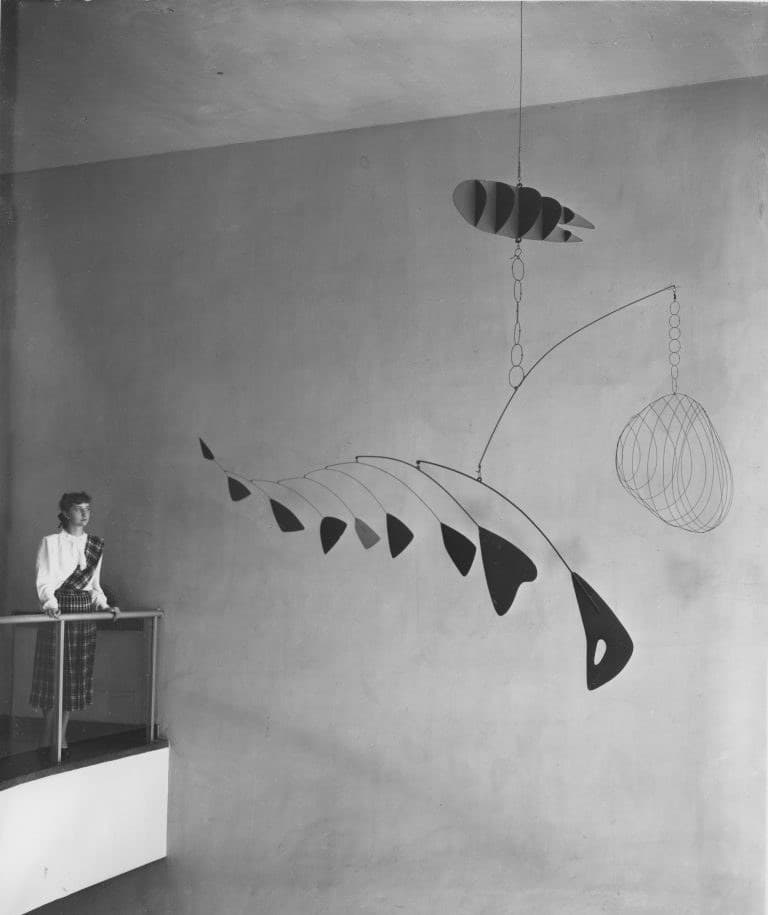
Calder's 1939 mobile for MoMA's stairwell: a wire lobster trap and a school of aluminum fins balancing overhead — one of the earliest full statements of the hanging mobile.
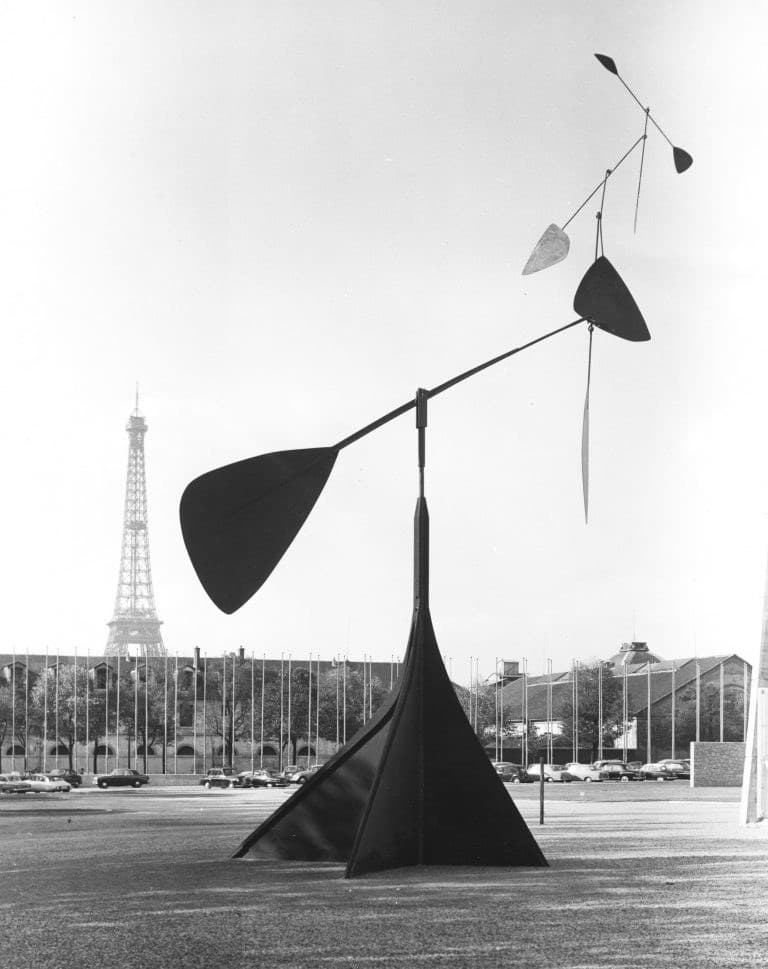
Sculpture · Monumental mobiles
Calder's ten-metre standing mobile for the UNESCO headquarters, installed in Paris in 1958 — his permanent work in the city that made him.
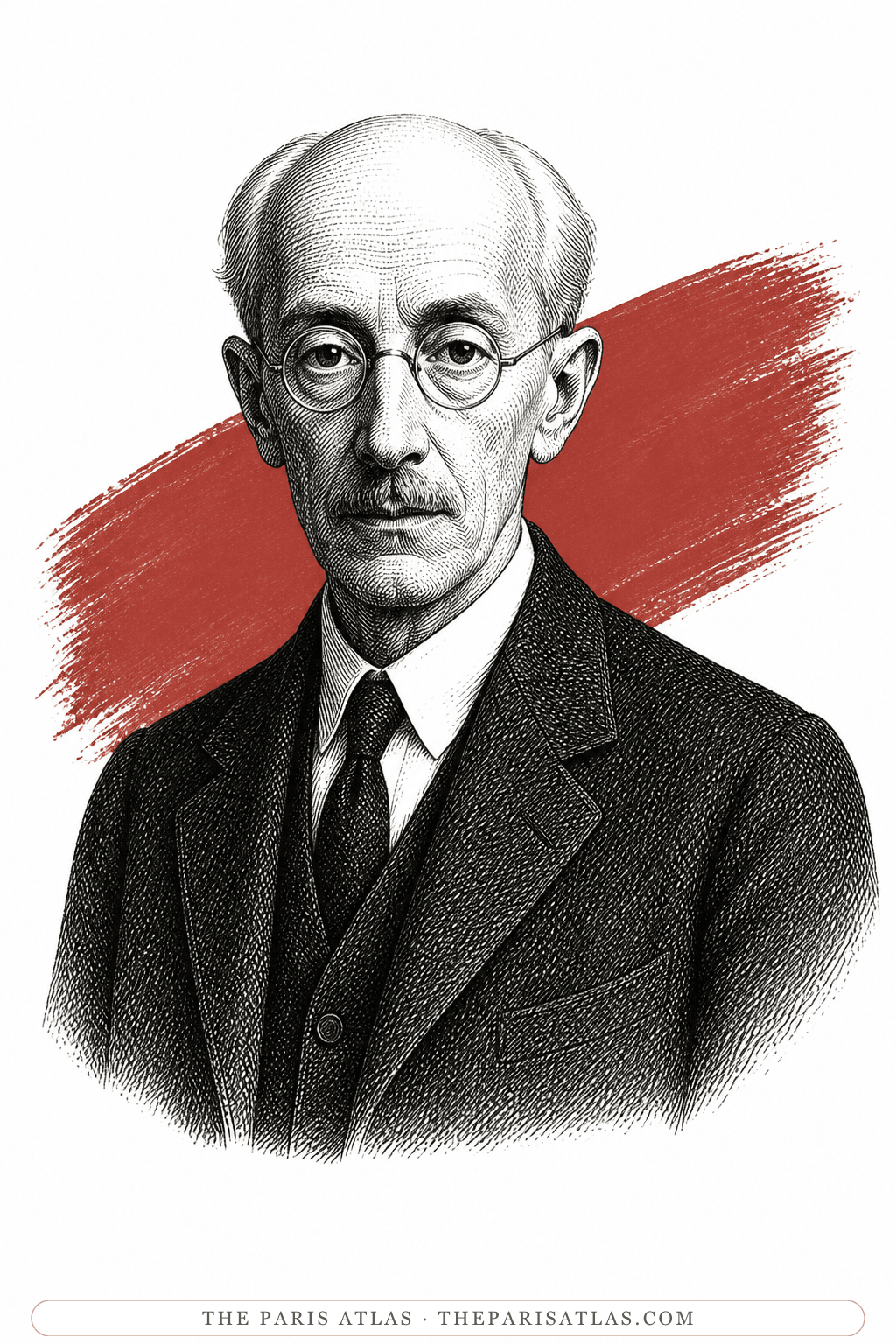
Calder visited Mondrian's studio at 26 rue du Départ in October 1930, saw the movable coloured rectangles pinned to the walls, and made his first wholly abstract constructions within weeks — the turn that produced the mobile. The Calder Foundation's own chronology records the visit as the pivot.
Inventing the mobile — sculpture that moves with the air — and its standing counterpart, the stabile. He is also loved for the Cirque Calder, the miniature wire circus he performed by hand for the Paris avant-garde, and for the monumental steel stabiles on plazas from Chicago to Paris.
In 1926 Paris was where a young American artist went to join the modern movement. Calder took a Montparnasse studio, built his wire circus there, and found his audience — Miró, Léger, Duchamp and Arp among them — through its performances.
Directly and datably. Calder visited Piet Mondrian's Paris studio in October 1930, saw the movable coloured rectangles pinned to its white walls, and said he wanted to make them oscillate. His first fully abstract constructions followed within weeks, and the mobile grew out of them.
Marcel Duchamp, in 1931 — a French pun combining motion and motive. When Calder's non-moving abstract sculptures needed a name to match, Jean Arp supplied 'stabile'. Both terms stuck for the rest of the century.
A miniature circus — acrobats, animals and props of wire, cork, cloth and rubber, packed into suitcases — that Calder built in Paris from 1926 and performed himself, animating each act by hand. It now belongs to the Whitney Museum in New York.
Influenced by · 1930
Calder visited Mondrian's studio at 26 rue du Départ in October 1930, saw the movable coloured rectangles pinned to the walls, and made his first wholly abstract constructions within weeks — the turn that produced the mobile. The Calder Foundation's own chronology records the visit as the pivot.
The sources below include biographies, scholarly essays, interviews, and primary materials that informed this page. They reflect both the historical record and ongoing critical conversations about Alexander Calder and their work.

Web source consulted for documented facts and historical context presented on the Alexander Calder page.
Web source consulted for documented facts and historical context presented on the Alexander Calder page.
These references anchor the page in the documented record and in the scholarly conversations around Alexander Calder. Every claim on this page traces back to one or more of the works listed here.
 Explore more resources