The Paris AtlasCharting the artists, works, and places worth returning to.
  • Author
· German, later American · 1898–1970

Erich Maria Remarque

German novelist whose direct, unsentimental fiction follows soldiers and survivors marked by the First World War.

2 books on our shelves

Details

Lived
1898–1970
Born
22 June 1898
Birthplace
Osnabrück, Germany
Birth name
Erich Paul Remark
Died
25 September 1970 · aged 72
Place of death
Locarno, Switzerland
Nationality
German, later American
Profession
Novelist and screenwriter
Major works
All Quiet on the Western Front, The Road Back, Three Comrades, Arch of Triumph, A Time to Love and a Time to Die, The Night in Lisbon
Married
Ilse Jutta Zambona · married 1925, divorced 1930; remarried 1938, divorced 1957Paulette Goddard · married 1958 until his death in 1970
Roles
Author

About Erich Maria Remarque

German novelist of the trenches and the exile roads, the author of All Quiet on the Western Front

Erich Maria Remarque was a German novelist, born Erich Paul Remark in Osnabrück on 22 June 1898. Conscripted at eighteen and wounded by shrapnel on the Western Front in 1917, he turned the trenches into All Quiet on the Western Front (1929), the story of the schoolboy soldier Paul Bäumer. The novel became an international best-seller, created the modern genre of veterans' war fiction, and has never left print or the screen.[1]

The book also made him one of the Nazis' first literary targets. His work was burned and banned in May 1933 at Joseph Goebbels's instigation, his citizenship was revoked in 1938, and propaganda falsely claimed he had never served and was secretly Jewish. Remarque watched from his villa on Lake Maggiore in Switzerland, then from American exile. He kept writing the century's displacements: the Weimar collapse in Three Comrades, refugee Paris in Arch of Triumph, the flight from Europe in The Night in Lisbon. In 1943 the regime he had escaped beheaded his youngest sister, Elfriede Scholz, telling her at trial that her brother was beyond their reach but she was not.

He returned to Switzerland in 1948 and died of heart failure at Locarno on 25 September 1970, aged 72, married in his last years to the film star Paulette Goddard. New York University's institute for European studies bears his name.[1]

Osnabrück, the trenches, and the Iron Cross, 1898–1919

Erich Paul Remark was born in Osnabrück on 22 June 1898, the second of four children of Peter Franz Remark, a bookbinder, and Anna Maria Stallknecht, in a working-class Catholic family. He was distant from his father and devoted to his mother; after the war he took her middle name, Maria, in her memory. The French-sounding surname was genuinely French: a great-grandfather from Aachen had been born Remarque, and the novelist later restored the older spelling.[2]

Conscripted into the Imperial German Army at eighteen, Remarque reached the Western Front in June 1917 and fought in the trenches between Torhout and Houthulst in Flanders. On 31 July 1917 shell shrapnel wounded him in the left leg, right arm and neck, and he spent most of the rest of the war in an army hospital in Duisburg. He was awarded the Iron Cross First Class in November 1918 and released from service in January 1919. The war took his health, many of his classmates, and, in 1917, his mother.[2]

Teacher, tire copywriter, and the unsellable manuscript, 1919–1929

The veteran drifted through the Weimar years. He taught primary school in villages around Osnabrück, then worked as a librarian, businessman, journalist and editor. One job had him writing technical copy for the Continental tire company, and the script of a comic strip for its house magazine. He had written since sixteen; a sentimental first novel, The Dream Room, appeared in 1920 under the name Erich Remark, and he later changed the spelling of his surname partly to bury it.[1]

In 1927, while working at the sports magazine Sport im Bild, he wrote the book that changed war literature, and could not find a publisher for it. All Quiet on the Western Front finally appeared in January 1929: the Western Front through the eyes of Paul Bäumer, a schoolboy soldier watching his class die one by one, told in flat, exact, unheroic prose. It became an international best-seller almost instantly, opened the floodgates for veterans' memoirs in every combatant country, and won an Academy Award as an American film within two years. Its sequel, The Road Back (1931), followed the survivors home.[1]

The bonfires, the revoked citizenship, and exile, 1933–1945

On 10 May 1933, at Joseph Goebbels's initiative, Remarque's books were declared unpatriotic, burned in the Nazi bonfires, and banned from every German library and bookshop. Propaganda attacked his French ancestry and his Catholicism, and insisted no true German would spell his name Remarque. It claimed falsely that he had never seen active service, and circulated the invention that his real name was Kramer, Remark backwards, and that he was Jewish. Remarque had already bought the Casa Monte Tabor at Ronco, above Lake Maggiore in Switzerland, with the novel's earnings, and he left Germany for good.[2]

Germany revoked his citizenship in 1938. The same year he remarried his ex-wife, the actress Ilse Jutta Zambona, to keep her from being forced back to Germany, and in 1939 the two sailed for the United States, where both became citizens in 1947. Hollywood and New York gave him a second fame: the exile of the 1930s celebrity, conducting a long affair with Marlene Dietrich begun at the 1937 Venice film festival, and later relationships with Hedy Lamarr and Dolores del Río. The novels kept pace with the catastrophe: Three Comrades (1936) for the Weimar end-years, Flotsam (1941) for the stateless, Arch of Triumph (1945), which sold nearly five million copies, for refugee Paris.[2]

The regime found the family it could reach. In 1943 his youngest sister, Elfriede Scholz, a dressmaker who had stayed in Germany, was tried before the People's Court for saying she thought the war was lost. The court's president, Roland Freisler, told her: your brother is unfortunately beyond our reach, but you will not escape us. She was beheaded on 16 December 1943. Remarque learned of it only after the war, and dedicated Spark of Life (1952), his concentration-camp novel, to her; the dedication was left out of the German edition.[2]

Porto Ronco, the late novels, and Paulette Goddard, 1948–1970

Remarque returned to his Swiss villa in 1948 and wrote the rest of his books there. A Time to Love and a Time to Die (1954) put an ordinary German soldier on leave amid the ruins; Douglas Sirk filmed it in 1958, with Remarque himself acting a schoolteacher hiding from the Nazis. He wrote the screenplay for The Last Act (1955), on Hitler's final days in the bunker, and a Broadway play, Full Circle. The Black Obelisk (1956) returned to the inflation years, and The Night in Lisbon (1962), his last completed novel, distilled the whole refugee decade into one night of storytelling on a quayside.[1]

His stormy marriage to Ilse Jutta Zambona ended in a final divorce in 1957, and in 1958 he married the American film star Paulette Goddard. Asked at sixty-nine why he had never reclaimed his German citizenship, he answered that he had never applied to be denaturalised in the first place. He died of heart failure at Locarno on 25 September 1970, aged 72, and is buried at Ronco; Goddard was buried beside him in 1990. Her $20 million bequest founded New York University's Remarque Institute for European studies, and NYU holds his papers.[3]

How Remarque wrote

The Remarque sentence is short, concrete and stripped of commentary, the war reported in the present tense of the men inside it: food, boots, shellfire, the death of friends. All Quiet on the Western Front refuses every consolation of the war story, patriotism, meaning, even plot, and that refusal is what made it both a landmark and a bonfire book. He kept the manner for forty years, in simple, emotive language that translated easily and sold in the millions.

His lasting subject was the man history evicts: the soldier who cannot come home in The Road Back, the stateless refugees of Flotsam and Arch of Triumph moving from visa to visa, the camp prisoner of Spark of Life. He wrote the century's displacement from inside it, and the novels double as a record of his own route: Osnabrück, the trenches, Berlin, Ronco, Paris, New York, and back to the lake.

Reception and legacy

All Quiet on the Western Front remains among the most read war novels ever written, and each generation refilms it: the 1930 American version won the Academy Award for best picture, and the 2022 German version won four Oscars. The later novels, long treated as best-seller fiction beneath criticism, have been steadily revalued as a chronicle of exile with few equals in either German or American letters.

Germany's reconciliation with him has been posthumous and thorough. There are plaques in Berlin, and a peace centre and archive in his native Osnabrück. An asteroid carries his name. His villa at Ronco, the Casa Monte Tabor, was bought in 2021 by owners who preserve it for events on peace. He himself died stateless of his birth country's making, an American citizen with a French name on a Swiss hillside.[2]

Life events

  1. 1898

    Born Erich Paul Remark in Osnabrück on 22 June, a bookbinder's son.

    — Erich Maria Remarque

  2. 1917

    Reaches the Western Front in June; wounded by shrapnel in the leg, arm and neck at the end of July, and spends the rest of the war in hospital at Duisburg.

    — Erich Maria Remarque

  3. 1919

    Released from the army with the Iron Cross First Class; teaches primary school in villages around Osnabrück.

    — Erich Maria Remarque

  4. 1925

    Marries the actress Ilse Jutta Zambona in Berlin.

    — Erich Maria Remarque

  5. 1929

    All Quiet on the Western Front is published in January after a year without a publisher, and becomes an international best-seller.

    — Erich Maria Remarque

  6. 1931

    The Road Back follows the survivors home; the royalties buy the Casa Monte Tabor at Ronco in Switzerland.

    — Erich Maria Remarque

  7. 1933

    His books are burned and banned in Germany on 10 May at Goebbels's instigation; Remarque leaves for Switzerland.

    — Erich Maria Remarque

  8. 1937

    Meets Marlene Dietrich on the Venice Lido in September; their affair runs into 1940, mostly by letter and telephone.

    — Erich Maria Remarque and Marlene Dietrich, edited by Werner Fuld and Thomas Schneider, Sag mir, daß du mich liebst: Erich Maria Remarque und Marlene Dietrich (2003)

  9. 1938

    Germany revokes his citizenship; he remarries Ilse Jutta Zambona to keep her out of German hands.

    — Erich Maria Remarque

  10. 1939

    Sails for the United States just before the war; he and Ilse become American citizens in 1947.

    — Erich Maria Remarque

  11. 1943

    His sister Elfriede Scholz is beheaded on 16 December for saying the war is lost; the judge tells her that her brother is beyond the court's reach.

    — Erich Maria Remarque

  12. 1945

    Arch of Triumph, his novel of refugee Paris, sells nearly five million copies worldwide.

    — Erich Maria Remarque

  13. 1948

    Returns to the villa at Ronco, his home for the rest of his life.

    — Erich Maria Remarque

  14. 1958

    Marries Paulette Goddard, and appears as an actor in Douglas Sirk's film of A Time to Love and a Time to Die.

    — Erich Maria Remarque

  15. 1962

    The Night in Lisbon, his last completed novel, compresses the refugee years into a single night's story.

    — Erich Maria Remarque

  16. 1970

    Dies of heart failure at Locarno on 25 September, aged 72, and is buried at Ronco above Lake Maggiore.

    — Erich Maria Remarque

People Erich Maria Remarque Knew

Relationships with other people, with sources for each connection.

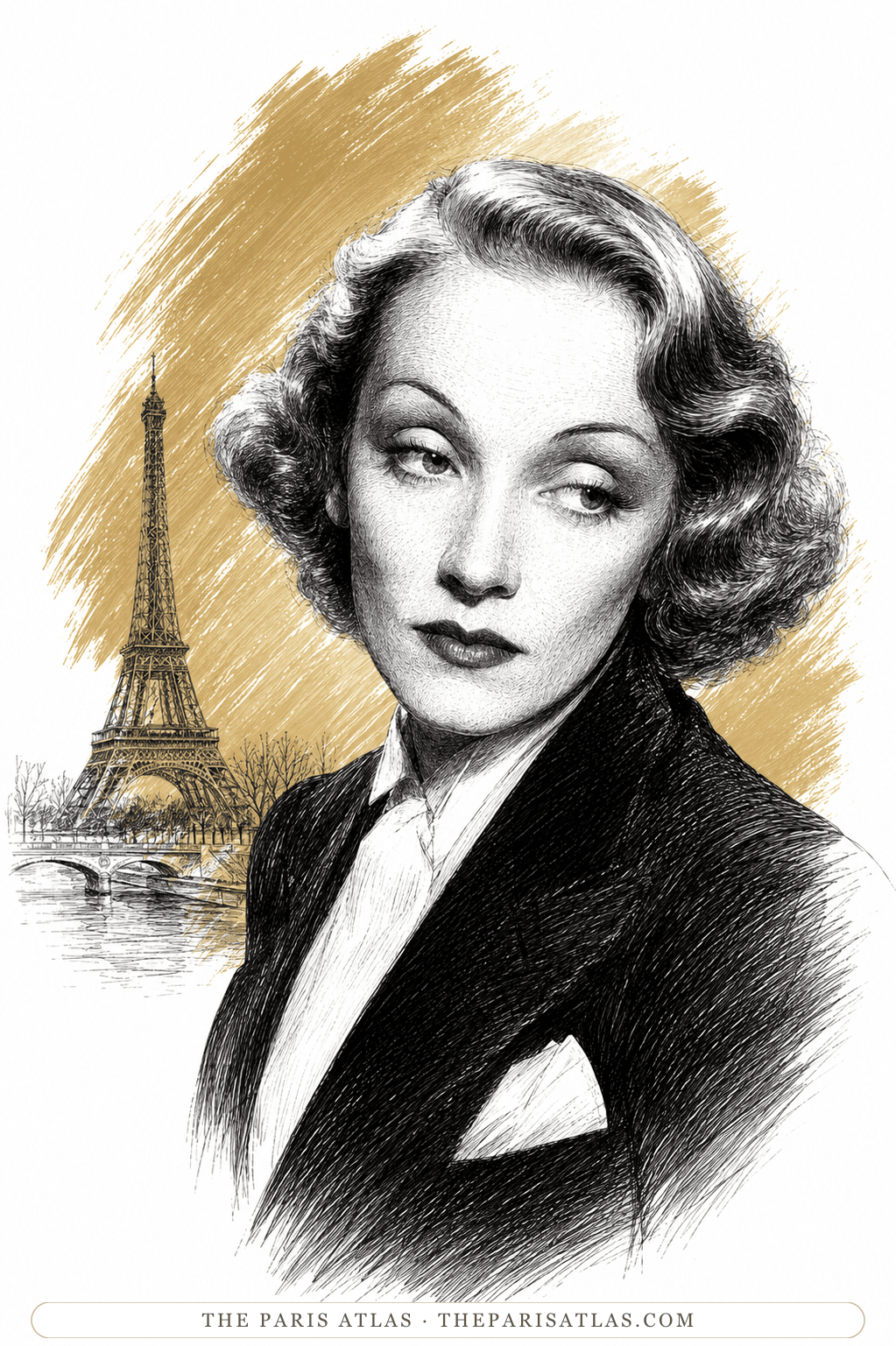
Illustrated portrait of Marlene Dietrich

Marlene Dietrich

  • Actor
  • Singer

Met · 1937–1940

They met on the Lido in September 1937, during the Venice film festival, and the affair ran until at least 1940, carried mostly by letters, telegrams and telephone calls between two Germans in flight from the same regime. A selection of the correspondence was published in 2003 as Sag mir, daß du mich liebst.

— Erich Maria Remarque and Marlene Dietrich, edited by Werner Fuld and Thomas Schneider, Sag mir, daß du mich liebst: Erich Maria Remarque und Marlene Dietrich (2003); Erich Maria Remarque

Books by Erich Maria Remarque

Cover of The Road Back by Erich Maria Remarque

War fiction

The Armistice stops the shooting, but Ernst Birkholz and his friends discover that becoming civilians again is another struggle.

4.6

Questions about Erich Maria Remarque

Who was Erich Maria Remarque?

Erich Maria Remarque (1898–1970) was a German novelist, the author of All Quiet on the Western Front (1929), the most famous novel of the First World War. Wounded in the trenches at nineteen, he turned the experience into a book that sold millions, created the modern genre of veterans' war fiction, and made him one of the first authors the Nazis burned and banned. He spent the rest of his life in Swiss and American exile, writing novels of soldiers, refugees and the displaced, and died in Switzerland in 1970.

Is All Quiet on the Western Front based on Remarque's own life?

On his war, yes; on his biography, only partly. Remarque was conscripted at eighteen, reached the Flanders trenches in June 1917, and was badly wounded by shrapnel five weeks later, spending most of the rest of the war in hospital. Paul Bäumer's frontline year is built from that experience and from what fellow soldiers told him. Nazi propaganda later claimed Remarque had never served at all, one of several lies, including a fabricated Jewish name, spread about him after the book's success.

Why did the Nazis ban Remarque's books?

Because All Quiet on the Western Front told the war without heroism, which the Nazis read as an attack on German military honour. On 10 May 1933 his books went into the first bonfires, declared unpatriotic at Joseph Goebbels's instigation, and were banned from sale and from every library. Propaganda called his French-spelled name un-German, denied his war service, and invented a Jewish origin for him. His citizenship was revoked in 1938, and in 1943 his sister Elfriede Scholz was beheaded for defeatist remarks, the court telling her that her brother was beyond its reach.

How did Erich Maria Remarque die?

Of heart failure, in Locarno, Switzerland, on 25 September 1970, at the age of 72. He had lived since 1948 at his villa, the Casa Monte Tabor at Ronco above Lake Maggiore, with his second wife, the American actress Paulette Goddard. He is buried in the Ronco cemetery, and Goddard was buried beside him after her death in 1990. He never resumed German citizenship, noting that he had never asked to lose it.

Who were Erich Maria Remarque's wives?

Two women, three marriages. He married the actress Ilse Jutta Zambona in 1925; they divorced in 1930, remarried in 1938 so that she could not be forced back into Nazi Germany, escaped to America together, and divorced finally in 1957. In 1958 he married the film star Paulette Goddard, Chaplin's former leading lady, and they remained married until his death. In between he had famous relationships with Marlene Dietrich, whose letters to him were published in 2003, Hedy Lamarr and Dolores del Río.

What are Remarque's best books after All Quiet on the Western Front?

Start with Three Comrades (1936), on friendship in the dying Weimar Republic. Arch of Triumph (1945), the story of a refugee surgeon in prewar Paris, sold nearly five million copies. A Time to Love and a Time to Die (1954) follows a soldier's leave in bombed Germany, and The Black Obelisk (1956) returns to the inflation years. The Night in Lisbon (1962), the last finished novel, folds the whole refugee experience into one night. Spark of Life (1952), set in a concentration camp, is dedicated to his executed sister.

Connections and Sources

Erich Maria Remarque’s connections to people, places, and works, with the sources behind each one.

Met · 1937–1940

Marlene Dietrich

They met on the Lido in September 1937, during the Venice film festival, and the affair ran until at least 1940, carried mostly by letters, telegrams and telephone calls between two Germans in flight from the same regime. A selection of the correspondence was published in 2003 as Sag mir, daß du mich liebst.
— Erich Maria Remarque and Marlene Dietrich, edited by Werner Fuld and Thomas Schneider, Sag mir, daß du mich liebst: Erich Maria Remarque und Marlene Dietrich (2003); Erich Maria Remarque

References

References

The sources below include biographies, scholarly essays, interviews, and primary materials that informed this page. They reflect both the historical record and ongoing critical conversations about Erich Maria Remarque and their work.

  1. 1abcdeErich Maria Remarque

    Website
    Encyclopaedia Britannica
    Used for

    Encyclopaedia Britannica's biography, used to confirm dates and the career outline.

    View source
  2. 2abcdefErich Maria Remarque Peace Centre

    Website
    Stadt Osnabrück
    Used for

    The Osnabrück peace centre and Remarque Archive, the standing institutional record in his home city.

    View source
  1. 3↑Sag mir, daß du mich liebst: Erich Maria Remarque und Marlene Dietrich

    Letters
    Kiepenheuer & Witsch, 2003
    Used for

    The published Remarque–Dietrich correspondence, behind the met-claim this page carries.

  2. 4Erich Maria Remarque

    Website
    Wikipedia
    Used for

    Reference article cross-checked for the war record, the ban and the propaganda lies, the exile, the marriages, and the sister's execution.

    View source
i
Why these sources are here

These references anchor the page in the documented record and in the scholarly conversations around Erich Maria Remarque. Every claim on this page traces back to one or more of the works listed here.

Explore more resources
Browse all authors