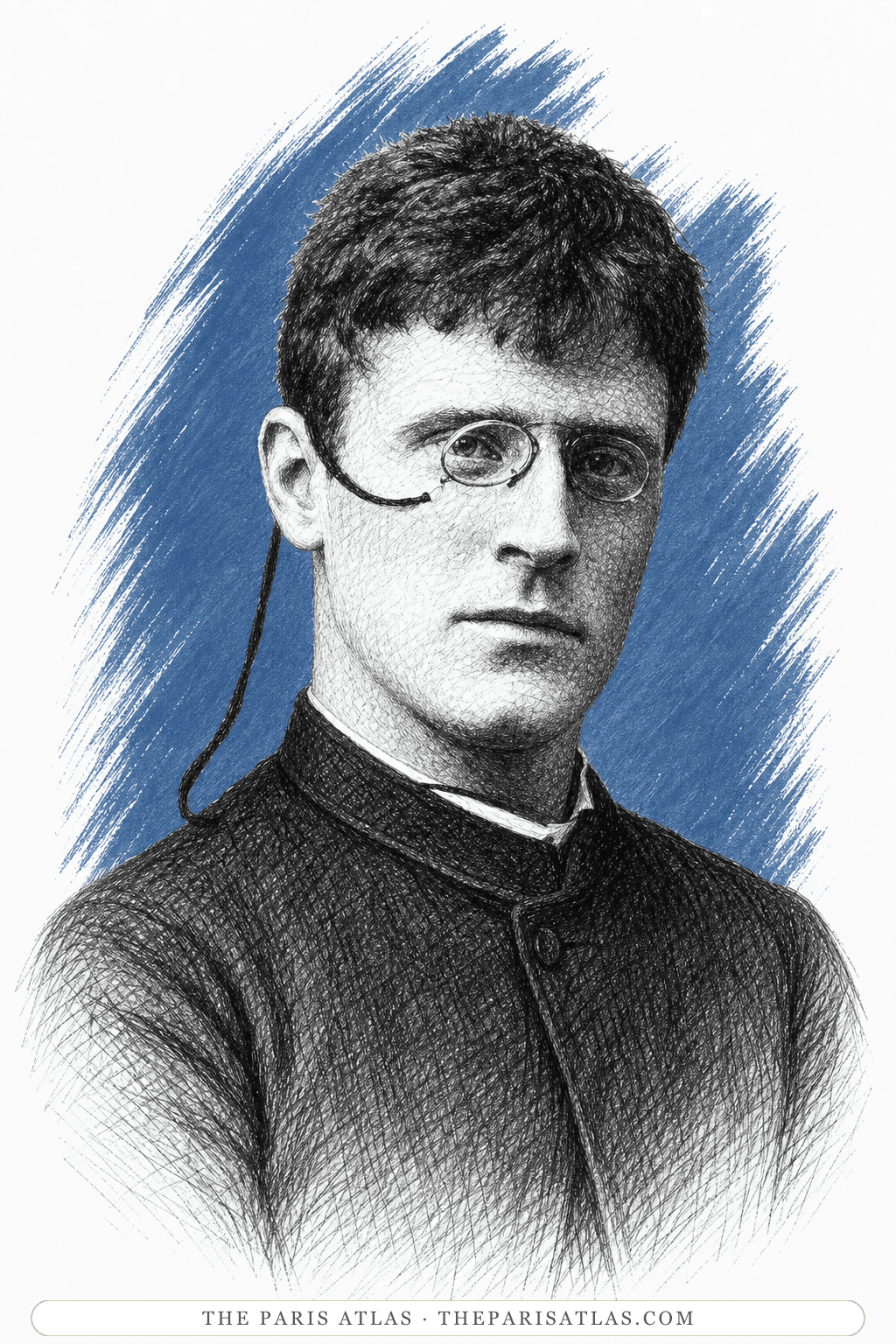
Knut Hamsun
Fante repeatedly named Hamsun as a central influence; the proud and impoverished writer of Hunger is a documented precursor to Arturo Bandini.
American novelist, short-story writer and screenwriter whose autobiographical fiction made Italian American family life, artistic ambition and Los Angeles into the world of Arturo Bandini—and whose nine-week stay in Paris produced “The First Time I Saw Paris.”
John Fante (April 8, 1909 – May 8, 1983) was an American novelist, short-story writer, and screenwriter whose autobiographical fiction transformed the experiences of an Italian American working-class family and a struggling young writer in Los Angeles into some of the most distinctive American prose of the twentieth century. Although he achieved only intermittent literary success during his lifetime, his reputation rose dramatically near the end of his life and after his death, particularly through the rediscovery of his 1939 novel *Ask the Dust*. Today he is regarded as an important writer of Los Angeles, Italian American identity, immigration, family conflict, Catholic guilt, ambition, poverty, and artistic failure.[1]
Fante's best-known creation was Arturo Bandini, a boastful, insecure, ambitious Italian American writer who served as a deliberately exaggerated version of Fante himself. Bandini appears in the novels Wait Until Spring, Bandini, The Road to Los Angeles, Ask the Dust, and Dreams from Bunker Hill, collectively known today as the Bandini Quartet. Fante did not originally conceive them as a planned series. Looking back late in life, he explained that he had simply reused Bandini because the character allowed him to turn portions of his own experience into fiction.[2]
John Fante was born in Denver, Colorado, on April 8, 1909, the eldest of four children of Nicola "Nick" Fante and Mary Capolungo Fante. His father had emigrated from Torricella Peligna, a mountain town in the Abruzzo region of Italy, arriving in the United States in 1901. Nick became a bricklayer and stonemason. Fante's mother was born in Chicago to a family whose origins were in southern Italy and was a deeply observant Catholic.[3]
The family eventually settled in Boulder, Colorado. Money was frequently uncertain. Nick Fante could work extremely hard when construction was available, but Colorado winters interrupted masonry work, and his drinking, gambling, spending, fighting, and affairs made family life still more unstable. His son would spend much of his literary career trying to understand him. Versions of Nick recur throughout Fante's fiction: sometimes frightening, sometimes ridiculous, sometimes magnificent, and often all three at once.
John grew up in an environment in which his family's Italian background and Catholicism made him conspicuous. He later remembered being especially sensitive to anti-Italian slurs and getting into fights over them. Colorado in the 1920s also had a powerful Ku Klux Klan presence, whose targets included Catholics and immigrant communities. The tension between wanting to be accepted as completely American and feeling marked as Italian would become one of the central conflicts in Fante's fiction.
Fante attended Catholic schools in Boulder and later Regis High School in Denver, a Jesuit institution from which he graduated in 1927. At Regis he encountered classical literature, considered the priesthood for a time, and developed the complicated relationship with Catholicism that would remain with him even after his youthful faith weakened. The Catholic pattern of sin, confession, guilt, punishment, forgiveness, and attempted redemption became deeply embedded in his storytelling.[4]
He briefly attended the University of Colorado but did poorly academically and left. Fante later described himself during these years as an increasingly obsessive reader. He consumed literature and philosophy outside the classroom, particularly Friedrich Nietzsche, and became fascinated by H. L. Mencken and The American Mercury. The rupture in his family intensified when his father left Mary for another woman. According to biographer Stephen Cooper, the episode contributed to Fante's break with his religious faith and helped propel him away from Colorado.
Around 1929–1930, Fante left Colorado for Southern California determined to become a writer. He first lived in working-class Wilmington, near the Port of Los Angeles, and spent time in Long Beach before gravitating toward downtown Los Angeles and Bunker Hill. He supported himself with ordinary jobs—including restaurant, hotel, and industrial work—while writing stories and repeatedly submitting them for publication.
The poverty, cheap rooms, cafeterias, bars, libraries, boarding houses, palm trees, hot streets, and peculiar mixture of loneliness and possibility he encountered in Los Angeles became his great material. Unlike the glamorous Hollywood version of the city, Fante wrote about people living at its edges: immigrants, waiters, hotel residents, laborers, unsuccessful artists, and people who had arrived in California expecting something better.
One of the most important relationships of his career began through the mail. Fante admired H. L. Mencken, the formidable critic and editor of The American Mercury, and relentlessly sent him letters and manuscripts. Mencken encouraged him and in 1932 published Fante's story "Altar Boy." Their relationship developed into a correspondence lasting roughly two decades. Mencken provided Fante with something he badly needed: confirmation from an established literary figure that he possessed a genuine voice.[5]
Fante wrote an early Arturo Bandini novel, The Road to Los Angeles, during the 1930s, but publishers rejected it. The manuscript was not published until 1985, two years after his death. His first published novel instead became *Wait Until Spring, Bandini* in 1938. It drew heavily from his Colorado childhood, presenting an Italian immigrant family enduring poverty, winter, sexual jealousy, Catholicism, and the enormous emotional presence of its bricklayer father.
Fante followed it in 1939 with ***Ask the Dust***, the book that would eventually define his reputation.[6]
Its protagonist, Arturo Bandini, is a penniless young writer living in Bunker Hill who possesses almost no evidence of greatness except his absolute conviction that he will become great. Bandini is vain, frightened, romantic, cruel, funny, ashamed of his ethnicity, desperate for love, and capable of sudden compassion. His unstable relationship with Mexican American waitress Camilla Lopez gives the novel much of its emotional force.
The book's treatment of ethnicity is deliberately uncomfortable. Arturo, himself insecure about being Italian American, directs racial insults toward Camilla while simultaneously desiring her and recognizing aspects of his own outsider status in hers. Modern scholarship has increasingly examined Camilla against the history of Mexican marginalization and forced repatriation in Depression-era California, making Ask the Dust important not only as a writer's novel but as a book about who gets to belong to Los Angeles.
The novel received some favorable reviews but sold poorly. One contemporary account estimates that its first edition sold only about 600 copies. Its publisher, Stackpole Sons, was simultaneously caught in an expensive legal dispute over an unauthorized American edition of Adolf Hitler's Mein Kampf, leaving little ability to promote Fante's novel. Ask the Dust soon disappeared from general circulation.
Fante followed it with the 1940 story collection *Dago Red*, much of which returned to childhood, family, religion, ethnicity, and the difficult process of becoming American without entirely escaping the world of one's parents.
In 1937 Fante met Joyce Smart, a Stanford-educated poet from a prosperous northern California family. Her background differed sharply from his. Joyce later remembered him as poor, combative, handsome, and intensely alive. Her mother strongly disapproved of the relationship, in part because of Fante's class and ethnic background and in part because she was appalled by his unpublished writing. John and Joyce married secretly in Reno on July 31, 1937.
They remained married for the rest of Fante's life and eventually raised four children, largely in Malibu. Their son Dan Fante later became a novelist and playwright in his own right.
The marriage was lasting but not necessarily peaceful. Fante could reproduce some of the behavior that he had hated in his father: drinking, gambling, disappearing for long stretches, explosive moods, and intense self-absorption. Joyce nevertheless became indispensable to both his life and his literary survival. She worked, raised their family, preserved manuscripts, edited his work, and, when he lost his sight, physically enabled him to continue writing by taking his dictation.
Fante's literary books brought prestige but little money. Hollywood offered the opposite.
Beginning in the 1930s and increasingly during the 1940s and 1950s, Fante worked as a studio writer. He contributed stories, treatments, scripts, and screenplays to productions including Dinky, East of River, Youth Runs Wild, My Man and I, Jeanne Eagels, Walk on the Wild Side, The Reluctant Saint, and others. At Warner Bros. he moved among contract writers that included William Faulkner and Dalton Trumbo.
Hollywood gave Fante financial security and helped him support Joyce and their four children, but he remained deeply ambivalent about the work. He often treated screenwriting as commercial labor rather than literature. The contradiction became part of the Fante mythology: a man convinced he was capable of great novels spending years writing movie projects that might be altered, abandoned, or never produced.
One of the happier exceptions was *Full of Life*. Fante published the comic autobiographical novel in 1952, drawing upon marriage, pregnancy, Catholic family life, and domestic chaos. He then adapted it for a film starring Judy Holliday and Richard Conte. The adaptation was commercially and critically successful, and Fante received a Writers Guild nomination for Best Written American Comedy.
Fante's connection to Paris was brief compared with writers who permanently joined the city's expatriate culture, but it was substantial enough to form a genuine episode in his life and work.
In the summer of 1959, producer Darryl F. Zanuck sent Fante to Paris to work on a screenplay. The film was never produced, but Fante remained in the French capital for approximately nine weeks. The experience became the basis of his short prose piece "The First Time I Saw Paris," later collected in The Big Hunger: Stories 1932–1959.
The Paris that Fante describes is characteristically different from the romantic city familiar from expatriate mythology. He notices heat, strangers, sex workers, policemen, hotel lobbies, loneliness, and his own homesickness for California. He describes walking near Avenue George V, observing an impoverished elderly woman, and moving between the street and his hotel while crowds of young people wait outside for Elvis Presley, who was visiting Paris during his U.S. Army service in Europe. Fante explicitly refers to what he had seen during his nine weeks in the city.
The editorial history of The Big Hunger, assembled by Fante biographer Stephen Cooper, confirms that Fante wrote the sketch while living in Paris and working for Zanuck. Cooper's editorial account also states that Fante and Presley were staying at the same hotel. The hotel is identified as the Prince de Galles on Avenue George V, and Cooper's research records that Fante and Presley were introduced and briefly shook hands.
That makes the Prince de Galles a strong Fante-related Paris location, although the identification comes through Cooper's biographical research and editorial notes rather than Fante naming the hotel directly in the published sketch. The nine-week Paris residence, Zanuck assignment, Avenue George V setting, Presley crowds, and resulting story are much more firmly documented.
Fante's connection with France became significant in another, posthumous sense. French readers and publishers enthusiastically rediscovered his work during the 1980s, helping transform an American writer who had spent decades in relative obscurity into an international literary figure. Scholarship on his French reception notes the particular attraction of Bandini as a kind of artiste maudit: impoverished, excessive, proud, and nearly forgotten.
Fante's prose often looks easier than it is. His sentences tend to be clear, fluid, and close to spoken American English. He avoided elaborate literary display, but his plainness could suddenly accelerate into lyrical passages, comic exaggeration, anger, tenderness, or despair. Scholar Leonardo Buonomo describes the apparent simplicity of his prose as carrying the rhythm of a speaking voice.
Fante himself identified **Sherwood Anderson** as a major stylistic influence. He admired Anderson's simple sentences, apparent innocence, and refusal to sound "fancy." He also repeatedly named Knut Hamsun as a central influence. Hamsun's Hunger, with its proud, unstable, impoverished young writer wandering through a city, is an obvious ancestor of Ask the Dust.
H. L. Mencken influenced Fante both personally and stylistically through his irony, irreverence, skepticism, and faith in vigorous American prose. The young Fante also read Friedrich Nietzsche intensely. Literary critics have additionally traced elements of Dostoevsky, Homer, and James Branch Cabell in his work, although Anderson, Hamsun, Mencken, and Nietzsche are among the clearest documented influences.
His fiction is intensely autobiographical without being simple memoir. He transformed life into performance. Fathers became larger and more violent; sons became more arrogant; humiliations became comic set pieces; personal failures could suddenly acquire mythic scale. His recurring subjects include family, fathers and sons, immigration, Italian American identity, Catholicism, poverty, ambition, sexual longing, artistic vanity, Los Angeles, shame, failure, and forgiveness.
Fante also possessed a quality that greatly impressed later readers: he was unafraid of emotion. Sentimentality, cruelty, humor, and self-mockery frequently occur in the same scene. His narrators may declare themselves geniuses one moment and reveal themselves as frightened fools the next.
The most important writer Fante directly influenced was **Charles Bukowski**.
As a young man in Los Angeles, Bukowski discovered Ask the Dust in the Los Angeles Public Library. He later described Fante as a lifelong influence and famously called him his "god." Fante's willingness to write about cheap rooms, drinking, humiliating jobs, failure, sexuality, Los Angeles streets, and emotional desperation helped show Bukowski that such material could become serious literature.
Bukowski eventually brought Fante's work to the attention of his publisher, John Martin of Black Sparrow Press. In 1980 Black Sparrow republished Ask the Dust with an introduction by Bukowski. After roughly four decades of neglect, Fante's novel had a second life. Other books followed.
The rediscovery came almost painfully late. By the time readers began finding Fante again, his health had deteriorated catastrophically.
His influence extended beyond Bukowski. Screenwriter Robert Towne has described discovering Ask the Dust while researching 1930s Los Angeles and using Fante's evocation of the city as an influence on the world of *Chinatown. Towne later spent decades trying to bring Ask the Dust* to the screen, eventually directing the 2006 adaptation.
Fante is also frequently described as a precursor to later Beat and Los Angeles writing. Claims of direct influence on every later writer should be treated cautiously, but the mixture of confessional prose, urban outsiders, emotional immediacy, humor, and working-class subject matter that became prominent in later American writing is clearly present in Fante decades earlier.
Fante was diagnosed with diabetes in 1955. Over the following decades the disease damaged his body severely. By 1978 he had lost his sight, and within approximately two years complications led to the amputation of both legs.
Yet his literary career revived just as his physical independence disappeared.
In 1977 he published *The Brotherhood of the Grape*, a late novel returning to the immense subject of the Italian American father. By this stage Fante was older than the angry young men of his early fiction and could look at the father figure with more tenderness. Recent scholarship has noted this evolution: the Italian father who had once represented embarrassment, violence, and an immigrant past from which the son wanted to escape gradually became an ancestor whose labor and identity the older writer could more fully understand.
After losing his sight, Fante continued writing by dictating to Joyce. His final novel, *Dreams from Bunker Hill*, returned once more to Arturo Bandini and to the Los Angeles of his youth. Joyce took down the book as he spoke it. Published in 1982, it brought the Bandini sequence back to its central obsession: becoming a writer, even when the world offers countless ways not to become one.
Fante died of pneumonia on May 8, 1983, one month after his seventy-fourth birthday, at the Motion Picture and Television Hospital in Woodland Hills, California. He was buried at Holy Cross Cemetery in Culver City.
Fante died just as his reputation was beginning its remarkable second ascent. Black Sparrow Press continued publishing and republishing his work, including manuscripts that had remained unavailable during his lifetime. The Road to Los Angeles appeared posthumously in 1985, allowing readers to see an earlier, more ferocious version of Arturo Bandini. Later collections, correspondence, and archival publications greatly expanded the known Fante canon.
His papers—manuscripts, correspondence, financial documents, scripts, photographs, memorabilia, and even his typewriter—are now preserved in UCLA Library Special Collections. The archive makes visible how closely Fante's apparently spontaneous prose was tied to a long working life of revision, rejection, commercial writing, and obsessive self-invention.
His international reputation has become particularly strong in France and Italy. In Los Angeles, his status as one of the city's defining literary writers was formally recognized in 2010 when an intersection near the Los Angeles Central Library and the vanished Bunker Hill neighborhood was named John Fante Square.
The irony would probably have pleased him. Arturo Bandini spent pages fantasizing about becoming a celebrated author while fearing that his books would disappear into library shelves. Decades after Fante himself nearly suffered that fate, readers went back to those shelves and found him.
John Fante is born in Denver, Colorado, on April 8, the eldest child of Nick and Mary Fante.
The family settles in Boulder. Fante attends Catholic school and experiences poverty, family instability, and anti-Italian prejudice.
Graduates from the Jesuit-run Regis High School in Denver.
Briefly attends the University of Colorado before leaving without a degree.
Leaves Colorado for Southern California with the ambition of becoming a writer.
Lives and works around Wilmington, Long Beach, downtown Los Angeles, and Bunker Hill while writing fiction.
H. L. Mencken publishes Fante's "Altar Boy" in The American Mercury, giving him his first major literary breakthrough.
Writes The Road to Los Angeles, but publishers reject it.
Meets Stanford-educated poet Joyce Smart. They secretly marry in Reno on July 31.
Wait Until Spring, Bandini becomes his first published novel.
Publishes Ask the Dust.
Publishes Dago Red and increasingly turns toward Hollywood screenwriting.
Works in the Hollywood studio system while continuing to publish short fiction.
Publishes Full of Life, one of his more commercially successful books.
Diagnosed with diabetes.
Adapts Full of Life for the screen; the film earns Fante a Writers Guild nomination.
Spends approximately nine weeks in Paris working on a screenplay for Darryl F. Zanuck. Stays at the Prince de Galles according to Stephen Cooper's research, encounters the phenomenon surrounding Elvis Presley's stay there, and writes "The First Time I Saw Paris."
Receives a screenplay credit on Walk on the Wild Side, adapted from Nelson Algren's novel.
Publishes the children's book Bravo, Burro! with Rudolph Borchert.
Publishes The Brotherhood of the Grape.
Diabetes has progressed to the point that Fante loses his eyesight.
Charles Bukowski and publisher John Martin help revive interest in Fante.
Black Sparrow Press republishes Ask the Dust with Bukowski's influential introduction.
Severe diabetic complications result in the amputation of both legs.
Publishes Dreams from Bunker Hill, dictated to Joyce after he became blind.
Dies of pneumonia on May 8 at the Motion Picture and Television Hospital in Woodland Hills, aged seventy-four.
Previously unpublished and unavailable works begin appearing, including The Road to Los Angeles.
Fante develops a particularly strong readership in France and Italy and is increasingly recognized as a major Los Angeles and Italian American writer.
Los Angeles officially dedicates John Fante Square near the Central Library and the former Bunker Hill neighborhood.
Fante repeatedly named Hamsun as a central influence; the proud and impoverished writer of Hunger is a documented precursor to Arturo Bandini.
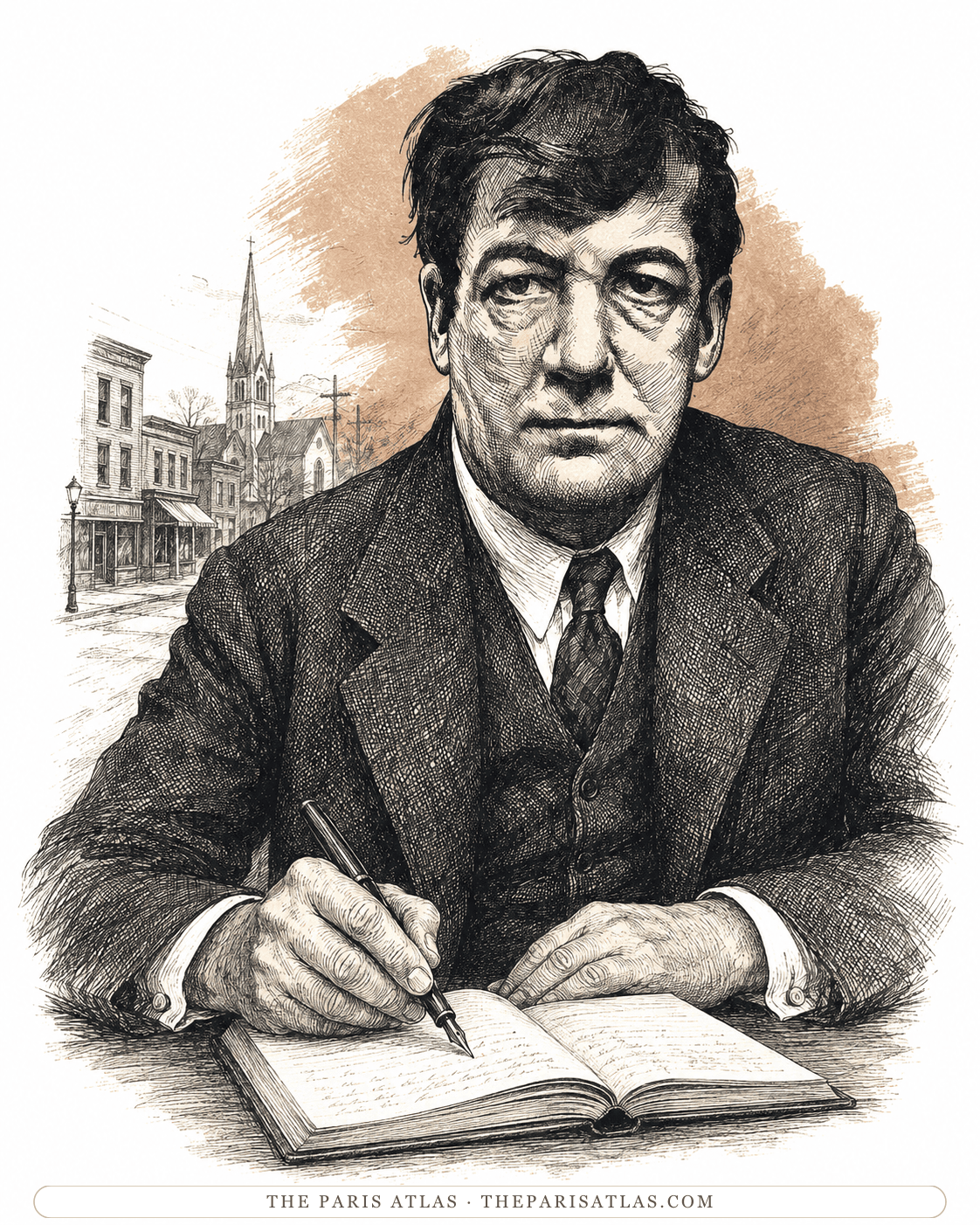
Fante identified Anderson as a major stylistic influence and praised the simplicity, apparent innocence, and lack of ornamental display in his prose.
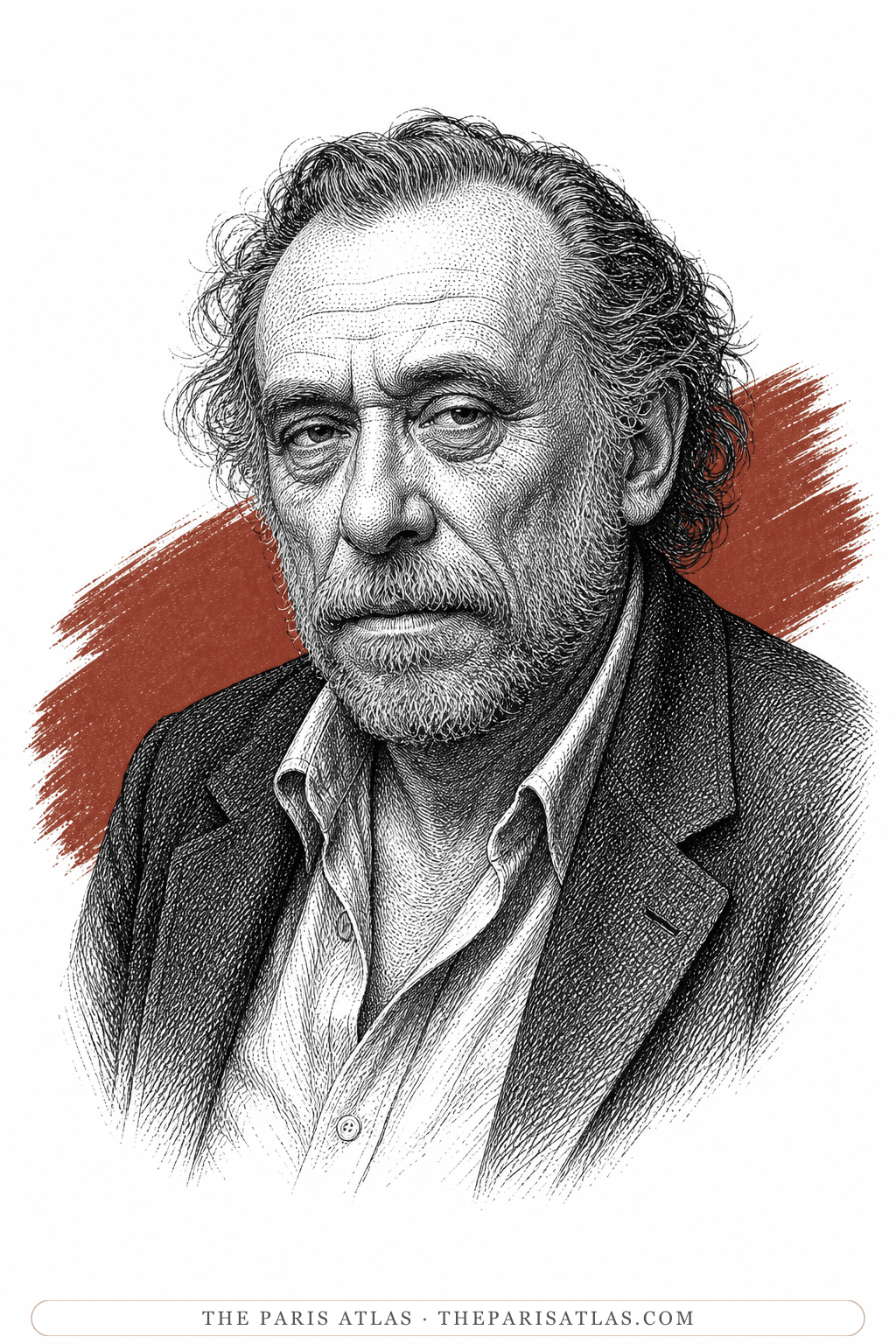
Bukowski described Fante as a lifelong influence, brought Ask the Dust to Black Sparrow publisher John Martin, and introduced the press's 1980 edition.

John Fante’s novel of a broke, arrogant young writer chasing literary glory and love in Depression-era Los Angeles.
Influenced
Bukowski described Fante as a lifelong influence, brought Ask the Dust to Black Sparrow publisher John Martin, and introduced the press's 1980 edition.
Influenced by
Fante repeatedly named Hamsun as a central influence; the proud and impoverished writer of Hunger is a documented precursor to Arturo Bandini.
Influenced by
Fante identified Anderson as a major stylistic influence and praised the simplicity, apparent innocence, and lack of ornamental display in his prose.
The sources below include biographies, scholarly essays, interviews, and primary materials that informed this page. They reflect both the historical record and ongoing critical conversations about John Fante and their work.

UCLA's archival finding aid provides Fante's biographical outline, death information, and the scope of his surviving papers.
Primary interview material on Arturo Bandini and Fante's explanation that the novels were not conceived as a planned series.

Biographical account covering Fante's Italian American family, Colorado childhood, move to California, marriage, writing career, and final years.
Review of Cooper's biography with details of Fante's family rupture, faith, early reading, and movement toward California.
Documents Fante's long correspondence with H. L. Mencken and the publication of "Altar Boy."
Critical account of *Ask the Dust*, its small first-edition sale, Fante's neglect, and his later rediscovery.
Bibliography and filmography documenting Fante's novels, stories, posthumous publications, and screen credits.
Stephen Cooper's centenary assessment of Fante's Los Angeles writing, education, Hollywood career, and literary importance.
Account of Fante's publication history, Charles Bukowski's advocacy, and the Black Sparrow revival.
Ben Pleasants's recorded interview with Fante on his childhood, anti-Italian prejudice, and early Los Angeles years.
Primary interview material on the writers Fante named as influences, especially Sherwood Anderson and Knut Hamsun.
Fante's Paris sketch with Stephen Cooper's editorial notes documenting the 1959 Zanuck assignment, nine-week stay, Prince de Galles, and Elvis Presley encounter.
Publication record for *The Big Hunger: Stories 1932–1959*, the collection containing "The First Time I Saw Paris."
Film history documenting Fante's autobiographical novel, screenplay adaptation, cast, reception, and Writers Guild nomination.

Scholarly encyclopedia entry situating Fante in American modernism and documenting his life and major works.
Scholarly collection on *Ask the Dust*, including ethnicity, Los Angeles, reception, adaptation, and Fante's international readership.
Scholarly analysis of Camilla Lopez, Mexican American history, and erased memory in *Ask the Dust*.
Interview in which Robert Towne discusses *Ask the Dust*, *Chinatown*, and his long effort to adapt Fante's novel.
Philippe Garnier's account of Fante's French rediscovery and the appeal of Bandini as an *artiste maudit*.
Literary scholarship on Fante's speaking voice, stylistic simplicity, Italian American identity, and emerging canonical status.
Scholarly study of confession, Catholicism, and Italian identity in Fante's writing.
Scholarly analysis of the changing father figure across Fante's fiction.
Review and discussion of Stephen Cooper's biography *Full of Life*, including Fante's family and literary career.
Review of Cooper's biography with details of Joyce Fante's role in the family and preservation of Fante's work.
Book record and biographical material on Fante's diabetes, blindness, amputations, and the final novel dictated to Joyce.
California Digital Library account of the UCLA John Fante Papers, their contents, and the dedication of John Fante Square.
Primary source and publication record for Fante's defining 1939 novel.
Modern publisher record for *Ask the Dust* and its Charles Bukowski introduction.
These references anchor the page in the documented record and in the scholarly conversations around John Fante. Every claim on this page traces back to one or more of the works listed here.
 Explore more resources