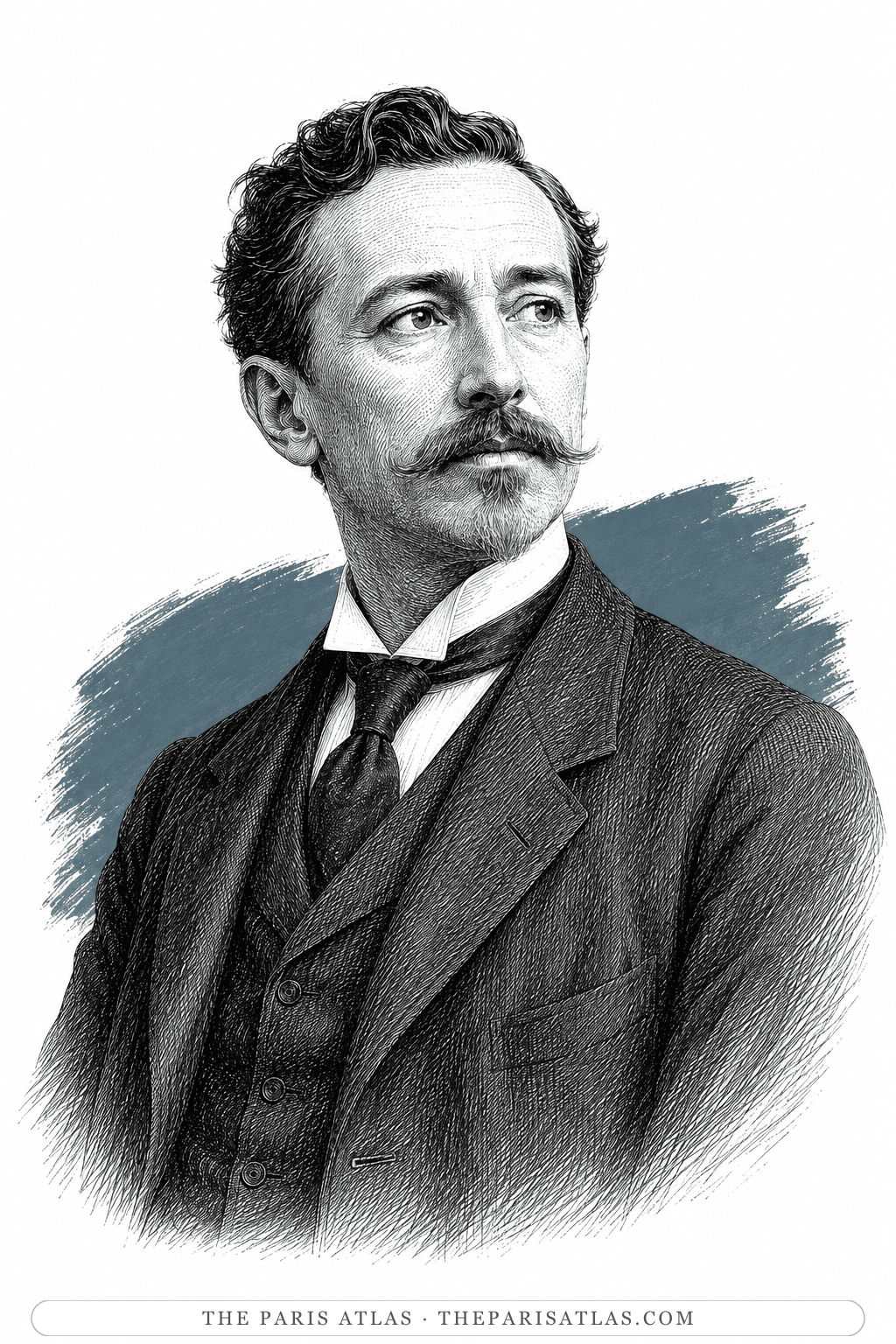
Albert Langen
- Publisher
Met · 1893
Hamsun met the German publisher Albert Langen through Willy Gretor during his 1893 Paris stay.
Norwegian novelist and Nobel laureate whose experiments with consciousness helped anticipate literary modernism—and whose support for Nazi Germany permanently complicated his legacy.
Knut Hamsun (4 August 1859 – 19 February 1952), born Knud Pedersen, was a Norwegian novelist, short-story writer, playwright, poet, essayist, and Nobel laureate whose experiments with consciousness, irrational behavior, alienation, desire, and unstable identity helped anticipate twentieth-century literary modernism. His 1890 novel Sult (*Hunger*) is widely regarded as his breakthrough and one of the pioneering works of modern psychological fiction. He later produced major novels including Mysterier (Mysteries, 1892), Pan (1894), Victoria (1898), Markens Grøde (Growth of the Soil, 1917), and Landstrykere (Vagabonds, 1927). In 1920 he received the Nobel Prize in Literature, specifically for Growth of the Soil.
Hamsun's literary achievement is inseparable from one of the most troubling episodes in modern Scandinavian cultural history. During the 1930s and the German occupation of Norway, he became an outspoken supporter of Nazi Germany and Vidkun Quisling. He met Joseph Goebbels and Adolf Hitler, gave Goebbels his Nobel medal, urged Norwegians to stop resisting German forces, and wrote an admiring obituary of Hitler only days before Germany's surrender. After the war, he underwent psychiatric examination and was ordered to pay a large civil penalty to the Norwegian state. His political choices devastated his standing in Norway but did not erase the enormous influence of his fiction.
Hamsun was born Knud Pedersen on 4 August 1859 in Gudbrandsdalen, in the region around Lom and present-day Vågå in central Norway. His parents, Peder Pedersen and Tora Olsdatter, came from modest farming and working backgrounds. When Knud was about three years old, the family moved far north to Hamsund on Hamarøy, above the Arctic Circle. Northern Norway would remain one of the central landscapes of his imagination for the rest of his life.[1]
The family was poor, and Hamsun received comparatively little formal schooling. During parts of his childhood he lived with his maternal uncle Hans Olsen, a tailor, merchant, postmaster, and keeper of a small library. Hamsun later remembered these years darkly. His childhood became part of the personal mythology from which he built the wandering, isolated, fiercely independent figures who recur throughout his fiction.
At the same time, Hamarøy gave him something he would never abandon: the extraordinary northern landscape. Mountains, forests, sea, changing seasons, silence, birds, animals, and especially the endless daylight of the northern summer became almost living presences in his fiction. Pan, Benoni, Rosa, and numerous shorter works draw upon this world. The Hamsun Centre notes that northern Norwegian nature, speech, and social life remained fundamental to his writing long after he left the region.
After adolescence, Hamsun began the restless existence that would later appear repeatedly in his fiction. He worked at different times as a shop clerk, peddler, shoemaker's apprentice, teacher, sheriff's assistant, road laborer, and other temporary occupations. He traveled around northern and southern Norway and repeatedly attempted to establish himself as a writer.
His first small book, *Den Gaadefulde, appeared in 1877 under the name Kn. Pedersen. In 1878 he published the poem Et Gjensyn and the narrative Bjørger*. These juvenilia attracted little notice, but they established an ambition that would become almost obsessive.[2]
He originally used forms of the family name Pedersen, later adding Hamsund, the name of the place where he had grown up. The familiar story is that an 1885 article on Mark Twain appeared with the final d accidentally omitted from “Hamsund.” Whether the change was entirely accidental is somewhat more complicated—Hamsun had experimented with several versions of his name—but he adopted Hamsun permanently.
In 1879 and 1880, the young writer spent periods in Kristiania, today's Oslo. He experienced severe poverty, uncertainty, hunger, and humiliation while attempting to make a literary career.
Those experiences would eventually become raw material for Hunger.
The important distinction is that Hunger is not simply autobiography. Hamsun took his own experiences of starvation and radically transformed them. The book largely abandons the traditional social novel in favor of an unstable consciousness: the narrator invents stories, lies for no reason, gives away money he desperately needs, argues with himself, experiences manic exhilaration and despair, and watches his mind behave in ways he cannot completely control.
Before that breakthrough arrived, however, Hamsun spent years failing to establish himself.
In 1882, supported by friends and acquaintances, Hamsun traveled to the United States.
He initially stayed in New York before traveling west to Wisconsin, where an older brother lived. He worked in shops and on farms, lectured to Norwegian immigrant communities, and eventually became associated with the Norwegian-American writer and Unitarian minister Kristofer Janson in Minneapolis. For a period, Hamsun served as Janson's secretary and even preached in his place.
Illness sent him back to Europe in 1884, but he returned to America in 1886. During his second stay he famously worked as a streetcar conductor in Chicago, later returning to Minneapolis and working as a farm laborer and lecturer. He read widely and discussed writers including Balzac, Flaubert, Zola, Strindberg, and J. P. Jacobsen with the Swedish journalist Victor Nilson.
America fascinated and irritated him. His experiences produced *Fra det moderne Amerikas Aandsliv (The Cultural Life of Modern America*, 1889), a deliberately provocative attack on American materialism, culture, politics, and democracy. Hamsun's judgments were frequently unfair and exaggerated, but the book reveals attitudes that would remain important throughout his life: suspicion of mass society, hostility toward modern civilization, dislike of democracy, and admiration for strong individual personalities.[3]
He returned to Europe in 1888.
After leaving America, Hamsun went to Copenhagen, where he lived in extreme poverty in a small attic room and worked on the manuscript that became Hunger.
A fragment appeared anonymously in the journal Ny Jord in November 1888 and immediately attracted attention. The completed novel was published on 5 June 1890.[4]
Hunger follows an unnamed would-be writer wandering the streets of Kristiania while gradually starving. Very little conventional plot occurs. The real action takes place inside the protagonist's consciousness.
His moods change instantaneously. Pride prevents him from accepting help. He invents absurd explanations for his behavior. Hunger affects his perception. Words and ideas take on obsessive power. Comedy can turn into terror within a paragraph.
Hamsun was deliberately rejecting the dominant Scandinavian tradition of socially engaged realism. In his 1890 essay “Fra det ubevidste Sjæleliv” (“From the Unconscious Life of the Mind”), he argued that literature should examine the tiny, unpredictable movements of consciousness rather than construct tidy representative “types.” His interest was in strange impulses, irrational contradictions, nervous states, fantasies, and sensations that arise without obvious causes.
That literary program makes Hunger an important precursor to modernism. Hamsun's characters do not always understand themselves, and the narrator is not necessarily a reliable interpreter of his own behavior.[5]
Hamsun followed Hunger with *Mysteries* in 1892.
Its protagonist, Johan Nilsen Nagel, arrives in a small Norwegian town wearing a conspicuous yellow suit and carrying a violin case that does not contain a violin. He lies, contradicts himself, provokes strangers, falls in love, humiliates himself, performs different personalities, and becomes increasingly impossible to interpret.
Nagel calls himself a “living contradiction,” and the description could apply to many of Hamsun's early protagonists. They are proud and insecure, cruel and compassionate, attracted to society and desperate to escape it.
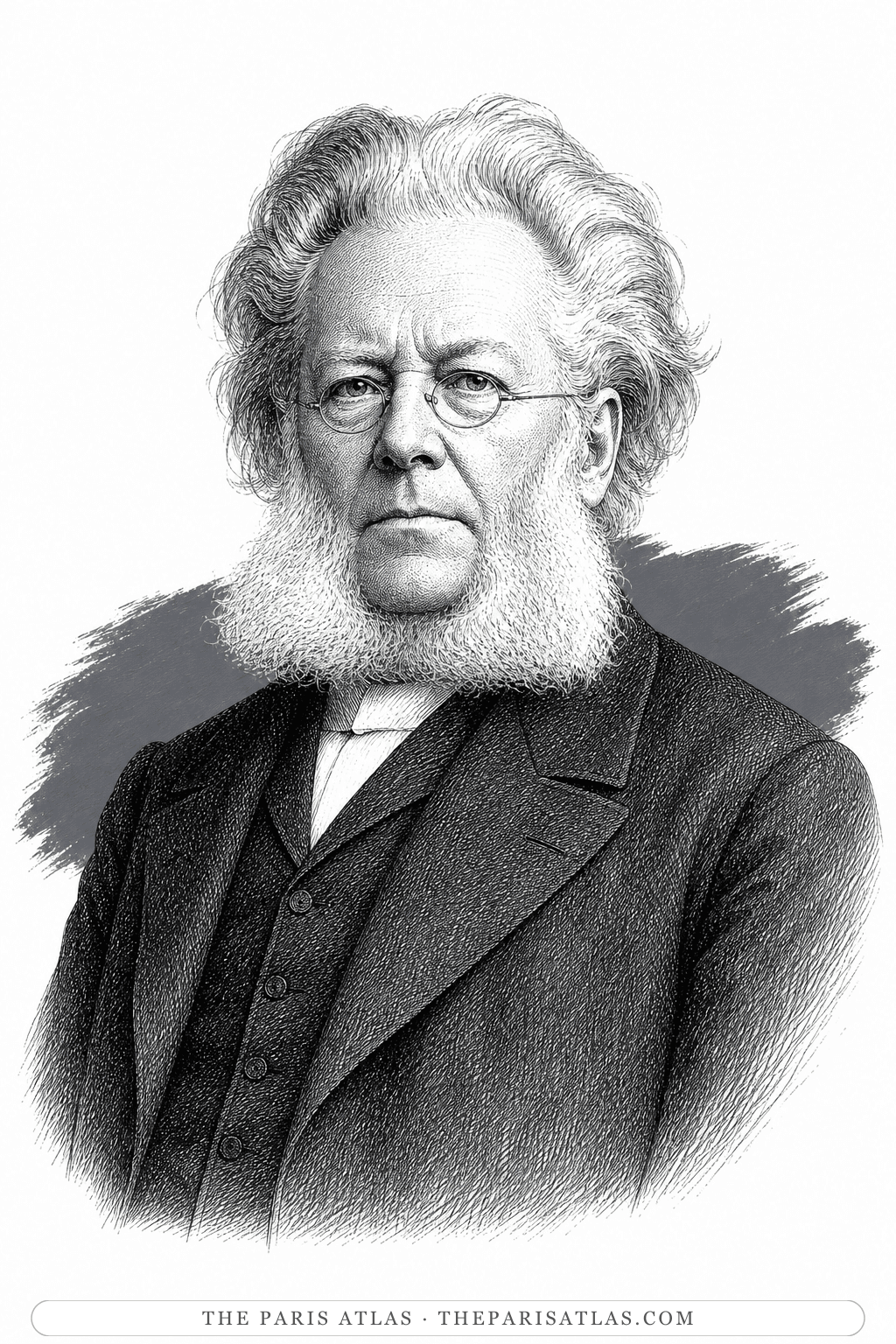
Hamsun was becoming famous as both a novelist and a provocateur. In 1891 he toured Scandinavia giving aggressive literary lectures attacking established writers, especially Henrik Ibsen, who personally attended one of them. Hamsun argued that literature had become too concerned with social reform and insufficiently interested in the mysteries of the individual psyche.
Paris was not merely a place Hamsun visited. He lived and worked there during one of the most important periods of his early career.
Scholarly research places Hamsun's first substantial Paris stay from approximately mid-April until July 1893.[6]
The Danish artist, art dealer, and patron Willy Gretor provided him with a room in Gretor's apartment at:[7]
112 boulevard Malesherbes, Paris
Gretor supported a number of Scandinavian artists and writers in Paris and helped introduce Hamsun into the city's Scandinavian and European artistic networks. It was through Gretor that Hamsun met the German Albert Langen, who would become one of the most important publishers of Hamsun's work in Germany. Langen eventually founded his publishing business partly around the German publication of Hamsun's Mysteries.
During this first Paris period, Hamsun also worked on *Ny Jord (Shallow Soil*), which appeared in 1893.
Hamsun returned for another extended Paris residence from approximately November 1894 until June 1895. Research into his Paris years also connects him securely with:
8 rue de Vaugirard Paris 6e
A commemorative plaque on the building states that Knut Hamsun, Norwegian writer and 1920 Nobel laureate, lived and worked there between 1893 and 1895. The plaque survives today.[8]
Scholarship describes Hamsun occupying a modest upper room there, despite the fashionable Left Bank location. The building is near the Luxembourg Gardens and only a short distance from Saint-Germain-des-Prés.
For Paris Atlas, this is one of the strongest possible author-location connections because it is not merely inferred from correspondence: the building itself carries a memorial plaque identifying Hamsun's residence and work there.
Paris coincided directly with the creation of one of Hamsun's masterpieces.
During 1894, Hamsun was working on *Pan* while in Paris. The Hamsun Society's chronology explicitly places him in Paris that year while writing the novel. Hamsun subsequently traveled to Kristiansand in Norway during the summer and completed the book there before its publication in the autumn. He then returned to Paris.[9]
This is a fascinating contrast: one of the great literary evocations of Northern Norwegian wilderness was partly conceived and written while Hamsun was living in metropolitan Paris.
Pan follows Lieutenant Thomas Glahn, who withdraws into a hut in the forests of Nordland and becomes entangled in a destructive love affair with Edvarda. Nature is not simply background scenery. Forests, animals, seasons, light, smell, silence, sexuality, and emotion merge until Glahn's psychological state seems inseparable from the landscape.
With Pan, Hamsun's international reputation expanded dramatically.
Hamsun also encountered an extraordinary artistic network in Paris.
The Hamsun Society records that he met August Strindberg in Paris in 1894. After returning later that year, he encountered figures including:[10]
Paul Verlaine Paul Gauguin August Strindberg Herman Bang Johan Bojer Albert Langen*
These connections placed the previously impoverished Norwegian wanderer within the international artistic world of fin-de-siècle Paris.
Paris therefore mattered to Hamsun on several levels: it gave him a place to work, connected him with publishers, brought him into contact with major writers and artists, and overlapped directly with the composition of Pan and Shallow Soil.
His Paris connection deserves to be treated as a genuine period of residence and literary production, not simply a visit.
The novels following Hunger increasingly established Hamsun as an international writer.
*Pan* became one of his great lyrical works, joining psychological instability with an almost ecstatic sensitivity to nature.
*Victoria*, published in 1898, became perhaps his best-known love story. It follows Johannes, the son of a miller, and Victoria, the daughter of a wealthy landowner. Class prevents their relationship from developing normally, but the deeper obstacle is characteristically Hamsunian: the lovers are almost more committed to the idea of impossible love than to the practical possibility of happiness.
Longing in Hamsun is often strongest when fulfillment is impossible.
In 1898 Hamsun married Bergljot Goepfert, a divorced woman from a more prosperous social background. Their relationship deteriorated during the following decade. They traveled through Finland, Russia, the Caucasus, and Turkey, experiences Hamsun later transformed into I Æventyrland (In Wonderland). They had one daughter, Victoria, before the marriage ended.
In 1909 Hamsun married the young actress Marie Andersen, twenty-two years his junior. Hamsun required Marie to abandon her theatrical career, and the couple increasingly attempted to build the agricultural life Hamsun had begun to idealize. They had four children: Tore, Arild, Ellinor, and Cecilia.[11]
Their marriage lasted until his death, although it was frequently difficult. Hamsun could be possessive, jealous, withdrawn, and demanding, and he often left the family for hotels or rented rooms because he found it easier to write away from domestic life.
As Hamsun aged, his fiction changed.
The hyper-sensitive solitary protagonists of Hunger, Mysteries, and Pan gradually gave way to broader social narratives. He became increasingly hostile toward industrialization, cities, tourism, mass politics, intellectual professions, modern technology, and what he regarded as rootless modern existence.
In 1911, Hamsun and Marie moved to a farm at Skogheim in Hamarøy, where they attempted to build the agricultural existence that had increasingly become central to his philosophy.
The culmination was *Markens Grøde (Growth of the Soil) in 1917*.
Its central character, Isak, establishes a farm in wilderness and gradually transforms the land through labor. Hamsun presents cultivation, physical work, family, animals, seasons, and continuity with the earth as an alternative to the restless artificiality of modern society.
In 1920, Hamsun received the Nobel Prize in Literature.
Unlike most literature prizes, which recognize an author's work as a whole, Hamsun's citation specifically identified Growth of the Soil, honoring him:
“for his monumental work, Growth of the Soil.”
By then Hamsun was internationally famous.
The family had acquired the estate Nørholm, near Grimstad, in 1918. Hamsun used a significant portion of his Nobel money to restore and develop the property, which remained his principal home for the rest of his life.
Hamsun's importance rests less on any single subject than on how he represented consciousness.
His early fiction often abandons predictable psychological motivation. Characters behave irrationally and then invent explanations afterward. Thoughts interrupt one another. Tiny sensations suddenly acquire enormous significance. Mood can override logic.
This was revolutionary in the context of nineteenth-century realism.
Instead of explaining characters from the outside, Hamsun often places the reader inside consciousness while it is actually changing. His protagonists experience what later literature would call alienation, fragmentation, obsessive thought, unreliable perception, and unstable identity.
His 1890 manifesto demanded literature concerned with the secret and unpredictable movements of the mind. Hunger became the great practical demonstration of that theory.
Hamsun's style could also be extraordinarily lyrical. In Pan, perception of forests, moonlight, animals, sea, vegetation, weather, and human desire merges into poetic prose.
Later novels display another Hamsun: the oral storyteller and satirist. Works such as Vagabonds combine humor, gossip, exaggeration, comic characters, local speech, and an apparently effortless narrative voice.
Across these very different periods, several qualities remain recognizable:
psychological unpredictability, lyrical intensity, irony, sudden shifts of tone, fascination with outsiders, distrust of explanations, sensual attention to nature, and an extraordinary ear for spoken language.
Hamsun's strongest acknowledged literary influence was Fyodor Dostoevsky.
Modern scholarship has documented the importance of Dostoevsky to Hamsun's treatment of poverty, unstable behavior, contradiction, guilt, irrationality, and religious or existential crisis. Hamsun later described Dostoevsky as the writer from whom he had learned the most.
August Strindberg was another major influence and contemporary. Hamsun admired Strindberg's willingness to oppose conventional morality, realism, bourgeois society, and stable psychological characterization.
The philosophy of Friedrich Nietzsche also became important, particularly Nietzsche's emphasis on individualism, irrational forces, vitality, anti-democratic elitism, and the solitary individual opposed to the crowd. Arthur Schopenhauer's pessimism likewise remained important to Hamsun throughout his life.
As a young writer, Hamsun had admired Bjørnstjerne Bjørnson, even approaching the famous Norwegian author personally. Bjørnson was not convinced that Hamsun would succeed as a writer and instead helped find him work as a road laborer—an irony given Hamsun's later stature.
Hamsun's influence on twentieth-century literature was enormous.
Ernest Hemingway has repeatedly been identified as an inheritor of Hamsun's stripped-down psychological and narrative innovations. Hamsun was also a major influence on Henry Miller, whose Tropic of Cancer was shaped partly by Hunger. Oxford's literary reference work specifically identifies Hamsun as one of Miller's early formative influences.
John Fante drew directly upon Hunger when developing the young, impoverished writer figure behind Arturo Bandini and Ask the Dust.
Isaac Bashevis Singer admired Hamsun intensely. Hamsun's treatment of irrational and perverse impulses helped free Singer to construct characters whose behavior could not be reduced to simple moral explanations.
Maxim Gorky was influenced by Hamsun's work in Russia, while writers including Thomas Mann, Hermann Hesse, and others publicly celebrated him during his lifetime.
One useful literary lineage is therefore:
Dostoevsky → Hamsun → Fante / Hemingway / Miller / Singer
Hamsun occupies an unusually important bridge between nineteenth-century psychological fiction and the modern novel.
Hamsun became increasingly preoccupied with aging.
His wanderer novels—Under the Autumn Star, A Wanderer Plays on Muted Strings, and The Last Joy—feature an aging narrator named Knut Pedersen who attempts to escape civilization by wandering through the countryside. Youth, lost erotic possibility, resignation, and the desire to disappear into nature dominate these books.
By the 1920s Hamsun suffered from worsening deafness, tremors, depression, isolation, and periods of creative difficulty.
Remarkably, the deeply conservative writer underwent psychoanalysis in 1926 with physician Johannes Irgens Strømme, making him one of the relatively early Norwegian patients to undergo such treatment. His creative block soon lifted, although it is impossible to know how directly the therapy contributed.
The result was another major creative period beginning with *Landstrykere (Vagabonds*, 1927).
The most difficult part of Hamsun's biography cannot be treated as a footnote.
His admiration for Germany long predated Hitler. During the First World War he had publicly favored Germany over Britain. During the 1930s, however, his views became increasingly connected to National Socialism.
He praised Hitler's Germany, attacked parliamentary democracy, supported Vidkun Quisling, and in 1935 publicly opposed awarding the Nobel Peace Prize to imprisoned German pacifist Carl von Ossietzky.
When Germany invaded Norway in April 1940, Hamsun openly supported the occupiers. He published articles urging Norwegian resistance to end and argued that Germany was defending Europe against British power.
His support was therefore public, repeated, and sustained, not simply an isolated remark made at the end of his life.
In 1943, Hamsun met Nazi propaganda minister Joseph Goebbels and subsequently sent Goebbels his Nobel Prize medal as a sign of admiration.
That same year he met Adolf Hitler at the Berghof. The meeting did not go smoothly. Hamsun repeatedly complained about Reich Commissioner Josef Terboven's brutal rule in occupied Norway and pressed Hitler to remove him. Hitler became furious and ended the meeting.
Hamsun also intervened on behalf of some Norwegians imprisoned by the German authorities. Those efforts are part of the historical record, but they do not negate his broader political support for Nazi Germany.
His most notorious act came at the very end of the war.
After Hitler's suicide, Hamsun submitted an obituary published in Aftenposten on 7 May 1945, praising Hitler even as Nazi Germany collapsed.
For many Norwegians, the country's most famous living writer had become associated with the occupation they had just endured.
Norwegian police took Hamsun into custody in June 1945.
Because he was already in his mid-eighties and physically frail, authorities struggled with how to prosecute him. He was transferred between a hospital, an old people's home, and Vinderen psychiatric clinic in Oslo, where doctors Gabriel Langfeldt and Ørnulv Ødegård examined him for 119 days.
They concluded that he was not psychotic but possessed “permanently impaired mental faculties.”
The planned criminal treason case was abandoned. Instead, Hamsun faced civil proceedings concerning his association with Quisling's Nasjonal Samling.
Hamsun insisted that he had never formally been a party member, although he did not deny supporting Quisling or Germany. The courts ultimately ordered him to pay the Norwegian state 325,000 kroner after appeal, a very large sum at the time.
The legal and psychiatric handling of Hamsun remains controversial, but there is no serious dispute about the basic fact of his political support for Nazi Germany.
Hamsun's response came through literature.
While under official supervision, he secretly began keeping notes. These developed into *Paa gjengrodde stier (On Overgrown Paths), published in 1949*, when Hamsun was ninety years old.
Part memoir, part diary, part literary meditation, and part defense of himself, the book returned unexpectedly to the fragmented, elusive method of his youth. Hamsun describes doctors, officials, strangers, remembered incidents, landscapes, fragments of conversation, and his own prosecution without constructing a straightforward argument.
The stylistic sharpness of the book was immediately striking because it seemed difficult to reconcile with the official description of a man whose mental faculties had been permanently weakened.
It became his final book.
Hamsun returned to Nørholm and reconciled with Marie during his final years.
By then he was almost completely deaf, his eyesight was failing, and his physical condition had deteriorated significantly.
He died in his bedroom at Nørholm on 19 February 1952, aged ninety-two, after having been in a coma for approximately forty-eight hours. Contemporary authoritative biographical sources do not consistently provide a more precise single medical cause of death, so it is safest to describe his death as following a severe final physical decline rather than assigning an unsupported specific cause.
He was buried on the grounds of Nørholm.
Few writers possess a legacy as divided as Knut Hamsun's.
His early fiction changed the possibilities of the novel. Hunger, Mysteries, and Pan anticipated modernism's fascination with consciousness, alienation, irrationality, fragmented identity, unreliable narration, and inner monologue years before such techniques became widespread.
His influence can be traced through European and American literature, from Henry Miller and Hemingway to John Fante and Isaac Bashevis Singer.
At the same time, Hamsun's political history resists any comfortable attempt to turn him into a harmless literary monument. His nationalism, anti-democratic attitudes, admiration for Hitler, support for the occupation of Norway, and defense of Nazi Germany remain part of the record.
Norwegian cultural institutions today generally approach both sides simultaneously. The Hamsun Centre at Hamarøy, opened in connection with the 150th anniversary of his birth, is devoted not merely to celebrating his fiction but to examining the contradictions between the artist, the political figure, and the mythology Hamsun created around himself.
His greatest books survive partly because they are more complicated than his ideology. The early Hamsun distrusted fixed explanations of human beings; his characters contradict themselves, sabotage themselves, invent identities, and remain mysteries even to themselves.
That psychological instability became one of his greatest contributions to modern literature.
It also makes his biography unusually disturbing: one of the writers who understood human contradiction most brilliantly ultimately became one of the most contradictory figures in European literary history.
Born Knud Pedersen on 4 August in Gudbrandsdalen, Norway.
Family moves north to Hamsund on Hamarøy.
Spends periods living with his uncle Hans Olsen; receives limited formal education.
Publishes Den Gaadefulde, his first book.
Publishes Et Gjensyn and Bjørger.
Experiences severe poverty during periods in Kristiania; these experiences later feed into Hunger.
Travels to the United States.
Lives in Wisconsin and Minnesota, working on farms, in shops, lecturing, and assisting Kristofer Janson.
Returns to Norway because of illness.
Uses the name “Hamsun,” apparently after the final d of Hamsund disappears from a published byline.
Returns to the United States.
Works as a streetcar conductor in Chicago and later returns to Minneapolis.
Leaves America and settles temporarily in Copenhagen.
An anonymous fragment of Hunger creates a literary sensation.
Publishes The Cultural Life of Modern America.
Publishes Hunger and the essay “From the Unconscious Life of the Mind.”
Conducts controversial literary lecture tour attacking conventional realism and writers including Ibsen.
Publishes Mysteries.
Moves to Paris; stays for part of the year with Willy Gretor at 112 boulevard Malesherbes.
Publishes Editor Lynge and Shallow Soil; the latter was written substantially in Paris.
Lives and writes in Paris; meets August Strindberg and works on Pan.
Travels to Kristiansand and completes Pan.
Pan is published; Hamsun returns to Paris.
Paris period includes 8 rue de Vaugirard; encounters Paul Verlaine, Paul Gauguin, Herman Bang, Johan Bojer, and Albert Langen.
Leaves Paris during the summer.
Meets Edvard Munch, who produces a portrait etching of him.
Marries Bergljot Goepfert; publishes Victoria.
Travels through Russia, the Caucasus, and Turkey.
Daughter Victoria is born.
First marriage ends; publishes Benoni and Rosa.
Marries actress Marie Andersen.
Hamsun and Marie establish themselves at Skogheim in Hamarøy.
Their four children Tore, Arild, Ellinor, and Cecilia are born.
Publishes Growth of the Soil.
Family settles at Nørholm, near Grimstad.
Awarded the Nobel Prize in Literature for Growth of the Soil.
Undergoes psychoanalysis while struggling with depression and difficulty writing.
Publishes Vagabonds, beginning another major creative period.
Publishes August.
Publishes The Road Leads On.
Publicly attacks Carl von Ossietzky's candidacy for the Nobel Peace Prize.
Publicly supports Vidkun Quisling; publishes The Ring Is Closed, his final conventional novel.
Germany invades Norway; Hamsun publicly supports the German occupation and urges Norwegian resistance to cease.
Meets Joseph Goebbels and sends him his Nobel medal.
Meets Adolf Hitler at the Berghof and argues with him about Josef Terboven's rule in Norway.
Publishes an admiring obituary of Hitler shortly before Germany's surrender.
Taken into custody by Norwegian authorities.
Undergoes lengthy psychiatric examination at Vinderen.
Civil proceedings result in a major financial judgment against him; Norway's Supreme Court ultimately sets the amount at 325,000 kroner.
Publishes On Overgrown Paths at age ninety.
Reunited with Marie at Nørholm.
Dies at Nørholm on 19 February, aged ninety-two.
Met · 1893
Hamsun met the German publisher Albert Langen through Willy Gretor during his 1893 Paris stay.
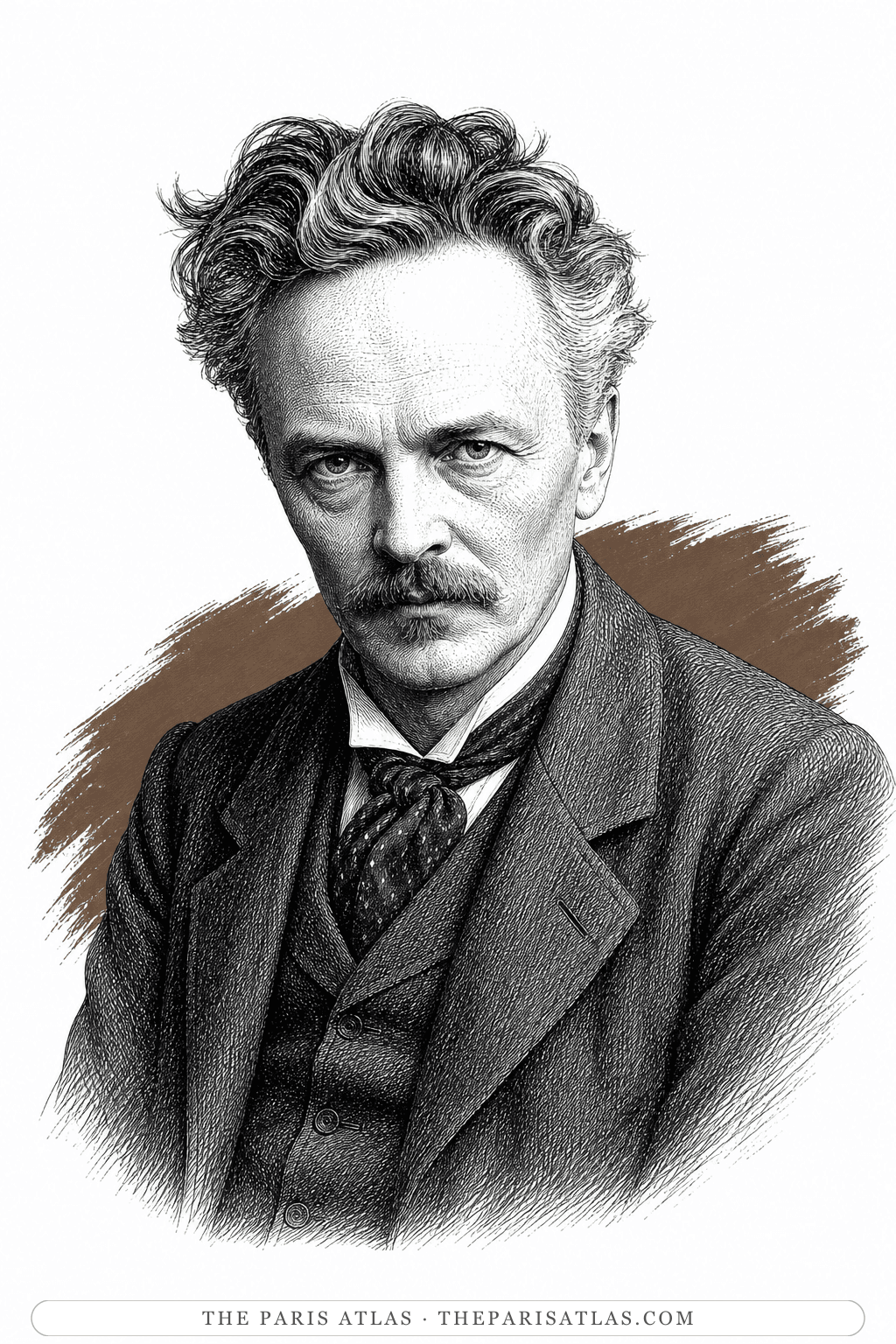
Met · 1894
The Hamsun Society chronology records that Hamsun met August Strindberg in Paris in 1894.
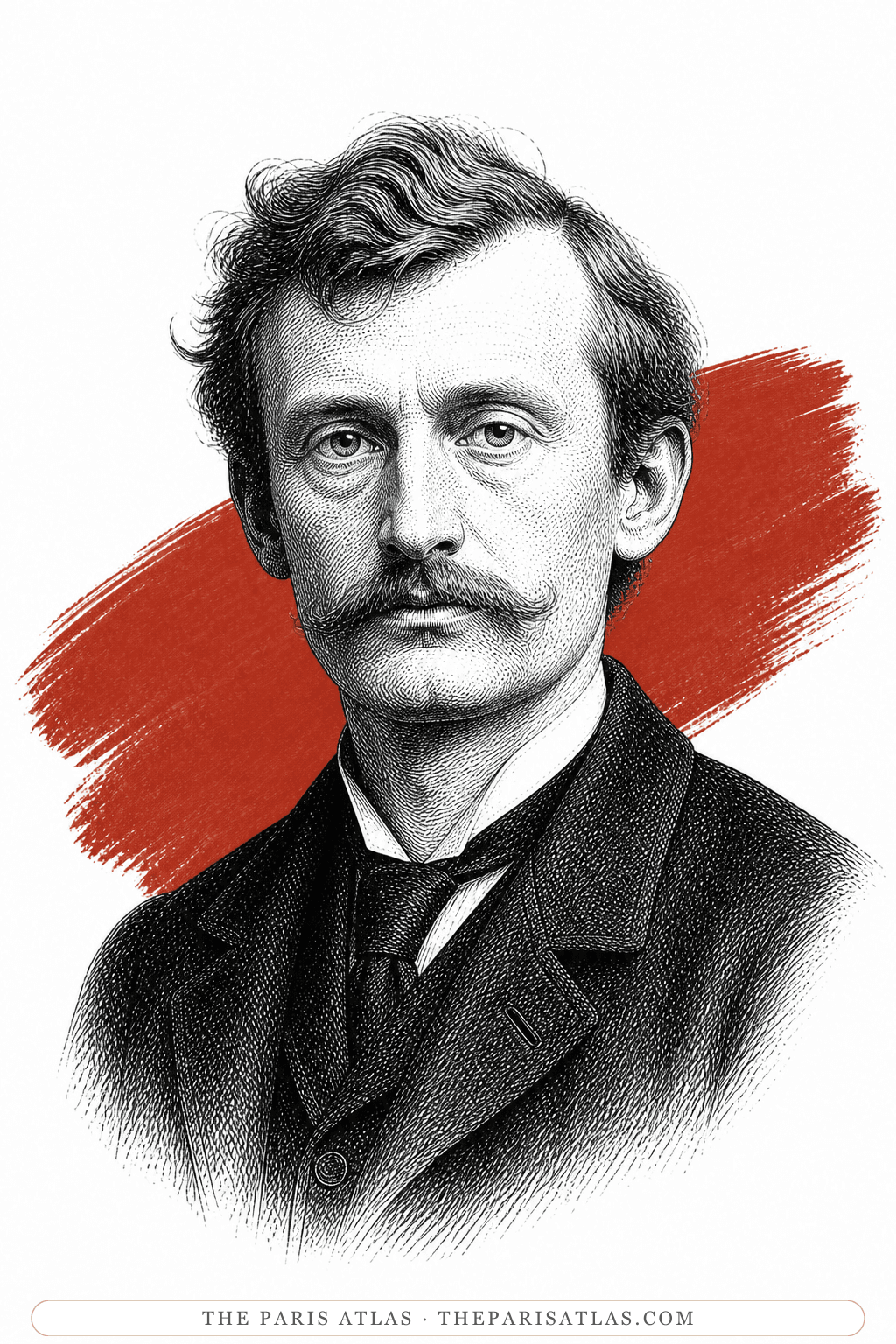
Met · 1894
Hamsun met Munch in Paris in 1894 through Strindberg; Munch later made the contested 1896 portrait etching and their complicated acquaintance continued for decades.
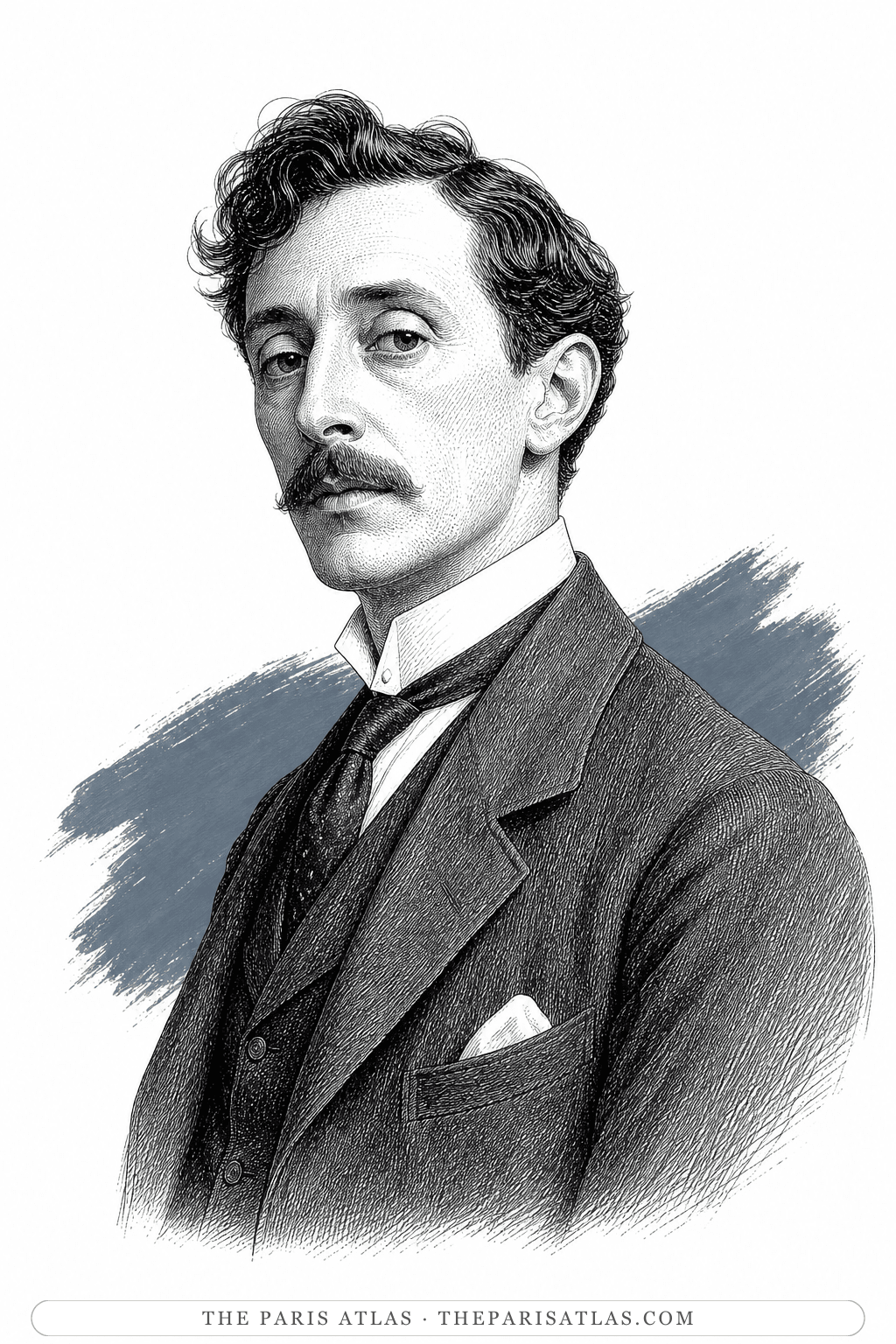
Met · 1894
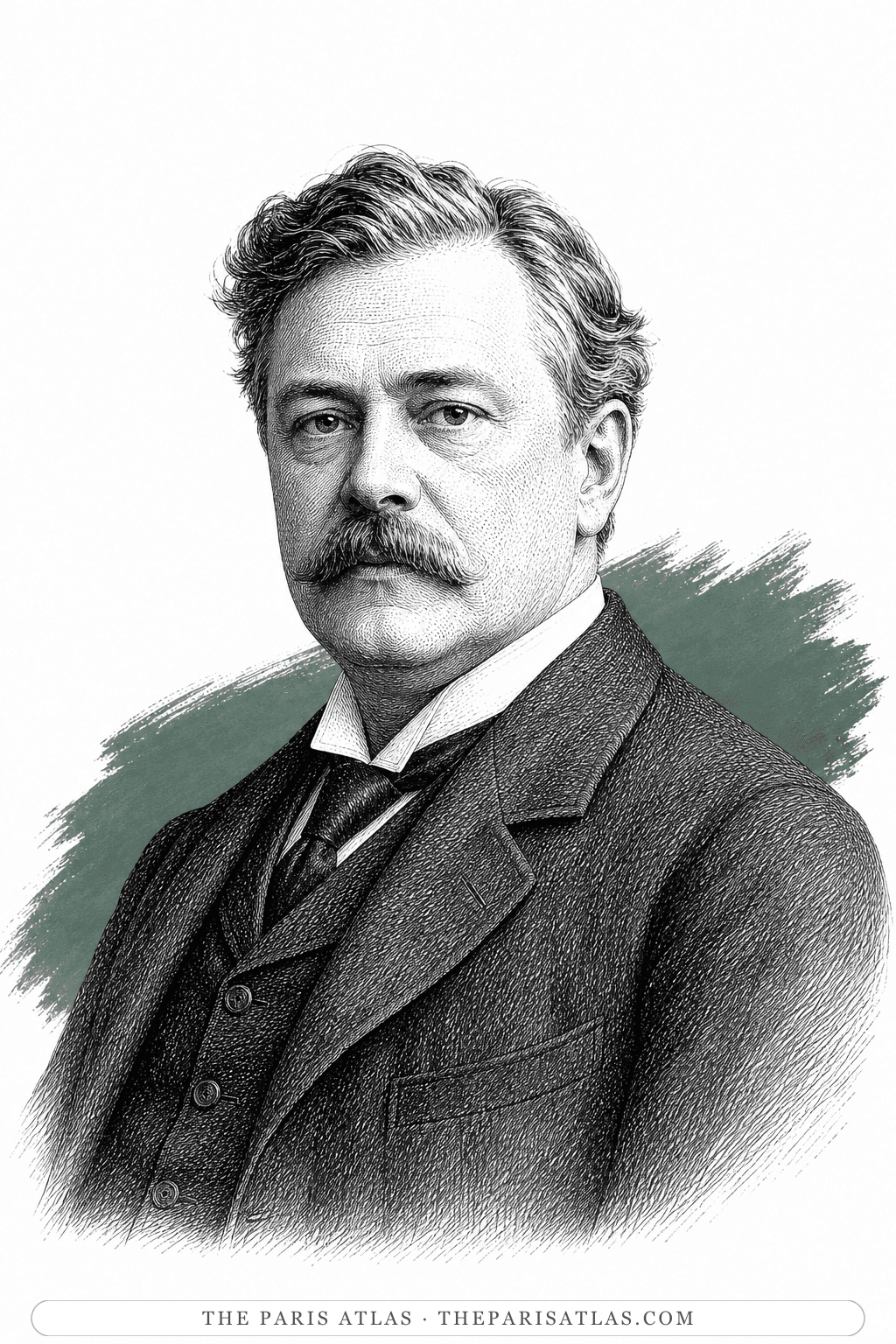
Hamsun encountered Danish novelist Herman Bang during his 1894–1895 Paris period.
Met · 1894
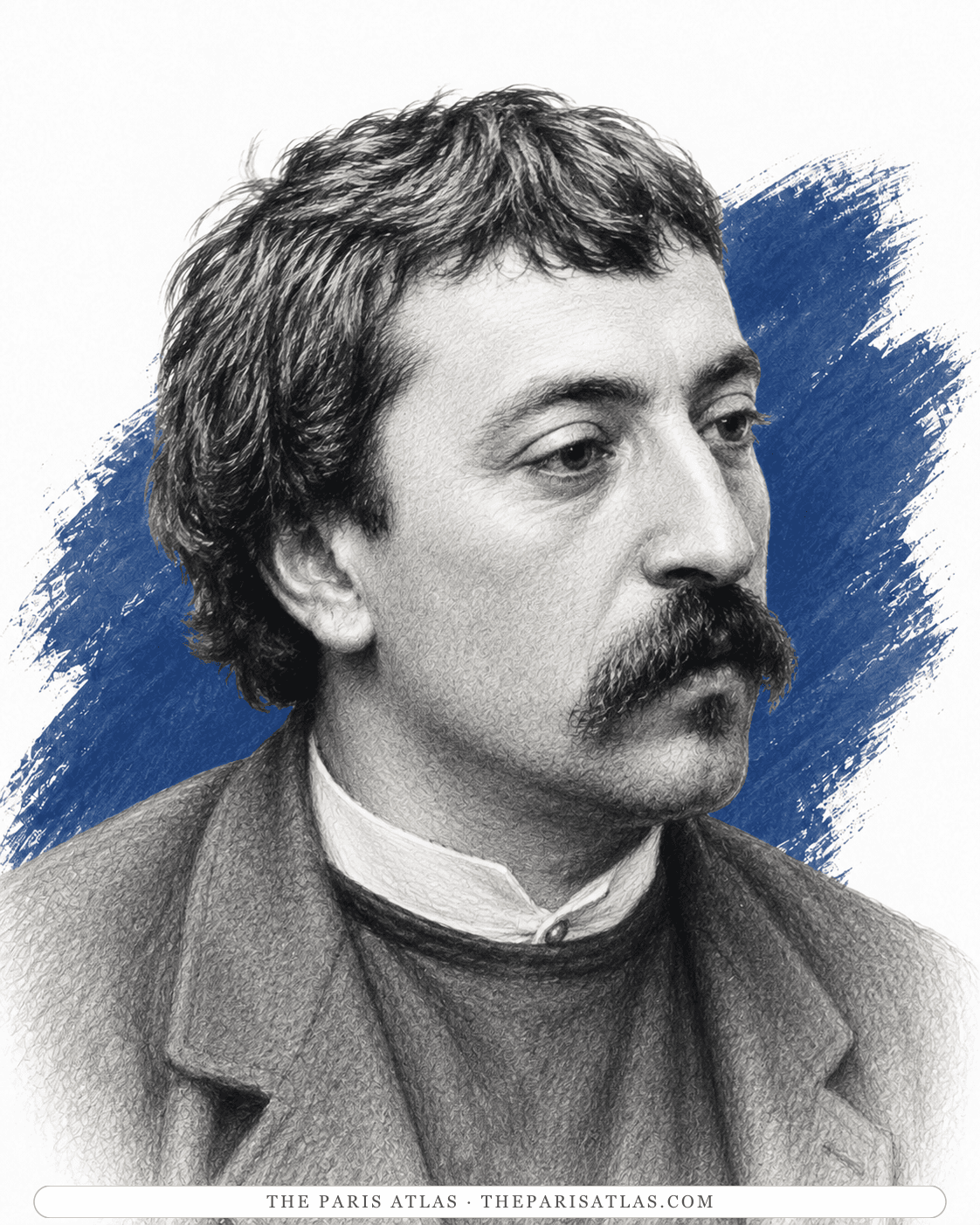
Hamsun encountered Norwegian novelist Johan Bojer during his 1894–1895 Paris period.
Met · 1894
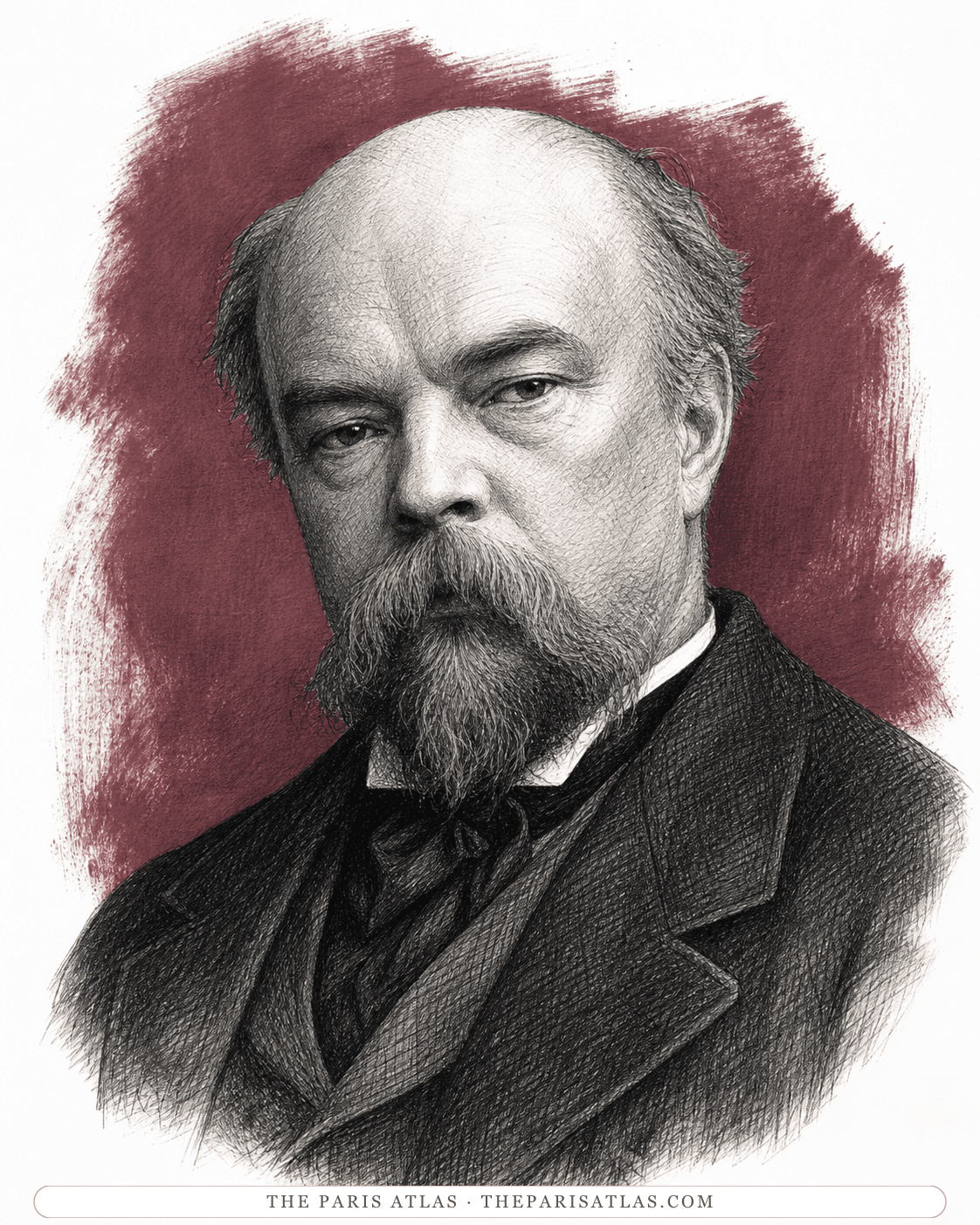
Hamsun encountered Paul Gauguin within the artistic network of his 1894–1895 Paris period.
Met · 1894
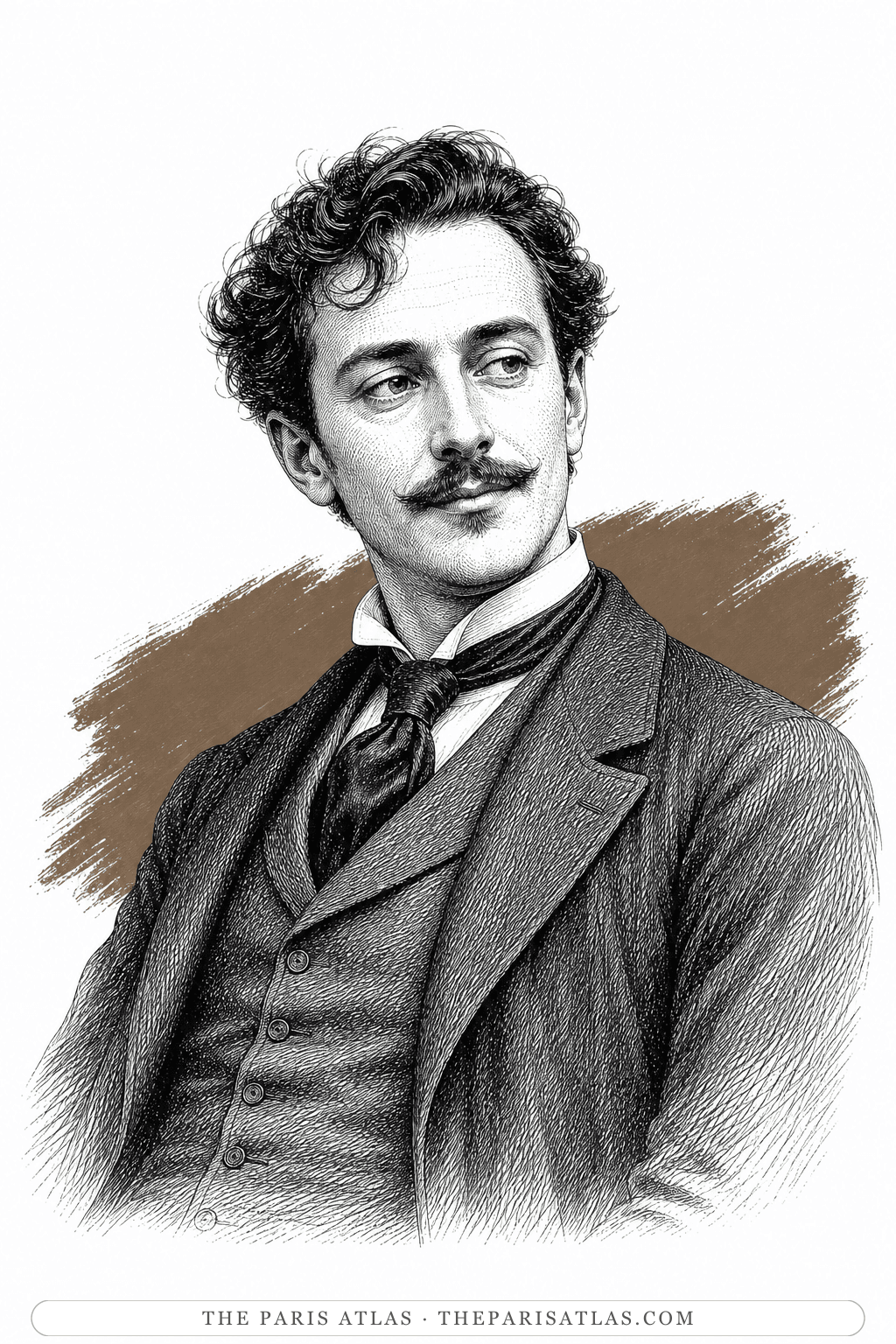
Hamsun encountered Paul Verlaine within the international literary world surrounding his 1894–1895 Paris residence.
Met · 1893
Gretor hosted Hamsun in his apartment at 112 boulevard Malesherbes during Hamsun's first substantial Paris stay and introduced him to the city's Scandinavian artistic network.
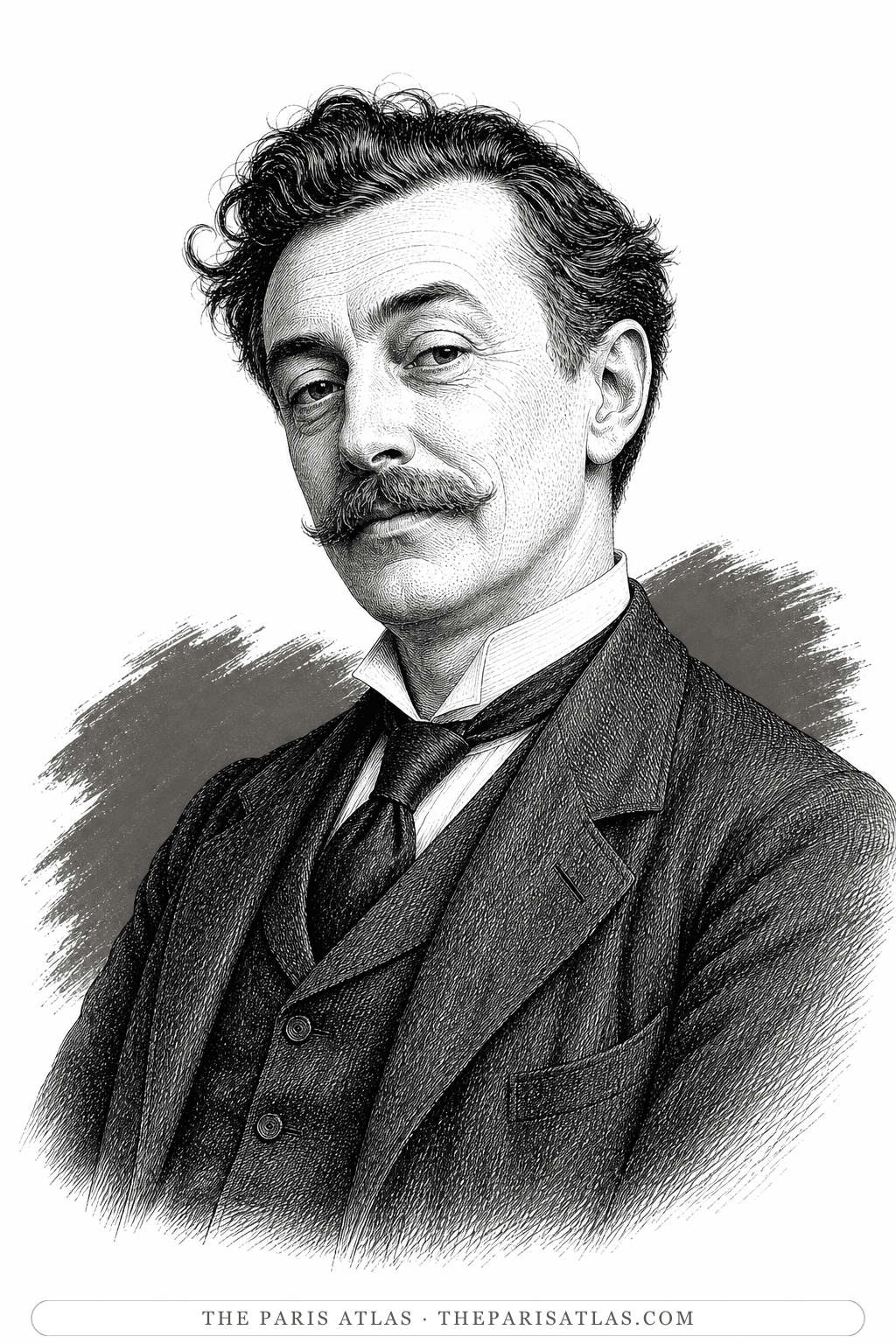
Met · 1899
The Hamsun Society chronology records Hamsun meeting Swedish artist and writer Albert Engström in 1899.
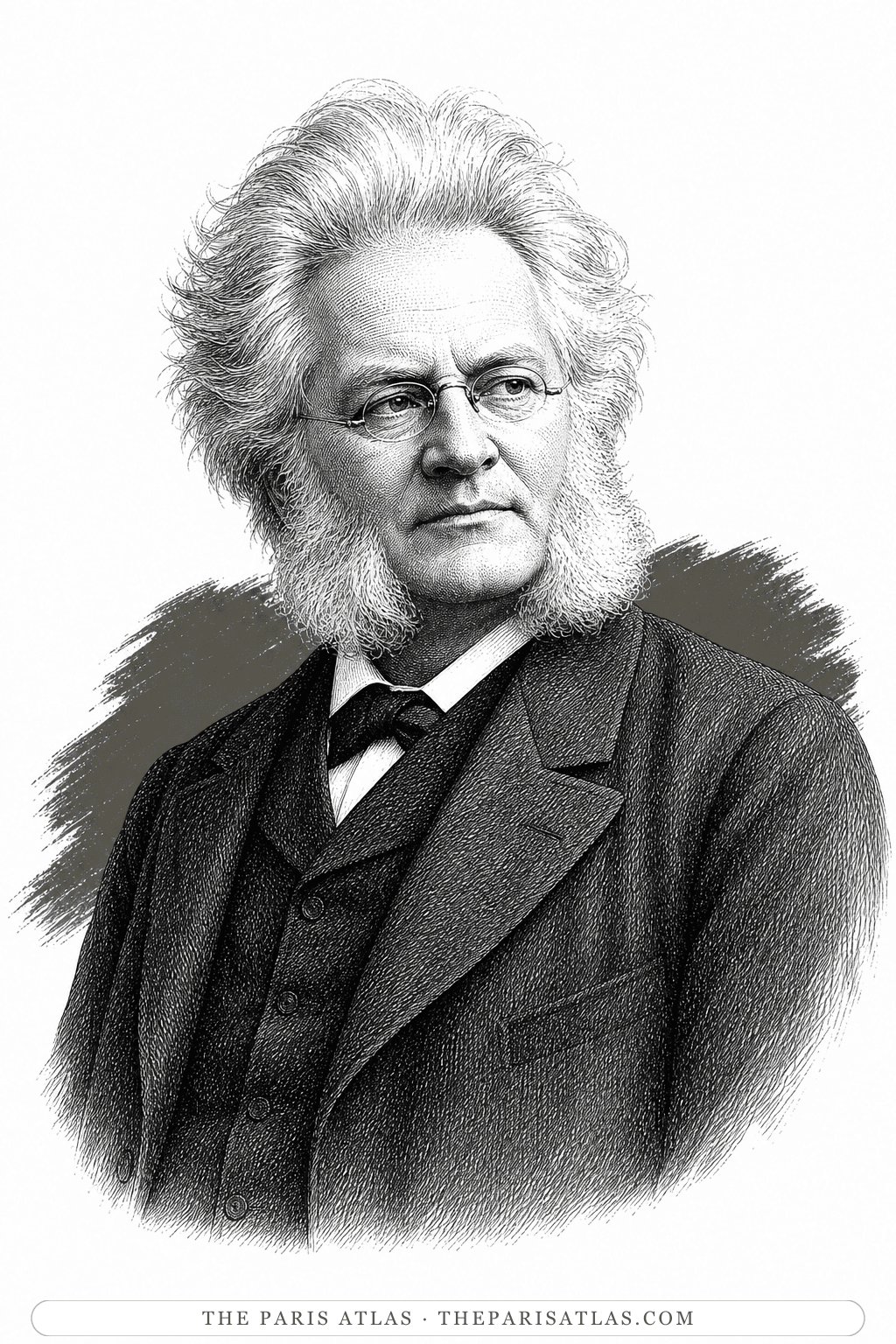
Met · 1879
The young Hamsun sought out his literary idol at Aulestad; Bjørnson doubted his prospects but helped him obtain road work and later supplied a letter of introduction for America.
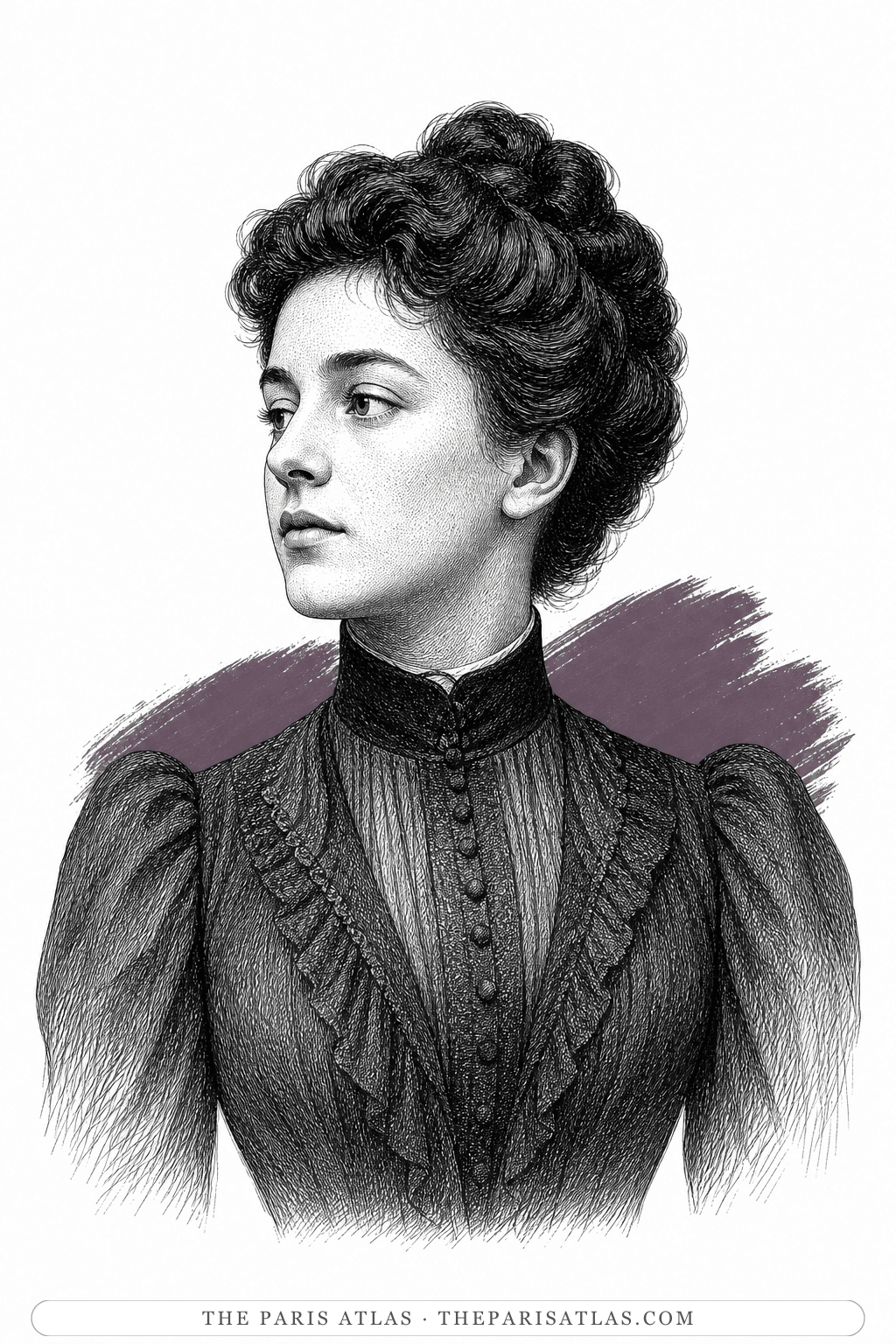
Met · 1895
Hamsun socialized with Juel, Munch and Stanisław Przybyszewski during a documented 1895 gathering in Kristiania.
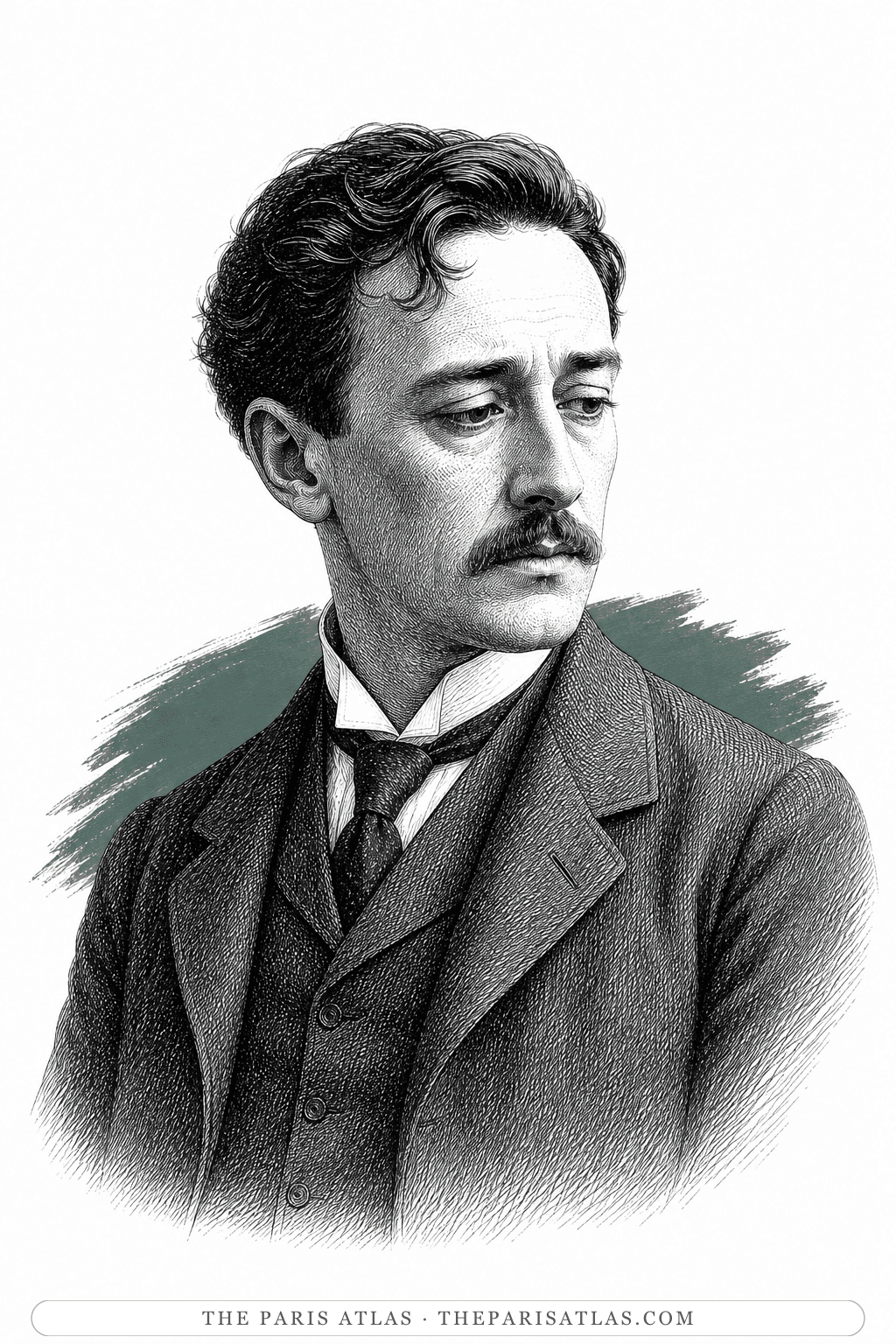
Met · 1894
Hamsun befriended Kinck and his wife in Paris in December 1894, wrote warmly of him and continued their correspondence.
Met · 1891
Hamsun personally invited Ibsen to the 1891 Kristiania lecture in which he attacked the established realist writers; Ibsen attended as Hamsun's principal literary adversary.
Met · 1899
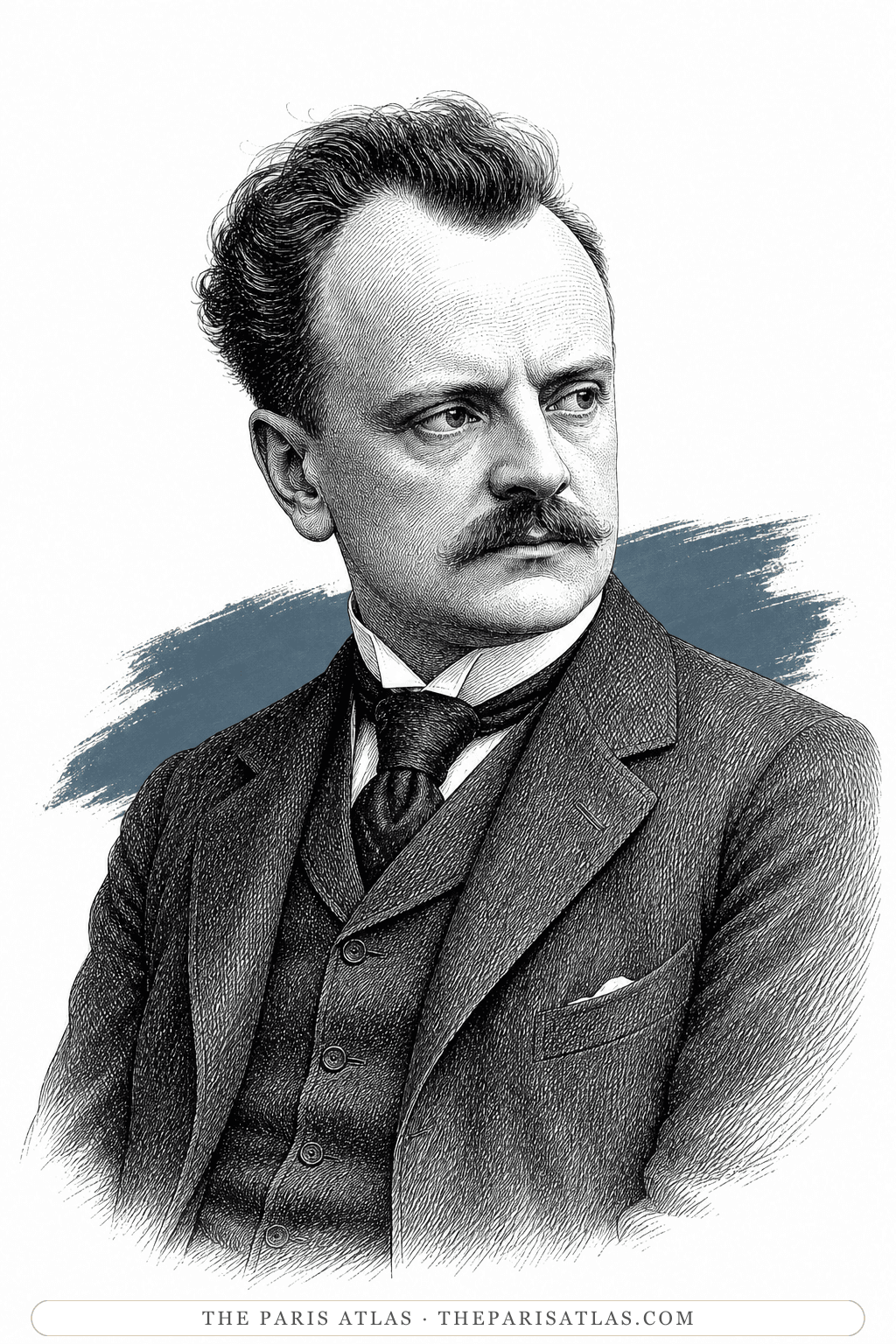
The Hamsun Society chronology records Hamsun meeting Sibelius during his 1899 stay in Finland.
Met · 1893
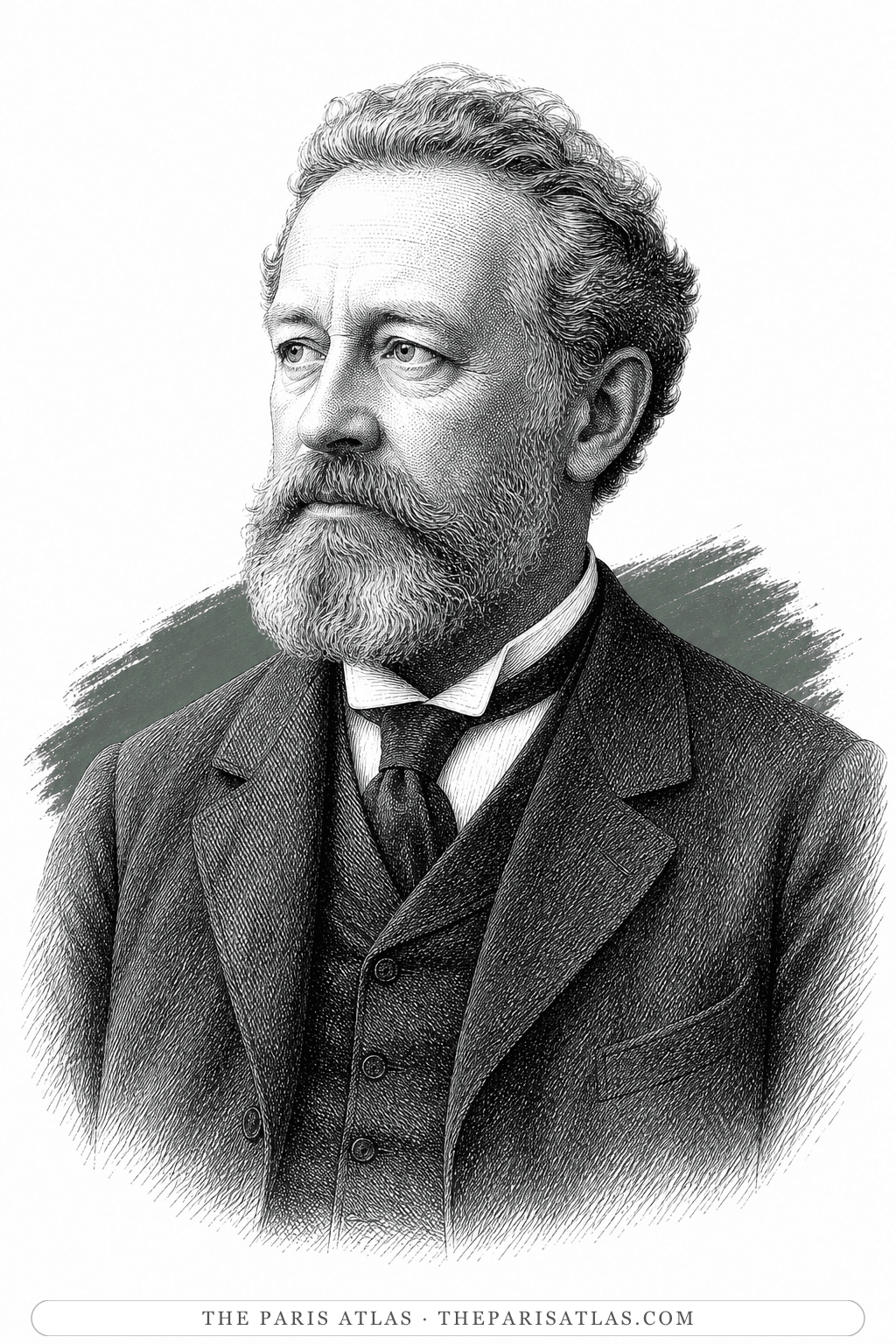
Hamsun, Herman Bang and Vilhelm Krag sometimes gathered at the senior novelist's home on Avenue de la Grande Armée during Hamsun's Paris period.
Met · 1895
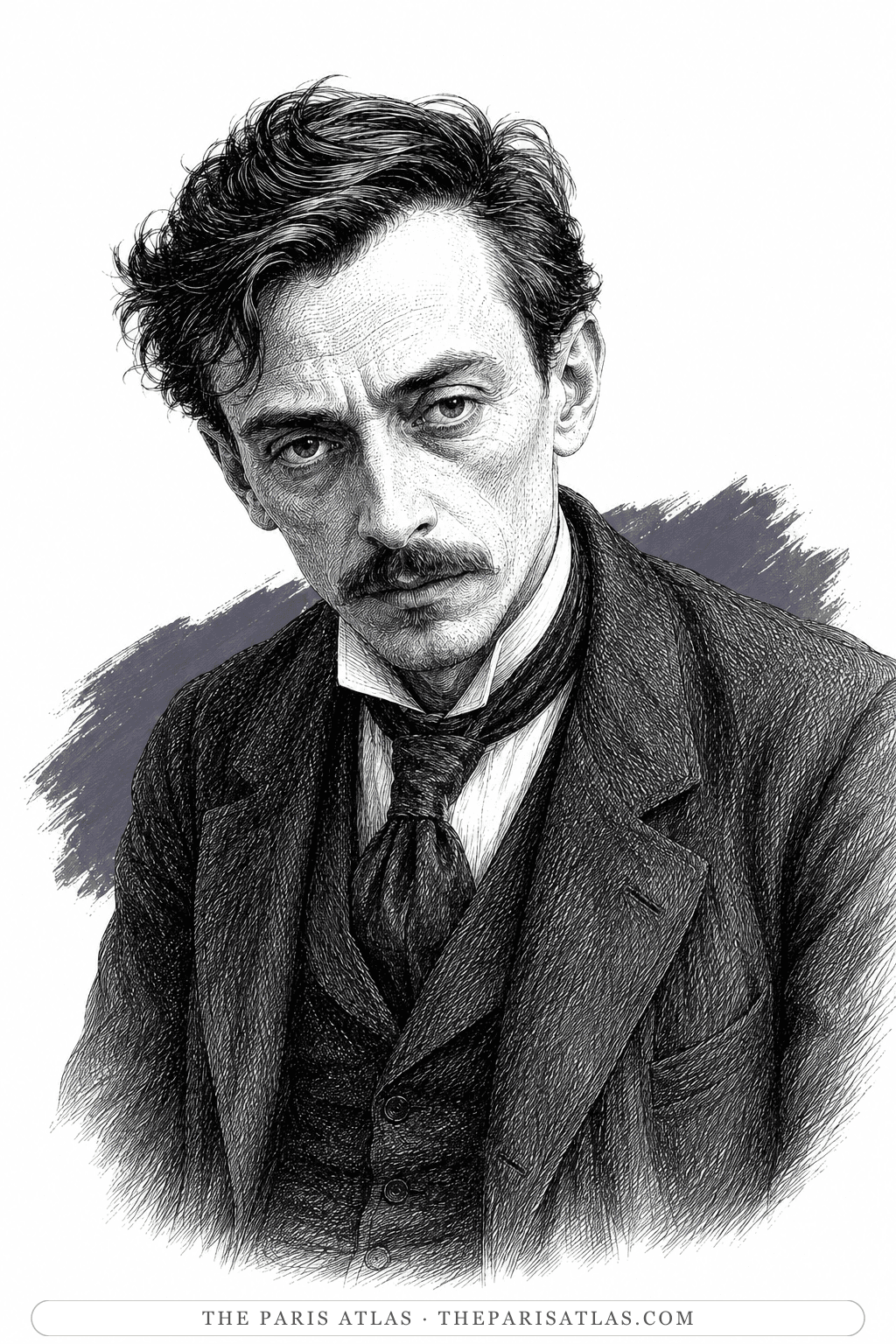
Hamsun socialized with Przybyszewski in the Scandinavian avant-garde circle and delivered a speech for him at an 1895 gathering with Munch and Dagny Juel.
Partner of · 1892
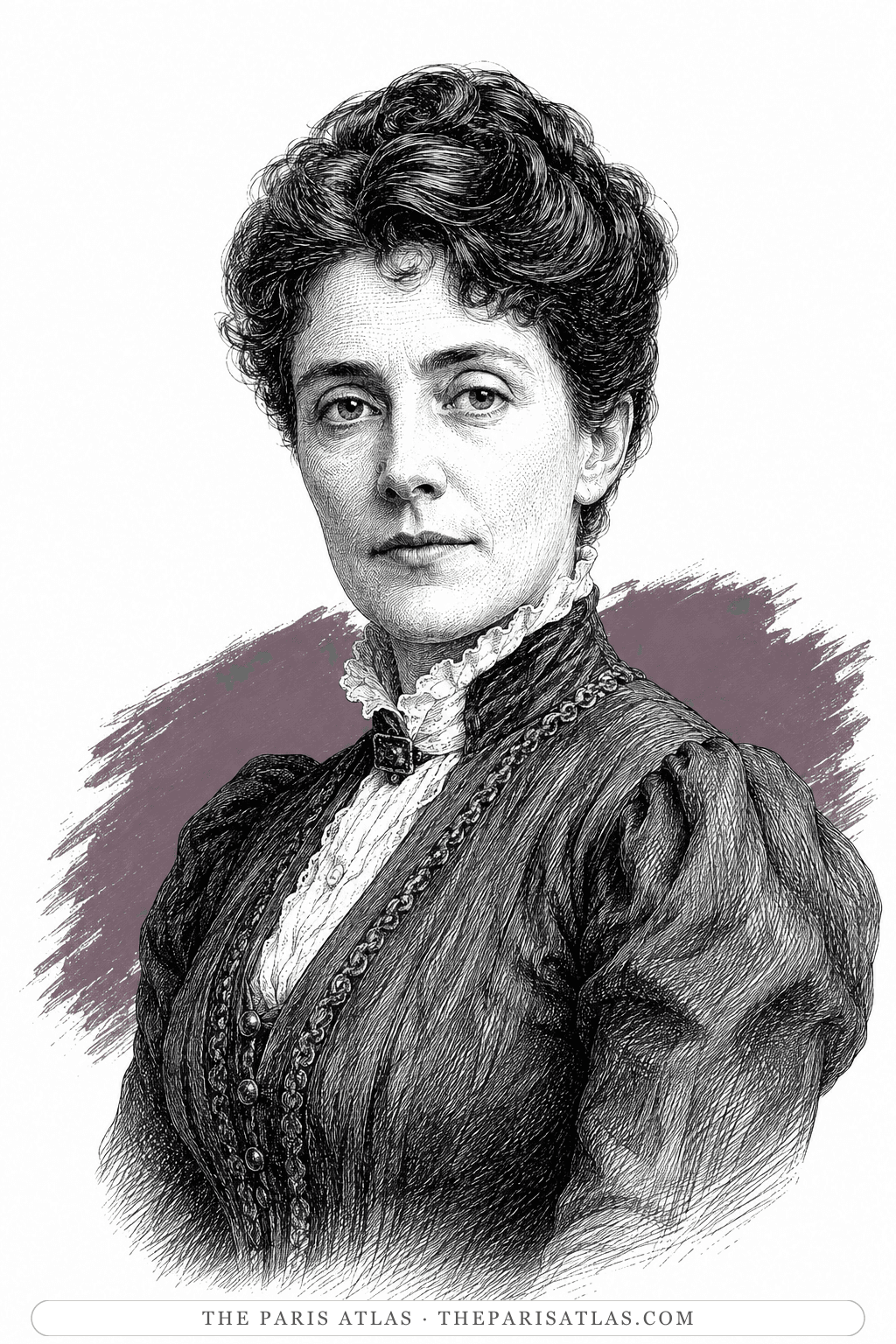
Egerton met Hamsun in Norway and had a brief romantic relationship with him; she dedicated Keynotes to him and later translated Hunger into English.
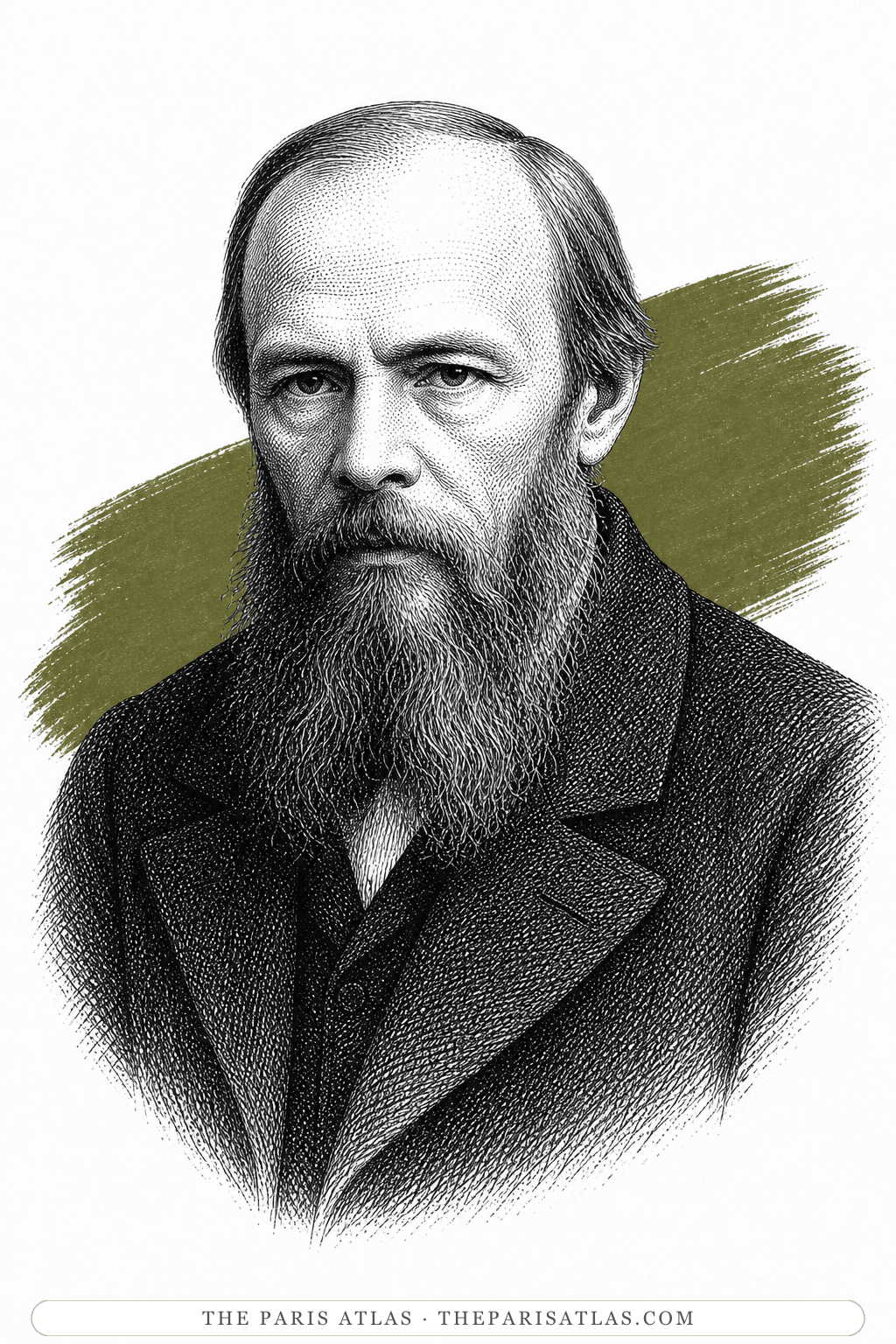
Hamsun identified Dostoevsky as the writer from whom he had learned the most; scholarship traces that influence through his treatment of poverty, irrational behavior, contradiction and guilt.
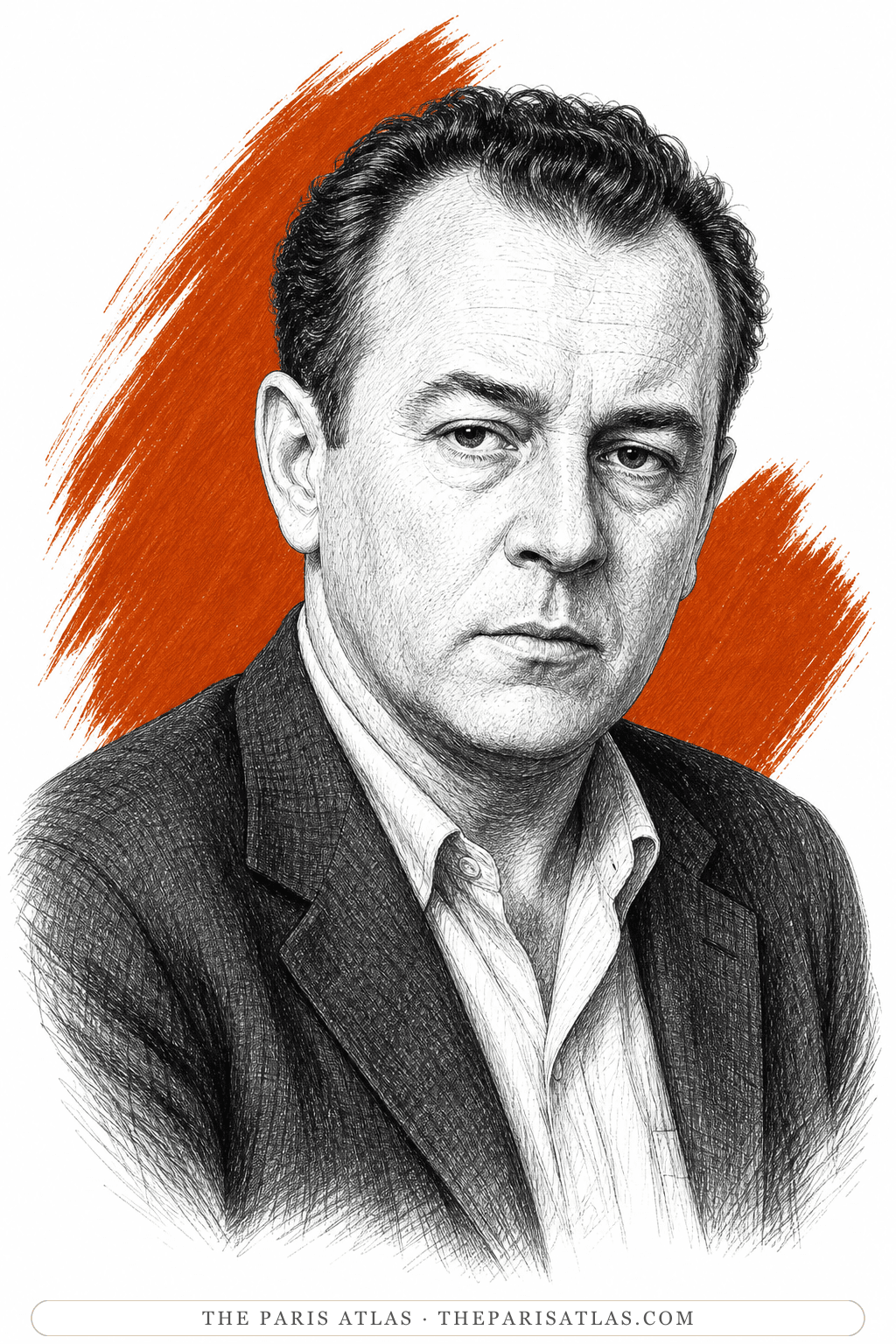
Fante repeatedly named Hamsun as a central influence; the proud and impoverished writer of Hunger is a documented precursor to Arturo Bandini.
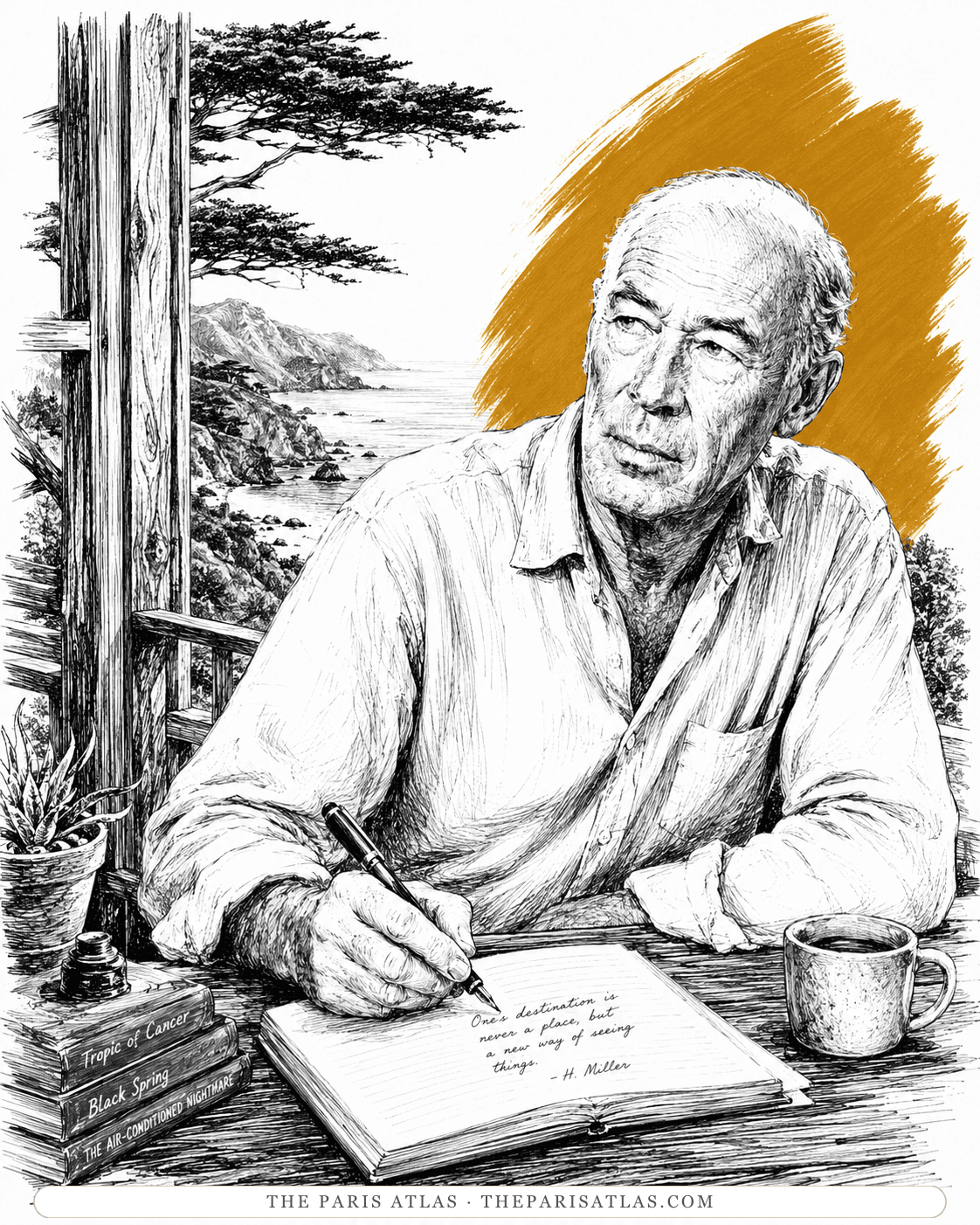
Oxford's literary reference work identifies Hamsun as one of Henry Miller's formative influences, particularly on Tropic of Cancer.

Knut Hamsun’s feverish portrait of a penniless young writer walking Kristiania while hunger dismantles his reason and pride.
Influenced
Fante repeatedly named Hamsun as a central influence; the proud and impoverished writer of Hunger is a documented precursor to Arturo Bandini.
Influenced
Oxford's literary reference work identifies Hamsun as one of Henry Miller's formative influences, particularly on Tropic of Cancer.
Met · 1893
Hamsun met the German publisher Albert Langen through Willy Gretor during his 1893 Paris stay.
Met · 1894
The Hamsun Society chronology records that Hamsun met August Strindberg in Paris in 1894.
Met · 1894
Hamsun met Munch in Paris in 1894 through Strindberg; Munch later made the contested 1896 portrait etching and their complicated acquaintance continued for decades.
Met · 1894
Hamsun encountered Danish novelist Herman Bang during his 1894–1895 Paris period.
Met · 1894
Hamsun encountered Norwegian novelist Johan Bojer during his 1894–1895 Paris period.
Met · 1894
Hamsun encountered Paul Gauguin within the artistic network of his 1894–1895 Paris period.
Met · 1894
Hamsun encountered Paul Verlaine within the international literary world surrounding his 1894–1895 Paris residence.
Met · 1893
Gretor hosted Hamsun in his apartment at 112 boulevard Malesherbes during Hamsun's first substantial Paris stay and introduced him to the city's Scandinavian artistic network.
Met · 1899
The Hamsun Society chronology records Hamsun meeting Swedish artist and writer Albert Engström in 1899.
Met · 1879
The young Hamsun sought out his literary idol at Aulestad; Bjørnson doubted his prospects but helped him obtain road work and later supplied a letter of introduction for America.
Met · 1895
Hamsun socialized with Juel, Munch and Stanisław Przybyszewski during a documented 1895 gathering in Kristiania.
Met · 1894
Hamsun befriended Kinck and his wife in Paris in December 1894, wrote warmly of him and continued their correspondence.
Met · 1891
Hamsun personally invited Ibsen to the 1891 Kristiania lecture in which he attacked the established realist writers; Ibsen attended as Hamsun's principal literary adversary.
Met · 1899
The Hamsun Society chronology records Hamsun meeting Sibelius during his 1899 stay in Finland.
Met · 1893
Hamsun, Herman Bang and Vilhelm Krag sometimes gathered at the senior novelist's home on Avenue de la Grande Armée during Hamsun's Paris period.
Met · 1895
Hamsun socialized with Przybyszewski in the Scandinavian avant-garde circle and delivered a speech for him at an 1895 gathering with Munch and Dagny Juel.
Partner of · 1892
Egerton met Hamsun in Norway and had a brief romantic relationship with him; she dedicated Keynotes to him and later translated Hunger into English.
Influenced by
Hamsun identified Dostoevsky as the writer from whom he had learned the most; scholarship traces that influence through his treatment of poverty, irrational behavior, contradiction and guilt.
The sources below include biographies, scholarly essays, interviews, and primary materials that informed this page. They reflect both the historical record and ongoing critical conversations about Knut Hamsun and their work.

Detailed scholarly overview of Hamsun's life, writing, political record, postwar judgment, and legacy.
Extensive Norwegian biographical reference used for the chronology, family history, American journeys, major books, politics, and final years.
The national Hamsun center's institutional account of his life, work, landscapes, and divided legacy.

Critical introduction to *Hunger*, its intellectual background, and Hamsun's literary program.
Reference entry situating Hamsun within literary modernism and the development of psychological fiction.

Scholarly study documenting Hamsun's invitation to Ibsen and Ibsen's attendance at the hostile 1891 lecture.
Scholarly research on Hamsun's international literary networks and his 1893 Paris residence with Willy Gretor at 112 boulevard Malesherbes.
Photographic record of the surviving commemorative plaque identifying Hamsun's residence at 8 rue de Vaugirard.
Hamsun Society biography confirming the meetings with Bojer, Sibelius and Albert Engström.
The Strindberg Society's chronology of the Paris circle around Strindberg and Hamsun.
Biographical source for Marie Hamsun, her marriage, children, and life with Hamsun.
Official Nobel Prize record confirming Hamsun's 1920 award and its citation for *Growth of the Soil*.
Nobel's biographical account of Hamsun's life, principal works, and international reputation.
Institutional source for Hamsun's childhood home and upbringing in Hamarøy.
Research on Hamsun's childhood with his maternal uncles, including Hans Olsen.
The Hamsun Centre's account of northern Norway's lasting place in Hamsun's imagination and fiction.
Hamsun Society chronology documenting his Paris residences, work on *Pan*, Paris circle, and death.
Museum history documenting Hamsun's long, complicated acquaintance with Munch, their 1894 Paris meeting and the 1896 portrait.
Correspondence-based record of Hamsun befriending Hans E. Kinck and his wife in Paris in December 1894.
Account of George Egerton's brief romantic relationship with Hamsun and her role in bringing his work into English.
Munch Museum archival commentary documenting Hamsun with Dagny Juel and Stanisław Przybyszewski in 1895.
Correspondence-based record of Hamsun's gatherings with Scandinavian writers at Jonas Lie's Paris home.
Scholarly study connecting *Pan* with Hamsun's Paris period and residence at 8 rue de Vaugirard.
Scholarly analysis of Dostoevsky's influence on Hamsun's representation of hunger, contradiction, guilt, and irrational behavior.
Oxford reference documenting Hamsun as a formative influence on Henry Miller.
Literary scholarship documenting the importance of Hamsun's *Hunger* to John Fante and *Ask the Dust*.
Museum account of Hamsun's wartime choices, postwar prosecution, and psychiatric examination.
These references anchor the page in the documented record and in the scholarly conversations around Knut Hamsun. Every claim on this page traces back to one or more of the works listed here.
 Explore more resources
 View source